News related to
Mid Term

Global oil supply is likely to align closely with demand through 2026, according to fresh projections from the Organization of the Petroleum Exporting Countries, setting up a clear divergence with forecasts from other major agencies that warn of a sizeable surplus building in the same period. OPEC’s latest monthly assessment indicates that the OPEC+ alliance, which brings together OPEC members, Russia and other producing partners, expects market […]

PwC Middle East has relocated its Riyadh office to Laysen Valley, underscoring the professional services firm’s deepening commitment to the kingdom as demand for advisory, audit and consulting services accelerates alongside economic transformation programmes. The new office brings PwC’s teams and capabilities together in a larger, purpose-built environment designed to support collaboration, client delivery and skills development. The firm said the facility is intended to serve as […]

Paramount Skydance’s decision to bring three Gulf sovereign wealth funds into its $108 billion hostile bid for Warner Bros Discovery has highlighted a rare convergence of interests among Saudi Arabia, Abu Dhabi and Qatar, as the states accelerate efforts to secure influence across the global entertainment industry. Paramount said the Saudi Public Investment Fund, Abu Dhabi’s L’imad Holding Company and the Qatar Investment Authority have agreed to […]

SINGAPORE – Media OutReach Newswire – 12 December 2025 – In today’s competitive job market, academic qualifications alone are no longer sufficient. Employers seek graduates who are academically accomplished and equipped with practical skills, confidence, and strong industry connections. At the Singapore Institute of Management (SIM), Career Connect delivers a holistic approach to career development that transforms education into employability. A Holistic Approach to Career Development SIM […]

Arabian Post Staff -Dubai Abu Dhabi’s sovereign investor Mubadala Investment Company plans to almost double its exposure to Asia to around a quarter of its global portfolio over the next decade, signalling a long-term shift in capital allocation as the region’s digital economy, energy transition and infrastructure needs accelerate. Speaking at Abu Dhabi Finance Week, Mohamed Albadr, Mubadala’s Head of Asia, said Asia’s share of assets under […]

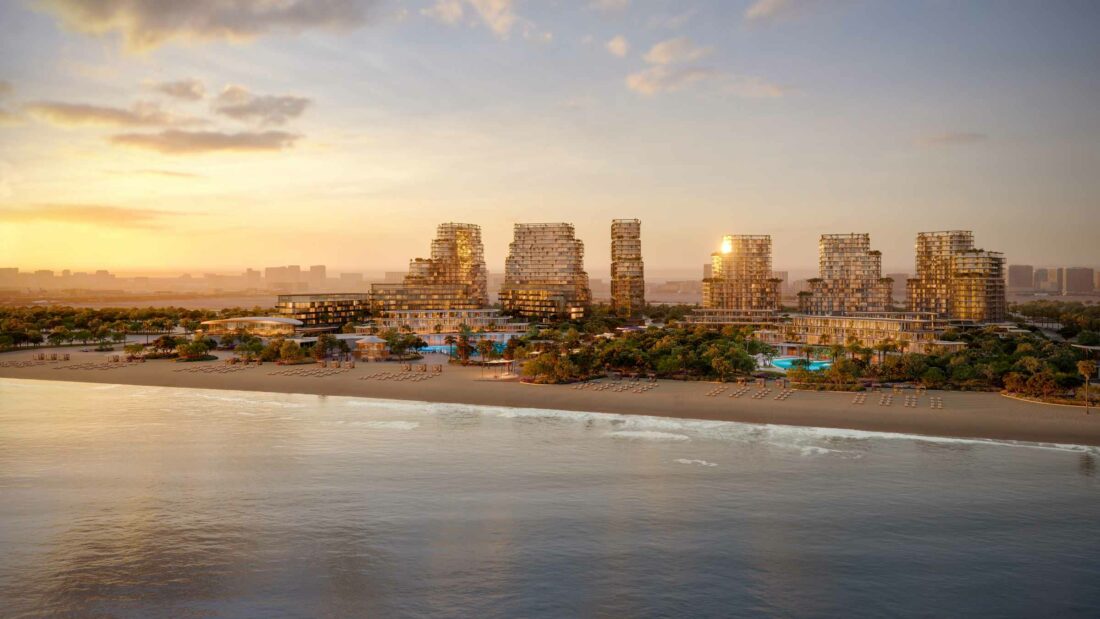
Beyond Developments has launched SIORA, its first beachfront masterplan on Dubai Islands, marking a significant step in the design-led developer’s expansion and reinforcing its alignment with Dubai’s long-term urban development strategy. The project becomes Beyond’s second large-scale community introduced within a year, underscoring the pace at which the company is scaling operations in a competitive real estate market shaped by strong demand for lifestyle-driven coastal living.

Planned across more than two million square feet, SIORA is positioned as a low-density waterfront enclave that blends residential, leisure and public-realm spaces. The development is conceived as a coastal sanctuary, with design cues drawn from Japanese garden philosophies and the concept of Ikigai, which centres on balance, purpose and fulfilment in everyday life. Beyond has said the masterplan aims to integrate natural elements, walkable environments and tranquil waterfront vistas to support wellness-focused living rather than high-intensity urban density.

Dubai Islands, formerly known as Deira Islands, has been earmarked by city planners as a key growth corridor for tourism, hospitality and mixed-use communities. The location offers direct coastal access while remaining closely connected to established commercial districts, ports and transport infrastructure. Authorities have promoted the area as part of a broader effort to diversify beachfront destinations beyond traditional luxury zones, combining residential neighbourhoods with cultural, retail and recreational assets. SIORA is expected to contribute to this repositioning by introducing a master-planned community rather than a standalone residential cluster.

Beyond Developments has framed the launch as part of a wider strategy to deliver future-ready communities that respond to evolving buyer preferences. Demand across Dubai’s residential market has increasingly tilted towards integrated developments that prioritise open space, sustainability and lifestyle amenities, particularly among long-term residents and international buyers seeking primary homes rather than short-stay investments. Waterfront projects, in particular, have continued to command price premiums, driven by limited supply and consistent global interest.

The company’s emphasis on Japanese-inspired design sets SIORA apart from conventional beachfront schemes dominated by high-rise towers and resort-style branding. Landscape-led planning, curated sightlines and quiet communal areas are intended to foster a sense of retreat within an urban context. Developers and architects working on similar concepts have pointed to growing interest in biophilic design and wellness-oriented planning, trends that gained traction as residents placed greater value on liveability, privacy and access to nature.

Beyond’s accelerated project pipeline also reflects confidence in Dubai’s regulatory environment and long-term population growth projections. Government initiatives supporting foreign ownership, long-term residency visas and infrastructure investment have underpinned sustained real estate activity across multiple price segments. Analysts tracking the market note that while transaction volumes have moderated from peak surges, end-user demand for well-located, thoughtfully designed communities remains resilient, particularly in waterfront and master-planned districts.

The launch of SIORA follows Beyond’s earlier community introduction within the same year, signalling a deliberate move to establish brand presence through scale rather than isolated developments. Industry observers note that new entrants adopting a design-led positioning often seek differentiation through master planning, architectural identity and curated amenities to compete with established developers. Delivering multiple large communities in quick succession also places emphasis on execution, construction timelines and long-term community management, factors that influence buyer confidence.

Activision has announced a strategic overhaul of how it releases titles in its flagship Call of Duty franchise, signalling an end to the practice of launching back-to-back entries in its Modern Warfare and Black Ops series. The change comes after Call of Duty: Black Ops 7, launched on 14 November, posted notably weaker engagement compared with its immediate predecessor and drew mixed responses from critics and players […]

Advertisements

Engineered for the AI era, MIMO delivers breakthrough metrics: 400 GB/s bandwidth, 54 million IOPS, and 40–90 μs latency—all within a form factor comparable to a large suitcase. MIMO serves as both a high-performance data hub for large-scale GPU clusters and a flexible edge deployment platform, extending seamlessly to desktop environments where it orchestrates workflows with various DGX Spark units based on NVIDIA’s GB10 Grace Blackwell superchip. […]

Nairobi — Kenya’s commercial banks have begun to implement a revised risk-based credit pricing framework that standardises how loan interest rates are set, driven by directives from the Central Bank of Kenya aimed at enhancing transparency and aligning borrowing costs with market conditions. Banks are now required to price variable-rate, Kenya-Shilling loans using a common reference rate plus a risk-adjusted premium, a shift designed to tighten the […]

Global development officials are assessing faltering progress on sustainable development targets as the United Nations Development Programme warns that economies and communities face mounting pressures from climate shocks, widening inequality, and geopolitical instability. The review comes at a time when the Global Environment Outlook 7 underscores the scale of environmental disruption, projecting that unchecked climate change could shave about 4 per cent off annual global GDP by […]

Google has unveiled its most affordable artificial intelligence subscription in India, aiming to challenge OpenAI’s popular ChatGPT Go service and expand the reach of its AI ecosystem. The new Google AI Plus plan is priced at ₹399 per month, with a special introductory offer of ₹199 for the first six months for new subscribers, a strategy clearly designed to attract price-sensitive users in one of the world’s fastest-growing digital markets.

The launch places Google directly in competition with OpenAI’s ChatGPT Go subscription, which has gained traction by offering enhanced features at a similar price point and, in some cases, bundled free access through promotions. Both plans now sit at roughly the same monthly cost, but key differences in features and ecosystem integration could shape consumer choice.

Google’s AI Plus plan gives subscribers expanded access to Gemini 3 Pro, the company’s most capable AI model yet, enabling advanced natural language understanding, coding assistance, creative tasks and complex research queries. It also includes Nano Banana Pro, Google’s latest image-generation and editing model, and enables video generation through tools such as Flow and Veo 3.1—features that aim to broaden appeal among creators and professionals alike.

Beyond generative capabilities, the plan bundles 200GB of cloud storage shared across Gmail, Google Drive and Photos, and allows users to share privileges with up to five family members, a benefit absent in many direct AI chatbot subscriptions. The integration of AI tools into everyday applications like Gmail and Docs is also a distinguishing factor for Google, tying advanced AI functionality directly into widely used productivity platforms.

Market analysts say the move reflects tech giants’ broader strategy to embed AI deeper into consumer ecosystems. By offering storage and productivity enhancements alongside generative AI, Google appears to be positioning AI as an everyday utility rather than a standalone service, contrasting with ChatGPT Go’s focus on conversational and research use cases.

OpenAI’s ChatGPT Go has been offered free for a year in various markets, including India under promotional deals, increasing its adoption among students, freelancers and casual users. Google’s decision to counter with a low-entry price signals recognition of the importance of competitive pricing in winning market share in regions where cost is a significant adoption factor.

Industry observers note that India has become a key battleground for generative AI services. The country’s large English-speaking population, burgeoning digital user base, and rapid uptake of smartphones have made it one of the most contested markets for AI subscriptions globally. This push comes amid substantial investment flows from global tech firms into the Indian AI and cloud sectors, including commitments from Microsoft and Amazon to expand infrastructure and services locally, underscoring broader confidence in the region’s long-term growth potential.

Despite aggressive pricing, some experts caution that affordability alone may not secure dominance. “Value for users increasingly depends on how AI integrates with everyday workflows,” said an independent technology analyst, pointing to the added utility of cloud storage and productivity enhancements in Google’s offer. “These extras could tip the balance for professionals and households in choosing one platform over another.” This assessment reflects growing sentiment that seamless application integration, rather than raw AI prowess alone, will be a key differentiator in consumer choices.

The launch also comes against a backdrop of regulatory and competitive developments in the AI landscape. Governments worldwide, including a policy proposal in India to impose royalties on AI firms that train on copyrighted local content, are scrutinising how large models are developed and monetised. Such regulatory pressure could shape how global AI companies price and deliver services in key markets.

Google’s broader AI strategy continues to evolve, with investments in advanced models and partnerships aimed at pushing generative AI beyond chat interfaces into practical, everyday tools. The company has also recently bolstered its AI collaborations, such as integrating advanced coding tools and developer platforms, and its executives have signalled an intensified focus on next-generation models and applications capable of supporting complex tasks.


Ubuntu is set to expand support for AMD’s data-centre GPUs after Canonical confirmed that it is working with the chipmaker to deliver a streamlined, fully integrated version of the ROCm software stack in upcoming releases of the operating system. The decision marks one of the most significant efforts yet to improve deployment of AMD accelerators across enterprise servers, cloud environments, and developer workstations as demand for AI […]

The investment landscape of 2026 is being shaped by a set of forces that are measurable, global, and impossible for any serious investor to overlook. The noise around short-term market swings has masked the reality that structural trends—not sentiment—are driving the next decade of value creation. Investors focused on what actually moves markets should concentrate on seven megatrends that are now setting the pace. The first is […]

OpenAI has appointed Denise Dresser, the chief executive of Slack, as its first-ever chief revenue officer, a decisive move aimed at accelerating the artificial intelligence giant’s commercial push and enterprise expansion. Dresser, a veteran of more than a decade at Salesforce and head of Slack since 2023, will oversee OpenAI’s global revenue strategy, encompassing enterprise sales and customer success as the company navigates mounting competition and seeks […]

Borrowing against physical and financial assets has become a defining feature of credit markets as more companies look for flexible funding beyond traditional loans. The model, known as asset-based lending, is drawing interest from mid-sized firms facing tighter bank standards and from fast-growing businesses seeking to unlock capital tied up in receivables, inventory, or machinery. This shift reflects an environment where cash-flow volatility, higher borrowing costs, and […]

Dubai once again became a hub for celebrating business excellence as industry leaders gathered at W Dubai – The Palm for the Entrepreneur Middle East Leadership Awards 2025. Among the standout honorees was Faruh Kurbanov, Co-Founder of DIA Holding, who received the Real Estate Leader of the Year award — a recognition of his growing influence on the region’s development landscape.  The annual awards highlight executives who […]

Abu Dhabi has secured a strategic collaboration between the Abu Dhabi Investment Office and US-based Prudential Financial Inc aimed at bolstering the emirate’s capacity in long-term retirement savings, income solutions and reinsurance as part of its financial sector transformation agenda. The agreement, unveiled during Abu Dhabi Finance Week 2025, also sees PFI joining the FinTech, Insurance, Digital and Alternative Assets cluster, a cornerstone initiative designed to position […]

Sharjah’s real estate market achieved an unprecedented milestone in November 2025, with transaction values soaring to AED 9.5 billion — the highest monthly figure in the emirate’s history. This performance highlights a powerful upswing in property demand and transaction activity, according to data from the Sharjah Real Estate Registration Department.

The surge was driven by a total of 15,131 individual real estate transactions completed across residential, commercial and land sectors, with the cumulative traded area in sales transactions reaching about 34.9 million square feet. Market dynamics showed robust participation from both end-users and investors, signalling sustained confidence in the emirate’s property market fundamentals.

Sales transactions contributed significantly to this total, accounting for 2,126 deals — around 14 per cent of all transactions — demonstrating heightened buyer activity. Mortgage deals also featured prominently, with 698 recorded transactions valued at approximately AED 1.6 billion. The volume and value of these mortgages reflect strong backing from financial institutions and growing investor confidence amid a favourable credit environment.

Analysts note that the November outcome builds on the emirate’s broader market momentum through 2025. Year-to-date figures indicate that property transactions in Sharjah have risen sharply compared with the previous year. Data from a Savills report show that the first nine months of 2025 saw total sales reach around AED 44.3 billion, up by more than half relative to the same period in 2024.

The jump in monthly and cumulative annual activity reflects several intersecting trends shaping Sharjah’s property landscape. Developers across the emirate have accelerated new project launches and master-planned communities that appeal to both domestic and international buyers. Villa and townhouse segments have been particularly active, buoyed by strong demand from families and investors seeking space outside the ultra-premium segments found in neighbouring markets.

Macro-economic factors also play a role. Sharjah’s broader economic ecosystem has recorded steady expansion, with diversification efforts in sectors such as logistics, education, and tourism underpinning population growth and boosting housing demand. Property professionals point to these structural drivers as crucial to the market’s resilience and robust performance.

Regional comparisons further contextualise Sharjah’s achievement. Across the United Arab Emirates, major property markets have posted strong results throughout 2025, with Dubai and Abu Dhabi also reporting significant upticks in transaction volumes and values. In Dubai, for example, transaction figures remained elevated in both off-plan and secondary markets, while Abu Dhabi logged increased activity linked to lifestyle-oriented developments and foreign investment.

Despite these broader national trends, Sharjah’s November figure stands out for its magnitude relative to the emirate’s historical performance. Prior monthly totals in 2025 — including around AED 7 billion in October — already pointed to accelerated momentum, but November’s record haul marks a pronounced inflection point.

Market insiders attribute part of this growth to flexible regulatory frameworks and proactive initiatives introduced by local authorities aimed at stimulating property sector participation. Enhanced transparency in transaction processes and targeted incentives for first-time buyers and investors have helped attract a more diverse buyer base.

Despite the strong upswing, industry observers caution that sustained growth will require continued alignment of supply with demand, particularly in mid-income and affordable housing segments. Robust demand could exert upward pressure on prices if not matched by commensurate increases in new deliveries. Developers and policymakers will need to address these dynamics to maintain market stability over the medium term.

Arabian Post Staff -Dubai Abu Dhabi’s move to establish an investment corridor with China gained further traction after the Abu Dhabi Investment Office confirmed a strategic partnership with China International Capital Corporation aimed at expanding two-way capital flows and creating a formal framework for long-term collaboration. The initiative positions the emirate to attract a new wave of Chinese companies while giving institutional investors in Abu Dhabi structured […]

Senegal is moving to start construction of a domestic gas pipeline network before the end of 2025, marking a decisive step in its strategy to channel offshore gas discoveries into power generation and industrial development. The announcement from Petroleum and Energies Minister Birame Soulèye Diop signals that the government aims to accelerate the transition from planning to execution as major gas projects come onstream. The minister confirmed […]

Lucid Group has inaugurated a new retail studio in Al Khobar on December 5, extending its operational footprint across the Kingdom by adding a facility in the Eastern Province. This marks Lucid’s third studio in Saudi Arabia, joining its existing sites in Riyadh and Jeddah — a move the company says reflects growing demand and commitment to the region.

The Al Khobar studio offers prospective customers the opportunity to view the company’s flagship models, including the Lucid Air sedan and Lucid Gravity SUV, alongside services such as product consultations, vehicle customisation and after-sales support.

According to the company’s Middle East president, the new facility brings Lucid closer to buyers in what is considered one of the Kingdom’s most affluent markets. Lucid described the Eastern Province as its third-largest market, underscoring the importance of establishing a direct presence there.

The expansion comes amid broader efforts by Lucid to localise electric vehicle production. Since 2023, the company has operated a manufacturing facility at King Abdullah Economic City, which began with semi-knocked down assembly of its vehicles and is being upgraded to full build capability. The factory is expected to reach a production capacity of up to 150,000 vehicles annually once completely operational.

This localisation aligns with Saudi Arabia’s drive to transform its economy under Vision 2030, by promoting advanced manufacturing, reducing reliance on oil, and supporting sustainable mobility. In January 2025, Lucid became the first global automaker to join the country’s “Made in Saudi” programme, reinforcing its long-term industrial and strategic role in the Kingdom.

Industry analysts highlight the creation of a nascent Saudi EV ecosystem, with Lucid among the pioneers shaping domestic market demands, infrastructure build-out and consumer adoption of electric vehicles.

Shares of the national carrier InterGlobe Aviation — operator of IndiGo — have tumbled over the last week after the airline cancelled thousands of flights following implementation of stricter pilot-duty regulations. Regulatory pressure and mounting costs have weighed on sentiment, yet several brokerages are urging investors to stay the course, citing the airline’s cost advantages and long-term dominance in the domestic market.

The aviation watchdog Directorate General of Civil Aviation has ordered IndiGo to slash its winter schedule ― first by 5 per cent, then escalating to a 10 per cent reduction ― in response to widespread cancellations and what regulators described as the carrier’s inability to manage the higher demands of new Flight Duty Time Limitations norms.

Operationally, the carrier flagged fatigue-rule compliance, crew scheduling bottlenecks and minor technical issues as reasons for the cancellations. It said a full root-cause analysis is underway.

Despite forecasting that IndiGo might cancel as many as 11,000 flights overall — incurring revenue losses of roughly ₹12–14 billion and reducing net profits by ₹3–5 billion — global banking major HSBC has retained a “Buy” rating for InterGlobe, while trimming its price target for FY26–27. Analysts say the airline’s unit cost per seat-kilometre might rise only around 1 per cent even after additional pilot hires.

Supporters of the airline point out that IndiGo remains the only Indian carrier ramping up capacity by roughly 50 aircraft each year — a growth rate unmatched by competitors such as Air India, SpiceJet or Akasa Air. This expansion underlines its dominant market share and suggests that regulatory interest in capping capacity is unlikely, even amid the crisis.

Not all are convinced. Credit-rating agency Moody’s flagged the flight disruptions as “credit negative,” pointing to potential long-term damage from compensation claims, refunds, potential DGCA penalties and erosion of customer trust. The agency also downgraded IndiGo’s human-capital score — citing slower hiring and inability to scale crew strength for its expanding fleet.

Market technicians have sounded alarms, noting that the share price has broken key support levels and fallen below major moving averages, a trend that could continue if recoveries don’t materialise.

Within the company, top leadership has attempted to calm nerves. IndiGo’s CEO has acknowledged the disruptions, termed the episode a “network reboot” and said flights are being progressively restored. The airline also disclosed that refunds for stranded passengers have been processed, luggage backlog cleared for most, and on-time performance is edging back towards normal.

Amid this turbulence, investors and regulators alike will watch closely whether IndiGo can restore operational stability in the coming weeks, and whether its long-term advantages in scale and cost can withstand the upheaval sparked by regulation and mis-management.

Botim Money and Binance have moved to broaden digital asset access for users across the UAE after signing a memorandum of understanding during Binance Blockchain Week in Dubai, signalling a push to integrate regulated crypto services into one of the region’s most widely used digital platforms. The agreement reflects a growing alignment between established fintech operators and global exchanges seeking to deepen their presence in a market that has positioned itself as a leader in digital-asset regulation and innovation.

Botim Money, the financial services arm of the UAE-based communications platform Botim, aims to use the partnership to explore compliant pathways for users to buy, sell and manage crypto assets from within its ecosystem. The platform, owned by Astra Tech, has expanded from a calling and messaging service into a broader super-app model, adding payments, remittance and e-commerce tools. Executives have argued that embedding secure crypto access is a natural progression as users increasingly seek unified financial services in trusted digital environments. The collaboration with Binance, one of the world’s largest crypto exchanges by trading volume, is expected to focus first on regulatory frameworks, technical integration and user-protection standards.

The signing of the agreement at Binance Blockchain Week placed the partnership in the spotlight as global industry participants gathered in Dubai. Officials from Binance highlighted that the UAE’s licensing landscape and digital economy strategy have created conditions where exchanges can build long-term infrastructure. Richard Teng, who heads Binance globally, has repeatedly emphasised that the Gulf region’s regulatory clarity has allowed the company to stabilise operations after addressing compliance concerns elsewhere. The MoU with Botim Money follows earlier moves by Binance to secure approvals through Dubai’s Virtual Assets Regulatory Authority, enabling it to develop a locally compliant exchange environment.

Senior figures at Botim Money pointed to the super-app’s large user base as a strategic advantage. With millions of active customers across the Middle East and South Asia, Botim has become a central payments and communications tool for expatriate workers. Astra Tech’s leadership said the partnership could help bridge the gap between conventional financial users and digital-asset platforms, allowing remittance senders, online shoppers and small businesses to access crypto payments or investment tools without transitioning to unfamiliar applications. Industry analysts noted that such integrations could accelerate mainstream adoption, provided that strong risk controls are embedded from the outset.

Dubai’s position as a global blockchain hub formed a central backdrop to the announcement. The emirate has attracted exchanges, tokenisation projects and Web3 developers with its tiered licensing system and emphasis on consumer safeguards. Officials have pitched Dubai as a base for companies seeking regulatory stability after volatility in global crypto markets. Binance Blockchain Week itself drew developers, institutional investors, compliance specialists and start-ups exploring tokenised assets, AI-driven trading tools and cross-border payment systems. The Botim Money–Binance collaboration stood out among the event’s business announcements for its potential to link a mass-market communications app with a globally recognised exchange.

The partnership arrives at a time when the UAE continues to refine rules governing custodial services, stablecoins and digital-asset marketing. Market participants say these developments have strengthened confidence among fintech companies looking to integrate virtual assets without jeopardising compliance obligations. Botim Money’s leadership has indicated that any crypto services made available through the platform would adhere to regulatory requirements on customer verification, anti-money laundering controls and risk disclosures. Binance has similarly stressed that its growth strategy in the UAE is tied to full regulatory alignment, following heightened scrutiny by authorities in Europe and North America earlier this year.

Observers viewed the agreement as part of a broader trend in which everyday digital platforms embed financial products to enhance user engagement. For Binance, the arrangement offers an opportunity to reach a large demographic that predominately uses mobile channels for financial activities. For Botim Money, it presents a pathway to diversify revenue streams and retain users within a single app environment, especially as competition intensifies among regional fintech operators seeking to offer remittances, payment processing, microfinance and merchant tools.

Global asset manager BlackRock has indicated it is willing to partner with sovereign wealth funds from the Gulf Cooperation Council to channel more capital into Asian markets. The company’s Chief Investment Strategist for Middle East and Asia-Pacific, Ben Powell, described the firm as “very open minded” about co-investment opportunities with SWFs in the region. This marks a notable strategic shift by the world’s largest asset manager, which […]

VISHNU RAJA
RYO YAMADA
HITORI GOTOH
IKUYO KITA
Just in: