Just in:
Miss Universe Hong Kong Jen Zhou Departs for Puerto Rico to Compete in the 75th Miss Universe World Final // Hong Kong mandates crypto transaction disclosures to tax authorities // Asia Left Behind: Ten international companies have yet to report delivering on their cage-free egg pledges across the region // Trump’s Iran War Has A Share Of Contribution To His Midterm Debacle // Geely’s i-HEV Intelligent Hybrid Technology Offers a New Direction for Gasoline-Powered Vehicles // Motorola introduces Signature 27 flagship priced at $1,599 // Emirates Group records AED 4.1 billion half-year profit // Geely’s i-HEV Intelligent Hybrid Technology Offers a New Direction Vision for Gasoline-Powered Vehicles // Dubai boat show confirms international shipyard line-up for November // CR Longdation Aethereal Cybersecurity × Global Cybersecurity Alliance (GCSA) Join Hands to Establish the “AI and Cybersecurity Research Centre” // Dubai details five-year visa benefits for returning visitors // Meraas showcases five residential zones at Dubai Design Week // Beyond the exhibition floor: How robots, AI and networks are moving into the real world // UK air traffic outage inflicted £33m financial losses // APT29-linked campaign exploits outdated Apple and Android software // Ousted top Kochi cop gets IG post // The “1st Greater Bay Area Health and Longevity Summit & Awards Ceremony” concludes successfully in Macao // TVM –Mangaluru Vande Bharat claims top spot // Emaar approves Development buyout ahead of planned delisting // Oil advances towards $100 as tanker attacks persist //

News related to
Mid Term

Tesla’s China-made electric vehicle sales rose sharply in April, extending a rebound that has strengthened the Shanghai plant’s role as the company’s key export and volume hub.

Deliveries of Model 3 and Model Y vehicles built at Tesla’s Shanghai factory reached 79,478 units in April, including exports to Europe and other overseas markets. The figure was 36% higher than a year earlier, marking a sixth straight month of year-on-year growth, though it was 7.2% lower than March as the market moved through a seasonally softer month after a stronger end to the first quarter.

The April performance signals that Tesla is regaining some stability after a difficult stretch in 2025, when competition, pricing pressure and consumer fatigue weighed on its standing in major electric vehicle markets. Shanghai remains central to that recovery because it supplies the domestic market while also serving as a major export base for Europe, Asia-Pacific and other regions. The plant produces Tesla’s two highest-volume models, leaving its monthly output closely watched as a gauge of both local demand and overseas momentum.

Tesla sold 85,670 China-made vehicles in March, giving it a stronger base heading into the second quarter. April’s decline from that level suggests the rebound remains uneven, but the year-on-year rise points to healthier order flow than at the same point last year. The recovery has been helped by adjustments to production, export allocation and the refreshed Model Y cycle, while Tesla has continued to use financing incentives and targeted promotions to defend its share.

China’s electric vehicle market remains the world’s most competitive, with new energy vehicles accounting for a growing majority of passenger-car retail sales. April industry estimates pointed to new energy vehicle retail sales of about 860,000 units and a penetration rate above 60%, underscoring how quickly battery-electric and plug-in hybrid models are displacing petrol vehicles. That shift benefits Tesla’s broader addressable market, but it also exposes the company to fierce price competition from domestic manufacturers with faster model cycles and wider product ranges.

BYD remains Tesla’s most formidable rival, with a broad line-up spanning mass-market cars, plug-in hybrids, premium models and exports. Geely, Chery, Leapmotor, Xpeng, Li Auto, Nio and Xiaomi are also pressing deeper into the market, competing not only on price but on software, cabin technology, driving-assistance features and charging convenience. Several of these manufacturers are expanding overseas, putting pressure on Tesla in Europe and other export markets that were once more heavily dominated by the US company.

Tesla’s challenge is sharpened by the age of its core passenger line-up. The Model Y and Model 3 remain strong global sellers, but rivals are launching fresh sport-utility vehicles, sedans and compact models at a faster pace. Tesla has been working on lower-cost products and software-led upgrades to protect volumes, but investors and customers are watching closely for evidence that the company can broaden its appeal beyond its two main models.

Europe has become a key test of whether Shanghai’s output can translate into renewed international growth. Tesla sales have improved in several European markets after a weak 2025, helped by stronger demand for electric vehicles and a recovery from earlier supply disruptions. Yet the company faces a more crowded field, with BYD, Xpeng and other manufacturers gaining visibility through competitive pricing, longer equipment lists and expanded dealer networks.

Regulatory approval for advanced driver-assistance technology remains another variable. Tesla’s Full Self-Driving package is central to its long-term positioning, but approvals in China and Europe have moved cautiously. Wider deployment could support margins and brand differentiation, though regulators continue to scrutinise safety, data handling and driver-monitoring requirements. Without a faster software rollout, Tesla’s sales recovery will depend more heavily on vehicle pricing, product updates and production efficiency.

Tesla’s first-quarter global deliveries stood at 358,023 vehicles, with Model 3 and Model Y accounting for 341,893 units. That concentration highlights the importance of Shanghai’s April result: the plant is not merely a regional asset but a major pillar of the company’s global volume strategy. Stronger China-made deliveries can ease pressure on other factories, support export flexibility and help Tesla manage inventory across markets with uneven demand.
Snap has confirmed the quiet end of its $400 million artificial intelligence partnership with Perplexity, removing a high-profile growth lever from its 2026 outlook just as the Snapchat parent faces pressure from uneven advertising demand, geopolitical disruption and a deeper push for cost discipline. The agreement, announced in November 2025, was designed to bring Perplexity’s conversational answer engine into Snapchat’s Chat interface, allowing users to ask questions […]

Arabian Post Staff -Dubai   Arada has entered the UAE healthcare market by acquiring a majority stake of more than 80 per cent in Reem Hospital, marking a decisive shift by the master developer from residential communities and branded wellness projects into clinical care. The transaction gives Arada control of one of Abu Dhabi’s specialist private healthcare assets and comes with an AED2 billion investment commitment to […]

The five-year extension ensures operational continuity at one of Thailand’s leading container terminals, supporting the country’s expanding role in intra-Asian trade

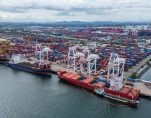
BANGKOK, THAILAND – Media OutReach Newswire – 7 May 2026 – DP World, through its joint venture Laem Chabang International Terminal Co., Ltd. (LCIT), has secured a five-year concession extension to continue operating the B5 container berth at Laem Chabang Port. The extension comes at a time of increasing intra-Asian trade and evolving supply chain dynamics, reinforcing the port’s role as a critical gateway for Thailand’s economy.

Terminal and yard at Laem Chabang Port

The contract, granted by the Port Authority of Thailand (PAT), will run from May 2026 to April 2031, reinforcing DP World’s central role in bolstering regional trade flows.

LCIT operates both B5 and C3 berths at Laem Chabang, Thailand’s principal deep-sea gateway and the country’s largest container hub supporting international trade. The terminals can accommodate up to four vessels simultaneously along 900 meters of berth length and are supported by 4,420 sqm of on-dock container freight station (CFS) facilities. In 2025, LCIT handled a record 1.936 million twenty-foot equivalent units (TEUs), its highest annual throughput to date, reflecting sustained growth in container volumes.

Glen Hilton, CEO & Managing Director, Asia Pacific, DP World, said: “This concession extension at Laem Chabang Port ensures continuity and service stability for our customers at a time when supply chains face increasing pressure and complexity. As Thailand strengthen its position as a regional trade hub, this extension allows us to continue investing in capacity, efficiency and sustainable operations. Together with our partners at LCIT, we are well positioned to support growing intra-Asia trade and deliver long-term value for customers across the Asia Pacific region.”

This concession will enable continued investment by DP World in operational efficiency and sustainability at Laem Chabang. In 2025, five electric internal transfer vehicles (eITVs) were deployed at LCIT, reducing emissions by approximately 60% compared to diesel alternatives while supporting faster vessel handling. Further upgrades are planned in 2026, including the installation of additional eITVs, electric reach stackers, and an electric empty container handler.

Complementing its operations at Laem Chabang Port, DP World has an integrated logistics network throughout Thailand, including cross-border trucking, landside logistics and freight forwarding. The company also recently launched a rail-connected inland container yard in Khon Kaen with a dedicated thrice-weekly rail shuttle to Laem Chabang, enhancing connectivity for exporters in Thailand’s Northeastern region.

​ These services and solutions aim to strengthen Thailand’s domestic and export trade by enabling the seamless movement of goods and materials from port to domestic hinterlands, and to markets across the wider Asia Pacific region.
Hashtag: #DPWorld


The issuer is solely responsible for the content of this announcement.

About DP World

DP World is reshaping the future of global trade to improve lives everywhere. Operating across six continents with a team of over 125,000 employees, we combine global infrastructure and local expertise to deliver seamless supply chain solutions. From Ports and Terminals to Marine Services, Logistics and Technology, we leverage innovation to create better ways to trade, minimising disruptions from the factory floor to the customer’s door.

In Asia Pacific, DP World employs over 15,000 people across 22 geographies. We operate 17 ports and terminals, complemented by a comprehensive suite of end-to-end supply chain solutions – to connect the region to the rest of the world.

WE MAKE TRADE FLOW

LOS ANGELES, US – Newsaktuell – 7 May 2026 – The newly released 2026 Berggruen Governance Index (BGI) paints a mixed picture of global governance heading into a future of mounting shocks, finding widespread gains in public-goods provision from 2000 to 2023 even as democratic accountability edged down and state capacity showed little overall improvement.

Presentation of the 2026 Berggruen Governance Index: On 6 May in Los Angeles, the following individuals discussed the findings of the study (from left): Vinay Lai (Professor of History, UCLA), Michael Storper (Distinguished Professor of Urban Planning, UCLA), Stella Ghervas (Professor of History, UCLA) and the two authors of the study, Joseph Saraceno and Prof. Helmut Anheier (both from UCLA's Luskin School of Public Affairs). Democracy News Alliance / Jordan Strauss/AP for DNA
Presentation of the 2026 Berggruen Governance Index: On 6 May in Los Angeles, the following individuals discussed the findings of the study (from left): Vinay Lai (Professor of History, UCLA), Michael Storper (Distinguished Professor of Urban Planning, UCLA), Stella Ghervas (Professor of History, UCLA) and the two authors of the study, Joseph Saraceno and Prof. Helmut Anheier (both from UCLA’s Luskin School of Public Affairs). Democracy News Alliance / Jordan Strauss/AP for DNA

The BGI, presented Wednesday by an international group of governance scholars, analyses measurable benchmarks of democratic accountability across 145 countries.

On a 100-point scale, the global score for democratic accountability slipped slightly from 65 in 2000 to 64 in 2023, the most recent data used in the project. The wave of democratisation observed in the closing decades of the last century has stalled in the last 15 years. Democratic accountability fell in 54 countries while it improved in 48 countries.

Yet the BGI — a collaborative project of the Luskin School of Public Affairs at the University of California, Los Angeles (UCLA), Berlin’s Hertie School and the Berggruen Institute, a think tank headquartered in Los Angeles — captures remarkably widespread growth in provision of public goods.

Encompassing healthcare, education, infrastructure, environmental sustainability and conditions to foster employment and rising prosperity, public goods improved in 135 of the countries studied, while declining slightly in just four. The global average jumped from 58 to 69 points from 2000 to 2023.

The third component of what the BGI authors refer to as the “governance triangle” is state capacity, defined as the ability to tax, borrow and spend, control territory, operate scrupulous, competent bureaucracies and administer predictable rule of law. The index finds the global average ticking up from 48 to 49 points; 56 countries had increased state capacity while 57 declined.

“What does it tell us about the world ahead?” Prof. Helmut K. Anheier, a Luskin School sociologist and BGI principal investigator, asked during the public release of the 2026 BGI on the UCLA campus.

“Countries are not really improving in their governance performance in significant ways. … We’re not really having forward-looking investment in governance capacity. There is considerable inertia.”

The largest improvements across all three BGI components occurred in Gambia, which the report groups with “low-capacity developing states.” These states score low across the board, particularly in the provision of public goods. This cluster constitutes the poorest countries with the least developed economies, which face the most serious challenges.

“They have the greatest exposure to likely future crises, whether it’s global warming, whether it’s a new pandemic, whether it’s another financial crisis, whether it’s the impact of AI,” Anheier said. “And they have the least capacity to respond to it.”

Bhutan, Georgia, Iraq and Tunisia — which make up the remaining top five countries with the largest improvements in the BGI — are classified as “capacity-constrained states.” They tend to be middle-income with struggling democracies. These countries score higher across the board than the low-capacity developing states, but their state capacity tends to lag compared to public goods and democratic accountability.

The capacity-constrained states risk falling into “a cycle that erodes the institutions they have built,” Anheier said.

“Consolidated democratic states”, a cluster of most of the world’s richest countries, which score highly in all three BGI components, have to confront domestic complacency. Further, in the United States and some others, “political dysfunction” is leaving mounting problems unaddressed and risking erosion of state capacity, Anheier said.

At the other end of the spectrum, the country with the farthest fall on the BGI since 2000 is Nicaragua. Second from last is Venezuela, followed by Hong Kong, Hungary and Turkey. The rest of the bottom 10 are Russia, Iran, Poland, El Salvador and Belarus.

Since 2023, which is the last year of data available for the study, Poland and Hungary have both seen government changes via election, despite serious democratic backsliding. Both had fallen out of the group of “consolidated democratic states” by 2023 and moved into the capacity constrained cluster.

The other eight countries at the bottom of the list are all places that once had some semblance of competitive elections, but by now have little or no remaining pretense of democracy. They are grouped by the authors among the “authoritarian and hybrid states”, which have by far the lowest democratic accountability but outperform even some struggling democracies in delivering public goods.

These regimes have tended toward faster economic growth in the period observed. But that seeming prosperity, typically fueled by extractive industries or overreliance on exports, masks “serious institutional weaknesses in these countries, including divided elites,” Anheier said.

Relatively few countries — 21 of the 145 — changed enough for better or worse to be classified in a new group by the end of the 23-year study period.

“Movement between them is rare, but this is largely what we should expect,” said Stella Ghervas, a UCLA historian on a panel of experts who discussed the BGI findings Wednesday. “Government systems are not created in a moment. They evolve over long periods of time.”

Local conditions shaping governance in each country can rarely be quickly reset through political will or even external shocks, Joseph C. Saraceno, a Luskin School data scientist and BGI co-author, said Wednesday.

“Despite all the talk of major transformations happening in global affairs, the underlying configuration of governance simply doesn’t appear to change very much,” Saraceno said. “We use the term inertia to describe this reoccurring pattern. In other words, the structures of global governance are resistant to movement as the conditions beneath them are quite sticky: political economies, demographics, resource endowments. These are deeply layered, and they push each country toward the world that it already inhabits.”

But the challenges lurking around the world may not wait for the slow and difficult processes of political change and development to catch up.

“With the few exceptions of those countries in the consolidated democratic world,” Anheier said, “the great majority of the countries in the world is ill-prepared for the future.”

The full report, ‘ 2026 Berggruen Governance Index – The Four Worlds of Governance‘, can be viewed and downloaded from the website of the UCLA’s Luskin School.

Frank Fuhrig, DNA

—————————————————-

This text and the accompanying material (photos and graphics) are an offer from the Democracy News Alliance, a close co-operation between Agence France-Presse (AFP, France), Agenzia Nazionale Stampa Associata (ANSA, Italy), The Canadian Press (CP, Canada), Deutsche Presse-Agentur (dpa, Germany) and PA Media (PA, UK). All recipients can use this material without the need for a separate subscription agreement with one or more of the participating agencies. This includes the recipient’s right to publish the material in own products.

The DNA content is an independent journalistic service that operates separately from the other services of the participating agencies. It is produced by editorial units that are not involved in the production of the agencies’ main news services. Nevertheless, the editorial standards of the agencies and their assurance of completely independent, impartial and unbiased reporting also apply here.

The issuer is solely responsible for the content of this announcement.

Arabian Post Staff -Dubai Dubai’s financial free zone has strengthened its standing as a global insurance centre after gross written premiums climbed to $4.2 billion in 2025, up 20 per cent from $3.5 billion a year earlier. Underwriting volumes at Dubai International Financial Centre have doubled since 2022, marking a sharp expansion in the emirate’s role as a booking, structuring and specialist underwriting platform for risks flowing […]

Cybersecurity investigators have linked a deceptive ransomware-style intrusion to MuddyWater, a state-sponsored hacking group associated with Tehran’s intelligence apparatus, after forensic evidence showed the operation was built around espionage rather than financial extortion. The campaign, observed in early 2026, was presented to victims as an attack by an affiliate of the Chaos ransomware-as-a-service ecosystem. Yet the intrusion lacked a defining feature of ransomware: there was no file […]

Advertisements

Edelman Smithfield has announced a series of senior promotions and appointments across its Middle East business, reflecting its focus on building talent and leadership in the region. These moves underscore the firm’s commitment to developing senior expertise and strengthening its capabilities across key client accounts. Dhanya Issac has been promoted to Managing Director, Edelman Smithfield Middle East. In this expanded regional role, she will continue to lead […]

MANILA, PHILIPPINES – Media OutReach Newswire – 6 May 2026 – VinFast has officially launched the VF MPV 7 electric vehicle in the Philippines, marking the third international market where the model is present. The launch further strengthens VinFast’s diverse product portfolio in the country and reaffirms its commitment to making electric mobility more accessible, thereby accelerating the transition toward greener transportation in the Philippines.

In the Philippines, the VF MPV 7 is priced at PHP 1,518,000 for the battery-included version and PHP 1,239,000 under the battery subscription model.

In the Philippines, the VF MPV 7 is priced at PHP 1,518,000 for the battery-included version and PHP 1,239,000 under the battery subscription model. The flexible battery subscription policy is tailored to real-world usage needs, with a monthly fee of PHP 2,700 for distances of up to 2,000 km and PHP 4,150 for distances exceeding 2,000 km.

Starting from May 5, 2026, customers can place orders for the VF MPV 7 through VinFast dealerships nationwide. Notably, until May 31, 2026, the first 1,000 customers will be entitled to a promotional program, including one year of free battery subscription for usage of up to 2,000 km per month. Customers opting to purchase the vehicle with battery included will receive a direct discount of PHP 27,200.

Photo2

Positioned as a versatile 7-seater electric MPV for families, the VF MPV 7 targets customers seeking a meaningful upgrade from conventional MPVs. With the MPV segment accounting for nearly 20% of total automotive sales in the Philippines, the VF MPV 7 offers a well-balanced solution combining spaciousness, strong performance, and competitive ownership costs, addressing the most critical criteria for family vehicle buyers.

The VF MPV 7 measures 4,740 x 1,872 x 1,734 mm with a 2,840 mm wheelbase, delivering interior space that exceeds typical segment standards and suits the needs of multi-generational families. The vehicle is developed around the “golden ratio” characteristic of MPVs, with wheels pushed toward the corners to optimize cabin space. This is combined with a modern design language, VinFast’s signature V-shaped LED daytime running lights, and 19-inch alloy wheels, creating a well-balanced and robust appearance.

The interior is configured to maximize space and practicality, ensuring comfort for all occupants, including those in the third row. Cargo capacity reaches up to 1,240 liters, providing flexibility for both daily use and long-distance travel. The VF MPV 7 is equipped with an electric motor delivering 150 kW of power and 280 Nm of torque, paired with a 60.13 kWh battery, enabling a driving range of up to 450 km on a full charge under NEDC standards. Fast-charging capability allows the battery to charge from 10% to 70% in approximately 30 minutes, ensuring flexible operation in real-world conditions.

Notably, the VF MPV 7 offers a clear advantage in monthly operating costs, as energy expenses remain stable and significantly lower than those of gasoline-powered vehicles in the same segment, helping optimize total cost of ownership over the long term. Owners also benefit from free charging at V-Green stations across the Philippines through March 2029, along with a 7-year or 160,000 km vehicle warranty and a 10-year or 200,000 km battery warranty, among the best in the segment.

Photo3

Mr. Antonio Zara, CEO of VinFast Southeast Asia, said: “The launch of the VF MPV 7 in the Philippines marks another step forward in VinFast’s global expansion strategy and demonstrates our long-term commitment to this market. With its spacious interior, strong performance, optimized operating costs, and sustainable ownership value, we believe the VF MPV 7 will serve as a comprehensive upgrade for Filipino families and set a new benchmark in the MPV segment.”

Alongside the product introduction, VinFast has continued to strengthen its comprehensive electric mobility ecosystem in the Philippines by expanding its dealership and aftersales network. The company is also implementing attractive policies such as free charging, long-term warranties, and flexible buying solutions to lower barriers to EV adoption and enhance the overall ownership experience.

Hashtag: #VinFast

The issuer is solely responsible for the content of this announcement.

Kuala Lumpur-based International Islamic Liquidity Management Corporation has raised $1.475 billion through a US dollar-denominated short-term sukuk auction, marking its largest single issuance since its first auction in August 2013 and underscoring the continuing depth of demand for high-quality Islamic liquidity instruments. The auction was 2.07 times oversubscribed, with bids reaching $3.05 billion even as investors weighed geopolitical tensions, shifting expectations on US interest rates and uneven […]

Arabian Post Staff -Dubai   US President Donald Trump has temporarily halted Washington’s ship-escort operation through the Strait of Hormuz, saying talks with Tehran have made “great progress” toward a wider settlement after weeks of disruption to one of the world’s most critical energy corridors. The pause, announced on Tuesday, came only hours after Secretary of State Marco Rubio detailed a US effort that began on Monday […]

  • Screening 104 Matches across 3 Major Malls, with over 40% Morning Kick-offs and Dedicated Family Zones to Encourage Cross-Generational Football Viewing
  • Olympian City “Classic x New”, tmtplaza “Football King Challenge”, Citywalk “Baby Football Mania”
  • More than 50 Activities to be held, with Double-Digit Growth Expected in Football and Sports-Related Retail Sales

HONG KONG SAR – Media OutReach Newswire – 6 May 2026 – The highly anticipated quadrennial major football event will kick off in mid-June, igniting excitement among fans citywide. Committed to supporting international sporting events, Sino Group announces that its shopping malls will be screening the tournament in full for the fourth consecutive edition. The Group will invest over HK$8 million in promotional spending. Its three flagship malls — Olympian City, tmtplaza and Citywalk — will broadcast all 104 matches live in high definition on giant LED screens, offering the public an immersive stadium-like experience and uniting fans across Hong Kong in celebration of global football fever.

Sino Group Broadcast International Football Tournament for Fourth Straight Edition Over HK$8M Invested to Launch ‘Sino Malls Goal Together’ Campaign

Ms. Bella Chhoa, Chief Commercial Officer of Sino Group, remarked: “Sino Group has long been dedicated to promoting local sports development and major international sporting events. This year, over 40% of the matches will kick off in the morning Hong Kong time, creating a unique ‘morning sports economy’. Beyond core football fans, the early kick‑offs are ideal for families, allowing parents, children and even three generations to enjoy breakfast together while watching matches. A dedicated family viewing zone and morning match viewing parties will be introduced at Olympian City to encourage football culture across generations. In total, over 50 football‑themed activities will be organised across the malls, catering to toddlers, families, hardcore fans and e‑sports enthusiasts alike, seeking to unite the city and share the excitement. In addition, nearly 100 merchants will roll out special promotions in phases across dining, sportswear and electronics categories and more.” She added that the Group expects the football frenzy to significantly boost local consumption, with double‑digit year‑on‑year growth anticipated in both mall footfall and sales performance of sports‑related retailers.

To enhance the viewing experience, matches will be broadcast on the 430‑inch and 540‑inch giant LED screens at Olympian City and tmtplaza respectively, with Citywalk also offering simultaneous HD live broadcasts, bringing fans from across the city together to cheer on their favourite teams.

Olympian City: “Classic x New” Football Fun for All Generations

Yapp Hung Fai Appears with Three Generations of Family | Classic “Watermelon Ball” Meets the New Football Challenges

As the main broadcasting hub, Olympian City will screen all 104 matches in full and, in view of the strong appeal of morning fixtures, will set up a dedicated Family Zone with family seating and cheering props for all 44 morning matches, bringing families together to jointly experience a world‑class sporting spectacle. 3 special morning match viewing parties will offer breakfast menus including Chinese dim sum, Hong Kong-style pineapple buns and Western fast food, allowing fans to enjoy breakfast while cheering for their favourite teams.

Under the theme of “Classic x New”, Olympian City welcomes the Hong Kong Footballer of the Year, Yapp Hung Fai, who will attend with his father and four‑year‑old son to share stories of football heritage across generations, alongside a series of interactive highlights including a 3.5-metre-tall classic “Watermelon Ball” photo spot, retro arcade football game on a 430-inch LED screen, traditional tabletop football, innovative under-table football and a 2-on-2 mini match featuring age-grouped competitions, allowing children and adults alike to experience the joy of football from multiple perspectives.

tmtplaza: Clear 10 Rounds to Win Up To HK$40,000 in cash vouchers at “Football King Challenge”

tmtplaza will partner with PlayStation to present the highlight weekend event “Football King Challenge”, featuring PlayStation®5 EA SPORTS FC™ 26 gameplay in a classic knockout format. Participants who clear 10 consecutive rounds can win HK$10,000 S Coupons, with no quota limit. The top 16 finalists will advance to the grand finale to compete for the Football King title and HK$30,000 worth of S Coupons, also a chance to challenge well‑known KOLs onsite. A dedicated PS5 football gaming experience zone will be open to the public, allowing e-sports players and football fans alike to showcase their skills in the virtual arena.

Beyond e‑sports, the mall actively promotes youth sports development. In collaboration with local football academy LBRO, football experience sessions and regular interest classes for children aged 3 to 10 will be held from May at tmtp commons, led by professional coaches to nurture interest, teamwork and perseverance.

Additionally, the mall atrium will transform into a giant football field, featuring 11 international football stars reimagined by local designers as 2‑metre‑tall Q‑style inflatable “Football Stars” for photo‑taking.

Citywalk: Kick-Off for All Ages – From Babies to Seniors

In addition to live match broadcasts, Citywalk will roll out a series of football‑themed activities designed to engage participants of all ages, launching with “Baby Football Mania”, which features football‑inspired crawling and obstacle courses for babies, alongside “Senior Football Adventures”, offering football fitness exercises tailored for elderly participants. The programme will be rounded out by the “Goddess of Goals Challenge”, a pop‑up interactive game inviting shoppers of different generations to join in, ensuring that children, families and seniors alike can share in the excitement of the football spectacle together.

More exciting programmes will be announced soon. Stay tuned for more.
Hashtag: #SinoGroup #OlympianCity #tmtplaza #Citywalk

The issuer is solely responsible for the content of this announcement.

Microsoft has warned of a large-scale credential theft operation that used fake workplace compliance emails to target more than 35,000 users across over 13,000 organisations in 26 countries, underscoring how cybercriminals are refining corporate-style social engineering to bypass both human caution and automated defences. The campaign, observed between April 14 and 16, 2026, relied on emails that appeared to come from internal human resources, regulatory or conduct […]

SEMICON Southeast Asia 2026 opened in Kuala Lumpur on Tuesday, putting Malaysia at the centre of a regional push to capture a larger share of the global semiconductor value chain as chipmakers rethink production networks, sourcing risks and capacity plans.

The three-day industry gathering at the Malaysia International Trade and Exhibition Centre runs from 5 to 7 May and is expected to draw more than 20,000 policymakers, manufacturers, suppliers, investors, researchers and technology specialists. Held under the theme “Transform Tomorrow”, the event is being staged in strategic partnership with Malaysia’s Ministry of Investment, Trade and Industry and the Malaysian Investment Development Authority.

The launch ceremony was officiated by Datuk Seri Johari Abdul Ghani, Malaysia’s Minister of Investment, Trade and Industry, with senior SEMI executives, MIDA leadership and global semiconductor company representatives in attendance. The programme places manufacturing scale-up, advanced packaging, intelligent manufacturing, sustainability and workforce development at the centre of discussions, reflecting the industry’s shift from pure capacity expansion to more resilient and geographically diversified ecosystems.

Malaysia enters the event with a strong base in electrical and electronics manufacturing, particularly assembly, testing and packaging. The country has long been a critical node for chip back-end operations, with Penang and Kulim playing key roles in outsourced semiconductor assembly and test activity. The policy focus is now moving further up the value chain into chip design, advanced packaging, automation, materials, equipment support and higher-value manufacturing services.

Datuk Sikh Shamsul Ibrahim Sikh Abdul Majid, chief executive officer of MIDA, said Malaysia was no longer positioning itself as a passive beneficiary of industry shifts. “The semiconductor industry is at an inflection point, and Malaysia intends to be at the centre of what comes next,” he said, pointing to the MADANI Economy Framework and the New Industrial Master Plan 2030 as policy anchors for a broader industrial upgrade.

The E&E sector secured RM28.5 billion in approved investments in 2025, underlining continued investor interest despite a more fragmented global trade environment. Malaysia’s broader semiconductor strategy is focused on supply-chain integration, stronger domestic enterprise capability and talent development, as the country seeks to build a deeper industrial base around its existing production strengths.

Ajit Manocha, president and chief executive officer of SEMI, said closer coordination across design, manufacturing, materials and supply chains had become essential as artificial intelligence, high-performance computing and advanced electronics reshape demand. He said SEMICON Southeast Asia was designed not only as a technology showcase but as a platform for partnerships that can support long-term industry growth and resilience.

The timing of the Kuala Lumpur event is significant. Global semiconductor sales are on course to approach $1 trillion in 2026, driven largely by demand for AI accelerators, memory, advanced logic, data-centre infrastructure, automotive electronics and edge devices. Monthly industry sales crossed $99 billion in March 2026, while first-quarter sales were sharply higher than the previous quarter, showing the scale of the current upcycle.

Capital expenditure is also accelerating. Spending on 300mm fab equipment is projected to rise to about $133 billion in 2026 and $151 billion in 2027, as chipmakers expand capacity for advanced logic and memory while governments push for more localised semiconductor supply chains. Yet Southeast Asia remains under-represented in new front-end fabrication plans compared with China, Taiwan, South Korea, Japan and the United States, leaving room for Malaysia, Singapore, Vietnam, Thailand and the Philippines to compete more aggressively for future investment.

SEMICON Southeast Asia 2026 features the Executive Leadership Summit, the MIDA Strategic Semiconductor Forum and Seminar, the Sustainability and Energy Summit, TechZoomers Challenge and TalentCONNECT. These sessions are designed to connect policy, capital, manufacturing capability and workforce planning, rather than treating the exhibition as a conventional trade fair.

The emphasis on talent is especially important. Semiconductor expansion is being constrained not only by investment cycles and export controls but also by shortages of engineers, technicians, automation specialists and materials experts. Malaysia’s challenge is to match global investor confidence with a skilled workforce capable of supporting advanced packaging, precision manufacturing and design-linked activity.

Arabian Post Staff -Dubai AD Ports Group has signed a memorandum of understanding with CMA Terminals Khalifa Port and CMA CGM Group to extend container logistics beyond Khalifa Port into inland markets across the UAE and the wider region, sharpening Abu Dhabi’s bid to become a more integrated trade and distribution hub. The agreement, signed on Tuesday, brings together AD Ports Group’s consolidated inland intermodal network with […]

Arabian Post Staff -Dubai London-listed Man Group is moving to establish an office in Abu Dhabi, adding fresh momentum to the UAE capital’s drive to become a larger global centre for hedge funds, alternative assets and private capital. The firm, one of the world’s biggest publicly traded hedge fund managers, has applied for a Category 3A licence at Abu Dhabi Global Market, the emirate’s international financial centre. […]

By T N Ashok The verdict from India’s sprawling five-state assembly elections of 2026 has redrawn the country’s political map with a force few had anticipated. What began as a routine electoral cycle across West Bengal, Tamil Nadu, Kerala, Assam and Puducherry has culminated in something far more consequential: a consolidation of power for the […]

The article Fall Of Two Regional Pillars Mamata And Stalin Weakens Fight For Federal India appeared first on Latest India news, analysis and reports on Newspack by India Press Agency).

The official ceremony underscores Southeast Asia’s growing role in the global semiconductor value chain through collaboration, innovation and ecosystem-wide partnerships

KUALA LUMPUR, MALAYSIA – Media OutReach Newswire – 5 May 2026 – SEMICON Southeast Asia (SEMICON SEA) 2026 was officially launched today at the Malaysia International Trade and Exhibition Centre (MITEC), bringing together policymakers, manufacturers, suppliers, researchers, investors and emerging talent from across the global semiconductor ecosystem for three days of industry dialogue, technology showcases and business engagement.

The opening ceremony was officiated by YB Datuk Seri Johari Abdul Ghani, Minister of Investment, Trade and Industry (MITI), and attended by SEMI leadership, the Malaysian Investment Development Authority (MIDA) led by the Chief Executive Officer Datuk Sikh Shamsul Ibrahim Sikh Abdul Majid, and senior executives from global semiconductor companies.

Held under the theme ‘Transform Tomorrow’ in strategic partnership with MITI and MIDA, SEMICON Southeast Asia 2026 is expected to welcome more than 20,000 innovators, policymakers and technology experts. The three-day event focuses on key industry priorities including manufacturing scale-up, advanced packaging, intelligent manufacturing and workforce development, as companies respond to demand driven by artificial intelligence, high-performance computing and advanced electronics.

Datuk Sikh Shamsul Ibrahim Sikh Abdul Majid, Chief Executive Officer of MIDA, said Malaysia is approaching the next phase of semiconductor growth as an active builder rather than a beneficiary of global trends.

“The semiconductor industry is at an inflection point, and Malaysia intends to be at the centre of what comes next. Under the MADANI Economy Framework and the New Industrial Master Plan 2030, we are not simply maintaining our position in the global semiconductor supply chain, we are deliberately reshaping it. The NIMP 2030 sets a clear direction for the E&E sector to move beyond assembly and test into design, advanced packaging and innovation-driven manufacturing, and MIDA is here to make that transition real. The RM28.5 billion secured by the E&E sector in 2025 is proof that global confidence in Malaysia has not wavered. What we are now building is the ecosystem to match that confidence, through supply chain integration, local capability development and the kind of high-value partnerships that platforms like SEMICON Southeast Asia are uniquely placed to catalyse,” said Datuk Sikh Shamsul Ibrahim.

“SEMI’s role has always been to bring together the global semiconductor ecosystem, and that responsibility becomes even more important as the industry grows in scale and complexity. Today, innovation is no longer confined to a single segment. It requires closer alignment across design, manufacturing, materials and supply chains. SEMICON Southeast Asia provides a platform to bridge these different parts of the ecosystem, enabling stakeholders to engage in more meaningful collaboration and move from discussion to execution,” said Ajit Manocha, President and CEO of SEMI.

“As demand continues to be driven by artificial intelligence, high-performance computing and advanced electronics, the ability to coordinate across regions and capabilities will be critical. SEMICON Southeast Asia 2026 is not only about showcasing technology, but about strengthening the partnerships needed to support long-term industry growth and resilience.”

The event features key leadership programmes including the Executive Leadership Summit, MIDA Strategic Semiconductor Forum and Seminar, Sustainability and Energy Summit, TechZoomers Challenge and TalentCONNECT, reflecting SEMICON Southeast Asia’s role not only as an exhibition platform, but as a convening point for leadership, capability and execution across the region’s semiconductor ecosystem.

Marking over a decade of strategic collaboration, MIDA and SEMI today reinforce 12 years of a transformative partnership dedicated to elevating Malaysia’s standing in the global semiconductor value chain. This enduring alliance remains anchored on three core pillars designed to future-proof the nation’s industrial landscape:

  • Ecosystem Integration: Harmonising domestic and international supply chains to ensure seamless operational synergy.
  • Enterprise Capability: Empowering local businesses to scale their technical expertise and compete on a global stage.
  • Talent Advancement: Cultivating a high-skilled workforce as the essential bedrock of Malaysia’s long-term economic resilience and competitive edge.

SEMICON Southeast Asia 2026 runs from 5–7 May 2026 at MITEC, Kuala Lumpur, with participation from companies and organisations across Asia, the United States and Europe.

The issuer is solely responsible for the content of this announcement.

About MIDA

MIDA is the government’s principal investment promotion and development agency under the Ministry of Investment, Trade and Industry (MITI) to oversee and drive investments into the manufacturing and services sectors in Malaysia. Headquartered in Kuala Lumpur Sentral, MIDA has 12 regional and 20 overseas offices. MIDA partners with investors at every stage of their journey, supporting sustainable growth and long-term value creation for Malaysia. For more information, please visit and follow MIDA on X, Instagram, Facebook, LinkedIn, TikTok and YouTube.

About SEMI

SEMI® is the global industry association connecting over 4,000-member companies and 1.5 million professionals worldwide across the semiconductor and electronics design and manufacturing supply chain. We accelerate member collaboration on solutions to top industry challenges through Advocacy, Workforce Development, Sustainability, Supply Chain Management and other programs. Our SEMICON® expositions and events, technology communities, standards and market intelligence help advance our members’ business growth and innovations in design, devices, equipment, materials, services and software, enabling smarter, faster, more secure electronics. Visit , contact a regional office, and connect with SEMI on and to learn more.

Dubai has moved a new cluster of mega projects from ambition to execution, tying transport, aviation, finance, mobility and artificial intelligence into a single development push aimed at reshaping how the emirate lives, works and competes. The programme is anchored by the Dubai Metro Blue Line, the expansion of Al Maktoum International Airport, future mobility systems, a major widening of Dubai International Financial Centre and an AI-powered […]

Cardano founder Charles Hoskinson’s claim that he has been kept outside crypto’s most powerful policy and industry circles has sharpened a wider argument over influence, visibility and technical delivery in the digital-asset sector. Hoskinson, who co-founded Ethereum before building Cardano through Input Output Global, said in an interview that he had been excluded from key conversations despite Cardano’s sustained engineering output. His remarks landed as development metrics […]

India’s electronics manufacturing drive has gained fresh momentum after Ashwini Vaishnaw said the country was positioned to become a trusted global value chain and supply chain partner, placing semiconductors, mobile phones, artificial intelligence infrastructure and component manufacturing at the centre of its industrial strategy.

The Union Minister for Electronics and Information Technology, Railways and Information and Broadcasting made the remarks at the ground-breaking ceremony of the Google Cloud India AI Hub in Visakhapatnam, a project carrying an estimated investment of $15 billion. The facility, planned with Adani ConneX and Airtel Nxtra, will include a 1GW hyperscale AI data centre, with about 600 acres allocated across Turluvada, Rambilli and Adavivaram in Andhra Pradesh.

Vaishnaw’s comments reflect a broader policy effort to shift India’s role from assembly-led electronics manufacturing to deeper participation in global technology supply chains. The government is seeking to build domestic capability across finished devices, modules, sub-modules, components, raw materials, tools and manufacturing machinery, a progression seen as essential for reducing import dependence and gaining a larger share of global production.

Mobile phones remain the strongest evidence of that transition. Electronics production has risen from about ₹1.9 lakh crore in 2014-15 to about ₹11.3 lakh crore in 2024-25, while electronics exports climbed from about ₹38,000 crore to about ₹3.3 lakh crore over the same period. Mobile phone production expanded from about ₹18,000 crore to roughly ₹5.5 lakh crore, and mobile phone exports rose from about ₹1,500 crore to nearly ₹2 lakh crore, making the category one of the country’s most visible export successes.

Smartphones have become a leading export product, with Apple, Samsung, Tata Electronics, Foxconn, Dixon Technologies and other manufacturers playing prominent roles in the production ecosystem. The shift has been supported by the Production Linked Incentive scheme for large-scale electronics manufacturing, which helped attract global brands and contract manufacturers to expand capacity. The sector’s next phase, however, will depend less on assembly incentives and more on the availability of components, precision engineering, skilled labour, predictable taxation and faster logistics.

The Google Cloud project adds a digital infrastructure dimension to this manufacturing agenda. Vaishnaw urged global technology companies, including Google, to consider manufacturing servers, GPUs and chips in the country, arguing that the domestic data centre boom could create demand for high-value electronics and advanced computing hardware. Visakhapatnam is being positioned as an artificial intelligence hub, with subsea cable links expected to improve global connectivity through routes connecting Australia, the Middle East, Europe, Africa and the United States.

Semiconductors are the most strategic part of the plan. The India Semiconductor Mission has already helped draw investment into assembly, testing, marking and packaging facilities, chip design centres and fabrication proposals. Approved projects across several states include packaging units, display driver chip capacity and compound semiconductor facilities. The sector remains capital-intensive and technologically demanding, and India is entering a field dominated by Taiwan, South Korea, the United States, Japan, the Netherlands and China. Timelines, execution quality and ecosystem depth will determine whether the country can move beyond packaging and design services into higher-value production.

The government’s target of building a $500 billion domestic electronics ecosystem by 2030-31 is ambitious. It requires not only export-led growth but also a domestic supplier base for printed circuit boards, camera modules, batteries, displays, sensors, connectors, power electronics and semiconductor materials. Without local component depth, headline export gains can mask high import content, limiting value addition and leaving manufacturers exposed to currency swings and global supply disruptions.

Industry executives have generally welcomed the policy focus but continue to point to operational challenges. High logistics costs, customs procedures, dependence on imported inputs, limited component clusters, power quality, land acquisition delays and uneven state-level implementation remain constraints. Global companies also compare India with Vietnam, Mexico, Malaysia and Thailand when allocating production, making policy certainty and execution speed critical.

Labour availability is one of India’s advantages. Electronics manufacturing has generated large-scale employment, including substantial hiring of young women in assembly lines and component facilities. This has helped states such as Tamil Nadu, Karnataka, Uttar Pradesh, Andhra Pradesh and Gujarat compete for investment. Yet sustained growth will require improvements in industrial training, factory housing, transport, safety standards and career progression, particularly as production moves from assembly to precision manufacturing.

Geopolitics has created an opening. Companies are diversifying supply chains because of trade tensions, tariff risks, pandemic-era disruptions and concerns over concentration in China. India’s democratic institutions, large market, engineering talent and improving infrastructure make it a credible candidate for “China plus one” strategies. The challenge is to convert interest into anchored manufacturing networks that include suppliers, tooling companies, testing labs, logistics providers and research partnerships.

Laying the Foundation for Long‑Term Growth in Japan Through Seamless Customer Experiences and Trusted Local Expertise

TOKYO, JAPAN – Media OutReach Newswire – 4 May 2026 – Arrow Electronics (NYSE: ARW), a global technology solutions provider, today announced the integration of Chip One Stop’s e‑commerce capabilities into arrow.com, strengthening its omnichannel customer engagement in Japan. By bringing together Arrow’s global resources, supplier network, and digital tools with Chip One Stop’s trusted local expertise, the integration delivers a more seamless and consistent customer experience while laying a strong foundation for long‑term growth.

Arrow Electronics Integrates Chip One Stop’s E‑Commerce Capabilities into arrow.com, Strengthening Its Omnichannel Customer Engagement in Japan

Through the integration on arrow.com, customers in Japan gain access to a single, scalable destination that continues to offer Japanese‑language support and local services, while expanding their access to Arrow’s broader ecosystem. Arrow’s Yokohama warehouse will continue to operate as an important logistics facility in Japan, supporting stable and efficient fulfilment. Eligible orders can typically be delivered within 24 hours in Japan and in many South Asian markets, with delivery timelines in other Asia‑Pacific countries varying by destination.

Electronic components and technology solutions are foundational to Japan’s manufacturing, innovation, and technology ecosystems. On arrow.com, customers can access an integrated interface that supports discovery, evaluation, transaction, and related services.

Arrow’s omnichannel engagement approach enables customers to seamlessly manage design, engineering, supply chain services, and fulfillment—helping speed time‑to‑market. Customers benefit from access to engineering expertise, reference designs, bill of materials (BOM) optimization, lifecycle management, and integration support to move from concept to production more efficiently. At the same time, real‑time pricing, inventory visibility, cost‑optimization tools, and advanced analytics enable smarter supply‑chain decisions, risk mitigation, and compliance for critical applications. A more agile digital foundation also supports faster response to urgent needs and evolving market conditions.

“This transition builds on the trusted relationships our customers value in Japan while expanding how we support them,” said Aiden Mitchell, Arrow’s chief growth officer, global semiconductor. “By combining strong local execution with Arrow’s global platform, we are well positioned as a trusted solution provider—supporting customers and suppliers from product inception through supply chain and go‑to‑market execution.”

As part of the integration, chip1stop.com has been retired, with e‑commerce operations now available on arrow.com as of May 4, 2026. Chip One Stop’s operations and services will be integrated into Arrow, with existing services continuing without interruption.

For more information, visit www.arrow.com.
Hashtag: #ArrowElectronics

The issuer is solely responsible for the content of this announcement.

About Arrow Electronics

Arrow Electronics (NYSE:ARW) sources and engineers technology solutions for thousands of leading manufacturers and service providers. With 2025 sales of $31 billion, Arrow’s portfolio enables technology across major industries and markets. Learn more at .

  Chainlink has drawn fresh attention from digital-asset investors after a string of institutional tie-ups strengthened its claim to be a core infrastructure layer between traditional finance and blockchain-based markets. The latest push centres on the integration of market data from SIX Swiss Exchange and BME Exchange, bringing equities with a combined value of more than €2 trillion on-chain through Chainlink’s DataLink service. The move gives decentralised […]

  Microsoft detected about 8.3 billion email-based phishing threats in the first quarter of 2026, exposing a sharp shift in attacker behaviour as criminal groups moved deeper into QR codes, fake CAPTCHA pages, phishing-as-a-service kits and file-based payloads to bypass conventional email defences. The volume eased from about 2.9 billion threats in January to 2.6 billion in March, but the decline in headline numbers masked a more […]

VISHNU RAJA
RYO YAMADA
HITORI GOTOH
IKUYO KITA
Just in:
Oil and chip shares retreat after Democratic victories // Dubai boat show confirms international shipyard line-up for November // Beyond the exhibition floor: How robots, AI and networks are moving into the real world // OpenAI introduces GPT-6 Cyber with restricted security access // The “1st Greater Bay Area Health and Longevity Summit & Awards Ceremony” concludes successfully in Macao // Ningbo Consensus on Collaborative Development released at 2026 Global Mayors Dialogue · Ningbo // e-Crime Bureau Signs Cybersecurity Partnership With Smart Africa, Reinforcing Its Global Expansion // CR Longdation Aethereal Cybersecurity × Global Cybersecurity Alliance (GCSA) Join Hands to Establish the “AI and Cybersecurity Research Centre” // Geely’s i-HEV Intelligent Hybrid Technology Offers a New Direction Vision for Gasoline-Powered Vehicles // Geely’s i-HEV Intelligent Hybrid Technology Offers a New Direction for Gasoline-Powered Vehicles // Emaar approves Development buyout ahead of planned delisting // Meraas showcases five residential zones at Dubai Design Week // Asia Left Behind: Ten international companies have yet to report delivering on their cage-free egg pledges across the region // Hong Kong mandates crypto transaction disclosures to tax authorities // Oil advances towards $100 as tanker attacks persist // Miss Universe Hong Kong Jen Zhou Departs for Puerto Rico to Compete in the 75th Miss Universe World Final // Technology shares plunge as Nasdaq enters correction // Xi Jinping Preparing For A Trilateral Summit With Trump And Putin At APEC Summit On Nov 18-19 // Dubai details five-year visa benefits for returning visitors // Emirates Group records AED 4.1 billion half-year profit //