News related to
Strategy

Multiply Group, the Abu Dhabi investment holding firm, will acquire 2PointZero and Ghitha Holding via a share-swap deal, creating a combined enterprise with an estimated valuation of AED 120 billion. The transaction involves issuing around 23.36 billion new shares, lifting Multiply’s share capital from AED 2.8 billion to AED 8.64 billion and expanding the total shares to 34.56 billion. Approval from shareholders and regulators is pending.

The decision follows board sanction and aligns with a broader move by IHC to consolidate its leading portfolio companies—Multiply, 2PointZero, and Ghitha—into a unified listed entity under the name 2PointZero Group PJSC. The merger is pitched as an effort to streamline governance, deepen synergies across sectors, and accelerate growth. The transaction is slated for completion by mid-November 2025, contingent on formal clearances.

Under the proposed structure, Multiply will absorb full ownership of 2PointZero and a majority of Ghitha Holding. The merged entity will retain its listing on the Abu Dhabi Securities Exchange. With combined operations across energy, mining, financial services, agrifood, consumer goods, media, logistics, and related verticals, the new 2PointZero Group aims to harness diversification and integrated scale.

2PointZero brings to the table AI, energy transition, mining and financial services capabilities. Its role as a facilitator in cleantech and future resource assets is central to the logic of the merger. Ghitha Holding contributes a robust agriculture, food production, processing and distribution footprint—one of the UAE’s key players in national food security. Multiply already has stakes in sectors including mobility, media & communications, retail/apparel, packaging, and beauty.

Syed Basar Shueb, Chairman of Multiply, called the deal “a natural evolution of our portfolio strategy,” emphasising the aim to “optimise scale and strengthen the platforms we have built.” Samia Bouazza, Group CEO and Managing Director, framed the merger as aligning capital with megatrends, stating the unified entity would “grow bottom line both organically and inorganically, unlock value through AI, and deliver consistent long-term returns.” The new group will operate across more than 85 countries and target service to one billion people globally.

IHC’s own communications parallel Multiply’s narrative. The parent firm describes the merger as a means to craft a “next-generation investment powerhouse” anchored in a dual focus on energy and consumer sectors, intended to enhance operational efficiency and strategic scale. Sheikh Tahnoon bin Zayed Al Nahyan, IHC Chairman, cited the move as reaffirming IHC’s role as a catalyst of transformation, leveraging AI and value networks. Sheikh Zayed bin Hamdan bin Zayed Al Nahyan, Chairman of 2PointZero, said the consolidation would further the mission of driving energy transition, enabling AI, and empowering communities.

Matein Khalid Real estate occasionally provides prescient investors the ability to make serious capital gains with minimal or even zero risk. Take the Empire of the Rising Sun and the sinking yen, also known as Japan. The ruling LDP has shed its Komeito coalition partner and is all set to embrace Sanae Takaichi as Lady Shogun or Dai Nippon’s first elected woman Prime Minister. This means higher […]

ASML’s blowout third-quarter orders tell the real story of the global economy right now. The world is not slowing down — it’s retooling itself for the AI age. The Dutch company, which makes the advanced lithography machines needed to produce the most powerful AI chips, reported €5.4 billion in new bookings for the quarter, well above forecasts. This figure matters far beyond Europe’s borders. It signals that […]

Al Mal Capital REIT has sealed its first move into the healthcare sector by acquiring the real estate asset housing NMC Royal Hospital in Dubai Investments Park. The transaction lifts AMCREIT’s portfolio valuation to around AED 1.4 billion across six assets. The facility spans 492,332 square feet and comprises two hospital blocks alongside a fully leased commercial wing. The hospital, which supports nearly 120 inpatient beds, outpatient […]

Davidson Kempner Capital Management has inaugurated an office at the Abu Dhabi Global Market, marking its first physical presence in the Gulf and becoming the latest global hedge fund to deepen its footprint in the United Arab Emirates. The new office will be led by partner Chris Krishanthan together with managing director Naveen Sabharwal.

The firm, which manages approximately $37 billion in assets, aims to tap deeper into regional capital flows and align more closely with sovereign and institutional investors across the Gulf Cooperation Council. Tony Yoseloff, managing partner and chief investment officer, described the move as a step to “further expand our investable universe” and strengthen “local relationships in a highly dynamic market.”

For years, Abu Dhabi has steadily worked to position itself as a rival to Dubai in financial services. Its strategy has included tailoring tax incentives, loosening regulatory constraints, and courting global asset managers to relocate or open branches there. As part of this wave, major hedge funds such as Brevan Howard and Marshall Wace have already established bases in ADGM; Davidson Kempner joins their ranks in what is being viewed as a consolidation of the emirate’s appeal to global capital.

The timing dovetails with a broader uptick in cross-regional trading. The CME Group recently reported a 16 percent rise in average daily trading volumes from the Middle East, with hedge fund activity surging nearly 30 percent this year. The firm’s commercial officers noted the region has become its fastest-growing market. Many attributers point to favourable time zones, regulatory allure, and close proximity to sovereign wealth capital as key drivers.

Internally, the ADGM office is intended both as a regional sourcing hub and a local relationship engine. Krishanthan and Sabharwal have previously overseen Davidson Kempner’s Middle Eastern investment activity, so the new base is meant to formalise and deepen ongoing operations. The firm describes its core strategy as rooted in credit and event-driven investing, spanning public and private markets globally.

This expansion comes amid headwinds in certain corners of the firm. In 2024, Davidson Kempner moved to shutter its Distressed Opportunities fund — once managing around $2 billion — as evolving market conditions rendered that strategy less compelling in a constrained restructuring environment. The firm indicated it would reorient distressed allocations into closed-end and multi-strategy vehicles.

Observers see the firm’s Abu Dhabi entry as both adaptive and opportunistic. By embedding itself in ADGM, Davidson Kempner seeks proximity to capital allocators, deal flow, and regional intelligence — all of which matters in markets where local networks and relationships often play outsized roles.

Competition in the region is intensifying. Abu Dhabi’s Lunate recently acquired a minority stake in Brevan Howard, launching a joint investment platform with an initial commitment of $2 billion. Regional investors have also targeted global fund firms for partnerships or co-investment models. That push underscores Abu Dhabi’s ambition to evolve into a globally competitive asset management hub, alongside regulatory hubs like London, Singapore, and Hong Kong.

The International Monetary Fund has lifted its projection for the United Arab Emirates’ economic expansion to 4.8 per cent in 2025 and sees 5.0 per cent growth in 2026, citing accelerating non-hydrocarbon activity and a rebound in oil output.

Stronger-than-expected performance in tourism, construction, trade and financial services is underpinning the upward revision. The IMF attributes resilience to the country’s diversified strategy and structural reforms such as enhanced trade agreements and sustained investment in infrastructure.

Analysts say the revision contrasts sharply with broader regional downgrades. The IMF now expects growth across the Middle East and North Africa to expand by only 2.6 per cent in 2025, constrained by policy uncertainty, volatile energy markets and geopolitical tensions.

Within the UAE, central bank data reinforce the narrative of dual expansion. The non-hydrocarbon sector is forecast to grow by around 4.5 per cent annually in both 2025 and 2026, while the hydrocarbon segment is expected to rebound more sharply—by 5.8 per cent in 2025 and 6.5 per cent in 2026—on increased output as OPEC+ quotas are relaxed.

When IMF staff visited the UAE in January 2025, they noted that domestic demand remained robust amid modest oil production, forecasting real GDP growth at about 4 per cent for the year. They projected that fiscal and external surpluses would remain comfortable, helped by elevated non-oil revenues and cautious fiscal management.

Still, risks linger. The UAE’s banking sector, while well capitalised, faces exposure to real estate, and high house prices pose concerns for asset quality. In mid-2025, exposure to property in banks’ portfolios stood at around 18 to 19 per cent of risk-weighted assets. A sudden shift in investor sentiment or capital flows could test the stability of credit markets.

On the external front, the current account surplus is projected at about 7.5 per cent of GDP, supported by stronger non-oil exports and moderating import growth. Liquidity buffers remain healthy, with international reserves covering more than eight months of imports.

Abidjan — The World Food Programme has secured a US$9.3 million grant from the Korea International Cooperation Agency to support a five-year school meals and resilience programme across northern Côte d’Ivoire. The initiative will target 200 primary schools and 50,000 pupils from 2025 to 2029, backed by support for local farmers and community health efforts.

Under the partnership, WFP will channel the Korean funding into locally sourced, nutritious meals intended to enhance students’ concentration, health and retention. Alongside direct school feeding, 100 farmer groups will receive training and technical assistance to improve crop quality and yield, while forging supply links with school kitchens — aiming to stimulate rural markets and buttress food systems. The programme also includes capacity-building in hygiene and nutrition education, investment in hand-washing stations, and multisectoral coordination with national ministries of education, health and agriculture.

Olivia Hantz, WFP’s Representative and Country Director in Côte d’Ivoire, described the cooperation as “an investment in the country’s future”, noting that bolstering national systems and empowering local producers helps advance both nutrition and resilience. Kim Sangjun, the KOICA Country Director in Côte d’Ivoire, emphasized that linking schools with nearby farmers ensures the programme’s sustainability and reflects Korea’s own experience in leveraging school meals to support development.

Government agencies in Côte d’Ivoire will play a leading role in implementation. The Ministries of National Education and Literacy, Agriculture and Food Production, and Health and Public Hygiene will work through departmental directorates such as the Directorate of School Canteens to integrate this project with national plans. WFP already operates school feeding across 733 schools nationwide, reaching over 166,000 pupils, and this new injection will focus on underserved northern regions.

The strategy centres on what is often called a “home-grown school feeding” model: meals are locally procured, thereby linking educational support with rural livelihoods. This approach is intended not only to support children, but to stimulate smallholder agriculture, strengthen supply chains and reduce dependency on external imports.

Côte d’Ivoire faces persistent inequalities in food access. In rural and northern areas, food insecurity and chronic malnutrition remain major challenges. According to WFP’s internal data, more than 30% of children in those regions suffer from stunting, and households face high post-harvest losses, limited access to credit or inputs, and exposure to climate stresses. WFP’s country briefing from mid-2025 highlights programmes aiming to strengthen climate resilience among women and youth in zones such as Poro by promoting sustainable agricultural practices.

WFP’s school feeding and resilience operations in Côte d’Ivoire are embedded in a broader strategy. The agency seeks to scale national social protection systems, enhance disaster preparedness, and support agriculture-led recovery. The KOICA-funded project aligns with both Côte d’Ivoire’s national development plan, which emphasises human capital and inclusive growth, and with global objectives on nutrition, education and resilience.

Analysts view the agreement as part of a broader trend of South–South development cooperation. Korea has expanded its development financing across Africa in recent years, often emphasising education, agriculture and infrastructure. The model adopted here reflects that emphasis: combining direct welfare support with investment in domestic capacity. For WFP, the strategy offers a way to reduce long-term dependency on donor aid by anchoring programmes in national institutions and markets.

Advertisements

Kigali has become the launchpad for the Rwanda chapter of the Africa Trade Gateway, a comprehensive digital trade ecosystem developed by the African Export-Import Bank in partnership with the African Continental Free Trade Area Secretariat. The rollout aims to accelerate uptake of the platform across the nation and integrate Rwandan firms more closely into Africa’s digital trade networks. The ATG combines five integrated modules—including PAPSS, MANSA, ATEX, […]

Russia and China have endorsed an ambitious joint action plan to expand shipping via the Northern Sea Route, setting freight targets and launching collaborative projects that signal a deepening strategic partnership in the Arctic domain. At a meeting of the bilateral NSR sub-commission in Harbin, officials agreed on a roadmap aimed at scaling cargo traffic to 20 million tonnes by 2030, while pursuing development in shipbuilding, logistics, […]

WUHU, CHINA – Media OutReach Newswire – 14 October 2025 – Under the theme “Innovation · Defining the Future,” the inaugural JETOUR Media Alliance (JMA) Technology Tour is set to commence on October 17 in Wuhu, Anhui. Media representatives from the Middle East, Asia-Pacific, Central and South America, Africa, and other international markets will gather in China to experience JETOUR’s cutting-edge new energy technologies firsthand. Together, they […]

What first inspired you to pursue your current industry or professional path? Was there a defining moment or influence that shaped your direction? My journey into financial technology began during my early days at Banque Misr, Egypt’s second-largest bank, where I witnessed firsthand the inefficiencies of traditional paperbased banking systems. The defining moment came when I was tasked with spearheading the digital transformation initiative, converting traditional transactions […]

The Bank of North Dakota and payments firm Fiserv have unveiled plans for a dollar-backed digital token dubbed “Roughrider,” to be deployed among banks and credit unions in 2026 as a new instrument for interbank settlement. The token, restricted initially to participating financial institutions, aims to accelerate and modernise bank-to-bank transactions within the state.

Under the agreement, Roughrider will be built on Fiserv’s digital asset infrastructure, leveraging the platform’s framework to interoperate with other stablecoins. The Bank of North Dakota becomes the first U. S. state bank to issue a stablecoin on Fiserv’s platform. The initiative targets enhanced liquidity, streamlined payments, and potential expansion into merchant adoption.

Governor Kelly Armstrong cast the move as bold institutional innovation, positioning the state as a testing ground for blockchain-enabled finance. “We’re entering a new era,” he said, emphasising that North Dakota financial institutions must embrace evolving money-movement tools. Fiserv’s COO Takis Georgakopoulos described Roughrider as merging the stability of traditional banking with the agility of distributed ledger technology.

State officials say the Industrial Commission, which oversees the bank, must approve the pilot plan. Once greenlit, the rollout will begin with a small cohort of local institutions. BND President and CEO Don Morgan noted that any costs from development will rest on the bank’s balance sheet rather than state taxpayer funding. The legal team of Troutman Pepper Locke has advised the bank in structuring the deal.

The federal legislative environment played a crucial role: in July, Congress passed the GENIUS Act, providing stablecoin issuers with a national regulatory framework requiring full backing by high-quality assets, transparency rules, and audit requirements. North Dakota’s scheme is built to align with those standards.

While Wyoming’s Frontier Stable Token launched in August and is available for public use, North Dakota’s strategy is more conservative. Roughrider will begin as a wholesale instrument; public or consumer-facing use is not part of the first phase. Some stakeholders view it as a deliberate step to mitigate operational and financial risks before broader deployment.

Analysts say North Dakota offers a lower-complexity environment for experimentation. With BND being the only state-owned bank in the U. S., the state provides a more controlled setting to work through technical, legal, and compliance challenges. If successful, the model could be scaled beyond North Dakota’s borders or adopted by others.

Banks and credit unions participating in the pilot stand to benefit from faster settlement, reduced settlement costs, and simpler liquidity management. But industry voices warn of potential downsides: deposit flight is a concern if stablecoins siphon off customer balances, and state regulators may need more capacity to oversee digital assets.

Fiserv, which serves roughly 10,000 financial institutions and 6 million merchants globally, sees this as an opportunity to embed stablecoin rails within its ecosystem. It launched its own white-label stablecoin platform earlier this year, with FIUSD as its internal token, and views Roughrider as a use case within that infrastructure.

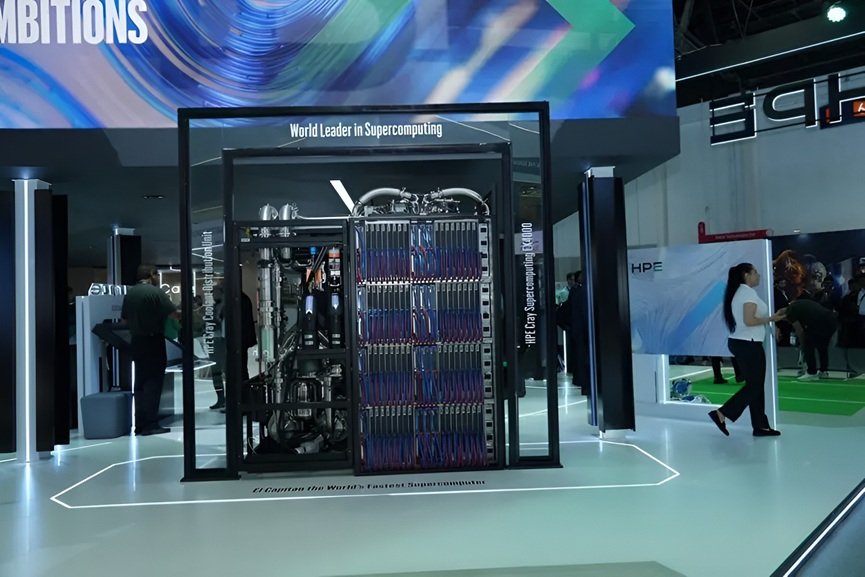
Dubai—Dell Technologies asserts it commands more than 24 per cent of the UAE’s data centre server market, signalling a strong foothold in a region where demand for digital infrastructure is surging. Samer Al Jayyusi, Specialty AI & GenAI Regional Lead for Central & Eastern Europe, Middle East and Africa at Dell, made the disclosure at GITEX Global 2025, emphasising that national institutions have shown growing confidence in […]

Mohammed Bin Rashid Housing Establishment is spotlighting a suite of digital housing solutions at GITEX Global 2025, announcing strategic tie-ups aimed at advancing smart infrastructure and inclusive living. The initiative underscores Dubai’s push to fuse technology with urban development amid intensifying global competition in digital transformation.

MBRHE is presenting new digital services engineered to optimise housing operations, energy efficiency and resident experience. At GITEX, the entity finalised a partnership with Emirates Islamic Bank to develop financing and digital payment tools tailored for homeowners, and earlier inked an agreement with AI Smart to retrofit housing units with assistive technologies for People of Determination. The latter includes deploying smart systems in five identified residences to enhance mobility and independence. These deals complement an existing MoU with Emirates Gas to supply next-generation LPG composite cylinders across MBRHE communities, complete with annual maintenance services.

As part of Dubai’s government ecosystem at GITEX, MBRHE is listed among Gold Partners in the Digital Dubai pavilion, joining over 50 public and private entities promoting the emirate’s City-as-a-Service model. This placement gives MBRHE visibility amid hundreds of technology players from more than 180 countries. The pavilion is intended to demonstrate cross-sector digital synergies across health, energy, mobility and governance spheres.

MBRHE officials emphasise a multipronged strategy. The partnership with Emirates Islamic is geared toward embedding embedded financial tools into housing services. The AI Smart alliance is positioned as a step toward inclusive smart homes. Meanwhile, the collaboration with Emirates Gas addresses energy reliability and safety in residential zones under MBRHE’s purview. In announcing the AI Smart engagement, MBRHE described it as aligning with UAE leadership’s agenda to empower all segments of society, especially People of Determination.

The move follows MBRHE’s earlier commitment with GFS Developments to launch the Smart Housing Forum 2025, a platform to convene global experts on sustainable housing innovation. That partnership, formalised in late September, frames GITEX as a conduit for showcasing outcomes and inviting further collaboration.

Industry analysts say MBRHE’s integration of housing, finance, energy and assistive technology is representative of a wider trend in the Gulf: public agencies are no longer viewing infrastructure in isolation but as an integrated service ecosystem. State-linked housing bodies are increasingly collaborating with fintech, cleantech, proptech and social inclusion tech firms to convert static assets into responsive, data-enabled platforms.

Critics caution that the true test lies in execution, particularly in integrating legacy systems, ensuring cybersecurity across interconnected modules, and managing equitable access across lower-income beneficiary groups. For instance, retrofitting older housing stock with IoT or assistive systems often requires structural upgrades, which carry cost and logistical burdens.

At GITEX, MBRHE is expected to demonstrate live pilot models of smart home systems, energy monitoring dashboards, and resident apps that tie into real estate finance. These demos will act as proof points to entice further private sector engagement and scaling. MBRHE’s role as both regulator and operator gives it leverage but also raises accountability for outcomes.

Emirates NBD is in advanced negotiations to acquire up to a 25 percent stake in Mumbai-based RBL Bank through a preferential allotment of equity and warrants, two people familiar with the matter told Reuters. The proposal would mark a major move by the Dubai-based lender into India’s private banking sector.

The Dubai bank is evaluating the terms of the deal, including pricing and structure, though both parties have yet to confirm the arrangement publicly. One of the sources indicated that the deal may be announced once approvals are in place.

On the Indian equities front, news of the talks propelled RBL’s shares higher: the stock climbed over 3 percent on 14 October, reaching its highest level since January 2024, and became one of the top gainers among private banks. Investor optimism stemmed from expectations that a reputable foreign investor might bolster transparency, governance and capital strength at RBL Bank.

Under Indian banking regulations, strategic foreign investors are generally restricted to a 15 percent stake, although exceptions have been made in high-profile cases. The Reserve Bank of India earlier permitted Sumitomo Mitsui Banking Corporation to hold 20 percent in Yes Bank, setting a precedent for flexibility in exceptional circumstances. Simultaneously, India is exploring adjustments to foreign ownership rules to enhance capital inflows into its banking sector.

Emirates NBD already holds regulatory approval in principle to convert its branches in India into a wholly owned subsidiary, positioning itself to operate on par with domestic Indian banks. That architecture would facilitate compliance with local regulations and provide greater autonomy to its Indian operations.

RBL Bank maintains a dispersed shareholding structure, with retail investors, mutual funds and small institutional holders driving most of its capital. It has no traditional promoter group. In June 2024, the bank had announced plans to raise ₹65 billion through a mix of institutional share issuance and debt instruments to support growth plans.

Previous media reports spanning earlier in 2025 suggested Emirates NBD’s interest in acquiring a minority stake in RBL, via a preferential allotment route, as part of its Asian expansion push. Those earlier discussions laid the groundwork for the current advanced negotiations.

The deal—if consummated—would align with Emirates NBD’s broader strategy of deepening its footprint in India, a market it already serves through branches in Mumbai, Chennai and Gurugram, and via its approved subsidiary structure. The bank has posted robust growth: in the first quarter of 2025, it exceeded profit expectations, buoyed by strong loan expansion and net interest income.

Still, multiple hurdles remain. Key among them are regulatory approvals from the RBI and possibly the finance ministry, clearances from capital markets regulators, and acceptance by RBL Bank’s board. Moreover, the valuation will be closely scrutinised, since acquiring a wedge of 25 percent may require pricing the equity at a premium to prevailing market values.

On the regulator’s side, officials have been deliberating over changes to banking ownership norms to attract foreign capital, particularly in systems where capital demand is rising rapidly. Some observers view case-by-case relaxation of limits as a likely path forward.

Institutional analysts have viewed Emirates NBD’s possible entry as a positive for RBL. One equity research note from ICICI Direct argued that the presence of a well-capitalised global investor could strengthen governance practices and investor confidence.

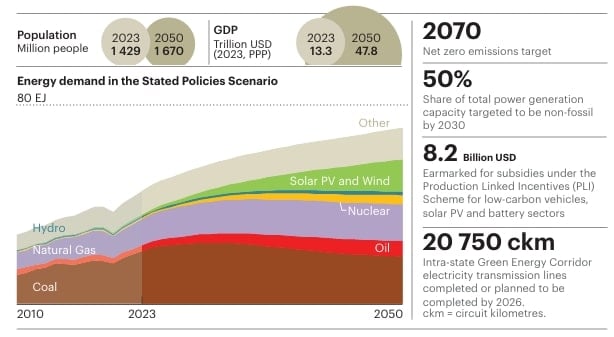
By Nantoo Banerjee There is little to be excited about the recent inauguration of predominantly mountainous Arunachal Pradesh’s first commercial coal mine at Namchik-Namphuk in the Changlang district jointly by Union Coal & Mines Minister G Kishan Reddy and Arunachal Chief Minister Pema Khandu, marking the state’s first coal mine project. With an officially estimated […]

The article India Must Cut Down Coal Consumption appeared first on Latest India news, analysis and reports on Newspack by India Press Agency).

Investcorp Capital, listed on the Abu Dhabi Securities Exchange, has pledged to commit $750 million to the Investcorp Golden Horizon platform, a strategic growth-stage vehicle that supports pre-IPO companies across the Gulf Cooperation Council and China. Golden Horizon was launched by Investcorp in conjunction with China Investment Corporation and is anchored by CIC as the lead institutional investor. The platform is structured to channel capital into high-growth […]

Dubai Healthcare City Authority has unveiled a Dhs1.3 billion development programme for Phase 1 of Dubai Healthcare City, marking an aggressive expansion that aims to elevate its global standing in health infrastructure. Construction is set to start in December, with a targeted completion window by November 2027.

At the heart of the initiative lies a triple-pronged buildout: a LEED Platinum-certified office block, a purpose-built medical complex, and supporting infrastructure—each tailored to attract health-related investors and operators. The office building, designed by P&T Architects & Engineers, spans some 13,000 sqm across nine levels and includes flexible workspaces and ground-floor retail zones. The medical complex, by Design & Architecture Bureau, covers 5,800 sqm, with two basements and five floors, and is planned to accommodate surgical units, diagnostics, outpatient services and lab facilities.

Beyond buildings, the infrastructure scope includes multi-storey parking with electric vehicle charging points, integration with Salik for smart parking, and accessibility enhancements. The aim is to strengthen the underlying ecosystem so that the healthcare precinct becomes not just a cluster of clinics, but a fully serviced global health hub.

Issam Galadari, DHCA’s CEO, asserted that these projects reflect the authority’s ambition to combine sustainability, global investment appeal and design excellence, aligned with Dubai’s Economic Agenda and the UAE’s Net Zero Strategy 2050. Allae Almanini, COO, added that the works will “boost confidence for healthcare providers and investors” by improving efficiency, accessibility and sustainability across the community.

Phase 1 of DHCC, located in Oud Metha, currently operates within a 4.1 million sq ft footprint dedicated to medical services and education. Phase 2, by contrast, spans around 19 million sq ft at Al Jaddaf, and is oriented more toward wellness and mixed support services.

This new investment signals a sharpened focus on physical infrastructure as a differentiator. In recent years, DHCC has emphasised partnerships and innovation: its free-zone model already supports over 400 licensing entities and more than 168 clinical facilities. Earlier this year, DHCA collaborated with AI Quantum Intelligence Institute to launch an AI healthcare innovation lab in the free zone, and formed an agreement with AirMed International to deepen medical transport capabilities.

Analysts see the move as a bid to compete not only regionally, but globally. Healthcare infrastructure, especially when linked with sustainability credentials such as LEED Platinum certification, is increasingly a factor in investors’ decisions. The new build will position DHCC among the few healthcare zones worldwide that combine clinical, administrative and research capacity within one contiguous ecosystem.

However, the scale and timeline carry risks. Dubai’s construction sector is already navigating supply-chain pressures, labour constraints, and rising material costs. Ensuring timely delivery and quality control in a high-performance project will demand rigorous project management. Meanwhile, the authority must ensure that demand from healthcare operators, both local and international, matches the expanded real estate supply, lest vacancy rates rise.

More immediately, the December commencement date — just weeks away — will test DHCA’s readiness in securing contractors, tendering work packages and coordinating certifications. Delays in permitting or approvals could cascade into missed target windows. Yet, if executed successfully, the project will enable DHCC to present itself as an integrated health campus offering offices, clinical space, and support services under one sustainable umbrella.

Observers note that medical tourism in Dubai already commands significant weight, drawing patients from the GCC, the broader Arab world, Europe, and Asia. DHCA’s bet is that infrastructure sophistication will amplify that pull, especially for high-end specialty and precision medicine segments.

Tether CEO Paolo Ardoino has asserted that only Bitcoin, gold and land will endure as reliable monetary instruments as fiat systems unravel. He framed those three assets as hedges against systemic collapse and said they will outlast any rival currency, reflecting Tether’s ongoing pivot from pure stablecoin backstop to diversified asset allocator.

Speaking during appearances at Bitcoin 2025 and in media interviews, Ardoino has emphasised that Tether will continue to channel a portion of its profits into Bitcoin accumulation and expand gold exposure. He described gold not merely as a relic but as a “natural Bitcoin” and strategic complement to digital reserves. Ardoino also dismissed claims that Tether was liquidating Bitcoin to fund gold purchases, suggesting any shifts in allocation are incremental and disciplined.

Tether’s balance sheet already demonstrates the alignment between rhetoric and action. As of mid-2025, it held around US$8.93 billion in Bitcoin and US$8.72 billion in precious metals, alongside the core swathe of U. S. Treasury allocations. Ardoino has disclosed that gold assets reside in a Swiss vault, underlining both security and the company’s intent to position gold holdings more prominently. His remarks come amid reports that Tether has held discussions with gold mining and royalty firms as part of a broader commodity strategy.

The company’s asset diversification bid is playing out amid intensifying regulatory clarity. With the U. S. Senate having passed the GENIUS Act—legislation meant to regulate stablecoins—Ardoino is charting Tether’s path to compliance while preserving its global reach. He has portrayed the bill as presenting “high but fair” standards for reserve disclosure and anti-money laundering. While it is branded as beneficial to onshore issuers like Circle, Ardoino contends Tether’s offshore structure can adapt via comparable systems or U. S.-based subsidiaries.

Tether is not simply a passive holder of assets. Ardoino has also announced the company’s ambition to become one of the world’s largest Bitcoin miners by year-end, arguing that supporting network security reinforces the value of its reserve holdings. He claimed that while direct Bitcoin investment can outpace mining returns in many scenarios, mining offers strategic hedging benefits. Tether is preparing to open-source its Bitcoin Mining Operating System to enable broader participation in the network, potentially lowering barriers to entry for smaller mining operators.

The Philippines has accused a Chinese coast guard ship of deliberately ramming and deploying a water cannon on a Philippine government vessel near Thitu Island in the disputed Spratly archipelago, causing minor damage but no injuries, according to Manila’s coast guard.

Manila says three Philippine government vessels were anchored off Thitu to support local fishermen when Chinese ships approached and fired water cannon. One Chinese coast guard ship is alleged to have rammed the stern of the Philippine vessel BRP Datu Pagbuaya after using the water cannon. China, however, claims the Philippine vessels “illegally entered” waters near Sandy Cay and caused the collision by dangerous manoeuvres.

Beijing condemned Manila’s accusations as a distortion of facts, stating that the Philippine boats ignored repeated stern warnings and violated Chinese territorial waters. According to the Chinese coast guard, the Philippines bore responsibility for the collision.

The U. S. embassy in Manila weighed in, denouncing China’s actions as “dangerous ramming” and stressing support for the Philippines in upholding maritime rights under international law. Philippine officials vowed to press diplomatic action while continuing patrols to protect Filipino fishermen’s access in the area.

Experts tracking the South China Sea dispute see this episode as part of an intensification of maritime confrontations. Overlapping claims by China, the Philippines, Vietnam, Malaysia, Brunei and Taiwan have long made the region volatile, especially around fishing zones and strategic shipping routes.

In August, a high-speed pursuit near Scarborough Shoal resulted in a China Coast Guard cutter and a Chinese naval vessel colliding while chasing a Philippine patrol. That incident injured none but raised alarm over the risks of escalation.

Manila’s strategy has increasingly leaned on international legal norms, especially the 2016 ruling by a Hague tribunal that rejected China’s sweeping maritime claims under the “nine-dash line.” Beijing refuses to accept that decision and has steadily expanded coast guard deployments, artificial island construction, and maritime militia activity.

Analysts suggest that China’s recent operations indicate a shift towards more assertive enforcement in its claimed seas. Pressure tactics such as water cannon use, ramming, and vessel interdiction are becoming more frequent in contested zones. Philippine officials contend such tactics intimidate local fishing communities and undermine sovereign rights over their exclusive economic zone.

Diplomatic watchers note that the timing of these clashes often aligns with Chinese domestic political or military posturing, especially as Beijing seeks to reinforce its claims ahead of international scrutiny. For its part, the Philippines has stronger backing from Washington, and its defence and coast guard are gradually upgrading capabilities and interoperability with allies.

Washington pressed Beijing to adopt a more conciliatory stance in an intensifying trade dispute over rare earths, as Vice President JD Vance asserted that President Donald Trump holds superior leverage in any escalating confrontation. Speaking on Fox News’s Sunday Morning Futures, Vance warned that China’s reaction will largely decide whether the standoff becomes a full-blown trade war or returns to negotiation. China responded with defiance. Its Ministry […]

Cryptocurrency markets endured a historic collapse as leveraged positions were liquidated en masse – over 1.6 million traders wiped out $19.13 billion in bets within 24 hours, data from Coinglass shows.

The crash accelerated sharply after U. S. President Donald Trump announced an additional 100 per cent tariff on Chinese imports and threatened export controls on critical software, heightening fears of a full-blown trade war. Bitcoin plunged more than 12 per cent from its recent highs, briefly sliding below $102,000 before rebounding above $113,000.

Before the sell-off, Bitcoin had breached a new all-time peak above $125,000, buoyed by institutional inflows into crypto exchange-traded funds. Governments and institutional investors had viewed digital assets as a hedge amid macroeconomic uncertainty.

Today’s market rout, however, exposed the fragility of overleveraged positions in a thinly capitalised market. In a single hour on Friday, more than $7 billion of liquidations occurred. The top losses were seen among long positions, particularly in Bitcoin and Ethereum derivatives, which accounted for a substantial share of the forced unwinds.

Institutional players and high-net-worth traders were swept up in the cascade. Market watchers noted that order books lacked the depth to absorb such a severe shock, triggering knock-on effects through futures and perpetual swap markets.

Beyond crypto, equity indices faltered under the weight of renewed global risk aversion. The S&P 500 dropped 2.7 percent, while tech stocks, sensitive to trade tensions, bore steep losses.

Some analysts likened the event to a “black swan” moment for crypto markets — a sudden shock revealing systemic vulnerabilities in a still nascent asset class. Traders operating with high leverage, little hedging, and aggressive margin policies found themselves particularly exposed.

Efforts to assess contagion effects to traditional finance are underway. Banks offering crypto derivatives and prime brokers are now scrutinising counterparty risks. Regulators in several jurisdictions may use today’s crash to justify stricter margin and leverage rules for crypto trading.

Reviewing policy implications, the tariff escalation marks a sharp pivot in U. S.–China trade strategy. Trump framed the measures as retaliation for China’s export curbs on rare earth metals, which are critical for tech manufacturing. The move signals willingness to escalate economic confrontation, with markets already pricing in broader disruption to global supply chains.

Despite the volatility, some investors are still betting on long-term resilience of digital assets. The week before the crash saw a record $5.95 billion flow into global crypto ETFs, led by U. S. allocations, suggesting that capital rotation into crypto remains strong over medium timeframes.

Liquidity providers and market makers face fresh trials. Some have temporarily withdrawn from funding markets or widened spreads to mitigate risk exposure. In highly volatile hours, arbitrage desks and algorithmic liquidity engines contributed to exaggerated price swings.

Wider sentiment has turned cautious: on-chain analytics show a rise in stablecoin inflows to exchanges, possibly reflecting flight from risk. Options markets registered growing demand for deep out-of-the-money puts, as traders brace for further downside.

Abu Dhabi — EDGE entity FADA has completed a week-long “Space Roadshow” across six Emirati educational institutions, aiming to galvanise youth interest in space sciences and strengthen the UAE’s space ecosystem. The roadshow, conducted in collaboration with the UAE Space Agency and Space42, carried the theme “Living in Space” and comprised workshops, interactive sessions, and networking opportunities touching on Earth observation, satellite communications, CubeSat technologies and astronaut […]

Saudia’s inaugural direct passenger flight from Riyadh to Moscow landed on Friday at Sheremetyevo airport, signalling a new chapter in Saudi–Russian air connectivity. The airline plans to operate three weekly round-trip services, integrating tourism, business and diplomatic traffic between the two capitals.

The launch positions Saudia alongside Flynas, which commenced direct operations between Riyadh and Moscow’s Vnukovo airport in August with three weekly flights. Flynas is also slated to begin a Jeddah–Moscow route come December. The twin developments reflect a concerted push by both states to deepen bilateral ties through aviation links.

The Riyadh–Moscow air bridge is underpinned by the Saudi Tourism Authority and the Air Connectivity Program, designed to promote cross-border mobility and support Saudi Vision 2030. Saudia officials say ticketing and scheduling are aligned to accommodate business travellers, diplomats and leisure tourists. The route’s launch was celebrated in both capitals, where it was honoured with a water cannon salute at Sheremetyevo and a gala in Moscow attended by diplomatic representatives and aviation executives.

Russia has experienced a surge in travellers from Saudi Arabia. In 2024, over 52,400 Saudis visited Russia, a leap from just 9,300 the previous year, following Moscow’s August 2023 e-visa reform that enabled Saudis easier access. Likewise, Russian visitors to the Kingdom have grown steadily, aided by anticipatory visa liberalisation and reciprocal travel facilitation efforts.

Russian Foreign Minister Sergey Lavrov, during talks with his Saudi counterpart, described the launch as an enabler of “tourist exchanges and business contacts,” citing that growing demand warranted direct air links. On the ground, Sheremetyevo’s scheduling system already lists flights to Riyadh beginning mid-October, operating up to five times weekly.

The timing dovetails with a broader recalibration in Saudi foreign policy and energy diplomacy. The personal rapport between Crown Prince Mohammed bin Salman and President Vladimir Putin has been instrumental in facilitating cooperation within the OPEC+ framework. Cooperation in trade, energy and security has steadily flourished in recent years, and aviation ties now offer a tangible bridge between economies.

Saudia’s fleet expansion and network strategy underscore that the Moscow link is more than symbolic. The airline now serves over 100 destinations across four continents, with plans to expand to 145 destinations by 2030. Performance figures underscore ambition: in the first half of 2025, Saudia carried 17.5 million passengers and operated 100,000 flights.

The route is expected to spur ancillary sectors. Saudi tour operators are preparing Russia-focused packages including Moscow, St Petersburg, and beyond, while Russian travel agencies are packaging Saudi cities and pilgrimage circuits. Pilgrim traffic is especially significant: the Moscow launch could funnel more Russian pilgrims directly to Mecca or Medina via Riyadh.

VISHNU RAJA
RYO YAMADA
HITORI GOTOH
IKUYO KITA