Just in:
Cloudflare unveils Zero Wire vulnerability intelligence service // After Reaching 7 Million Users in the Philippines, Skyro Launches Transparent Cash Loans in Malaysia // Dubai boat show confirms international shipyard line-up for November // Democrats capture Senate majority with seven Republican seats // Fast Just Got Fastest: STING Energy Boost™ Celebrates Kimi Antonelli’s Formula 1® World Championship and the Fan Energy Behind It // Asia Left Behind: Ten international companies have yet to report delivering on their cage-free egg pledges across the region // Pinarayi faults UDF over mounting road crashes // xCube Access Welcomes Entrust Capital Limited  Expanding Access to Professional Portfolio Management // AI trust gap reveals distinct retail priorities: Divergent paths to consumer growth in Hong Kong and the GBA // Arrow Electronics showcases technologies advancing intelligent robotics, mobility and digital infrastructure // As AI Reshapes Education, Singapore Convenes Global Dialogue on the Future of Early Childhood Education // ADIA and partners establish $1.4 billion aviation venture // Meraas showcases five residential zones at Dubai Design Week // OpenAI identifies 948 Linux privilege escalation flaws using AI // U.S. Mid Term Result Is A Clear Verdict Against Trump’s Authoritarianism // Hong Kong mandates crypto transaction disclosures to tax authorities // Cyberport Venture & Capital Forum 2026 Grand Opening // SC to examine students’ exam plea today // APT29-linked campaign exploits outdated Apple and Android software // Vance attributes Republican midterm defeats to Iran conflict //

News related to
Strategy

By Manish Rai In his maiden speech in the United Nations General Assembly, Syria’s interim president, Ahmed al-Sharaa, called for lifting of international sanctions on Syria, becoming the first head of state from Syria to address the gathering in nearly 60 years. This signifies the first appearance of a Syrian president since Nureddin al-Atassi took office in 1967. Syrian President Sharra engaged in a series of bilateral […]

Abu Dhabi’s economy expanded 3.8 percent in the second quarter of 2025, with non-oil activity growing by 6.6 percent and, for the first time in a second quarter, making up 56.8 percent of total GDP, according to figures released by the Statistics Centre – Abu Dhabi. The emirate’s real gross domestic product reached AED 306.3 billion in Q2, rising from the corresponding period in 2024. The non-oil […]

Aluminium Products Company of Saudi Arabia and Hong Kong–based Asia Aluminum Group have inked a master framework agreement to build the largest integrated downstream aluminium industrial complex in the Kingdom, with planned investment reaching up to USD 500 million. The initiative centres on three joint ventures covering aluminium extrusion, modular housing, and solar panel frame manufacturing. The agreement was signed in Hong Kong by ALUPCO Chief Executive […]

World Liberty Financial, the crypto venture tied to Donald Trump’s family, has announced it will issue a debit card enabling users to spend digital assets as conventional currency, with a pilot slated next quarter and full deployment targeted by late 2025 or early 2026.

At Singapore’s TOKEN2049 conference, CEO Zach Witkoff stated that the underlying aim is to “bridge crypto assets with everyday spending,” forecasting that the card could go live in the fourth quarter or first quarter of 2026. Co-founder Donald Trump Jr. joined the presentation, underscoring the project’s ambition to integrate cryptocurrency more deeply into consumer payments.

Beyond payments, World Liberty is advancing a plan to tokenise real-world commodities, aiming to use blockchain infrastructure to trade assets like oil, gas, timber and cotton. Witkoff described these as “really interesting” domains for on-chain trading, pointing to what the company sees as excess transactional inefficiency in traditional markets. The firm also launched its governance token, WLFI, earlier this month, and has introduced USD1, a dollar-pegged stablecoin backed by U. S. Treasuries and other cash equivalents to cut dependency on conventional banking rails.

World Liberty has secured a high-profile institutional backer: the UAE-based Aqua 1 Foundation invested USD 100 million in WLFI tokens, becoming the venture’s largest public investor. The strategic pact aims to fuel World Liberty’s expansion in South America, Europe and Asia, and to jointly incubate blockchain initiatives.

The governance token WLFI currently is non-transferable, granting holders voting rights rather than direct tradeability; World Liberty has said it is “working behind the scenes” to make WLFI transferable in the future. A large portion of WLFI’s supply remains held by the Trump family and affiliated entities.

The stablecoin USD1 gained traction after a major crypto exchange deal: World Liberty was among the early adopters when the funds backed by an Abu Dhabi entity were routed through USD1 to a major crypto platform, helping to elevate USD1’s market position in the stablecoin ecosystem.

Regulatory and ethical concerns already shadow the venture. Critics argue the project blurs lines between private enterprise and public office, noting that much of the Trump family’s wealth could become entangled with policy outcomes. Donald Trump Jr. has dismissed conflict-of-interest allegations as “complete nonsense,” but scrutiny over the convergence of politics and crypto is intensifying.

WLFI has exhibited wide volatility since launch, riding speculative momentum across global exchanges. Meanwhile, competing crypto card offerings already exist, with established fintechs and digital-asset platforms offering crypto-linked cards in partnership with Visa and Mastercard. Witkoff contends World Liberty’s version will differentiate through tighter integration with its stablecoin and tokenisation strategy.

Global investment firm KKR has acquired a minority stake in ADNOC Gas Pipeline Assets LLC, reinforcing its commitment to Middle East energy infrastructure. ADNOC retains full operational control and ownership of the pipelines. KKR’s move builds on longstanding ties with Abu Dhabi’s national energy group. In 2019, KKR and BlackRock acquired a portion of ADNOC’s oil pipeline business in a landmark deal; that investment was later sold […]

Tesla has launched sales of its Cybertruck in Qatar, bolstering its Middle East expansion as the electric carmaker seeks growth beyond saturated U. S. and Chinese markets. The announcement was made via its social media channel on 3 October, following its earlier push into Saudi Arabia this year.

Underlining its Gulf ambitions, Tesla has already made the Cybertruck available in Saudi Arabia and the United Arab Emirates, and now Qatar joins as one of the first markets outside North America to offer the pickup. The company plans to support local sales with online ordering, pop-up showrooms, Supercharger stations, and service centres.

Tesla does not provide regional breakdowns for Cybertruck deliveries, but a U. S. recall filing notes that 46,096 units had been built between November 2023 and early 2025. Analysts say the Qatar move is timely, given Tesla faces weakening demand and intensifying rivalry in its core markets.

Qatar, meanwhile, has signalled ambition in building an EV framework. The country is working toward installing 1,000 public charging stations by 2025 and targeting 4,000 by 2035. A partnership between Tesla, the utility Kahramaa, and real estate projects like Doha Festival City aims to deploy Superchargers capable of delivering 250 kW charging, enabling about 200 miles of range in 15 minutes.

Tesla’s introduction in Qatar is part of a broader Gulf strategy that seeks to replicate its Saudi model—offering multiple variants of the Cybertruck tailored to regional conditions. For example, orders in Saudi Arabia include both All-Wheel Drive and Cyberbeast trims, with the Saudi AWD variant priced starting at around 434,990 Saudi Riyal.

However, Tesla is also reshaping its product line due to weak uptake. It has dropped the standalone rear-wheel-drive Cybertruck variant from its U. S. configurator, leaving only two higher-end models in the lineup. This shift signals that Tesla is consolidating its offerings to better match market demand.

Competition in the Gulf is mounting. Chinese manufacturers BYD and Zeekr are pushing aggressively into the region, and the U. S. EV maker Lucid—backed by Saudi Arabia’s sovereign wealth fund—poses a formidable local rival.

Tesla’s Q3 performance provided a temporary boost: the company reported record global deliveries, partly driven by a rush before the U. S. EV tax credit expired on 30 September. Yet analysts anticipate a steep drop in Q4 sales given the expiration of that incentive.

Tesla’s entry into Qatar underscores its strategic pivot toward markets where expansion potential remains, even as challenges loom in technology adaptation, climate conditions, and consumer uptake.

Saudi Arabia confronts mounting fiscal headwinds as oil revenues falter and large-scale investments under its Vision 2030 agenda intensify strain on the state’s budget, a fresh analysis by Fitch Ratings warns. Fiscal consolidation efforts are threatened by rising expenditures, volatile energy markets and valuation setbacks to flagship development projects.

Fitch anticipates the kingdom will record a fiscal deficit equivalent to 5.3 percent of GDP in 2025—more than double earlier forecasts of 2.3 percent—and projects a narrowing to 3.3 percent in 2026. That trajectory, the ratings agency argues, rests on fragile assumptions about revenue rebound and disciplined spending cuts. The downgrade in oil income, combined with persistent capital outlays, introduces high risk to Saudi’s consolidation plans.

The Public Investment Fund, corner-stone of Vision 2030, channels vast investment into infrastructure, technology, tourism and real estate. But it has also borne losses: in 2024, the PIF recognised an $8 billion writedown of its “gigaprojects,” including NEOM, reflecting cost overruns and market volatility. That impairment eroded some of the cushion these high-profile ventures were meant to provide.

Fitch treats PIF as a government-related entity, equating its credit profile with that of the sovereign given its central role in state economic strategy and the expectation of ongoing state support. However, Fitch cautions that heavy spending commitments in the pre-budget statement expose weaknesses in the consolidation path. The agency notes that worsening oil market dynamics and delays in translating megaprojects into stable returns heighten exposure.

Saudi Arabia’s finance ministry projects 2026 revenues of 1.14 trillion riyals against expenditures of 1.31 trillion, signalling an ambition to shrink deficit to 3.3 percent. The government anticipates revenue growth of 5.1 percent and spending reductions of 1.7 percent relative to 2025 projections. But achieving that will depend heavily on improved non-oil income and restrained capital outlays.

Crude price downturns have compounded pressure. With oil income constituting roughly 60 percent of Saudi’s state revenue, any softness in the energy market imposes acute stress. Analysts say the kingdom is caught in a bind: it must maintain investment momentum to stay on track with Vision 2030, yet it must also restrain spending lest debt and deficits spiral.

Investors and economists point to NEOM as a test case. Massive in scale and ambition, NEOM has come under scrutiny following the substantial writedown. Critics suggest that the project’s capacity to generate returns fast enough to justify its cost is increasingly in question. That, in turn, weakens one of the main pillars of the kingdom’s diversification rationale.

To mitigate risks, Saudi authorities are leaning on non-oil revenue sources, including taxes, fees and state levies, which remain robust. Public consumption and private sector growth also play supportive roles. But these revenue streams may not suffice to offset deep slippage in oil proceeds.

Advertisements

Stock market information for Bitcoin
Bitcoin is a crypto in the CRYPTO market.
The price is 122782.0 USD currently with a change of 1997.00 USD from the previous close.
The intraday high is 123928.0 USD and the intraday low is 119360.0 USD.

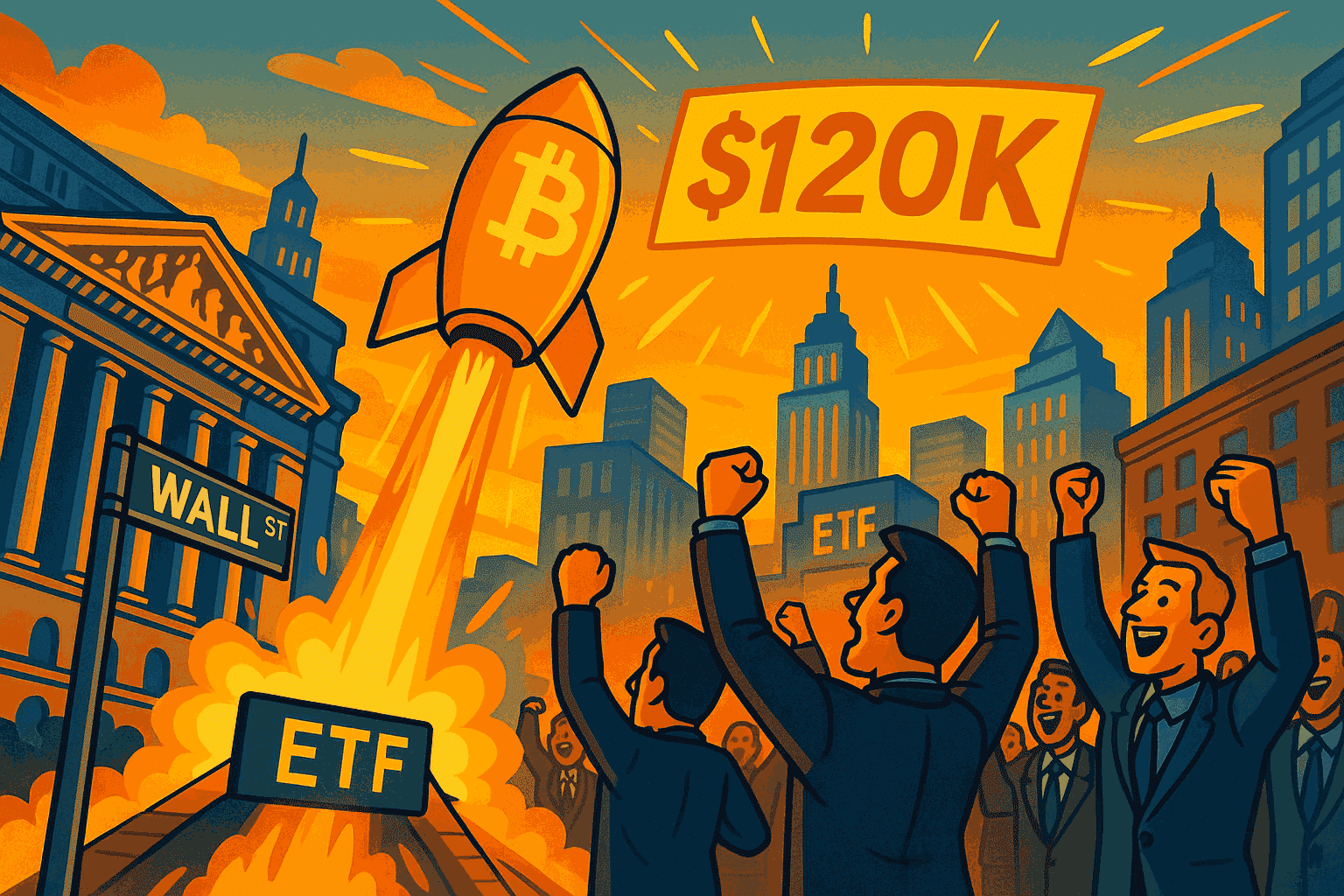
Bitcoin cleared the $120,000 mark on Friday, marking its strongest move in months as inflows into U. S. spot Bitcoin exchange-traded funds and fears of U. S. political gridlock spurred investor appetite.

The sharp rally saw Bitcoin rise toward levels not seen since August, with price action driven by mounting demand from institutional channels and growing speculative interest in its safe-haven appeal. Observers link the surge to accelerating purchases via ETFs, as well as elevated yields on derivative positions betting on further strength.

Citigroup this week trimmed its year-end Bitcoin forecast to $133,000, citing headwinds from a strengthening U. S. dollar and weak gold prices, while lifting expectations for Ethereum to $4,500 on the back of increasing inflows. The contrasting moves reflect a recalibration of expectations amid shifting capital flows in crypto markets.

Analysts tracking ETF inflows suggest that institutional adoption remains the catalyst for upward momentum. Bitwise reiterated a $200,000 target for Bitcoin in 2025, emphasising sustained demand from endowments, corporates, and sovereign treasuries. Meanwhile, Coindesk’s mid-year forecast placed a $150,000–$160,000 range as a probable zone should monetary policy ease.

Technical indicators show the path is not without resistance. Price models project a critical threshold at $117,000–$120,500: surpassing it decisively would confirm a bullish breakout, while failure to hold could trigger pullbacks toward $110,000 or lower support zones. Analysts caution that leveraged long positions may be vulnerable to liquidation should sentiment cool.

On-chain data shows accumulation by so-called “whales” has intensified over recent weeks, reinforcing the theory that major players are driving the advance. Machine-learning forecasting studies underscore that low, high, and opening price series remain the most informative variables for trend prediction, though the authors note models still struggle with sudden macro shocks.

MicroStrategy, a prominent corporate Bitcoin holder, has slowed its acquisitions. Its latest SEC filing disclosed a modest $22 million purchase, significantly down from earlier, more aggressive buys. That shift reflects a degree of caution in managing dilution risk and capital allocation.

Around the political landscape, speculation over a potential U. S. government shutdown elevated demand for non-traditional assets, while weak private sector job data has stoked hopes of a future rate cut by the U. S. central bank. Market participants are watching whether rate expectations shift further in favour of growth-assets like Bitcoin.

Valetax, a leading global provider of trading services, is proud to announce its participation as an Elite Sponsor at Forex Expo Dubai 2025, one of the world’s most prestigious financial events. The expo will take place on 6–7 October 2025 at the Dubai World Trade Centre, drawing traders, partners, and industry experts from across the globe. As an Elite Sponsor, Valetax is set to make a remarkable […]

Perplexity has opened access to its AI-powered Comet browser for all users, eliminating its previous paywall and casting the browser as a direct challenger to Google Chrome’s dominance. Comet integrates Perplexity’s AI search engine with a built-in assistant designed to automate user tasks and summarise content across browsing sessions. The company emphasises that the browser is now free indefinitely, with a paid “Comet Plus” tier offering premium […]

Samsung is deepening its collaboration with Coinbase to integrate cryptocurrency services directly into its Wallet app. Users with Galaxy devices in the U. S. will now be able to make crypto purchases using Samsung Pay, and enjoy enhanced access to Coinbase’s premium offerings.

Wallet users will gain special access to a three-month subscription to Coinbase One, and early users may receive a $25 credit after placing their first trade. The alliance bridges Samsung’s digital wallet ecosystem with Coinbase’s crypto infrastructure to simplify onboarding for mainstream consumers.

The rollout begins with U. S. Galaxy customers, where Samsung says more than 75 million device owners could benefit. Samsung executives have signalled plans to extend the integration to other markets globally.

This isn’t the first foray for the two companies. The integration was first announced in July, enabling Samsung Pay within the Coinbase app, allowing users to fund crypto purchases without leaving the app or switching payment methods.

Under the new details, Samsung Wallet becomes a conduit not just for payments and identity, but also crypto trading, staking, and portfolio oversight. The partnership emphasises security, leveraging Samsung’s Knox platform and tokenisation to protect user assets and data.

Shan Aggarwal, Coinbase’s Chief Business Officer, said the tie-up aligns with the firm’s mission to bring “more than a billion people on chain” by meeting them on devices they already use. Drew Blackard, Senior Vice President at Samsung, noted that Galaxy users already rely on their phones for payments, identity verification and digital storage—and crypto access is a natural extension.

The push is part of Coinbase’s broader strategy of embedding crypto capabilities across consumer channels. In August, the company disclosed $1.5 billion in Q2 revenue and underscored its ambition to become what it calls “the everything exchange” — a unified gateway to trading, payments, and on-chain finance.

In parallel, Coinbase has struck partnerships with financial institutions. Notably, it is collaborating with JPMorgan Chase to let customers link their bank accounts to Coinbase wallets, enabling crypto trading and the conversion of credit card points into digital assets.

Industry observers view the Samsung integration as one of the most ambitious consumer-level crypto distribution moves to date. By embedding exchange functionality directly into a widely used mobile wallet, Coinbase and Samsung seek to lower structural barriers that often frustrate new crypto users.

That said, challenges remain. The U. S. regulatory environment around crypto remains volatile, with the SEC and other agencies scrutinising exchanges, token listings, and taxation. Skeptics warn that bundling crypto into everyday apps could expose users to market risk without full awareness.

Meanwhile, the phased rollout in the U. S. and Canada will test adoption rates, user behaviour, cross-border compliance, and competition from rival wallets like Apple Pay or Google Wallet, some of which may pursue their own crypto plans.

By Sushil Kutty There’s this theory going around that the Congress, wherever it has fought elections in recent years, from Haryana to Maharashtra, and now Bihar in the offing, it fought with its INDIA bloc allies more than with the BJP, the party to beat if the INDIA Bloc has to oust Prime Minister Narendra […]

The article Congress Should Go The Whole Hog With Its Ally RJD In Coming Bihar Polls appeared first on Latest India news, analysis and reports on Newspack by India Press Agency).

Markets across the crypto derivatives space are on edge as Bitcoin and Ethereum options worth approximately $4.33 billion enter settlement today, setting the stage for heightened volatility in the near term.

On the Deribit platform, Bitcoin dominates the expiries, with about $3.5 billion notional value scheduled for settlement in roughly 30,200 contracts. Its put-to-call ratio stands at 1.23, suggesting more downside protection bets than bullish wagers. The so-called “max pain” level — the strike price at which the greatest number of contracts expire worthless — is pegged at $114,000, close to current trading levels and potentially acting as a magnet for price movement.

Ethereum’s portion comprises about $806.75 million, across 177,398 contracts, with a put-to-call ratio near 0.99, indicating a more balanced bias among traders. Its max pain is estimated at $4,500, just beneath recent market trading ranges.

Derivatives analysts caution that expiries of this size tend to exert short-term pressure on price behaviour, particularly as market makers and institutional actors roll, hedge or unwind positions ahead of settlement. In many past cycles, price action has gravitated toward max pain levels in the hours leading up to expiry.

Volatility expectations are reinforced by elevated implied volatility in both Bitcoin and Ethereum options markets. Some trading desks point to a compression of liquidity around strike clusters and warn that even modest directional flows may trigger outsized price swings.

Some market strategists argue that Bitcoin’s bearish tilt reflects growing hedging demand after price consolidation above major resistance zones. Meanwhile, Ethereum’s near-neutral PCR hints at structural hedging and profit-taking rather than outright directional bets.

Macro factors could amplify sensitivity. With markets digesting central bank policy signals, inflation indicators and equity market drift, crypto derivatives flows may act as a conduit for correlation shocks. That makes expiry day risk not purely technical but potentially reactive to broader sentiment shifts.

Earlier this month, a near-identical expiry event saw $4.3 billion in options settle, with BTC positioning yielding shortterm downside pressure and ETH holding more firmly near its pricing bands. That expiry foreshadowed a larger $18 billion BTC options expiry scheduled for 26 September, intensifying speculation on whether today’s event will prime momentum.

Market watchers are watching order-book depth near the $114,000 and $4,500 levels, as sharp absorption or rejection there may offer clues to directional bias post-expiry. In the absence of sustained trend breaks, much of the post-settlement period could hinge on whether institutions successfully reestablish exposure rather than exit.

Traders are also navigating strategy choices: rolling forward, closing positions, or rebalancing via delta hedges. The interplay of those flows may create forks in volatility—in which the first few hours post-expiry see directionless chop before a stronger move emerges.

The Middle East and North Africa are experiencing a wave of sovereign bond issuance as governments tap global debt markets to meet financing needs, even though oil prices have held in the mid-$60s per barrel and credit spreads remain compressed. Kuwait re-entered the international capital markets after an eight-year hiatus, successfully issuing $11.25 billion in three, five and ten-year bonds at spreads of 0.40 to 0.50 percentage […]

Oil prices are sliding as traders cite mounting unsold Middle Eastern crude and weakening demand from key importers. This shift raises prospects of a global oversupply even as OPEC+ debates its next policy move.

Estimates from trading houses place unsold crude cargoes for November loading in the Middle East between 6 million and 12 million barrels. These volumes represent a departure from usual patterns where discount-seeking buyers quickly absorb surplus cargoes. Market participants point to a combination of subdued Chinese demand and logistical bottlenecks as contributing factors.

Spot premiums on benchmark grades such as Oman, Dubai and Murban have plunged below $2 per barrel, reflecting the discounts sellers are forced to offer to entice buyers. One trading analyst noted that the drop in premiums signals heightened desperation amid a buyer’s market for Middle Eastern crude.

China, a traditional backstop for surplus exports, is showing signs of pulling back. In May, China recorded a crude surplus of 1.4 million barrels per day—indicating that imports significantly outpaced refinery throughput. That accumulated surplus suggests refiners are prioritising inventory building over active processing, perhaps in anticipation of future market volatility.

Iran adds another layer of complexity. Tanker-tracking firms estimate that between 23 million and 33 million barrels of Iranian crude are currently held in floating storage. While Iran’s oil minister has denied any unsold inventory, satellite and maritime data paint a different picture. Analysts say the discrepancy reflects the country’s use of ship-to-ship transfers and “ghost fleet” operations to obscure the origin and movement of crude, especially in shipments headed for China.

These movements coincide with a broader recalibration in OPEC+ strategy. Some member states, notably Iraq, have increased destination-free exports, signalling an intent to saturate markets and regain influence with trading partners. Iraq’s shipment of Basrah Medium crude is projected to rise significantly in the coming month, following a period in which pledged output increases by coalition members have lagged deliveries.

Many analysts believe that OPEC+ will proceed cautiously in its production decisions. A sudden output cut might stoke accusations of market manipulation, while continued supply expansion could exacerbate falling price trends. Ahead of its upcoming meeting, the group faces the dilemma of balancing the need to safeguard revenue against the risk of triggering a price collapse.

Meanwhile, U. S. domestic supply is contributing to uncertainty. The Energy Information Administration reports that U. S. output has strengthened marginally, offset by curtailed imports of Russian crude under tightened sanctions. But some industry observers warn that U. S. production may have peaked. One petroleum engineer pointed to a 12 percent decline in output from October 2024 to June 2025, citing state-level data that may undercut EIA projections.

Oil futures reflect growing anxiety. Brent crude and West Texas Intermediate have posted their steepest weekly drops since June, falling over 8 percent in some benchmarks amid concerns that global inventories will build significantly. Traders increasingly view OPEC’s next move as critical in determining whether markets stabilise or cede ground to excess supply.

In this environment, floating storage becomes a more active tool. The accumulation of oil held offshore is not just a symptom of imbalance but a way to temporally manage supply pressure. Floating oil reserves enable sellers to delay deliveries until market conditions improve—or until buyers return.

Refiners in Asia and Europe are approaching capacity constraints. Some are cutting processing rates or entering maintenance periods, reducing appetite for new crude. Because many surplus cargoes are being offered on destination-free terms, they face competition across regions—and the lack of clear demand is forcing suppliers to lengthen delivery offers or scale back premiums.

If the pricing squeeze deepens, some producers may respond by cutting output unilaterally. Others might seek to promote further cooperation on coordinated supply restraint, though such moves carry reputational risk if markets judge them as manipulative. Meanwhile, importers in developing markets—particularly in Africa and Southeast Asia—could benefit from cheaper crude. But those gains may not offset pressure on oil-producing economies that rely heavily on export revenue to fund budgets and social programmes.


Goldman Sachs and a subsidiary of the Abu Dhabi Investment Authority have entered into a co-investment alongside PAI Partners in Froneri, valuing the ice­cream conglomerate at around €15 billion, including debt. The transaction restructures PAI’s 50 per cent stake in Froneri by rolling it into a new vehicle, with ADIA as a “significant minority” and a Goldman-led continuation vehicle also taking a position.

PAI has formally completed the €3.6 billion equity transaction, creating a fresh ownership arrangement for its Froneri shareholding. The Goldman Sachs Alternatives instruments, deployed via a single-asset continuation vehicle, attracted oversubscription, while the ADIA subsidiary secured its role as co-investor. PAI emphasised the move underscores confidence in Froneri’s trajectory and enables further growth ambitions. The firm also appointed Weil as legal counsel for the transaction.

Froneri, launched in 2016 as a 50:50 joint venture between PAI’s R&R Ice Cream and Nestlé’s European ice cream operations, now reports annual revenues near €5.5 billion and over 12,000 employees across 25 markets. In 2019 it further expanded by acquiring Nestlé’s U. S. ice cream arm—bringing brands such as Häagen-Dazs, Drumstick, and Outshine into its portfolio. That acquisition elevated Froneri’s global presence and sharpened the competition with Unilever’s Ice Cream business, soon to be spun off as Magnum Ice Cream Company.

Nestlé is retaining its circa 50 per cent share in Froneri and has expressed support for this new capital injection and structural reset. PAI, on its part, expects the new format to help it maintain alignment with institutional investors while reaping long-term value from an asset already showing consistent growth.

The ADIA involvement aligns with the sovereign fund’s strategy to diversify into private equity and alternative investments. ADIA was among the most active sovereign wealth funds in the first nine months of 2025, particularly in co-investment deals and private equity events across global markets. Placing capital into a well–established consumer goods platform like Froneri helps balance its portfolio between growth and stability.

Continuation vehicles, such as the one orchestrated by Goldman Sachs in this case, have seen increasing adoption in private equity markets. They allow firms to extend holding periods for assets beyond the life of original funds, while offering liquidity options to existing limited partners. In this Froneri transaction, demand exceeded expectations—signalling investor appetite for high-quality consumer assets.

Space42 has issued its Foresight Constellation Viewpoint, a strategic dossier that underscores how Synthetic Aperture Radar satellite systems, when paired with artificial intelligence, can reshape decision making for governments and industries. The viewpoint emphasises the capacity for persistent imaging, all-weather operation and near-instant analytics — capabilities that are becoming mission-critical in an era of intensifying climate, security and infrastructure challenges.

At the heart of the Viewpoint is GIQ, Space42’s AI engine that converts raw SAR data streams into decision-grade intelligence within minutes. The report argues that the combination of high-resolution persistent coverage and AI transforms Earth observation from static imagery into a dynamic intelligence layer for monitoring, planning and emergency response. Launching Foresight-1 in August 2024 and Foresight-2 in January 2025 has already bolstered the UAE’s Earth observation capability.

Space42 frames its approach as not just a technological upgrade, but a sovereign asset: reliance on third-party satellite data leaves states vulnerable to disruptions, but a domestic SAR-analytics ecosystem offers resilience and control. The global SAR market, currently estimated around $5.8 billion, is forecast to nearly double to $9.8 billion by 2030. According to the Viewpoint, deployment of integrated SAR systems can yield cost savings — for instance, reducing predictive maintenance expenses by up to 30 per cent while improving emergency response by as much as 90 per cent.

The technical backbone of this strategy depends on both the satellite constellation and ground systems. Space42 has entered into a joint venture with ICEYE to localise manufacturing of SAR satellites in the UAE, aiming to strengthen supply chains and transfer expertise. The joint venture builds on prior collaboration: ICEYE’s technology underpins the Foresight satellites, and cooperation is intended to deepen over coming years.

Foresight-2 was successfully deployed via a rideshare launch on 14 January 2025, expanding the constellation’s capabilities and reinforcing its ability to revisit areas multiple times per day. With Foresight-1 and 2 in orbit, the full constellation is expected by 2027. The satellites exploit SAR’s unique ability to image through clouds and in darkness — a significant advantage over optical systems, especially in disaster and high-latency environments.

The Viewpoint also positions its narrative with real-world scenarios. It cites the 2023 Turkey earthquake, in which optical systems were hindered by cloud cover, while SAR satellites continued functioning — enabling assessments of a major dam’s structural integrity in crisis conditions. That example supports the argument that SAR ecosystems must be treated not as supplements but as core infrastructure for resilience and security.

Space42 positions itself as a full-stack player: not merely a satellite operator but a systems integrator combining space services, geospatial analytics and AI. Its dual business units—Space Services and Smart Solutions—serve satellite operations and downstream intelligence markets respectively. Among its touted use cases are border surveillance, maritime monitoring, infrastructure health, mobility and disaster management.

Yet challenges remain. Building sovereign SAR ecosystems demands investment in ground infrastructure, antenna networks, data processing centres and skilled personnel. Market competition is increasing: global players—commercial and governmental—are accelerating developments in miniaturised SAR payloads, hybrid optical/SAR systems and edge AI processing. Moreover, the cost dynamics of deploying dense constellations must be managed against returns from clients in defence, environment and infrastructure sectors.

HANGZHOU, CHINA – Media OutReach Newswire – 3 October 2025 – Geely Riddara launches the RD6 Econ all-electric pickup in Laos and the Philippines, with rollouts to Thailand, Malaysia, and Pakistan—Positioned as an economical, dual-use pickup for commercial and personal needs, the RD6 Econ combines outstanding cost efficiency with optimized energy consumption to offer global markets a more sustainable, value-driven choice. Geely Riddara Launches RD6 Econ All-electric […]

Austria’s armed forces have shifted from Microsoft Office to the open-source LibreOffice platform on approximately 16,000 desktops, a move framed by defence authorities as a step toward digital sovereignty rather than cost cutting. Michael Hillebrand, head of Directorate 6 ICT and Cyber, emphasised that data processing will now remain entirely in-house under strictly auditable systems. He told ORF radio that dependency on external cloud providers was considered […]

Electronic Arts, creator of blockbuster franchises like “Battlefield” and “Madden NFL,” has agreed to be acquired by a consortium led by Saudi Arabia’s Public Investment Fund, private equity firm Silver Lake, and Jared Kushner’s Affinity Partners, in what would be the largest leveraged buyout in history. Under the terms, EA shareholders will receive $210 per share in cash, valuing the company at roughly $55 billion. The transaction […]

Kuwait has issued $11.25 billion in sovereign bonds split across three maturities, marking its first successful US dollar debt sale since 2017 and signalling a renewed re-entry into global capital markets. The offering drew strong investor demand, allowing the country to secure attractive pricing even as it seeks to diversify its funding amid mounting fiscal pressures.

The issuance comprised $3.25 billion in three-year bonds at 40 basis points over US Treasuries, $3 billion in five-year bonds also at 40 bps, and $5 billion in ten-year bonds at 50 bps. Order books reached as high as $28 billion—roughly 2.5 times oversubscribed—enabling Kuwait to tighten guidance from initial levels. Over two-thirds of the allocations went to investors outside the Middle East and North Africa, with significant participation from the United States, Europe, the United Kingdom and Asia.

Acting Finance Minister Subaih Al-Mukhaizeem described the deal as “historic”, citing that it reflects “global markets’ confidence in Kuwait’s financial strength, prudent policies, and solid reserves.” He added that this issuance reinforces Kuwait’s reputation as a credible sovereign issuer while supporting the New Kuwait 2035 vision of economic transformation.

Analysts noted that the spreads achieved in this issuance are significantly tighter than Kuwait’s inaugural dollar bond sale in 2017, underscoring market optimism about its credit metrics and macro outlook. Its low debt burden—currently less than 10 percent of GDP—offers the space for measured borrowing, even while the International Monetary Fund projects that the ratio may rise toward 25 percent by 2030 as deficits widen.

The path to this issuance was opened in March with the passage of a long-delayed public debt law, which raised the borrowing ceiling from KD 10 billion to KD 30 billion and permitted longer maturities. That law had been stalled for years due to clashes between the appointed government and the elected parliament; in response, the emir dissolved parliament for up to four years, clearing the way for reform.

Kuwait is the latest Gulf sovereign to take advantage of favourable global interest rates and strong investor appetite, joining others such as Saudi Arabia, the United Arab Emirates and Bahrain in tapping dollar markets to address fiscal gaps and finance diversification programmes.

While the bond sale delivers fresh funding, questions remain about Kuwait’s strategy for deploying the proceeds. Its economy remains heavily dependent on hydrocarbon revenues, which accounted for nearly 90 percent of government income in the most recent fiscal year. Previous reporting indicates that proposed projects include infrastructure upgrades such as a new port and airport expansion, intended to generate non-oil revenue streams.

GlobalSource Partners had speculated earlier that Kuwait’s general deficit could rise to between 7 and 8 percent of GDP in the current year, with this issuance expected to cover a large portion of the shortfall. The country has also tapped local debt markets, issuing about $5 billion in domestic bonds before turning to international markets.

Shared services hub to build on early momentum and further enhance all-in-one platform to empower financial advisory firms SINGAPORE – Media OutReach Newswire – 2 October 2025 – PROPEL with Singlife, the one-stop shared services hub for financial advisory firms, announces today that it has onboarded over 1,300 financial adviser representatives (FARs), just nine months after its official launch. PROPEL continues to solidify its position as the […]

Global private equity heavyweight KKR has acquired a minority share in the company that leases Abu Dhabi National Oil Company’s gas pipelines, deepening its commitment to the UAE’s energy infrastructure. The financial terms and precise percentage of the stake were not disclosed. The deal gives KKR exposure to ADNOC Gas Pipeline Assets LLC, which holds the lease rights for a network of 38 pipelines across the UAE, […]

PHNOM PENH, CAMBODIA – Media OutReach Newswire – 1 October 2025 – Cambodia’s climate resilience efforts gained fresh momentum with the signing of a memorandum of understanding between the Ministry of Environment and the Chen Zhi Climate Action Challenge, a nationwide initiative led by Neak Oknha Chen Zhi that empowers young Cambodians to lead scalable, community-based climate solutions. Memorandum of Understanding (MoU) Signing Ceremony with Ministry of […]

VISHNU RAJA
RYO YAMADA
HITORI GOTOH
IKUYO KITA
Just in:
As AI Reshapes Education, Singapore Convenes Global Dialogue on the Future of Early Childhood Education // Utilities pursue ₹1,992 cr in unpaid bills // CR Longdation Aethereal Cybersecurity × Global Cybersecurity Alliance (GCSA) Join Hands to Establish the “AI and Cybersecurity Research Centre” // BJP’s Aggressive Response Exposes Anxiety Over Opposition Unity // Ta’ziz finalises $1.39bn funding for Ruwais industrial facilities // Vance attributes Republican midterm defeats to Iran conflict // Asia Left Behind: Ten international companies have yet to report delivering on their cage-free egg pledges across the region // Dubai boat show confirms international shipyard line-up for November // After Reaching 7 Million Users in the Philippines, Skyro Launches Transparent Cash Loans in Malaysia // Meraas showcases five residential zones at Dubai Design Week // Burying Head In “India Made Poverty Reduction” Data Is Dangerous // OpenAI identifies 948 Linux privilege escalation flaws using AI // Cyberport Venture & Capital Forum 2026 Grand Opening // U.S. Mid Term Result Is A Clear Verdict Against Trump’s Authoritarianism // Democrats capture Senate majority with seven Republican seats // Emirates Group records AED 4.1 billion half-year profit // Arrow Electronics showcases technologies advancing intelligent robotics, mobility and digital infrastructure // Anthropic to prohibit persistent abuse of Claude chatbot // Middle East governments assess Iran war after US vote // Oil and chip shares retreat after Democratic victories //