News related to
Strategy

SHENZHEN, CHINA – Media OutReach Newswire – 10 December 2025 – Across South Africa, millions still struggle to get online, limiting access to education, jobs, and opportunity. As the government accelerates its SA Connect broadband strategy, Huawei and Broadband Infraco are helping extend high-speed connectivity to underserved communities. For young people like Godfrey, a digital future is finally coming within reach. “No Internet, no modern life.” That’s […]

Amazon has pledged to invest more than $35 billion in India by 2030, targeting a significant expansion of its technology, logistics, and export operations across the country. The announcement, delivered on 10 December at the Amazon Smbhav Summit in New Delhi, follows previous investments totalling about $40 billion since 2010 — including a $26 billion commitment in 2023.

The funding will be channelled along three strategic pillars identified by Amazon: AI-driven digitisation, export growth and job creation. The company intends to leverage artificial intelligence to reshape its marketplace operations and support small and medium-sized enterprises.

Amazon aims to boost cumulative exports from Indian sellers — which hit over $20 billion — to $80 billion by 2030. That step would represent a four-fold increase in volume while providing an impetus to local manufacturing, packaging, logistics and supply-chain networks.

As part of this push, the firm expects to generate at least 1 million new employment opportunities across direct, indirect and seasonal roles by the end of the decade. These would be distributed across technology, operations, logistics, fulfilment and customer support functions.

The announcement by Amazon aligns with similar large-scale commitments from other global tech players. A day earlier, Microsoft committed $17.5 billion for cloud and AI infrastructure in India, while Google has floated plans to inject about $15 billion over five years towards AI data-centre development in the country.

Amazon’s renewed commitment comes against a backdrop of intensifying competition in India’s e-commerce and delivery space. Firms such as Flipkart, along with app-based delivery services like Blinkit, Swiggy-led Instamart and Zepto, have rapidly expanded consumer-facing logistics, creating pressure on legacy players to scale up technological and operational capabilities.

According to a report by consultancy Keystone Strategy, Amazon’s past investments helped digitise over 12 million small businesses, enabled more than $20 billion in exports and supported around 2.8 million jobs as of 2024. The upcoming investment aims to deepen that impact by extending digital infrastructure, training, fulfilment and AI-powered tools to more businesses.

A newly announced strategic alliance between Ford and Renault will yield two new affordable Ford-badged electric vehicles for the European market, with the first expected to arrive in early 2028. The announcement marks a decisive move by both automakers to regain competitiveness amid mounting pressure from lower-cost electric vehicles flooding in from Chinese manufacturers. Under the agreement, Renault will provide its Ampere EV platform — already used […]

Figma chief executive Dylan Field admitted he struggled as a manager during the company’s formative years but has since used those shortcomings to forge a leadership style rooted in clarity, feedback and self-improvement — a transformation that comes at a critical time as the company navigates public markets, AI-led expansion and investor scrutiny. Field told the “First Time Founders” podcast that when he launched Figma with co-founder […]

A token linked to the brand of popular creator-entrepreneur Jimmy Donaldson — known globally as MrBeast — saw price gains of nearly 900 per cent in 24 hours, reflecting growing investor speculation around the newly filed fintech trademark by his corporate group. The rally has thrust the unofficial memecoin spotlit by social-media buzz, despite clear warnings that the currency remains unauthorised and unconnected to any official launch.

The underlying spark appeared after his firm, Beast Holdings, submitted a trademark application in October 2025 for a brand called MrBeast Financial. The filing outlines services ranging from mobile banking, crypto payment processing, exchange and decentralized-trading tools to loans, credit cards and financial-education offerings.

Soon after media and investor attention picked up, the BEAST token’s trading volume soared — a pattern analysts attribute to a mix of hype, confusion with other meme coins referencing MrBeast, and overbought technical indicators that often precede sharp reversals.

Insiders at Beast Industries, including CEO Jeffrey Housenbold, have confirmed that financial-services expansion is part of a broader diversification strategy. At the summit event where the plan was publicly discussed, Housenbold said the company aims to package banking, fintech and creator economy functions under one umbrella — potentially offering fans access to financial services via a recognised brand.

Beast Industries’ market valuation has reportedly reached around US $5 billion. That, combined with MrBeast’s social-media reach, fuels investor optimism that “MrBeast Financial” — if realised — might attract millions of users instantly. This visibility helps explain why speculative investors clung to BEAST token amid the buzz.

Yet experts caution over regulatory and structural hurdles before any fintech project materialises. A US trademark filing does not equate to regulatory clearance; launching banking or crypto-exchange services would require compliance with complex licensing regimes, including money-transmitter permits, anti-money-laundering protocols and possibly oversight by financial authorities.

This is not the first time the MrBeast brand has floated multiple trademarks without launching full-fledged products. Past filings — ranging from burgers to gaming to snacks — have produced mixed results, with some evolving into real ventures and others quietly fading. That casts ambiguity over whether “MrBeast Financial” will ever become a functioning platform.

Despite that, investor appetite for BEAST appears to remain driven by two forces: the fear of missing out characteristic of crypto cycles, and hope that a fintech rollout tied to a globally recognised creator could upend traditional financial models. Until regulators weigh in or Beast Industries announces concrete partnerships, however, BEAST remains a speculative asset — its value tied more to branding buzz than fundamentals.

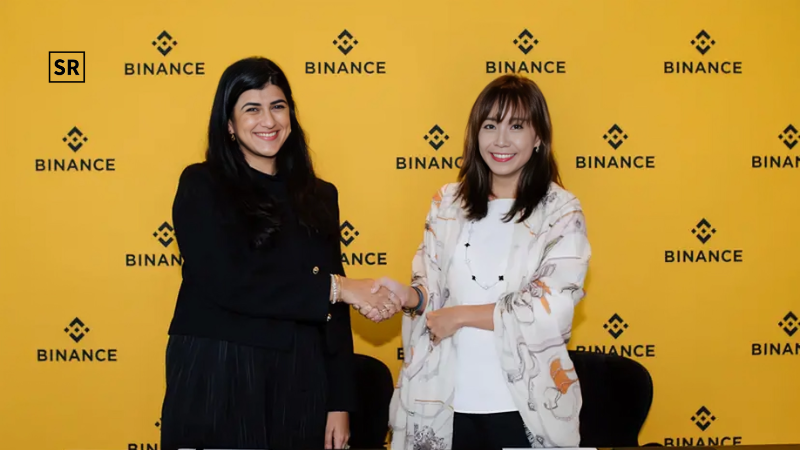
Botim Money and Binance have moved to broaden digital asset access for users across the UAE after signing a memorandum of understanding during Binance Blockchain Week in Dubai, signalling a push to integrate regulated crypto services into one of the region’s most widely used digital platforms. The agreement reflects a growing alignment between established fintech operators and global exchanges seeking to deepen their presence in a market that has positioned itself as a leader in digital-asset regulation and innovation.

Botim Money, the financial services arm of the UAE-based communications platform Botim, aims to use the partnership to explore compliant pathways for users to buy, sell and manage crypto assets from within its ecosystem. The platform, owned by Astra Tech, has expanded from a calling and messaging service into a broader super-app model, adding payments, remittance and e-commerce tools. Executives have argued that embedding secure crypto access is a natural progression as users increasingly seek unified financial services in trusted digital environments. The collaboration with Binance, one of the world’s largest crypto exchanges by trading volume, is expected to focus first on regulatory frameworks, technical integration and user-protection standards.

The signing of the agreement at Binance Blockchain Week placed the partnership in the spotlight as global industry participants gathered in Dubai. Officials from Binance highlighted that the UAE’s licensing landscape and digital economy strategy have created conditions where exchanges can build long-term infrastructure. Richard Teng, who heads Binance globally, has repeatedly emphasised that the Gulf region’s regulatory clarity has allowed the company to stabilise operations after addressing compliance concerns elsewhere. The MoU with Botim Money follows earlier moves by Binance to secure approvals through Dubai’s Virtual Assets Regulatory Authority, enabling it to develop a locally compliant exchange environment.

Senior figures at Botim Money pointed to the super-app’s large user base as a strategic advantage. With millions of active customers across the Middle East and South Asia, Botim has become a central payments and communications tool for expatriate workers. Astra Tech’s leadership said the partnership could help bridge the gap between conventional financial users and digital-asset platforms, allowing remittance senders, online shoppers and small businesses to access crypto payments or investment tools without transitioning to unfamiliar applications. Industry analysts noted that such integrations could accelerate mainstream adoption, provided that strong risk controls are embedded from the outset.

Dubai’s position as a global blockchain hub formed a central backdrop to the announcement. The emirate has attracted exchanges, tokenisation projects and Web3 developers with its tiered licensing system and emphasis on consumer safeguards. Officials have pitched Dubai as a base for companies seeking regulatory stability after volatility in global crypto markets. Binance Blockchain Week itself drew developers, institutional investors, compliance specialists and start-ups exploring tokenised assets, AI-driven trading tools and cross-border payment systems. The Botim Money–Binance collaboration stood out among the event’s business announcements for its potential to link a mass-market communications app with a globally recognised exchange.

The partnership arrives at a time when the UAE continues to refine rules governing custodial services, stablecoins and digital-asset marketing. Market participants say these developments have strengthened confidence among fintech companies looking to integrate virtual assets without jeopardising compliance obligations. Botim Money’s leadership has indicated that any crypto services made available through the platform would adhere to regulatory requirements on customer verification, anti-money laundering controls and risk disclosures. Binance has similarly stressed that its growth strategy in the UAE is tied to full regulatory alignment, following heightened scrutiny by authorities in Europe and North America earlier this year.

Observers viewed the agreement as part of a broader trend in which everyday digital platforms embed financial products to enhance user engagement. For Binance, the arrangement offers an opportunity to reach a large demographic that predominately uses mobile channels for financial activities. For Botim Money, it presents a pathway to diversify revenue streams and retain users within a single app environment, especially as competition intensifies among regional fintech operators seeking to offer remittances, payment processing, microfinance and merchant tools.

Alpha Dhabi Holding PJSC has unveiled a three-year dividend policy offering annual payouts of AED 2 billion, with a built-in 5 per cent increase each year starting from the 2025 financial year. The Abu Dhabi–listed investment house also proposed a share buyback scheme of up to AED 1 billion, capped at 10 per cent of its issued share capital. The dividend plan is subject to approval by […]

Advertisements

The Kingdom of Saudi Arabia is planning a massive infrastructure push to achieve net-zero carbon emissions by 2060, with a significant portion of financing expected to come from the private sector. Investment Minister Khalid Al-Falih, speaking at the MOMENTUM2025 Development Finance Conference in Riyadh, projected that infrastructure investments could reach up to $1 trillion over the medium term, with private capital accounting for around 40 per cent — equivalent to $400-500 billion.

Al-Falih outlined that this influx of investment will be channelled across diverse programmes: privatisation schemes, energy infrastructure under the supervision of the Ministry of Energy, and major initiatives led by key domestic players such as ACWA Power and Saudi Aramco, including expansion of blue hydrogen production and global marketing. The minister emphasised that the push reflects the Kingdom’s evolving infrastructure and energy strategy — aligning economic diversification under Saudi Vision 2030 with climate-related commitments.

Officials at the conference stressed that the investment liquidity will flow through multiple channels. Besides large-scale energy and infrastructure projects, capital will also support expansion in sustainable tourism, desalination plants, airport and logistics development, and logistics hubs, boosting sectors beyond oil and traditional energy. This drive is underpinned by a broader green finance framework recently introduced by domestic regulators, including the issuance of green bonds and the creation of a domestic carbon-credit market under Tadawul.

Despite the ambitious plan, some observers remain cautious. Independent analysts — such as those at the Climate Action Tracker — rate the Kingdom’s net-zero pledge for 2060 as “poor”, noting that the target lacks legal codification and fails to clarify which greenhouse gases or sectors are included. They underline that while domestic investments in renewables, carbon capture and clean hydrogen are growing, the lack of a comprehensive emissions-reduction pathway — especially regarding export-related emissions — leaves a significant portion of emissions unaddressed.

Al-Falih acknowledged the challenges but framed the plan as a transformation rather than a short-term campaign. He pointed out that the Kingdom has already exceeded some Paris Agreement-linked targets, and underlined an energy mix strategy aiming for 50 per cent of electricity generation through renewables by 2030, supplemented by high-efficiency gas turbines and storage technologies to ensure reliability.

As global demand for energy continues to rise — driven in part by rapid advances in artificial intelligence and digital infrastructure — Riyadh’s roadmap envisages that growing energy needs will dovetail with sustainable investment in infrastructure, industrial transformation and green-energy exports.

Japan is intensifying its economic engagement with Gulf partners as policymakers and corporate leaders seek to counter global uncertainty and reduce exposure to shifting geopolitical priorities under evolving US policy. The recalibration marks a notable acceleration in Tokyo’s outreach to the Middle East’s major sovereign investors, energy exporters, and technology funds, reflecting a sense within government and industry that the country must widen access to capital and secure strategic partnerships as global supply chains face persistent strain.

A growing number of senior officials and executives have argued that Japan’s longstanding reliance on the US as an anchor for both economic and security stability now requires broader support. Their stance reflects concerns generated by the more transactional orientation of the US under the America First framework, which has amplified debates in Tokyo on the need for diversified alliances. That reassessment has coincided with unprecedented liquidity flows across the Gulf, where sovereign wealth funds are expanding global portfolios in sectors ranging from clean energy and advanced manufacturing to semiconductors, logistics and emerging technologies.

Prime Minister Fumio Kishida’s government has moved to strengthen ties with the region’s largest investment authorities, including Abu Dhabi’s Mubadala Investment Company and Saudi Arabia’s Public Investment Fund. Japanese ministries have encouraged joint projects that align with national priorities such as chip resilience, hydrogen supply chains, carbon management, and infrastructure modernisation. Officials familiar with the discussions say the focus extends beyond energy security to long-term industrial cooperation, with Tokyo exploring ways to integrate Middle Eastern capital into Japan’s domestic renewal.

Several major companies have already positioned themselves to capture the shift. Trading houses such as Mitsui & Co. and Mitsubishi Corp. have expanded partnerships in clean fuels and petrochemicals, while Japan’s leading automakers are examining opportunities linked to Gulf diversification strategies, particularly in battery supply, autonomous mobility, and advanced materials. Banks including MUFG and SMBC are increasing their presence in the region to support outbound investment, project finance, and corporate advisory mandates requested by Gulf entities looking to deploy capital in Asia.

Analysts observe that the evolving dynamic is not one-sided. Middle Eastern investors have signalled interest in stable, technologically advanced economies as part of their long-term diversification plans. Japan’s strong intellectual property base, advanced industrial ecosystem, and predictable regulatory environment have become increasingly attractive to funds seeking alternatives to higher-risk markets. Executives have also pointed to the convergence of strategic priorities, including shared urgency around food security, energy transition, and digital infrastructure development.

The country’s semiconductor revival has emerged as a key area of alignment. As Japan attempts to rebuild its chip manufacturing footprint with government-backed projects involving firms such as Rapidus and partnerships with global foundries, Gulf investors have explored opportunities to participate in upstream and downstream components of the supply chain. Officials tracking the conversations describe growing interest from Middle Eastern funds in Japan’s materials science know-how and next-generation fabrication technologies, which they view as long-term assets capable of supporting their broader industrial programmes.

Energy cooperation remains central to the relationship. Japan continues to depend heavily on the Gulf for crude oil and liquefied natural gas, but the nature of that relationship is shifting toward co-investment in renewable energy, hydrogen production, and carbon capture projects. Tokyo’s efforts to secure stable supplies of blue and green hydrogen align closely with the decarbonisation roadmaps of Saudi Arabia and the United Arab Emirates, which are positioning themselves as future exporters of low-carbon fuels. Japanese companies have signed multiple memoranda with Gulf partners to test supply chains that could support both nations’ energy transition targets.

Technology collaboration is also gathering momentum. Gulf sovereign funds have expanded their allocations to late-stage venture investments and tech infrastructure, creating new openings for Japanese firms in fields such as robotics, clean-tech, mobility software, and advanced manufacturing systems. Executives from several technology conglomerates have confirmed that discussions are under way to establish joint R&D facilities, venture co-investment platforms, and industrial clusters that could operate across Asia and the Middle East.

Diplomatic signalling has reinforced the economic shift. Visits by senior Japanese officials to Riyadh, Abu Dhabi, Doha and Manama have highlighted Tokyo’s intent to deepen ties not only through energy partnerships but also through digital transformation initiatives, defence industrial cooperation, and food-supply agreements. These engagements complement Japan’s broader Indo-Pacific strategy, which emphasises stability, open trade routes, and resilience in critical sectors.

Microsoft has committed $17.5 billion — roughly Rs 1.5 lakh crore — to expand cloud and artificial-intelligence infrastructure in India, marking its largest investment ever in Asia. The announcement came after a meeting between Microsoft chief executive Satya Nadella and Prime Minister Narendra Modi in New Delhi. The funds will flow over the next four years, aimed at building data-centre capacity, upskilling the workforce and strengthening what the company calls “sovereign AI capabilities.”

Under the plan, Microsoft will significantly expand its cloud infrastructure footprint across several Indian states. A new hyperscale data-centre in Hyderabad is expected to go online by mid-2026, complementing existing facilities in Chennai, Pune, Mumbai, along with the company’s Jio-Azure regions in Maharashtra and Gujarat. The investment builds on a $3 billion commitment earlier this year — an amount that had already positioned India as a major node in Microsoft’s global AI ambitions.

Skill-development forms a core pillar of the strategy. The company aims to train millions of Indians in AI and related domains, equipping a growing workforce to design, manage and deploy advanced AI systems. Nadella described the investment as central to India’s “AI-first future,” emphasizing the need for both infrastructure and human capital to realise such a vision.

Industry analysts view the commitment as a signal that multinational technology firms increasingly see India not merely as a consumer market, but as a global hub for cloud and AI development. The scope and scale of Microsoft’s investment reflect a broader shift in the global tech landscape, where companies are betting on India’s large internet-user base and technical talent pool. The move could also encourage other global players to escalate investments, accelerating the pace at which India becomes a major node in the emerging AI economy.

Government officials welcomed the announcement as a boost to India’s ambition to emerge as a technology superpower. As Modi noted after the meeting, global optimism around India’s AI potential is growing — and the new investment is expected to create significant opportunities across industries, particularly for start-ups and youth seeking to build careers in cutting-edge technologies.

The size and ambition of Microsoft’s commitment also suggest that the company expects robust returns from a nation undergoing rapid digital transformation. By combining massive infrastructure build-out with aggressive talent development, Microsoft appears to be laying the groundwork for India to play a central role in shaping the next generation of global AI products and services — from cloud-native applications to enterprise-level AI deployments.

Long-term operating lease to expand Center 66’s retail area by nearly 40% HONG KONG AND SHANGHAI – Media OutReach Newswire – 9 December 2025 – Hang Lung Properties Limited (SEHK Stock Code: 00101) (“Hang Lung” or the “Company”) today announced a partnership with Wuxi Liangxi City Development Group Co., Ltd.* to secure a long-term operating lease for a landmark commercial redevelopment project in central Wuxi. Expected to […]

Shareholders of Tesla, Inc. have backed what may become the largest pay-out ever awarded to a corporate chief executive. On 6 November 2025, more than 75 per cent of voters approved a compensation package for Elon Musk — structured around 12 tranches of restricted stock — that could yield up to $1 trillion over the next decade, contingent on an array of steep performance and valuation targets. […]

Strong momentum around sustainability and policy alignment set the tone as Automechanika Dubai opened its three-day run at the Dubai World Trade Centre, drawing widespread attention to how manufacturers, regulators, and technology providers are coordinating strategies to future-proof the region’s automotive aftermarket. Organisers underscored that the exhibition, recognised as the Middle East’s largest platform for aftermarket products and services, has become a focal point for dialogue on efficiency standards, emissions reduction, and supply-chain innovation across Gulf markets.

Delegates arriving for the opening day reported a clear emphasis on accelerating collaboration between public agencies and private-sector operators, an approach that exhibitors said is critical as the sector adapts to shifts in fuel technologies, mobility patterns, and environmental expectations. The message was reinforced by senior officials highlighting ongoing government programmes supporting advanced manufacturing, electric-vehicle servicing capabilities, and circular-economy models designed to reduce waste in parts and materials. Industry leaders noted that the presence of policy representatives at the show indicated growing institutional commitment to standardising quality benchmarks for components traded across regional markets.

The exhibition floor featured a broad cross-section of global and regional suppliers, including established parts manufacturers, diagnostics specialists, and emerging technology firms developing AI-enabled maintenance platforms. Several company executives pointed to the UAE’s long-term industrial strategy and its targets for cleaner transport as a source of demand for new product lines, especially in electric-vehicle battery servicing, thermal-management systems, and lightweight components. Some suppliers said the regulatory clarity provided by ongoing transport-sector initiatives has encouraged them to scale up investment in test facilities and distribution hubs across the Gulf.

A surge in visitor numbers compared with earlier editions reflected strong commercial interest from trading companies, fleet operators, and workshop networks seeking to position themselves for the next phase of regional mobility growth. Market analysts attending the exhibition commented that the Gulf’s rising vehicle parc, coupled with rapid urbanisation, continues to underpin demand for quality replacement parts and advanced repair technologies. They added that Dubai’s role as a re-export centre gives Automechanika Dubai outsized influence in shaping product pipelines bound for Africa, South Asia, and parts of Europe.

Exhibitors specialising in sustainability solutions drew particular attention on the opening day. Firms showcasing refurbished components, remanufactured engines, and eco-friendly consumables signalled that demand for lower-impact products is gaining traction across workshop networks. Several companies highlighted investments in closed-loop systems that reduce the environmental footprint of tyres, lubricants, and metal parts. Executives from diagnostics and telematics providers described how predictive-maintenance tools are helping fleet operators extend vehicle life cycles, improving both cost efficiency and emissions outcomes.

Government participation reinforced the event’s focus on regulatory evolution. Transport and industrial-development officials presented updates on national frameworks aimed at improving automotive-aftermarket oversight, including certification programmes, workshop accreditation standards, and traceability requirements to curb counterfeit parts. Trade-facilitation agencies outlined digital-customs initiatives designed to streamline the movement of genuine components through regional ports, an issue flagged repeatedly by manufacturers seeking more secure and transparent supply chains.

Technology demonstrations formed another prominent attraction. Autonomous-inspection systems, connected workshop tools, and advanced calibration equipment drew steady crowds as exhibitors explained how digital solutions can address labour shortages and support skills development. Training centres affiliated with several global brands used the event to highlight upskilling programmes for technicians preparing to service electric and hybrid vehicles. Senior trainers said the shift towards high-voltage systems requires updated curricula and investments in safety infrastructure, emphasising that workforce readiness remains a central pillar of regional mobility planning.

Executives from multinational suppliers said the show’s first day underscored the strategic importance of Dubai as a testing ground for new automotive-aftermarket models. They noted that regulatory predictability, strong logistics infrastructure, and sustained government interest in industrial diversification have combined to create favourable conditions for technology adoption. Some pointed to collaborations with Gulf-based research institutions developing materials science, battery-repair techniques, and advanced fluid technologies, suggesting that locally rooted innovation has begun to influence global supply chains.

Fleet-management firms attending the event highlighted the operational impact of sustainability mandates, stressing that cleaner fleets are no longer viewed solely through an environmental lens but as a commercial imperative shaped by fuel-efficiency metrics and customer expectations. Executives said digital-fleet platforms now integrate emissions tracking, automated maintenance scheduling, and component-health monitoring, trends that align with broader mobility transformations occurring across the Gulf.


Shares of Twenty One Capital, the newly public Bitcoin-native company, plunged sharply as trading began on the New York Stock Exchange under ticker “XXI”. The decline, amounting to roughly 24-26%, underscores investor unease even as the firm debuts with substantial holdings — over 43,500 bitcoins, valued at nearly US$4 billion, making it one of the largest corporate Bitcoin treasuries globally.

The decline came just as the firm completed a merger with special-purpose acquisition company Cantor Equity Partners, a process that had secured shareholder approval earlier this month. The combined entity began trading today, marking the formal public debut of Twenty One Capital.

The backers behind Twenty One include stablecoin issuer Tether, trading platform Bitfinex, and investment-holding conglomerate SoftBank Group — with the SPAC sponsored by global financial firm Cantor Fitzgerald.

Leadership under co-founder and CEO Jack Mallers has portrayed Twenty One as more than a treasury — the firm aims to build Bitcoin-centric financial services, capital markets advisory, lending and education operations. The business model seeks to marry a large Bitcoin reserve with recurring-revenue operations, offering investors both exposure to crypto and conventional business growth potential.

Despite the ambitious roadmap and deep institutional backing, investor sentiment appears cautious. The dip in share price comes amid a broader downturn in cryptocurrency valuations; bitcoin itself has fallen more than 28% since hitting a peak in October. That decline has put pressure on companies with large digital-asset treasuries.

Market watchers note that the stumble highlights the risks inherent in combining a speculative asset like bitcoin with public equity. Treasury-centric crypto firms have gained attention in recent months for treating bitcoin as a corporate reserve asset — yet, as volatility returns, their valuations are bearing the brunt. Some analysts argue the drop may force such firms to rethink reliance solely on crypto-treasury value, especially if markets remain turbulent.

For now, Twenty One’s challenge is to reassure shareholders that the business side will grow fast enough to absorb volatility in bitcoin prices. Its future will depend on execution: whether it can build a sustainable loan, advisory or media business around Bitcoin — and whether that strategy can hold up even if crypto markets remain unpredictable.

YouTube has moved to strengthen its presence in the UAE’s digital health landscape by developing programmes that place licensed medical professionals at the forefront of its educational content, signalling a determined push to make verified advice more accessible across the platform. The company’s strategy targets growing demand for trustworthy health information online, as concerns over misinformation continue to shape global discussions around digital media governance.

Executives overseeing the initiative said the platform aims to build a space where users can reliably distinguish expert-led guidance from unverified commentary, a challenge amplified by the scale and diversity of YouTube’s audience. The expansion forms part of a wider effort to elevate authoritative creators working in fields where accuracy is critical, particularly as the Gulf region deepens its investment in digital transformation of public services, including healthcare, teleconsultation and patient education tools.

YouTube’s managing teams have pointed to the UAE as a priority market due to its strong uptake of digital services, rapid population growth and the increasing role of online platforms in shaping consumer behaviour. Company representatives noted that the health programme supports licensed doctors and specialists in producing explanatory content on topics ranging from chronic disease management to preventative care, with a focus on clarity and cultural relevance. The aim is to ensure that users searching for guidance on everyday health queries encounter information grounded in established medical understanding.

The regional rollout also follows the platform’s broader global commitment to responsible content curation, which includes labelling health sources, collaborating with regulatory bodies and strengthening partnerships with hospitals and academic institutions. Executives highlighted that user trust depends not only on removing harmful material but also on amplifying credible voices. This shift reflects wider trends across major technology firms, which are under increasing pressure to address misinformation while supporting creators who offer value through expertise.

During discussions about the programme, YouTube’s leadership emphasised that the future of digital platforms lies in empowering diverse creator communities. A senior executive cited the example of a Dutch knitting creator whose channel grew from a small personal project into a global community hub, illustrating how storytelling and authenticity can generate engagement across borders. The reference underscored the platform’s belief that healthcare content, too, should be driven by relatable human narratives, not only clinical explanations.

Doctors participating in the UAE initiative have described the programme as a chance to reach audiences who might hesitate to seek medical advice through traditional channels. Specialists working in fields such as cardiology, paediatrics and mental health say that video content enables them to clarify misconceptions, guide viewers toward evidence-based treatment options and encourage early intervention. Several practitioners have noted that the platform provides a unique opportunity to communicate complex issues in a visually engaging format, which can support better understanding among younger users.

Market analysts observing YouTube’s strategy say the platform’s focus aligns with the UAE’s national priorities, particularly its long-term digital health agenda. Authorities across the Gulf have invested in AI-enabled diagnostics, electronic health records and telemedicine infrastructure, creating a parallel demand for trusted educational material that helps residents navigate an evolving healthcare environment. Analysts also point to the competitive landscape, where global platforms are working to differentiate themselves through credible content partnerships.

The company’s decision to bring more clinical professionals onto the platform reflects research showing that users often rely on video explanations when confronted with health queries. Executives acknowledge that this behaviour carries both opportunities and risks, as misinformation can spread rapidly when content appears authoritative. To address this, YouTube has been refining its ranking systems to elevate licensed practitioners and institutions, ensuring visibility for creators whose credentials and communication standards have been verified.

Creators involved in the new initiative have stressed the responsibility that accompanies such visibility. Several participants noted that working on the platform requires balancing accessibility with professional rigour, avoiding oversimplification while keeping content digestible for general audiences. These doctors have described the process as an extension of public health education, albeit through a digital medium that demands nuanced storytelling and sensitivity to cultural context.

Amazon’s efforts to scale its Prime Air drone service have come under intensified scrutiny after a delivery aircraft struck a cable in Texas earlier this year, prompting renewed questions over the programme’s operational readiness, regulatory compliance, and ability to challenge competitors that have gained ground in autonomous logistics. The incident, which damaged the drone and forced safety investigations, underscored the complexities of expanding unmanned aerial deliveries in […]

Global corporate crypto holdings took a dramatic leap as Strategy disclosed acquiring 10,624 more bitcoins between 1 and 7 December 2025, at an average price of $90,615 per coin. That purchase—amounting to about $962.7 million—raises the firm’s total holdings to 660,624 BTC, equivalent to roughly 3 % of the entire Bitcoin supply. The acquisition was funded primarily through the company’s at-the-market equity programme. According to the company’s […]

Abu Dhabi’s ascent as a core pillar of Alan Howard’s hedge fund strategy gained fresh momentum as the billionaire founder detailed how the emirate has rapidly become one of his firm’s most influential trading and investment hubs. The expansion, initiated when Howard established a permanent base in the city in 2023, has evolved into a defining feature of the firm’s global footprint, positioning Abu Dhabi alongside London […]

Alpha Dhabi Holding moved to reassure investors with confirmation of a new three-year dividend framework and a parallel plan to repurchase a portion of its shares, signalling a strategic effort to sustain value creation across its portfolio. The Abu Dhabi-listed conglomerate said the policy is designed to provide predictable returns while supporting the group’s long-term expansion. The company said the proposed framework targets annual dividends of AED […]

By Nantoo Banerjee India’s domestic civil aviation market, the world’s third largest after the United States and China, nearly collapsed last week as its major private airline, IndiGo, boasting nearly 70 percent of traffic share, suddenly cancelled hundreds of flights on the ground of pilot shortages after it failed to adapt to new flight crew […]

The article India Must Clip IndiGo’s Wings To Protect Fast-Growing Domestic Aviation Market appeared first on Latest India news, analysis and reports on Newspack by India Press Agency).

HONG KONG SAR – Media OutReach Newswire – 8 December 2025 – Abax Global Capital (Hong Kong) Limited is proud to announce its selection by the Hong Kong Investment Corporation (HKIC) as an asset manager for the 2025 batch of capital (“2025 Capital Batch”) of the Investment Portfolio (“CIES IP”) under the New Capital Investment Entrant Scheme (“New CIES”). “We are honored by the HKIC’s confidence in […]

Man Group Plc has moved to secure a regulatory licence to establish an Abu Dhabi office next year, signalling a deeper shift among global asset managers toward the Gulf as the region accelerates its ambitions to become a leading centre for alternative investments. The London-listed hedge fund confirmed the application, underscoring its intention to broaden its footprint in a market that has drawn some of the world’s […]

Web3 momentum across the Gulf is increasingly visible in grassroots spaces where developers, founders, and early-stage investors gather to exchange ideas far from official boardrooms. The growth of these informal networks in Dubai, Abu Dhabi, Riyadh, and Bahrain has become a notable driver of activity in blockchain, tokenisation, digital assets, and decentralised applications, complementing government-led strategies that have positioned the region as a key hub for emerging […]

Abu Dhabi’s biggest sovereign investors —Abu Dhabi Investment Authority, Mubadala Investment Company and ADQ— have significantly increased their global footprint in finance, energy and artificial-intelligence infrastructure, edging the emirate ever closer to a central role in global capital flows and technology investment. ADIA has expanded its exposure to public and alternative asset managers, allocating roughly $40 billion to hedge funds in 2025, part of a long-term strategy […]

VISHNU RAJA
RYO YAMADA
HITORI GOTOH
IKUYO KITA