News related to
Tech

The government of Mozambique has committed to invest 12 million US dollars to rehabilitate technical and vocational education and training institutions countrywide, a move aimed at expanding capacity and better aligning training with labour market needs. The investment, slated to kick off in 2026, forms part of a broader reform supported by partner organisations. The Secretary of State for Technical and Vocational Education, Leo Jamal, announced the […]

The grip of Chromium on the global browser ecosystem has grown so wide that many users now assume every modern browser is built on Google’s open-source architecture. That perception has taken root partly because major names such as Microsoft Edge, Opera, Brave, Vivaldi and Arc all rely on Chromium’s Blink rendering engine, creating a sense that browsing itself has become synonymous with Google-aligned foundations. The dominance is […]

Concerns over Oracle Corporation’s massive borrowing to fund its artificial-intelligence ambitions have pushed its debt instruments into territory unseen since the 2008 financial crisis. The company’s bonds have sold off, yields on maturing notes have climbed, and its credit default swap spreads have surged — signalling growing investor anxiety about the sustainability of its heavy spending on cloud and AI infrastructure. The sell-off follows disclosure that Oracle […]

Greenlogue/AP New Murabba, the massive urban redevelopment project in Riyadh, has formalised a partnership with the US Green Building Council to embed global sustainability standards into its design, construction and operations. The memorandum of understanding signed between the two organisations establishes a framework to explore how international systems such as LEED — including its latest LEED v5 as well as LEED for Communities — can be applied […]

Solana has formed a double-bottom reversal pattern around the $125 support level, setting up bulls for a possible surge past the $145 resistance zone.

Price data shows that SOL is trading near $143, with technical indicators on daily charts signalling a strong buy: moving averages across 5-, 10-, 20- and 50-day periods align bullish, while MACD, CCI and other oscillators support renewed upward momentum.

Longer-term studies point to a bullish swing if SOL clears $145, a level viewed by many as a crucial barrier to resetting next-leg targets. One prominent analysis suggests that if SOL flips this resistance to support, upside zones near $165 and $179 could come into play — levels that previously acted as consolidation thresholds.

Support near $125 has been repeatedly defended following a dip from higher levels. That makes the double-bottom pattern more credible: the chart shows two distinct troughs at roughly the same price, followed by a rebound — a textbook technical reversal signal.

Traders are watching on-chain metrics as well. The blockchain’s ecosystem remains active with strong total value locked and steady stablecoin and DEX activity, providing some fundamental stability alongside the technical setup.

Arabian Post Staff -Dubai Saudi Arabia approved its 2026 state budget, confirming total government expenditure at 1.31 trillion riyals and setting revenues at approximately 1.15 trillion riyals, signalling a planned deficit of 165 billion riyals—equivalent to 3.3 percent of gross domestic product. The projected spending level is only marginally lower than the 2025 outlay, reflecting a continued commitment to funding national priorities and long-term economic diversification. Forecasts […]

Geopolitical and macroeconomic uncertainty, tariffs, and cyber risks pose liability challenges for the boards of corporations of all sizes. The increasing number of insolvencies around the globe is becoming a major issue for executives. Claims severity and settlement costs are increasing, especially in the US, while the commercial financial lines insurance market remains highly dynamic. SINGAPORE – Media OutReach Newswire – 3 December 2025 – Around the […]

Advertisements

Advances in large language models have delivered extraordinary gains, yet each new iteration introduces a structural tension that the wider software ecosystem is only beginning to confront. As foundation models evolve from version 4.X to 4.X+1, the coding assumptions, prompt-engineering conventions and guardrails that developers rely on can shift in subtle but consequential ways. This is emerging as a modern variant of the software world’s old problem […]

Nigeria must generate 27.3 million new formal jobs from 2025 to 2030 if it is to maintain an unemployment rate of 4.3 per cent, according to the Nigerian Economic Summit Group. That works out to roughly 4.55 million net new jobs each year, a target seen as essential to absorb a growing labour force and to gradually formalise a workforce long dominated by informal, low-productivity work. The […]

Abu Dhabi-headquartered Mubadala Energy and PLN Energi Primer Indonesia have formalised a Heads of Agreement to supply natural gas from the Andaman Sea, a step set to reshape Indonesia’s energy supply landscape. The arrangement centres on output from the Tangkulo gas field, located roughly 65 kilometres off North Sumatra, which is estimated to hold over two trillion cubic feet of gas-in-place. Under the pact, resources from Tangkulo […]

Iraq’s Oil Ministry has launched a formal process to invite a handful of major US oil companies to directly negotiate the takeover of the 75 percent stake in the West Qurna-2 oil field — currently held by Lukoil — following international sanctions imposed on the Russian company. The ministry’s announcement emphasises that transferring control to a US operator would support global market stability while preserving Iraq’s vital […]

OceanX has completed its first research mission in Timor-Leste, carrying out fourteen days of integrated science and exploration across the northern coast and Atauro Island region. Dili, Timor-Leste – Media OutReach Newswire – 2 December 2025 – The mission brought together scientists from KAUST, the University of Florida, the University of Western Australia, and Timorese counterparts to investigate biodiversity, whale ecology, and seafloor structure in one of […]

Smartphone makers in India have been instructed by the telecom ministry to preload a government-owned cybersecurity app on all new devices sold in the country, blocking users from deleting the application once installed. Under a directive issued on November 28, companies such as Apple, Samsung, Vivo, Oppo and Xiaomi have been given a 90-day window to ensure all handset models destined for India include the Sanchar Saathi app. For devices already in the retail pipeline or those awaiting sale, manufacturers must deliver the app via over-the-air software updates and ensure it appears prominently during first-use setup.

Authorities say the app plays a key role in telecom security by giving users tools to verify device authenticity through IMEI checks, report suspected thefts or fraud, and block lost or stolen phones. Since the app’s launch in January 2025, government data indicates it has helped recover over 700,000 lost devices and block millions of connections flagged as fraudulent. Officials argue that this move is critical to counter growing misuse of duplicate or tampered IMEI numbers—a problem that fuels scams and the resale of stolen phones across India’s vast second-hand device market.

This mandate marks the first time the government has required a permanently installed, non-removable application on all smartphones sold in the country. The decision reflects a broader tightening of regulatory oversight over telecom infrastructure and device authenticity, drawing parallels with security measures in other jurisdictions.

The requirement has triggered sharp criticism from technology companies and privacy advocates alike. For example, the policy of Apple prohibits pre-installation of third-party or government apps prior to device sale—an approach that could force the company to either seek exemptions or find workarounds. Industry representatives have warned that the mandate may strain compliance operations, increase production costs, and undermine relationships with handset vendors.

Beyond logistical concerns, digital rights groups argue the rule tramples on user consent and privacy. Critics contend that embedding a state-run app with potentially broad access on every phone amounts to unwarranted surveillance and sets a troubling precedent. Some lawmakers and civil liberties advocates dubbed the move “a Big Brother measure,” warning that once entrenched, such mandates could be expanded further, eroding individual privacy without adequate data-protection safeguards.

Russian President Vladimir Putin arrived in New Delhi for a two-day visit aimed at reviving and expanding energy and defence cooperation with India. His agenda includes proposals for increased Russian oil exports alongside renewed offers of missile systems and fighter jets, as part of efforts to restore ties challenged by global pressure on Moscow.

The visit coincides with heightened scrutiny of India’s oil and weapon imports from Russia, but also signals Moscow’s determination to deepen the “special and privileged strategic partnership” with New Delhi. Kremlin officials, including Russia’s deputy prime minister overseeing trade, emphasised that the India-Russia forum planned around the summit would explore ways to diversify bilateral trade, extend industrial cooperation and foster joint investments across high-technology and raw-material sectors.

On offer are new arms deals including advanced air-defence platforms and additional batches of combat aircraft. Negotiations are expected to cover the procurement of more units of the S-400 missile system and potential acquisition of fifth-generation Su-57 jets and the next-generation S-500 air-defence shield. Although India has widened its defence procurement sources over recent years, Moscow remains one of its leading suppliers, bolstered by long-standing familiarity and legacy hardware in the armed forces. Analysts note that these proposed arms deals would reaffirm Russia’s influence in India’s defence posture, even as New Delhi attempts to balance Western and Russian dependencies.

Energy cooperation is another key pillar. Russia is offering discounted crude oil supplies under new trade arrangements, including through intermediaries and possibly via joint ventures or extraction projects in Russia’s Far East and Arctic regions. This appears geared toward circumventing Western sanctions on Russian energy exports, while ensuring that India retains access to competitively priced hydrocarbons. At the same time, Indian officials are conscious of growing trade imbalances caused by large-scale Russian imports and have flagged the need to augment Indian exports to Russia, particularly in equipment, raw materials and food products.

Efforts to revive large-scale trade go beyond energy and defence. The India-Russia forum accompanying the summit is expected to chart cooperation in civil nuclear projects, space technology, and high-tech industrial ventures. Signals from the Russian side underscore a long-term vision of a resilient, multifaceted partnership rooted in historical ties. While geopolitical pressures from Western capitals and tariffs on Indian goods pose real challenges, both Moscow and New Delhi appear keen to insulate their bilateral engagement from external strains.

Tesla is advancing a bold push toward delivering unsupervised Full Self-Driving to customers before the end of 2025, riding on technological progress, regulatory shifts and a faster rollout of robotaxi services. CEO Elon Musk recently reiterated the company’s commitment to achieving true autonomy, underpinning Tesla’s ambition to transform mobility globally. The company’s roadmap has gained momentum as its robotaxi programme — launched in June 2025 in Austin, […]

Filmmaker James Cameron has delivered a stark warning to Hollywood: generative artificial intelligence capable of creating entire performances from a single text prompt risks erasing the human essence from cinema. In an interview on CBS’ Sunday Morning, he described the notion of AI-generated actors and performances as “horrifying,” arguing that such automation undermines what he considers the core of film — live collaboration between actor and director. […]

Growing sophistication in artificial-intelligence driven video and audio forgery has sent shockwaves through financial systems and public trust alike, with 2025 emerging as a watershed year in deepfake-enabled fraud. Losses tied to deepfake scams are widely estimated at over $50 billion annually — a stark indicator of how rapidly cybercrime is evolving. Fake videos that convincingly mimic celebrities, corporate executives or even family members are now being […]

At the third edition of the Saudi International Handicrafts Week, held at Princess Nourah bint Abdulrahman University in Riyadh, veteran craftsperson Wu Jianmei rose to the spotlight as exhibitors and visitors gathered to experience global artistry. Wu Jianmei took a seat in the bright red-themed China pavilion, her fingers deftly guiding a needle in a demonstration of Xiang embroidery — a traditional art form that has earned her acclaim over a career spanning more than four decades. Her calm poise and meticulous stitching drew a steady stream of visitors who paused to watch each slender thread breathe life into the fabric.

Organised by Heritage Commission, Banan has brought together over 400 artisans representing more than 40 countries for 2025. China holds the title of Guest of Honour, a symbolic showcase of its cultural heritage in a pavilion designed to present more than a thousand handmade pieces alongside live craft demonstrations. The pavilion features lacquerware, fan-making, batik techniques and complex embroidery — each presented by skilled heritage bearers chosen to represent China’s rich craft traditions.

China’s role this year coincides with the 35th anniversary of formal diplomatic relations with Saudi Arabia, as well as the designation of 2025 as the Year of Handicrafts in the Kingdom. Officials accompanying the Chinese delegation underscored the ambition to promote cross-cultural understanding and elevate artisanal craftsmanship within a broader creative economy. Among those present was the Chinese ambassador, who visited the China pavilion and praised the global scope of the event and the Kingdom’s support for heritage-driven cultural exchange.

Visitors to Banan were drawn not only to the China pavilion but to a wider tapestry of worldwide craftsmanship. Traditional techniques from Syria, the United Arab Emirates, Egypt, Oman, Bahrain and Jordan featured prominently, alongside booths from European, African, Asian, and Middle Eastern artisans. Demonstrations ranged across wood carving, clay pottery, metalwork, weaving and shadow-puppet craft.

A special interactive zone called “Banan Story” offered families and children an opportunity to engage hands-on with materials and tools under guided supervision, helping younger attendees connect playfully with global craft techniques. This initiative reflects a broader strategy by the Heritage Commission to foster intergenerational appreciation of handcrafts, encouraging younger audiences to explore cultural diversity through creativity.

For many, Wu Jianmei’s presence at Banan served as a powerful cultural bridge. Her Xiang embroidery pieces — delicate and intricate — symbolised a living history: patterns and stitches that carried stories of generations. Locals and expatriates alike watched in quiet admiration as the needle moved, building intricate motifs destined for display or sale. Her work has previously been exhibited in major institutions, a testament to her stature in the heritage-arts community.


The all-electric championship ABB FIA Formula E World Championship rolled into Jeddah’s Corniche Circuit for its first-ever double-header round, delivering a pair of night races under floodlights that combined high-speed action with a strategic twist. The event marked the debut of PIT BOOST, a mid-race 600 kW fast-charging stop that injects roughly 10 percent extra energy into the cars — a shift set to redefine Formula E’s competitive dynamics.

Drivers navigated the 3.001-kilometre layout of the Jeddah Corniche Circuit — adapted for Formula E with 19 turns and modified chicanes to test energy management and overtaking skill. In Round 3, pole-sitter Maximilian Günther of DS Penske held off rivals across a chaotic mid-race charge stop to secure victory, with Oliver Rowland and Taylor Barnard completing the podium. Gundther also posted the fastest lap during the race.

Round 4 turned tactics upside down when Rowland turned pole position into a commanding win, while Barnard and Jake Hughes clinched second and third. The contrasting race results underlined how PIT BOOST can influence race outcomes dramatically — positioning at the start matters less when energy strategies diverge mid-race.

PIT BOOST compelled all 22 drivers to make a mandatory stop for a 30-second battery recharge, adding roughly 3.85 kWh mid-race. Only one car per team may use the charging rig at a time, and no mechanical work is permitted during the stop. The concept, first mooted several seasons ago, had been delayed until technical and safety standards were satisfied.

Organisers believe this innovation will bring Formula E’s technological mission full-circle — showcasing fast-charging EV tech on the track that could accelerate adoption in road-going electric vehicles. Critics warn, however, that the 30-second pit stops risk breaking the flow of close racing, as cars may emerge at very different times and spread the field. Teams will need to master pressure-packed decisions on when exactly to pit as well as how to deploy the extra energy — a decision that could make or break a race.

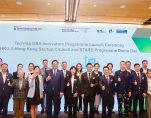
Showcasing Tech Innovation Businesses that Address Healthcare, Industrial Production and Environmental Pain Points HONG KONG SAR – Media OutReach Newswire – 2 December 2025 – The University of Hong Kong Techno-Entrepreneurship Core (HKU TEC) will organise 30 developing startups to participate in the HKTDC Entrepreneur Day, an entrepreneurial event to be held on 4th and 5th December 2025 at the Hong Kong Convention and Exhibition Centre. Of […]

Saudi Arabia’s sovereign wealth fund is seeking to deepen ties with Japanese investors as it reshapes its investment strategy away from sprawling real-estate megaprojects toward sectors deemed more viable in the near term.

The Public Investment Fund, valued at roughly $925 billion, unveiled a plan to expand investments in Japan from $11.5 billion between 2017–2024 to a projected $27 billion by 2030, according to remarks by its governor, Yasir Al-Rumayyan, at a business summit in Tokyo. He described Japanese companies as “one of the largest partners for Saudi Arabia,” and said the kingdom hopes to “bring more and more Japanese companies” on board.

This outreach comes alongside a major overhaul of PIF’s priorities. Plans for large-scale real estate ventures—previously central under the Vision 2030 plan—are being put on the back foot as delays and write-downs erode investor confidence. The new strategy pivots toward sectors such as logistics, mineral extraction, religious tourism and artificial intelligence, with greater emphasis on data infrastructure and industries promising quicker returns.

Some megaprojects under Vision 2030, including the much-publicised desert city NEOM and a planned mountain-based winter sports hub, have faced repeated delays and mounting costs, prompting analysts to question their long-term viability. PIF’s 2024 annual report shows impairments on several high-profile investments that have weighed on returns, and strategic rebalancing appears aimed at stabilising the fund’s financial outlook.

The renewed focus on logistics underscores Saudi Arabia’s ambition to become a global supply-chain hub bridging Asia, Europe and Africa. Mineral extraction targets the kingdom’s considerable reserves of rare earths and critical minerals, seen as vital for future technology supply chains. Religious tourism aims to leverage steady demand for pilgrimage to holy sites, while investments in artificial intelligence and data infrastructure, led by PIF-backed firm Humain, reflect the kingdom’s drive to build a diversified economy beyond hydrocarbons.

Financial markets and global investors have welcomed the pivot as more pragmatic and potentially less risky than monumental real-estate bets. Yet critics caution that shifting to more conventional sectors may diminish the transformative potential originally promised under Vision 2030. The challenge now lies in whether the new strategy can deliver on its growth and diversification goals while restoring investor confidence.

Arabian Post Staff -Dubai Member states of the OPEC+ alliance approved a new framework to assess each country’s maximum sustainable oil production capacity, with the outcome to determine output baselines from 2027. The decision was announced by Saudi Energy Minister Prince Abdulaziz bin Salman, who described the methodology as fair and transparent. The evaluation process covering most members will run from January to September 2026, laying the […]

HONG KONG SAR – Media OutReach Newswire – 2 December 2025 – APC Group, a leading specialty chemicals and process solutions provider in Asia Pacific and the Middle East, today announced the acquisition of i-Chem Solution Sdn Bhd, a specialist in industrial water treatment and wastewater treatment. This partnership strengthens APC Group’s Water Management segment and creates a single-source provider of end‑to‑end water solutions—combining chemicals, equipment, engineering, […]

Regulators at the Federal Reserve are moving to formalise rules for stablecoins, signalling a shift in how banks may soon treat these digital assets under supervision. The Vice Chair for Supervision at the Fed, Michelle Bowman, emphasised that banks should be able to engage with digital currencies — including stablecoins — under new regulatory guardrails. She argued that existing regulations, many crafted in the aftermath of the 2008 financial crisis, may no longer be appropriate given how much the economy and technology have evolved. Her remarks came against the backdrop of recent legislation that lays the groundwork for stablecoin regulation, prompting an overhaul of existing frameworks to encourage innovation while managing risk.

The regulatory momentum follows the passage of the Guiding and Establishing National Innovation for U. S. Stablecoins Act — known as the GENIUS Act — which establishes a comprehensive legal framework for payment stablecoins. Under the law, issuers of stablecoins must back tokens on a one-to-one basis with U. S. dollars or other low-risk assets, provide regular disclosure of reserves, and maintain transparent redemption processes. This marks a turning point: stablecoins officially enter the regulated financial system, opening the door for banks and other financial institutions to participate under defined standards.

Bowman has signalled that the Federal Reserve, alongside agencies such as the Office of the Comptroller of the Currency and the FDIC, intends to craft tailored supervisory guidelines rather than impose a one-size-fits-all regulatory model. She has called for regulators to abandon what she described as an “overly cautious mindset” that has slowed the banking sector’s ability to embrace digital innovation. According to her, banks seeking to engage in stablecoin activities must separate those assets from their traditional banking operations. This segregation, she said, is necessary to preserve the safety and soundness of the banking system even as banks expand into digital asset services.

The move has drawn cautious optimism from some quarters of the financial world, particularly among proponents of digital assets and stablecoin issuers, who view increased regulatory clarity as critical for broader adoption. They argue that a well-designed framework will enable mainstream financial institutions to offer digital asset services, increasing legitimacy and liquidity in the stablecoin market. Analysts point to academic research suggesting stablecoins have evolved from niche cryptocurrency experiments to integral components of payments infrastructure worldwide — with stablecoins’ market capitalisation estimated to exceed several hundred billion dollars. Some experts have proposed hybrid models that combine fiat-backed stablecoins with central-bank anchored systems to mitigate liquidity risks and improve stability, particularly in volatile market conditions.

At the same time, concerns remain about potential threats to financial stability. Regulators such as the Fed must weigh the risk of deposit outflows, competition between banks and non-bank issuers, and the challenge of preventing money-laundering or illicit finance through digital assets. Financial supervisors globally are wrestling with how to calibrate capital requirements and risk-weighting rules for banks engaging with stablecoins and digital tokens — taking into account factors like volatility, liquidity stress, and redemption risk.

VISHNU RAJA
RYO YAMADA
HITORI GOTOH
IKUYO KITA