News related to
Tech

By Nitya Chakraborty The historic victory of the Democratic socialist candidate Zohran Mamdani in New York mayoral elections on November 4 night is acting as a big booster, not only to the left wingers in the Democratic Party belonging to the Bernie Sanders group, but also to the left parties in Europe and Latin America. […]

The article Zohran Mamdani’s Victory As New York Mayor Has Given A Big Boost To Global Left appeared first on Latest India news, analysis and reports on Newspack by India Press Agency).

Re-engineering towards a Resilient, Adaptive and Sustainable Supply Chain SINGAPORE – Media OutReach Newswire – 6 November 2025 – The 2nd edition of the Asia-Pacific Textile and Apparel Supply Chain Expo & Summit (APTEXPO 2025) returns to Singapore from 19–21 November 2025, reaffirming its role as the region’s premier platform for the textile and apparel industry. Bringing together global leaders, decision-makers, and innovators, the event will drive […]

The island administration of Tenerife has begun negotiations to sell 97 units of Bitcoin originally acquired by the research institute Institute of Technology and Renewable Energies in 2012 for €10,000. The potential sale—valued at around US$10 million—would represent a gain of nearly 1,000-times the procurement cost.

Under the oversight of councillor Juan José Martínez, ITER had purchased the bitcoins as part of an exploratory project to understand blockchain system dynamics rather than as a speculative investment. He emphasised that the holding “was one of the many investigations carried out … to experiment with different technological systems”.

Despite the modest initial outlay, the Council’s ability to monetise the asset has been complicated by regulatory and logistical hurdles. Martínez confirmed that discussions are ongoing with a Spanish financial institution authorised by the Bank of Spain and the National Securities Market Commission to ensure the sale meets regulatory compliance.

The delay in disposal stems in part from the nature of cryptocurrencies in public-sector portfolios. The Council attempted earlier sales but encountered banks unwilling to engage due to volatility risk and regulatory uncertainty. ITER officials were also unable to access the wallet for eight years owing to administrative inertia.

Market estimates suggest the 97 bitcoins are valued at approximately €10–11 million based on current trading prices, implying a gain of around 99,900 per cent relative to the original investment.

The Council plans to reinvest any proceeds into its research and innovation agenda, aligning with ITER’s evolving focus on quantum technologies and other advanced systems. Martínez said the logical next step is to channel the enhanced value into the institute’s core mission.

Observers note that while the transaction is small in global cryptocurrency terms, it signals growing institutionalisation of digital-asset holdings outside the private sector. Analyst Fernando Molina of Blockworks remarked that the sale could draw attention to the potential for public-administration bitcoin portfolios and the regulatory barriers they face.

The operational path to execution remains complex. The buyer remains undisclosed and must satisfy both Spanish financial-sector licensing and anti-money-laundering requirements. Because banks in Spain rarely accept bitcoin deposits, entities that facilitate the transaction must possess the requisite licences. The Council is navigating Spanish administrative processes that govern public-sector asset sales and digital-asset compliance.

Sector experts caution that while the gain is remarkable, cryptocurrencies held by public institutions carry unique risks. Price volatility, custody challenges, and regulatory oversight create additional burdens for an asset class still considered nascent. The Council’s case offers a rare example of such holdings being monetised by a sub-national government.

The Public Investment Fund and Jones Lang LaSalle Saudi Arabia Company Limited announced a memorandum of understanding to deepen collaboration in Saudi Arabia’s real-estate sector. The agreement, inked during the Future Investment Initiative in Riyadh, lays out a strategic partnership aimed at leveraging PIF’s infrastructure ambitions and JLL’s global real-estate expertise.

Under the MoU, PIF and JLL intend to focus on critical areas such as market-insight generation, valuation services, project-management frameworks and talent development within the real-estate industry. The goal is to increase private-sector participation, accelerate technology adoption in property development and support the transformation of Saudi Arabia’s built environment.

PIF’s local real-estate strategy positions the fund as a driver of urban innovation, economic diversification and quality-of-life enhancements in line with Vision 2030. As head of PIF’s Local Real Estate Investment Division, Saad Alkroud signed the agreement alongside Sue Aspre y Price, EMEA CEO and global head of Portfolio Services, Work Dynamics at JLL.

Real-estate activity in Saudi Arabia has come under the spotlight as the economy looks beyond oil and prioritises new sectors such as urban development, tourism and infrastructure. Data from real-estate-consultant estimates show that rents and purchase-prices have surged in major urban areas, prompting policymakers to explore responsive measures. Once largely dominated by public-sector investment, the market is shifting toward private-sector engagement — a key objective in the MoU. The agreement signals JLL’s commitment to the Kingdom, where the firm already has operations and plans to expand offerings in valuations, asset management and advisory services.

Execution will be critical. While the MoU is non-binding, it lays the foundation for joint initiatives to build local capacity, deploy digital and prop-tech solutions and drive more efficient project delivery. For JLL the partnership offers a fast-growing real-estate market with the backing of a sovereign investor. For PIF it opens global know-how and operational discipline in property-sector value chains. Analysts observe that the real-estate sector must contend with affordability pressures, consumer-demand dynamics and a need for asset-liability management frameworks in a transitional economy.

The collaboration also supports the broader push for sustainability in built-environment projects. As PIF steers giga-projects and landmark initiatives, JLL’s experience in global sustainability standards and ESG frameworks may be applied to help the Kingdom meet international benchmarks and investor expectations. According to the official statement, acceleration of new-technology adoption and fostering of local talent were emphasised as pillars of growth.

Industry watchers point out that the significance lies not just in the signing but in implementation. The proof will be in how swiftly joint programmes roll out, how private-sector engagement increases and how efficiently project pipelines convert into deliverables. The agreement comes at a time when Saudi policymakers are intensifying efforts to unlock private capital for real-estate, logistic and urban-development assets, with PIF central to that agenda.

With Saudi Arabia targeting a home-ownership rate of 70 per cent and major urban developments underway, the PIF-JLL alliance could become a cornerstone of the real-estate-ecosystem overhaul. Effective governance, transparency and strong monitoring mechanisms will be needed to ensure the partnership delivers the intended economic and social outcomes.

Swiss cloud storage leader pCloud introduces limited-time lifetime deals for Asian markets from November 3 to November 17, offering unmatched value on secure digital storage. ZUG, SWITZERLAND – Media OutReach Newswire – 6 November 2025 – Swiss-based cloud storage provider pCloud, trusted by more than 22 million users worldwide, announced today the launch of its exclusive 11.11 Mega Sale for Asia. Running from November 3 to November […]

A groundbreaking partnership has emerged between Ripple Labs, Mastercard Incorporated, WebBank and Gemini Trust Company to pilot the use of Ripple’s U. S. dollar-backed stablecoin, RLUSD, for credit-card settlement on the XRP Ledger network. The announcement, made at Ripple’s annual Swell 2025 event, signals a key move by a mainstream payments network to integrate blockchain-based tools into legacy infrastructure.

Under the terms of the pilot, Card issuer WebBank—partnering via Gemini’s credit-card programme—will explore settling Mastercard-network transactions using RLUSD on the XRPL. The goal is to streamline settlement flows between merchants and issuers, compressing what now often takes days into near-real-time settlement through blockchain rails, while preserving regulatory compliance and consumer protection.

Ripple noted that RLUSD has already surpassed a circulation threshold of $1 billion, and is issued under the oversight of the New York Department of Financial Services with reserves held in cash and short-term U. S. Treasuries. Mastercard described the collaboration as part of its broader strategy to integrate regulated digital assets. “Through our partnerships with Ripple, Gemini and WebBank, we’re using our global payments network to bring regulated, open-loop stablecoin payments into the financial mainstream,” said Sherri Haymond, Mastercard’s Global Head of Digital Commercialisation.

The partnership unfolds amid growing attention on stablecoins as institutional settlement tools rather than niche digital-asset instruments. Mastercard’s previous statements reflect cautious optimism: its Chief Product Officer, Jorn Lambert, has said that despite the potential of stablecoin technology, adoption demands “a seamless and predictable user experience, reach and wide distribution” beyond the technological narrative alone.

Industry analysts note that if scaled, this model could challenge entrenched settlement processes such as those using ACH and SWIFT and cut both transactional cost and latency—especially for cross-border commerce. Ripple executives suggest that the pilot is a demonstration of how stablecoins can function within regulated frameworks rather than as adversarial alternatives.

Nonetheless, key caveats remain. The pilot requires regulatory clearance before full onboarding begins, and adoption by issuers and merchants at scale remains to be proven. Some banks and payment networks continue to view stablecoins with caution, given ongoing questions about trust, custody, interoperability and how legacy infrastructure will migrate. As an example, Mastercard has publicly noted stablecoins still have “a long way to go” before becoming everyday payment tools.

This initiative builds on Ripple’s broader institutional push, which included a reported $500 million funding round at a $40 billion valuation, intended to fuel growth in custody, stablecoins and institutional payments infrastructure. The XRPL platform, which underpins XRP and is designed for low-cost, high-speed settlement and tokenisation, is central to the experiment.

For cardholders, the consumer experience may remain unchanged—swipe a card—but behind the scenes, settlement flows could shift dramatically. For merchants and issuers, the promise lies in reduced settlement risk, faster liquidity and improved traceability. For regulators and infrastructure providers, the test will show whether a hybrid bridge between legacy finance and blockchain can scale without undermining compliance or stability.


GYEONGJU, SOUTH KOREA – Media OutReach Newswire – 5 November 2025 – On October 31, 2025, the “One Step One Realm” international integrated cultural tourism brand IP attended the APEC CEO SUMMIT. “One Step One Realm” is an international integrated cultural tourism IP. Through a form of cultural tourism that integrates cultural and international political exchanges, it enhances the international image for partners from various fields in […]

Advertisements

Abu Dhabi-listed investment firm Waha Capital has confirmed that its subsidiary, Waha VAS Limited, has completed its divestment from the AI-fintech group Optasia following the latter’s listing on the Johannesburg Stock Exchange. The firm reported proceeds of US$119 million, an internal rate of return of 25 per cent, and a multiple on invested capital of four times. Waha VAS initially acquired a 20 per cent stake in […]

Canada is set to introduce a comprehensive federal framework aimed at regulating fiat-backed stablecoins under its 2025 budget. The plan mandates issuers to maintain full asset reserves, enforce redemption policies, and deploy robust risk-management and data-security protocols.

The regulatory scheme will be overseen by the Bank of Canada under the existing Retail Payment Activities Act, with the BoC allocating CAD 10 million over two years beginning in the 2026-27 fiscal year for implementation. Administration thereafter is expected to cost around CAD 5 million annually, to be offset through regulated-issuer fees.

This approach aligns Canada with the global trend in digital-asset regulation. The United States passed its own stablecoin legislation in July, placing pressure on Canada to move with similar urgency. The international stablecoin market currently stands above USD 300 billion and is projected to reach USD 2 trillion by 2028.

Regulated issuers will face specific requirements: they must hold reserves sufficient to cover outstanding stablecoins, enable immediate redemption at par value, and adopt risk protocols covering operational, credit, and market exposures. Issuers also must protect consumers’ personal and financial data and support national-security safeguards. Entities already operating as payment-service providers may need to transition under the Retail Payment Activities Act if they issue “prescribed stablecoins”.

Industry reaction has been broadly positive. The Canada arm of Coinbase called the framework “a watershed moment” that will “change how Canadians interact with money and the internet”. Fintech firms such as Tetra Digital and Wealthsimple, which are developing Canadian-dollar stablecoin offerings, have welcomed clarity of regulation as unlocking innovation. Nonetheless, some market commentators caution that tighter regulation must avoid stifling fintech entrants or pushing innovation offshore.

Canada’s decision follows a growing regulatory impetus. The BoC had earlier urged federal and provincial authorities to coordinate efforts on stable-coin regulation and payment-system modernisation, highlighting that Canada’s payment infrastructure lagged that of other advanced economies.

The timing of the regulatory initiative is notable. While the budget itself does not specify the exact date when the legislation will be tabled, it signals a shift toward payment-ecosystem reform. The budget also signals expansion of the BoC’s oversight of payment-service firms and accelerated deployment of the Real-Time Rail payments system expected to launch in 2026.

Analysts see multiple drivers behind the move: protecting consumers from stable-coin issuer failure; preserving monetary sovereignty by keeping domestic transactions off unregulated foreign stablecoins; encouraging competition and innovation in the payments sector; and aligning with international regulatory frameworks as digital assets blur traditional banking boundaries.

Some key challenges lie ahead. Defining which tokens qualify as “stablecoins” under the framework, and carving the issuer view between payment-instrument regulation and securities regimes at the provincial level, remain open. Enforcement mechanisms, cross-border coordination, and transitional arrangements for existing issuers will also test regulators’ capacity.

Under the announced funding plan, the BoC will allocate CAD 10 million over the first two years to establish regulation of stablecoin issuance and oversight, beginning in the 2026-27 fiscal period. Ongoing annual oversight costs of CAD 5 million will be recouped via licensed-issuer fees. Regulators assert that the initiative will support faster, cheaper and safer payment flows for Canadians while reducing reliance on unregulated digital tokens.

Extends Agentic AI Safety from infrastructure to application with agentless EDR and integrated guardrails to secure next-generation AI factories HONG KONG SAR – Media OutReach Newswire – 5 November 2025 – Trend Micro Incorporated (TYO: 4704; TSE: 4704), a global cybersecurity leader, today announced a new integration with NVIDIA BlueField, which embeds protection directly into the data center layer for more secure and scalable AI factories. This […]

The governments of the northern United Arab Emirates have taken a bold step into natural-hydrogen exploration with the collaboration among the Sharjah National Oil Corporation, Siemens Energy and Decahydron to assess the use of naturally occurring hydrogen for power generation and other industrial applications. This marks a decisive departure from traditional fossil reliance and underscores Sharjah’s ambition to secure a foothold in the emerging hydrogen economy. The initiative rides on ongoing technical studies by Decahydron and SNOC at an existing exploration well in Sharjah, with initial findings reported as encouraging and further drilling scheduled for 2026 to gather detailed resource data and measure flow rates.

The emerging project will evaluate whether natural hydrogen — distinct from hydrogen produced by electrolysis or reforming — can feed power turbines or serve heavy industry without the extensive storage, transport and conversion infrastructure typically required for conventional “green” or “blue” hydrogen. Siemens Energy brings its global hydrogen and energy-system expertise into the alliance, while Decahydron focuses on mineralisation and subsurface hydrogen resources. SNOC, as the emirate-owned upstream and midstream energy company, provides the local infrastructure and regulatory engagement needed to steer the resource development. The companies frame the effort as a potential new low-carbon energy source that could serve data centres, manufacturing plants and other energy-intensive uses in the UAE.

Figures within the consortium underscore the significance of the move. SNOC’s chief executive, Khamis Al Mazrouei, said the feasibility study could mark “a new chapter in Sharjah’s energy landscape—providing an abundant, naturally occurring source of clean energy.” Siemens Energy’s UAE managing director, Khalid Bin Hadi, described hydrogen as central to decarbonising the power sector, adding that this collaboration sets a new course for natural-hydrogen in the Gulf region. Decahydron’s CEO, Arnaud Lager, said early findings suggest the potential for continuous supply directly from subsurface sources and that Sharjah and the northern Emirates hold “exceptional potential”.

Global context reinforces the ambition behind the project. The UAE aims to become one of the top ten hydrogen-producing countries and to capture a 25 per cent share of the low-carbon hydrogen key markets, according to statements from leading federal energy officials. Sharjah’s drive aligns with this broader national strategy. Previously SNOC announced its intent to explore green hydrogen and carbon capture within its portfolio as part of its pathway to net-zero emissions. Now the emphasis on naturally occurring hydrogen marks a notable shift in approach.

The technical front remains complex. Natural hydrogen projects remain nascent worldwide, with questions around resource size, continuity of flow, well economics, contaminants and commercial usability still to be resolved. The Sharjah initiative is built on preliminary well-site data, but the drilling slated for 2026 will be critical in determining resource scale and flow rate viability, which in turn will affect whether the hydrogen can be used directly for power generation or whether it will need conversion. Siemens Energy’s role will involve analytical and technical verification of commercial potential, while SNOC’s project governance will oversee permitting, regulatory interaction and integration with Emirate infrastructure.

Industrial demand in the Gulf region adds urgency to the project. With increasing energy consumption from data centres, hydrogen applications in manufacturing, and a drive to decarbonise hard-to-abate sectors, natural hydrogen presents a complementary path to electrolytic hydrogen and renewables. The potential upside includes bypassing some of the cost and complexity of hydrogen storage and pipeline transport by tapping subsurface reservoirs directly. If proven viable, the Sharjah project could serve as a model for other Middle East jurisdictions investigating hydrogen from unconventional sources.

Strategic risks remain. Project economics will depend on the continuity and purity of hydrogen flows, the cost of drilling and well development, regulatory frameworks, and the readiness of industrial hosts to adapt infrastructure. Market competition is intensifying: electrolytic green hydrogen is scaling rapidly and could outpace unconventional hydrogen if production and storage costs fall further. Moreover, hydrogen certification, transport logistics, and industrial offtake agreements remain evolving domains globally. For Sharjah and the GNOC-Siemens-Decahydron alliance, time to commercial decision-making will be an important metric.

The Abu Dhabi Investment Authority has secured a 4.7 per cent stake in the initial public offering of India’s investment-platform operator Groww, acquiring approximately 14 million shares via its India subsidiary Monsoon for 1.4 billion rupees. The investment was made through two separate transactions ahead of Groww’s IPO, in which 298.45 million equity shares were earmarked for institutional investors.

Groww’s anchor book raised 29.8 billion rupees from 102 institutional investors ahead of its public offer, which opens on 4 November and aims for a valuation of around US$754 million. The Government of Singapore committed 1.39 billion rupees in the anchor round for a 4.68 per cent stake.

The depth of anchor demand underlines strong institutional confidence in the Bengaluru-based company. The anchor tranche accounted for five out of the six largest global sovereign-wealth funds involved, and domestic mutual funds took nearly half of the allotted 29.84 million shares in the anchor raise at a unit price of ₹100. Groww’s parent, Billionbrains Garage Ventures, will deploy fresh issue proceeds for cloud-infrastructure upgrades, brand building and margin-trading facility expansion.

Groww faces a turning point as it transitions beyond core broking. In the quarter ended June 2025, broking revenue accounted for 79.5 per cent of total revenues, down from 87.4 per cent a year earlier, as the company ramps enrollment in commodities, bonds and margin-trading services. With strong backing from marquee institutional players, Groww appears to be counting on growth in wealth-management, lending and derivatives to justify its IPO valuation.

The involvement of ADIA gives Groww not only capital but credibility in the public markets. For the Abu Dhabi fund, the deal provides further exposure to India’s dynamic fintech ecosystem as it continues to expand its footprint through Asia-focused growth equity deals. The participation of the Government of Singapore and multiple global asset managers reinforces the message that the Indian retail-investment rally still commands global attention.

Crypto markets experienced a sharp upheaval as the price of Bitcoin slid below the US $100,000 mark for the first time in approximately six months, while Ethereum plunged to levels near US $3,000. As a result, leveraged positions totalling around US $2 billion were liquidated within a 24-hour period.

The downturn began when Bitcoin fell to about US $99,000, triggering a cascade of forced unwinds in futures and perpetual contracts. According to data providers, more than 80 per cent of these losses stemmed from long bets, amounting to approximately US $1.6 billion. Ethereum’s drop—exceeding 20 per cent over two days—added nearly US $1 billion in liquidations in the same timeframe. The broader crypto market capitalisation slipped to roughly US $3.4 trillion, marking its lowest level in four months.

Analysts point to a confluence of factors driving the sell-off. The Federal Reserve’s cautious comments about future policy signalled the end of easy money for risk assets and prompted a rise in the US dollar index and treasury yields—both typically adverse for cryptocurrencies. Weakening institutional demand compounded the problem, as cumulative outflows from spot Bitcoin exchange-traded funds and related vehicles exceeded US $1.3 billion in the days leading to the crash. Algorithm-driven trades amplified the move: Bitcoin breached its 200-day exponential moving average near US $109,800 and touched technical support around US $100,000, triggering automated sell orders.

The liquidation event has wider implications for investor sentiment and the structure of the crypto market. The so-called Fear & Greed index plunged into the “extreme fear” zone, while open interest in perpetual futures contracts dropped as many leveraged players exited. On-chain metrics show historic wallets transferring tens of thousands of Bitcoin to exchanges, signalling profit taking by long-term holders. Yet some argue the correction could serve as a cleansing phase for the market: by flushing out excessive leverage, the environment may become healthier for the next leg of the cycle.

Despite the turbulence, there are signs that structural demand remains intact. Large-scale buyers such as MicroStrategy continue to accumulate Bitcoin—its holdings now exceed 641,000 BTC. Meanwhile, infrastructure-oriented developments in decentralised physical infrastructure networks and the convergence of blockchain with artificial intelligence are still attracting investor interest. Nevertheless, the immediate path forward is fraught. Analysts now identify a failure to hold US $100,000 for Bitcoin as potentially opening a decline toward the US $92,000–US $94,000 range. For Ethereum, a slide toward US $2,700–US $2,800 is on the radar if momentum fails to stabilise around current levels.

The African Union and the Global Fund to Fight AIDS, Tuberculosis and Malaria have signed a memorandum of understanding aimed at bolstering health systems across the continent, particularly in the fight against AIDS, tuberculosis and malaria. The agreement, inked on 3 November 2025 in Geneva, commits both parties to deeper collaboration including data-driven accountability, domestic resource mobilisation and integrated development planning. Under the pact, the AU and […]

The Czech-based registry operator CZ. NIC has launched its new second-generation router, the Turris Omnia NG, which incorporates swappable Wi-Fi and cellular modules alongside a lifetime automatic update policy, signalling a push towards longer-term home network hardware. At its core the Turris Omnia NG runs a quad-core ARMv8 64-bit processor clocked at 2.2 GHz and features a passively-cooled design to deliver silent operation under heavy load. The […]

Wall Street’s surge in equity valuations, largely driven by a small group of technology giants, has raised concerns about the shallow nature of the rally and the potential risks that may follow. Leading the pack are companies such as Nvidia, Microsoft and Amazon. com, whose combined market capitalisations and dominant positions in artificial-intelligence-driven sectors are exerting an outsized influence on the broader market. Analysts note that the […]

Dubai’s fuel-retail market marked a shift this week as Emirates Petroleum Company opened its 158th service station, the “Al Buhaira” site in Barsha South, incorporating what the company describes as the GCC’s first dedicated Electric Vehicle Service Centre. This move underscores Emarat’s response to evolving mobility trends as electric vehicles gain traction across the region. Located in Dubai’s New Dubai zone, the Al Buhaira station not only […]

Fintech firm Ripple has announced the acquisition of wallet-and-custody specialist Palisade, aiming to accelerate its institutional digital-asset services by seamlessly combining bank-grade custodial infrastructure with wallet-as-a-service capabilities.

The deal positions Ripple to serve not just banks but fintech players, crypto-native firms and large corporates that require both long-term vaulting and high-speed transaction flows. Palisade brings features such as Multi-Party Computation key-management, zero-trust architecture, fast wallet provisioning, multi-chain support and decentralised-finance integration. According to Ripple President Monica Long the acquisition creates an “end-to-end provider for every institutional need, from long-term storage to real-time global payments and treasury management.”

Ripple’s custody solution already supports major institutions including Absa Bank, BBVA, DBS and Société Générale – FORGE, enabling a secure vault model that offers tamper-proof audit trails and cryptographic controls. Palisade will extend reach into wallets and payment rails, enabling use-cases such as on- and off-ramps, subscription billing, sweeping funds across accounts and real-time treasury operations.

Industry analysts note the move reflects a broader trend: as large companies move from observing digital-asset infrastructure toward building internal treasury and payments capabilities, they require turnkey, compliant solutions rather than in-house key-management or bespoke setups. The acquisition addresses that demand by marrying payments infrastructure and custody under one roof.

However, the deal comes amid a tougher market environment. While Ripple expands its institutional stack, its native token, XRP, continues to face downward pressure — trading below key moving averages and amid broader crypto-asset market liquidity stress. That contrast raises questions about whether infrastructure gains will translate into near-term revenue growth. Furthermore, regulatory and licensing complexity remains a challenge. Palisade is European-licensed, which helps fill a gap in Ripple’s footprint, but regulatory regimes in real-world-asset tokenisation and stablecoin flows remain evolving and unpredictable.

The acquisition forms part of a flurry of moves by Ripple this year: following its purchase of prime broker Hidden Road, stablecoin payments firm Rail and treasury-software provider GTreasury, the company has pledged more than US$4 billion in strategic investments and acquisitions. Integration of Palisade’s wallet-as-a-service platform into Ripple Payments will allow for new offerings such as instant wallet creation at scale, multi-chain asset support, and alignment of corporate treasury with digital-asset flows.

HANOI/ ABU DHABI, VIETNAM – Media OutReach Newswire – 4 November 2025 – The Vietnam Exposition Center (VEC) and dmg events have announced a strategic partnership and launch their first collaborative initiative – a global energy congress and exhibition. Operated under an exclusive brand model, this global event is expected to become a new international platform connecting the renewable energy, power, hydrocarbons, energy storage, hydrogen, low-carbon technology, […]

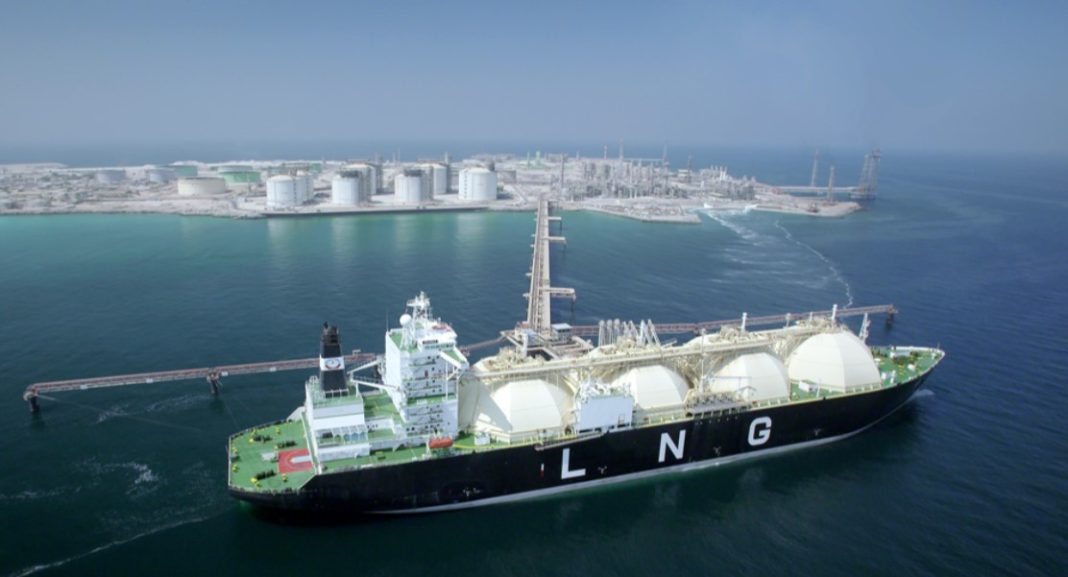
Abu Dhabi’s state energy company signed a 15-year sales and purchase agreement with a unit of British energy major for the delivery of up to 1 million tonnes per annum of liquefied natural gas. The contract represents the first long-term LNG sales deal between the company and Shell and marks the eighth offtake agreement secured for its new export facility.

The LNG will be supplied from the Ruwais LNG project in Al Ruwais Industrial City, Abu Dhabi, which is under development and is set to become the first LNG export plant in the Middle East and Africa region to operate on clean power. Shell holds a 10 per cent equity stake in the project. The agreement converts a previous heads of agreement into a definitive contract and accelerates the project’s commercial timeline.

By securing this deal, more than 8 mtpa of the facility’s planned 9.6 mtpa capacity has already been contracted across Asia and Europe, just 16 months after the project’s final investment decision in July 2024. The project comprises two liquefaction trains of 4.8 mtpa each and is designed to more than double the company’s existing LNG production capacity to around 15 mtpa.

The deal is timed to global gas-market conditions where demand is picking up and energy security is a key concern for buyers. By locking in long-term supply, the exporting company seeks to position itself as a “reliable global supplier of lower-carbon LNG”, while the buyer views the contract as a strategic commitment to expanding its LNG portfolio and securing long-term supplies.

For the seller, the rapid pace at which contract commitments have been won is significant. The chief executive of the gas-division described the achievement of contracting more than 80 per cent of the plant’s capacity within roughly a year of FID as “a new benchmark” for large-scale LNG projects globally, and noted that construction, contractor mobilisation and site works remain on track for commissioning by the end of 2028. The buyer emphasised its long-standing partnership of more than fifty years with the Abu Dhabi exporter and said the agreement supports its global LNG-expansion strategy.

Analysts note that the project’s clean-power design, advanced technology deployment, and rapid contracting distinguish it in the LNG market. That said, while the exporting company releases its ambition to expand its LNG portfolio, competitors in the region are also pursuing aggressive growth, raising competitive risk. Moreover, delivering commercial operations at a low-carbon intensity adds complexity and cost — achieving the projected timeline and performance will require careful execution.

On the demand side, the contract underscores how buyers are increasingly seeking longer-term and lower-emissions supply arrangements in the transition-era gas market. For the buyer, the deal adds to its diversified portfolio of LNG suppliers as it faces intensified competition for cargoes from traditionally dominant exporters. The seller’s ability to secure multiple offtake agreements rapidly helps de-risk the project and supports financing and construction momentum.

One key theme emerging is the alignment of LNG expansion with sustainability credentials. The Ruwais facility’s design to run on clean grid-powered operations, along with claims of being among the lowest-carbon intensity LNG plants globally, reflects a shift in gas-project metrics: projects are now evaluated not solely on cost and capacity but also on carbon footprint and technology sophistication. This trends suggests that access to lower-carbon LNG could become a differentiator among suppliers and a value driver for buyers.

However, achieving this low-carbon ambition may face challenges such as securing clean-power infrastructure, managing capital-cost escalation, and meeting stringent environmental and regulatory expectations across export markets. The broader LNG market is also subject to volatility in feed-gas supply, shipping capacity constraints, and fluctuating demand growth in key markets such as Asia and Europe.

By Dr. Arun Mitra On October 29, U.S. President Donald Trump announced that ‘Because of other countries testing programs, I have instructed the Department of War [the Pentagon] to start testing our nuclear weapons on an equal basis. That process will begin immediately. This statement is not only disturbing but also extremely dangerous’. The last […]

The article US Cannot Be Allowed To Push The World To The Nuclear Precipice appeared first on Latest India news, analysis and reports on Newspack by India Press Agency).

HAI PHONG, VIETNAM – Media OuReach Newswire – 4 November 2025 – Indochina Kajima, the joint venture between Indochina Capital and Kajima Corporation, and ITOCHU Corporation held a ground-breaking ceremony for Core5 Vietnam’s second industrial project in Hải Phòng at Deep C 2 Hai Phong Industrial Zone. The project will deliver approximately 80,000sq.m of world-class ready-built factory space for lease, with a handover expected in Q1/2027. Photo […]

The XRP Ledger delivered a marked performance in the third quarter of 2025, with significant growth across transaction volume, wallet activity and real-world asset tokenisation. A latest report from Messari shows average daily transactions rose from 1.6 million to 1.8 million — an 8.9 per cent uptick. Meanwhile, the number of active sender addresses grew 15.4 per cent, climbing from 21,900 to 25,300, and new wallet addresses surged 46.3 per cent to 447,200. Overall address count reached 6.9 million, up 6.1 per cent.

Growing interest from institutional players is manifest in XRPL’s RWA market capitalisation, which moved from around $115.5 million to $364.2 million, representing a 215 per cent increase during the quarter. Such tokenisation efforts featured funds of tokenised U. S. Treasuries, tokenised short-term debt instruments and real-estate assets being issued via XRPL.

NFT-related activity on XRPL also accelerated. Average daily NFT transactions increased 51.1 per cent — from 50,400 to 76,100 — while NFT minting alone rose 70.8 per cent, climbing from 37,800 to 64,600. The report noted that for the fifth quarter running, the number of active receiver addresses exceeded active sender addresses — a pattern often associated with airdrop and distribution events, as many wallets receive assets from a smaller cohort of senders.

Analysts say this trajectory suggests XRPL is maturing into an ecosystem that is bridging traditional finance and tokenisation, beyond its earlier reputation as primarily a payments-focused ledger. The built-in decentralised exchange, token-issuance features and escrow mechanisms support a broad set of use-cases.

However, the evolving narrative carries risks. One reservation is the heightened concentration of receiver addresses which may indicate that a disproportionate volume of activity stems from token-drops rather than organic usage. The sharp rise in new addresses and sender addresses does not necessarily translate into consistent value transfers unless sustained engagement follows. The decline of average daily receiver addresses by 30.1 per cent in the quarter further underscores the skew towards distribution-type events.

From a market perspective, the native token XRP closed the quarter at $2.85 — up 27.2 per cent — with a circulating market capitalisation of $170.3 billion, outperforming combined gains of the top competitors. That said, macro-factors remain relevant: broader risk sentiment turned negative in October as central-bank rate policy tightened, and XRP slipped to around $2.50 amid heavier selling pressure.

Institutional engagement is underlined by reported allocations of digital-asset treasury exposure: companies such as Trident Digital Tech Holdings, Webus International and others are said to hold sizeable XRP-based exposures in their portfolios. Meanwhile, seven spot XRP ETF applications to the U. S. Securities and Exchange Commission are pending, with expectations mounting around possible approvals and increased institutional inflows.

While enthusiasm builds, critics caution that XRPL’s broader utility remains under scrutiny. Analysts such as Scott Melker have questioned whether XRP’s role in payments can compete against entrenched networks such as SWIFT and other cross-border settlement platforms. The ledger’s capability to sustain and scale tokenisation beyond initial bursts — and to convert new wallet creation into ongoing transaction activity — will be key to its next stage of evolution.

From a technical vantage, XRPL’s architecture offers advantages: fast settlement times, comparatively low fees and in-built token issuance capabilities. The ledger’s use of enforced compliance tools and identity frameworks adds appeal to enterprise and institutional actors exploring tokenised real-world assets. Early adoption signals from tokenised treasuries and short-term debt suggest some firms are viewing XRPL as a settlement infrastructure alternative.

California-based Archer Aviation has signalled accelerated ambition in the electric air taxi sector with its CEO, Adam Goldstein, stating the company anticipates its first commercial flights within the next year across major city corridors. The objective is underpinned by a surge in interest, key contracts and strategic partnerships that could shape the future of urban air mobility.

Goldstein outlined that Archer’s inaugural production-model aircraft — dubbed Midnight — is scheduled to operate “in and around several big urban cities” by June next year, a milestone he described as achievable given current progress. He emphasised the dual track of domestic and international strategy, with particular emphasis on collaboration in the Gulf region. The company confirmed it is working with the UAE government and other global partners as part of its launch ecosystem.

Financially, Archer has bolstered its resources to support certification, manufacturing and ecosystem rollout. In its latest funding round, the firm raised some $300 million backed by institutional investors including BlackRock, bringing total liquidity to roughly $1 billion. These funds are earmarked for critical capabilities such as composites and batteries, underscoring the high cost of advancing from prototype to commercial launch.

Partnerships have emerged as a central pillar of Archer’s strategy. Late last year Archer acquired the patent portfolio of another eVTOL developer, allying further with global manufacturing partner Stellantis and with operators such as Jetex in the Gulf region. Specifically, Archer and Jetex signed a memorandum focused on leveraging Jetex’s network of fixed-base operator terminals—launching in Abu Dhabi and potentially expanding across 30 countries.

At the 2025 Paris Air Show Goldstein reaffirmed Archer’s interest in the UK and Europe as early-adopter markets, noting that regulatory frameworks and infrastructure development would be key determinants of where deployment regulatory certification is achieved first. He also addressed scepticism over the speed of robotic aircraft progress, dismissing a critical short-seller report by saying that “we prove everything by action … we have started our flight campaign, which is going really well, so we will continue to prove by showing not talking.”

The regulatory environment is evolving. The US federal government has elevated advanced air mobility as an industry priority, paving pathways for certification and integration of eVTOL aircraft into air-traffic systems. Nested within this push is the recognition that infrastructure — vertiports, charging systems, air-traffic management — remains the linchpin for commercial viability. Archer’s operations already envisage a dual business model: direct-to-consumer urban air rides and the sale of aircraft to operators.

Despite the momentum, significant challenges persist. Certification of a new aircraft category remains uncharted territory for many stakeholders; technological hurdles persist around battery energy density, noise reduction and charging turnaround. Market pricing models are under scrutiny as well; as early as 2024 industry analysts highlighted that selling an eVTOL aircraft at around US$5 million may be inconsistent with the aim of widespread, affordable urban service. Goldstein and his team must also build out manufacturing capacity: Archer’s planned Georgia manufacturing site, intended to ultimately produce up to 650 aircraft per year, is still under construction.

The Middle East remains a focal region for Archer’s first service launch. High-temperature performance testing of the Midnight aircraft is already underway in Abu Dhabi, where the company is collaborating with local civil-aviation authorities. Simultaneously, the company has signed on for major transport-network projects — notably serving as the official air-taxi provider for the 2028 Los Angeles Olympics, in which flights of 10-20 minutes between key venues are planned.

VISHNU RAJA
RYO YAMADA
HITORI GOTOH
IKUYO KITA
Just in:
BJP’s Aggressive Response Exposes Anxiety Over Opposition Unity // xCube Access Welcomes Entrust Capital Limited  Expanding Access to Professional Portfolio Management // Ta’ziz finalises $1.39bn funding for Ruwais industrial facilities // Utilities pursue ₹1,992 cr in unpaid bills // Middle East governments assess Iran war after US vote // Anthropic to prohibit persistent abuse of Claude chatbot // Democrats capture Senate majority with seven Republican seats // SC to examine students’ exam plea today // Cyberport Venture & Capital Forum 2026 Grand Opening // DIP Holding targets Dh1.12 IPO price and $529m proceeds // Asia Left Behind: Ten international companies have yet to report delivering on their cage-free egg pledges across the region // Arrow Electronics showcases technologies advancing intelligent robotics, mobility and digital infrastructure // Burying Head In “India Made Poverty Reduction” Data Is Dangerous // Fast Just Got Fastest: STING Energy Boost™ Celebrates Kimi Antonelli’s Formula 1® World Championship and the Fan Energy Behind It // APT29-linked campaign exploits outdated Apple and Android software // As AI Reshapes Education, Singapore Convenes Global Dialogue on the Future of Early Childhood Education // Hong Kong mandates crypto transaction disclosures to tax authorities // Vance attributes Republican midterm defeats to Iran conflict // Pinarayi faults UDF over mounting road crashes // ADIA and partners establish $1.4 billion aviation venture //