News related to
Tech

The mortgage market in Dubai and the wider UAE has entered a new stage of maturity. Once dominated almost entirely by cash buyers, today’s property landscape is increasingly shaped by mortgage financing. The first quarter of 2025 recorded AED 33 billion in cash transactions versus AED 21 billion in financed purchases. This indicates a clear rise in mortgage penetration as more residents, families, and long-term investors choose […]

By T N Ashok NEW YORK: For the first time since 2018, Indian Prime Minister Narendra Modi landed in China in late August 2025, greeted warmly by President Xi Jinping for the annual Shanghai Cooperation Organisation (SCO) Summit. Alongside Russian President Vladimir Putin, the trio projected a striking image of solidarity—three leaders from the world’s […]

PLYMOUTH, MINNESOTA; CHICAGO, ILLINOIS; BONN, GERMANY – Newsaktuell – 2 September 2025 – The Seeding The Future Foundation (STF), the Institute of Food Technologists (IFT), and Welthungerhilfe (WHH) today announced the next chapter of the Seeding The Future Global Food System Challenge (GFSC). With the conclusion of its fourth cycle, operations will transition from IFT to WHH, an international leader in food systems transformation and the fight […]

Google has eliminated around 35 percent of managers overseeing small teams, opting to shift many into individual contributor roles in a decisive drive to flatten its organisational structure. Brian Welle, vice president of People Analytics and Performance, revealed during an all‑hands meeting that the company now has substantially fewer managers and direct reports compared to this time last year. The aim is to reduce bureaucracy and accelerate decision‑making […]

Canada is advancing its Arctic security and defence strategy by expanding collaborations with NATO’s newest members—Finland and Sweden. As the geopolitical landscape shifts, Ottawa is actively moving beyond traditional reliance on the United States to forge deeper military, industrial and technological ties with Nordic allies, reinforcing its sovereignty and resilience in the High North. The Honourable Anita Anand, Minister of Foreign Affairs, has formalised a Canada–Finland strategic […]

Alibaba cloud to dedicate its global capabilities to support Bosch’s technology stack Both intend to deepen collaboration in leveraging Alibaba’s AI strength to facilitate Bosch’s business innovations, such as smart cockpit Bosch to expand its e-commerce presence in Southeast Asia, Spain, and Latin America through Alibaba’s global platforms HANGZHOU, CHINA – Media OutReach Newswire – 2 September 2025 – Bosch, a leading global supplier of technology and […]

A colossal leap in infrastructure development is underway as OpenAI pursues the establishment of a data centre in India with a striking capacity of at least one gigawatt. The project, integral to its Stargate initiative, ushers in a new era of AI infrastructure expansion across Asia.

OpenAI is actively exploring partnerships with Indian firms to bring this gigawatt-scale facility to life, though the precise location and timeline remain unspecified. The effort aligns with its Stargate programme—an expansive, multibillion-dollar venture in collaboration with SoftBank, Oracle and MGX to develop next-generation AI infrastructure.

The planned facility stands among the largest of its kind in the region and may be formally introduced by OpenAI’s chief executive, Sam Altman, during his anticipated visit to India in September. OpenAI has already gained legal footing by registering as an entity in India and is gearing up to open its first office in New Delhi later in the year, reflecting the nation’s importance as the company’s second-largest market by user base.

Financial implications of such mega‑scale AI infrastructure are enormous. According to Jensen Huang, chief executive of Nvidia, constructing a singular gigawatt-class facility could cost around $50 billion—$35 billion directed towards Nvidia’s hardware and $15 billion for supplementary systems. OpenAI’s ambitions also include similar “AI super‑factories” in Abu Dhabi and across the United States, all under the banner of Stargate.

This enormous investment is forecast to have ripple effects across the global AI ecosystem. With Stargate estimated at up to $500 billion, it underscores OpenAI’s strategic ambition to lead in AI infrastructure and the mounting demand for AI-optimised processing capabilities. Nvidia, for example, projects AI infrastructure spending could soar to the $3‑4 trillion mark annually by 2030, bolstered by commitments like those under Stargate.

Locally, establishing such a facility in India can offer tangible advantages. A dedicated data centre promises to reduce latency for Indian users while satisfying regulatory demands for local data storage, a critical consideration for enterprise clients and government services. The endeavour complements OpenAI’s earlier move to enable local data residency for services such as ChatGPT Enterprise and its API offerings, aligning with India’s regulatory framework.

India’s data centre ecosystem is expanding rapidly. From an installed capacity of approximately 950 megawatts in 2024, projections currently estimate that figure to nearly double—approaching 2 gigawatts by 2026. However, even with such growth, the nation still accounts for just a fraction of global data centre capacity despite generating a significant portion of worldwide data streams. The arrival of a gigawatt-scale project like OpenAI’s would mark a profound increase in both capacity and technological capability.

Environmental sustainability and energy demands also emerge as critical considerations. Hyperscale data infrastructure requires vast power and cooling resources, raising pressing questions about energy sourcing, water usage, and ecological impact—matters India is progressively addressing through green data centre policies and incentives.

OpenAI’s move echoes broader trends among global tech giants expanding their Indian footprints. For instance, Reliance Industries is planning a three‑gigawatt data centre in Jamnagar; Microsoft, Amazon, and Google are investing heavily in cloud infrastructure; and India’s government continues to support initiatives through Digital India and localisation mandates.

Advertisements

A notable surge in interest marks China’s gaming community, with nearly four in 10 individuals expressing a keen desire for generative AI within gaming platforms.

A recently circulated report indicates that 39 per cent of gamers in China would welcome the integration of generative artificial intelligence into their gaming experiences. This figure underscores a significant shift in consumer expectations and highlights generative AI’s burgeoning role as a differentiator in content creation and gameplay dynamics.

The country’s generative AI gaming market is undergoing remarkable growth. A detailed forecast places market value at approximately USD 319.7 million in 2024, rising sharply to an anticipated USD 5.3 billion by 2035, driven by a robust compound annual growth rate of around 29 per cent. This surge is attributed largely to concerted efforts by major players such as Tencent, NetEase, ByteDance, MiHoYo and Alibaba – all heavily investing in generative AI technologies that promise tailored and dynamic gaming experiences.

Governmental backing is shaping much of this momentum: the Ministry of Industry and Information Technology has been advancing policies to encourage AI-driven innovation within the digital economy, reinforcing investments and research in generative AI applications across the gaming landscape.

On the technological front, Tencent recently introduced its Hunyuan 3D-generation system early this year. The platform enables the creation of 3D assets and environments using text prompts, streamlining content generation and unlocking new avenues for immersive game design. NetEase has also made strides by embedding AI-driven features into its mobile games, most notably with dynamic non-player characters that respond with lifelike reactions. Its upcoming title, Justice Online Mobile, will reportedly incorporate chatbot-style AI dialogue systems to allow players to engage in nuanced conversations with NPCs that may alter game progression.

Cloud gaming is emerging as another vector for AI’s influence. Tencent’s cloud gaming platform, START, developed in partnership with NVIDIA, enables users on low-end devices to stream AAA-quality games—blending AI, cloud infrastructure and advanced hardware to expand access and redefine the gaming experience.

Emerging trends include generative AI’s application across multiple stages of game production—from content creation and level design to character animation, testing and quality assurance. Mobile platforms, PC, console and cloud gaming are all key battlegrounds, assisted by both on‑premises and cloud-based deployment models. On-premises models offer enhanced control and data security, whereas cloud deployments grant scalability, faster updates and foster collaborative development.

China’s gaming population, exceeding 600 million users, offers a vast and varied demographic. That scale is bolstering demand for personalised, generative experiences.

Beyond purely technological innovation, generative AI is starting to influence the narrative and emotional depth of gameplay. NPC interactions, procedurally generated story arcs and real‑time adaptations informed by AI are creating fresh, immersive layers of engagement. Developers – both established studios and indie creators – are experimenting to align with gamer preferences and refine the interplay between narrative and agency.

Regulatory frameworks are also evolving. The Cyberspace Administration of China and other authorities introduced “Interim Measures for the Management of Generative AI Services” in August 2023. These regulations aim to ensure ethical application and secure deployment of generative AI technologies across public services – including gaming.


A new digital platform, the Flight Operations Centralised Unified System, has been unveiled by the General Civil Aviation Authority to drastically streamline how both foreign and national air operators seek operational approvals across the UAE. The system consolidates key regulatory links and information into a single, user‑friendly gateway, promising faster processing, greater transparency, and reduced bureaucracy. Saif Mohammed Al Suwaidi, Director‑General of the GCAA, described F. O. C. U. S. […]

WorldShards has revealed that its Token Generation Event will take place on 5 September 2025, aligned with its debut listing on Bybit’s Spot market. The collaboration has been formalised through a partnership with Bybit, the world’s second‑largest cryptocurrency exchange by trading volume, setting the stage for the $SHARDS token to embrace broader market accessibility.

The partnership entails a Bybit Megadrop promotion, offering participants opportunities to stake USDT or MNT and earn from a 60 million SHARDS prize pool. This initiative runs from 5 to 9 September and is intended to support early liquidity and user engagement.

WorldShards is a downloadable Web3 MMORPG developed by Lowkick Studio, rooted in a fantasy sandbox universe filled with crafting, exploration, and dynamic role‑playing. It blends blockchain elements such as NFT‑authenticated content into its interactive gameplay. The $SHARDS token adheres to a “fair launch” model, with no allocations reserved for the development team or early investors—enhancing perceived transparency and community ownership.

Ahead of its TGE, WorldShards will offer a 30‑day free access period to new players. Those who remain active for at least 25 days within that window will unlock full and permanent access to the game at no additional cost. This incentive is limited to new accounts and is designed to accelerate early engagement.

WorldShards operates on a fixed total supply model, capped at 5 billion tokens. Tokenomics are structured to distribute 60 percent for player rewards and 25 percent for ecosystem liquidity, with the remainder supporting broader community initiatives; remaining tokens are vested over six years to safeguard economic equilibrium.

Industry observers note that Bybit’s participation brings critical market exposure, offering access to its global user base—which exceeds 70 million accounts—and enhancing $SHARDS’ market liquidity and visibility. This positions $SHARDS amid the growing momentum of GameFi, where blockchain technology merges with immersive gaming economies.

While specific user metrics for WorldShards remain undisclosed, broader gaming industry data suggests a robust opportunity: in 2025, there are an estimated 3.43 billion active online gamers, with mobile gaming accounting for more than half of platform usage. Regions such as the Middle East, North Africa and Turkey have displayed notable growth in mobile gaming revenue, signalling favourable markets for adoption.

Lowkick Studio, the developer based in Abu Dhabi and founded in 2022, comprises industry veterans formerly involved in games such as World of Tanks and Allods Online. The studio’s trajectory includes partnerships with Abu Dhabi Gaming and OpenLoot, rapid community expansion exceeding half a million members, $8.6 million in NFT sales during 2024, and over 600,000 unique active wallets prior to TGE.

Within the WorldShards ecosystem, $SHARDS serves multiple functions—including item upgrades, rarity enhancements, rift processing, stat re‑rolling, and external trade—solidifying ties between in‑game progression and broader market dynamics.

Chinese President Xi Jinping delivered a bold address at the Shanghai Cooperation Organisation summit in Tianjin, asserting China’s leadership role in global affairs and unveiling a series of strategic initiatives—most notably a new AI cooperation centre and a development bank—that signal an assertive pivot towards a multipolar world order. With over 20 leaders present, including Russian President Vladimir Putin and Prime Minister Narendra Modi, the summit stood […]

Kraken’s Chief Security Officer, Nick Percoco, has issued a warning to users about a sophisticated phishing campaign impersonating the platform. Attackers are dispatching emails that replicate Kraken’s branding—with near-identical logos, fonts and messaging—to pressure recipients into taking urgent action. The emails allege the need to accept “updated terms” within a two‑day window, a tactic intended to prompt hasty decisions. In nearly every instance, the sender urges recipients to download remote desktop software such as AnyDesk under the guise of offering support. Percoco emphasises that Kraken will never request installation of such tools from users.

Such phishing attempts exploit both visual authenticity and psychological manipulation—cultivating a sense of urgency to override caution. According to official guidance, Kraken will only use verified domains—including @kraken. com, @futures. kraken. com, @email2. kraken. com, @email. krak. app and other specific, approved addresses—to communicate with users. Any other source should be treated as suspicious.

This incident reflects a broader escalation in phishing tactics across the crypto sector. Industry data indicates that phishing attacks surged more than 200% in August, resulting in losses exceeding $66 million. One single breach accounted for $55 million in stolen funds. Abnormal AI, a cybersecurity firm, attributes the elevated threat level to more advanced techniques—emails originating from older, seemingly trustworthy domains, employment of social engineering, and polished language devoid of traditional red‑flag keywords. These newer attacks are designed to bypass legacy email filters and evade automated detection.

Users are urged to remain vigilant and adopt a security-first mindset. The most effective defence measures include verifying sender addresses, suspecting communications that evoke fear or demand immediate compliance, and avoiding email links entirely—especially those prompting software installation. Instead, users should always navigate directly to Kraken’s official URL (), ideally via a bookmarked link, and contact support through trusted channels if unsure.

Kraken’s approach is rooted not only in technological safeguards but also in cultivating user awareness. Percoco has previously underscored that phishing and social engineering are among the most common threats to both users and employees. Kraken’s layered filtering and a security-conscious culture help reduce risk, though no system is foolproof. Humans remain the critical last line of defence.

With trusts at stake, exchanges are under mounting pressure to enhance transparency and user education. Some platforms have introduced anti‑phishing codes or digital signatures to help users verify authenticity. While Kraken currently relies on verified domains and user education, the challenge continues to evolve as attackers adopt more deceptive techniques.

Enterprise technology budgets are increasingly tilted towards AI, with artificial intelligence infrastructure and software commanding the lion’s share of growth while traditional hardware investment shows signs of stagnation. IDC projects global AI spending will surge to over US $632 billion by 2028, propelled by an almost 30 percent compound annual growth rate between 2024 and 2028. Generative AI alone is expected to capture roughly one‑third of this, driven by a […]

Arabian Post Staff -Dubai Night Vision Pro driving glasses claim to reduce glare and enhance low-light viewing through yellow‑tinted lenses and anti‑reflective coatings. User testimonials often echo these benefits, reporting clearer contrast and less eye strain behind the wheel. But independent experts and research cast doubt on whether these lenses truly deliver improved safety and visibility. Night Vision Pro glasses are described as non‑prescription eyewear with yellow‑tinted […]

Crypto casinos continue to outpace regulatory efforts, with regulatory frameworks lagging behind industry growth. Crypto gambling revenue soared past $81 billion in 2024, a more than fivefold increase since 2022, as players flocked to platforms such as Stake, Rollbit and Roobet—licensed in jurisdictions like Curaçao and Malta—despite restrictions in major markets including the UK, US and China. Widespread access through VPNs and affiliate marketing, combined with limited KYC […]

As the first event held at the newly inaugurated Vietnam Exposition Center in Hanoi, the exhibition titled “80 Years of Independence – Freedom – Happiness” has become a symbol of a modern, ambitious, and globally engaged Vietnam. HANOI, VIETNAM – Media OutReach Newswire – 2 September 2025 – Anyone who finds themselves in Hanoi these days can sense that history is not just something written on faded […]

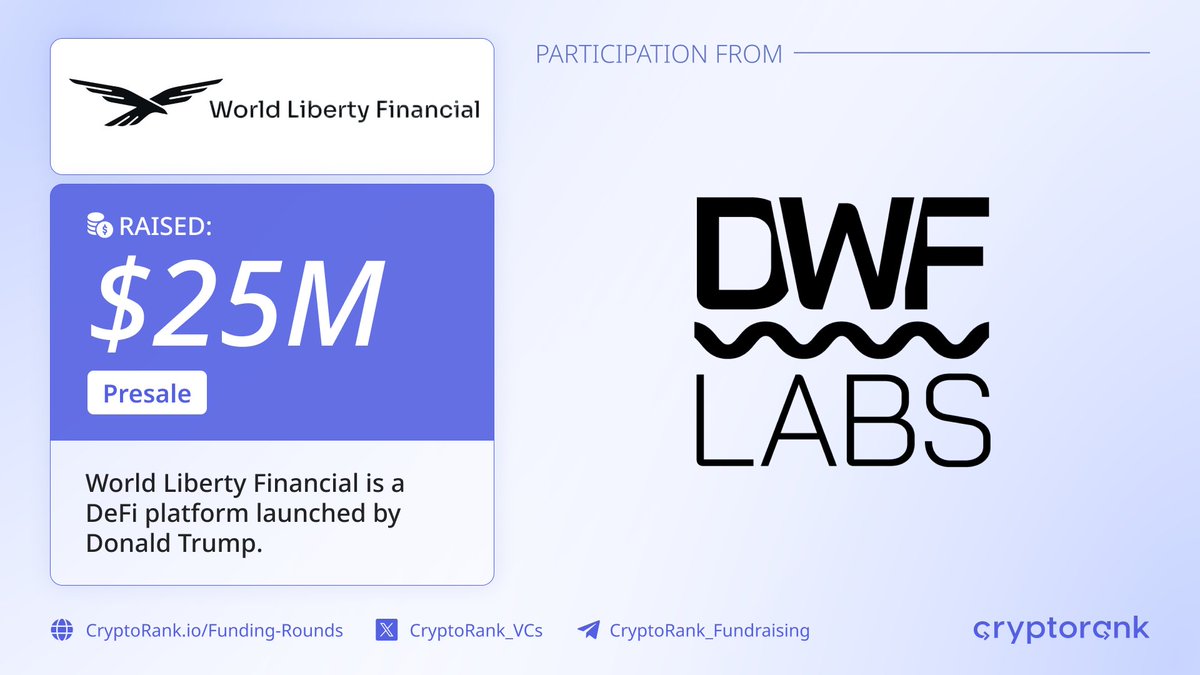
DWF Ventures, the investment arm of Web3 market‑maker DWF Labs, has delivered a detailed evaluation of $WLFI, World Liberty Financial’s newly issued utility token. Published via X, the analysis emphasises $WLFI’s integration into World Liberty’s broader ecosystem and its potential as a key enabler in connecting traditional finance with on‑chain liquidity. Unlike World Liberty’s $TRUMP memecoin, $WLFI is purpose‑built to power the upcoming “WLFI super app”, which will streamline access through web wallets and bank on‑ramps, and underpin planned lending and borrowing services.

The report highlights the success of the USD1 stablecoin—backed by short‑term US Treasuries and cash equivalents—which now commands a market capitalisation approaching $2.5 billion and enjoys listings on major exchanges such as Binance and Coinbase. These developments have significantly boosted investor attention toward the $WLFI token.

World Liberty has raised approximately $500 million across two funding rounds by selling about a quarter of its 100 billion token supply. Among its backers are DWF Labs itself and crypto figure Justin Sun, while ALT5 Sigma has outlined a $1.5 billion treasury strategy centred around $WLFI. DWF Ventures expects that the token could soon be integrated by several DeFi protocols, including Falcon Finance, Ethena and Mantle.

Importantly, DWF Ventures positions $WLFI’s launch as more than a token debut; it sees the initiative as a structural pivot that could catalyse institutional adoption and facilitate compliant capital onboarding—possibly even drawing interest from sovereign investors.

But $WLFI’s entry into the market has triggered concerns. Reports reveal technical difficulties involving the Lockbox contract, intended to unlock 20 percent of token allocations for early investors, which have left many users unable to activate the mechanism. Pre‑market trading responded with a 40 percent drop, raising doubts about launch readiness. Coupling these issues with the political profile of its founders, the token has become entangled in financial and reputational risks.

Indeed, WLFI’s connection to the family of the former president has cast a shadow over its market potential. The token’s political dimensions have already affected diplomatic engagements—such as withdrawals from the Bitcoin Asia 2025 conference—and prompted ethical criticism over conflicts of interest.

Broader scrutiny of World Liberty Financial underscores such tensions. Investigations have revealed that the Trump family commands a substantial share of revenue from token sales and that governance design reflects unusual centralisation for a DeFi project. Further concerns relate to self‑dealing practices: for instance, ALT5 Sigma—a firm acquired by World Liberty—purchased $750 million worth of WLFI tokens. As part of this arrangement, its leadership includes Eric Trump and WLFI co-founder Zach Witkoff, a structure that regulators and critics view as raising red flags.

Ethics experts warn that such close ties between ruling office, private enterprise and foreign investment could undermine democratic safeguards. The New Yorker, for one, described the venture as stretching the norms of political ethics, with World Liberty seen by some as a mechanism for influence through token‑based access channels.

The $WLFI launch is clearly more than a token generation event—it is shaping into a test case for the nexus of politics, finance and regulation in the emerging Web3 era.

The European Union is preparing to postpone taxes on aviation and shipping fuels until 2035 under its energy tax reform, a move that significantly delays the implementation of climate-aligned taxation for these sectors. A draft proposal endorsed by Denmark, the current holder of the EU presidency, outlines this extension and is slated for discussion among member states in Brussels, with an aim to reach agreement in November. […]

Lunate has unveiled a new thematic ETF offering, marking the first of its kind in the region, aimed squarely at quantum computing—a field rapidly reshaping sectors from pharmaceuticals to cybersecurity. The Boreas Solactive Quantum Computing UCITS ETF, developed under Lunate’s newly introduced Boreas range, is set to debut on the Abu Dhabi Securities Exchange on 22 September under the ticker QUANTM.

The fund traces the Solactive Developed Quantum Computing Index and encompasses 25 firms spanning pure-play quantum specialists like IonQ and Rigetti, alongside technology giants at the vanguard of quantum research such as Microsoft, Nvidia, and IBM. Lunate, acting through its regulated affiliate in Abu Dhabi, is spearheading the investor-facing programme, which integrates active thematic research with transparent, index‑based selection.

Geir Espeskog, an industry veteran, heads the specialist team behind the Boreas suite, reinforcing Lunate’s intensified investment in its ETF platform. Following the addition of this thematic ETF to its portfolio, Lunate will manage a total of 19 offerings, combining traditional and thematic strategies.

ADX’s Group Chief Executive, Abdulla Salem Alnuaimi, highlighted the significance of this launch, noting that QUANTM will serve as the 17th ETF listed on the exchange. He underscored its value in granting investors direct access to global leaders in quantum computing, including Alphabet and Amazon.

Solactive, the index provider, described the collaboration as a milestone both for itself and for thematic ETFs in the region. Its ARTIS® natural language processing power plays a central role in categorising companies across hardware, software & algorithms, and communication & sensing segments—applying a rank-weighted methodology that ensures balanced exposure within the index.

Market trends underpinning this launch are compelling. The global thematic fund arena has nearly doubled in size over five years, reaching roughly $562 billion. In the U. S. and Europe, thematic ETFs have also surged; by early 2025, the U. S. counted 473 listings, while Europe hosted 748, with assets concentrated in tech-heavy strategies such as AI and digital infrastructure.

Investors may subscribe to QUANTM between 10 and 16 September via six authorised participants or the ADX eIPO portal. The fund will carry a total expense ratio of 0.49 percent.

Novacore Innovations, based in Mumbai, has launched India’s inaugural GPU cloud platform built around NVIDIA’s Blackwell‑based B200 servers. The platform, powered by a ₹44.6 crore line of credit led by Rashi Fincorp with backing from U. S. and Abu Dhabi investors, is being deployed in Hyderabad to serve startups, researchers and enterprises across India, the U. S. and the Middle East.

This GPU‑as‑a‑service offering centres on the NVIDIA B200, an iteration of the Blackwell architecture that boasts up to 2.3× higher peak performance and double the real‑world AI speed over its predecessors. It is equipped with 192 GB of HBM3e memory, 8 TB/s bandwidth, fifth‑generation tensor cores and dual transformer engines, which collectively accelerate training by up to 3× and inference throughput by as much as 15×, while enhancing energy efficiency up to 25×.

Novacore’s co‑founders, Ranbir Badwal and Aryamaan Singhania, credit India’s low energy costs, technical workforce and Hyderabad’s robust data‑centre ecosystem for enabling this development. They emphasise that the platform offers lower hosting costs, rapid provisioning, and scalable compute for generative AI, large language models, scientific computing and real‑time analytics.

As an incentive to foster uptake, Novacore is offering trial access to qualifying startups and research labs across its target markets.

The platform also aligns with wider developments in India’s AI infrastructure. NVIDIA is collaborating with major domestic firms such as Reliance and Tata to expand locally hosted AI data‑centre capabilities powered by renewable energy, supporting India’s sustainability and net‑zero objectives. Meanwhile, the domestic AI‑as‑a‑service market is forecast to expand at a compound annual growth rate of roughly 26.4 percent, reaching an estimated $31.94 billion by 2031.

The launch of this platform by Novacore marks a significant enhancement in India’s ability to support advanced, high‑performance AI workloads locally. Transactions such as a similar move by CoreWeave in North America—deploying Blackwell Ultra GPUs commercially in July 2025—highlight a global push toward increasingly capable and efficient AI infrastructure.

A wave of data indicates that staff reliance on informal messaging platforms, particularly WhatsApp, is opening critical cybersecurity gaps across organisations. The 2025 KnowBe4 Africa Annual Cybersecurity Survey shows that 93 per cent of African professionals use WhatsApp for work purposes—surpassing email and even messages sent via enterprise-grade tools. Alarmingly, up to 80 per cent of these users operate from personal devices that often lack proper management […]

OKB, the native token of the OKX exchange, surged past the $200 threshold in the wake of a sweeping tokenomics overhaul and landmark ecosystem upgrades. These strategic shifts have reshaped the token’s role within the OKX ecosystem, igniting both market interest and institutional focus.

A decisive blow to token supply was delivered on 13 August 2025, when OKX executed a one‑off burn of approximately 65 million OKB—equivalent to around $7.3 billion—effectively halving circulating supply and capping total supply at 21 million tokens. The smart‑contract upgrade also eliminated future minting or discretionary burns, solidifying this deflationary model.

That scarcity shock triggered an explosive price rally. OKB vaulted from roughly $45 to a range between $135 and $200, with reported gains of 160–170% in the immediate aftermath. Trading volumes followed suit, rising sharply—in some accounts by as much as 383%, with daily turnover exceeding $1 billion.

Parallel to the token burn, OKX launched its upgraded X Layer blockchain, powered by Polygon’s CDK and zkEVM technology. This infrastructure now delivers throughput of 5,000 transactions per second, near‑zero gas fees and enhanced Ethereum compatibility, positioning OKB as the exclusive gas token across OKX Wallet, Exchange and Pay services. By migrating more than 90% of OKB tokens to X Layer and phasing out Ethereum Layer‑1 and OKTChain, OKX has consolidated liquidity and simplified its token architecture.

OKX also introduced a $100 million X Layer Ecosystem Fund to support developers and drive adoption in areas such as DeFi, payments and real‑world assets, while exploring entry into regulated markets in Europe and pursuing an IPO in the U. S..

Analysts caution that the token’s meteoric rise has pushed key technical indicators into overbought territory. Yet, many argue that OKB’s redefined scarcity model and expanded utility offer a structural foundation for sustained value, rather than a fleeting speculative euphoria.

Amid lingering regulatory uncertainties, particularly across Asian markets, investor sentiment remains firm. Continued strength may hinge on user migration to X Layer and the successful rollout of incentive initiatives and application-building support.

A client‑side remote code execution flaw in Google Web Designer for Windows poses a severe threat, allowing attackers to inject malicious CSS into configuration files to subvert internal APIs and seize full control of affected systems. The bug impacts every build prior to version 16.4.0.0711, and a fix has already been deployed in that release. Security researcher Bálint Magyar publicly disclosed the vulnerability, tracked as CVE‑2025‑4613, by demonstrating […]

Okta Threat Intelligence has uncovered a widespread campaign exploiting malicious online ads to tempt hotel and vacation rental professionals into disclosing access credentials. Attackers have been deploying paid search advertisements on platforms such as Google Search, impersonating familiar hospitality service providers. These deceptive ads lead victims to counterfeit login portals of cloud‑based property management and guest messaging systems, with the goal of harvesting usernames, passwords and one‑time authentication codes.

The adverts specifically mimic legitimate service providers—Okta researchers identified at least thirteen hospitality‑focused brands being spoofed. Rather than redirecting users to authentic company sites, these ads channel them to typosquatted domains that host visually convincing but fraudulent login pages. Through these pages, attackers collect credentials and MFA codes, undercutting security even when multi‑factor authentication is in place.

The phishing sites also incorporate tracking capabilities—collecting geolocation, session data, bot detection metrics and analytics—to better tailor the campaign and measure its effectiveness.

This strategy exemplifies the growing menace of malvertising, where advertisements themselves become vectors for malware distribution or phishing. Malwarebytes data reflects dramatic growth in such campaigns: a 42 per cent month‑on‑month escalation in fall 2023, followed by another rise of 41 per cent between July and September. Malicious ads frequently appear alongside legitimate search results, granting them apparent credibility and increasing the chance of successful deception.

Experts point out the dual advantage these tactics offer to threat actors: extensive reach through ad networks and a veneer of trust derived from the proximity to legitimate search results.

The hospitality sector faces unique vulnerabilities as hotels and rental operators increasingly rely on cloud systems to manage bookings, guest interactions and operational workflows. With projections indicating that by 2028 some 76 per cent of travel and tourism revenues will be generated online, these sectors have become especially tempting targets.

This campaign represents a convergence of two escalating cybersecurity concerns: the explosive growth of malvertising and the rising exposure of hospitality infrastructure to credential-based attacks. While the ads serve as the initial lure, the fraudulent credential capture enables potential downstream compromises across cloud services that manage guest data, reservations and even messaging systems.

For hotel and rental operators, the implications are severe—a breach of access credentials might cascade into broader system intrusions, guest data exposure and operational disruption. Preventive measures should include rigorous verification of URLs before entering credentials, vigilant monitoring of sponsored search results for impostor ads, widespread staff awareness and training, and robust technical controls like domain-based message authentication and behavioural anomaly detection.

Journalistic integrity demands careful cross-verification of details. Okta’s findings were drawn from their threat intelligence and threat detection capabilities tailored to enterprise identity environments. Malvertising trends are substantiated by independent cybersecurity data from industry researchers such as Malwarebytes. The convergence of these findings draws a consistent picture: the hospitality industry must brace for sophisticated phishing campaigns delivered via the same channels they rely on for marketing.

VISHNU RAJA
RYO YAMADA
HITORI GOTOH
IKUYO KITA
Just in:
U.S. Mid Term Result Is A Clear Verdict Against Trump’s Authoritarianism // Pinarayi faults UDF over mounting road crashes // Dubai boat show confirms international shipyard line-up for November // AI trust gap reveals distinct retail priorities: Divergent paths to consumer growth in Hong Kong and the GBA // Utilities pursue ₹1,992 cr in unpaid bills // e-Crime Bureau Signs Cybersecurity Partnership With Smart Africa, Reinforcing Its Global Expansion // Fast Just Got Fastest: STING Energy Boost™ Celebrates Kimi Antonelli’s Formula 1® World Championship and the Fan Energy Behind It // Govt opposes Arlekar’s PSC action // CR Longdation Aethereal Cybersecurity × Global Cybersecurity Alliance (GCSA) Join Hands to Establish the “AI and Cybersecurity Research Centre” // Ta’ziz finalises $1.39bn funding for Ruwais industrial facilities // ADIA and partners establish $1.4 billion aviation venture // After Reaching 7 Million Users in the Philippines, Skyro Launches Transparent Cash Loans in Malaysia // UK air traffic outage inflicted £33m financial losses // Burying Head In “India Made Poverty Reduction” Data Is Dangerous // Vance attributes Republican midterm defeats to Iran conflict // Asia Left Behind: Ten international companies have yet to report delivering on their cage-free egg pledges across the region // xCube Access Welcomes Entrust Capital Limited  Expanding Access to Professional Portfolio Management // Cloudflare unveils Zero Wire vulnerability intelligence service // APT29-linked campaign exploits outdated Apple and Android software // Meraas showcases five residential zones at Dubai Design Week //