Just in:
UK air traffic outage inflicted £33m financial losses // Fast Just Got Fastest: STING Energy Boost™ Celebrates Kimi Antonelli’s Formula 1® World Championship and the Fan Energy Behind It // CR Longdation Aethereal Cybersecurity × Global Cybersecurity Alliance (GCSA) Join Hands to Establish the “AI and Cybersecurity Research Centre” // SC to examine students’ exam plea today // Cloudflare unveils Zero Wire vulnerability intelligence service // Pinarayi faults UDF over mounting road crashes // Dubai boat show confirms international shipyard line-up for November // Emirates Group records AED 4.1 billion half-year profit // As AI Reshapes Education, Singapore Convenes Global Dialogue on the Future of Early Childhood Education // U.S. Mid Term Result Is A Clear Verdict Against Trump’s Authoritarianism // Anthropic to prohibit persistent abuse of Claude chatbot // Oil and chip shares retreat after Democratic victories // Vance attributes Republican midterm defeats to Iran conflict // Hong Kong mandates crypto transaction disclosures to tax authorities // Meraas showcases five residential zones at Dubai Design Week // Govt opposes Arlekar’s PSC action // Burying Head In “India Made Poverty Reduction” Data Is Dangerous // e-Crime Bureau Signs Cybersecurity Partnership With Smart Africa, Reinforcing Its Global Expansion // Utilities pursue ₹1,992 cr in unpaid bills // After Reaching 7 Million Users in the Philippines, Skyro Launches Transparent Cash Loans in Malaysia //

News related to
Tech

Organizations are deploying artificial-intelligence-driven defences to counter increasingly sophisticated cyber threats as attackers harness the same technology to mount agile attacks. Leaders at major cybersecurity firms say the conflict between defenders and adversaries has entered a new phase, where speed, adaptability and automation are critical. The security firm Palo Alto Networks announced upgraded platforms designed to protect cloud assets and AI-based applications, citing the need to monitor […]

A major step in electric-vehicle battery technology has been reached as GAC Group announced the completion of China’s first large-capacity all-solid-state battery production line capable of manufacturing vehicle-grade cells of 60 ampere-hours or more. According to company statements, the new line has achieved an areal capacity of 7.7 mAh/cm², compared with under 5 mAh/cm² for many conventional lithium-ion cells, signalling a potential leap in energy storage performance.

GAC’s research director, Qi Hongzhong, said that the energy density of the new solid-state cells is nearly double that of traditional liquid-electrolyte batteries and that vehicles currently capable of about 500 km range could stretch beyond 1000 km once the technology is integrated. The production line is presently in small-batch testing; vehicle integration trials are planned for 2026, with full mass-production targeted between 2027 and 2030.

This development places GAC among the first manufacturers globally to deploy large-format all-solid-state technology, an area in which automakers and battery firms in Japan, Korea and the United States have long been striving. Analysts observe that scaling solid-state technology from lab cells to industrial manufacturing has been a major bottleneck, primarily due to challenges around thick-electrode fabrication, solid-electrolyte interface stability, and cost. GAC’s ability to hit the 7.7 mAh/cm² threshold suggests the company has resolved at least one of the key obstacles.

The solid-electrolyte used in the new cells reportedly allows higher thermal thresholds—tolerating 300-400 °C compared to about 200 °C for conventional cells—and the battery manufacturing process incorporates a “dry” anode method that combines slurry mixing, coating and rolling into a single step. These process innovations are claimed to reduce energy consumption during manufacture and increase yield.

Alongside GAC’s progress, Dongfeng Motor Corporation is advancing its own all-solid-state agenda, targeting mass production of a 350 Wh/kg solid-state battery in September 2026, which it says will enable electric vehicles to achieve a range in excess of 1,000 km. Dongfeng already operates a 0.2 GWh pilot line and is working on variants of 400 Wh/kg and 500 Wh/kg solid-state batteries. The firm states that its 350 Wh/kg battery retains over 72% of its capacity at –30 °C and passed a 170 °C thermal safety test, surpassing current national standards.

Together these announcements reinforce the increasing pace of commercialization in the solid-state battery sector. Manufacturers hope such cells will deliver significant advantages over conventional lithium-ion chemistry: higher energy density, faster charging, better cold-weather performance and improved safety due to the absence of flammable liquid electrolytes. In GAC’s case, the large-cell format means fewer cells are needed per pack, potentially reducing packaging complexity, cost and weight.

However, experts caution that substantial hurdles remain before widespread adoption. Solid-electrolyte materials and manufacturing infrastructure are still costly, and long-term durability in automotive conditions – repeated charge/discharge cycles, thermal stress and mechanical vibration – must be validated. Further, supply-chain constraints for key materials such as solid-electrolyte precursors, special anode/cathode materials and high-purity manufacturing equipment continue to pose risks. GAC and Dongfeng both emphasise the need for ecosystem readiness, including new cell formats, pack integration and vehicle platforms designed for solid-state cells.

The strategic dimension of this move is significant: as China consolidates its leadership in electric vehicles and battery manufacturing, gaining industrial-scale capabilities in solid-state technology could confer a competitive edge. The reported 7.7 mAh/cm² areal capacity and 60 Ah cell format indicate that GAC is not simply experimenting in the lab but making strides towards production-level readiness. Whether the transition to full-scale mass manufacture meets the timetable will be closely watched by global automakers and battery suppliers alike.

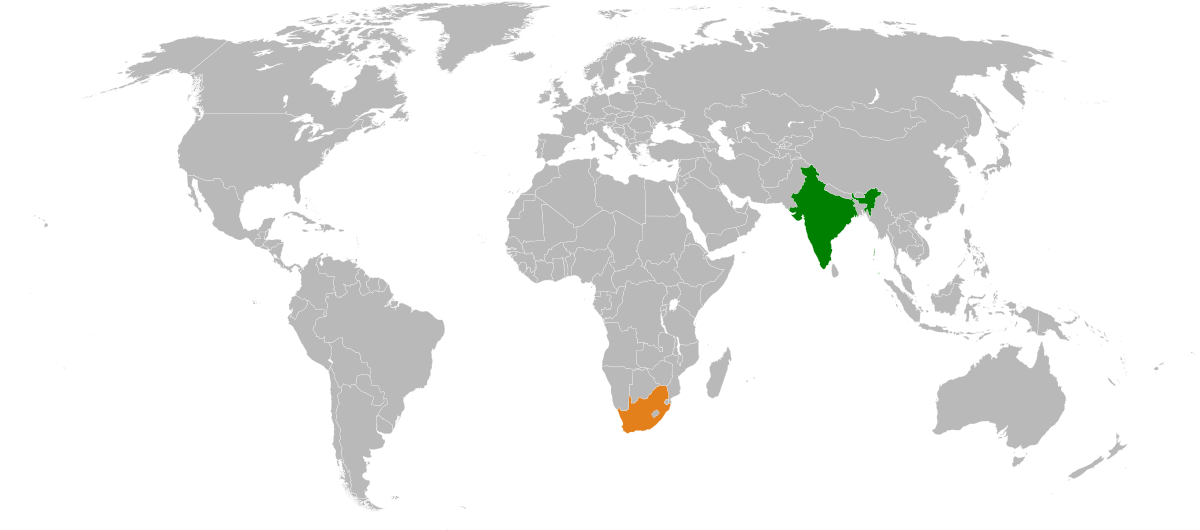
Leaders of India and South Africa affirmed a joint commitment to amplify the resonance of the Global South during a bilateral meeting on the margins of the G20 summit in Johannesburg. India’s Prime Minister met South African President Cyril Ramaphosa to review an expanding partnership that now encompasses trade, digital infrastructure and critical-minerals cooperation.

The leaders emphasised the historical foundation of bilateral ties, tracing back to shared anti-colonial struggles and longstanding people-to-people links. They identified emerging sectors of collaboration, including artificial intelligence and digital public platforms, as well as enhanced investment flows across innovation, infrastructure and mining sectors.

India expressed gratitude to South Africa for its role in relocating cheetahs to India and extended an invitation for South Africa to join the International Big Cat Alliance. At the G20 held in Johannesburg, which is the first summit of its kind hosted on African soil, South Africa has sought to spotlight issues of development, sustainability and Global South equity.

The two countries signalled their readiness to facilitate mutual investments, noting the growing footprint of Indian firms in South Africa and a shared interest in deepening bilateral ties in mining, start-ups, technology and infrastructure. They agreed to enhance support frameworks for these sectors.

In the domain of digital transformation, the meeting explored ways in which India’s Digital Public Infrastructure experience could be shared with South Africa, with the leaders discussing a roadmap for cooperation in those digital arenas that support transparency, inclusion and scalability.

On critical minerals—the backbone of technologies from electric vehicles to renewable energy systems—the dialogue underscored the strategic convergence of India’s growth ambitions and South Africa’s resource endowment. Both governments emphasised sustainable extraction, value-chain development and mutual investment as priorities.

The meeting also took place against the backdrop of global institutional reform debates, where developing countries increasingly seek to adjust frameworks such as the IMF and development banks. South Africa, as serving G20 chair, has framed its presidency around the themes of solidarity, equality and sustainability, particularly as representative of countries in the Global South.

While the two leaders concentrated on bilateral priorities, they also discussed multilateral coordination and collective platforms. They welcomed South Africa’s initiative to convene the IBSA leaders meeting and affirmed cooperation ahead of India’s upcoming chairship of BRICS in 2026.

Observers note that India–South Africa ties have evolved from traditional trade and diplomacy to a more strategic convergence around technology, investment, and global governance. According to experts, this shift reflects the changing priorities of middle powers in a multipolar world, where alignment on development and technological sovereignty is rising.

However, there remain practical challenges. For South Africa, translating resource-rich endowments into sustainable, inclusive growth has long been a domestic policy hurdle. For India, ensuring that digital partnerships respect both sovereignty and local capacity presents implementation risks. Critics argue that while high-level pledges are valuable, they must be matched by concrete mechanisms, regulatory clarity and project-level follow-through.

In trade terms, the two countries’ discussions come at a time when global supply-chain realignments and technology competition are raising the stakes for investment in emerging markets. Indian companies entering South Africa will need to navigate regulatory complexity, local participation requirements and the country’s infrastructure bottlenecks. South Africa, for its part, will have to ensure that its mining and start-up ecosystem attract and retain investment while meeting environmental and community benchmarks.

The diplomatic messaging also signals a broader orientation for both nations. India’s engagement with Africa has increasingly focused on capacity-building and infrastructure, while South Africa has positioned itself as a voice for Africa in global forums. Their joint push to amplify the Global South suggests an intention to influence agendas around debt relief, climate finance, digital equity and reform of global institutions.


Gamers facing unexpected slowdowns on the PlayStation 5 are turning to a set of practical optimisation steps that have gained wide attention across the gaming community, as players report smoother gameplay and shorter load times after fine-tuning system settings and improving network configurations. The guidance reflects broader efforts by console owners to get the best possible performance from the device as game file sizes grow, online titles […]

A pioneering bio-textile crafted from marine algae has been rolled out by the Fashion Commission of Saudi Arabia at the Misk Global Forum in Riyadh, marking a bold step into sustainable fashion. The initiative, termed the Red Sea Seaweed Project, turns algae harvested from the Red Sea into fabric through a collaboration with King Abdullah University of Science and Technology and the fibre-specialist PYRATEX. The unveiling took place during a panel titled “Fabric of the Future: Red Sea Seaweed Textile” and was led by the commission’s CEO Burak Çakmak.

The textile is created by integrating seaweed biomass with Lyocell and organic cotton to form a sustainable fibre. Py­ra­tex’s expertise in seaweed-based fabrics—previously applied in other regions—has been adapted here for local algae species. The venture relies on KAUST’s research unit KAUST Beacon Development to harvest Red Sea algae while maintaining its bioactive properties and supporting a traceable supply chain. Çakmak said the material “marks a defining moment in our journey to build a future-ready sustainable fashion ecosystem. By transforming a local natural resource into a fully traceable, sustainable textile, we are demonstrating the power of science, creativity and industry working together.”

KAUST’s involvement builds on its broader algal biotechnology work, including the DABKSA initiative set up with the Ministry of Environment, Water and Agriculture to establish local algae-based industries. That scheme originally focused on animal feed, but now its marine-species work is feeding into fashion applications. PYRATEX’s page confirms seaweed-based fabrics offer anti-irritation and skincare benefits—though that model was previously developed in Iceland.

The project is designed not only as a material innovation but as a symbol of economic diversification. The Fashion Commission says it aims to strengthen the Kingdom’s domestic fashion ecosystem by embedding sustainability principles and leveraging local resources. The Lab, the commission’s in-house development studio, converted the seaweed fibre into wearable garments, emphasising full supply-chain transparency.

Analysts note that the fashion industry globally is under rising pressure to reduce its environmental footprint. The Guardian estimated the sector accounts for up to 10 per cent of global greenhouse-gas emissions. By tapping coastal biomass, the Saudi initiative could offer a distinct regional advantage. The Red Sea region’s marine environment provides access to algae species adapted to high salinity and heat, meaning less intensive cultivation may be required. KAUST’s earlier trials with extremophile algae in desert conditions underline that point.

However, questions remain about how the new textile will scale commercially and how its sustainability claims will hold in full life-cycle analyses. Industry watchers emphasise that adopting bio-based textiles is only part of the solution; supply-chain energy use, water consumption, and end-of-life recyclability also matter. The Fashion Commission acknowledged those challenges in its public statement but noted this is a “first step” in a broader innovation roadmap.

Beyond the material itself, the move aligns with broader strategic priorities such as Vision 2030 and the Saudi Green Initiative, which call for economic diversification and sustainable development across the Kingdom. It also positions Saudi fashion as a player in the global sustainability agenda, where brands are looking for story-driven innovation and regional supply-chain transparency. The Fashion Commission’s statements emphasise that this home-grown development can contribute meaningful solutions to the global fashion landscape.

Bitcoin climbed to just below $88,000, with fresh momentum in the market fuelling optimism among traders and analysts. The broad crypto ecosystem responded in kind, bringing the total market capitalisation close to the $3 trillion mark — a figure emblematic of expanding institutional interest and regulatory shifts. A growing number of market participants now expect the flagship crypto-asset to press higher, although analysts caution that volatility remains elevated and support levels are becoming increasingly critical.

The asset’s ascent has been driven by multiple factors. Anticipation of potential interest-rate easing by the Federal Reserve, combined with favourable regulatory developments in the US, has bolstered investor confidence. Support from institutional flows appears meaningful: large asset-managers and first-time institutional entrants are moving into crypto-related products. Some technical analysts highlight that the jump above $86,000 marks a breakout from prior resistance, reinforcing bullish narratives.

Key support is identified in the $84,000–$86,000 zone. One analyst from block-chain data firm Glassnode warns that a slip below $88,000 could set up a descent back toward that lower band, which would challenge bullish momentum. The same company points out that trading volumes are lighter than during major rallies of the past, suggesting caution until stronger confirmation arrives.

Looking ahead, technical-chart readings suggest a potential push toward $90,000-plus levels, possibly reaching into the $92,000–$100,000 range if momentum holds and major resistance is overcome. Several analysts highlight the $92,000-$93,000 region as a key hurdle, with failure to clear it likely to trigger a thinned advance. Others remain more cautious, pointing to broader macro and regulatory risks.

From a structural standpoint, one scenario treats the move as part of a wave-four corrective bounce, implying that a wave-five surge could follow. Under that model the next leg upward might push toward $100,000+. On the flip side, critics note that weekend trading volumes typically shrink, making such breakouts less reliable and opening the possibility of false moves.

Altcoins are broadly echoing the trend. Ethereum and major tokens have posted gains, though their trajectories remain more muted compared with Bitcoin’s. The dominance of Bitcoin in the crypto-market cap has widened slightly, underlining that many investors remain focused on the primary asset while altcoin sentiment remains cautious.

Regulatory dynamics are playing a significant role. The US Congress and regulators have advanced legislation and guidance that facilitate crypto-asset integration into mainstream financial systems, including retirement-account access and clearer tax/data rules. Such changes are interpreted by institutional investors as de-risking signals that could unlock further flows.

The Fund offers a flexible revenue-share token, unlocking AI infrastructure access from US$1,000 HONG KONG SAR – Media OutReach Newswire – 23 November 2025 – Pioneer Asset Management Limited (“Pioneer“), a subsidiary of Tykhe Capital Group Limited (“Tykhe Capital“), a leading Real-World Asset (RWA) and Security Token Offering (STO) innovator in the Asia-Pacific region and Skyvast Digital Sdn. Bhd. (“Skyvast“), today announced the launch of the world’s […]

Advertisements

A first-of-its-kind facility has begun operations in Fukuoka, Japan, tapping the natural movement of water between freshwater and seawater to generate electricity around the clock. The plant, developed by the Fukuoka District Waterworks Agency and inaugurated on 5 August 2025, is the first commercial-scale osmotic power facility in Asia and only the second in the world. It is designed to produce approximately 880,000 kWh annually—enough to power […]

Cloud-software giant Salesforce has announced that it is investigating unauthorised activity involving applications published by vendor Gainsight, which may have enabled access to customer data through the Salesforce platform. The firm said it revoked all active access and refresh tokens related to the Gainsight apps and temporarily removed those applications from its marketplace. It emphasised this incident does not stem from a vulnerability in the Salesforce core […]

JAKARTA, INDONESIA – Media OutReach Newswire – 21 November 2025 – At the GAIKINDO Jakarta AutoShow 2025, taking place from November 21 to 30, 2025, VinFast will present an exclusive preview of the seven-seat, three-row Limo Green ahead of its official market launch in Indonesia next year. Alongside this highlight, the Company will also make its first public showcase in Indonesia of the VF Wild concept. The […]

Google’s top infrastructure executive has informed staff that the company must double its artificial-intelligence compute capacity every six months to keep pace with escalating demand. Amin Vahdat, vice-president of AI infrastructure at Google Cloud, stated that this rapid expansion is critical if the company is to achieve the next “1,000×” increase in compute over the next four to five years. Vahdat delivered the message during an all-hands […]

AI-as-a-Service applications will make AI virtual CFO and COO for SMEs Public-private collaboration in regulatory sandboxes help to provide clarity and certainty when it comes to new technology like tokenisation and AI SINGAPORE – Media OutReach Newswire – 21 November 2025 – Eric Jing, Chairman of Ant Group, said the company’s focus is on putting new payment and operation tools powered by AI and tokenisation technology in […]

By R. Suryamurthy India’s student mobility crisis is no longer a question of data, it is an indictment of a system that has refused to reform while the world moved on. The new NITI Aayog paper does not so much analyse this imbalance as expose it. The numbers are brutal: for every foreign student who […]

The article India’s Higher-Education System Is Driving Students Out — Not Bringing The World In appeared first on Latest India news, analysis and reports on Newspack by India Press Agency).

Abu Dhabi’s infrastructure expansion enters an ambitious phase with the Abu Dhabi Projects and Infrastructure Centre announcing a capital-projects pipeline valued at US$54 billion over the next five years, and ambitions to double the size of this programme by 2040. Officials described the initiative as a broad invitation to overseas and regional contractors to engage in major new developments spanning housing and social infrastructure. During a road-show […]

The U. S. Commerce Department has authorised the export of advanced artificial-intelligence semiconductors to two Middle Eastern firms, granting licences for each to procure up to 35,000 units of Nvidia’s Blackwell chips. The approvals apply to G42 of the United Arab Emirates and Humain of Saudi Arabia, representing a significant shift in America’s technology-export policy. The licences impose stringent conditions: both companies must adhere to rigorous security […]

New Consumer Insights and Digital Strategies Shaping Thailand’s Luxury Landscape BANGKOK, THAILAND – Media OutReach Newswire – 21 November 2025 – LINE Thailand hosted “FLAIR BKK ’25”, an exclusive gathering of luxury leaders in Thailand and abroad. The event unpacked emerging luxury trends, shifting consumer aspirations from ownership to experience-driven value, and the rising influence of digital innovation across the luxury sector. It also highlighted Thailand’s accelerating […]

Researchers unveiled at the The Union World Conference on Lung Health 2025 in Copenhagen a wave of artificial-intelligence tools designed to speed up detection, refine treatment and improve targeting of care for tuberculosis (TB). The disclosures spotlight novel machine-learning methods applied to breath analysis, cough audio and vulnerability mapping—each aiming to close critical gaps in diagnosis and follow-up for this longstanding infectious disease. One major innovation involves […]

Matein Khalid India’s NSE Nifty scaled a milestone on Dalal Street this morning, rising 160 points as I write to 26205. This has little to do with Nvidia/Jensen Huang’s fabulous guidance last night and everything to do with global fund managers attracted Asia’s Cinderella EM of 2025 by the BJP’s supply side policy pivot to slash the GST, ramp up post-Bihar election capex, boost consumption even as […]

The Abu Dhabi Securities Exchange has marked its 25th year, standing today as one of the world’s top 20 stock markets by market value. Founded in 2000 with just 12 listed companies, the exchange now hosts more than 200 securities, carries a market capitalisation in excess of AED 3 trillion and counts 1.2 million investors drawn from over 200 nationalities. This milestone comes as the ADX embarks […]

A collaboration between the Technology Innovation Institute and Space42 will deliver the first space-to-ground quantum-communication network in the United Arab Emirates, signalling a significant step in national cyber-security strategy. The partnership, unveiled at the Dubai Airshow, brings together TII’s advanced research into Quantum Key Distribution and Space42’s satellite infrastructure to form a sovereign system capable of ultra-secure data transfer between orbiting platforms and terrestrial stations. TII and […]

KUALA LUMPUR, MALAYSIA – Media OutReach Newswire – 20 November 2025 – YTL Cement Group (YTL Cement) has become the first cement and precast producer in Malaysia to obtain Environmental Product Declarations (EPDs) for products across its ECOCem®, ECOConcrete™ and precast product ranges, marking a major milestone in its sustainability journey. YTL Cement Group leaders celebrate becoming Malaysia’s first cement and precast producer to obtain Environmental Product […]

Valetax marked a major milestone with a powerful presence at Jeddah Fintech Week 2025, held on 16 and 17 November at the Jeddah Hilton Hotel. As the Official Sponsor, the company delivered an impactful showcase that strengthened its relationships with traders, partners, and fintech professionals while reaffirming its long-term commitment to innovation, transparency, and partnership-driven growth across the MENA region.   This year’s edition of Jeddah Fintech […]

US-based artificial intelligence firm Luma AI has secured a $900 million Series C funding round led by Saudi-backed HUMAIN, the AI venture owned by the kingdom’s sovereign wealth fund, the Public Investment Fund. Participation also came from AMD Ventures and existing investors including Andreessen Horowitz, Amplify Partners and Matrix Partners. The funding is part of a broader strategy to advance multimodal artificial general intelligence capable of generating, interpreting and interacting with the physical world.

Luma AI’s valuation following the round is estimated at over $4 billion, underscoring the intense competition among frontier AI firms. The company specialises in “world models” that integrate video, audio, image and language to drive applications in robotics, simulation, advertising, gaming and personalised education. CEO Amit Jain described the aim as training systems on “a quadrillion tokens” of multimedia data to move beyond current large-language-model architectures.

HUMAIN, having positioned itself as a global full-stack AI player, will use the funding partnership to anchor its compute infrastructure ambitions. The joint roadmap includes the rollout of what HUMAIN terms “Project Halo” — a super-cluster targeting up to 2 gigawatts of AI compute capacity in the kingdom. Luma AI will become a key customer of this infrastructure.

The funding and infrastructure build-out reflect a strategic shift in Saudi Arabia’s economic diversification efforts. Under the leadership of Mohammed bin Salman, the PIF is deepening commitments to AI and high-performance computing as pillars of its wider Vision 2030 agenda. Luma AI’s partnership becomes a vehicle for exportable AI capabilities and for strengthening the kingdom’s position in the global tech ecosystem.

From Luma AI’s perspective, the capital infusion and access to sovereign-scale compute represent a strategic lever to accelerate development of next-generation models. In entertainment and creative industries the company already claims traction: its Ray3 reasoning video model has been embedded within major platforms. The new funding will allow expansion into simulation, robotics and immersive media. Jain asserted that only by integrating systems and infrastructure at scale can models “understand and simulate the universe”.

For HUMAIN the deal accomplishes several objectives: securing a marquee US AI partner, anchoring compute commitments, and beginning commercial deployments of its planned AI infrastructure. The first phase of the accompanying joint venture with Cisco Systems and AMD will deliver a 100-megawatt data-centre cluster in Saudi Arabia, fully subscribed by Luma AI, with construction scheduled to begin in 2026 and renewable energy powering the facility.

The global implications are significant. With Asia, Europe, India, the Middle East and Africa identified as target markets-worth an estimated 4.5 billion people-the infrastructure build-out promises to reshape the geography of AI training and inference. HUMAIN’s model seeks to challenge the dominance of US- and China-based AI supply chains.

Challenges remain. Developing multimodal AGI is widely acknowledged as highly complex, with technical risks, high compute costs and uncertain commercial timelines. Critics highlight concerns about geopolitical dependencies in AI infrastructure and the ethical implications of deploying models trained on vast multimedia datasets. The Saudi-US dimension adds further scrutiny given strategic sensitivities around data, export controls and digital sovereignty.

Dubai-based upstream operator Dragon Oil has announced a major new oil discovery offshore Egypt’s Gulf of Suez, a development that industry watchers say could underpin its ambition to boost production significantly by 2026. The company, a unit of Emirates National Oil Company, made the find at its North-East Ramadan Concession, reaching a total depth of 13,425 feet to intersect the Crystal NER-1X reservoir in the Honey Sand formation. Initial wireline logs confirmed a 224-foot hydrocarbon column, indicating meaningful commercial potential.

The well was drilled under the company’s commitment agreement in the NE Ramadan concession in partnership with Egypt’s Egyptian General Petroleum Corporation and the Gulf of Suez Petroleum Company. The pair of state-owned Egyptian entities jointly operate with Dragon Oil in the concession. The flow to production is projected at around 3,000 barrels per day once the well is tied into existing infrastructure. Final wireline logging, core sampling and reservoir evaluation are underway before full integration into the production grid scheduled for July.

The discovery supports Dragon Oil’s longer-term plan to raise output from its current base of more than 140,000 barrels of oil per day and achieve an aggregate target of roughly 300,000 barrels of oil equivalent per day by 2026, according to the company’s investor materials. The Gulf of Suez investment follows earlier gains from assets in Turkmenistan, Iraq and Algeria. Additionally, the firm signed a strategic memorandum of understanding with PETRONAS in late October to explore upstream growth opportunities in Asia-Pacific and other frontier regions, signalling a willingness to pursue both organic and acquisition-driven expansion.

In Turkmenistan, Dragon Oil expects production to rise to approximately 200,000 bopd by 2030, leveraging digital-technology programmes such as artificial-intelligence-enabled reservoir modelling and real-time monitoring. The company has invested more than US$11 billion in the country’s oil sector since the production-sharing agreement began in 1999 and has added more than 200 social-development projects in local regions. That upstream base remains a pillar of its global growth model.

Analysts say the Egyptian find is particularly significant because it taps an under-developed offshore domain using advanced Ocean-Bottom Node seismic technology that identified the Honey Sand formation. The drilling from the existing Al-Fanar platform avoided major new infrastructure investment, improving cost efficiency and time to tie-in. The fact that Dragon Oil already holds the working interest via its GUPCO joint venture means it can fast-track upstream investment and production.

Nevertheless, a number of risks remain. The Egyptian concession still requires commercial validation of reservoir behaviour and sustained flow testing; many wells encounter initial signs of hydrocarbons but fail to deliver long-term viability. The broader upstream industry is also under increasing pressure from the energy-transition agenda and environmental-regulation developments. Investors and stakeholders will watch closely how Dragon Oil balances growth ambitions with the demands of sustainability, given the global shift away from fossil fuels.

Company leadership emphasises that the teamwork between its Dubai and Cairo operations, together with EGPC and GUPCO partners, reflects a mature technical capability that bodes well for further exploration success. Chief Executive Abdulkarim Ahmed Al Maazmi said the technical result “demonstrates the strength of our technical partnership and underlines our vision to unlock new opportunities across our assets in Egypt.”

Regionally, the Gulf of Suez has been a mature producing basin, yet the new find suggests there remains untapped potential when combined with modern subsurface imaging and drilling techniques. Some energy-sector commentators believe the discovery could encourage other operators to revisit older fields or deeper formations, heightening competition.

VISHNU RAJA
RYO YAMADA
HITORI GOTOH
IKUYO KITA
Just in:
APT29-linked campaign exploits outdated Apple and Android software // Pinarayi faults UDF over mounting road crashes // As AI Reshapes Education, Singapore Convenes Global Dialogue on the Future of Early Childhood Education // Cloudflare unveils Zero Wire vulnerability intelligence service // Oil and chip shares retreat after Democratic victories // U.S. Mid Term Result Is A Clear Verdict Against Trump’s Authoritarianism // Vance attributes Republican midterm defeats to Iran conflict // Utilities pursue ₹1,992 cr in unpaid bills // After Reaching 7 Million Users in the Philippines, Skyro Launches Transparent Cash Loans in Malaysia // OpenAI identifies 948 Linux privilege escalation flaws using AI // Asia Left Behind: Ten international companies have yet to report delivering on their cage-free egg pledges across the region // Ta’ziz finalises $1.39bn funding for Ruwais industrial facilities // Fast Just Got Fastest: STING Energy Boost™ Celebrates Kimi Antonelli’s Formula 1® World Championship and the Fan Energy Behind It // ADIA and partners establish $1.4 billion aviation venture // AI trust gap reveals distinct retail priorities: Divergent paths to consumer growth in Hong Kong and the GBA // Govt opposes Arlekar’s PSC action // Meraas showcases five residential zones at Dubai Design Week // UK air traffic outage inflicted £33m financial losses // Middle East governments assess Iran war after US vote // Dubai boat show confirms international shipyard line-up for November //