Just in:
Ta’ziz finalises $1.39bn funding for Ruwais industrial facilities // Govt opposes Arlekar’s PSC action // UK air traffic outage inflicted £33m financial losses // The “1st Greater Bay Area Health and Longevity Summit & Awards Ceremony” concludes successfully in Macao // Utilities pursue ₹1,992 cr in unpaid bills // Meraas showcases five residential zones at Dubai Design Week // Fast Just Got Fastest: STING Energy Boost™ Celebrates Kimi Antonelli’s Formula 1® World Championship and the Fan Energy Behind It // Hong Kong mandates crypto transaction disclosures to tax authorities // AI trust gap reveals distinct retail priorities: Divergent paths to consumer growth in Hong Kong and the GBA // Dubai boat show confirms international shipyard line-up for November // Democrats capture Senate majority with seven Republican seats // xCube Access Welcomes Entrust Capital Limited  Expanding Access to Professional Portfolio Management // Emirates Group records AED 4.1 billion half-year profit // SC to examine students’ exam plea today // Anthropic to prohibit persistent abuse of Claude chatbot // Vance attributes Republican midterm defeats to Iran conflict // Asia Left Behind: Ten international companies have yet to report delivering on their cage-free egg pledges across the region // CR Longdation Aethereal Cybersecurity × Global Cybersecurity Alliance (GCSA) Join Hands to Establish the “AI and Cybersecurity Research Centre” // Pinarayi faults UDF over mounting road crashes // APT29-linked campaign exploits outdated Apple and Android software //

News related to
Tech

Dubai is preparing to host one of the region’s largest music festivals when the event runs from 6–9 November at the sprawling Dubai Parks and Resorts complex. Organisers expect over 250,000 attendees and plan more than 100 global artists performing across five stages designed to cover genres from EDM and techno to hip-hop and world music. The move to Dubai Parks and Resorts marks a major expansion […]

Bengaluru is set to become a linchpin in global chip manufacturing as the India Cellular and Electronics Association and the Global Semiconductor Alliance formally announced a strategic alliance aimed at deepening the country’s role in global semiconductor value chains. The agreement, unveiled at a joint press conference co-organised with the India Semiconductor Leadership Roundtable, marks a significant push to integrate local design, manufacturing and packaging capabilities with global technology networks.

ICEA chairman Pankaj Mohindroo described the industry as standing at “an inflection point” and said the partnership with the GSA represented “a strategic step towards positioning India as a vital node in global semiconductor value chains, where design, manufacturing and innovation converge.” Meanwhile, GSA chief executive Jodi Shelton noted the collaboration with ICEA and the India Semiconductor Mission reflected “a shared commitment to connect India’s dynamic innovation with the global semiconductor ecosystem.” Under the terms of the alliance, the two bodies will co-host the India Semiconductor Leadership Summit in 2026, providing a forum where global fabless firms, design innovators and equipment suppliers will engage with emerging Indian fab and OSAT capacity.

The partnership is underpinned by India’s policy drive under the ISM. The government has approved an outlay of ₹76,000 crore to build semiconductor and display manufacturing ecosystems, and around ten projects with investment commitments of nearly ₹1.6 lakh crore have already been sanctioned. The alliance signals a concerted push not only to attract foreign capital but also to nurture domestic design champions and bridge the gap between India’s expanding electronics ecosystem and global supply chains.

Industry analysts highlight India’s strengths: a growing engineering talent pool, improving infrastructure and a policy regime increasingly supportive of semiconductor manufacturing. ICEA points to electronics output in India having reached USD 150 billion, with exports expected to surpass USD 50 billion. The doubling of the Electronic Component Manufacturing Scheme budget underscores the emphasis on scaling manufacturing capacity.

Nevertheless, challenges remain. Global semiconductor value chains remain highly concentrated, especially in fabrication and advanced node manufacturing. To catch up, India will need to address constraints including high capital intensity, access to specialised equipment, materials, technology transfer regimes and workforce readiness for advanced manufacturing operations. There is also the task of aligning timelines: large-scale chip fabrication plants typically take multiple years to commission and ramp. The broader global context matters too — recent supply-chain disruptions, geostrategic tensions and export controls complicate efforts for any aspiring hub.

Despite these hurdles, the ICEA-GSA partnership reflects a strategic recognition that design capabilities, ecosystem linkages, and global connectivity will matter as much as fabrication. By positioning India as a design-to-manufacturing platform and emphasising cross-border collaboration, the alliance aims to raise the country’s profile in the semiconductor supply chain beyond simply being a site for assembly. Industry figures emphasise this direction: Dr Randhir Thakur, chair of ICEA’s Semiconductor Leadership Forum and managing director & chief executive of Tata Electronics, described the partnership as poised to bring “the global and Indian semiconductor ecosystems closer, delivering unique value to customers, design companies, manufacturers and suppliers.”

On the global front, the GSA brings nearly three decades of experience connecting semiconductor leaders worldwide; its network includes chip-design firms, fabs, equipment vendors and global platforms like Google, Amazon and Tesla. Shelton remarked that the aim is for India to become a site where global design houses can work, test and scale—and thereby feed into the broader manufacturing and packaging ecosystem. GSA’s commitment to including India in its annual global executive events underscores the intent to shine a spotlight on India’s semiconductor ambitions.

By K Raveendran The narrative circulating among professionals in high-performing technology firms is increasingly marked by anxiety. Reports of employees receiving lay-off notifications at 3 a.m. are emblematic of a culture in which even top-paid staff feel tethered to the abyss of “you may not be here tomorrow”. The juxtaposition of lucrative compensation and precarious […]

The article Big Tech’s Brutal Culture Pushes Employees Down An Abyss Of Anxiety appeared first on Latest India news, analysis and reports on Newspack by India Press Agency).

Amazon has activated a sweeping measure across its Fire TV Stick and Fire TV device lineup to block applications that provide unauthorised access to premium films, television and live sport. The initiative is anchored in a collaboration with the anti-piracy coalition Alliance for Creativity and Entertainment. According to Amazon, apps known to offer infringing streams — including those sideloaded from outside the official App Store — will […]

A study led by scholars at Stanford University and Northeastern University has shed light on why large language models often produce narrow, repetitive outputs and offers a promising technique to restore creative breadth without retraining. The research identifies a hidden driver behind “mode collapse” in aligned LLMs and introduces a prompting approach known as Verbalized Sampling as a corrective measure. The phenomenon of mode collapse describes a […]

HONG KONG SAR – Media OutReach Newswire – 31 October 2025 – The local online pharmacy platform “FastMed HK” is actively advancing smart healthcare development in Hong Kong. Through its innovative online consultation and dispensing model, it provides the public with convenient and professional medical services. The platform integrates a comprehensive electronic distribution system to deliver a seamless medication experience: “online consultation, same-day medication delivery.” Professional Consultations: […]

Tokyo-based digital forwarder Shippio has secured fresh capital to accelerate its transformation of international trade logistics, signalling a push to capture a major share of cargo flows into and out of Japan and beyond. The company, founded in 2016, has raised a total of approximately ¥3.24 billion in its Series C round, comprising ¥1.87 billion in equity and ¥1.37 billion in debt financing, bringing its lifetime funding to roughly ¥7 billion overall.

Key investors in this round include DNX Ventures as lead investor, along with Suzuyo, New Commerce Ventures and YMFG Capital in the equity portion, and a consortium of financial institutions—such as Shoko Chukin Bank, Japan Finance Corporation, Mizuho Bank, Mitsubishi UFJ Bank and Resona Bank—providing the debt portion. The funds will support Shippio’s goal of capturing a 30 per cent share of Japan’s total cargo volume through product development, customer expansion and mergers and acquisitions.

Japan, as an island economy heavily dependent on imports and exports, has seen a dramatic up-surge in e-commerce and cross-border trade: customs clearance permits have reportedly increased eight-fold between 2016 and 2024. Despite this, many logistics operations remain mired in analog workflows and manual documentation. Shippio aims to plug that gap by deploying a digital platform that offers shipment tracking, cost analysis, invoice management and customs processing. The founder and co-CEO, Takanori Sato, has remarked that the company is building a multi-sided network for importers/exporters and freight forwarders, with an eye on becoming the leading digital forwarder in Asia.

Shippio’s growth trajectory is evident: industry data indicates the company achieved approximately US$1.8 million in revenue in 2024, up from roughly US$590 000 in 2023, representing year-on-year growth of more than 200 per cent. Though earlier funding profiles remain opaque, publicly available records state Shippio underwent a Seed round of ¥190 million in December 2018 and has proceeded through Series A and Series B stages.

The logistics industry in Japan presents both a compelling opportunity and formidable challenge. On one hand, the market is highly fragmented, low margin, and hard-to-digitise—qualities that deter many investors. On the other, digital disruption in freight forwarding is overdue and ripe for those who can execute. In an interview with a logistics-industry podcast, Sato acknowledged the complexity of the space, noting that legacy practices have persisted for decades, and that the challenge lies not simply in building technology but in shifting enterprise behaviour and workflows.

Shippio now aims to expand its platform coverage beyond freight forwarding into wider supply-chain orchestration, including customs brokerage, trucking and warehousing. The company has already opened an office in Ho Chi Minh City to establish a Southeast Asia footprint, recognising that Vietnam and other manufacturing-heavy nations will be key origins for cargo flowing to Japan and other Asian markets. Its ambition to gain 30 per cent share implies a very steep climb: the total Japanese import-export market for logistics services is large, and incumbent players have entrenched relationships.

Industry analysts observe that Shippio’s dual-capital structure—equity plus debt—reflects a hybrid growth model where the company needs forward-looking product development as well as stable working-capital to service logistics networks. The inclusion of major banks suggests confidence in Shippio’s revenue model and risk profile. However, some caution that scaling in freight forwarding entails managing international customs regimes, myriad carriers, modal shifts and often low visibility in cost structures and margins. How well Shippio executes integration of its digital platform with real-world assets and operations will determine whether it can move beyond a niche player into a regional logistics heavyweight.

Advertisements

SHENZHEN, CHINA – Media OutReach Newswire – 31 October 2025 – In recent days, the Model (Aviation) Sport of the Mass Participation Events of the 15th National Games (NG) of China has held its finals in Longhua District, Shenzhen, which attracted aviation model enthusiasts from across the country. At the competition venue, players skillfully maneuvered their models between the sky and the ground, setting off a wave […]

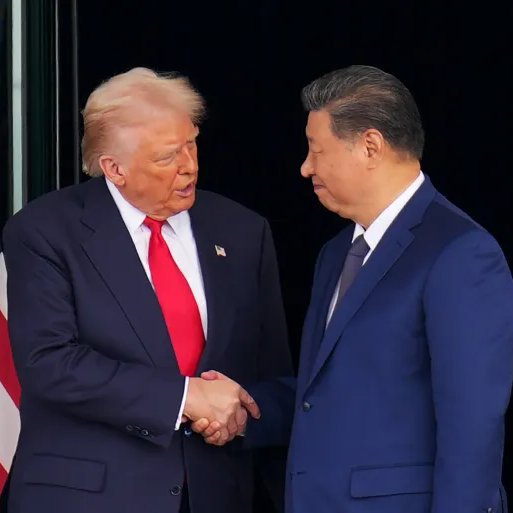
By Nitya Chakraborty In the last 24 hours since the holding of the historic summit between President Donald Trump and Chinese President Xi Jinping, a large number of commentaries in the American media as also in other western papers have been written. While in US, the assessment of the outcome of talks is on expected […]

The article Trump-Xi Summit At Busan Is A Game Changer Within China’s Us Policy appeared first on Latest India news, analysis and reports on Newspack by India Press Agency).

Texas has approved a significant $1.1 billion loan for a proposed natural gas-fired power plant in the Permian Basin, marking the largest financial commitment under a state programme designed to secure the state’s energy future. The funding, provided at low interest rates, aims to address the rising demand for electricity driven by both industrial growth and the increasing need for energy to power emerging technologies, including artificial […]

BYD Co. has reported another significant dip in its quarterly profit, a trend that highlights growing challenges for the Chinese electric vehicle manufacturer. The company’s financial struggles are attributed to increasing domestic competition and intensified scrutiny within the rapidly expanding electric vehicle market.

The latest figures reveal a sharp drop in profit, signalling a tough period for BYD as it grapples with shifting market dynamics. The EV giant, which has long been a leader in China’s electric car market, is now confronting a series of pressures that have raised questions about its ability to maintain its leading position in the industry.

BYD’s financial results for the latest quarter show a marked decline compared to previous years. While the company has seen significant sales growth, the rapid expansion of competitors and the tightening regulatory environment have severely impacted its profitability. Analysts point to these factors as the key contributors to the company’s poor performance, with increasing competition from both domestic and international manufacturers.

Several key rivals in the Chinese market have ramped up their EV production, offering more affordable models and aggressively targeting a broader consumer base. This surge in competition has intensified the pressure on BYD, forcing it to lower prices and increase marketing efforts to retain market share. However, such strategies have led to reduced margins, contributing to the company’s profitability issues.

Meanwhile, the regulatory landscape for EV manufacturers in China has become more stringent. The government has introduced new policies aimed at tightening emissions standards and ensuring greater transparency in the EV supply chain. These regulations, while necessary for the long-term sustainability of the sector, have added another layer of complexity for companies like BYD, which are already grappling with increasing competition.

Despite these challenges, BYD has maintained its status as one of China’s largest producers of electric vehicles. The company’s leadership has made efforts to pivot and adapt to changing conditions by focusing on new technology and improving vehicle quality. However, analysts suggest that its ability to sustain growth at its current pace may be compromised unless it can effectively manage both competition and regulatory pressures in the coming months.

The company’s performance also highlights a broader trend in the Chinese EV market, where competition is becoming fiercer as both established players and new entrants seek to capitalise on the booming demand for electric cars. International brands are also increasing their presence in the market, further intensifying the competitive pressure on domestic companies like BYD.

The global economic environment is adding to the uncertainty, as supply chain disruptions and fluctuating material costs affect car manufacturers worldwide. For BYD, the cost of raw materials, including lithium, a crucial component for batteries, has surged, further eroding its profitability.

BYD’s management is reportedly focusing on cutting operational costs, improving manufacturing efficiency, and exploring new international markets to counter the pressure it faces at home. The company has already made moves to expand its footprint in Europe, where demand for electric vehicles is steadily increasing. However, this shift to international markets will require significant investment in infrastructure and brand development, which may take time to yield results.

The European Central Bank is moving closer to launching a pilot phase for the digital euro, with the prospect of beginning in 2027, contingent upon the agreement of national governments and the European Parliament on a legal framework next year. The digital euro, a form of central bank digital currency, has been under discussion for several years, with the ECB exploring its potential to complement cash in the digital economy.

As Europe grapples with the rise of cryptocurrencies and the growing trend of digital payments, the digital euro could provide an official, secure alternative to private sector digital currencies. The ECB’s President, Christine Lagarde, has emphasised the need for such a digital currency to support the stability and efficiency of the European financial system, ensuring that the euro remains relevant in the digital age.

The digital euro would function as a central bank liability, meaning it would be fully backed by the ECB. It would be designed to facilitate seamless transactions within the European Union, enhancing the speed and security of payments while reducing the costs associated with cash handling. The move aligns with global trends, as several central banks, including those of China and Sweden, have already made significant progress in developing their own digital currencies.

According to the ECB, the pilot phase of the digital euro will test its usability, privacy measures, and integration with existing payment systems. This will provide invaluable insights into its effectiveness and address potential challenges, such as ensuring the currency’s security against cyber threats and the impact on existing banking systems. A key aspect of the digital euro is that it will be designed to coexist with physical cash, offering citizens the flexibility to choose between digital and traditional forms of payment.

Although the digital euro will be built on blockchain technology, it will differ from cryptocurrencies like Bitcoin. While cryptocurrencies operate on decentralised networks, the digital euro will be centralised, controlled by the ECB. This distinction is important for maintaining monetary control and ensuring that the currency does not fall prey to the volatility often associated with digital assets. The goal is to create a stable digital currency that enhances the European Union’s ability to manage monetary policy, while also improving the payments landscape for consumers and businesses.

The upcoming legal framework is crucial in determining how the digital euro will be implemented and regulated. The European Commission is expected to propose legislation that will outline how the digital currency will be integrated into the broader financial system. National governments and the European Parliament will then need to agree on the proposal, a process that is expected to take several months. The legal framework will address issues such as the protection of personal data, the accessibility of the digital euro to all citizens, and how it will interact with existing digital payment systems.

For the ECB, the digital euro represents a forward-thinking solution to challenges posed by the growing use of digital payment methods and the risk of losing control over the money supply. Central banks around the world are racing to develop their own digital currencies in response to the rapid rise of private sector innovations like stablecoins and cryptocurrencies. The digital euro could potentially safeguard the sovereignty of the eurozone’s monetary system while fostering innovation in payments.

The shift towards a digital currency also holds significant implications for the banking sector. By providing a digital alternative to cash, the ECB could help reduce the reliance on commercial banks for certain types of payments. This could reshape the banking sector, influencing the role of traditional banks and their relationship with consumers. At the same time, the introduction of the digital euro could offer new opportunities for businesses, especially in the area of cross-border payments, where speed and efficiency are essential.

However, the introduction of a central bank digital currency is not without its challenges. Privacy concerns are a major issue, as the digital euro would need to balance transparency with the protection of personal data. The ECB has stated that it will ensure robust privacy protections, but questions remain about the extent to which transactions will be monitored and tracked. Additionally, the potential for disruption to the existing banking and payment systems must be carefully managed to ensure a smooth transition.


The International Olympic Committee has announced it will no longer collaborate with Saudi Arabia to host the Olympic eSports Games. This move, described as a “mutual” decision, signifies the conclusion of the partnership between the two entities, which had initially planned to join forces in promoting digital sports at the Olympic level. In a statement issued on its official website, the IOC explained that both parties would […]

Dubai-based global terminal operator DP World has pledged an additional $5 billion in investment to strengthen India’s maritime infrastructure, furthering its long-term commitment to the country. The announcement was made during India Maritime Week 2025, marking a significant boost to the nation’s integrated supply chain network that facilitates both exports and domestic trade. This latest financial commitment follows the signing of five Memoranda of Understanding with prominent […]

BEIJING, CHINA- Media OutReach Newswire – 31 October 2025 – The Annual Conference of Financial Street Forum 2025 was held in Beijing from October 27 to 30. During the four-day agenda, over 400 financial leaders, policymakers and industry experts from more than 30 countries and regions around the world gathered in Beijing’s Financial Street. The core area of Beijing’s Financial Street, covering an area of 2.59 square […]

The multimedia framework FFmpeg has been awarded a $100,000 grant by the FLOSS/fund initiative, marking a significant injection of resources into a project that underpins video and audio processing worldwide. The grant is part of the organisation’s second tranche for 2025, delivered by FLOSS/fund—a programme launched by the brokerage firm Zerodha to bolster Free and Open Source Software projects globally.

FFmpeg, which is instrumental in powering platforms from online streaming services to editing suites, has long faced sustainability challenges despite its ubiquity in digital infrastructure. The project’s official handle confirmed receipt of the donation, describing it as “a step forward to a sustainable future for Open Source Software.” Meanwhile, FLOSS/fund’s blog revealed that the second tranche totals $675,000, bringing its total disbursement for the year to $1 million including the $325,000 committed earlier. Among the recipients alongside FFmpeg are notable projects such as Blender, OpenStreetMap and Wireshark.

The decision signals a wider trend in which tech-sovereignty and infrastructure resilience are being framed as strategic priorities. In its anniversary post, FLOSS/fund’s leadership emphasised that the typology of “Mutual Assured Sustenance” will—unlike traditional arms-race logic—apply in software ecosystems: interdependence rather than deterrence. With this context, the fund sees itself as a “global initiative with Indian roots”, citing India’s growing role in open source ecosystems.

Behind the scenes, the mechanics of funding remain complex. The blog post acknowledged that although the full amount has been committed, only $195,000 of the first tranche has been disbursed due to cross-border regulatory and tax paperwork. The timetable from announcement to actual transfer spans four to sixteen weeks, driven by varying jurisdictional requirements. The fund is working on a partnership with GitHub Sponsors to simplify payment flows.

The selection process for recipients is also non-traditional: rather than a formal application, projects publish a “funding. json” manifest detailing their finances and needs. The fund curators review the open-directory listings and pick recipients based on criteria such as “critical technical infrastructure”, adoption, and uniqueness of the project. It noted that diversity of projects—from developer libraries to humanitarian-tech tools—makes comparison difficult but unavoidable.

FFmpeg now joins a cohort of 29 projects selected in this tranche. The fund’s leadership stated that the grant does not “solve the funding problems behind FFmpeg and open source in general”, but underlined its symbolic and practical value. Analysts note that while a single donation will not fundamentally shift open-source economics, the move may prompt other large-scale users of open-source components to follow suit.

Industry observers credit the decision in part to shifting attitudes within the enterprise and government sectors. As digital dependency deepens, the risk of under-funded foundational tools becomes more visible. FLOSS/fund’s commentary suggested that countries such as India would benefit from a sovereign open-source fund administered in collaboration with the community—a concept that remains aspirational but gaining traction.

Corporations that derive value from open-source software may face increasing moral and strategic pressure to contribute back. Zerodha founder Nithin Kamath has publicly stated that “without open source software, there would be no Zerodha” and that supporting open-source infrastructure is in the best interests of both companies and states. That statement underscores the larger narrative at work: that critical digital infrastructure must be supported not just by users, but by the ecosystem as a whole.

BANGKOK, THAILAND – Media OutReach Newswire – 31 October 2025 – The journey of Mr. Sansern Kiattivejsoonthorn, Founder of COSDENT Dental Clinic, encompasses resilience, creative design, and digital transformation—a journey recently celebrated with the Master Entrepreneur Award at the prestigious Asia Pacific Enterprise Awards (APEA) 2025 Thailand Chapter. With an education spanning Architecture and Urban Design, Sansern entered the healthcare sector with a unique vision: to fuse […]

Swiss privacy firm Proton AG has unveiled its new “Data Breach Observatory”, a live-monitoring platform designed to track organisations’ data leaks by scanning hacker-forums and underground marketplaces on the dark web. According to the company, the tool has already identified 794 unique breach incidents in 2025 alone, exposing over 300 million records linked to identifiable companies. If broader data-compilations are included, the number of incidents rises to […]

An international distinction celebrating the company’s culture of human excellence and innovation PARIS, FRANCE – Media OutReach Newswire – 30 October 2025 – HepTa Advisory-Labs has earned the Best Place to Work 2024 certification, joining the exclusive community of organizations recognized for the exceptional quality of their workplace environment and their commitment to employee well-being. This distinction, awarded following a rigorous evaluation conducted among employees and the […]

Tech giant Google has announced a $2.85 million funding package to support artificial-intelligence skills development, education, online safety and cybersecurity in South Africa. The funding was disclosed at the AI Expo Africa event in Johannesburg and forms part of Google’s broader continental strategy to cultivate an AI-ready workforce and digital ecosystem. The funding will be channelled through Google. org, the company’s philanthropic arm, and it builds upon […]

The African Development Bank has approved a US$75 million financing package for Nyanza Light Metals Pty Ltd of South Africa to construct an 80 000-tonne-per-year titanium dioxide pigment production facility at the Richards Bay Industrial Development Zone. The plant will process locally and regionally sourced ilmenite ore into high-value pigment used in paints, coatings, cosmetics, food processing and medical applications. The financing deal includes US$50 million drawn […]

A configuration error in the cloud infrastructure of the software giant caused its service platform to falter around 16:00 UTC on October 29, affecting productivity tools, gaming services and enterprise systems worldwide. The company reported that the fault stemmed from a change to its global delivery network and ensuing DNS problems, which triggered widespread failures across key offerings. The affected services included the productivity suite used by […]

HONG KONG SAR – Media OutReach Newswire – 30 October 2025 – Hotel Artz Fair is proud to announce the artist and program highlights for its much-anticipated second edition, taking place from 21–23 November 2025 at Conrad Hong Kong. This boutique Fair offers a uniquely intimate experience, transforming hotel rooms into warm, homelike art spaces where works by over 40 artists from 12 countries and regions will […]

Matein Khalid Critical minerals have become a national security priority for GCC states as China has weaponised its dominance over supply chains, refining capacity and magnet production. These materials, including lithium, nickel, cobalt, tin, tungsten, vanadium and germanium, are essential for defence systems such as Lockheed’s F-35 stealth fighters, Raytheon’s hypersonic missiles and General Dynamics’ Virginia-class submarines, as well as civilian applications in advanced semiconductors, electric vehicles, […]

VISHNU RAJA
RYO YAMADA
HITORI GOTOH
IKUYO KITA