Articles written by
arabian post staff

Arabian Post Staff India’s Rana Group has launched Erisha Smart Manufacturing Hub that will see the development of 150 large industries with an investment outlay of US$10 billion (Dh3.7 billion) at Al Ghail Industrial Area in Ras Al Khaimah, UAE, in the next five years. Rana Group has recently signed an agreement with Ras Al Khaimah Economic Zones (RAKEZ) to acquire the license and the industrial plots […]

Majid Al Futtaim has opened six HyperMax outlets in Bahrain, coupled with an online store offering, as it pushes its grocery retail ambitions further into the Gulf market. The launch delivers a brand positioned on local produce, value pricing and convenience, aiming to align with Bahrain’s Vision 2030 goals on sustainable growth and economic diversification. With a workforce exceeding 1,600 staff, HyperMax will draw upon partnerships with […]

Gold surged past levels not seen in over four months after growing confidence that the Federal Reserve will cut interest rates this month boosted demand for bullion, while silver climbed above $40 per ounce for the first time in over a decade.

Spot gold rose around 0.9% to roughly US$3,486.86 per ounce, reaching highs last marked in late April. US gold futures for December delivery also advanced, riding momentum from dovish comments by San Francisco Fed President Mary Daly and a U. S. appeals court decision that struck down most of former President Trump’s tariffs, which weighed on the dollar. Silver jumped about 2.2%, to near US$40.56, its best since September 2011. Other precious metals followed: platinum added 1.5% and palladium rose around 0.8%.

Investors have been digesting a weakening US dollar, cautious labour market indicators, and signals from policymakers suggesting the Fed could lower rates by 25 basis points. Some traders contemplate a larger cut, although forecasts remain varied. Demand for gold as a hedge has been reinforced by geopolitical uncertainty and concerns around the independence of central banking.

Analysts at ANZ and UBS have revised their forecasts for gold upward. ANZ now expects gold to average about US$3,800 per ounce by year-end, with upside toward US$4,000 by mid-2026. UBS similarly raised its year-end target, citing robust central bank buying, persistent inflation pressures, and the likelihood of further policy easing.

Silver’s rally, driven by industrial demand and tight supply, outpaces gold in percentage gains. ETF inflows have also favoured silver, reflecting investor appetite for high-beta exposure in the precious metals space.

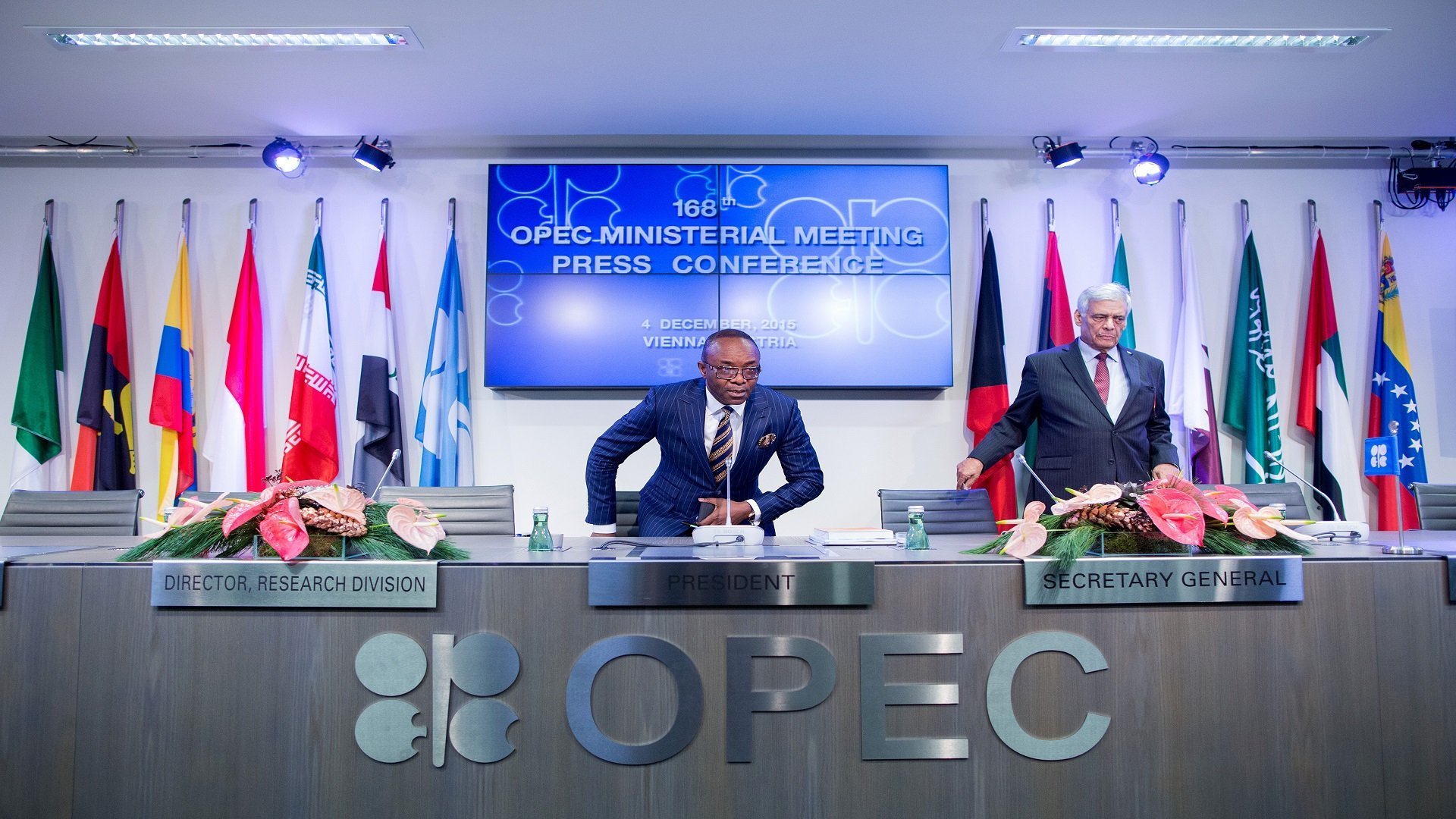
Haitham Al Ghais, Secretary General of the Organization of the Petroleum Exporting Countries, has affirmed that OPEC will remain a pillar of market stability and a critical voice for oil’s role in the world for decades. Delivered to coincide with OPEC’s 65th anniversary, his remarks emphasised the organisation’s long‐standing mission and future direction.

OPEC projects oil demand to reach around 123 million barrels per day by 2050, driven by economic expansion and growing populations. Al Ghais warned that predictions of a near-term decline in relevance or “peak oil” should be viewed with scepticism in light of long‐term demand forecasts and OPEC’s historical resilience.

He noted that oil remains indispensable across many spheres of daily life: transportation, construction, food production and healthcare. Oils and petroleum derivatives, he said, are foundational not just for consumers but for societal and economic prosperity more broadly. Without them, critical infrastructure and supply chains could be severely disrupted.

Al Ghais described OPEC’s foundation in 1960 as a unifying vision for oil-producing nations, asserting sovereign control over production, supporting regular supply to consuming nations, and ensuring a fair return for investors. He reflected on the group’s evolution, including its expansion and the formation of the OPEC+ framework in 2016, which he said strengthened its ability to respond to global shocks such as those caused by the COVID-19 pandemic.

The 65-year mark, he argued, is not simply an anniversary but a reaffirmation of core objectives: balancing producer and consumer interests; dialogue and cooperation with non-OPEC producers; and emphasizing a holistic, multi-technology approach to energy security and poverty alleviation in developing regions.

He also stressed that energy security is “inconceivable without oil,” especially for societies coping with energy poverty. For OPEC, the challenge ahead involves ensuring that growth in demand is met “in a sustainable way” that incorporates environmental, social and economic considerations, while keeping market stabilisation efforts front and centre.

ADVERTISEMENT

Ubisoft employees have challenged company leadership about a possible funding partnership with Saudi Arabia tied to new downloadable content for Assassin’s Creed Mirage. Management insists it retains full creative control, but internal concerns focus on ethical and reputational risks. Workers from Ubisoft’s Social and Economic Committee posed questions after the announcement of a free expansion set in AlUla, historically significant as a UNESCO World Heritage site now […]

Frontline medical residents in Nigeria launched a five-day warning strike on Friday, demanding unpaid allowances, salary arrears and better welfare. The strike, ordered by the National Association of Resident Doctors, is a response to what the doctors call government inaction on long-standing financial and professional concerns. NARD Secretary-General Dr. Oluwasola Odunbaku confirmed that work stopped at 8 a. m. across federal and state hospitals. The association insists […]

Binghatti Holding Ltd, a Dubai-based developer, has initiated steps toward an initial public offering in the United Arab Emirates, as it looks to harness momentum from a strong real estate market climb. The company is in discussions with banks to assist in going public, according to persons with knowledge of the matter who spoke under condition of anonymity. A spokesperson declined to comment, calling the IPO talk “market rumour and speculation.”

Earnings performance is underpinning the move. For the first half of 2025, Binghatti reported a net profit of AED 1.82 billion, up 172 percent year-on-year. Total sales rose 60 percent to AED 8.8 billion, while revenue jumped about 189 percent to AED 6.3 billion. These figures reflect strong demand for its residential offerings.

Non-resident buyers are accounting for a growing share of Binghatti’s business, with about 61 percent of sales in H1 2025 coming from outside the UAE. That shift underscores Dubai’s continued appeal to international investors.

This potential IPO follows recent capital market activity by Binghatti. It issued a USD 500 million Sukuk under its USD 1.5 billion Trust Certificate Issuance Programme; the offering was oversubscribed by five times, with orders exceeding USD 2.5 billion from regional and global investors.

In June, Binghatti launched an asset management arm, Binghatti Capital, based in Dubai International Financial Centre and regulated by the DFSA. The new entity is targeting roughly USD 1 billion in assets under management, focused on Sharia-compliant real estate investment and private credit strategies.

Several analysts view the IPO bid as a strategic move to broaden funding sources beyond debt and sukuk, enable more institutional investment in the company, and leverage its rising profile. Real estate analysts note that the surge in demand—both domestic and foreign—is creating a favourable window for property players to tap equity markets. Oversupply concerns persist in some segments of Dubai’s housing market, but differentiated developers like Binghatti, known for branded luxury residences and fast construction delivery, appear well positioned.

Advertisements
ADVERTISEMENT

Eshraq Investments has struck sale and purchase agreements totalling AED 264 million with Blue Lake Properties and Al Ain Properties to dispose of several land plots on Al Reem Island. The move forms part of its strategy to monetise land holdings and respond to mounting financial losses.

The sale takes place in prime zones of Al Reem Island adjacent to Al Maryah Island and inside the jurisdiction of the Abu Dhabi Global Market, locations particularly attractive to developers seeking centrality and regulatory stability. The agreements bolster Eshraq’s land monetisation drive, which has become a priority as the company seeks to improve its financial footing.

Financial filings show that accumulated losses for the first half of 2025 reached AED 484.85 million, equal to 18.05% of Eshraq’s capital. That marks an improvement from a loss of AED 526.55 million at the end of 2024, helped by gains from independent valuations of assets held by Goldilocks Investments, which rose by AED 55.14 million during the same period.

Goldilocks, a key non-core investment, had its net investment value boosted to AED 827.70 million as at 30 June 2025, up from AED 772.56 million in December 2024, offering some cushion against Eshraq’s operating losses.

In its first quarter of 2025, Eshraq reported a net loss of AED 27.03 million, a sharp decline from AED 306.05 million in the same period of 2024. Revenue across its portfolio has faltered, prompting management to accelerate the disposal or development of under-utilised land.

Industry observers note that investor appetite for Al Reem Island remains strong, driven by its proximity to key business hubs, relatively favourable regulatory environment, and demand for residential and mixed‐use projects. The sale with Blue Lake and Al Ain Properties underscores that even amidst financial pressure, prime real estate in central Abu Dhabi retains market confidence.

WWE has confirmed that WrestleMania 43 will take place in Riyadh, Saudi Arabia in 2027, marking the first time the flagship event will be held outside North America. The announcement was made by WWE’s Chief Content Officer, Paul “Triple H” Levesque, in partnership with Turki Alalshikh of the Saudi General Entertainment Authority.

Officials say WrestleMania 43 will become part of Riyadh Season, with the Kingdom hosting both the weekend’s celebrations and related WWE programming such as Friday Night SmackDown, Monday Night Raw, NXT, fan events, and community outreach.

This move represents a major shift in WWE’s global strategy. Since 2018, WWE has maintained a ten-year partnership with Saudi Arabia aimed at expanding international entertainment ties under Vision 2030. The deal has already resulted in multiple large WWE events being hosted in the Kingdom.

Levesque described the decision as an opportunity to “show the world … that WWE is a global brand that reaches every corner of the world.” Turki Alalshikh emphasised respect for WrestleMania’s legacy and global prestige, and expressed intent to make the upcoming show “unlike anything the world has ever seen.”

Among those present for the announcement were WWE legends Shawn Michaels and The Undertaker, and current stars including Seth Rollins, Charlotte Flair, Liv Morgan, Bianca Belair, Logan Paul, and Stephanie Vaquer.

Negotiations are underway for marquee matchups. Dwayne “The Rock” Johnson is reportedly in discussions to appear, possibly facing either Roman Reigns or Cody Rhodes, which, if confirmed, could involve one of the largest wrestler paydays ever.

Abu Dhabi-based developer Object 1 is accelerating its expansion into the capital, using the platform of the International Real Estate & Investment Show at ADNEC to roll out its latest developments and strategic vision. Head of Business Development, Ismail Gasanov, will speak on panels addressing investment prospects for foreign nationals, sustainability, and intentional design.

The company is opening its first sales gallery in Abu Dhabi to serve investors, brokers, and homebuyers. Sales figures for Abu Dhabi’s wider real-estate sector demonstrate strong performance: Abu Dhabi Real Estate Centre reported Dh25.3 billion worth of transactions in the first quarter of 2025, a year-over-year increase of 34.5 %, with demand shifting toward lifestyle, waterfront, and premium residences.

Object 1’s growth in Abu Dhabi builds on its rapid ascendance in Dubai. With over 17 active projects, the developer has become a top-ten player in Dubai’s development landscape within just a few years. The company claims sales value jumped 188 % in the first half of 2025 compared to the same period in 2024, while transaction volume rose 157 %. Its development pipeline now exceeds 4.5 million square feet, including ALTA V1EW, its newest tower slated to rank among the tallest in Jumeirah Village Circle.

At IREIS 2025, with more than 35 exhibitors and over 2,000 investors expected, Object 1 joins Gold Sponsors such as Reportage Properties, Danube Properties, and Dugasta Properties. The show features an Investment Conference that will examine foreign investment, property law reforms, new ownership models, and how proptech, smart cities, and sustainability are reshaping the market.

Tatiana Tonu, CEO of Object 1, said that Abu Dhabi’s stable economy, high-quality infrastructure, and affluent communities continue to draw discerning investors seeking both capital growth and lifestyle excellence. The expansion into the capital reflects the firm’s long-term confidence in Abu Dhabi as a hub for design-led, sustainable developments that combine community living and investment value.

Abu Dhabi’s active development pipeline is considerable. A report by BNC Network puts the total value of active projects at about US$758.79 billion, with the urban construction component contributing some US$221.56 billion. Residential supply is increasing, with around 2,400 units already delivered in Abu Dhabi city this year; by year end, about 10,400 units are projected, and 11,000 more scheduled for delivery in 2026.

ADVERTISEMENT

Australia’s Reserve Bank, through Assistant Governor Brad Jones, has warned that the era of stability and integration following the Cold War has given way to a more contested strategic environment that carries elevated risk for governments, financial institutions, and markets. At a FINSIA event in Sydney on 12 September, Jones declared that “the era of the peace dividend is over,” citing geopolitical, technological and operational disruptions reshaping the global financial order.

Jones described the international security and economic system as undergoing “seismic adjustment — on a scale and speed unseen in eight decades.” He flagged multiple forces contributing to instability: rising strategic rivalry, weakening tenets of the rules-based order, frictions in globalisation, and increasing emphasis on self-insurance by nations and firms against a broader set of possible harms.

Technological advances form one front of the risk profile. Jones spoke of an expanding surface for cyber-attacks driven by digitalisation, concerns over concentration risk in cloud services, and quantum computing’s looming threat to encryption systems. Artificial intelligence, while promising productivity gains, poses risks of misinformation, fraud, and systemic instability due to herding behaviour.

Critical infrastructure exposures were cited as especially vulnerable: telecommunications networks, the electrical grid, payment systems, and market infrastructure. Jones referenced a recent example in Europe, where cascading power outages in the Iberian Peninsula disrupted both households and economic activity, pointing out that such disruptions would be far more dangerous if key financial infrastructure were affected.

To respond, the RBA is pressing for what it calls an “anti-fragile” financial system—one not simply capable of withstanding shocks but able to adapt and improve because of them. Innovation, competition, and efficiency are being positioned not as opposing goals to resilience but as complementary. Initiatives under way include work with industry to bolster payments resilience, frameworks to ensure that future payments systems embed reliability and recoverability, migration to quantum-safe encryption standards, and reforms aimed at enabling new entrants in financial market infrastructure to reduce concentration risk.

These concerns build on earlier warnings in the RBA’s Financial Stability Review, which noted that heightened geopolitical tensions, trade uncertainty, and technological vulnerabilities could interact with existing financial system risks. The review flagged operational risks from interconnectedness and dependency on third parties for infrastructure and services.

The shift has implications for monetary policy, regulatory oversight, and business strategy. Regulators are likely to place greater emphasis on risk scenarios involving geopolitics, cyber-threats and supply-chain disruptions; financial institutions will need to review and stress-test against non-traditional threats while ensuring agility; and policy frameworks may need to evolve to address threats outside standard macroeconomic shocks.

A senior Tesla engineer has resigned, accusing Chief Executive Elon Musk of leading with what he describes as “seriously compromised” leadership. He claims the company’s mission and integrity are being undermined, citing concerns about dishonesty, manipulation of public discourse and support for climate change denial. Giorgio Balestrieri, who had spent eight years at Tesla and worked on the company’s European energy trading algorithms—specifically the Autobidder platform that […]

Taraf, the real-estate arm of Yas Holding, has entered a joint venture with Masdar City to build a residential community covering 1.4 million square metres within Masdar City, Abu Dhabi’s flagship sustainable innovation hub. The development will offer over 1,000 homes, including two- to six-bedroom villas and townhouses, with freehold ownership options.

Designed around a neighbourhood cluster model, the community emphasises human-centred amenities: shaded walkways, cycling routes linked to Al Masar Park, numerous parks, and extensive open spaces for wellbeing and active lifestyles. The layout will also include family-friendly infrastructure: dedicated clubs, safe environments for children, and walkable areas throughout.

Low Ping, Group CEO of Yas Holding, said that this project reflects Taraf’s strategy of building “design-led communities that inspire modern living where sustainability and innovation come together,” and that it aligns with Abu Dhabi’s Falcon Economy Vision for dynamic, connected growth. Ahmed Baghoum, CEO of Masdar City, emphasised the intention for the development to combine Taraf’s design focus with Masdar’s sustainability framework, creating a place “where people can live, work, learn, and innovate” under low-carbon principles.

This project represents a growing trend in the UAE towards full-community developments built on sustainable, low-carbon design and green infrastructure. Masdar City has already established itself as a leader in eco-innovation, hosting many businesses, research centres and incubation hubs under strict environmental standards. The inclusion of freehold ownership is relatively rare in developments of this nature in Masdar City, potentially making the homes attractive to investors and owners seeking long-term assets.

Investors and urban planners are likely to monitor how the community balances high design and sustainable living with affordability and infrastructure delivery. Ensuring that walkable, shaded and bike-friendly pathways are effectively integrated, as well as ensuring accessibility of services such as schools, healthcare and public transport, will be critical to the success of the development.

Regulatory and market conditions in Abu Dhabi have been increasingly favourable to sustainable urban development, with government policy pushing for low-carbon goals, renewable energy adoption, and integrated infrastructure. Abu Dhabi’s Falcon Economy Vision is central to this, aiming for economic diversification and environmental sustainability together.

Discussions between Washington and New Delhi are said to have reached a critical stage, with US officials making India’s cessation of buying Russian oil a central condition for sealing a bilateral trade agreement. Ambassador-nominee Sergio Gor, during his Senate Foreign Relations Committee hearing, stated that the two sides are “not that far apart” and are now negotiating “the nitty-gritty” of deal terms. He added that ending oil purchases from Russia is one of the Trump administration’s highest priorities. Those talks are expected to involve India’s trade and commerce ministers in Washington next week.

Commerce Secretary Howard Lutnick echoed Gor’s position in an interview, saying the US will resolve trade barriers with India once India stops purchasing Russian oil. The US has imposed a 50% tariff on certain Indian goods, partly as a penalty tied to India’s energy imports from Russia, while insisting that market openness and reciprocal concessions are essential.

India’s leadership has defended its energy procurement strategy as aligned with national interests, citing economic factors and global market conditions. Finance Minister Nirmala Sitharaman reaffirmed that New Delhi intends to continue buying Russian crude, describing it as a practical choice given price and supply stability. She referenced the high import dependency for energy and refined fuels and argued that decisions about suppliers are driven by utility and cost.

Diplomatic signals suggest that the trade impasse stems from more than tariffs and oil. Gor characterised previous delays as “hiccups” and praised the personal rapport between President Donald Trump and Prime Minister Narendra Modi as playing a pivotal role in reopening the dialogue. He noted shared strategic goals, including countering Chinese influence, enhancing regional stability, and expanding cooperation in defence and infrastructure.

Analysts warn that making the Russian oil condition a non-negotiable requirement may limit India’s flexibility. New Delhi has maintained that certain sectors — agriculture, dairy, small producers — cannot absorb full opening of its markets without harming domestic stakeholders. As US pressure mounts through tariffs and public statements, India seeks assurances about trade access, particularly for its exports, while preserving sovereign control over energy policy.

ADVERTISEMENT

A surge in cyberattacks targeting U. S. schools and colleges is being met with increasing resistance, but experts warn that serious vulnerabilities remain. Data from multiple cybersecurity firms and institutions show that ransomware incidents rose by 23% year-on-year for the first half of 2025 among educational organisations—around 130 confirmed or probable attacks—at an average ransom demand of approximately US$556,000. Check Point Research finds that from January to […]

European regulators are finalising a set of remedies with Abu Dhabi-based oil major ADNOC for its €14.7 billion bid to acquire chemical manufacturer Covestro, adjustments that aim to satisfy concerns under the EU’s Foreign Subsidies Regulation.

ADNOC is expected to convert a planned €1.2 billion capital increase into a shareholder loan bearing market terms. The move seeks to counter claims by the European Commission that the proposed capital equity injection could constitute unfair foreign aid under EU rules. In addition, ADNOC will likely address issues around an alleged unlimited state guarantee and commit to keeping Covestro’s intellectual property and technology within Europe.

The EU launched its formal investigation in July to assess whether UAE-based government support might distort competition in the internal market. Scrutiny has focused on whether ADNOC’s offer price, bolstered by state subsidies such as guarantees and capital injections, created an unlevel playing field. A regulatory deadline of 2 December looms for the European Commission’s final decision.

ADNOC has expressed frustration with the breadth of information requests from the Commission, describing them as “disproportionate and invasive.” The company warned that such demands could threaten the viability of its acquisition bid if not managed carefully.

Negotiations involve high level officials: ADNOC CEO Sultan Ahmed Al Jaber spoke with EU antitrust chief Teresa Ribera about the remedy proposals. ADNOC will likely mirror similar steps taken by UAE telecoms group e&, which recently prevailed in an EU review by eliminating an unrestricted state guarantee and following domestic bankruptcy statutes more closely.

Covestro, which produces materials used in insulation, automotive parts and consumer goods, would be one of the biggest acquisitions of an EU firm by a Gulf state if the deal proceeds. The transaction, announced in October, has drawn close attention for being ADNOC’s largest ever and for raising questions about foreign capital’s role in European markets.

Dubai Business Events secured the Association Development Award at the ICCA Middle East Summit, recognising its leadership in fortifying association capacity and fostering knowledge exchange across the region. The accolade was conferred by Fatima Bint Jaafar Al Sairafi, Bahrain’s Minister of Tourism, at Exhibition World Bahrain in partnership with the Bahrain Tourism and Exhibitions Authority.

At the summit, attended by more than 100 destination leaders and industry stakeholders from the region, the bureau’s commitment to advancing collaboration and sustainable development in the meetings industry was spotlighted. This recognition reflects its alignment with the Dubai Economic Agenda D33 and its mission to enhance the region’s global competitiveness in business events.

Dubai Business Events—part of the Dubai Department of Economy and Tourism—participated in a high-level panel discussion titled “The Future of Destination Leadership: Unlocking Regional Potential through Innovation, Inclusivity, and Sustainability,” alongside counterparts from Abu Dhabi, Bahrain, Oman and Jordan. The session highlighted how destinations across the Gulf are leveraging innovation, inclusivity and sustainable practices to shape the future of association meetings.

Ahmed Al Khaja, CEO of Dubai Festivals and Retail Establishment, hailed the accolade as evidence of their strategic foresight. He emphasised that associations—regardless of scale or sector—play a pivotal role in Dubai’s growth by facilitating knowledge exchange, industry development and economic impact.

ADVERTISEMENT

Abu Dhabi Global Market recorded more than 11,000 active licences and a striking 42 per cent rise in assets under management in the first half of 2025, underpinning its emergence as the Middle East and North Africa region’s leading international financial centre. ADGM Exceeds 11,000 Licences, AUM Surges 42 %.

The expansion sees ADGM surpass AED 500 billion in market capitalisation of its listed entities on the Abu Dhabi Securities Exchange, reflecting its pivotal role in strengthening the emirate’s non-oil economy, which grew to 9.1 per cent in the first quarter of 2025.

More than 2,970 firms—comprising 308 financial and 2,664 non-financial entities—are now operating from ADGM, marking a 42 per cent year-on-year increase. The centre issued 1,869 new licences during the period, the highest ever in a half-year span, up by 47 per cent from the previous year.

Asset management continued to thrive: ADGM is now home to 154 fund and asset managers overseeing 209 funds, driving AUM up by 42 per cent over the year to June 2025.

Powerful global partnerships fuelled the centre’s momentum. Fortress Investment Group set up an office in ADGM and joined a US$1 billion co-investment venture with Mubadala. Kimmeridge opened its ADGM branch and inked an MoU with Mubadala Energy to develop natural gas and LNG projects. Meanwhile, IHC, BlackRock and ADGM-based Lunate launched an AI-native reinsurance platform worth over US$1 billion. A private credit joint venture between Mubadala and Alpha Dhabi scaled to US$2.5 billion—all anchored at ADGM.

ADGM’s increasing workforce reflects its expanding influence: by end-June 2025, nearly 36,000 professionals were working across Al Maryah and Al Reem Islands.

ADGM’s achievements are underpinned by enhanced regulatory frameworks. The Financial Services Regulatory Authority issued 52 In-Principle Approvals and 45 new Financial Services Permissions. The Registration Authority implemented improvements such as the AccessRP digital platform for property interest verification, Commercial Permit Regulations to support non-financial businesses, and revised fees to simplify market entry. Mutual recognition of digital platforms with Astana International Financial Centre and a 223 per cent increase in supervision assessments further underscore ADGM’s commitment to governance and global alignment.

International engagement has also grown: ADGM participated in CityWeek 2025 in London, held roadshows in China and Japan, and concluded MoUs with regulators in Azerbaijan, Bhutan, Hong Kong and Sweden. These moves have promoted cross-border regulatory collaboration, innovation in capital markets, and sustainable finance initiatives.

NMDC Group PJSC and ADNOC Logistics and Services Plc forged a three-year agreement today to assess joint delivery of maritime services for offshore projects, reinforcing their partnership in Abu Dhabi’s energy infrastructure.

The agreement, signed by Engineer Yasser Zaghloul, Group Chief Executive of NMDC Group, and Captain Abdulkareem Al Masabi, Chief Executive of ADNOC L&S, at NMDC’s headquarters, lays the groundwork for a stronger framework for offshore EPC collaboration. It covers marine services and integrated logistics, signalling both organisations’ dedication to supporting the emirate’s offshore energy operations. This expanded collaboration reaffirms the offshore maritime services pact strengthening cooperation between the two groups.

Zaghloul highlighted NMDC Group’s five decades of expertise in multi-sector marine engineering, procurement, construction delivery and complex project logistics. He underscored that the launch of NMDC LTS, the group’s latest business unit, allows the market to leverage these capabilities. He praised ADNOC L&S for its leadership in offshore energy support and hydrocarbon logistics, pointing out that both entities operate some of the region’s largest marine fleets. He said the pact would “ensure a robust framework between our two powerhouse organisations” to drive synergies, market differentiation and value growth, ultimately fortifying the industrial marine sector in Abu Dhabi and beyond.

Captain Al Masabi said the collaboration aligns with ADNOC L&S’s long-term ambition to deliver top-tier, integrated logistics that underpin the UAE’s offshore energy expansion. He commented that combining strengths with NMDC would unlock new opportunities, deliver value to ADNOC, its shareholders and clients, and support the UAE’s broader economic development.

Splash247 noted that the pact establishes an “expanded framework for continued collaboration on offshore EPC projects in Abu Dhabi,” emphasising its role in promoting synergies and value growth. It also highlighted ADNOC L&S’s aim to enhance performance through such partnerships.

This development follows earlier significant milestones and investments by NMDC that demonstrate its pivotal role in regional marine and energy infrastructure. In 2024, NMDC secured a contract worth more than US$200 million from ADNOC for marine dredging works in the Ruwais LNG Project, involving removal of approximately 15 million cubic-metres across a five-kilometre channel and installation of navigational aids. NMDC also launched the NMDC LTS unit as part of efforts to diversify into logistics and technical services, reinforcing its leadership in the UAE’s marine EPC, dredging, and logistics sectors.

PubMatic has taken legal action against Google, not merely to secure compensation but to affirm that bold vision for digital advertising’s open, idea-driven future depends on innovation and trust, not coercion. The company’s co-founder and chief executive, Rajeev Goel, emphasised that the industry’s direction should be determined by the strength of ideas and the trust earned—not by dominance or pressure, as articulated in its lawsuit filed on 8 September. This step comes in response to a US District Court decision earlier this year that found Google guilty of maintaining monopolistic control over ad exchanges and ad servers. PubMatic claims that Google’s “First Look” and “Last Look” mechanisms, along with unified pricing rules, have systematically disadvantaged competitors and undermined fair competition in the digital ad space.

The lawsuit seeks substantial damages—potentially amounting to billions of dollars—and aims to restore fairness and transparency across the advertising ecosystem. PubMatic assures that this legal pursuit will not disrupt its daily operations or affect its clients’ experience; instead, it is designed to establish a more equitable long-term operating environment. This strategic move aligns with PubMatic’s broader mission to champion an open internet, where publishers and advertisers can thrive on merit and innovation rather than power imbalances.

PubMatic’s broader response builds on its narrative that competition—not coercion—should shape industry evolution. Goel’s message is deliberate: bold vision for digital advertising’s open, idea-driven future must be realised through trust and ingenuity. The company underscores its investment in private cloud infrastructure across 12 data centres, processing billions of ad impressions daily, as a foundation for transparent, high-performance systems. It also highlights its growing suite of solutions—including OpenWrap, Identity Hub, and header-bidding technologies—aimed at supporting omnichannel monetisation across mobile, OTT, and connected TV environments, and enabling publishers to manage identity and addressability in a privacy-safe manner.

Goel contextualised the firm’s challenge and growth: despite doubling its market share—from 2 per cent to 4 per cent over five years—PubMatic has achieved this only in a market tilted by Google’s dominance. This underscores the urgency behind its legal strategy and its long-term vision: an ad tech ecosystem driven by ideas and innovation.

This development echoes broader industry shifts. The Department of Justice’s antitrust ruling earlier in 2025 laid legal groundwork, but did not provide avenues for redress to harmed parties. PubMatic’s lawsuit now fills this gap, seeking tangible accountability and a fairer competitive landscape. As digital advertising increasingly depends on AI-powered tools, independent supply-side platforms like PubMatic are positioning themselves to lead innovation—provided they can operate on a level playing field.

Gold in Dubai opened trading on Tuesday with the 22K grade touching Dh408 per gram, setting a fresh all-time high and elevating investor and shopper concerns alike. The 24K variety climbed to Dh440.5, while 21K inched ever closer to the key Dh400 level, trading at Dh391.0 per gram.

Global and regional market dynamics are fueling this surge. The international spot price of gold has consistently pushed new heights, recently nearing $3,600 per ounce, with August seeing an approximate 31 per cent year-to-date gain. In part, this reflects growing expectations of US Federal Reserve rate cuts, which traditionally support gold’s safe-haven appeal.

Experts caution that the Dh408 per gram summit for 22K gold may not mark a plateau. Elevated global demand, festival-season jewellery purchases, and sustained investor appetite are converging. Yet there is also speculation about a pullback. Some analysts interpret current levels as ripe for partial profit-taking, while others expect continued momentum if support holds.

The 상승 in gold prices is reshaping shopper sentiment. With Dubai gold surges; 22K at Dh408 now firmly established, affordability becomes a pressing issue for consumers, particularly those buying for weddings, gifts, or as long-term stores of value. Jewellery retailers, in turn, are adapting by promoting lighter ornament designs and gold savings schemes to manage demand amid elevated prices.

Buyers may face a strategic dilemma: delay purchases in hopes of a correction, or lock in gold at historically high prices before potential further rises. The combination of geopolitical tensions, inflationary pressures, and currency fluctuations continues to bolster gold’s attractiveness.

As the UAE moves deeper into its peak gold-buying season, Dubai gold surges; 22K at Dh408 encapsulates the shifting dynamics at play: strong upward trajectory, global economic tension, and consumer caution all intersecting in a market where every dirham counts.

Passenger traffic at airports across the UAE surpassed one billion between 2015 and 2024, with aircraft movements exceeding 6.4 million during the same interval, driven by strategic planning and expansion across the aviation sector, the Federal Competitiveness and Statistics Centre reported. The country also emerged as the global leader in air transport quality and ranked among the top ten worldwide across five additional air performance indicators, underlining its position as a premier aviation hub.

Data from the Centre reveal that annual passenger numbers climbed from 114.8 million in 2015 to 147.8 million in 2024, marking the underlying foundation for cumulative traffic exceeding one billion passengers. Meanwhile, aircraft movements rose sharply, culminating in more than 800,000 operations in 2024 and taking the ten-year total past 6.4 million flights.

These gains coincide with the UAE’s top global ranking in air transport quality and inclusion among the top ten in five further air-related indicators, as noted in the Centre’s analysis.

The escalation of aviation activity reflects the UAE’s broader aviation transformation. The General Civil Aviation Authority emphasises that the UAE now operates a dense, globally connected network, with twelve certified airports, 100 heliports, and a web of bilateral air agreements linking to over 300 destinations worldwide. In 2024 alone, the UAE recorded over one million air traffic movements and continued to lead globally in international passenger traffic and seat capacity.

Dubai International Airport remained the busiest airport globally for international passengers in 2024, registering more than 92 million passengers and 440,000 aircraft movements, and handling 2.2 million tonnes of cargo.

Abu Dhabi’s Zayed International Airport, renamed in February 2024, handled nearly 29.5 million passengers and recorded 249,747 aircraft movements, reinforcing the dominance of UAE airports in the regional aviation landscape.

These milestones underscore how UAE aviation achieves unprecedented growth, advancing capacity, connectivity and performance standards to global leadership.

The Federal Competitiveness and Statistics Centre attributes these successes to forward-looking directives and investment, positioning the aviation sector as a cornerstone of economic sustainability. The enhancements bolster not only passenger and cargo mobility but also broader economic diversification goals, tourism development, and the UAE’s growing prominence as a global transport hub.

Schneider Electric has declared its newly inaugurated Dubai office, The NEST, carbon neutral just three months after opening, marking a bold leap in sustainable workplace design and operational innovation.

The NEST, spanning over 10,000 sqm and accommodating more than 1,000 staff, forms the vanguard of the company’s global Impact Buildings Program. Within this smart facility—now carbon-neutral in three months—EcoStruxure™ technologies interlock digital energy management, automation, and operational analytics to deliver exceptional environmental and user performance.

The building reduces energy consumption by 37 percent relative to Schneider Electric’s previous Dubai location, yielding annual cuts of approximately 572 metric tons of CO₂—equivalent to the yearly electricity usage of some 77 homes.

In recognition of its digital and sustainable credentials, The NEST earned a perfect WiredScore SmartScore Platinum rating, with top marks in user functionality, technological foundation, and innovation. It stands poised to achieve LEED ID+C Platinum and WELL Equity certifications.

Designed around four guiding principles—sustainability, resilience, efficiency, and a people-centric ethos—the facility integrates a micro-grid, digital twin systems, AI-driven HVAC and occupancy analytics, a cybersecure edge data centre, and abundant daylighting and indoor air-quality features.

The NEST also houses Dubai’s first Schneider Electric Global Innovation Hub and a dedicated Training Centre to upskill regional professionals and youth in clean energy and smart building solutions.

“This building exemplifies how digitisation and electrification can uplift sustainability in the built environment,” said the company’s Zone President for the Middle East and Africa, underscoring how The NEST is more than a building… it is a living example of smart infrastructure in action.

The achievement reflects alignment with broader national ambitions such as the UAE Net Zero by 2050 strategic initiative and Dubai’s Economic Agenda D33, reinforcing The NEST’s status as a blueprint for high-performance, low-carbon commercial environments.

Plans are in motion to expand the Impact Buildings Program globally—encompassing new constructions and retrofitting existing facilities over the next 18 months—to replicate the model of adaptive, people-centred, low-carbon buildings across Schneider Electric’s commercial real estate portfolio.

eToro Group Ltd is poised to pursue bolder acquisitions after securing a substantial liquidity base, according to one of its co-founders. At the Ambrosetti Forum in Cernobbio, Italy, Ronen Assia, executive director and co-founder, confirmed that the firm “has cash and cash equivalents of around $1.2 billion at the end of the first half of the year, with a cash position of $988 million, with no debt.” He added: “We’re looking to do more ambitious stuff involving acquisitions,” emphasising that eToro aims to broaden both asset classes and its geographic footprint.

eToro’s deliberate pivot into more aggressive mergers and acquisitions comes on the heels of its listing on Nasdaq in May 2025, where it raised $620 million in its initial public offering. The company’s robust cash war-chest endows it with flexibility to explore new verticals and markets in a dynamic fintech landscape.

Beyond financial strength, eToro is deepening its product offering. The platform recently rolled out tokenisation and artificial intelligence tools targeted at retail investors, along with expanding its global reach. Meanwhile, preliminary selected business metrics for July and August reveal continued operational momentum: assets under administration rose to $19.7 billion, funded accounts approached 3.69 million—both reflecting high year-on-year growth—while crypto trading volumes surged by nearly 50 percent.

The company’s healthy balance sheet is grounded in a successful IPO and product innovation. In Q1 2025, eToro reported $736 million in cash, cash equivalents, and short-term investments, alongside growth in user accounts and assets under administration. The firm also expanded its trading products, launching options in the UK and futures in Europe, while diversifying geographic access to include exchanges in Abu Dhabi and Hong Kong.

This marks a clear signal that bold acquisitions are on eToro’s horizon—a phrase that captures the firm’s evolving strategic ambition and its capacity to act decisively in a competitive market.

The timing of this announcement is significant. Mergers and acquisitions within fintech and crypto sectors have become tools for scale, innovation, and regulatory navigation. With its substantial liquidity and no leverage, eToro may look to acquire firms offering complementary capabilities—whether in tokenisation, AI-driven trading, wealth management, or regional expansion.

Ronen Assia’s stance highlights both intent and preparedness. The expressed goal to take on “more ambitious” deals indicates a readiness to move beyond smaller bolt-ins, aiming instead for transformative moves that could reshape the firm’s product and regional scope. The emphasis on adding asset classes and locales suggests potential targets might include firms with niche offerings or solid footprints in under-penetrated markets.

At a time when many fintech companies are consolidating or recalibrating amid macroeconomic shifts and evolving regulation, eToro’s proactive posture sets it apart. With backing of a strong balance sheet and public market credibility, the platform is well placed to capitalise on strategic M&A opportunities as they arise.

VISHNU RAJA
RYO YAMADA
HITORI GOTOH
IKUYO KITA
Social Media Auto Publish Powered By : XYZScripts.com