Articles written by
arabian post staff

Oil prices edged higher after OPEC+ approved a modest production increase of 137,000 barrels per day from October, signalling a deliberate shift from propping up prices to recapturing market share even as the possibility of oversupply looms.

A rapid, 11-minute virtual meeting resulted in the decision by eight key alliance members to introduce a restrained output lift, clearly OPEC+ inches production upward amid surplus risk. That modest hike marks the start of unwinding an additional tranche of voluntary cuts—around 1.65 million barrels per day—that were originally scheduled to remain in place until the end of 2026.

Brent crude gained approximately 34 cents to trade at $65.84 per barrel, while U. S. West Texas Intermediate rose about 30 cents to $62.17 a barrel, trimming losses incurred last week following a soft U. S. jobs report. Analysts see the price rebound as partly driven by relief over the modest hike and technical factors, alongside concerns that looming U. S. sanctions on Russian oil may curb supply.

OPEC+ members—including Saudi Arabia, Russia and several Gulf producers—have been gradually rolling back earlier cuts since April, with previous monthly increases topping 550,000 barrels. This latest move, while smaller in volume, is seen as a strategic signal that the group is prioritising global market positioning over immediate price support. Jorge Leon of Rystad Energy commented, “The barrels may be small, but the message is big,” underscoring the symbolic weight of the alliance’s decision.

Not all members can raise output equally—only Saudi Arabia and the United Arab Emirates have sufficient spare capacity to make notable additions. Others face physical and contractual limitations to boost deliveries.

Despite the gradual rollback of cuts, analysts warn that the ramp-up, combined with rising non-OPEC+ output, could push the oil market into surplus territory by early 2026. Goldman Sachs, while holding its 2025 price forecast steady, flagged muted price risks for 2026, with expected average Brent and WTI prices in the mid-$50s.

The alliance has reaffirmed its flexibility to adjust future output, including the ability to accelerate, pause or even reverse course as market conditions evolve. Members will meet again on 5 October to review developments and determine whether to extend or amend the output ramp.

Net profits for banks listed across the Gulf Cooperation Council surged to an unprecedented $16.6 billion in the second quarter, marking the second straight quarter of gains and a sequential increase of roughly 3.7 %, with year-on-year growth at a robust 9.2 %, according to Kamco Invest. This performance was driven by broadly higher revenues and a lower cost-to-income ratio that more than compensated for a rise in impairments. Lending activity remained resilient, underpinned by strong economic fundamentals and a pipeline of projects in the region.

Banks across the GCC achieved strong growth, with net profits rising 10.3 % year-on-year to $16.6 billion in Q2 2025, according to the latest Kamco Invest analysis. The sequential increase of about 3.7 % was fuelled by a broad-based rise in revenues, while a leaner cost-to-income ratio offset the impact of elevated impairments. Lending growth persisted, reflecting healthy demand and continued economic momentum.

Abu Dhabi led regional outperformers as its banks posted aggregate Q2 earnings of $3.2 billion—a 23.1 % rise compared to the year before. First Abu Dhabi Bank stood out with a 29.4 % surge in quarterly net profits to $1.5 billion, supported by stronger non-interest income and lower impairment charges. Abu Dhabi Commercial Bank and Abu Dhabi Islamic Bank also delivered solid gains, buoyed by elevated interest and fee income.

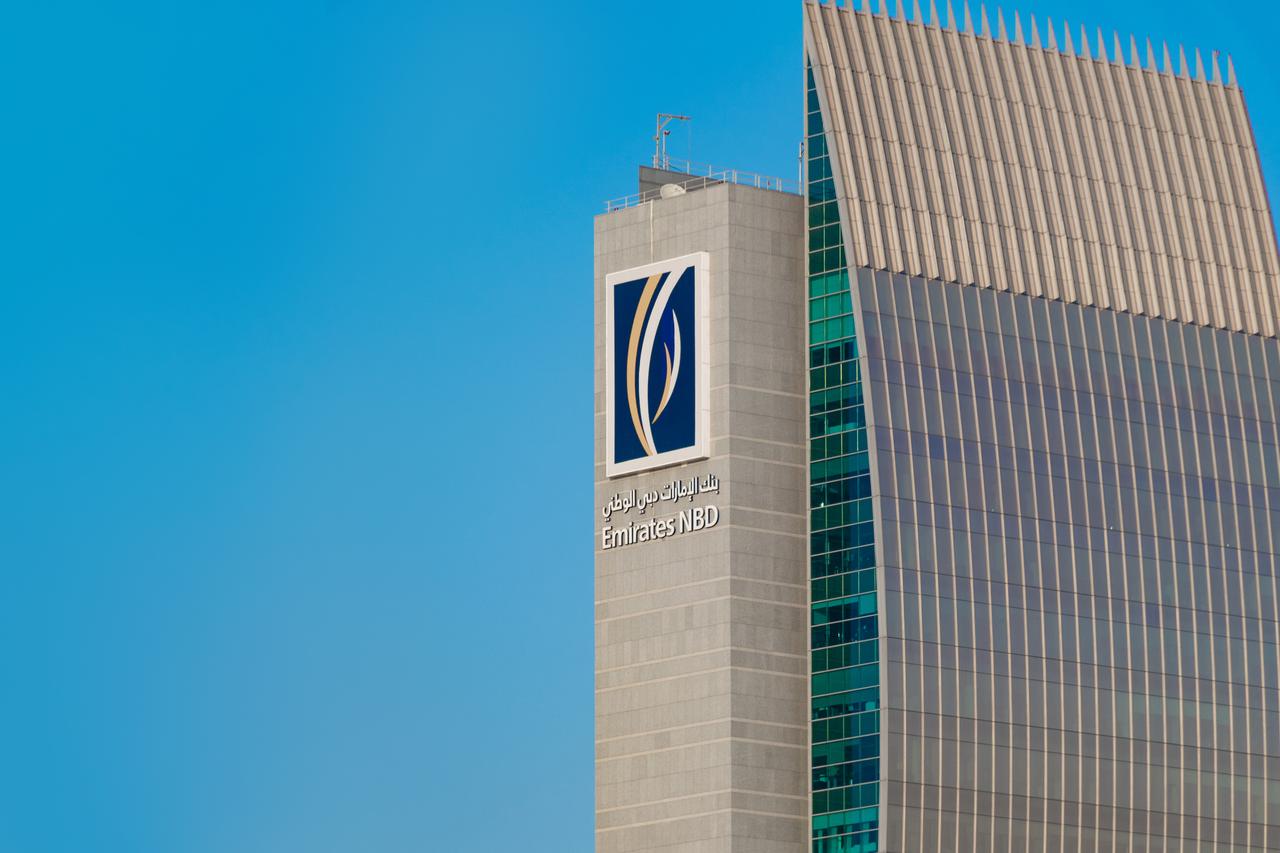
Dubai’s banks, by contrast, experienced a contraction: aggregate city-listed earnings fell by 6.4 % to $3.2 billion, weighed down by increased impairments at major lenders such as Emirates NBD. Some resilience came from Commercial Bank of Dubai, which posted a 15.4 % rise, alongside a surge in real-estate and utilities profits—Emaar Properties and DEWA among the top performers.

Among other GCC markets, Q2 net profits for Oman-listed banks were around $1 billion, while those in Qatar also posted gains, contributing to the overall strength in the banking sector.

The headline figure—$16.6 billion in quarterly profit for GCC banks—captures the scale of the region’s banking sector resilience. This strong performance highlights how GCC banks post record-high quarterly profits, powered by sustained credit growth and operational efficiencies even amid higher impairments.

Arabian Post Staff -Dubai Deal volumes across the Middle East hit 271 in the first half of 2025, up from 228 a year earlier, defying a 9 per cent contraction in global M&A activity. The region owes this strong performance to sovereign capital, regulatory reforms, and strategic investments in high-growth sectors. Middle East M&A Volume Climbs Amid Global Decline now captures the robust upswing. Driving this growth […]

The Environment Agency – Abu Dhabi unveiled the EAD Avatar at the Abu Dhabi International Hunting and Equestrian Exhibition 2025, held at the Abu Dhabi National Exhibition Centre from 30 August to 7 September. This AI-powered initiative aims to revolutionise public interaction with environmental information, offering a lifelike digital interface that bridges cultural authenticity with technological innovation.

Developed in collaboration with Accord Business Group, the EAD Avatar introduces two digital personas, Souheil and Dana, designed to reflect Emirati heritage. Fluent in both Arabic and English, these avatars provide real-time, interactive communication, delivering accurate, AI-generated responses drawn from verified data sources. This approach ensures that users receive reliable information on environmental topics, enhancing public understanding and engagement.

Ahmed Baharoon, Executive Director of Environment Information, Science and Outreach Management at EAD, highlighted the significance of the launch, stating, “By merging cultural authenticity with cutting-edge AI, we are enhancing how the community interacts with EAD and transforming how they understand and connect with the environment.” The avatars’ natural voice modulation, facial expressions, and body language contribute to a more human-like interaction, fostering trust and encouraging deeper engagement.

ADVERTISEMENT

Undersea cables in the Red Sea were severed on September 6, 2025, causing significant internet disruptions across parts of Asia and the Middle East. The affected cables include the South East Asia–Middle East–Western Europe 4 and the India–Middle East–Western Europe, both vital for regional connectivity.

Microsoft reported increased latency for users in the Middle East, while NetBlocks, a digital rights group, confirmed that the outages impacted countries such as India and Pakistan. The disruptions have also affected cloud services, with Microsoft Azure experiencing service degradation due to rerouted traffic.

The cause of the cable cuts remains unclear. While there is concern that the Houthi rebels in Yemen may have targeted the cables as part of their campaign related to the Israel-Hamas conflict, the group has denied responsibility for such attacks. In early 2024, the Houthis had threatened to target undersea cables, but no direct evidence has been presented linking them to the current incident.

DP World will begin offering the “Atlas” service from Morocco to UK and North Europe, cutting export times for fruit and vegetable shipments by up to two days when operations commence in November 2025. The maritime corridor will link the Moroccan ports of Agadir and Casablanca with DP World’s London Gateway and Antwerp Gateway terminals via two dedicated vessels, offering a faster, more cost-effective, and lower-carbon alternative to over-the-road transport.

This new route is expected to transfer up to 150,000 tonnes of fresh produce annually from trucks to ships, reducing carbon emissions by approximately 250 kg CO₂ per tonne-kilometre—a decrease of around 70% compared with traditional road haulage.

By offering faster and smoother delivery, the “Atlas” service from Morocco to UK and North Europe provides a more reliable logistics option. It circumvents issues such as traffic congestion, border delays and instances of vandalism, which frequently compromise delicate produce like tomatoes and blueberries.

To support the service, DP World has rolled out a substantial investment in refrigerated and general-cargo containers: 1,250 new reefer units plus 1,000 40-foot high-cube and 750 20-foot dry containers. Customers will benefit from full end-to-end supply-chain visibility via the CARGOES digital platform.

According to DP World, Morocco currently exports more than 6.5 million metric tonnes of fruit and vegetables to Western Europe annually, with volumes rising at over 20% year-on-year—making improved logistics more urgent than ever.

DP World Europe’s managing director and chief executive, Rashid Abdulla, emphasised that the service’s pillars of reliability, fast transit and modern IT platform make it a viable alternative to trucking, delivering better-quality produce at lower cost and with markedly reduced emissions. Markus Rodatz, chief operating officer for Freight Europe at DP World, highlighted the company’s commitment to developing smarter, more sustainable and more resilient supply chains, noting the new route helps growers and retailers meet environmental targets.

Abu Dhabi’s G42 is offering 2 % of its shareholding in its subsidiary, Presight AI, to institutional investors through an accelerated book-build, aiming to raise slightly more than $100 million. The transaction will reduce G42’s holding in the analytics group from 70.5 % to 68.5 %, while retaining majority control. First Abu Dhabi Bank and Jefferies are acting as joint global coordinators and joint bookrunners, with International Securities serving as joint bookrunner.

Demand for the placement has been strong, with books reportedly fully covered ahead of finalisation. Settlement is expected around 10 September 2025, following final terms being set by 4 September. G42 has also committed to a 180-day lock-up period before any further sale of its Presight shares.

The strategic purpose behind G42 lowers Presight AI stake via ABB is to broaden and institutionalise Presight’s investor base, enhance liquidity, and strengthen its case for inclusion in the FTSE Emerging Market Index. Greater free float and international institutional ownership would increase trading activity and appeal to passive investment funds.

Presight AI, which listed on the Abu Dhabi Securities Exchange in 2023, has posted strong financials through 2025. Its share price has risen by approximately 67 % year-to-date, closing recently at AED 3.47. In the first half of 2025, organic revenue grew by 33.5 %, supported by new domestic contracts. In the second quarter, group net profit rose by nearly 8 % to Dh77 million, with revenue up by over 53 % to Dh523.9 million. International markets now contribute 26.8 % of revenue, up from just 4.9 % a year earlier.

G42 group CFO Ricky Thirion described Presight as “a critical pillar of the G42 ecosystem and a cornerstone of our Intelligence Grid offering,” noting that its performance reflects consistent growth and strong leadership.

Regionally, secondary offerings like this one are gaining traction. In 2025, follow-on sales across the Middle East have raised roughly $3.7 billion, surpassing IPO proceeds—a sign of deepening market maturity.

The placement’s proceeds will go entirely to G42, with no dilution or impact on other shareholders or Presight’s operations.

Abu Dhabi’s G42 has therefore engineered a measured recalibration of its ownership in Presight AI—G42 lowers Presight AI stake via ABB—while securing capital, expanding its shareholder base, and positioning the company for broader market inclusion and visibility.

Advertisements
ADVERTISEMENT

du has unveiled its Envision 2025 agenda, signalling a decisive push towards an AI-first future. The event is scheduled for 9 September 2025 at Atlantis, The Royal, and is designed to mobilise public and private sector leaders around AI-enabled smart communities and sovereign digital innovation.

The Envision 2025 blueprint brings together a distinguished roster of sponsors and partners. Oracle is confirmed as Host Sponsor, contributing expertise in cloud and sovereign AI capabilities. Cisco, as Platinum Partner, reinforces commitments to digital advancement. Gold Partners include HPE, Huawei, Akamai Technologies and CyberKnight, while Silver Partners—Dell Technologies, Fortinet, Accenture, Hexaware and Palo Alto Networks—support AI and cybersecurity resilience. Equinix and Joy Smart Technologies join as Bronze Partners, emphasising a collaborative approach to transformation. du charts AI-first future with Envision 2025 echoes this collaborative vision, emphasising alignment between leadership and technological innovation.

The threefold Envision platform will host both an exhibition and a conference, spotlighting cutting-edge domains: AI Data Centres, Sovereign Cloud, Generative and Agentic AI, GPU-as-a-Service, Industry 4.0, Advanced Robotics, and Cloud Computing. It seeks to provoke strategic alliances and stimulate discourse aligned with the UAE’s National AI Strategy and National Digital Government Strategy 2025.

Fahad Al Hassawi, Chief Executive Officer of du, underscored the alignment with national vision, referencing the leadership of H. H. Sheikh Mohammed bin Rashid Al Maktoum, who asserted that “future is not something we wait for, but something we make.” Al Hassawi emphasised that converging leadership with advanced technology will underpin the creation of a scalable, secure, and AI-first UAE.

Jasim Al Awadi, Chief ICT Officer at du, described Envision 2025 as more than a technology event—but as a national platform uniting future shapers to align vision, innovation and execution. He stressed that the collaborators are vital to delivering secure, scalable, sovereign digital solutions that enhance smart communities, economic growth and quality of life.

Miguel Vega, Senior Vice President for Database Platform & Cloud Infrastructure at Oracle for the Middle East, Turkey and Africa, said Oracle’s participation will centre on advancing sovereign AI and cloud functions, aiming to help public and private sectors unlock greater levels of innovation, security and efficiency.

Saudi authorities have tested drone delivery of postal parcels in Jeddah, a pivotal move in modernising logistics and postal services. The General Authority of Civil Aviation and the Transport General Authority, backed by Dr Rumaih Al-Rumaih, Vice Minister of Transport and Logistic Services and Acting President of TGA, led the operation on Thursday, 4 September 2025. Saudi Drone Parcel Trial Signals Smarter Logistics encapsulates this milestone in eight purposeful words.

The trial, overseen by GACA and TGA, was executed under updated aviation safety regulations aligning with international standards such as those of ICAO and EASA, ensuring rigorous oversight of drone operations. GACA managed aviation-related protocols while TGA handled regulatory and legislative support for the postal sector.

Dr Al-Rumaih described the drone operation as a breakthrough that will “open new horizons” for expanding delivery services and fostering innovative logistics solutions in line with national digital transformation goals. Meanwhile, GACA’s Executive Vice President for Aviation Safety and Environmental Sustainability, Captain Suleiman Al-Muheimidi, said the trial heralds faster, greener, and more advanced delivery methods.

This initiative forms part of the Kingdom’s Vision 2030 strategy to boost transport efficiency, shorten delivery times, and integrate technology into everyday life. Authorities emphasised that advanced drone deployment promises safer, quicker, and more sustainable parcel delivery across the country.

Arabian Post Staff Dubai has again claimed first place in the Savills Executive Nomad Index 2025 as the most sought-after destination for executive nomads worldwide, while Abu Dhabi holds second place for the second year running. Dubai’s dominance stems from its unmatched airline connectivity and comprehensive amenities, with Dubai Maintains No-1 Spot as Executive Nomads’ Top Choice capturing the essence of its appeal. The index, evaluating 30 […]

ADVERTISEMENT

Astana International Exchange and Abu Dhabi Securities Exchange have activated a direct connection between their central securities depositories, enhancing post-trade infrastructure and extending investor access across markets. The move, under the October 2021 memorandum of understanding that brought AIX into the Tabadul digital hub, expands on the existing Tabadul network and enables fully operational CSD-to-CSD communication.

The newly established arrangement builds on Tabadul’s digital trading network, which launched in mid-2023 when AIX formally joined and began enabling bilateral trading with ADX. Tabadul, introduced in 2022, operates on a mutual market access model, facilitating cross-exchange trading across member markets.

Under the framework established in October 2021, AIX had integrated into Tabadul, paving the way for today’s deeper integration via its direct CSD link with ADX.

Assel Mukhanova, chief executive of AIX, welcomed the formalisation, noting that this will bring tangible benefits to participants through more efficient trading corridors and deeper cross-border investment flows. Abdulla Salem Alnuaimi, group chief executive of ADX, emphasised that the direct CSD connection supports capital markets accessibility, post-trade connectivity, and opens new avenues for both global and regional investors.

This development underscores a strategic commitment from both exchanges to deepen connectivity, bolster liquidity, and accelerate regional capital market integration. By complementing the stronger ties forged through Tabadul, the new ADX–AIX direct CSD link strengthens market access for issuers and investors alike.

OPEC’s oil output rose further in August, hitting 27.84 million barrels per day—a gain of 360,000 bpd over July’s revised total. The rise was driven chiefly by expanded production from Saudi Arabia and the United Arab Emirates under an OPEC+ agreement to gradually reverse output curbs.

The production boost stemmed from an agreement by eight OPEC+ countries for August output, under which five OPEC members—Algeria, Iraq, Kuwait, Saudi Arabia and the UAE—were to raise output by 416,000 bpd, before accounting for compensation cuts totalling 178,000 bpd imposed due to earlier overproduction. In practice, those five delivered a net increase of 310,000 bpd.

This escalation forms part of OPEC+’s accelerated effort to dismantle its most recent output cuts. Simultaneously, some members continue to implement additional cuts to offset previous excesses, theoretically capping the effect of these increases.

This latest surge underlines OPEC+’s strategy of reclaiming market share through coordinated rollback of production restraints, even as the group attempts to preserve price stability by enforcing compliance and offset mechanisms.

Abu Dhabi will host the BRIDGE Summit from 8 to 10 December 2025 at the ADNEC Centre, uniting heads of state, media executives, policymakers, technologists and content creators in an ambitious bid to redefine the global media landscape. Announced in Washington by Abdulla bin Mohammed bin Butti Al Hamed, chairman of the National Media Office, alongside Dr Jamal Mohammed Obaid Al Kaabi, director-general of the NMO, the summit pledges to foster dialogue, innovation and sustainable growth across the sector. Attendance is expected to exceed 5,000 participants, underpinning its status as a global media landmark.

Preparatory efforts have extended worldwide. In June, a roundtable in London convened Al Hamed and Al Kaabi with media experts during London Tech Week to reinforce the summit’s commitment to transparency, accountability and cross-sector collaboration in an increasingly digital era. In Asia, the BRIDGE roadshow landed in Shanghai, following stops in New York, London and Osaka, each event contributing insights to shape the summit’s agenda. A mission to Seoul in August further advanced partnerships with technology and media firms, including I-ON Communications on AI and data storytelling; Dentons on regulatory frameworks; Lotte Caliverse on immersive media; and SM Entertainment on cultural collaboration. These discussions cemented shared goals around content credibility, technology ethics and investment in creative startups.

The BRIDGE Summit is embedded within a broader ecosystem spearheaded by the National Media Office. Alongside the summit lies the BRIDGE Foundation, a non-profit body dedicated to empowering media professionals, funding research and supporting startups. This aligns with the UAE’s pursuit of media as a force for societal development and economic progress. A recently published fact sheet outlines the summit’s six thematic zones—Academy, Diplomacy, Forum, Marketplace, Impact and Spotlight—designed to foster skills, policy engagement, tech innovation, social impact and cultural exchange across a three-day programme.

AI and ethics feature prominently among the summit’s themes. Organisers emphasise human values in storytelling amid accelerating digital disruption and algorithmic influence. Al Hamed has characterised media as a humanitarian force that must uphold integrity and cohesion, not merely chase clicks. The summit will address responsible AI’s potential and pitfalls, ethical journalism, and media business models fit for the digital age.

Beyond content and tech, BRIDGE seeks to bridge policy and practice. With roundtables and forums designed to foster international dialogue, policymakers, creators and academics will collaborate on frameworks that safeguard credibility while embracing innovation.

The summit’s global scope is reflected in its steady itinerary of international engagements. From Washington to London, Shanghai to Seoul, each stop has contributed regional perspectives and partnerships that will inform the summit’s structure, themes and participant networks.

Organisations across Africa, the United Kingdom, the Middle East and Brazil are accelerating a shift away from traditional payroll systems as cloud-native platforms transform how companies manage staff pay, compliance and workforce data. With remote and hybrid workforces now common, employers are under pressure to modernise systems that were built for office-bound staff and paper-based reporting. The payroll function, often overlooked, has emerged as a critical lever […]

ADVERTISEMENT

Arabian Post Staff DP World has agreed to manage the logistics operations for Atlantis, The Palm and Atlantis The Royal, overseeing daily on‑demand delivery of perishables, dry goods and speciality items across nearly 7,000 pallets, supported by temperature‑controlled storage, inventory management and real‑time tracking systems. The transaction positions DP World to address the complexity of luxury‑hotel supply chains, enabling the resorts to uphold high service standards as they serve thousands of […]

A pivotal online gathering on Sunday will determine whether the Organisation of the Petroleum Exporting Countries and its allies proceed with further oil production increases or hold current levels. The group has already rolled back its earlier cuts by 2.5 million barrels per day, equivalent to around 2.4 per cent of global demand, and is now assessing whether to unwind the next 1.65 million bpd tranche ahead of schedule.

Markets responded to the impending meeting with cautious anticipation. Brent crude fell modestly, trading near $67 a barrel, while U. S. West Texas Intermediate hovered around $63–$64. Analysts, including those at ANZ, flagged that any additional supply could deepen the surplus during a typically weak demand season. The softening outlook has already rippled through equity markets: major oil producers and service firms such as APA, Occidental, Halliburton and Schlumberger saw their shares slip between 3 and 5 per cent.

Since April, OPEC+ has pursued an aggressive unwind of output curbs. Initial increases began with modest tranches but have since accelerated: April saw the first rise, followed by consistent monthly boosts—from 411,000 bpd in May, June and July to 548,000 bpd for August and 547,000 bpd for September. These decisions reflect strategic moves to regain market share amidst growing competition, especially from U. S. shale producers, and external pressures, including public calls from the U. S. administration to increase global supply.

Despite these ramped-up supplies, prices have retained considerable strength—hovering around the $70 mark—bolstered by low inventory levels and geopolitical constraints, particularly sanctions on Russia and Iran. Analysts at the Commonwealth Bank of Australia observe that OPEC+ now appears comfortable with Brent trading in the $60–$65 range, a level that could pressure U. S. shale operations by narrowing profit margins.

Meanwhile, data from the American Petroleum Institute indicated an unexpected rise of 622,000 barrels in U. S. crude stocks, counter to forecasts, adding another layer of downward pressure on prices. The situation reflects a delicate balance: rising supply meets lukewarm demand, particularly as global economic growth shows signs of softening in key regions like China, India and Brazil.

Executive voices within OPEC+ remain tight-lipped. No official statements were forthcoming from Riyadh or other capitals prior to the weekend meeting. Analysts remain split: some believe the group will maintain its current stance through October, exercising caution amid market saturation concerns. Others argue that continued increases are part of a calculated strategy to defend or expand market share well into next year.

Anthropic has secured a monumental US $13 billion Series F funding round, propelling its post-money valuation to approximately US $183 billion and firmly establishing itself as one of the highest valued private startups globally. The round was spearheaded by Iconiq Capital, Fidelity Management & Research, and Lightspeed Venture Partners, with the Qatar Investment Authority joining as a “significant” investor alongside an impressive roster of global financial institutions and sovereign wealth funds.

Anthropic’s valuing nearly tripled since March, climbing from US $61.5 billion, when it completed a US $3.5 billion Series E raise earlier in 2025. This leap reflects the surging investor appetite for generative AI developers, despite growing debates over tech spending sustainability.

Anthropic’s growth trajectory is underpinned by its financial performance. The company’s run-rate revenue soared from roughly US $1 billion at the start of 2025 to over US $5 billion by August. The enterprise customer base now tops 300,000, with so-called “large accounts” expanding nearly seven-fold in just one year.

The rise of Claude Code, Anthropic’s developer-centric AI tool launched fully in May 2025, has been especially impactful. It currently generates over US $500 million in run-rate revenue, and usage has surged more than ten-fold within three months.

Anthropic’s research credentials and product roadmap also underpin its valuation. In August, the company rolled out Opus 4.1, an upgrade tailored to agentic tasks, coding, and reasoning. Its rapid expansion, focus on AI safety, and growing international footprint were cited by investors as further proof of its potential.

The participation of the Qatar Investment Authority marks a notable chapter in Gulf sovereign wealth funds’ deepening role in AI financing. While Anthropic did not disclose the precise QIA investment amount, it was highlighted as a “significant” backer in the funding syndicate. QIA’s April 2025 holdings were estimated at around US $557 billion, underscoring the strategic weight that such sovereign investments carry in global tech markets.

This infusion of capital will enable Anthropic to scale its enterprise operations, intensify its AI safety research, and accelerate international growth of its Claude platform. Amazon, already a stakeholder, may deploy the funding to expand its cloud infrastructure support for Anthropic, particularly through AWS Project Rainier. Analysts note this could meaningfully boost Anthropic’s spending on cloud services, with projections suggesting an uptick to as much as US $5 billion by 2026.

Amid this whirlwind of funding and growth, some experts caution about the long-term sustainability of such capital-intensive AI ventures. Infrastructure demands for large language model development can rival those of tech giants like Google, Microsoft, or Meta.

ADVERTISEMENT

United Arab Bank has formed a strategic alliance with Abu Dhabi Securities Exchange to enable its customers to subscribe for upcoming IPOs through the bank’s digital channels or ADX’s eIPO Investor Portal. This arrangement aims to simplify the process of accessing capital markets, offering a secure and intuitive experience to investors.

At a ceremony held at ADX’s headquarters in Abu Dhabi, the agreement was formalised in the presence of Abdulla Salem Alnuaimi, Group Chief Executive Officer of ADX, and Shirish Bhide, Chief Executive Officer of UAB, alongside senior officials from both organisations.

This collaboration is designed to strengthen UAB’s wealth management proposition by embedding investment opportunities within its digital ecosystem. Customers will now be able to access IPO applications directly via UAB’s mobile application, replacing previously cumbersome procedures with streamlined, guided pathways that enhance transparency and usability.

According to Shirish Bhide, this partnership reflects the bank’s dedication to innovation and long-term value creation. By integrating investment services within UAB’s digital channels, customers gain more inclusive access to the UAE’s capital markets. Abdulla Salnuaimi added that this initiative reaffirms ADX’s aim to enhance the investor experience by collaborating with leading financial institutions and advancing digital solutions.

The move aligns with UAB’s broader digital transformation strategy, as demonstrated by prior efforts such as launching RegPRISM, an AI-powered regulatory intelligence platform developed with Smarbl to improve compliance and operational efficiency.

Further underpinning UAB’s financial robustness is its first-quarter 2025 performance. The bank reported a 49 per cent year-on-year increase in net profit—rising to AED 102 million—driven by growth in assets, loans, Islamic financing, and investments. Capital adequacy remains solid, with a CET1 ratio of 12.6 per cent and a total capital adequacy ratio of 17.1 per cent. Non-performing loans saw improvement from 4.8 per cent to 3.4 per cent, with coverage at 118 per cent.

These financial strengths were in part bolstered by a rights issue completed earlier, which raised around AED 1.03 billion and strengthened UAB’s capital position.

ADX, for its part, continues to pursue innovation in financial market infrastructure. In July, it collaborated with First Abu Dhabi Bank and HSBC to launch the Middle East’s first DLT-based digital bond, reinforcing its frontier role in tokenised finance.

Through this latest agreement, UAB and ADX are promoting a more integrated, accessible investment landscape—blending digital banking and capital markets participation in a manner that could redefine customer expectations and market engagement.

Saudi Aramco is poised to issue U. S.‑dollar denominated sukuk within September in a bid to fortify its financial position amid subdued oil prices. The company aims to raise between $3 billion and $4 billion through Shariah‑compliant bonds, according to insiders familiar with the matter.

Aramco’s timing underscores a strategic response to heightened volatility in oil markets. The company’s dividend payouts remain intact—$21.1 billion in Q2 and still on track for an $85.4 billion annual total—demonstrating a commitment to returns despite pressure on profit margins. The sukuk issuance follows a $5 billion conventional bond sale in May, as indicated by Aramco’s sukuk prospectus filing with the London Stock Exchange on 30 May. That filing allows up to one year for issuance, signalling flexibility in debt deployment.

Despite the fall in crude prices, Aramco’s gearing remains among the lowest in the global oil industry—a point highlighted during the company’s August earnings call. That financial cushion gives it room to tap capital markets when conditions are favourable.

The sukuk issuance aligns with broader Kingdom‑level bond activity. Saudi Arabia has raised $5.5 billion through a dual‑tranche sukuk offering, comprising a $2.25 billion five‑year tranche and a $3.25 billion ten‑year tranche—sold at spreads of 65 bps and 75 bps over U. S. Treasuries respectively, substantially tighter than initial guidance. Investor demand exceeded $17 billion.

Aramco’s anticipated issuance would tap into the same deep liquidity pool, appealing to Islamic finance and ESG‑oriented investors while preserving fiscal discipline. This approach mirrors the Kingdom’s strategy to diversify its funding base and reduce reliance on hydrocarbons. The proceeds are likely to support refinancing, cost‑management efforts, and strategic asset redeployment.

In parallel, measures such as an $11 billion lease‑and‑leaseback deal for Jafurah gas processing assets with a BlackRock‑led consortium, reflect efforts to raise liquidity without reducing shareholder returns. CFO Ziad Al‑Murshed emphasised the aim to “redirect capital away from low‑return assets to core operations” during the earnings briefing.

This financial planning arrives at a time when Aramco continues to face earnings pressure—second‑quarter profit fell by 22 per cent—but the dividend pledge remains firm, maintaining investor confidence.

Google sealed its acquisition of DeepMind in January 2014 for between $400 million and $500 million, securing a standout team of AI researchers and laying the foundation for its leadership in artificial intelligence. Right from the outset, Google’s purchase endowed it with access to DeepMind’s exceptional talent pool and pioneering work in reinforcement learning—especially its neural Turing machines and early breakthroughs in gameplay AI. This strategic move […]

Dubai Chambers, together with the International Chamber of Commerce and its World Chambers Federation, introduced a new digital platform designed to elevate the performance of chambers of commerce worldwide. Unveiled at the 14th World Chambers Congress in Melbourne, the Chamber Benchmarking Tool offers structured data analysis, best-practice comparisons and a repository of global insights to help chambers advance operational standards.

The launch was witnessed by over 1,200 chamber officials representing more than 100 countries, reaffirming the tool’s role as a global platform for strategic exchange.

The Chamber Benchmarking Tool evaluates performance across seven principal functions of chamber institutions—spanning economic research and business intelligence, advocacy and policy representation, trade and investment facilitation, workforce training and support, networking, advisory services and legal or dispute resolution. These are assessed alongside eight dimensions of operational excellence, including strategic alignment, innovation, governance and financial impact.

Mohammad Ali Rashed Lootah, President and CEO of Dubai Chambers, described the initiative as emblematic of the emirate’s ambition to lead in institutional innovation, enabling chambers to elevate their value to business communities through streamlined services and resilient strategies. John W. H. Denton AO, Secretary‑General of the ICC, hailed the tool as a “milestone,” praising Dubai Chambers for their leadership in bringing the platform to fruition.

Built from research examining 19 diverse chambers, the tool rests on a foundation of empirical insight. It offers a data-driven framework of self-assessment, enabling chambers to compare their metrics against anonymised regional and global averages and receive tailored strategic guidance drawn from global case studies.

Developed in confidence under ICC‑WCF’s secure, cloud‑based infrastructure, the platform ensures high standards of data confidentiality. Only aggregated benchmarking results are shared publicly, with each chamber’s data kept private unless explicit consent is granted.

The tool assigns two access roles: the ‘chamber steward’, who leads data submission, assessment completion and case‑study creation; and ‘chamber staff’, who receive view‑only access to performance dashboards, insights and the best‑practice library.

Participation remains voluntary and open to all types of chambers—whether national, regional, thematic or international—particularly those connected to the ICC‑WCF network. Non‑members may apply for membership to gain access.

Chambers that perform well in given categories become eligible to develop case studies, using an integrated creator to document initiative details, global trends addressed, outcomes and lessons learned. Authors may enrich submissions with supporting documents, media, and contact details. Approved case studies are added to the global repository, fostering peer learning and strategic inspiration.

With an emphasis on continuous improvement, the platform allows chambers to refresh their assessments annually—or after major organisational shifts—and to update roles and responsibilities over time, ensuring the tool remains current with evolving strategic priorities.

Beyond benchmarking, the platform is a strategic intelligence system. Chambers gain access to emerging trends, visibility into gaps and growth opportunities, and direction for innovation and future readiness. It fosters cross‑border collaboration, data‑led decision‑making and collective excellence across the global chamber ecosystem.

FedEx has gained an economic licence from Saudi Arabia’s General Authority of Civil Aviation to operate as a foreign air carrier, marking a significant expansion of its logistics footprint in the Kingdom. The move equips FedEx to conduct scheduled cargo services via King Khalid International Airport in Riyadh, with plans to operate 24 flights per month from early September 2025, establishing Riyadh as its regional hub linking continents.

The licence, granted on 2 September 2025, grants FedEx the ability to fly directly and to integrate air and ground operations across the Gulf Cooperation Council states. The announcement was made during a ceremony in Diriyah, attended by senior officials including Saleh Al‑Jasser, Minister of Transport and Logistics Services and Chairman of GACA; Abdulaziz Al‑Duailej, GACA President; and Dr Rumaih Al‑Rumaih, Acting President of the Transport General Authority, alongside FedEx executives.

FedEx introduced its first nonstop freighter service from the United States and Europe into Riyadh, operating six times a week with Boeing 777 aircraft. This route is the only express logistics connection offered by FedEx that bypasses other hubs, and continues onward to Guangzhou and Shanghai.

This direct link strengthens trade routes, particularly for high-priority sectors like energy, manufacturing, mining, healthcare and automotive, enabling temperature‑controlled, heavy, oversized or hazardous shipments. FedEx complements this airlift with its FedEx Logistics suite—air, road and sea freight forwarding, customs brokerage, and transit cargo support—aimed at enhancing supply chain resilience across the GCC, South Asia and Africa.

The company has developed end‑to‑end capabilities in the Kingdom, directly managing pickup, delivery and customs clearance through four gateways and four stations, supplemented by digital tools for shipping visibility and efficiency.

FedEx leadership emphasises Saudi Arabia’s role as a strategic logistics hub connecting Asia, Europe and the Americas. Richard Smith, Chief Operating Officer, International and CEO of the Airline at FedEx, cited the Kingdom’s infrastructure as a vital link in their global network. Kami Viswanathan, President of FedEx Middle East, Indian Subcontinent and Africa, underlined the integration of infrastructure, digital innovation and integrated solutions to aid Saudi businesses in competing globally.

These moves align closely with Saudi Vision 2030. The Aviation Programme aims to elevate Saudi Arabia’s aviation sector to the highest regional standards, targeting 330 million passengers, 4.5 million tonnes of air cargo, and air connectivity to 250 destinations by 2030. FedEx’s operations support these objectives by advancing industry capacity and reinforcing Riyadh’s prominence in logistics.

The expansion follows challenges earlier this year, when FedEx suspended economy parcel and freight services to the Kingdom from countries including India, Japan and the UK in March 2025. Service was halted temporarily, with FedEx noting it would resume “as soon as possible.”

Trade levels in Saudi Arabia have surged. The Kingdom posted a trade surplus of US$ 16.8 billion in Q1 2025, up 52 percent on the prior quarter, reflecting strong exports and demand for logistics infrastructure that FedEx is now well‑positioned to serve.

With strategic investments—including the creation of a global head office in Riyadh to oversee operations across Saudi Arabia, Bahrain, Kuwait and Qatar—FedEx reinforces its long‑term commitment to the region.

This expansion signals a departure from reliance on intermediaries or regional hubs outside the Kingdom; FedEx now controls its entire customs-to-delivery chain in Riyadh, laying the groundwork for faster transit, improved service reliability and deeper integration into global trade networks.

Emerging trends include rising demand for integrated logistics services, investment in digital tools for customs and tracking, and regional consolidation of supply chain operations. Key players alongside FedEx include Saudi authorities driving Vision 2030’s transport strategy, while GCC markets and commercial sectors increasingly rely on swift, dependable global connectivity.

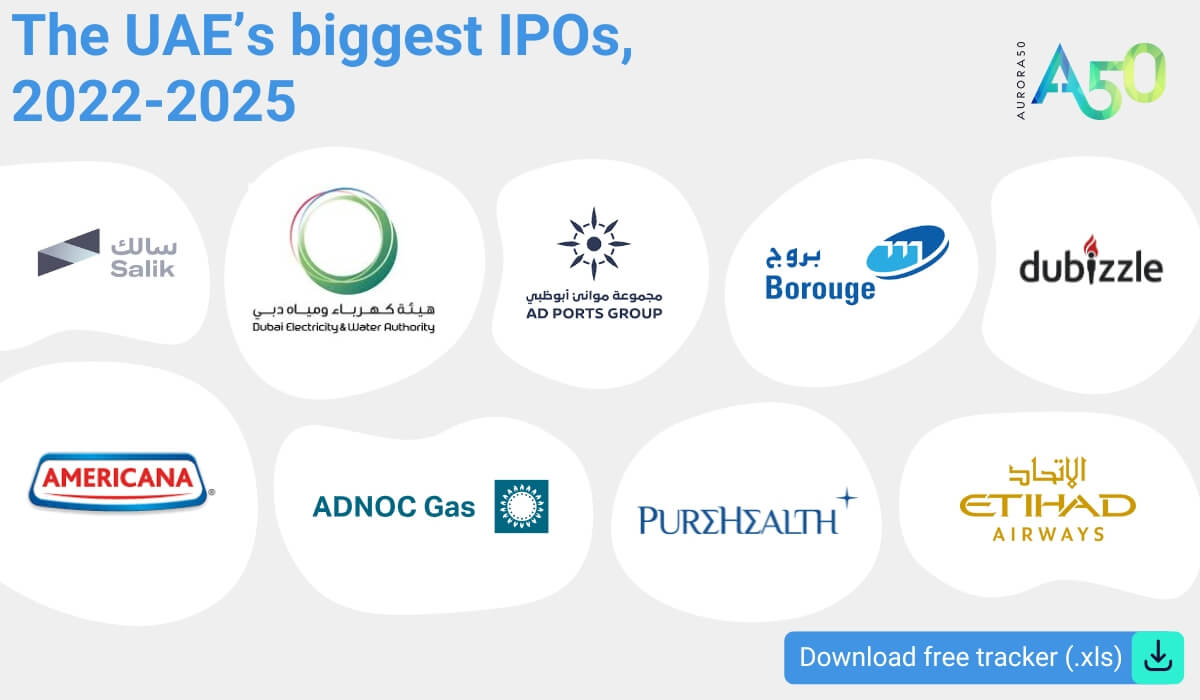
Etihad Airways has stressed it has no set timetable for a public listing, affirming that its $20 billion expansion over the coming decade can be financed from within.

The airline’s chief executive, Antonoaldo Neves, confirmed it is prepared for an initial public offering, yet the decision remains with its shareholder—Abu Dhabi’s sovereign wealth fund, ADQ. He stated that “the time has not come yet”, emphasising that Etihad can self‑fund its next phase of growth.

Neves traced the shift in strategy to ADQ’s acquisition of Etihad in October 2022, which ushered in a focus on organic growth and strengthened regional connectivity through Abu Dhabi, rather than continuing merger or acquisition activity.

Passenger demand continues to rise, with traffic up 17 percent year‑on‑year and load factors climbing to 88 percent—up from 86 percent a year earlier. Despite a slowdown during the Israel-Iran conflict, bookings rebounded fully by the end of July, demonstrating robust consumer interest.

Etihad’s fleet exceeds 100 aircraft, spanning both Airbus and Boeing models. In May, the airline placed a major order with Boeing for 28 wide‑body jets—including 777X aircraft destined to replace its Airbus A380s after 2030. Neves also revealed plans to supplement fleet expansion via secondhand aircraft and lessor sourcing.

This public statement builds upon a broader narrative unfolding over the past year. Etihad reported profitability in 2022 and 2023—92 million dirhams and 525 million dirhams respectively—after years of losses. The airline has been enhancing transparency, governance, and operational efficiency, eliminating underperforming routes and returning grounded aircraft to service.

Earlier projections had flagged a possible IPO no earlier than 2025, allowing Etihad to bolster its financials before a listing. Speculative growth targets under its “Journey 2030” strategy include expanding to over 125 destinations and substantially growing its fleet.

Other commentary from February 2025 suggested Neves intended to float a stake of up to 20 percent on the Abu Dhabi stock exchange, possibly valuing the airline at $5 billion, and underscored his readiness for a float—though final approval again resides with ADQ.

Throughout this period, Etihad has forged strategic alliances. A landmark joint venture with China Eastern Airlines will coordinate schedules and revenues on selected routes from 2025, the first such pact between Middle East and Chinese carriers. Additionally, the airline has broadened its network through expanded service offerings to emerging and mid‑distance markets, positioning Abu Dhabi as a strategic travel hub.

Pharmaceutical developers are making headway with artificial intelligence tools to model drug absorption, distribution, and toxicity in human-relevant systems. This shift supports the U. S. Food and Drug Administration’s initiative to make animal testing an exception rather than a rule, particularly in pre‑clinical safety assessments for monoclonal antibody therapies and other drugs.

Regulatory authorities expect New Approach Methodologies—including AI-driven computational models, human-cell‑based systems like organs‑on‑chips, and organoids—to halve both development time and costs within the next three to five years. Recursion Pharmaceuticals recently advanced a cancer drug candidate to clinical trials in just 18 months, markedly faster than the 42‑month industry average.

The FDA’s April roadmap encourages drug developers to submit safety data from NAMs in Investigational New Drug applications. Firms providing robust NAM evidence may receive streamlined review processes—a concrete incentive to adopt these modern methods. A pilot programme allows select monoclonal antibody developers to use primarily non‑animal testing strategies, with results shaping future guidance.

Industry leaders at Charles River, Certara, Schrodinger, Recursion and InSphero are investing heavily in these emerging tools. Charles River’s NAM portfolio now generates roughly US $200 million annually. Certara’s president, Patrick Smith, stated the company is reaching a point where animal testing may no longer be necessary. Schrodinger utilises physics‑based simulations with AI to predict potential toxicity, while InSphero tests safety and efficacy using 3D liver microtissue models.

This transition builds on milestones such as the FDA Modernization Act 2.0, which removed the default requirement for animal data in drug development and formally recognised in vitro, in silico, and organ‑based methods as valid non‑clinical evidence. The Act is part of a broader regulatory overhaul that began with the ISTAND programme—for qualifying organ-on-chip tools—and continued with acceptance of the first liver‑chip into that pathway in 2024. Additional momentum comes from shifts in funding and policy: the NIH now prioritises human‑based models and no longer supports animal‑only proposals; the U. S. Navy has ended cat and dog experiments; and a federal push is underway to align academic and industry research with NAMs adoption.

Beyond regulation, academic research underscores the promise of computational approaches. A June 2025 study highlights AI and deep learning as enablers of predictive frameworks for vaccine and immunotherapeutic design—pointing toward a future where animal testing is replaced by computational models that refine vaccine targets and immune response predictions.

In parallel, the FDA is advancing its broader modernisation agenda through pilot programmes aimed at accelerating drug review timelines. Commissioner Marty Makary has proposed a split‑submission process that allows early review of key data during clinical trials. Coupled with AI tools such as Elsa—used daily within the FDA to expedite data review—this approach is projected to compress approval times from 10–12 months to as little as one to two months in eligible cases.

Ethically, these developments carry weight. Animal testing has repeatedly fallen short in predicting human outcomes—about 90 per cent of drugs deemed safe in animals fail in humans. New methods rooted in human biology promise not just faster, cost‑efficient drug pipelines, but also greater relevance and reliability in safety assessments, while reducing ethical concerns.

Though a complete end to animal testing is not expected immediately, experts anticipate a hybrid landscape in the short term, with animal studies still used where necessary but significantly reduced in favour of AI and human‑based alternatives.

VISHNU RAJA
RYO YAMADA
HITORI GOTOH
IKUYO KITA
Social Media Auto Publish Powered By : XYZScripts.com