By K Raveendran The Supreme Court vacation bench’s observation that the “heavens are not going to fall” if petitions seeking an independent investigation into the alleged misappropriation of donations to the Ayodhya Ram Temple waited for the regular judicial process was an unfortunate choice of words. The bench may have been procedurally justified in declining […]
The United States has sharply loosened export controls on the UAE, opening wider access to advanced artificial intelligence chips, military equipment, commercial satellites and other sensitive technologies. The Department of Commerce reclassified the UAE under the Export Administration Regulations on Friday, placing it in a group that receives broader licence exemptions for controlled military and dual-use goods. The decision marks a significant upgrade in economic, defence and […]
Ticket sales have opened for the 23rd Abu Dhabi International Hunting and Equestrian Exhibition, which will run from August 28 to September 6 at ADNEC Centre Abu Dhabi. ADNEC Group, a Modon company, said visitors can purchase admission through the exhibition’s official digital channels and Ticketmaster. The launch begins the public countdown to one of Abu Dhabi’s largest heritage, outdoor lifestyle and specialist trade events. ADIHEX 2026 […]
Interpol has announced 5,811 arrests and the interception of $293 million in illicit assets following a sweeping operation against cyber-enabled fraud across 97 countries and territories. Operation First Light 2026 targeted social engineering scams and related money laundering networks between January 15 and April 30. Authorities identified more than 142,000 victims, analysed 152,808 cases and blocked 31,014 bank accounts linked to suspected criminal proceeds. The China-funded operation […]
Infoblox has agreed to acquire network observability specialist Kentik, bringing together core internet infrastructure data and real-time traffic intelligence as enterprises seek greater control over increasingly complex digital operations. The companies announced a definitive agreement on July 8, with completion subject to regulatory approvals and customary closing conditions. Financial terms were not disclosed. Kentik will continue operating under its existing contracts, pricing, account teams and support arrangements […]
HO CHI MINH CITY, VIETNAM – Media OutReach Newswire – 11 July 2026 – As global urban challenges evolve, Vietnamese Developers offer valuable insights into alternative development models.
Vinhomes’ strategic response is crystallized in its ESG
For much of the past century, urban development followed a relatively straightforward equation: build housing, expand infrastructure and accommodate population growth. This formula is now showing its limitations. As climate risk intensifies, biodiversity declines and cities compete not only for investment but also for talent, developers around the world are now forced to redefine the very nature and purpose of what they build.
From the Gulf to Singapore, and from Scandinavia to Southeast Asia, large-scale urban projects are evolving into integrated ecosystems where mobility, green infrastructure, education, healthcare, digital services and environmental restoration are planned together. The industry paradigm has shifted from constructing buildings to designing places capable of sustaining both economic growth and quality of life over generations.
Vinhomes has initiated a comprehensive repositioning to navigate this global transition.
Known as Vietnam’s largest residential developer, the company is increasingly recognized not merely as a builder of housing projects, but as a creator of large-scale lifestyle ecosystems, communities where urban planning, technology, ecology and public services are conceived as parts of the same system.
When Nature Becomes Urban Infrastructure
For decades, environmental considerations were often introduced after a city’s masterplan had already been completed.
The emerging model reverses that sequence. Across many of its recent developments, Vinhomes operates on the principle that natural systems should become the starting point of planning. Hydrology, coastal conditions, biodiversity and existing vegetation are treated as design inputs that shape the urban layout from the earliest stages.
This philosophy marks a notable departure from conventional large-scale development, particularly in rapidly urbanising markets where natural landscapes have frequently given way to intensive construction.
With more than 30 developments across Vietnam and a land bank equivalent to roughly two-thirds the size of Singapore, Vinhomes has the unusual opportunity to test this planning approach at a metropolitan scale.
Rather than replicating identical urban formulas, each project is designed around the ecological characteristics of its location.
The company maintains that the long-term success of a city should ultimately be measured not by how much has been built, but by whether natural ecosystems continue to thrive decades after residents have moved in. That perspective aligns with an increasingly influential school of urban planning in which green infrastructure is viewed as essential public infrastructure.
Factors Compelling Cities Toward Regeneration
Environmental, Social and Governance (ESG) frameworks have become standard across global investment. Urban planners, however, are beginning to question whether sustainability alone is sufficient.
Maintaining today’s environmental conditions may no longer be enough if tomorrow’s cities must also respond to rising temperatures, sea-level change and growing demographic pressures.
Vinhomes’ strategic response is crystallized in its ESG++, a framework that extends beyond conventional ESG principles by introducing two additional objectives: Regeneration and resilience.
The distinction is subtle but important.
Regeneration implies restoring ecological systems rather than simply reducing environmental impact. Resilience focuses on designing cities capable of adapting to changing climatic, technological and social conditions over many decades.
Projects such as Vinhomes Green Paradise Can Gio and Vinhomes Global Gates Ha Long are intended to demonstrate how these concepts can be incorporated into large-scale urban planning, combining renewable energy, smart infrastructure and ecological restoration within a single development model.
This shift highlights a growing global consensus: the success of next-generation cities will ultimately be measured by their ability to adapt to increasingly complex environmental challenges.
Vietnam’s Urban Story Is Becoming Part of a Global Conversation
For many international audiences, Vietnam remains associated primarily with its cultural heritage and natural landscapes. Urban development may become an equally important part of that story.
Rapid urbanisation, expanding infrastructure investment and a national commitment to achieve net-zero emissions by 2050 have created conditions in which entirely new urban models can be planned without many of the legacy constraints facing older cities.
This developmental opportunity is capturing increasing global interest.
Commenting on Vinhomes Green Paradise’s participation in the global 7 Wonders of Future Cities initiative, Jean-Paul de la Fuente, Director of the New7Wonders Organisation, described Vietnam as undergoing a “transformative step change” in its national identity and global positioning. He pointed to the country’s progress in reducing the carbon footprint of urban mobility as an example of coordinated action between government and the private sector that offers valuable insights extending beyond Southeast Asia.
For Vinhomes, participation in international platforms such as 7 Wonders of Future Cities is therefore less about showcasing a single project than about contributing to a broader discussion on how rapidly developing economies might approach urban growth differently. The company’s evolution mirrors a wider shift taking place across the global property sector.
Increasingly, the core value proposition for developers is no longer anchored in how many buildings they can deliver. Instead, it centers on whether they can create cities that remain economically competitive, environmentally resilient and socially relevant long after construction has ended.
Apple has sued OpenAI and two former employees, accusing them of stealing trade secrets to accelerate the ChatGPT maker’s push into consumer hardware. The lawsuit, filed on Friday in the US District Court for the Northern District of California, marks a sharp escalation in tensions between companies that began working together two years ago. Apple alleges that OpenAI systematically obtained confidential product, manufacturing and supplier information by […]
HONG KONG SAR – Media OutReach Newswire – 13 July 2026 – The Chinese University of Hong Kong (CUHK) has climbed 14 places in the latest Quacquarelli Symonds (QS) World University Rankings 2027 to rank 18th globally, entering the global top 20 for the first time. This milestone reflects significant improvements across key indicators, including employer reputation, international research network, and international student ratio, while retaining a full score in international faculty ratio.
CUHK climbs 14 places to enter the global top 20 for the first time.
CUHK’s Academic Excellence and Global Research Impact
CUHK’s academic rigour is further recognised in the 2026–27 Best Global Universities Rankings by U.S. News & World Report, where it ranks 28th globally and 5th in Asia, remaining Hong Kong’s top university for the fourth consecutive year. The University features 15 subjects in the global top 50, including five in the top 10, such as Education and Educational Research (#1), Gastroenterology and Hepatology (#2), Computer Science (#7), and Arts and Humanities and Artificial Intelligence (both ranked #9).
CUHK: Where Bold Ideas Become Impactful Research
CUHK provides an exceptional environment for impactful research, supported by approximately 300 research institutes and centres, alongside four state key laboratories approved by the Ministry of Science and Technology of China. Reflecting on the academic environment, Zhamilya Zhirenova, a PhD student in Biomedical Science from Kazakhstan, has deepened her expertise through her involvement with the Centre for Neuromusculoskeletal Restorative Medicine (CNRM), an InnoHK research centre CUHK established with Sweden’s Karolinska Institutet.
Unlike traditional research pathways, where students are often confined to a single university laboratory, Zhamilya gained extensive experience at Hong Kong Science Park, a dynamic setting that closely resembles industry. “It feels more like an industrial company,” she reflected, “and that experience has been invaluable.” For researchers with ambitions beyond academia, such early exposure to the pace and expectations of the biotech industry provides a distinct advantage.
Nurturing the Next Generation of Scientific Innovators
Many of CUHK’s scholars are globally renowned experts who have made significant breakthroughs in their respective fields. These experts provide valuable mentorship, cultivating an intellectually stimulating environment for innovative research.
At the Centre for Novostics, an InnoHK research centre dedicated to advancing molecular diagnostics, Yasine Malki, a Chemical Pathology PhD student from Hong Kong, highlighted mentorship as a defining aspect of his experience at CUHK. Benefiting from the mentorship of Professor Dennis Lo, CUHK’s Vice-Chancellor and President, and a pioneer in molecular diagnostics, Yasine collaborates with specialists in molecular technologies, bioinformatics, and clinician-scientists, exemplifying CUHK’s dynamic, multidisciplinary approach to medical science.
Through the latest global rankings, CUHK continues to demonstrate the impact of its research and scholarship. The University offers robust financial support to attract top-tier global talent, such as the Hong Kong PhD Fellowship Scheme (HKPFS) for the 2027–28 intake, which provides over HK$1.81 million (approximately US$232,420) in funding. Applications open on 1 September 2026.
Hashtag: #CUHK
The issuer is solely responsible for the content of this announcement.
About CUHK
Founded in 1963, The Chinese University of Hong Kong (CUHK) is a leading comprehensive research university with a global reputation and world-leading rankings. Located in the heart of Asia, CUHK has a vision and a mission to combine tradition with modernity, and to bring together China and the West. The University has eight faculties: Arts, Business Administration, Education, Engineering, Law, Medicine, Science, and Social Science. Together with the Graduate School, the University offers over 300 undergraduate and postgraduate programmes. All faculties are actively engaged in research in a wide range of disciplines, with an array of research institutes and research centres specialising in interdisciplinary research of the highest quality.
Dubai’s Palm Monorail has resumed operations after a six-month maintenance shutdown, restoring the only public transport service running along Palm Jumeirah. The reopening reconnects Palm Gateway with Al Ittihad Park, Palm Jumeirah Mall and Atlantis Aquaventure, giving residents, hotel guests and tourists an alternative to taxis and private vehicles. Passengers can again purchase tickets online or from customer service desks at the stations. The 5.5-kilometre elevated line […]
Arabian Post Staff -Dubai Ajman Bank has opened a corporate office on Sheikh Zayed Road in Dubai, strengthening its capacity to serve companies, institutions, business owners and wealth-management clients across the UAE’s largest commercial centre. The 7,565-square-foot office has been designed as a specialised hub for corporate, business and wealth banking. It combines private meeting areas with digital screens, advanced audiovisual systems and smart technology intended to […]
Space42 and Skylo Technologies have successfully tested two-way satellite text messaging and emergency alerts on standard Android devices in the UAE, moving direct-to-device connectivity through the Thuraya-4 satellite closer to commercial launch. The test linked an ordinary Android smartphone with a satellite messaging device, allowing SMS and SOS communications to travel in both directions through Space42’s next-generation mobile communications satellite. The companies said the connection required no […]
Arabian Post Staff -Dubai Modon Holding and Abu Dhabi Islamic Bank have agreed to offer eligible buyers financing of up to 75 per cent for homes under construction, opening a new route into Abu Dhabi’s expanding off-plan property market. The financing programme will be available exclusively for future developments launched by Modon. It is designed to provide funding during construction rather than requiring buyers to wait until […]
Arabian Post Staff -Dubai Digital Dubai and the Emirates Group have signed a collaboration agreement to widen the aviation group’s access to Dubai’s government digital services, shared platforms and data. The agreement is designed to improve employee experience, accelerate internal processes and strengthen operational efficiency across a workforce of more than 130,000 people. It also creates a framework for systems integration, secure data exchange and wider use […]
By Paul Murray, CEO Life & Health Reinsurance, Swiss Re
SINGAPORE – Media OutReach Newswire – 9 July 2026 – Op-ed by Paul Murray, CEO Life & Health Reinsurance, Swiss Re.
Ten years.
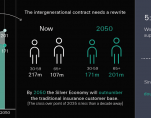
That is roughly how long we have before many societies reach one of the most defining demographic tipping points of our era: the point at which the “new” silver economy (over 65’s) outnumber people aged 30-59 who have traditionally been the bedrock of the life and pensions system.
The intergenerational contract needs a re-write
The significance of this shift goes far beyond demographics.
It represents a symbolic moment that forces us to rethink the intergenerational contract: how we provide care and financial security for people as they move into later life – and how we finance a new set of needs.
The demographic evidence is already visible across major economies. In the US, adults aged 65 and over already outnumber children in 11 states. Singapore’s over-65 population has nearly doubled in a decade to 21%. Japan is approaching 30%. The UK, France and Germany are not far behind
These numbers are well-known. But their meaning is not yet fully reflected in our industry’s existing product strategy.
The tipping point is also more than a statistical curiosity. We will experience it through the decisions we make coming into retirement and to secure the future of the generation coming after us. We will need to make new choices on how we fund care. We will need to make new assumptions about when to retire. And we will face a new reality around how much of the financial burden falls on the state, families or the individual.
Families have always carried the weight of old age, even as pensions, healthcare systems and social care programmes have broadened that responsibility across society.
But the arithmetic underpinning the system is breaking. Globally, the ratio of working-age people financially supporting each person over 65 is projected to fall from around five-to-one in 2021 to three-to-one by 2050. Across developed markets, debates about pension reform, healthcare funding and retirement ages reflect the same underlying question: how do we maintain security and dignity later in life when there are fewer hands to carry the weight?
It’s not a crisis of demographics. It’s a crisis of design – our systems were built for shorter lives and larger workforces, and they haven’t been rebuilt for the world we are actually entering.
That insight matters because it challenges how we think about insurance’s role. I believe we have less than a decade to develop the products that the older consumers who make up the Silver Economy – and their families – will need.
There will be no silver bullet. We cannot return to a single solution based around family care versus public provision. The individual retiree will be the focus, but our thinking will need to be based on a more collaborative model in which families, governments, communities and the private sector work together.
Recent Swiss Re consumer research in France and Germany revealed something striking. People don’t think about later life in terms of pensions or insurance policies. They think about practical outcomes: staying independent, being resilient when health shocks hit, not becoming a burden to their children.
Our industry has spent decades optimising for wealth accumulation and income protection during working years. Ageing societies demand we apply the same rigour to what happens after.
That does not mean the intergenerational contract has failed. It means it is evolving.
We are already seeing what that evolution looks like in practice.
Senior health products in Asia are closing a real gap —The median age of cancer diagnosis is 67, yet many critical illness policies expire before retirement even begins. The result is high out-of-pocket expenses, stressed public healthcare, and increased burden on families. With dedicated products to cover later life illnesses, such as senior cancer products we are effectively closing a protection gap.
Long term care in France has had some success with private solutions alongside public provision. With over 1.4 million people covered by private long term care insurance, France has built a strong risk pool that directly addresses one of the strongest concerns expressed by consumers: not becoming a burden on the next generation.
Deferred annuities offer a third path beyond the binary “draw-down versus annuity” thinking. By combining flexibility today with guaranteed income later, they help transform longevity from an individual financial risk into one that can be shared more broadly.
At first glance these solutions appear very different. In reality, they are pieces of the same puzzle. Each expands the circle of support around the individual. They help families carry less of the burden alone, and they complement the work of state safety nets.
That is what the next evolution of the intergenerational contract looks like in practice.
Ageing societies are one of humanity’s great achievements. But if our products and institutions stay built for a demographic reality that no longer exists, achievement curdles into liability.
We have a decade to close that gap. Let’s treat it as a product-development window, not a deadline.
Disclaimer Certain statements and illustrations contained herein are forward-looking and are made for informational purposes only. These statements (including as to plans, objectives, targets, and trends) and illustrations provide current expectations of future events based on certain assumptions and include any statement that does not directly relate to a historical fact or current fact. Readers are cautioned not to place undue reliance on forward-looking statements. Swiss Re undertakes no obligation to publicly revise or update any forward-looking statements, whether as a result of new information, future events or otherwise. Further information on forward looking statements and the use of information contained in this publication can be found in the Legal Notice section on Swiss Re’s website.
The issuer is solely responsible for the content of this announcement.
About Swiss Re
The Swiss Re Group is one of the world’s leading providers of reinsurance, insurance and other forms of insurance-based risk transfer, working to make the world more resilient. It anticipates and manages risk – from natural catastrophes to climate change, from ageing populations to cyber crime. The aim of the Swiss Re Group is to enable society to thrive and progress, creating new opportunities and solutions for its clients. Headquartered in Zurich, Switzerland, where it was founded in 1863, the Swiss Re Group operates through a network of around 70 offices globally.
Bharat Sanchar Nigam Limited has widened access to its satellite communication service with a rugged handset priced at ₹1,34,166, targeting users who operate beyond the reach of conventional mobile networks.
The state-owned telecom company said the device can provide voice calls and text messaging in isolated regions, including mountainous terrain, forests, offshore locations, mining zones and areas affected by natural disasters. The quoted handset price includes taxes, while customers must separately subscribe to an approved Global Satellite Phone Service plan.
The phone is being positioned primarily for defence units, maritime operators, emergency agencies, mining companies, remote infrastructure teams and adventure travellers. Unlike ordinary mobile phones, it communicates directly with a satellite rather than depending on nearby ground towers, allowing connectivity across large areas where terrestrial coverage is unavailable or unreliable.
BSNL’s announcement represents an expansion of an established service rather than the introduction of satellite calling for the first time. The company has offered voice and SMS connectivity through its Global Satellite Phone Service to the public and private enterprises since January 1, 2018.
The renewed commercial push comes as satellite communication assumes greater importance in disaster management and strategic operations. Cyclones, floods, earthquakes and landslides can damage mobile towers, sever fibre links and disrupt electricity supplies. Satellite phones provide an alternative channel for coordinating rescue teams, sharing field information and maintaining contact with command centres.
The service can also support personnel stationed along remote borders and crews operating far offshore. Mining, energy and construction businesses may use the handset at project sites where installing mobile towers or fibre infrastructure is technically difficult or commercially unviable.
BSNL offers separate plans for government and commercial customers. Post-paid monthly charges begin at ₹3,500 for government users, with 16 minutes of voice usage or an equivalent number of SMS messages included. Another government plan costs ₹5,835 a month and includes 30 minutes or messages.
The commercial post-paid package costs ₹11,670 a month and provides 60 minutes of calls or SMS messages. Once the included allowance is exhausted, government users pay ₹18 per minute or message, while commercial subscribers pay ₹25. Taxes are charged separately on the service plans.
Pre-paid options are also available. Government customers can choose a ₹3,500 monthly package carrying 20 minutes or messages, or an annual plan costing ₹38,500 with an allowance of 240 minutes or SMS messages. Commercial packages cost ₹5,835 a month for 30 minutes or messages and ₹64,185 a year for 360.
Additional pre-paid top-ups are available in denominations ranging from ₹200 to ₹10,000. The pricing underlines the specialised nature of the service and is likely to limit widespread consumer adoption, particularly when compared with conventional mobile connections and emerging satellite messaging features on premium smartphones.
Satellite phone ownership and use remain subject to strict security requirements. Subscribers must undergo the prescribed customer verification process and disclose where the handset will be used, the period of intended operation and the purpose for which it is required. These conditions are designed to maintain traceability because satellite devices can function independently of domestic terrestrial networks.
The communication transmitted through the Global Satellite Phone Service is encrypted. However, the service currently supports only voice calls and SMS, not high-speed internet access or the broader applications available on modern smartphones.
Customers have been advised to approach the nearest BSNL office for purchasing and activation details. Availability may depend on documentation, regulatory clearance, service eligibility and the user’s stated operational needs. The company has not announced a mass-market retail network or consumer financing options for the handset.
The move is distinct from direct-to-device satellite technology, which seeks to connect ordinary mobile handsets to satellites without requiring a dedicated satellite phone. BSNL has also worked with US-based Viasat on trials of direct satellite connectivity, including messaging and emergency communication applications.
Competition is developing in the broader satellite communications market as global and domestic companies prepare broadband services for homes, enterprises and remote locations. Starlink, Eutelsat OneWeb, Jio Satellite Communications and other operators have pursued regulatory approvals and spectrum access, although satellite broadband requires different equipment, licensing and commercial models from BSNL’s voice-focused service.
COLOMBO, SRI LANKA- Media OutReach Newswire – 9 July 2026 – On July 4, 2026, the cultural exchange event Encounter & Insight: Dialogue Between Ningbo, China and Colombo, Sri Lanka took place in Colombo.
On July 4, 2026, the cultural exchange event Encounter & Insight: Dialogue Between Ningbo, China and Colombo, Sri Lanka took place in Colombo.
Separated by thousands of miles, the two millennia-old port cities reconnected, leveraging their ports as a bond and cultural exchanges as a cohesive force to hold in-depth talks on integrated port-city development and bilateral economic and trade connectivity.
This cross-Indian Ocean dialogue echoes the ancient Maritime Silk Road while charting a brand-new outbound development path. As a pivotal starting port of the ancient Maritime Silk Road, Ningbo is building a new global trade landscape powered by smart manufacturing.
A thousand years ago, merchant vessels from Mingzhou Port set sail southward loaded with Yue Kiln celadon porcelain, passing through Ceylon to deliver Oriental crafts across the Indian Ocean coasts. Precious gemstones and spices traveled the same sea route back to regions south of the Yangtze River, laying the groundwork for the earliest cultural exchange between the two ports through trade. Today, the cargo carried by giant cargo ships has undergone a dramatic transformation. Beyond traditional daily necessities, intelligent equipment, digital home appliances and industrial robots now dominate shipments.
Official statistics show that Ningbo’s exports of intelligent equipment, including mechanical arms and industrial robots, hit 440 million yuan in 2025, surging more than 40% year-on-year. From January to May this year, Ningbo’s exports of mechanical and electrical products maintained steady growth, reaching 247 billion yuan, a 4.1% year-on-year increase and accounting for 58.0% of the city’s total export volume. The new energy foreign trade sector saw explosive growth, with exports of new energy vehicles, lithium batteries, and photovoltaic products jumping 138.4% year-on-year, with electric vehicle exports skyrocketing 215.9%. Smart manufactured goods are continuously expanding the scope of Ningbo’s foreign trade.
Complementing the Colombo forum, an exhibition highlights Ningbo’s outstanding going-global enterprises and their products, vividly illustrating the profound shift in Ningbo’s trade structure.
Alongside time-honored Maritime Silk Road staples such as celadon porcelain and silk, Ningbo’s smart manufactured products—including AI translation glasses, intelligent outdoor gear and digital small home appliances—occupy prominent display spaces across the venue. In Sri Lanka, Ningbo smart water meters are widely adopted nationwide, while handheld cooling fans and intelligent kitchen appliances have entered ordinary households.
Leveraging Colombo Port’s transshipment advantages, massive volumes of Ningbo smart manufactured goods are distributed onward to Europe, the Middle East and beyond. What Ningbo exports today is no longer mere commodities, but a complete outbound solution integrating technology, brand value and after-sales services.
Faced with mounting challenges including homogeneous global market competition and rising trade barriers, Ningbo’s manufacturing sector has abandoned the old model of low-cost OEM production, relying on intelligent transformation to consolidate its competitive edge in overseas markets.
Over more than a decade of digital transformation efforts, Ningbo has achieved full digital upgrading of all industrial enterprises above designated size. A large number of local factories have built unmanned black-light workshops and flexible production lines, escaping vicious price competition through continuous technological iteration. Represented by five specialized, sophisticated, distinctive and innovative enterprises dubbed Ningbo’s “Five Little Tigers”—famous for their core proprietary technologies, including highly sophisticated visual inspection equipment, heat-resistant materials, sun-proof coatings, puncture-proof materials and self-drilling fasteners—these niche manufacturers have developed differentiated technical routes and full-spectrum production capacity, cementing irreplaceable competitiveness for Ningbo smart manufacturing on global markets.
Beyond trade expansion, Ningbo has built a supporting cultural communication system to ensure “products go global, accompanied by local culture”.
The launch of Sri Lanka’s first “One-Meter Cultural Space” cultural station during the Colombo event marks a tangible milestone of Ningbo’s go-global initiative. Built on enterprises’ overseas outlets, these miniature cultural exhibition halls integrate intangible cultural heritage crafts, urban stories and smart products, enabling overseas clients to experience cutting-edge manufacturing while gaining insight into Ningbo’s profound cultural heritage.
During the twin-city story-sharing session, Ningbo entrepreneurs based in Sri Lanka and local designers blending Chinese and Sri Lankan aesthetics shared stories of bilateral exchanges. Economic and trade ties have evolved into a bond for people-to-people communication, bridging divides in cross-cultural trade.
From Tang-dynasty celadon porcelain sailing across the Indian Ocean to intelligent equipment shipping to every corner of the globe, Ningbo, the ancient Maritime Silk Road port, has preserved its enduring gene of openness. Where exchanges once relied purely on commodity trade, today smart manufacturing underpins a stable, diversified and high-value-added global trade network.
The Ningbo-Colombo dialogue stands as a vivid microcosm of this transformation: the port still links lands and seas, yet the core of its trade has undergone a full intelligent upgrade.
Rooted in its historical legacy as a key Maritime Silk Road hub, Ningbo has consolidated its industrial foundation through a decade of digital development, expanded global market reach via worldwide port networks, and softened trade cooperation through cultural exchanges. This brand-new outbound shipping route forged by smart manufacturing has not only reshaped the city’s foreign trade landscape, but also delivered a replicable port-city development model for Chinese manufacturing to go global.
Mercato Shopping Mall has opened a giant indoor slide for children and adults, offering visitors a free attraction throughout the Dubai Summer Surprises campaign until August 30. The slide is operating daily at the Jumeirah shopping centre in three sessions: 10am to 12.45pm, 2pm to 4.45pm and 6pm to 7.45pm. Entry does not require a purchase, widening access for families seeking indoor activities during Dubai’s hottest months. […]
Exclusive Co-Development: The partnership covers the exclusive supply and co-engineering of the IVECO URANIA and IVECO TUTELA ranges – the only fluids officially recommended by IVECO
Network Support: PLI will strengthen support for IVECO’s European dealer network, driving customer value, reliability, and total cost-of-ownership (TCO) optimisation
TURIN, ITALY – Media OutReach Newswire – 9 July 2026 – IVECO, one of Europe’s leading commercial vehicle manufacturers, and PETRONAS Lubricants International (PLI) have officially renewed their long-standing strategic partnership for an additional five years. The agreement extends the partnership through 2032, reinforcing a collaboration that has driven innovation, performance, and sustainability in the commercial transport sector for more than 50 years.
PETRONAS Lubricants International and IVECO renew their strategic partnership through 2032, marking over 50 years of collaboration
The renewal ensures the continued supply and joint engineering of a comprehensive range of lubricants designed for commercial vehicles. From advanced engine oils to transmission fluids, brake fluids and coolants, PLI and IVECO will continue to formulate solutions specifically engineered to meet the demanding operational requirements of IVECO’s commercial vehicle portfolio across Europe.
A Legacy of Technical Excellence
This milestone reflects the sustained success of the co-branded IVECO URANIA engine oils and IVECO TUTELA technical fluids, developed through decades of joint R&D and a shared commitment to delivering high-performance, energy-efficient solutions that maximise vehicle uptime and extend component life. The ranges are also the only fluids recommended by IVECO.
The partnership’s rapid pace of innovation was recently highlighted by the launch of Urania Next 0W-16. This breakthrough –the first SAE 0W-16 engine oil developed specifically for heavy-duty applications – delivers exceptional fuel efficiency, reduced CO₂ emissions, and extended oil drain intervals. Furthermore, the formulation is Euro 7 ready, supporting improved efficiency and emissions performance for IVECO’s latest generation of engines.
Domenico Nucera, Chief Quality & Operations Officer, Iveco Group, commented, “The renewal of the agreement with PETRONAS Lubricants International confirms the strength of a long-standing collaboration built on shared technical expertise and a common ambition to continuously improve performance, efficiency, and sustainability across our vehicle and powertrain portfolio. Through the co-engineering of our IVECO URANIA and IVECO TUTELA ranges, we are able to deliver solutions that maximise vehicle uptime, optimise total cost of ownership, and support our customers and dealer network with the highest standards of quality and reliability.”
Driving Dealer and Customer Value
The renewed agreement also places a strategic focus on the IVECO dealer network. Beyond providing cutting-edge products, PLI will implement targeted initiatives aimed at strengthening dealer engagement and reinforcing customer awareness of IVECO’s officially approved lubricants. These initiatives are expected to support dealer business growth across European markets, while helping customers benefit from enhanced vehicle reliability and optimised total cost-of-ownership.
Domenico Ciaglia, Group Chief Strategy & Transformation Officer of PETRONAS Lubricants International (PLI), said: “This partnership renewal demonstrates what can be achieved through a long-term forward-thinking collaboration, with consistency, and a shared commitment to excellence. Through continuous product innovation, we have been able to co-develop market-leading solutions such as the Urania Next 0W-16 engine oil formulation, seamlessly integrated into IVECO’s ecosystem. This collaboration enables us to deliver greater value to the industry by combining our expertise and driving innovation together.
Looking ahead, PETRONAS Lubricants International remains fully committed to supporting the IVECO Group with forward integrated reliable, high-performance products and solutions that create lasting value for its network and customers.
This renewed collaboration further reinforces the foundation of PLI’s broader strategic roadmap, demonstrating how technical excellence and trusted partnerships can drive sustainable, long-term value internationally.” Hashtag: #PETRONASLubricantsInternational #PLI #IVECO #industrial #lubricants #technology
The issuer is solely responsible for the content of this announcement.
PETRONAS Lubricants International (PLI)
PETRONAS Lubricants International (PLI) is the global lubricants manufacturing and marketing arm of PETRONAS, Malaysia’s dynamic global energy group. Established in 2008, PLI manufactures and markets a full range of high-quality automotive and industrial lubricant products in over 100 markets internationally. Headquartered in Kuala Lumpur, PLI also has offices around the world including Turin, Belo Horizonte, Beijing, and Chicago. PLI is the technical resource behind PETRONAS’ partnership with the Mercedes-AMG PETRONAS Formula One Team, responsible for the design, development and delivery of the Fluid Technology Solutions™, which includes customised lubricants, fuels and transmission fluids to power the Silver Arrows.
We are a progressive energy and solutions partner, enriching lives for a sustainable future. Our commitment remains to conduct and grow our business in ways that contribute positively to society and the environment.
PLI is driving an aggressive business growth agenda as one of the leading global lubricants companies at the forefront of the industry, providing custom-made solutions for every need. For more information, please visit www.pli-petronas.com.
Nintendo will shut down Mario Kart Tour on iOS and Android on September 29 in Pacific time, ending the smartphone racing game seven years after its launch and confirming that no offline edition is planned. The company has begun winding down paid services inside the app. Sales of rubies, the game’s premium currency, stopped at 11pm Pacific time on July 7, while automatic renewals and new subscriptions […]
BingX has launched a global community initiative after Enzo Fernández scored Argentina’s stoppage-time winner against Egypt, turning a World Cup comeback into a marketing moment for the cryptocurrency exchange and Web3-AI platform. Fernández’s goal completed Argentina’s 3-2 victory in Atlanta after the defending champions had trailed 2-0 deep into the last 16 tie. Cristian Romero began the recovery in the 79th minute, Lionel Messi levelled four minutes […]
Arabian Post Staff -Dubai Azentio Software has launched a UAE e-invoicing solution inside its enterprise resource planning platform, positioning the product around the Federal Tax Authority mandate that will begin applying to large businesses from January 2027. The Dubai announcement follows Azentio’s designation as a pre-approved Accredited Service Provider by the Ministry of Finance, a status that places the company among technology vendors preparing to connect businesses […]
San Diego is home to one of California’s most dynamic legal communities. From thriving startups and family-owned businesses to military families, nonprofits, and individuals facing unexpected legal challenges, the city’s diverse population creates demand for experienced attorneys across many practice areas. Whether someone needs help recovering after an accident, protecting business interests, planning an estate, or navigating immigration law, finding the right legal team can make all […]
A newly demonstrated attack against Claude Desktop has highlighted how synced AI preferences and locally connected tools can be chained to turn a trusted chatbot into a covert route for command execution on a user’s workstation. The attack path centres on Claude Desktop’s Personal Preferences feature, which allows users to set account-wide instructions that are synchronised across sessions and devices. Security researchers showed that if an attacker […]
DuckDuckGo has added YouTube video ad blocking to its privacy-focused browser, widening its challenge to dominant browsers and giving users a built-in way to watch videos with fewer commercial interruptions. The feature blocks ads that appear before and during videos viewed inside the DuckDuckGo browser, including on YouTube. It relies on community-maintained uBlock Origin filter lists, a significant choice because those lists are open-source, regularly updated and […]




 https://vinhomes.vn/en





 https://www.linkedin.com/company/swiss-re/