SINGAPORE – Media OutReach Newswire – 21 September 2026 – Aolani, a Singapore-founded AI Cloud powering AI growth, today announced the signing of a strategic compute collaboration with NVIDIA.
A first of its scale for a Southeast Asian-founded company, the collaboration marks a major milestone that will significantly boost Southeast Asia’s profile in the global AI ecosystem. By combining Aolani’s capabilities and NVIDIA’s technology, the strategic collaboration will unlock financing that will further accelerate and democratise access to AI compute in Asia for global AI natives, sovereigns, and local enterprises and SMEs.
This collaboration brings Aolani’s total AI factory capacity to more than 100 megawatts (MW). 22,000 GPUs are expected to be deployed across two AI factories in Malaysia and the Philippines in early 2027. This will bring Aolani’s total deployment to over 48,000 GPUs.
An NVIDIA Cloud Partner since 2023, Aolani will be deploying NVIDIA Blackwell Ultra GPUs, a leading AI system designed to help organisations build and scale advanced AI workloads today.
Aolani will deliver NVIDIA-powered cloud services to AI-native companies, enterprises, startups, developers and institutions across Southeast Asia. A revenue-sharing and credit-support model will align infrastructure deployment with customer demand, helping broaden access to large-scale accelerated computing while giving Aolani a capital-efficient path to scale its AI factories across the region.
Driving Southeast Asia as a leading global powerhouse for AI innovation
Southeast Asia is one of the most robust AI markets in the world, with AI adoption rates among companies demonstrating stronger momentum than global average[1]. With more than US$50 billion invested by global hyperscalers in AI-ready data centres and cloud infrastructure[2], the region’s growth is driven by its emerging position as a global arena for cloud and AI innovation.
While Malaysia has established itself as one of Asia’s premier AI factory hubs, the Philippines represents a high-potential emerging market for AI infrastructure. Aolani’s deployment in the Philippines is expected to be among the first large-scale AI infrastructure platforms in the country, broadening access to advanced AI compute and supporting the buildout of essential AI infrastructure in Asia.
Nicholas Chia, Chief Executive Officer at Aolani said: “This collaboration with NVIDIA marks a defining moment in Aolani’s mission to deliver world-class AI compute at the speed that matches the pace of AI development, and on infrastructure that is compliant, accountable, and trusted to perform. Southeast Asia is rapidly emerging as a key global node for the next wave of global AI buildout, and we are well-positioned to lead this. We are excited to work with new partners and customers to build the Southeast Asian AI ecosystem and cement the region’s central role in the global AI landscape.”
[1] McKinsey & Company, “AI in Southeast Asia: An Era of Opportunity,” 2024, https://www.mckinsey.com/featured-insights/future-of-asia/ai-in-southeast-asia-an-era-of-opportunity
[2] Singapore Economic Development Board, “AI in Southeast Asia: An Era of Opportunity,” https://www.edb.gov.sg/en/business-insights/market-and-industry-reports/ai-in-southeast-asia-an-era-of-opportunity.html
The issuer is solely responsible for the content of this announcement.
About Aolani
Where AI gets built in Asia. Headquartered in Singapore and founded in 2023, Aolani is backed by compliant and purpose-built infrastructure to deliver the performance capabilities for next-generation AI. Aolani’s AI factories enable organisations to build with confidence, scale ambitiously, and move at hyper-speed in the world’s fastest-growing AI market.
Arabian Post Staff -Dubai Dubai Electronic Security Centre has unveiled SARAAB, an artificial intelligence model built to detect deepfake videos, presenting the Emirati-developed system at GISEC Global 2026 as authorities intensify efforts to counter AI-enabled cyber fraud and manipulation. The open-source model was developed entirely by a team at the Dubai Electronic Security Centre, or DESC, and is designed to analyse video frame by frame for signs […]
Gold prices were little changed on Monday, holding close to a one-week high as investors balanced persistent Middle East tensions against expectations that US interest rates could remain elevated for longer. Spot gold was almost flat at about $4,379.74 an ounce in early trade, while US gold futures for December delivery slipped 0.1 per cent to $4,419.40. The metal had climbed to a one-week high on Friday […]
Arabian Post Staff -Dubai Qatar’s prime minister has called for Gulf states to act together to restore regional stability and help secure a settlement between the United States and Iran, arguing that the war should force governments to rethink how security is organised across the Gulf. “We are hoping this war is a wake-up call for everyone,” Sheikh Mohammed bin Abdulrahman Al-Thani said on Sunday at the […]
HONG KONG SAR – Media OutReach Newswire – 21 September 2026 – Phancy Group Co., Ltd. (“Phancy” or “the Group”, stock code: 6682.HK), a leading full-stack enterprise-AI cloud services platform, ranked first overall in the latest 2026 China AI Computing Resource Management Platform Technology Capability Assessment, published by International Data Corporation (“IDC”), a global technology intelligence firm.
The assessment evaluated multiple leading AI computing resource management platform providers in China and noted Phancy’s industry-leading technological maturity across heterogeneous accelerator compatibility and adaptation, large-scale cluster operations, and delivery in hybrid cloud environments. Drawing on its accumulated capabilities in heterogeneous computing resource management, fine-grained GPU virtualization and agent-oriented computing services, Phancy received full scores and outperformed the industry benchmark in four out of six evaluated dimensions[1].
According to the IDC report, as AI moves into large-scale deployment, the growing adoption of AI agents is reshaping cloud infrastructure. In the meantime, AI infrastructure is evolving beyond basic computing capacity to become a core part of the enterprise technology stack, supporting digital and intelligent transformation.
Dr. Dai Wenyuan, Founder and Chief Executive Officer of Phancy, said: “The AI industry is moving beyond the ‘model race’ and entering a new phase of large-scale deployment. For enterprises, the real challenge is no longer whether they can access large language models, but about how to translate agentic AI capabilities into sustained productivity while keeping costs under control and operations stable. IDC’s assessment reflects the growing importance of unified management, flexible scheduling and fine-grained operations for heterogeneous computing resources. Phancy will continue to advance its capabilities in heterogeneous computing resource scheduling and agent infrastructure, helping more enterprises unlock the value of AI with greater efficiency, cost-effectiveness and reliability.”
Five Core Capabilities Behind Phancy’s Vendor-Neutral Unified Management Platform
At the core of Phancy’s offering is vendor-neutral unified management software that supports large-scale training and high-concurrency inference for mainstream models across chips from over ten leading vendors[2]. Its core technological capabilities include:
Code-compatible multi-chip virtualization: Phancy supports the partitioning of a single AI accelerator across multiple workloads, enabling mainstream frameworks and inference engines, including PyTorch, TensorFlow, vLLM and SGLang, to run without changes to application code. Resource quotas help maintain stability when multiple workloads run concurrently.
Three-tier resource pools and intelligent workload scheduling: Phancy’s platform provides three types of resource pools: dedicated, shared and overcommitted pool. Resources can be intelligently scheduled based on four dimensions (workload priority, hardware topology, real-time load and resource requirements), enabling large-scale training and high-concurrency inference workloads to run on the same infrastructure.
AI gateway and dual-track metering: The AI gateway provides unified management of model routing, API calls and audit activities. Usage is measured through both accelerator hours and token consumption, helping enterprises track costs and resource utilization from the perspectives of both resource consumption and model usage.
Agent-oriented computing services: Phancy’s platform turns heterogeneous computing resources into standardized services that AI agents can call on demand. These services support partitioning, reuse and elastic scaling. Combined with intelligent routing through the AI gateway, this accommodates the frequent calls and fluctuating workloads associated with AI agents, while token quotas and circuit-breaking mechanisms also help enterprises manage usage risks and costs when predefined limits are exceeded.
Operations and maintenance for heterogeneous computing resources: Phancy’s platform provides end-to-end observability spanning nodes, accelerators, workloads and model services. It supports fault isolation, workload rescheduling and private deployment in environments without public internet access, helping enterprises improve operational efficiency across complex heterogeneous computing environments.
The report highlighted a use case in which a Chinese policy bank significant improved resource utilization by using Phancy’s three-tier resource pool architecture to manage computing resources across three data centers in two locations, while also enabling a smooth business migration.
Looking ahead, Phancy will continue to advance its AI computing resource management platform as AI infrastructure shifts from traditional “cloud + AI” architectures toward greater cloud-native, agent-oriented integration. The Group will continue to help enterprises manage computing resources more efficiently, deploy AI across a wider range of production environments, and turn AI into sustainable business productivity at scale.
[1] The assessment evaluated platforms across six dimensions: computing resource management, computing service management, compute operations, Technical architecture, business scenario support, and delivery services. According to the IDC report, the findings are intended to help enterprises evaluate and select the platforms best suited to their needs.
[2] Phancy’s platform now supports accelerators from more than ten vendors, including Ascend, Hygon DCU, Cambricon, Iluvatar CoreX, MetaX, Moore Threads, Kunlunxin, Enflame, T-Head and Biren Technology.
Hashtag: #Phancy
The issuer is solely responsible for the content of this announcement.
About Phancy Group
Phancy Group (6682.HK) is a leading full-stack AI cloud services platform, providing comprehensive solutions for the AI 2.0 era. Our offerings include SageAIOS, HAMi vGPU and ModelHub XC, delivering efficient and scalable AI infrastructure with end-to-end capabilities. We provide a complete solution from heterogeneous compute resource management and optimization to the deployment of intelligent agent models. These solutions empower digital transformation across a wide range of industries, supporting our vision of building a large-scale and efficient “Token Factory.”
Guided by the mission of “AI for Everyone” and positioned as the “Navigator of AI,” Phancy Group is committed to becoming a global leader in Artificial General Intelligence.
European electricity prices for the coming winter have risen to their highest levels since the 2022 energy crisis, with German January contracts trading above €180 a megawatt-hour as gas supply concerns and geopolitical disruption tighten the market across the continent now. The German benchmark on the European Energy Exchange is more than 60 per cent higher than a year ago, signalling growing concern over the cost of […]
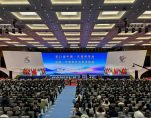
NANNING, CHINA – Media OutReach Newswire – 20 September 2026 – On September 16, as an international science and technology exchange platform included in the list of cooperation initiatives for the series of leaders’ meetings on East Asia cooperation, the Fourth Forum on China-ASEAN Artificial Intelligence Cooperation was successfully held in Nanning, Guangxi. With the theme of “AI for Industries, Digitalization for Shared Future”, this forum was co-hosted by the China-ASEAN Technology Transfer Center, the China-ASEAN Innovation Cooperation Center for Artificial Intelligence, the Department of Science and Technology of Guangxi Zhuang Autonomous Region, and the Guangxi Institute of Industrial Technology. More than 700 government representatives, research scholars, tech entrepreneurs, and venture capital representatives from China and ASEAN countries gathered on site, focusing on three major directions, namely embodied intelligence, AI finance, and data circulation, discussing collaborative technological innovation, jointly pursuing industrial digital transformation, and comprehensively deepening pragmatic cooperation between China and ASEAN in the field of artificial intelligence.
Fourth Forum on China-ASEAN Artificial Intelligence Cooperation Successfully Held in Nanning, Drawing Over 700 Delegates
Coinciding with the historic milestone of the Pinglu Canal being completed and navigable, a canal opens up a physical trade corridor between China and ASEAN, opening a new chapter of digital economy collaboration. “Goods Flow Across Rivers and Seas, Digital Intelligence Connects ASEAN” has become the most distinctive symbol of the era at this forum. The forum closely follows the differentiated development path of “R&D in Beijing, Shanghai, and Guangzhou + Integration in Guangxi + Application in ASEAN”, solving problems through technological breakthroughs, gathering momentum through industry-finance linkage, and promoting effectiveness through scenario implementation, to deepen and solidify China-ASEAN AI cooperation.
Technology empowers the opening, creating a new paradigm of human-machine collaboration
The forum kicked off with Guangxi’s classic ethnic song “Folk Songs like the Spring River”, where human dancers, dancing robots, accompaniment robots, and a digital crowd performing the folk song collaborated across disciplines to perform group collaborations. Relying on millisecond-level cluster scheduling technology, ethnic culture and embodied intelligence were deeply integrated to create an immersive technological audiovisual feast. This forum innovatively adopted a three-party collaborative hosting model of “human host + digital human avatar + intelligent robot”. Yang Yanqing, Professor of ShanghaiTech University, coordinated with her digital human avatar and AGIBOT Lingxi X2 to jointly host the forum, empowering the forum scene through technology, which became a major highlight of the event.
Dr. Padapxay SAYAKHOT, Director-General, Institute of Information and Communication Technology, Ministry of Technology and Communications, Lao PDR, Sun Ruijun, Director-General, China-ASEAN Technology Transfer Center, Secretary of the Party Leadership Group and Director-General, Department of Science and Technology of Guangxi Zhuang Autonomous Region, Secretary of the Party Committee, Guangxi Institute of Industrial Technology, delivered speeches in succession. Both sides stated that they will use this forum as a link to deepen the connection of scientific research and innovation, the implementation of industrial scenarios, and the coordination of policies and mechanisms, gather synergy for digital and intelligent development, and serve the building of a closer China-ASEAN community with a shared future.
Industry authorities gather, anchoring regional AI development directions
The speakers at the forum combined international breadth and professional depth, bringing together industry experts, academic and cutting-edge research forces, industrial technology, and cross-border implementation capabilities from ASEAN countries, forming a core high ground for intellectual exchange and gathering top intellectuals for China-ASEAN AI innovation and development.
Industry experts from ASEAN countries: Dr. Wasan Pattara-atikom, Vice President, National Science and Technology Development Agency, Thailand; Li Haizhou, Fellow of the Academy of Engineering, Singapore (SAEng), Dean of the School of Artificial Intelligence, the Chinese University of Hong Kong, Shenzhen; YAP Hwa Jen, Professor of Universiti Malaya, Managing Director of the UPUM Sdn. Bhd.;
Academic and cutting-edge research forces: Yang Chao, Professor of Peking University, Founder and Chief Scientist of Beijing 1011 Technology Co., Ltd.; Cui Peng, Professor of Tsinghua University and Chief Scientist of Stable AI (Xiong’an) Technology Co., Ltd.; Wang Shisong, Professor of Guangzhou University, Co-founder of Abelian (a quantum-resistant blockchain infrastructure);
Industry technology and cross-border implementation forces: Li Nan, Founder, Chairman, and CEO of Maimai Technology Group; Yao Yuan, Vice President of the Middle East Asia-Pacific Region Division, AGIBOT Innovation (Shanghai) Technology Co., Ltd.; Lyu Jun, Chief Scientist of Shanghai Noematrix Technology Co., Ltd.; Liu Liqi, General Manager of Data Strategy Department, X Square Robot Technology (Shenzhen) Co., Ltd.
The guests focused on three major directions, namely embodied intelligence, AI finance, and data circulation, exploring feasible paths for technological breakthroughs, ecosystem co-construction, and joint innovation. They covered the key stages of artificial intelligence from source research and development and technology transfer to industrial implementation and cross-border cooperation, achieving a two-way dialogue between cutting-edge academic theories and practical industry needs, and providing diverse perspectives and action ideas to bridge the regional digital divide and unlock the inclusive value of AI.
Five achievements released, strengthening the solid foundation for digital intelligence cooperation
At the forum, five scientific and technological innovation achievements were released together, constructing an AI innovation supply system oriented toward ASEAN from multiple dimensions including technology products, platform carriers, talent systems, and decision-making support.
1. The China-ASEAN Cross-Border Industrial Large Language Model: It covers multilingual capabilities and industry knowledge graph for ASEAN, integrates six major agents to collaboratively analyze business scenarios, and serves as a professional intelligent partner for Chinese enterprises to expand into the ASEAN market.
2. Achievements in AI Talent Development for ASEAN: Relying on the Guangxi Academy of Artificial Intelligence, a talent training model of “a dual-mentor system, dual-integrated teaching, dual training tracks, and an integrated master-doctoral program” has been created, achieving an international education pattern of enrolling at one university, earning credits from multiple universities, gaining practical experience in multiple countries, and strengthening talent support for cross-border AI cooperation.
3. “Guikerong” Sci-Tech Finance Digital-Intelligent Foundation Platform: Developed under the guidance of the Department of Science and Technology of Guangxi Zhuang Autonomous Region, it uses data-driven technology credit evaluation to open the value transformation chain of “technology, industry, and finance”, supporting the innovative development of technology-based enterprises.
4. Lao-Language Large Language Model (LLM) for the Energy and Power Sector: China’s first AI overseas project in the power industry, implemented on Electricite du Laos, exploring a new model of “Retaining Computing Power in Guangxi, Exporting Services Globally” for compliant token going global, providing a practical example for cross-border services in the energy sector.
5. “2026 China-ASEAN Artificial Intelligence Industry Development Study Report”: A panoramic overview of regional industrial policy environment, market scale, and application patterns, analyzing core industry development trends, and providing decision-making references for China-ASEAN AI industry cooperation.
Exhibition and negotiation are working together to build a pragmatic platform for exchange and cooperation
The forum adheres to the principles of “promoting research through exhibitions, cooperation through meetings, and implementation through business matchmaking”, simultaneously hosting the Special Session on AI: Bank-Enterprise Matchmaking and the Industry Supply-Demand Matchmaking and Technology Achievement Exhibition, achieving precise coordination between exhibition displays and business negotiations, and building a cross-border cooperation ecosystem deeply integrating industry, academia, research, and application.
The Technology Achievement Exhibition showcased high-tech products such as the General Embodied Intelligent Robot, Fingertip 3D Force Sensors, Integrated Land-Sea-Air Inspection Equipment, Smart Wall-Climbing Industrial Robot, and AI + Embodied Intelligence Teaching and Experiment Platform, covering key tracks like humanoid robots, industrial intelligent equipment, and education and training, demonstrating the innovative strength of domestic AI technology adaptation to ASEAN scenarios.
The venue also set up an immersive AI experience zone, where interactive projects such as coffee-making robots, agile robotic arms, AI customized cultural products, and unmanned retail attracted attendees to stop and experience the vivid effects of AI empowering people’s services up close, highlighting the development philosophy of technology for good and digital intelligence benefiting the people.
Focusing on collaborative win-win cooperation to jointly build a new pattern of regional development
As an international platform for scientific and technological exchange aimed at ASEAN, the Forum on China-ASEAN Artificial Intelligence Cooperation has been held consecutively for four sessions, bringing together more than 4,300 guests from China, foreign government, industry, academia, and research, facilitating the connection of over a hundred industrial projects, and becoming an important platform for the exchange of ideas, interconnection of technologies, and mutual industrial support between China and ASEAN in the field of artificial intelligence.
Looking to the future, China and ASEAN will continue to deepen cross-border joint innovation, promote the orderly flow of AI innovation elements, cultivate a vibrant and inclusive regional digital innovation ecosystem, facilitate digital intelligence benefiting regional industrial upgrading and livelihood development, and jointly build a new mutually beneficial and win-win pattern of China-ASEAN digital economy.
This forum was supported by the Ministry of Technology and Communications of Laos and the ASEAN Secretariat, and co-hosted by Guangzhou University, Guangxi Beibu Gulf Bank, Guangxi Academy of Artificial Intelligence, and Computer Academy of Guangxi.
The issuer is solely responsible for the content of this announcement.
By K Raveendran Donald Trump now possesses one of the most formidable economic weapons available to an American president against countries sustaining Russia’s energy revenues. Yet, the decision on how aggressively to wield it is complicated by a contradiction that Washington cannot easily escape: squeezing Russian oil out of the international market could also push […]
Spain’s data protection authority has disclosed its first notified personal-data breach in which an artificial intelligence agent allegedly carried out several stages of an intrusion, including vulnerability discovery, data modification and access to billing records. The Agencia Española de Protección de Datos said the incident involved an agent using a known large language model and marked a significant shift in the operational use of AI in cyberattacks. […]
Waymo will launch a fully autonomous ride-hailing service in Singapore in 2028, making the city-state its first Southeast Asian market as the Alphabet-owned company accelerates its international expansion.
The company said an initial fleet of all-electric Jaguar I-PACE vehicles will arrive in Singapore over the coming months, with preparations beginning before a phased testing programme in 2027. Trained autonomous specialists will initially drive the vehicles manually while Waymo maps roads and adapts its self-driving system to local conditions.
The programme will expose the Waymo Driver to Singapore’s road geometry, dense traffic environment and monsoon weather patterns before the company seeks to move towards autonomous operation. Commercial rides are scheduled to be offered through the Waymo app in 2028, subject to regulatory approvals.
Initial operations are expected to focus on western Singapore, including the Labrador and HarbourFront area, before any broader passenger rollout is considered locally.
Singapore’s Land Transport Authority said Waymo would become the country’s newest autonomous vehicle operator, joining ComfortDelGro and Grab. The authority said it would work closely with the company to ensure deployments meet safety and regulatory requirements and help build public confidence in autonomous vehicles.
Waymo is entering a market where autonomous transport is already moving from trials towards limited passenger services. Public rides on autonomous shuttle services began in Punggol in April, while operators including Grab, WeRide, ComfortDelGro and Pony. ai are expanding deployments and testing additional routes.
Waymo’s arrival therefore adds a major US developer to a field that already includes regional and China-based autonomous driving companies. Singapore has sought to attract multiple operators as it develops a competitive autonomous mobility sector and evaluates how driverless vehicles could supplement existing public transport.
Transport Minister Jeffrey Siow said Waymo would bring technology and operational expertise while supporting Singapore’s goal of creating additional transport options. Authorities have also stressed that autonomous vehicle deployment will not be allowed to move faster than measures to retrain and support drivers whose jobs could be affected.
The government announced a manpower transition package in July aimed at helping drivers acquire new skills and, where appropriate, move into jobs created by the autonomous vehicle sector. The issue has become more prominent as testing expands from controlled trials towards services carrying members of the public.
Singapore’s regulatory framework requires autonomous vehicles to clear technical and operational assessments before carrying passengers and progressing towards driverless operation. The Land Transport Authority assesses performance on authorised routes, including whether vehicles can cover sufficient distance without intervention and handle a range of traffic situations within their approved operating areas.
The Ministry of Transport also opened a public consultation this year on a broader legislative framework covering autonomous vehicles, including responsibility, licensing, insurance, liability and enforcement. Existing rules already require authorisation for autonomous vehicle trials and use on public roads.
Waymo said its Singapore expansion would follow the phased approach it has used elsewhere. The company has completed more than 20 million fully autonomous passenger rides and more than 300 million autonomous kilometres, according to company figures, giving it one of the largest operating datasets among commercial robotaxi developers.
Its overseas push is gathering pace. Waymo is preparing for commercial autonomous services in Tokyo and has also announced plans involving London and Munich, as it seeks to extend technology developed largely on US roads to markets with different driving environments, regulations and weather conditions.
Singapore offers a compact but demanding testing ground. Heavy rainfall, complex urban traffic, motorcycles, cyclists and dense interactions around public transport infrastructure create operating conditions that differ from many of Waymo’s established US service areas.
The company says its vehicles use lidar, radar and cameras to maintain a 360-degree view of their surroundings. The Singapore fleet will initially use Jaguar I-PACE sport utility vehicles, although Waymo has not disclosed how many vehicles will be deployed at launch or the eventual size of its commercial fleet.
Arabian Post Staff -Dubai Cross-border investment in commercial property rose 56 per cent to $71.8 billion in the first half of 2026, with stronger activity in Asia and Europe helping international deals outpace the broader recovery in global real estate transactions. Data from property consultancy JLL showed overseas investment into Asian property quadrupled to $19.3 billion, while cross-border investment in Europe increased 31 per cent to $39.9 […]
The UN Security Council has condemned continuing Houthi attacks on Saudi Arabia in the strongest terms and affirmed the kingdom’s right to defend itself under international law. The 15-member council said on Friday that strikes affecting civilian and energy infrastructure had injured civilians, including women and children, as cross-border attacks from Yemen continued to place Saudi cities and strategic facilities under pressure. Council members affirmed “the inherent […]
TypeSafe AI has released Jev, a transformer-based artificial intelligence model designed to make structured decisions for software rather than generate conversational text, drawing strong early interest from developers seeking faster and cheaper automation tools. The San Francisco start-up, founded by former OpenAI researcher Diogo Almeida, introduced Jev as its first “System One” model after two years in stealth. Almeida helped develop research behind ChatGPT and reinforcement learning […]
NANNING, CHINA – Media OutReach Newswire – 19 September 2026 – On September 17, the 23rd China-ASEAN Expo and China-ASEAN Business and Investment Summit opened in Nanning, Guangxi. With the theme of “CAFTA 3.0 Opportunities, Better Life”, the 23rd CAEXPO and CABIS was attended by Chinese and foreign leaders and important guests at the opening ceremony.
This year marks the 5th anniversary of the establishment of the China-ASEAN comprehensive strategic partnership, the inaugural year of the “Plan of Action to Implement the ASEAN-China Comprehensive Strategic Partnership (2026-2030)”, and a critical year for accelerating the implementation of the China-ASEAN Free Trade Area (CAFTA) 3.0 Upgrade Protocol following its signing.
The 23rd CAEXPO has a total exhibition area of approximately 170,000 square meters, showcasing the latest achievements of cooperation between China and ASEAN countries, as well as new business opportunities under the Version 3.0 China-ASEAN Free Trade Area (CAFTA). More than 3,400 enterprises from over 70 countries and regions are participating, with the total number of exhibitors increasing by 5.3% compared to the previous session. Timor-Leste made its debut as a formal ASEAN member state and co-organizer of the CAEXPO. This marks the first time that all 11 ASEAN countries have gathered in Nanning, Guangxi, since ASEAN’s expansion, representing a historic moment for the CAEXPO’s circle of friends. In addition to the main exhibition area at the Nanning International Convention and Exhibition Center, two other exhibition areas are set up at CAAIC Community and the Guilin International Conference & Exhibition Center.
For the first time, an ASEAN country demand exhibition is set up during the event, and an ASEAN demand list is released for the first time, focusing on showcasing projects and application needs of ASEAN countries in areas such as transportation, smart logistics, artificial intelligence applications, urban management, and park construction, creating a new one-stop precise matchmaking platform for China and ASEAN.
In addition, more than 50 economic and trade promotion activities will be held during the event, focusing on trade and investment facilitation and regional economic integration, cross-border industrial and supply chain cooperation, “Shop in China”, “Export to China”, “Invest in China”, and other topics.
Hashtag: #CAEXPO#CABIS
The issuer is solely responsible for the content of this announcement.
Kerala Tourism has stepped up its outreach to Gulf travellers at Arabian Travel Market 2026 in Dubai, using the four-day trade fair to present the state’s backwaters, wellness products, culture, nature and adventure experiences to buyers and industry partners.
Tourism Minister P. C. Vishnunadh visited the Kerala pavilion at the Dubai World Trade Centre and met UAE Minister of Economy and Tourism Abdulla bin Touq Al Marri as the state sought to deepen engagement with one of its most important overseas visitor markets. He was accompanied by Tourism Secretary Biju K.
Vishnunadh said the Middle East remained significant for Kerala because of the state’s longstanding links with the UAE and the region’s importance to its tourism economy. He said Arabian Travel Market provided an opportunity for tourism businesses to understand changing demand, identify emerging opportunities and present packages designed for Gulf travellers.
Kerala Tourism said 26,255 visitors from the UAE travelled to the state in 2025, underlining the market’s value as it looks to expand international arrivals and strengthen demand beyond peak seasons.
The state’s 69-square-metre pavilion, carrying the theme “Green Peace – Yalla Kerala”, used imagery of hill stations and green landscapes alongside displays promoting established and emerging tourism products. The presentation placed emphasis on Kerala as a year-round destination, with Ayurveda and wellness, beaches, backwaters, cultural experiences and adventure travel forming key parts of the pitch.
Vishnunadh also met Sudhir Sreedharan, senior vice-president of flydubai, and officials of the Dubai Police Authority during his visit. The meetings came as Kerala Tourism used the event not only for destination promotion but also for business networking with airlines, tour operators and travel-sector partners.
Six tourism businesses from Kerala joined the pavilion as co-exhibitors: Kairali – The Ayurvedic Healing Village in Palakkad, The Elephant Court in Thekkady, Somatheeram Ayurveda Group, Intersight Tours and Travels, Santamonica Tours and Travels, and Gateway Malabar Holidays. Their participation gave buyers access to accommodation, wellness and tour products directly from operators.
Arabian Travel Market 2026, held from September 14 to 17, brought together tourism authorities, airlines, hospitality companies, tour operators and other travel businesses from the Middle East and overseas markets. Organisers positioned the 33rd edition as a platform for commercial partnerships, destination marketing and discussion of travel trends.
The UAE used ATM to launch “Visit UAE”, its first unified federal tourism identity, bringing the seven emirates under a single national tourism platform. Abdulla bin Touq said the initiative was intended to present the country as an integrated destination and support stronger cooperation across tourism.
Kerala’s Gulf-focused campaign extended beyond the exhibition floor. At a Kerala travel meet in Dubai built around the same “Green Peace – Yalla Kerala” theme, officials and private-sector participants held business-to-business meetings with UAE-based buyers.
Tourism Secretary Biju K presented Kerala’s destination portfolio and invited travel-industry representatives to Kerala Travel Mart 2026, while the state highlighted its appeal across leisure, wellness, culture and nature-based travel. The engagement was designed to convert destination visibility into business links with tour operators and distributors serving Gulf customers.
Kerala has been placing greater emphasis on the Arab market because demand from the region often overlaps with the state’s monsoon and shoulder seasons, when Ayurveda, wellness and nature-based travel can help spread visitor flows more evenly through the year.
That approach also reflects growing competition among destinations for Gulf travellers, who have access to extensive direct and one-stop air connectivity through Dubai, Abu Dhabi, Doha and other regional hubs. Kerala’s strategy at the fair focused on product differentiation rather than a single tourism segment, combining established attractions with experiential offerings.
The Maldives also maintained a presence at the Dubai event, with 165 industry representatives from 74 tourism companies participating alongside official tourism bodies. Its delegation used the fair to pursue airline partnerships and destination marketing agreements aimed at improving connectivity and widening market reach.
Westinghouse Electric is seeking a valuation above $50 billion for a planned US initial public offering, people familiar with the preparations said, as the nuclear technology group moves towards a potential public filing as early as October. The proposed valuation has not been announced by Westinghouse or its owners and could change as preparations advance. The number of shares to be sold, the price range and the […]
Software stocks are staging a sharp recovery as stronger-than-expected earnings and fresh calls for restraint in advanced artificial intelligence development ease fears that AI will quickly undermine the sector’s business models. The iShares Expanded Tech-Software Sector ETF has climbed about 17 per cent since the end of the first half, reversing part of a 14 per cent decline during the opening six months of 2026, when investors […]
Bitcoin’s network hashrate is showing signs of recovery, prompting CryptoQuant analysts to flag a pattern that has historically coincided with stronger prices. The improvement comes as Bitcoin trades back near $80,000 after a volatile week, while estimates of the computing power securing the network have moved higher from early-September lows. Trackers placed hashrate around 900 to 930 exahashes per second on Friday, with estimates varying because the […]
Arabian Post Staff -Dubai Abu Dhabi Investment Authority has been allocated shares worth about 2 billion rupees in the National Stock Exchange of India’s anchor book, placing the sovereign wealth fund among the largest institutional investors in the exchange’s 67.46 billion-rupee pre-IPO placement. NSE allotted 37.79 million shares to 189 anchor investors at 1,785 rupees each, the top of its 1,700-1,785 rupee price band, according to the […]
Saudi Arabia’s King Salman Humanitarian Aid and Relief Centre has signed a cooperation agreement with the Refaq Association in Hail Region to provide monthly financial assistance, clothing and shopping vouchers for orphans in Djibouti. The agreement, signed on Thursday at KSrelief’s headquarters in Riyadh, provides monthly support of $80 for each participating orphan, intended to reduce the financial pressure on families caring for them. It also includes […]
SpaceX has held informal discussions about buying customer and operational data from troubled or defunct startups to train artificial intelligence models, people familiar with the talks say, as the company looks for lower-cost information beyond material available on the public internet. The discussions are taking place within SpaceXAI, the artificial intelligence operation created after SpaceX acquired Elon Musk’s xAI business in February. No transaction has been announced, […]
SHANGHAI, CHINA – Media OutReach Newswire – 17 September 2026 – Huawei today announced the Peerium Computing Architecture, a new computing architecture for the AI era. The architecture enables processors at the million scale to work as one computer, meeting the ever-growing demand for AI compute.
The Peerium Computing Architecture achieves strong scaling to the million-processor level through nested parallelism, unified memory addressing, and peer interconnect. It breaks through the Turing paradigm with the introduction of Nested BSP (Nested Bulk Synchronous Parallel), extends the von Neumann single-machine architecture, and overturns the master–slave architecture that has prevailed for decades, so that a million processors truly become one larger computer.
UnifiedBus (UB) is the key interconnect technology that makes the Peerium Computing Architecture possible. Built on a single open protocol, UB is a high-speed bus that scales without limit to connect CPUs, NPUs, memory, SSDs, network interface cards (NICs), and switches. With UB, peer interconnect is achieved across compute, storage, and networking.
The Atlas 950 SuperPoD and SuperPoD-based SuperClusters are the first-generation product built on the Peerium Computing Architecture. An Atlas 950 SuperCluster with 256,000 cards is already being deployed, and the Atlas 960 system based on near-packaged optics (NPO) is currently under testing.
Eric Xu, Huawei’s Rotating Chairman, said, “In the AI era, Huawei is drawing on the Peerium Computing Architecture we pioneered to continuously build the SuperPoDs and SuperPod-based SuperClusters that meet customer needs for training and inference, making computing power available everywhere and intelligence accessible to all.”
Hashtag: #Huawei
The issuer is solely responsible for the content of this announcement.
The UAE Cyber Security Council and Fortinet have launched a cybersecurity internship programme aimed at developing Emirati talent through structured training, practical experience and industry mentorship. The programme is the first project of its kind under the council’s Cyberani Practical Training Initiative, which was created with the Ministry of Higher Education and Scientific Research to prepare university students for cybersecurity careers. Fortinet is participating as a technology […]
Dubai has approved an 80-kilometre road corridor linking Abu Dhabi and Sharjah through the emirate, a two-phase project intended to divert through traffic, strengthen freight movement and sharply reduce journey times on key sections of the network. Sheikh Hamdan bin Mohammed bin Rashid Al Maktoum, Crown Prince of Dubai, Deputy Prime Minister and Minister of Defence, approved implementation of the New Fourth Corridor, which will run from […]



 https://www.aolani.com
 https://sg.linkedin.com/company/aolani-cloud