News related to
demand

Elon Musk will probably get the $86 billion he wants from the SpaceX IPO. The harder question is whether investors will still be as enthusiastic about the company a year from now. Seeking a valuation of $1.78 trillion, SpaceX is attempting something unprecedented. If successful, the offering will become the largest IPO in history and instantly rank among the biggest corporate fundraising events ever seen. Many investors […]

Romanian President Nicușor Dan is preparing to nominate Eugen Tomac as prime minister, seeking to break a month-long political deadlock and restore fiscal direction in one of the European Union’s most strained economies. Tomac, a member of the European Parliament and leader of the People’s Movement Party, has emerged as the presidency’s preferred option after talks among mainstream parties failed to produce a stable governing formula. His […]

MMC Port Holdings Sdn Bhd has approached prospective bidders for a minority stake in the business, shifting attention from a delayed public listing to a private transaction that could test investor appetite for one of Southeast Asia’s most significant port platforms. The move follows the postponement of an initial public offering that had been expected to rank among Malaysia’s largest listings in more than a decade. The […]

Cardano’s ADA token fell below 20 US cents as founder Charles Hoskinson said he was “taking a break” after warning that the blockchain ecosystem faces a wave of project failures, deepening concern over funding, governance and developer momentum. ADA traded around $0.19 on Thursday after dropping more than 12 per cent over 24 hours, taking its one-year decline to about 70 per cent and pushing the token […]

Arabian Post Staff -Dubai UiPath has secured certification from the Dubai Electronic Security Center for its Automation Cloud Commercial UAE region, clearing a key compliance hurdle for wider deployment of its automation and artificial intelligence services across Dubai’s government, semi-government and regulated enterprise sectors. The certification places UiPath’s UAE cloud operations under the DESC Cloud Service Provider Security Standard, a framework required for cloud providers serving Dubai […]

Arabian Post Staff -Dubai Microsoft has tested a wearable AI badge for office workers as part of a wider effort to move artificial intelligence agents beyond laptops, phones and traditional software applications. The device was shown at Microsoft Build 2026 in San Francisco under Project Solara, a new chip-to-cloud platform designed for hardware that runs AI agents instead of conventional apps. The badge concept resembles a workplace […]

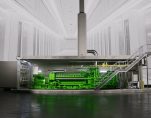
Gas engine manufacturer Innio has raised $2.43 billion in a US initial public offering, pricing an upsized share sale at the top of its marketed range as investors continue to chase companies tied to the electricity demands of artificial intelligence. The Munich-based distributed energy group priced 90 million shares at $27 each, above the 75 million shares originally planned and at the upper end of the $24 […]

Advertisements

Bitcoin fell four percent on Wednesday to $64,721.39, its weakest level since 28 February, as pressure from fund withdrawals, leveraged liquidations and shifting macroeconomic signals deepened a broad retreat across digital assets. The slide extended a difficult stretch for the world’s largest cryptocurrency, which has moved sharply lower after failing to hold above key support levels near $70,000. Selling accelerated as investors reduced exposure to risk assets, […]

HONG KONG SAR – Media OutReach Newswire – 4 June 2026 – AECOM, the trusted global infrastructure leader, and the Urban Land Institute (ULI), today announced the launch of the Asia Pacific Infrastructure Innovation Index 2026, a new thought leadership report examining how the infrastructure industry across the region is prioritizing innovation in response to stakeholders’ needs, increasing system complexity, operational pressures and evolving delivery challenges.

AECOM and Urban Land Institute launch inaugural Asia Pacific Infrastructure Innovation Index, highlighting region's evolving infrastructure innovation priorities.
AECOM and Urban Land Institute launch inaugural Asia Pacific Infrastructure Innovation Index, highlighting region’s evolving infrastructure innovation priorities.

Developed in collaboration between AECOM and ULI, the report brings together perspectives from stakeholders across infrastructure, government, utilities, investment, planning and development sectors. It draws on a survey of more than 100 senior infrastructure professionals in Asia Pacific, alongside in-depth interviews with industry leaders. As the first edition of the Index, it establishes a baseline for understanding how infrastructure innovation is currently being prioritized and delivered across the region.

“This report highlights how organizations are moving beyond ideas and applying innovation in practical ways to improve delivery, resilience and system performance,” said Ian Chung, chief executive of AECOM’s Asia region. “Infrastructure leaders across Asia Pacific are responding to growing complexity by strengthening digital capabilities, improving coordination across interconnected systems and focusing on long-term operational performance.”

“Our collaboration with AECOM reflects a growing recognition that infrastructure and real estate are increasingly interdependent,” said Alan Beebe, CEO Asia Pacific, ULI. “As cities in Asia Pacific evolve, infrastructure is no longer just a technical consideration, but plays a critical role in shaping how places function, grow and perform. Understanding how innovation is being applied in this context is essential for those involved in the built environment.”

Among the top ten takeaways highlighted in the report, three key themes emerged consistently across both the survey findings and interview insights: the role of AI in infrastructure systems, the integration and growing demands on energy systems, and the need to design and operate infrastructure for climate resilience. Together, these themes highlight a broader shift toward enhancing how infrastructure systems are developed and perform under increasingly complex, real-world conditions.

Read the report here: Asia Pacific Infrastructure Innovation Index | AECOM Insights

Hashtag: #AECOM #AsiaPacificInfrastructureInnovationIndex

The issuer is solely responsible for the content of this announcement.

About AECOM

AECOM is the global infrastructure leader, committed to delivering a better world. As a trusted professional services firm powered by deep technical abilities, we solve our clients’ complex challenges in water, environment, energy, transportation and buildings. Our teams partner with public- and private-sector clients to create innovative, sustainable and resilient solutions throughout the project lifecycle — from advisory, planning, design and engineering to program and construction management. AECOM is a Fortune 500 firm that had revenue of $16.1 billion in fiscal year 2025. Learn more at aecom.com.

About the Urban Land Institute

The Urban Land Institute (ULI) is a non-profit education and research institute supported by its members. Its mission is to shape the future of the built environment for transformative impact in communities worldwide. Established in 1936, the Institute has more than 48,000 members worldwide and over 3,000 members in the Asia Pacific region representing all aspects of land use and development disciplines. For more information on ULI Asia Pacific, please visit , or follow us on , , , , and .

By K Raveendran Public anger has a strange way of finding symbols. Sometimes it gathers around a saintly figure in a white cap, sometimes around an unlikely political label that sounds almost like a joke until it begins to speak for a generation. The overwhelming response from Gen Z to the Cockroach party carries unmistakable […]

The article Cockroach Politics And The Limits Of Public Anger appeared first on Latest India news, analysis and reports on Newspack by India Press Agency).

Arabian Post Staff -Dubai Abu Dhabi has temporarily halted rent increases across residential, commercial and industrial properties, cutting the permitted annual rise from 5 per cent to 0 per cent until further notice. The measure applies to tenancy contract renewals across the emirate and means rents must remain unchanged for the duration of the freeze. New tenancy contracts for previously rented units must also be registered at […]

Bull and Hon Hai Technology Group, better known as Foxconn, will manufacture artificial intelligence and cloud infrastructure in Europe under a strategic partnership designed to strengthen the region’s computing supply chain and reduce dependence on external technology providers. The project will use Foxconn’s manufacturing base in Pardubice in the Czech Republic and Bull’s factory in Angers, France, to produce AI systems and related components for European AI […]

FIFA has confirmed the final squad lists for the 2026 World Cup, naming a record 1,248 players across 48 national teams for the expanded tournament in Canada, Mexico and the United States. The lists mark the last major administrative step before the competition opens on 11 June, with the final scheduled for 19 July after 104 matches across the three host countries. Each participating association has submitted […]

MUMBAI/CHENNAI: Just as the microfinance sector appears to be emerging from a prolonged asset-quality stress cycle, a weaker monsoon forecast threatens to create fresh challenges. With the India Meteorological Department (IMD) downgrading its southwest monsoon forecast to “below normal” — potentially the weakest in 11 years — concerns are resurfacing for India’s over ₹3-lakh-crore microfinance […]

The article Weak Monsoon Forecast Raises Fresh Concerns For India’s Rs 3 Lakh Crore Microfinance Sector appeared first on Latest India news, analysis and reports on Newspack by India Press Agency).

Washington and Tehran exchanged fresh military strikes across the Gulf, placing new pressure on a fragile ceasefire and raising the risk of wider disruption around one of the world’s most important energy corridors. US forces intercepted Iranian ballistic missiles and drones aimed at neighbouring Middle East countries and then struck a military ground control station on Iran’s Qeshm Island, near the Strait of Hormuz. The operation followed […]

Greenlogue/AP Dairy processors can cut greenhouse gas emissions from liquid dairy lines by as much as 49% by modernising existing equipment rather than replacing entire production systems, a Tetra Pak assessment has found, pointing to a faster route for plants under pressure to lower costs, reduce waste and meet climate targets. The analysis, released from Lausanne, examined upgrades to chilled and ambient liquid dairy processing lines and […]

Snowflake has placed Anthropic’s Claude at the centre of its enterprise artificial intelligence push, using Summit 26 to show rising customer uptake inside Cortex AI while a $6 billion infrastructure commitment to Amazon Web Services reshapes the economics behind its expansion. The data cloud company said enterprises are increasingly deploying Claude through Snowflake Cortex AI to run governed AI agents on business data without moving sensitive information […]

Persistent dollar strength pushed the yen back towards 160 per US dollar on Wednesday, reviving concern that Tokyo may step into the foreign exchange market as renewed Gulf hostilities drove investors towards the US currency.

The yen traded near 159.92 per dollar in Asian dealings, close to the level widely viewed by traders as a possible trigger for official action. The move erased much of the currency’s rebound after Japan’s ¥11.7 trillion intervention campaign earlier this year, leaving markets alert to fresh warnings from the Ministry of Finance.

Dollar demand strengthened after renewed fighting in the Gulf raised fears of wider disruption to energy supplies and trade routes. The US currency benefited from its reserve status, while risk-sensitive currencies came under pressure. The dollar index held around 99.27, supported by geopolitical uncertainty and firm US labour indicators that have reduced expectations of near-term monetary easing by the Federal Reserve.

Japan’s authorities have intensified verbal warnings as the yen weakens. Finance Minister Satsuki Katayama has said the government is ready to respond appropriately to excessive currency moves, language that traders typically read as a signal that intervention remains on the table. Officials have also stressed coordination with the United States, a politically sensitive point because unilateral currency action can draw scrutiny from trading partners.

The yen’s slide reflects a combination of external pressure and domestic policy constraints. Japan remains heavily dependent on imported energy, much of it priced in dollars. Higher oil prices therefore worsen the trade position and add pressure to household costs, while a weaker yen raises import bills further. Brent crude climbed towards $95 a barrel as Gulf tensions fed concerns over supplies, adding another layer of strain for Japan’s economy.

Attention is now focused on Bank of Japan Governor Kazuo Ueda, whose next policy signals will be watched closely ahead of the June 15-16 policy meeting. Markets have increased bets that the central bank could raise interest rates from 0.75% to 1%, especially as imported inflation pressures build. Any move would mark a further step away from the ultra-loose policy framework that kept Japan’s rates far below those of other major economies for years.

Still, the Bank of Japan faces a difficult balance. A rate increase could support the yen and help restrain inflation expectations, but policymakers remain cautious about tightening too sharply while domestic demand stays uneven. Wage growth has improved, yet household purchasing power remains vulnerable to higher energy and food costs. A premature tightening cycle could hurt consumption just as companies pass on higher input costs.

The interest-rate gap with the United States remains central to the yen’s weakness. US policy rates are still high by comparison, keeping dollar assets attractive to global investors. Stronger US jobs data has strengthened the argument that the Federal Reserve may keep policy restrictive for longer, or even consider further tightening if inflation risks intensify. That has limited any relief for currencies trading against the dollar.

Other major currencies also softened. The euro slipped as investors assessed rising energy-driven inflation in the eurozone and the possibility of a European Central Bank rate increase at its June 11 meeting. Sterling edged lower, while the Australian and New Zealand dollars were weighed down by weaker risk appetite. Cryptocurrency markets also came under pressure as investors moved away from volatile assets.

For Japan, the 160 level carries market and political significance. Authorities intervened when the yen breached similar levels in 2024 and again used large-scale buying this year to slow the currency’s decline. The effectiveness of intervention, however, depends on whether monetary policy and global market conditions move in the same direction. Without a narrower yield gap or a broader fall in the dollar, direct yen purchases can lose impact quickly.

Oman India Fertiliser Company is preparing to sell 25 per cent of its share capital through an initial public offering, setting up a July debut on the Muscat Stock Exchange as Oman pushes ahead with a broader programme to widen public ownership of strategic assets.

The offering will comprise existing ordinary shares held by the company’s current shareholders, meaning proceeds from the sale will go to the selling shareholders rather than to OMIFCO. The subscription period is expected to open this month, subject to final regulatory approvals from the Financial Services Authority, with trading targeted for July if market conditions remain supportive.

OMIFCO is 50 per cent owned by Oman state energy group OQ, while Indian Farmers Fertiliser Cooperative Limited and Krishak Bharati Cooperative Limited each hold 25 per cent. The float is expected to give investors access to one of Oman’s largest industrial exporters and a fertiliser producer with strong exposure to global urea and ammonia demand.

The company operates from Sur Industrial City, where its complex includes two ammonia trains and two urea trains. Annual nameplate capacity stands at about 1.15 million tonnes of ammonia and 1.65 million tonnes of urea, making the producer one of the largest fertiliser operators in the Gulf. The business is supported by long-term gas supply arrangements, established marketing relationships and export infrastructure, including a dedicated deep-water berth that connects the plant to overseas markets.

The IPO comes at a sensitive moment for fertiliser supply chains, with Middle East producers drawing stronger investor attention as global prices respond to disruptions in energy and shipping routes. Urea remains OMIFCO’s dominant revenue source, accounting for the bulk of sales, while ammonia provides an additional export stream and supports integrated production at the Sur complex.

OMIFCO generated revenue of $802.3 million in 2025, with an EBITDA margin of 50.6 per cent and a net profit margin of 40 per cent. Revenue for the first quarter of 2026 reached $207.4 million, while EBITDA margin stood at 50.5 per cent and profit margin at 40.4 per cent. The company has said it has maintained a net cash position for several years and has no interest-bearing debt, a profile likely to feature prominently in investor marketing.

The company expects to distribute dividends of about RO71.2 million, equivalent to roughly $185 million, for the 2026 financial year. The payout is planned in two equal instalments, scheduled for September 2026 and April 2027. For the following two financial years, dividend guidance is expected to be linked to either 90 per cent of net profit or a minimum annual compounded increase from the 2026 dividend base, whichever is higher.

The planned sale follows a series of listings and privatisation moves aimed at expanding the depth of Oman’s capital market. OQ Exploration and Production’s 2024 listing was one of the largest offerings in the region that year, while Asyad Shipping also formed part of the state-linked pipeline of public market transactions. OMIFCO’s proposed listing would extend that momentum into industrial manufacturing and food-security-linked exports.

Bank Muscat and Société Générale have been appointed joint global coordinators for the offering, with Bank Muscat also acting as issue manager. Arqaam Capital and United Securities are serving as joint bookrunners. The final structure, allocations and investor eligibility terms will be detailed in the prospectus after approval by the Financial Services Authority.

The offering is expected to include tranches for institutional and retail investors, with participation governed by Oman’s regulations for public joint stock companies. Shares will also be offered to selected qualified investors outside the United States under applicable securities rules, broadening the potential investor base while keeping the formal listing on the Muscat Stock Exchange.

OMIFCO’s position is closely linked to demand from agriculture markets, particularly urea used in crop nutrition. India has remained a major destination for its exports, supported by long-term commercial ties with its cooperative shareholders. From 2023 to 2025, the country accounted for most exported urea volumes and a substantial share of ammonia shipments, reinforcing the company’s role in cross-border fertiliser supply.

Arabian Post Staff -Dubai UAE non-oil private sector activity strengthened in May, but weaker demand, falling export orders and higher transport and material costs kept growth below its long-term trend, signalling a more cautious phase for businesses exposed to regional trade disruption. The headline Purchasing Managers’ Index rose to 52.6 in May from 52.1 in April, remaining above the 50 mark that separates expansion from contraction. The […]

Kioxia Holdings has moved within striking distance of Toyota Motor’s market value, underscoring how the artificial intelligence boom is reshaping Japan’s corporate hierarchy and lifting a memory-chip maker that listed in Tokyo less than two years ago into the country’s market elite.

The Tokyo-based maker of NAND flash memory and solid-state drives has become one of the most closely watched stocks on the Tokyo Stock Exchange after a sharp rally tied to demand for data-centre storage, AI servers and high-performance memory systems. Its market capitalisation has climbed into the tens of trillions of yen, placing it near Toyota and behind SoftBank Group in a reshuffled ranking that would have seemed unlikely when Kioxia priced its initial public offering at 1,455 yen a share in December 2024.

The shift marks a wider challenge to the long-standing dominance of Japan’s manufacturing champions. Toyota, the global carmaker that symbolised the strength of Japan Inc. for decades, has been displaced from the top position by SoftBank during the latest AI-led surge, while Kioxia has risen rapidly from a former Toshiba memory unit backed by Bain Capital into a central player in the market’s technology rotation.

Kioxia’s climb reflects investor expectations that memory will remain a bottleneck in AI infrastructure. Generative AI systems require vast amounts of storage and high-speed data movement, pushing demand beyond the older cycle driven mainly by smartphones and personal computers. Data-centre operators, cloud companies and chip designers are competing for components needed to train and run large AI models, giving memory producers stronger pricing power after years of volatility.

The company’s earnings have strengthened sharply. Kioxia has projected operating profit of about 1.3 trillion yen for the April-June quarter, a figure that puts it among the most profitable listed companies in Japan. Its latest annual results showed strong momentum in revenue, margins and cash generation, helping ease earlier concerns about debt and cyclicality. Rating upgrades to investment grade have added to the perception that the balance sheet is improving at a time when investors are rewarding semiconductor exposure.

Kioxia’s origins give its rise broader industrial significance. The company traces its roots to Toshiba’s memory business, which was sold to a Bain-led consortium in 2018 after Toshiba’s financial crisis. The group was renamed Kioxia in 2019, drawing on the Japanese word for memory and the Greek word for value. Its public listing in 2024 valued it below 800 billion yen, after earlier IPO attempts were delayed by weak valuation conditions and pressure in the memory market.

That cautious debut contrasts sharply with its current status. Shares have multiplied as investors reassessed the role of NAND flash in AI systems, especially as large-scale data centres require higher storage density, faster access and more energy-efficient hardware. Kioxia has also been developing advanced BiCS FLASH technology and promoting next-generation SSDs for AI storage infrastructure.

The rally has also lifted questions over valuation risk. Memory chips remain one of the semiconductor industry’s most cyclical segments, with prices exposed to shifts in capital spending, inventory levels and customer demand. A sharp rise in market value leaves Kioxia vulnerable if hyperscaler investment slows, if competitors add capacity faster than expected, or if customers push back against higher pricing.

Competition is intense. Samsung Electronics, SK Hynix, Micron Technology and SanDisk remain key players across memory markets, with SK Hynix holding a dominant position in high-bandwidth memory used in AI accelerators. Kioxia’s strength is more closely tied to NAND flash and SSDs, where demand from AI infrastructure has broadened the market but does not eliminate the risk of oversupply once new capacity comes on stream.

Toyota’s relative decline in the rankings does not point to operational weakness alone. The carmaker remains one of the world’s largest manufacturers by sales and a major profit generator, but investors have been rotating away from traditional industrial leaders towards companies with direct AI exposure. Concerns over electric-vehicle competition, currency movements and the cost of future technologies have weighed on auto valuations, even as Toyota continues to command global scale in hybrid vehicles and supply-chain management.

SoftBank’s ascent has further highlighted the changing market narrative. Its exposure to Arm and AI-related investments has drawn investors seeking Japan-based access to global AI infrastructure. Together, SoftBank and Kioxia now represent a market story centred on chips, data centres, software platforms and computing capacity rather than the export-led industrial model that long defined Japan’s equity market.

Foreign investor flows have amplified the shift. Japan’s equity market has benefited from corporate-governance reforms, stronger capital returns and renewed interest in companies linked to the AI supply chain. The Nikkei 225 has reached record territory, though the rally has been uneven, with gains concentrated in a limited group of technology-linked names while broader market performance has been more mixed.

Kioxia’s next test will be whether it can convert favourable pricing and sold-out capacity into durable earnings. Investors will look for clearer shareholder-return plans, disciplined capital expenditure and evidence that AI storage demand can remain strong beyond the current investment wave. The company’s contemplated US share listing would widen access to global technology investors and could further raise its profile if market conditions remain supportive.

India’s oil demand growth is heading for its weakest annual pace since the pandemic as the Middle East conflict pushes up crude and fuel costs, squeezes refiners and curbs consumption across transport, aviation and industrial sectors.

Consumption growth in the world’s third-largest crude importer is now forecast at about 78,000 barrels a day for 2026, nearly 40 per cent below pre-war expectations. Excluding the Covid-hit year of 2020, that would mark the slowest expansion in a decade for an economy that has otherwise been one of the main pillars of global oil-demand growth.

The downgrade reflects the widening economic impact of the war involving Iran, which began at the end of February and disrupted flows through the Strait of Hormuz, one of the world’s most important oil transit routes. International crude prices have risen sharply from pre-conflict levels, while refined product markets have tightened as Gulf exports of fuels and feedstocks remain constrained.

India’s reliance on imported crude and petroleum products has amplified the pressure. Higher energy prices are feeding into transport costs, refinery margins, aviation fuel expenses and household fuel supply management. A weaker rupee has added to the burden by increasing the local-currency cost of dollar-denominated imports.

State-run refiners have raised some fuel prices modestly, but domestic retail prices remain well below market-reflective levels. Oil ministry estimates indicate that processors have been losing about ₹6 billion a day on sales of diesel, petrol and liquefied petroleum gas. The strain has revived concerns over under-recoveries at state-controlled retailers, even as authorities seek to shield households and small businesses from a sharper fuel-price shock.

Diesel, the largest component of petroleum product consumption, is showing the clearest signs of stress. It powers trucks, tractors, construction equipment and a large portion of industrial activity. Forecasts for diesel-demand growth have been cut heavily, with some estimates suggesting growth may slow to only 4,000 to 5,000 barrels a day, compared with earlier expectations of 50,000 to 60,000 barrels a day.

Transport operators say higher running costs are already hurting freight movement. Rajendra Kapoor, president of the All India Motor and Goods Transport Association, said customers were resisting higher freight charges even as fuel expenses had risen. He estimated that fleet movement had fallen by 15 per cent to 20 per cent, affecting the movement of farm goods, industrial raw materials and retail products.

Petrol demand remains more resilient because passenger mobility has held up better than heavy freight. Even so, growth projections for petrol have been cut by about 40 per cent to around 38,000 barrels a day. Urban commuting, private vehicle use and two-wheeler demand continue to support consumption, but high prices and government appeals for fuel conservation are tempering growth.

Prime Minister Narendra Modi has urged people to save fuel by working from home where possible, using public transport and avoiding non-essential overseas travel. Such measures indicate how the energy shock has moved beyond refinery balance sheets into wider economic management.

Aviation turbine fuel is another area under pressure. Jet fuel costs account for a major share of airline operating expenses, and the loss of Middle East product exports has tightened supplies. Forecasts for jet fuel growth have been halved by some market consultants, while airlines face the twin challenge of higher fuel bills and weaker discretionary travel demand in price-sensitive segments.

Liquefied petroleum gas has also been hit by supply disruptions. April consumption fell to about 2.2 million metric tonnes, down more than 16 per cent from a year earlier, as import flows were affected. Authorities have asked state fuel retailers to build LPG storage capacity equivalent to 30 days of demand, a move aimed at strengthening energy security against further disruptions.

Official petroleum data showed total product consumption at 19.30 million metric tonnes in April, down 4.6 per cent from a year earlier. The contraction followed a record high of 21.75 million tonnes in December 2025, underlining the speed with which the war-related price shock has altered demand conditions.

Global oil-market agencies also disagree over the depth of the slowdown. Some forecasts still expect worldwide demand to rise this year, while others now see a contraction because of weaker refinery runs, reduced petrochemical feedstock availability and lower aviation activity. The sharpest downgrades have been concentrated in Asia, where import-dependent economies are most exposed to disruption in Gulf supply chains.


House of Doge has struck a partnership with Paxos to place Dogecoin on regulated brokerage and custody infrastructure used by major financial technology platforms, marking a fresh push to move the meme-origin cryptocurrency deeper into mainstream digital asset services. The agreement, announced on June 1, 2026, will integrate DOGE into Paxos’s enterprise crypto platform, allowing Paxos clients to offer buying, selling, holding and transfer functions for the […]

Spiro has raised $215 million in equity financing to expand its electric motorcycles, battery-swapping network and energy infrastructure across Africa, marking one of the largest funding rounds for the continent’s clean mobility sector. The Nairobi-based electric mobility platform said the investment was backed by institutional investors from Europe and Africa, including Impact Fund Denmark and Equitane, alongside continuing support from long-standing partners such as FEDA. The company […]

VISHNU RAJA
RYO YAMADA
HITORI GOTOH
IKUYO KITA