CPI(M)-aligned legislator K. T. Jaleel has demanded that Kerala Chief Minister V. D. Satheesan withdraw his remarks about the Muslim League and apologise, accusing him of portraying Muslims as potential extremists. Jaleel’s criticism followed Satheesan’s assertion that extremist organisations could occupy the politica…
Pilgrims from Tamil Nadu have alleged that dhotis distributed free under their state’s Pongal welfare programme were converted into irumudi bags and sold for Rs 300 at Pamba, the gateway to Kerala’s Sabarimala temple. The allegations emerged after devotees identified Tamil Nadu government markings on cloth used for th…
Thailand has attracted 35 advanced materials investment proposals worth approximately $690 million as demand for artificial intelligence hardware, electric vehicles and clean-energy equipment encourages manufacturers to expand local production.
The Thailand Board of Investment (BOI) said on Saturday that applications submitted between 2023 and the first half of 2026 totalled 23.5 billion baht. The proposed projects cover specialised components and industrial materials used in electronics, batteries, electric motors and hydrogen technologies.
The figures represent investment applications rather than completed expenditure. The agency did not provide a breakdown of project approvals, construction schedules or the amount already invested, leaving the pace at which the proposed capacity will become operational unclear.
Narit Therdsteerasukdi, secretary-general of the BOI, said domestic production of sophisticated materials could reduce dependence on imports and allow Thai suppliers to participate in higher-value international manufacturing networks. The agency wants to develop industries supplying essential inputs rather than relying principally on assembly operations.
The applications include multilayer ceramic capacitors, graphite films used for heat management, engineered ceramics, neodymium magnets, materials for batteries and fuel cells, and specialised glass and quartz fabrics used in printed circuit boards. Nanomaterials for precision manufacturing are also represented.
Such products are important to increasingly powerful computing equipment. Multilayer ceramic capacitors help regulate electrical power in electronic circuits, while graphite films dissipate heat generated by densely packed components. The BOI said a high-end AI server can contain as many as 30,000 ceramic capacitors, illustrating the scale of demand associated with advanced computing infrastructure.
Among the companies identified by the agency, Taiwan’s Fultech Fiber Glass produces glass fabrics for circuit boards, including higher-performance varieties suitable for AI servers. Jones Tech manufactures synthetic and natural graphite films designed to transfer heat away from electronic devices.
Other projects target electric transport and energy storage. BGN Thai produces coated foils for lithium-ion batteries, while Phinis Well manufactures neodymium magnets used in electric motors. Xinyuan Graphite supplies bipolar plates for hydrogen fuel cells, extending the range of technologies covered by the investment pipeline.
CoorsTek Advanced Materials, part of the US-based ceramics group CoorsTek, has invested in engineered ceramics used in automotive pressure sensors and silicon nitride balls for hybrid bearings. Those bearings have applications in electric vehicles and wind turbines. Golden Egret Cemented Carbide produces tungsten carbide powders for precision cutting tools.
Thailand already hosts established electronic component manufacturers, including Japan’s Murata Electronics and Kyocera AVX Components. The BOI cited these operations as part of the industrial base supporting the proposed expansion into more specialised upstream production.
The announcement follows broader growth in investment applications for technology-intensive industries. BOI figures released for the first half of 2026 showed total applications rising 37 per cent from a year earlier to approximately 1.47 trillion baht across 1,299 projects. Digital infrastructure, including data centres, accounted for a substantial share of the total.
Those economy-wide figures are separate from the 23.5 billion baht advanced materials pipeline, which covers applications accumulated over a longer period. Comparing the two as if they represented the same reporting window would overstate the scale of the materials industry’s immediate expansion.
The government’s electronics strategy has also focused on printed circuit boards, a manufacturing segment closely linked to AI servers and communications equipment. Authorities announced approvals for further expansion by three circuit-board manufacturers involving more than $668 million in investment, with over 5,000 additional jobs expected from those projects.
Electric vehicle manufacturing provides another source of potential demand. BOI data published in September placed cumulative approved investment across Thailand’s electric vehicle supply chain at approximately $4.59 billion through August, covering vehicle assembly, batteries and key components. That total concerns a different investment category and should not be added to the newly disclosed applications without checking for overlap.
Narit said the agency would continue supporting research, technology development and workforce training alongside investment promotion. Its stated objective is to increase the share of advanced materials and components manufactured domestically for regional and international customers.
The investment drive also reflects Thailand’s efforts to attract suppliers serving multiple industries, rather than individual product categories. Manufacturers of specialised materials can potentially supply electronics, automotive and renewable-energy customers through overlapping production capabilities and established distribution networks.
The BOI calculated the dollar equivalent of the latest proposals using an exchange rate of approximately 33.76 baht to the US dollar. The agency, established in 1966, administers investment promotion for both domestic and foreign businesses.
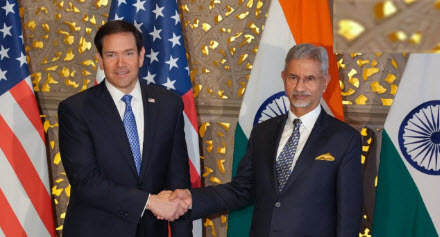
By T N Ashok NEW YORK: The latest diplomatic signals from Washington and New Delhi suggest that a prolonged India–US trade confrontation may finally be approaching a settlement. US President Donald Trump says a deal is close. Secretary of State Marco Rubio, after meeting External Affairs Minister S. Jaishankar in Mumbai on October 20, has […]
OpenAI is nearing a funding round of up to $30 billion at a proposed $1.25 trillion valuation, below the $1.4 trillion initially discussed with investors, as negotiations enter their final stages. The revised figure represents a $150 billion reduction in the ChatGPT developer’s valuation target, although the financing remains under discussion and neither the amount raised nor the final price has been confirmed. OpenAI has not publicly […]
BANGKOK, THAILAND – Media OutReach Newswire – 24 October 2026 – Makers of the capacitors, magnets and battery materials inside AI servers and electric vehicles (EVs) are lining up to invest in Thailand. Since 2023, they have filed 35 advanced materials projects worth about $690 million (23.5 billion baht) with the Thailand Board of Investment (BOI), the government’s investment promotion agency. Surging demand for AI, EVs, and clean energy is pushing global suppliers to build upstream capacity in the country.
Mr. Narit Therdsteerasukdi, Secretary General of the Thailand Board of Investment (BOI)
The projects, filed through the first half of 2026, cover multilayer ceramic capacitors (MLCCs), thermal graphite films, high-performance ceramics, battery and fuel-cell materials, neodymium magnets, glass and quartz fabrics for printed circuit boards, and nanomaterials for precision manufacturing. Together they mark a shift for one of Southeast Asia’s largest economies from downstream assembly toward the high-value materials on which future industries are built.
In AI computing and clean energy, lighter, more heat-resistant and more conductive materials determine how well devices perform. MLCCs are essential components in products from smartphones to AI servers, and a single high-end server can use up to 30,000 of them.
“The world is moving toward products that are smaller and lighter, yet stronger and more efficient,” said Mr. Narit Therdsteerasukdi, Secretary General of the Thailand Board of Investment. “Producing advanced materials in Thailand is key to building sustainable industrial capacity, reducing reliance on imports, and opening the door for Thai companies to join higher-value supply chains.”
Thailand is already a production base for leading component makers, including Japan’s Murata Electronics, which holds more than 35 percent of the global MLCC market, and Kyocera AVX Components, the world’s top tantalum capacitor maker. Among the new projects, Taiwan’s Fultech Fiber Glass makes glass fabric for printed circuit boards, including high-performance grades for AI servers. Jones Tech produces synthetic and natural graphite films that carry heat away from electronic devices.
Beyond electronics, the projects strengthen supply chains for electric vehicles, batteries, and clean energy, from BGN Thai’s coated foils for lithium-ion batteries and Phinis Well’s neodymium magnets for EV motors to Xinyuan Graphite’s bipolar plates for hydrogen fuel cells.
CoorsTek Advanced Materials, a subsidiary of US-based CoorsTek — a global leader in engineered ceramics for the semiconductor and aerospace industries — has invested in producing ceramics for automotive pressure sensors and silicon nitride balls for hybrid bearings in EVs and wind turbines. Golden Egret Cemented Carbide is making tungsten carbide powders for precision cutting tools, reinforcing Thailand’s base for high-precision manufacturing.
“The advanced materials industry taking root in Thailand today is the foundation of tomorrow’s supply chains in electronics, EVs, batteries, and clean energy,” Mr. Narit said. “The BOI will keep building this investment base, strengthening upstream materials and components, and supporting R&D, technology, and workforce development, to move Thailand from downstream to upstream production and make it the region’s advanced materials hub.”
Note: USD conversions are based on the Bank of Thailand’s average selling rate of approximately 33.76 baht per USD.
The issuer is solely responsible for the content of this announcement.
Thailand Board of Investment (BOI)
Established in 1966, the Thailand Board of Investment (BOI) has spent six decades promoting high-value investment from both foreign and Thai investors, strengthening the country’s competitiveness and driving its transition toward a sustainable, balanced new economy.
Investment Services Center — PR Section, Office of the Board of Investment (BOI)
The Kerala High Court is scheduled to hear Leader of the Opposition Pinarayi Vijayan’s appeal against an order directing criminal proceedings in the CMRL-Exalogic pay-off case on Monday, October 26, following intervention by the Supreme Court. The hearing follows the Supreme Court’s October 21 decision setting aside a…
Newly sworn-in Keralam Governor Om Prakash Mathur has triggered a political controversy by directing that only vegetarian food be prepared in the Lok Bhavan kitchen, prompting criticism from the Congress and Communist Party of India (Marxist) over dietary freedom and cultural diversity. The directive, issued ahead of…
The Kerala High Court is scheduled to hear Leader of the Opposition Pinarayi Vijayan’s appeal against an order directing criminal proceedings in the CMRL-Exalogic pay-off case on Monday, October 26, following intervention by the Supreme Court. The hearing follows the Supreme Court’s October 21 decision setting aside a…
The Keralam government’s proposed sports legislation faces uncertainty following objections within the ruling United Democratic Front (UDF) to provisions designed to restrict political appointments in sports organisations, complicating efforts to overhaul the state’s sports administration. Differences involving the Co…
Health Minister K Muraleedharan has reaffirmed the government’s decision to continue administering a cheaper generic formulation of risdiplam to children with spinal muscular atrophy (SMA), rejecting demands to suspend its use amid mounting concerns over safety, procurement procedures and medicine labelling. The minis…
Kerala Health Minister K Muraleedharan has reaffirmed the government’s decision to continue administering a cheaper generic formulation of risdiplam to children with spinal muscular atrophy (SMA), rejecting demands to suspend its use amid mounting concerns over safety, procurement procedures and medicine labelling. Th…
The Keralam government’s proposed sports legislation faces uncertainty following objections within the ruling United Democratic Front (UDF) to provisions designed to restrict political appointments in sports organisations, complicating efforts to overhaul the state’s sports administration. Differences involving the Co…
Newly sworn-in Keralam Governor Om Prakash Mathur has triggered a political controversy by directing that only vegetarian food be prepared in the Lok Bhavan kitchen, prompting criticism from the Congress and Communist Party of India (Marxist) over dietary freedom and cultural diversity. The directive, issued ahead of…
Corporate investment in artificial intelligence is accelerating, but most technology leaders still cannot demonstrate substantial financial benefits, according to new research exposing a widening gap between adoption and measurable business performance. A Gartner survey released on October 19 found that only 13 per cent of chief information officers said their organisations had achieved significant or transformational value from AI. The findings, presented at the Gartner IT Symposium […]
US semiconductor stocks suffered a sharp sell-off on Thursday, wiping billions of dollars from market valuations after equipment manufacturer Lam Research warned that supply-chain bottlenecks were restricting shipments despite strong demand for artificial intelligence infrastructure. The Philadelphia Semiconductor Index plunged 6.72 per cent on October 22, with all 30 constituent companies declining. The retreat reflected mounting investor concerns about whether chipmakers could sustain ambitious expansion plans amid […]
By Dr. Gyan Pathak Prime Minister is entitled to criticise the Leader of the Opposition forcefully, but the dignity of the office calls for a distinction between robust political criticism and personal ridicule. Nevertheless, PM Narendra Modi ridiculed his rival LoP Rahul Gandhi on 22 October 2026 at a World Summit organised by NDTV, where […]
By Rahil Nora Chopra The UP Congress is gearing up for the 2027 Assembly elections and negotiating the seat-sharing arrangement with the Samajwadi Party (SP). With the aim of outlining the terms of negotiations with the SP, Congress general secretary Priyanka Gandhi held a three-hour-long meeting with UP Congress leaders regarding seat allocation. The Congress […]
The partnership pairs LeapThought’s own AI with Google Cloud’s Gemini models and sovereign Cloud offering, giving infrastructure owners control of their data and connected intelligence across the full project and asset lifecycle.
SINGAPORE – Media OutReach Newswire – 23 October 2026 – LeapThought and Google Cloud today announced a strategic partnership to bring sovereign, domain-native AI to the owners and operators of critical building infrastructure, giving them control of their data and sharper decision-making across the full value chain, from delivery through operations.
Ratnakar Garikipati, Founder, Chair, and CEO of LeapThought, alongside Rahul Sharma, Google Cloud Managing Director, APAC Public Sector. The partnership combines LeapThought’s specialized AI with Google Cloud’s Gemini models and sovereign infrastructure to deliver secure data control and end-to-end intelligence for infrastructure assets.
The partnership has two priorities. The first is value chain integration, which connects everyone involved in delivering and running an asset — owners, operators, developers, consultants, contractors, and suppliers — on one governed platform. The second is security and sovereignty: owners can keep control of their data, within compliant, standardized frameworks that can be repeated from one program to the next.
FULCRUMHQ, LeapThought’s globally recognized Integrated Digital Delivery (IDD) platform, gives infrastructure owners the option to run on Google Cloud, including Google’s sovereign, air-gapped solutions for defense, public sector, and private sector environments requiring high security. At its core is GENIEHQ, LeapThought’s own Industrial AI, embedded directly into the platform and built to reason over the structured and unstructured data that defines a capital program — BIM models, GIS and geospatial data, ERP financials, schedules, contracts, reality capture, telemetry, and data from field robotics and sensors. The partnership pairs GENIEHQ with Google Cloud’s Gemini models, giving owners and their delivery teams natural-language access to that data across a project and a portfolio.
The partnership delivers on these two priorities as follows:
1. Value Chain Integration: One Governed Record, Natural-Language Insight
Major capital and building infrastructure programs span owners, operators, developers, consultants, contractors, and suppliers — each typically working in separate systems, with design, construction, and operational data fragmented across handovers. LeapThought’s FULCRUMHQ platform brings this information together into a single governed record that follows an asset from design through operation, giving owners a consistent view across their portfolio, not just a single project.
By running FULCRUMHQ — and the GENIEHQ Industrial AI embedded within it — on Google Cloud, and integrating LeapThought’s proprietary data architecture with Google’s Gemini models, the partnership enables:
Interactive Model and Portfolio Querying: Combining GENIEHQ’s deep understanding of project and portfolio data with the multimodal capabilities of Gemini, owners, engineers, project managers, and field teams can ask complex, plain-language questions directly against BIM models and portfolio data — instead of manually clicking through complex 3D CAD/BIM model trees or running predefined filter scripts — such as identifying clash detections, extracting exact material quantities, verifying regulatory code compliance, or surfacing risk trends across a program (e.g., “Show me all fire-rated doors on Level 3 that don’t match the latest spec,” or “Which contractors across our portfolio have the highest rate of non- conforming work this quarter”).
Global Scale and Reliability: Google Cloud provides the high-performance compute and elastic scalability needed to process compute-intense multi-gigabyte 3D models and point-cloud datasets, across a single project or an entire portfolio, in real time.
2. Security and Sovereignty: Full Control on Google Cloud’s Sovereign Solutions
For critical civil assets, defense installations, public sector agencies, and private sector owners where data cannot traverse the public cloud, LeapThought gives owners the choice to deploy on Google Cloud’s data residency solutions, including Google Cloud Data Boundary, Google Cloud Dedicated, and Google Distributed Cloud. In these environments, GENIEHQ, LeapThought’s Industrial AI embedded within FULCRUMHQ, runs alongside Gemini locally, within the owner’s chosen security boundary, ensuring zero cross-boundary exposure or unauthorized external telemetry.
“The value of an asset now lies as much in the intelligence around it as in its physical form. That intelligence belongs to the owner, and it must be secure, sovereign, and shared across the whole value chain. Demand for this is growing quickly, in Asia and around the world, and that is what brought us and Google Cloud together. We’re starting from Singapore and building toward a standard for critical infrastructure everywhere,” said Ratnakar Garikipati, Founder, Chairman, and CEO of LeapThought.
“Public sector and critical infrastructure agencies manage some of the most intricate engineering and regulatory datasets in the world. The partnership between Google Cloud and LeapThought enables project teams and portfolio owners to quickly surface actionable insights directly from complex BIM models and program data using everyday language. Combined with Google’s sovereign, air-gapped solutions, we’re providing agencies with the option to modernize project workflows while maintaining strict data governance, residency, and operational sovereignty,” said Rahul Sharma, Managing Director, APAC Public Sector, Google Cloud.
Hashtag: #LeapThought
The issuer is solely responsible for the content of this announcement.
About LeapThought
LeapThought is a US technology company that builds software connecting people, data, and AI across the infrastructure lifecycle. It is headquartered in Bellevue, Washington, has its Asia headquarters in Singapore, and operates across the United States, Brazil, Singapore, and New Zealand. Its FULCRUMHQ platform and embedded GENIEHQ Industrial AI serve public agencies, developers, consultants, contractors, and universities and institutes of higher learning. Clients include Singapore’s Land Transport Authority, Building and Construction Authority, and JTC. The company was founded and led by Ratnakar Garikipati.
Gold prices fell on Friday and headed for their sharpest weekly decline in more than four months as rising energy costs reinforced expectations that the US Federal Reserve will keep interest rates elevated. Spot bullion traded around $4,021 an ounce, extending its weekly loss to approximately 3.6 per cent. US gold futures dropped 0.6 per cent to about $4,035, bringing the psychologically important $4,000 threshold into sharper […]
Abu Dhabi renewable energy company Masdar has priced its $600 million five-year blue bond at 115 basis points above the comparable US Treasury benchmark, narrowing the spread from initial guidance of around 130 basis points. The 15-basis-point tightening establishes the final borrowing margin on the dollar-denominated offering, which is structured as senior unsecured debt and is scheduled to mature on 29 October 2031. The securities carry a […]
Photographs purportedly showing Natco Pharma representatives meeting Health Minister K Muraleedharan on August 5 have surfaced amid a controversy over medicines for spinal muscular atrophy (SMA), prompting the minister to clarify that the discussions concerned corporate social responsibility activities. The images are…
Residents of Munambam are preparing to resume their agitation following Kerala State Waqf Board chairman M. C. Mayin Haji’s assertion that the disputed coastal land belongs to the Waqf, contradicting Chief Minister V. D. Satheesan’s position on its ownership. The Munambam Protest Committee has announced a demonstratio…
Thiruvambady Devaswom has demanded a fresh investigation into the disruption of the 2024 Thrissur Pooram, rejecting Crime Branch findings that implicate its office-bearers in the controversy surrounding the festival. Devaswom secretary K Gireesh Kumar said the investigation had effectively transformed those who compla…




 https://www.boi.go.th/en/index/