News related to
near

Greenlogue/AP A newly released global analysis reveals that funding for climate adaptation in the world’s most hazard-prone nations has dropped sharply, leaving them dangerously exposed to floods, heatwaves and storms. The Climate Risk Index 2025, based on data spanning 1993 to 2022 from EM-DAT, the World Bank and IMF, found that more than 765,000 people died and nearly US$4.2 trillion was lost in direct economic damage due to […]

Senegal’s public debt rose sharply to unsustainable levels by the end of March 2025, the finance ministry disclosed, underscoring an ongoing struggle between escalating expenditures and faltering revenue streams. Debt servicing costs soared by nearly 24 per cent during the first quarter of 2025, adding to a 44.5 per cent rise already tallied in the final quarter of 2024—bringing repayments to approximately US $1.4 billion last quarter. Two-thirds of […]

Over 500 Premium Global Products Now Available for Convenient Home Shopping HONG KONG SAR – Media OutReach Newswire – 25 June 2025 – Best Mart 360 Holdings Limited (“Best Mart 360” or the “Company”, together with its subsidiaries, the “Group”; stock code: 2360.HK), a leading leisure food retailer in Hong Kong, is excited to announce that its flagship retail brand, “Best Mart 360˚ ” and its global […]

Void, a Y Combinator‑backed, open‑source AI code editor, has entered beta testing, promising developers full control over their code and data while delivering advanced AI capabilities. Launched this month, it positions itself as a credible contender to proprietary rivals like Cursor and GitHub Copilot. Developers can now choose whether to host models locally via tools like Ollama and LM Studio, or connect directly to APIs for Claude, […]

Jasper County authorities in Texas executed a search warrant to physically open a Bitcoin ATM on June 16, retrieving approximately $32,000 in cash—$25,000 of which a local family had deposited after falling prey to a scammer posing as a government official. Sheriff Chuck Havard authorised the operation after tracing funds to an ATM operated by Bitcoin Depot.

Law enforcement agents secured the warrant following a police report that fraudulent calls threatened the family with fines unless they paid via the kiosk. Deputies pulled cash from the machine using a power‑cutting tool, recovering a surplus in addition to the family’s deposit.

The sheriff defended his actions: “When thieves, low‑lifes and scammers attempt to take advantage of the citizens of Jasper County, we will work swiftly and utilise every resource at our disposal to protect our citizens and their property at all costs”. He also warned that cryptocurrency‑based fraud cases are notoriously complex and that the perpetrator remains unidentified.

The incident has sparked debate across digital‑currency communities. Some critics argue that damaging ATM infrastructure and seizing funds from an operator may undermine property rights, asserting that the ATM itself—provided by a third party—was collateral damage in the scam. One Redditor remarked:

“Sounds like maybe government employees destroyed an innocent third party’s property and stole his money.”

This episode highlights a concerning rise in crypto‑ATM scams. The FBI logged nearly 11,000 complaints totaling over $246 million in losses tied to such ATMs in 2024—a 31 percent increase from the previous year—with many victims aged over 60. Citing the surge in fraud, Spokane, Washington, enacted a ban on crypto‑ATMs on June 18, and Australia imposed tighter transaction caps earlier this month.

Bitcoin Depot, the ATM’s operator, confirmed it works closely with law‑enforcement agencies under AML and KYC protocols, but typically does not supervise cash retrieval directly from kiosks. The nature of cryptocurrency—its decentralisation and pseudonymity—adds obstacles to tracking illicit transfers and returning funds to victims.

Although the seized amount exceeds the family’s loss, victims must navigate legal processes to claim reimbursement, and success often depends on tracing crypto to identifiable exchanges. Past efforts, such as the U.S. Department of Justice recovering $2.3 million from the Colonial Pipeline ransomware attack, show that fund recovery is complex and rare.

Industry observers say the operation may set a legal precedent for law enforcement intervention in crypto‑ATM fraud. However, critics caution against the public destruction of third‑party property without clear evidence of complicity, warning it could erode trust in digital‑currency infrastructure.

Amid growing consumer vulnerabilities, experts call for enhanced public education, robust regulation, and strengthened compliance from ATM operators. Proposed measures include mandatory transaction limits, stricter licensing, real‑time fraud monitoring, and clearer cooperation channels with enforcement agencies.

Federal and state authorities are also considering new legislation targeting crypto‑ATM fraud. The Crypto ATM Fraud Prevention Act, if passed, would require improved operator oversight and clearer protocols for law‑enforcement response. Meanwhile, states like North Dakota and Nebraska have already introduced licensing and transaction‑cap laws.

As this case advances, Jasper County officials and Bitcoin Depot are expected to coordinate further to identify the scammer and determine rightful ownership of the recovered assets. The outcome of this operation may shape future legal and regulatory standards governing crypto‑ATM responses to fraud.

A six-month-old San Francisco‑based venture, Thinking Machines Lab, has secured a staggering $2 billion seed round, propelling its valuation to at least $10 billion. Led by Andreessen Horowitz with participation from Conviction Partners and reportedly the government of Albania, this marks one of the largest initial funding rounds in Silicon Valley history. Founded in February 2025 by former OpenAI chief technology officer Mira Murati, the company has assembled a formidable […]

BEIJING, CHINA – Media OutReach Newswire – 24 June 2025 – On June 19, the 3rd Wave Music Awards – Honor Ceremony concluded splendidly at the Beijing Performing Arts Center. Initiated by the Wave Music Committee and hosetd by the Tencent Music Entertainment Group (TME), this year’s Awards upheld the principle of “Jointly Establishing Artistic and Aesthetic Standards for the Music Industry,” with work quality as the […]

Advertisements

Polymarket, the world’s largest blockchain-based prediction market platform, is on the verge of completing a funding round exceeding $200 million that would value the company at over $1 billion. The strategic investment reflects growing investor confidence in forecasting platforms as tools for real-time insights and market intelligence.

The company, founded in 2020 by Shayne Coplan and headquartered in New York, has previously secured $70 million across Series A and B rounds led by General Catalyst, Founders Fund, alongside participation from Ethereum co-founder Vitalik Buterin. That capital helped Polymarket scale its operations offshore, particularly following regulatory setbacks in the United States, where it withdrew services under pressure from the Commodity Futures Trading Commission.

Sources indicate the new investment round will build on these foundations, raising upwards of $200 million and propelling Polymarket into unicorn status with a valuation north of $1 billion. Those close to the transaction describe a diverse syndicate of venture capital firms, strategic investors and high-profile figures from the crypto and financial sectors, though official names are yet to be disclosed.

Polymarket’s appeal lies in its novel combination of decentralised finance, crowd-sourced wisdom and smart contract automation. The platform allows participants to trade on real-world events—ranging from elections and policy outcomes to entertainment and economic indicators—by buying and selling shares reflective of outcome probabilities. Transactions occur using USDC on Polygon, ensuring on-chain settlement and transparency.

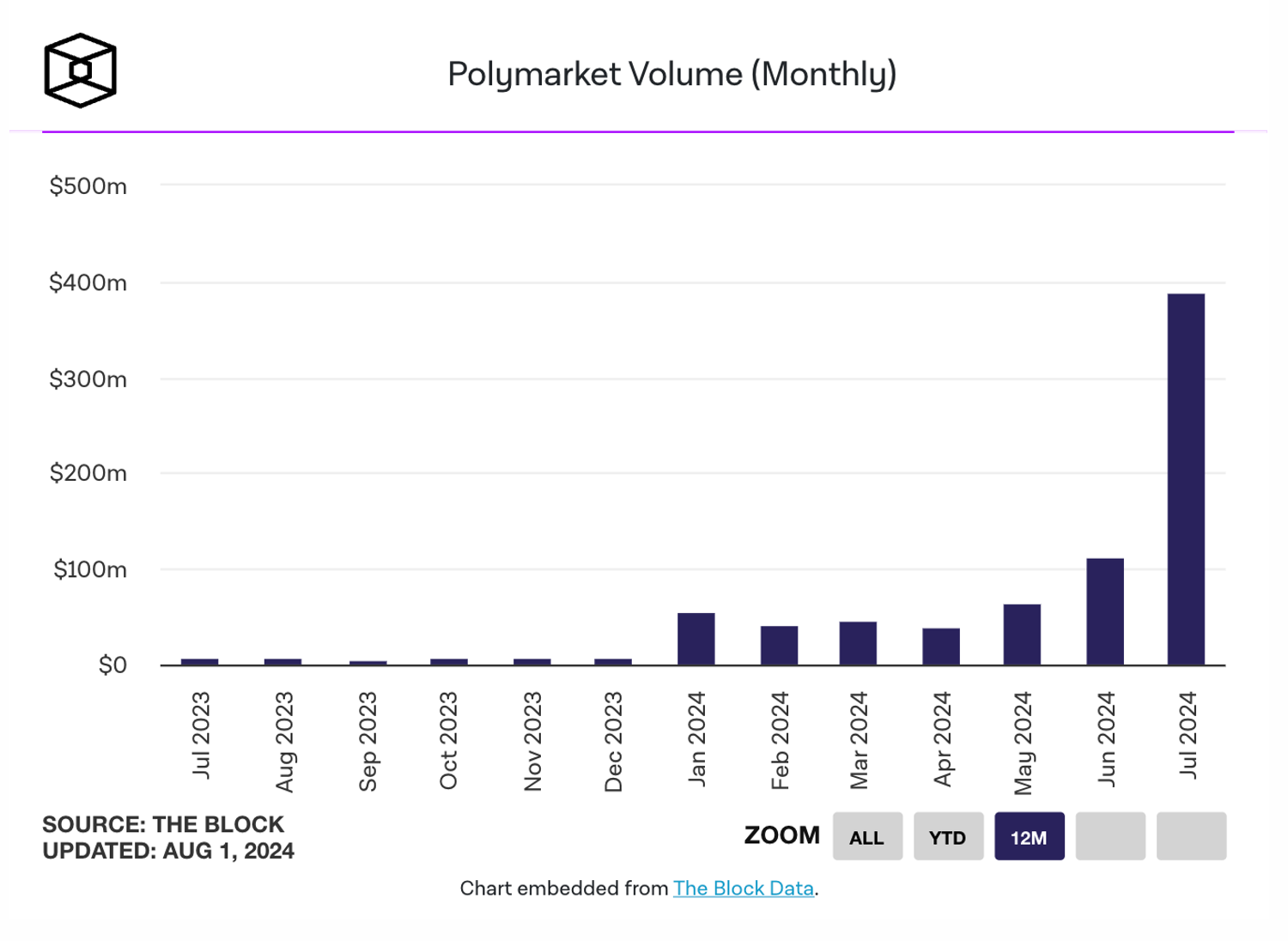
Trading volumes attest to the platform’s influence. In August 2024 alone, Polymarket processed approximately $472 million in trades, with political markets—especially those related to the US presidential election—accounting for nearly $1 billion in wagers by November 2024. Peter Thiel’s Founders Fund highlighted its trust in Polymarket’s market intelligence: “checking Polymarket when breaking news happens has become a habit”.

That compelling performance comes amid regulatory headwinds. Polymarket has barred US users since reaching a settlement with the CFTC in early 2022, which included a US$1.4 million fine and the appointment of former CFTC chairman J. Christopher Giancarlo to its advisory board. These changes aimed to address compliance concerns as the platform expanded internationally. More recently, the FBI reportedly raided Coplan’s home in autumn 2024 as part of an investigation into whether US-based activity violated these agreements.

Despite these challenges, Polymarket has continued to deepen its appeal. Ethereum co-founder Vitalik Buterin has publicly supported the broader application of prediction markets, terming them pioneers in “Info Finance,” an area he believes can enhance journalism, governance and scientific transparency. Polymarket’s data is now cited within Bloomberg’s Terminal services, offering institutional investors fresh analytical layers based on global betting dynamics.

The potential $200 million funding round is expected to include an allocation of token warrants enabling investors to participate in a future token issuance by Polymarket. Earlier reporting by CoinDesk and The Defiant in late 2024 highlighted a $50 million interim funding plan tied to a utility token offering, intended to integrate with or supplant the UMA oracle dispute-resolution system. That mechanism would allow users—or token holders—to validate market outcomes, an evolution that could expand Polymarket’s governance and on-chain autonomy.

Market observers view this token strategy as a logical advancement. Rising volumes and user engagement on election forecasts have revealed limitations in relying solely on external oracles; introducing a native token could decentralise verification and cement Polymarket’s position in the governance of its own markets.

Emerging trends suggest Polymarket is transitioning from an insurgent, crypto-native prediction exchange to a mainstream information infrastructure. Its user base now spans political analysts, financial professionals and retail traders. The recent partnership with X integrates Polymarket’s probabilistic feeds into social media dynamics, allowing users to access market sentiment in real-time alongside breaking news.

Yet questions over regulatory alignment remain. The CFTC is reportedly examining off-shore platforms that permit US bettor access, and lawmakers are considering broader prohibitions on event-based derivatives. The fallout from the 2024 FBI inquiry adds a layer of legal uncertainty, even as Polymarket navigates regulatory environments in Europe and Asia, where its platform has faced access restrictions from gambling regulators in Belgium, Poland, Singapore and France.

As Polymarket nears completion of its landmark funding round, it stands at a crossroads defined by opportunity and scrutiny. A valuation exceeding $1 billion would underscore investor conviction in its model, but unlocking the full potential of prediction markets may depend as much on regulatory clarity as on capital infusion.


Japan’s Financial Services Agency has unveiled plans to amend the Financial Instruments and Exchange Act, bringing cryptocurrencies under securities‑style regulation and opening the door to Bitcoin spot ETFs. The proposals also aim to replace the current progressive tax on crypto gains—ranging up to 55 per cent—with a uniform 20 per cent levy.

The agency’s discussion paper, released on 10 April by its digital policy division, outlines regulatory changes including classification of crypto into “Type 1” and “Type 2”, with insider‑trading rules to follow much like those in equity markets.

Behind the latest move is a growing consensus among Japan’s mainstream political and financial circles. The governing Liberal Democratic Party has actively backed the 20 per cent tax proposal, offering parity with capital‑gains treatment on stocks and bonds. It has also pushed to align tax on derivatives and crypto‑to‑crypto swaps accordingly.

Parliament is expected to review legislative amendments in early 2026, with the FSA targeting a policy direction announcement by mid‑2025.

Analysts note the regulatory upgrade could unlock institutional entry. While crypto ETFs have been launched in the US, Europe and Hong Kong, Japanese regulators have remained notably cautious. Under the proposed amendments, crypto-like instruments would qualify as financial instruments, subject to disclosure, custody, and market‑abuse safeguards.

This shift marks a departure from the current regime under the Payment Services Act, where digital assets are categorised alongside payments rather than securities. The FSA’s plan would position crypto within a legal framework better suited to large-scale trading activities.

Tax treatment has been a central barrier. Gains on crypto are now taxed as “miscellaneous” income—reaching rates as high as 55 per cent—while ETFs qualify as capital gains taxed around 20 per cent. The new flat rate would remove current inequities and possibly stimulate market growth.

Participants in the Japanese financial industry, including SBI and Franklin Templeton, are reportedly making strategic preparations. SBI has already collaborated with both US and UK asset managers to launch crypto‑related products, anticipating that regulatory approval will soon follow.

Despite these signals, caution persists. The Ministry of Finance remains cautious, wary of crypto’s volatility and adverse events such as the collapse of Mt. Gox and DMM Wallet, which led to extensive losses. The FSA itself is said to proceed methodically, emphasising investor protection above all.

To ensure granularity, the FSA’s discussion paper recommends dividing tokens into two regulatory categories: Type 1 assets—used in fundraising or business operations—and Type 2 assets, which include decentralised tokens like Bitcoin and Ethereum with no single issuer. This structure supports tailored oversight, including anti‑insider trading provisions.

Industry reactions reflect a mix of anticipation and prudence. Proponents argue that clearer classification and tax certainty would attract both retail and institutional investors. They point to the global momentum behind crypto ETFs and the relative tax efficiency such structures bring. Opponents, however, urge regulators to remain vigilant to market manipulation and developing infrastructure risks.

Global comparisons place Japan near the frontier of regulatory maturity. Countries such as the United States have delayed crypto classification under securities law even as they approved Bitcoin ETFs. The EU’s MiCA and Hong Kong’s licensing framework signal increased global regulatory alignment. Japan’s proposed amendments would signal competitive parity in Asia‑Pacific markets.

As Japan prepares to table the bill in parliament in 2026, attention will centre on implementation details. These include ETF approval timelines, disclosure requirements for exchanges and custodians, and whether the flat‑tax rate will apply retroactively or to future accruals only.

Cryptocurrency markets are recalibrating as TRON’s USDT reserves climb to an unprecedented $80.7 billion, eclipsing Ethereum’s $73.8 billion—a record milestone for 2025. Data from blockchain analytics firm CryptoQuant highlights that TRON’s share of the Tether stablecoin ecosystem has entered previously uncharted territory.

This expansion further cements TRON as the dominant platform for USDT issuance. Tether’s circulation on TRON—branded as TRC‑20 tokens—has surged sharply since the beginning of the year, jumping from approximately $59.8 billion in January to over $80 billion by mid‑June. In comparison, Ethereum’s ERC‑20 USDT remains below TRON’s benchmark, highlighting a structural shift in network preference.

Market observers attribute TRON’s gains to its lower fees and faster transaction times. A report from NFTEvening confirms that, as of mid‑May, TRON commanded nearly 50 per cent of global USDT supply, while Ethereum’s share hovered around 41 per cent. TRON’s blockchain now processes more than 2.4 million USDT transactions daily, dwarfing Ethereum’s roughly 280 000 transfers.

TRON’s performance in 2021 was already notable, with USDT supply expanding from $6.7 billion to $39.4 billion—an increase of nearly 487 per cent. Stakeholder confidence accelerated through 2024, with TRON first overtaking Ethereum in USDT issuance in November.

While TRON’s stablecoin dominance grows, its total value locked in DeFi has declined—from roughly $7.5 billion in January to about $4.3 billion by mid‑year—according to DefiLlama statistics. However, decentralised exchange activity on TRON is rising; trading volume increased from $4.9 billion in April to $5.5 billion in May. Analysts argue that users may prefer flexible, liquid trading over locking capital in yield‑farming protocols.

TRX, TRON’s native token, has gained approximately 2.2 per cent in the past 24 hours to $0.2729, yet remains some 36 per cent beneath its December 2024 peak of $0.4313. Technical charting shows consolidation below the 20‑day simple moving average and strength above key exponential moving averages, indicating latent bullish potential.

CryptoQuant reports that TRON’s agenda is now largely centred on payments rather than advanced DeFi, noting a distinct mix of tokens like Wrapped TRX and USDD on the network. The network’s recurring USDT mints are viewed as part of a strategic buildup. In mid‑May, Tether authorised another $1 billion mint on TRON, pushing its authorised supply well beyond Ethereum’s at $73.7 billion compared with $74.5 billion.

TRON’s growing role in Asia and emerging markets may be another driver. The platform appeals to users and exchanges that prioritise low cost and swift settlement—features that align with cross‑border remittance and retail payments. However, questions around TRON’s longstanding association with illicit transactions continue to cast a shadow over its rising stature.

Ethereum retains significant traction within DeFi due to its robust ecosystem and broader stablecoin diversity. Nevertheless, ongoing surcharges and network congestion are prompting shifts towards alternate chains like TRON. The competition reflects a broader evolution towards a multi‑chain infrastructure where each blockchain plays to its strengths: Ethereum for advanced financial apps, TRON for efficient payments.

Regulators are also watching this competition. Policy discussions around stablecoin frameworks in the United States, Europe and Asia could reshape how tokens are issued and used. TRON’s dominance in USDT may prompt further scrutiny and prompt Tether to reassess its minting cadence and reserve disclosures across different chains.

Aflac detected a cyberattack on its U.S. network on 12 June and contained the intrusion within hours. The company has confirmed that the attack may have compromised sensitive personal data, including Social Security numbers, claims and health information belonging to customers, beneficiaries, employees and agents. Operations remain fully functional as experts investigate the full extent of the breach. The insurer’s SEC filing and subsequent statement referred to […]

Markets surged as President Donald Trump announced a ceasefire agreement between Israel and Iran on Monday, calming fears of a broader Middle Eastern conflict and triggering a sharp drop in oil prices. With Brent crude falling nearly 5% in Asian trading and U.S. West Texas Intermediate declining by around 3%, investors responded swiftly to the prospect of restored supply and reduced geopolitical risk. At the same time, […]

Gulf states have reopened their airspace and resumed operations at major airports following swift precautionary closures in response to Iran’s missile assault on the US-operated Al Udeid Air Base near Doha. The suspension affected vital hubs such as Hamad International Airport, Dubai International, Bahrain and Kuwait, forcing dozens of flight reroutes and cancellations. Iran launched a barrage of short- and medium-range ballistic missiles targeting Al Udeid, home […]

HONG KONG SAR – Media OutReach Newswire – 24 June 2025 – MythFocus, a prominent business media platform known for its focus on commerce, entrepreneurship, and inspirational stories, has successfully concluded the “Asia’s Most Valuable Corporate Awards 2025” on June 12, 2025, at the esteemed Mira Hotel in Tsim Sha Tsui. This prestigious event was a celebration of innovation and excellence within the Hong Kong business community, […]

Forecasts place global GDP growth at 3.2 percent for 2025, yet the United Arab Emirates is projected to expand at about 4 percent and the Kingdom of Saudi Arabia by 3 percent, with both economies expected to accelerate through to 2027. These figures mark a significant divergence from the global outlook and underscore the economic momentum building in these Gulf nations. Data from NielsenIQ indicate that both the UAE and […]

Donald Trump proclaimed a full ceasefire between Israel and Iran on Monday, marking what he described as the end of a “12‑day war” that forced millions from Tehran and sparked grave fears of escalation. He posted on Truth Social that Iran would halt its operations at midnight ET, followed by Israel twelve hours later, culminating in a 24‑hour cessation of hostilities.

Trump touted the move as a diplomatic breakthrough, congratulating “both Countries, Israel and Iran, on having the Stamina, Courage, and Intelligence to end” the conflict. He asserted that the agreement was brokered in discussions with Prime Minister Netanyahu and through U.S. envoys in dialogue with Tehran, with Qatar playing a key intermediary role.

Iran’s foreign minister, Abbas Araghchi, echoed that Tehran’s forces stood down at 4 a.m. Tehran time if Israel ceased its attacks by then, though he clarified that a final decision on halting military operations was pending. Israel’s military has yet to formally acknowledge the ceasefire, and missile alerts and strikes were still reported over Tel Aviv, Beersheba and the Golan Heights in the hours following the announcement.

The conflict began on 13 June when Israel launched airstrikes on Iran’s nuclear and military infrastructure, including sites near Natanz, Isfahan and Tehran. That response, which Israeli authorities described as necessary to counter an alleged Iranian march towards nuclear weapons capability, included the destruction of centrifuge material and the deaths of senior Iranian military figures and nuclear scientists. Iran retaliated with waves of missiles and drones aimed at Israeli territory; Israel intercepted many of them, but civilian casualties were reported in Beersheba and Tel Aviv.

The conflict widened when the United States joined with bunker‑buster strikes on Iranian underground nuclear facilities over the weekend, prompting Iran to retaliate by targeting the U.S. air base at Al Udeid in Qatar. The attack caused no casualties, and Trump later thanked Iran for the “early notice,” calling it a “very weak response”.

Though Trump dismissed European diplomatic efforts as ineffective, he warned that U.S. involvement remained a distinct possibility if Iran escalated further, positioning American strikes solely against nuclear targets. Internal Israeli pressure also rose; Prime Minister Netanyahu reportedly instructed ministers to refrain from public commentary as military activity approached a pause.

Humanitarian fallout during this period has been acute. Over 650 Iranians have died, according to Iranian health data, including civilians, and over 200 Israeli military and civilian fatalities have been reported. Tehran saw large-scale evacuations as power and internet access faltered.

International bodies raised alarms over the bombardment of nuclear facilities. The International Atomic Energy Agency cautioned against striking enrichment sites due to risks of radiological contamination. Legal experts also voiced concerns that the strikes on civilian infrastructure—including hospitals and residential neighborhoods—could constitute violations under international humanitarian law.

Despite the ceasefire declaration, uncertainty remains. Iran’s foreign minister warned that if Israeli attacks persisted past 4 a.m. Tehran time, hostilities could resume. Similarly, Israeli officials reported continued launcher of missiles from Iran, demonstrating that the ceasefire may be fragile.

Regional and global reactions have been varied. Qatar’s prime minister was credited with facilitating Iran’s acceptance of the U.S.-proposed ceasefire. European negotiators, meanwhile, expressed frustration that efforts in Geneva had produced little movement before hostilities intensified. Both Russia and China urged restraint and urged full de‑escalation.

Markets responded positively to the ceasefire announcement, reflecting investor hopes for regional stability, yet the humanitarian toll and legal implications—the destruction of nuclear infrastructure, civilian casualties, and potential violations of international law—leave an ambiguous legacy for a war that surged in intensity over just under two weeks. The path ahead now hinges on whether both nations uphold the phased withdrawal and open room for diplomatic resolution amid deep mistrust.

Matein Khalid Operation Midnight Hammer was a spectacular military success though it will take 60 years more for the top secret CIA files on Trump’s rendezvous with history at Fordo to be declassified even though I hope Centcom and the Pentagon generals will release their BDA (Battle Damage Assessments) in the next two weeks to reinforce their claim that the Islamic Republic’s nuclear assets beneath the mountain […]

By Saifur Rahman The International Monetary Fund (IMF) has approved the allocation of US$1.33 billion to Bangladesh to support the country’s economy that witnessed slowdown since the change of government in August 2024. The allocation is part of the US$4.7 billion combined support package authorised by the IMF in January 2023 under the US$3.3 billion Extended Credit Facility (ECF) and Extended Fund Facility (EFF) and US$1.4 billion […]

Uganda achieved a significant leap in coffee export earnings and volumes during May, driven by a strong harvest in key growing regions and sustained high global prices. The May coffee shipments reached 793,445 bags of 60 kg—an increase of 44% year‑on‑year—while export earnings soared to US$243.95 million, marking a 92% rise compared to May 2024. The Ministry of Agriculture, Animal Industry and Fisheries attributes the performance to robust output from the […]

Bitcoin continues to hover above the US $100,000 mark, yet the network’s on‑chain activity tells a contrasting story. Overall transaction counts have declined sharply—from over 730,000 daily in 2023–24 to between 320,000 and 500,000 so far in 2025—while average transaction values surge, indicating that large investors are driving activity.

Despite fewer overall movements, the economic weight of each transaction remains high. Daily on‑chain settlement averages around US $7.5 billion, peaking at US $16 billion when Bitcoin briefly pierced its all‑time high of US $111.7 thousand. That amounts to an average transaction value of about US $36.2 thousand—dramatically higher than before.

The evidence points to a concentration in high‑value transfers. Transactions exceeding US $100,000 now account for nearly 89 percent of on‑chain volume—a stark increase from around 66 percent in late 2022—while transfers under that threshold have dwindled. Smaller wallets and lower‑value senders are increasingly absent from the blockchain.

Transaction fees are also bucking historical trends. In previous bull markets, network congestion drove fees higher. Now, with Bitcoin nearing all‑time highs, miner fee revenue has dropped to just US $558,000 per day—markedly low in comparison to past cycles. This divergence demonstrates muted block‑space demand despite soaring prices.

Meanwhile, trading activity is shifting decisively off‑chain. Centralised exchanges now dominate, with combined spot, futures and options volumes estimated at seven to 16 times greater than on‑chain settlement values. Futures markets alone trade roughly US $57 billion per day on average, peaking at US $122 billion in November 2024. Spot volumes, although smaller, remain robust, averaging US $10 billion daily.

Total open interest in Bitcoin futures and options has reached about US $96.2 billion. Notably, collateral structures have improved; stablecoin‑margined positions now dominate the derivatives landscape—an encouraging sign of reduced systemic risk following the collapse of FTX.

The on‑chain/off‑chain divergence shapes a nuanced picture: Bitcoin’s price resilience stems less from broad public usage and more from concentrated institutional flows and leveraged activity in centralised markets. While large holders continue to shift substantial sums on‑chain, much of the ecosystem’s vitality lies within off‑chain derivatives.

A team from the Directorate General of Civil Aviation will conduct a comprehensive annual audit of Air India from 24 to 26 June, intensifying focus on the carrier’s operations and compliance following the June 12 crash of Flight AI171 in Ahmedabad, which claimed nearly 280 lives. Though scheduled independently of the crash, the audit arrives as inspectors scrutinise the airline’s operational documents, cabin safety protocols, and historical audit responses.

Leading the review will be Deputy Chief Flight Operations Inspector Adhiraj Yadav and a team of ten officials, including two cabin safety experts. The inspection will span documents on airworthiness, crew training and flight duty records, and previous non-compliance action plans. The DGCA has emphasised mandatory presence of key Air India executives during the audit.

The audit takes place against a backdrop of mounting regulatory intervention. In late May, a DGCA inspection found that three Airbus jets in Air India’s fleet flew without timely safety checks on their emergency slides—one A320 had a check more than one month overdue, and one A319 was delayed by over three months. The regulator issued formal warnings and described the delayed compliance as evidence of “weak procedural control and oversight”.

Further compounding matters, the DGCA last Saturday issued a stern warning for repeated and serious pilot duty scheduling violations, instructing the removal of three crew-scheduling executives. Air India has indicated it has acted on the directive.

These developments follow intensified inspections of all 33 Boeing 787s in Air India’s fleet. While initial findings revealed no major safety defects, 24 aircraft had already undergone enhanced inspections by mid-June, with the remainder scheduled to complete the checks shortly. The comprehensive checks contributed to delays and cancellations across wide-body operations, with a downturn in route availability pegged at around 15 percent through mid‑July.

Experts suggest that this layer of oversight reflects a strategic shift by the DGCA toward “360-degree” evaluations, broadening beyond routine audits to include airlines, airports, maintenance organisations, training institutes and ground services. Officials describe this as a coordinated effort to fortify the aviation ecosystem after safety deficiencies surfaced in recent months.

In response, Air India has emphasised that it is accelerating its internal compliance efforts, including extensive verification of maintenance records and ensuring escape-slide checks are up to date. The airline maintains that its aircraft—particularly the ill-fated Boeing 787-8—were “well maintained” and crews were suitably experienced.

The crash of Flight AI171 involved a Boeing 787-8 Dreamliner registered VT‑ANB, which lost thrust after take-off and impacted a hostel block at B.J. Medical College shortly after clearing the runway. Only one passenger survived, while at least 39 people were killed on the ground. Both UK and US authorities are supporting the investigation, which is examining technical and procedural factors such as engine performance, hydraulic systems, flap configuration and crew training.

Tata Group, which assumed ownership of Air India in 2022, has urged staff to treat the disaster as a “turning point” in rebuilding a safety-first culture. Its strategic investments have included more than US $70 billion in new aircraft orders, infrastructure upgrades and a full-scale rebranding effort. Analysts caution, however, that restoring public trust hinges on tangible improvements in operational discipline and compliance.

The DGCA audit will therefore not only evaluate existing compliance but also test if Air India’s corrective processes are thorough and permanent. Given recent warnings and the complexity of the current probe, expectations are high that the audit’s findings could shape a longer-term regulatory approach to aviation safety in India.

Factories are increasingly adopting a Unified Namespace architecture—an event‑driven, centralised framework that unites data from diverse systems under a single, real‑time source of truth. By standardising naming conventions and utilising protocols like MQTT, this model dismantles data silos, enhances scalability, and accelerates decision‑making across engineering, operations, and management teams. UNS addresses the critical issue of fragmented automation ecosystems, where legacy PLCs, SCADA, MES, ERP and new IIoT […]

Iran has launched a new wave of missile and drone strikes against Israel, following U.S. airstrikes that obliterated key Iranian nuclear facilities under Operation Midnight Hammer. The ripple effects are already being felt in global oil markets, while diplomatic channels strain under mounting pressure. The bombardment hit Israeli cities including Tel Aviv and Ashdod, with satellite monitoring confirming sirens and intercepted projectiles. Iran disclosed the deployment of […]

Strategy, the publicly traded firm led by Michael Saylor, increased its Bitcoin reserve, purchasing 245 BTC for US $26 million during the week ending 22 June, at an average price of US $105,856 per coin. This augments the company’s holdings to 592,345 BTC, acquired at a cumulative cost of approximately US $41.87 billion and an average cost of US $70,681 per coin. Year‑to‑date, the firm has realised a yield of 19.2% on its Bitcoin portfolio.

Buying at the tail end of a dip—from highs near US $108,900 down to lows just below US $99,000—Strategy appeared undeterred by broader macroeconomic anxieties weighing on crypto markets. The timing underscores a deep conviction in Bitcoin’s long‑term trajectory, reinforced by Saylor’s forecast that the asset could reach US $21 million within 21 years, presented on 21 June.

This additional acquisition keeps Strategy on track with its 2025 target of a 25% annual yield, recently raised from an earlier goal of 15%. As of this purchase, the return-on-holding stands at 19.2%, offering a clear path toward the revised objective.

Despite a broad sentiment shift toward caution in the crypto space—manifest in an estimated US $5.5 billion inflow into institutional products in the three weeks through early May—the decision by Strategy to double down highlights a contrasting stance. Institutional inflows have been largely concentrated in Bitcoin, accounting for US $1.8 billion of the total amid a surge in interest.

Crypto analysts suggest that volatility triggered by geopolitical risks and shifting macroeconomic dynamics, including trade tensions and Federal Reserve policy, is creating opportunities for long‑term players. AInvest noted a “volatility window” in mid‑2025 that may set the stage for a fresh bull run towards US $200,000, drawing in investors anticipating US foreign‑trade and rate‑cut shifts.

Blockchain data firm Glassnode reports that on‑chain accumulation continues steadily, with long‑term holders increasing their reserves despite price swings. This suggests ongoing confidence among institutional and retail actors alike.

Strategy’s accumulation strategy exemplifies a bet on mean reversion and broader adoption of Bitcoin as a hedge against currency debasement and inflation. Saylor has consistently argued that Bitcoin is “hard money” with inherent scarcity, likening it to digital gold—an argument echoed in institutional flows and strategic investor behavior.

VISHNU RAJA
RYO YAMADA
HITORI GOTOH
IKUYO KITA
Just in:
Middle East governments assess Iran war after US vote // Miss Universe Hong Kong Jen Zhou Departs for Puerto Rico to Compete in the 75th Miss Universe World Final // Hong Kong mandates crypto transaction disclosures to tax authorities // Utilities pursue ₹1,992 cr in unpaid bills // Meraas showcases five residential zones at Dubai Design Week // Fast Just Got Fastest: STING Energy Boost™ Celebrates Kimi Antonelli’s Formula 1® World Championship and the Fan Energy Behind It // TVM –Mangaluru Vande Bharat claims top spot // APT29-linked campaign exploits outdated Apple and Android software // The “1st Greater Bay Area Health and Longevity Summit & Awards Ceremony” concludes successfully in Macao // Asia Left Behind: Ten international companies have yet to report delivering on their cage-free egg pledges across the region // Dubai boat show confirms international shipyard line-up for November // e-Crime Bureau Signs Cybersecurity Partnership With Smart Africa, Reinforcing Its Global Expansion // Cloudflare unveils Zero Wire vulnerability intelligence service // CR Longdation Aethereal Cybersecurity × Global Cybersecurity Alliance (GCSA) Join Hands to Establish the “AI and Cybersecurity Research Centre” // Ta’ziz finalises $1.39bn funding for Ruwais industrial facilities // Xi Jinping Preparing For A Trilateral Summit With Trump And Putin At APEC Summit On Nov 18-19 // Millions Of Indians May Soon Be Deprived Of Government Assistance // SC to examine students’ exam plea today // OpenAI identifies 948 Linux privilege escalation flaws using AI // Vance attributes Republican midterm defeats to Iran conflict //