Saudi Arabia is preparing to lift crude oil shipments at the start of 2026, a move that underscores mounting concerns about excess supply as global demand growth remains uneven. Allocations to buyers across Asia, Europe and North America are set to rise, according to trade and shipping data reviewed by market participants, pointing to a more assertive sales posture by the world’s largest exporter after months of […]
The global center of gravity for retail real estate innovation has shifted. For decades, Europe and the United States dictated the rules of the game—setting the benchmarks for planning, service, and concept. However, according to commercial real estate expert Roksolana Pyrtko, that era is ending. The new frontier of retail innovation is undoubtedly the Middle East. In a recent comprehensive analysis, Roksolana Pyrtko details how developments in the UAE, […]
By Dr. Gyan Pathak Two decades old Mahatma Gandhi National Rural Employment Guarantee Act (MGNREGA) 2005 is finally replaced by Viksit Bharat – Guarantee For Rozgar and Ajeevika Mission (Gramin) (VB-G RAM G) Bill 2025 on the last day of the Winter Session of the Parliament on December 19. Lok Sabha passed the Bill in […]
HONG KONG SAR – Media OutReach Newswire -19 December 2025 – HKAccidentLawyers.com and the HKCivilClaim.com today released the 2025 Annual Claims Data Report, providing summaries for each key data point to enhance legal literacy among accident victims.
1. Work Injury Claims Data (Total: 1,032 Cases) Sick Leave Distribution:
0 – 30 Days: 279 cases
31 – 100 Days: 323 cases
101 – 300 Days: 261 cases
301 – 700 Days: 145 cases
701 – 1,000 Days: 18 cases
1,001 – 2,000 Days: 3 cases
Over 2,000 Days: 3 cases
Summary: Over 58% of cases involve fewer than 100 days of sick leave, indicating that minor injuries remain the norm. However, extreme cases exceeding 2,000 days highlight the dire need for long-term legal and financial support for severely injured workers.
Assessment of Earning Capacity:
0% – 4%: 745 cases
5% – 14%: 188 cases
15% – 34%: 52 cases
35% – 64%: 11 cases
65% – 94%: 10 cases
95% – 100%: 26 cases
Summary: A “pyramid” distribution is observed, with 72% involving minor impairments. Yet, the 26 cases of near-total disability (95-100%) underscore the catastrophic impact of high-risk workplace accidents on families.
Estimated Results:
HK$0 – $50,000: 381 cases
HK$50,001 – $100,000: 226 cases
HK$100,001 – $200,000: 147 cases
HK$200,001 – $500,000: 109 cases
HK$500,001 – $1,000,000: 125 cases
HK$1,000,001 – $2,000,000: 31 cases
HK$2,000,001 – $5,000,000: 13 cases
Summary: 16% of inquiries yield estimates above HK$500,000. These cases often involve complex future loss of earnings, signaling a high demand for specialized legal advocacy in high-value claims.
2. Traffic Accident Claims Data (Total: 868 Cases) Injured Body Parts:
Back / Spine: 176 cases
Lower Back / Hips: 118 cases
Head: 112 cases
Shoulder: 111 cases
Neck: 105 cases
Leg: 104 cases
Knee: 74 cases
Arm: 68 cases
Summary: Back and spine injuries are the most frequent, often resulting from whiplash in rear-end collisions. These injuries are critical for PSLA (Pain, Suffering, and Loss of Amenities) evaluations in civil court.
Nature of Injuries:
Sprain: 241 cases
Fracture: 180 cases
Contusion: 169 cases
Nerve / Brain: 139 cases
Internal: 74 cases
Dislocation: 65 cases
Summary: While sprains are most common, the high number of nerve and brain injuries (139 cases) is concerning, as these often lead to permanent functional impairment.
Estimated Results:
HK$0 – $100,000: 422 cases
HK$100,001 – $200,000: 162 cases
HK$200,001 – $500,000: 179 cases
HK$500,001 – $1,000,000: 98 cases
HK$1,000,001 – $2,000,000: 5 cases
HK$2,000,001 – $10,000,000: 0 cases
Over HK$10,000,000: 2 cases
Summary: Traffic claims show extreme polarization. While most stay below HK $100k, two cases exceeded HK$ 10 million, reflecting the massive social cost of life-altering road collisions.
Mandatory Disclaimer
IMPORTANT: All compensation figures are generated by the “AI Compensation Calculator” based on user input. These are preliminary estimates only and not final actual compensation amounts. Final payouts depend on court rulings, liability apportionment, and medical evidence. Victims must seek formal legal advice from practicing lawyers.
Canada faces another period of economic uncertainty as the U. S. Supreme Court weighs a case that could reshape the legal foundations of tariffs imposed during Donald Trump’s presidency, reviving questions about the stability of cross-border trade rules and the exposure of Canadian industries to abrupt policy shifts. The pending decision centres on the scope of presidential authority to levy tariffs under long-standing U. S. trade statutes, […]
By Nitya Chakraborty Something incredible is happening in Beijing as also in other cities of China in the last five days. The cinema halls showing the American animation film “Zootopia 2” produced by the famous Disney studio are full and the Chinese cine lovers who have not yet seen the film are going mad online […]
Cisco has said that a sophisticated group of China-linked hackers is actively exploiting a previously unknown vulnerability to breach the networks of its customers, raising concerns across governments and large enterprises that rely on the company’s equipment for critical communications and data traffic. The company disclosed that the attackers have been using a zero-day flaw to gain unauthorised access to affected systems before patches were available, allowing […]
By K Raveendran Oil prices slipping below $60 a barrel for the first time since February 2021 and a sharp easing in European gas prices mark more than a cyclical downturn in commodities. They signal a rapid repricing of geopolitical risk at a moment when diplomacy, rather than escalation, has begun to dominate market psychology. […]
TAIPEI, TAIWAN – Media OutReach Newswire – 17 December, 2025 – CyCraft Technology has been identified as a Gartner® Sample Vendor in both Preemptive Exposure Management (PEM) and Unified Exposure Management (UEM) solutions. With our External Attack Surface Management (EASM) platform and XecGuard LLM firewall, CyCraft continues to integrate AI innovation into cybersecurity strategies at forefront.
With AI reshaping cybersecurity landscapes, it is pivotal to adopt unified management that preemptively leverages and secures AI. Integrating AI into cybersecurity defense is one of the emerging trends to combat AI-enabled or affiliated risks. C-suite executives and IT leaders must transit from the traditional detect-and-respond model to an AI-informed, proactive security governance.
Unified Exposed Assets and Attack Surface Management “The complexity of modern environments leads to fragmented data and isolated visibility. Unified exposure management enables holistic visibility through unified telemetry, enabling comprehensive attack surface visibility, accurate risk assessment and prioritization of remediation efforts.” Gartner, Emerging Tech: AI Vendor Race: Unified Exposure Management Will Drive Displacement of Fragmented Point Solutions, 29 September 2025.
CyCraft External Attack Surface Management (EASM) automatically discovers potential external threats, correlates multiple intelligence and provides an overview of digital assets from the attacker’s perspective. Constantly discovering exposed credentials on surface web, dark web or public markets, this module mobilizes early warning and leakage tracing. Moreover, with the exclusively trained AI model, EASM offers mitigation and audit recommendations tailored to various compliance requirements.
Caption: CyCraft EASM integrates multi-sourced intelligence and asset management, automating attack path simulation and impact analysis.
AI-empowered Model Safety, Application Security and Posture Governance “The emerging AI-enabled threat landscape demands more than just faster detection and response; it requires predictive threat intelligence combined with AI-driven analytics and preemptive action. AI and machine learning (ML) technologies must be used to anticipate attack paths and predict where an adversary is likely to strike to more effectively neutralize potential attacks before they begin.” Gartner, Emerging Tech Impact Radar: Preemptive Cybersecurity, 7 October 2025.
LLM inherent and related risks are not virtual shadows but substantial threats that jeopardize everyday existence. Since GenAI or LLM outputs are difficult to control, the continuous verification of both input and output is the only way to ensure the validity of a solution.
Built on this logic, CyCraft’s XecGuard is an easily deployable Guardrail module, including cybersecurity, compliance and ethical Guardrails. Defending against Prompt Injection, Jailbreak and Prompt Extraction, XecGuard tackles AI-enabled threats without compromising its performance.
Caption: Compared with other LLMs, CyCraft XecGuard presents more robust model safety.
To assess your LLM safety range with quantifiable standards, CyCraft XecArena provides different attack scenarios to compare their performance. Users need to coax the LLM to break its System Prompt or leak confidential information. Join this multi-round testing on XecArena now!
CyCraft continues driving AI innovation in enterprise cybersecurity. In our opinion, this research momentum has further been witnessed by the reception of NeurIPS and EMNLP.
“We believe, being acknowledged in these influential Gartner reports validates our strategic vision and technological innovation,” said Dr. Benson Wu, CEO and Co-Founder of CyCraft Technology. “We’ve consistently invested in AI-driven, preemptive capabilities that enable organizations to stay ahead of invisible threats.”
Evaluation Application For organizations seeking full functionality, CyCraft is offering a limited evaluation program for 50 qualified enterprises. Participants will receive two External Exposure Analysis Reports, enabling security and governance teams to quantify external attack surface risks and establish data-driven priorities for remediation.
Gartner, Emerging Tech: AI Vendor Race: Unified Exposure Management Will Drive Displacement of Fragmented Point Solutions, 29 September 2025.
Disclaimer
Gartner does not endorse any company, vendor, product or service depicted in its publications, and does not advise technology users to select only those vendors with the highest ratings or other designation. Gartner publications consist of the opinions of Gartner’s business and technology insights organization and should not be construed as statements of fact. Gartner disclaims all warranties, expressed or implied, with respect to this publication, including any warranties of merchantability or fitness for a particular purpose. GARTNER is a trademark of Gartner, Inc. and its affiliates.
The issuer is solely responsible for the content of this announcement.
About CyCraft
CyCraft is a leading AI cybersecurity company, dedicated to automating cybersecurity with AI technology. With a proven track record in government, finance, high-tech semiconductor, and other industries, and strong recognition from international institutions, CyCraft continues to build Asia’s most advanced AI Security Operations Center, fully committed to safeguarding enterprise digital resilience.
CyCraft’s product suite encompasses AI Red Teaming for automated validation of Large Language Model (LLM) security and strengthening cloud and on-premise AI models with AI Guardrail technology—aiming to build multi-layered cybersecurity resilience for the entire AI ecosystem. The XCockpit AI platform integrates three pillars of XASM (Extended Attack Surface Management): EASM, IASM, and automated endpoint protection, providing enterprises with proactive, preventative, and real-time deep defense.
Investors heading into 2026 face a familiar challenge: markets continue to evolve faster than habits do. Strong returns in recent years have rewarded certain behaviours and masked weaknesses in portfolio construction. The next phase, I believe, will favour discipline, balance, and clear decision-making. Rebuild diversification properly Diversification has been weakened by success. Long runs in US equities and large-cap technology have encouraged portfolios to drift into concentration, […]
Eastern European Union governments are coordinating a collective push to unlock larger and faster streams of funding to strengthen military defences against Russia, as leaders from eight frontline states meet in Helsinki to align priorities and influence the bloc’s budget and lending rules. Discussions among leaders from Finland, Estonia, Latvia, Lithuania, Poland, Czech Republic, Slovakia and Romania focus on closing gaps in air defence, long-range fires, ammunition […]
CME Group has broadened its cryptocurrency derivatives suite with the launch of spot-quoted futures tied to XRP and Solana, offering market participants regulated, transparent tools to trade these digital assets with reference to live spot prices. The new contracts, introduced on 15 December 2025, sit alongside the exchange’s existing spot-quoted Bitcoin and Ether futures and are available for trading under the rules of the Chicago Mercantile Exchange […]
Arabian Post Staff -Dubai OnePlus has lifted the curtain on its new Turbo series, positioning the line as a dedicated performance flagship aimed squarely at mobile gaming enthusiasts and power users ahead of 2026. The company says the Turbo models will combine an unusually large 8,000mAh battery, Qualcomm’s next-generation Snapdragon 8 Gen 5 platform and a 165Hz OLED display, marking a strategic escalation in a market where […]
United States President Donald Trump filed a defamation lawsuit against the British Broadcasting Corporation on Monday in the Southern District of Florida, seeking up to $10 billion in damages over the broadcaster’s editing of his January 6, 2021 speech that preceded the storming of the US Capitol. The complaint, lodged as a 33-page legal action, alleges that the BBC manipulated footage in a documentary to create a […]
By Nitya Chakraborty The results of the local polls in Kerala covering corporations, municipalities as also gram panchayats declared on Saturday December 13 are a firm indication of the massive erosion of the support base of the ruling Left Democratic Front (LDF) headed by the CPI(M) in both rural and urban areas signalling all the […]
A proposal in the House of Lords to restrict the use of virtual private networks by under-16s has reignited debate over child online safety, digital privacy and the enforceability of age-based controls. The amendment, put forward during scrutiny of the government’s online safety framework, aims to prevent children from using VPNs to bypass age checks on social media, adult content platforms and other regulated online services. Supporters […]
Australia has begun enforcing a landmark social media restriction aimed at limiting how platforms interact with users under 16, triggering debate among teenagers who question whether the policy addresses the realities of online life or simply shifts responsibility away from technology companies. The measures, introduced through updates to the Online Safety Act and reinforced by regulatory directives to major platforms, require companies such as Meta, TikTok, Snap […]
Matein Khalid Oracle’s Q2 earnings vindicated my call to stay short Microsoft and SoftBank as public market proxies for OpenAI, whose $500 billion valuation should realistically be marked down by 50% to reflect current ground realities which will get much worse. I was aghast to see Oracle slump by another 11% on Nasdaq but not at all surprised when Microsoft shed $18 in last night’s session/after market. […]
The investment landscape of 2026 is being shaped by a set of forces that are measurable, global, and impossible for any serious investor to overlook. The noise around short-term market swings has masked the reality that structural trends—not sentiment—are driving the next decade of value creation. Investors focused on what actually moves markets should concentrate on seven megatrends that are now setting the pace. The first is […]
Australia’s attempt to block under-16s from accessing major social media platforms was immediately challenged as teenagers bypassed the new restrictions within hours, surfacing concerns over the policy’s design, its rapid rollout, and the possibility that younger users could drift towards platforms with fewer safeguards. The ban, introduced as part of a national response to mounting concerns over online harm, requires platforms including Meta’s Instagram and Facebook, TikTok, […]
A wave of ambition is reshaping the technology landscape as leading entrepreneurs turn their attention to building artificial intelligence data centres in space. What began as scattered experiments in off-planet computing has matured into a competition among industry powerhouses seeking an edge in processing capacity, energy efficiency, and control over the infrastructure that will anchor next-generation AI systems. The pursuit is driven by the belief that Earth-based facilities are reaching fundamental limits, from land availability to cooling constraints, and that low-Earth orbit may provide the only environment capable of sustaining the exponential escalation in computational demand. Advocates frame this as an extension of a long-standing principle in engineering and exploration: to put human ingenuity to its fullest possible use, wherever the boundaries of science allow.
Several major technology leaders have stepped into this arena over the past two years. Their investments reflect a profound shift in strategy as companies realise that AI models cannot continue to scale using terrestrial infrastructure alone. The voracious energy requirements of large-scale training workloads challenge even the most advanced data-centre designs, pushing firms to explore solutions that draw on off-planet solar power and exploit the vacuum of space for passive cooling. Executives argue that orbiting facilities promise a cleaner energy profile, reduced environmental impact, and unprecedented independence from Earth’s physical constraints. As one aerospace investor remarked during a private industry event, the next digital revolution may be fuelled not by new algorithms but by new geography.
Engineering teams working on these orbital concepts often describe them as a convergence of satellite technology, chip innovation, and AI architecture. The logic is straightforward: satellites already operate reliably in extreme conditions with limited maintenance; AI systems increasingly require specialised compute hardware that benefits from consistent temperature conditions; and the economics of launch have changed dramatically due to reusable rockets. Once the cost of placing hardware into orbit falls to thresholds comparable to building premium facilities on Earth, the case for space-based computing strengthens considerably. What was once a speculative thought experiment has become a viable commercial target because access to space is no longer a privilege of governments alone.
However, the motivations driving this race are not solely technical. Strategic considerations weigh heavily. Ownership of orbital AI capacity promises unparalleled control over data sovereignty and computational independence. For executives wary of regulatory intervention or geopolitical risk, space offers a jurisdictional buffer that has become increasingly attractive. The ability to operate hardware outside traditional national borders gives corporations leverage at a moment when governments are tightening rules on data transfer, algorithmic transparency, and cloud-computing dependencies. Critics warn that this dynamic could set the stage for tension between public oversight and private ambition, particularly as orbital networks start to support commercial, defence, and financial applications simultaneously.
Security analysts have begun to examine the implications of off-planet AI infrastructure for global stability. On one hand, distributing critical systems across multiple orbital layers may reduce the vulnerability of communication and computing networks to terrestrial attacks or natural disasters. On the other, it introduces fresh risks, as high-value satellites could become targets in future disputes. Industry leaders tend to emphasise resilience and cooperation, arguing that shared standards and open coordination mechanisms can prevent escalation. Yet even in the early stages of development, commercial confidentiality and competitive pressure limit transparency, raising questions about how cooperative such a system can truly be.
Environmental considerations further complicate the picture. Proponents argue that orbital facilities will dramatically reduce the carbon footprint of data centres by tapping continuous solar energy and eliminating the need for extensive water-based cooling. They claim that redirecting computation to space will relieve pressure on overloaded terrestrial grids and free up land used for sprawling data-centre campuses. Environmental organisations counter that launching hundreds of tonnes of hardware into orbit will generate emissions during the construction phase and intensify concerns about space debris. Engineers involved in the projects acknowledge these issues but maintain that the long-term carbon savings outweigh the initial costs. Some firms have begun exploring closed-loop manufacturing cycles using recycled orbital material, a concept still in its infancy but increasingly part of corporate presentations.
The economic dimension of the space computing race has also attracted significant attention. Venture capital firms see orbital AI networks as a foundational platform similar in scale to the early internet, creating opportunities for startups focused on maintenance robotics, radiation-hardened chips, inter-satellite laser communication, and autonomous control systems. Government space agencies have shown interest too, recognising that private data-centre initiatives could stimulate broader commercial activity in orbit. Financial analysts caution that the capital intensity of these projects is immense and that many entrants may struggle to secure the funds required to move from prototype to full-scale deployment. But they also acknowledge that the firms leading the charge have histories of turning audacious concepts into viable industries.
One of the most compelling arguments for orbital AI centres revolves around scientific potential. Researchers emphasise that such facilities could support breakthroughs in materials engineering, climate modelling, pharmaceutical development, and astrophysics. Training models in microgravity environments may enable experiments that are impractical on Earth, and the isolation of orbital systems creates opportunities for secure high-performance computing dedicated to sensitive research. A prominent AI scientist recently noted at a conference that new frontiers in intelligence will be unlocked only when researchers have access to computational substrates as novel as the algorithms themselves, and that space may provide exactly that.
Despite enthusiasm, several fundamental questions remain unresolved. Energy transmission is one of them. While orbiting platforms can harness abundant solar power, efficiently transferring that energy to onboard compute clusters and ensuring stable operation during orbital night remains a challenge. Another issue concerns maintenance. Although robotic servicing is improving, most concepts still require periodic human intervention, raising questions about safety, reliability, and cost. Legal scholars are also wrestling with the future regulatory landscape, debating whether orbital AI nodes should be governed by space law, telecommunications frameworks, or entirely new agreements. These uncertainties highlight the complexity of forging infrastructure that defies conventional definitions.
Public perception is another area shaping the debate. The idea of billionaire-led initiatives expanding beyond Earth has drawn criticism from those who view it as a diversion of resources from urgent terrestrial needs. Advocates counter that technology has always advanced through bold exploration and that the benefits of space-based AI will eventually extend across society, from medical research to disaster forecasting. Several industry leaders have used narratives emphasising human progress and responsibility, suggesting that building orbital computing platforms represents a contribution to global knowledge rather than a retreat from Earth’s challenges.
By Nitya Chakraborty For rich European nations, especially the troika Germany, France and Britain, the geopolitical situation that is unfolding in the year 2026 has enough elements of an existential crisis as a result of the announcement of the US policy on global security which marginalizes the role of European nations and NATO in the […]
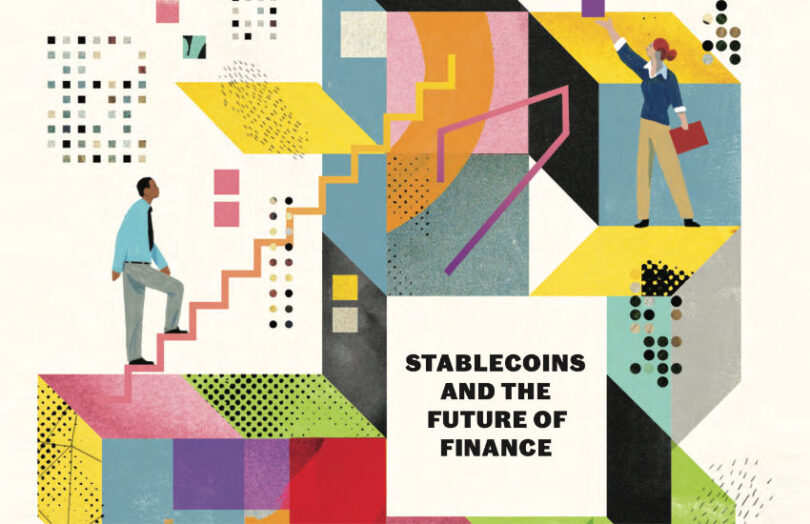
Growing concerns over the expansion of dollar-linked digital tokens have prompted the International Monetary Fund to issue a caution over the strain stablecoins could place on emerging markets, with the institution arguing that widespread use of these instruments risks weakening domestic monetary frameworks. The warning centres on the potential for currency substitution and accelerated outflows should stablecoins gain traction in jurisdictions where confidence in local units is fragile. This caution mirrors the broader message conveyed in IMF warns of stablecoin strain on emerging economies, underscoring the possibility of digital tokens amplifying financial vulnerabilities.
The Fund’s latest assessment highlights the challenge posed by USD-pegged tokens such as USDT and USDC, which together dominate the global stablecoin market. Analysts tracking flows note that these instruments have evolved into widely used vehicles for cross-border transfers, digital asset trading and store-of-value purposes in countries with volatile currencies. The IMF argues that their adoption can reduce the capacity of central banks to manage liquidity conditions, especially in economies where monetary authorities already contend with limited tools to stabilise inflation and anchor expectations. The institution has urged regulators to assume a proactive posture, particularly in markets where capital controls or shallow financial systems heighten the risk of abrupt movements.
The concerns reflect a shift from earlier phases of the digital asset cycle, when stablecoins attracted regulatory scrutiny largely due to their reserve backing and operational transparency. With greater clarity emerging around reserve audits and redemption mechanisms, policymakers are now looking beyond technical design and towards systemic implications. Economic experts cautioned that dollar-denominated tokens might evolve into parallel settlement channels, enabling households and corporates to bypass domestic banking systems during periods of stress. For countries with restricted foreign exchange markets, that pattern could complicate monetary management and accelerate the erosion of trust in local units.
Despite these warnings, several analysts point out that the scale of stablecoin adoption across developing economies remains uneven. Data from blockchain analytics firms suggests that while usage has grown in parts of Latin America, Africa, Eastern Europe and South Asia, activity is still far from the threshold that would trigger systemic currency substitution. Experts add that stablecoins often function as short-term hedging tools rather than long-term savings instruments, meaning their impact on monetary sovereignty is not yet of the magnitude implied by more pessimistic scenarios. Many economists argue that structural weaknesses in local economies, such as persistent inflation or fiscal imbalances, are more significant drivers of currency instability than the availability of digital dollar substitutes.
Regulators in several markets have already begun drafting frameworks to govern stablecoin issuance and use. Authorities in regions including the Gulf, the European Union, Singapore and parts of East Asia have introduced licensing requirements and reserve rules to ensure issuers maintain high-quality backing assets. These frameworks emphasise transparency and redemption at par, which policymakers view as essential to preventing destabilising runs. Some central banks are also exploring bilateral agreements to manage cross-border flows facilitated by stablecoins, particularly where local banks have limited capacity to monitor or report such transactions.
Several financial commentators suggest that concerns over capital flight through stablecoins stem from gaps in existing capital control regimes rather than from the forms of technology used to move funds. They argue that digital tokens merely enhance the speed and efficiency of transfers that might otherwise occur through informal channels. Nonetheless, the IMF stresses that the visibility and liquidity offered by stablecoins could encourage larger volumes to exit strained economies during periods of uncertainty. The institution asserts that emerging markets could face amplified volatility if households and corporates shift towards digital dollars at scale.
The rise of stablecoins has also coincided with broader experimentation in monetary innovation, with more than one hundred central banks evaluating options for digital currencies. Some economists view central bank digital currencies as a potential counterbalance to dollar-pegged private tokens, offering residents a regulated alternative for digital payments while preserving oversight. Others note that CBDCs alone will not offset the appeal of USD-linked tokens in countries where macroeconomic fundamentals drive demand for safer units. Policymakers face the challenge of building credibility, strengthening reserves and reinforcing inflation-targeting regimes while managing digital asset adoption.
While a number of market strategists acknowledge the IMF’s concerns, they contend that fears of widespread dominance of dollar-linked tokens may be overstated at the current stage of development. Adoption depends heavily on access to smartphones, internet connectivity, financial literacy and the availability of compliant service providers. These conditions vary widely across emerging economies, limiting the capacity of stablecoins to displace formal banking for now. Yet industry participants agree that the trajectory of digital finance warrants close oversight as stablecoin issuers expand their footprint and integration with payment networks.
A breakthrough in neural engineering is prompting wide debate over how far humans should push the boundaries between biological thought and digital computation. The unveiling of an ultra-thin implant known as BISC, designed to stream neural activity in real time through a high-bandwidth wireless interface, offers a glimpse of a future where the movement of a limb, the perception of an object, or the intent behind a […]








 https://www.cycraft.com/en
 https://www.linkedin.com/company/cycraft
 https://www.facebook.com/cycrafttechnology



 By Nitya Chakraborty The results of the local polls in Kerala covering corporations, municipalities as also gram panchayats declared on Saturday December 13 are a firm indication of the massive erosion of the support base of the ruling Left Democratic Front (LDF) headed by the CPI(M) in both rural and urban areas signalling all the […]