Just in:
The “1st Greater Bay Area Health and Longevity Summit & Awards Ceremony” concludes successfully in Macao // Hong Kong mandates crypto transaction disclosures to tax authorities // Technology shares plunge as Nasdaq enters correction // Emirates Group records AED 4.1 billion half-year profit // Emaar approves Development buyout ahead of planned delisting // Xi Jinping Preparing For A Trilateral Summit With Trump And Putin At APEC Summit On Nov 18-19 // APT29-linked campaign exploits outdated Apple and Android software // OpenAI introduces GPT-6 Cyber with restricted security access // Ousted top Kochi cop gets IG post // Oil and chip shares retreat after Democratic victories // TVM –Mangaluru Vande Bharat claims top spot // Motorola introduces Signature 27 flagship priced at $1,599 // Beyond the exhibition floor: How robots, AI and networks are moving into the real world // Ningbo Consensus on Collaborative Development released at 2026 Global Mayors Dialogue · Ningbo // Kochi police detain two actors over bid to honey trap doctor // CR Longdation Aethereal Cybersecurity × Global Cybersecurity Alliance (GCSA) Join Hands to Establish the “AI and Cybersecurity Research Centre” // Dubai boat show confirms international shipyard line-up for November // e-Crime Bureau Signs Cybersecurity Partnership With Smart Africa, Reinforcing Its Global Expansion // Geely’s i-HEV Intelligent Hybrid Technology Offers a New Direction for Gasoline-Powered Vehicles // Trump’s Iran War Has A Share Of Contribution To His Midterm Debacle //

News related to
should

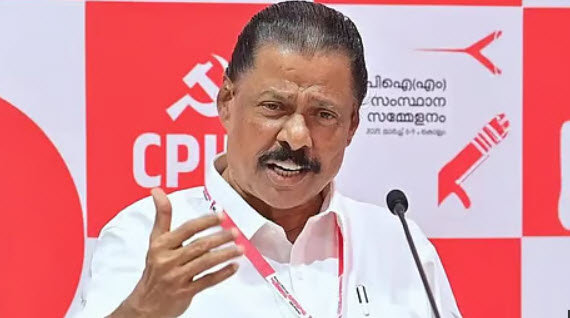
By P. Sreekumaran THIRUVANANTHAPURAM: A big salute to the CPI(M)’s lower-level leaders and the party cadres. For, it was their bold, open and trenchant criticism of the leadership which forced the party to go for a change for the better. The party’s central leadership, ably led by general secretary M. A. Baby, also deserves full […]

The article Kerala CPI-M in self-critical, corrective mode at three-day conclave appeared first on Latest India news, analysis and reports on Newspack by India Press Agency).

HONG KONG SAR – Media OutReach Newswire – 16 September 2026 –

Response by KK Chiu, International Director, Chief Executive, Greater China, Cushman & Wakefield:

Optimising the Housing Ladder and Improving Living Conditions

We welcome the Government’s commitment to increase housing supply, shorten the Composite Waiting Time for public rental housing and further strengthen the housing ladder. The adoption of a long-term housing supply framework comprising 40% public rental housing, 30% subsidised sale housing and 30% private housing, together with the delivery of approximately 196,000 public housing units over the next five years, will provide a clearer housing and homeownership pathway for different income groups.

We believe that increasing the supply of subsidised sale housing and enhancing the housing ladder will help more public housing tenants progress towards homeownership, accelerate housing mobility and enable families with genuine housing needs to gain access to public housing more quickly.

We support the Government’s efforts to increase public housing supply, continue the Light Public Housing programme and implement the Basic Housing Units regime in an orderly manner to phase out substandard subdivided units. This approach is consistent with our long-held view that increasing housing supply is the fundamental solution to improving inadequate housing conditions. With the Government targeting the resolution of substandard subdivided units in domestic buildings by 2030, we expect living conditions for grassroots households to improve progressively.

Urban Renewal Incentives

We support the Government’s more flexible approach to urban renewal, including transferable plot ratio arrangements and measures to unlock redevelopment potential. These initiatives will help enhance market participation, accelerate renewal in areas with pressing redevelopment needs and contribute to overall housing supply growth. We recommend the Government provide clearer guidance on application requirements and further streamline cross-departmental approval procedures to facilitate implementation.

Advancing the Yacht Economy

We welcome the Government’s continued efforts to promote the yacht economy. Beyond increasing marina berth supply and enhancing supporting infrastructure, we believe it is equally important to further facilitate cross-boundary initiatives, allowing greater mobility of yachts within the Greater Bay Area and fostering regional collaboration.

As more superyachts and high-net-worth visitors arrive in Hong Kong, demand is expected to rise across luxury tourism, hospitality, food and beverage, retail, marine services and waterfront commercial facilities, helping unlock the economic potential of Hong Kong’s coastline and island resources. At the same time, Hong Kong has the potential to develop a more comprehensive marine industry ecosystem encompassing yacht repair and maintenance, refitting services and specialised professional services. The development of a holistic marine services value chain will further strengthen Hong Kong’s competitiveness as a regional and international yachting hub.

Response by John Siu, Managing Director, Hong Kong, Cushman & Wakefield:

Planning Ahead for AI and Data Centre Infrastructure

We welcome the Government’s commitment to accelerate the development of the Sandy Ridge Data Facility Cluster, which is expected to provide computing power equivalent to 36 times Hong Kong’s current capacity by 2032, alongside a HK$1 billion injection into the Artificial Intelligence Subsidy Scheme. These initiatives will provide important support for the development of Hong Kong’s artificial intelligence and data centre sectors, further strengthening the city’s position as a regional digital and innovation hub.

However, with rapid advancements in artificial intelligence, large language models and cloud computing, demand for computing power is expected to grow significantly in the coming years. We believe that, in addition to planning data centre sites, the Government should proactively review long-term requirements for power supply, electricity grid capacity and related infrastructure. As AI adoption becomes more widespread, access to reliable power and supporting infrastructure will be a key factor in maintaining Hong Kong’s competitiveness as a technology and data centre hub.

We support the Government’s stated direction of pursuing “high-efficiency computing power, stable electricity supply and low-carbon transition”. Looking ahead, we recommend that the Government regularly review future demand for land, power supply and supporting infrastructure arising from the growth of artificial intelligence and data centre activities, particularly within the Northern Metropolis and other strategic development areas. A coordinated approach to computing, energy and digital infrastructure planning will help attract more data centre operators and technology companies to Hong Kong, while supporting the city’s long-term development as a regional hub for data and artificial intelligence.

Response to the Budget 2026/2027 by Rosanna Tang,Deputy Managing Director, Head of Research, Hong Kong, Cushman & Wakefield:

Clear Industry Positioning for the University Towns

We welcome the Government’s efforts under Hong Kong’s First Five-Year Plan to further define the positioning of the three university towns in the Northern Metropolis University Town, and are encouraged by its strategy to promote synergy among the university towns, the San Tin Technopole and surrounding industry parks. As the only city in the world with five universities ranked among the global top 100, Hong Kong possesses a strong foundation in higher education and research. At the same time, the San Tin Technopole is set to become a key innovation and technology hub. The complementary strengths of these two pillars, both geographically and strategically, provide a solid foundation for building a globally competitive innovation ecosystem in Hong Kong.

We are particularly encouraged by the Government’s emphasis on integrated industry-academia-research collaboration. The university towns should not be viewed merely as educational developments, but as strategic platforms for research commercialisation, international talent attraction and the cultivation of emerging industries. Closer collaboration among universities, research institutes, innovation and technology enterprises and industry parks will help establish a complete innovation value chain covering talent development, scientific research, technology transfer and industrial implementation.

In addition, the Plan proposes approximately 300 hectares of educational facilities as the core of the university towns, connected with adjacent strategic industry areas, distinctive conservation areas, sports and cultural facilities, and surrounding communities, bringing the overall development footprint to more than 1,000 hectares. Such a large-scale integrated education and industry development model is rare in Hong Kong’s urban planning history and clearly demonstrates the Government’s long-term vision of creating a knowledge-based city cluster and an international education hub in the Northern Metropolis.

Attracting Signature Industry Projects and Anchor Institutions to Enhance the Northern Metropolis’ Global Appeal

We welcome the Government’s efforts to establish differentiated industry positioning through the three university towns, while integrating key development nodes such as the San Tin Technopole, the Hong Kong Park of the Hetao Shenzhen-Hong Kong Science and Technology Innovation Co-operation Zone, the Hung Shui Kiu Industry Park and Ta Kwu Ling. This provides a clearer direction for industrial development in the Northern Metropolis and helps address long-standing market concerns regarding overlapping functions and unclear district positioning.

As highlighted in our previous research, we believe the next critical stage for the Northern Metropolis will be its ability to attract influential anchor institutions and leading enterprises. By bringing together universities, research institutes and industry leaders, Hong Kong can foster the clustering of businesses, talent and capital, gradually forming industry clusters with scale and international competitiveness. Hong Kong should also capitalise on its common law system, international financial centre status, intellectual property protection framework and global talent network by focusing on high value-added segments such as research and testing, intellectual property management, fundraising and listing activities, and international accreditation services. This will help Hong Kong establish an irreplaceable role within the Greater Bay Area industrial value chain.

Beyond strategic industries, we believe the Northern Metropolis could also explore internationally recognised and iconic industry projects to further enhance its global profile and attractiveness. For example, the Government may consider developing initiatives around new energy vehicles, smart mobility and advanced technologies, while exploring the feasibility of internationally recognised racing events, testing facilities or technology R&D platforms, such as those associated with Formula One. By leveraging motorsport-related economic activities and innovation-led development, Hong Kong could attract international automotive manufacturers, mobility technology companies and research institutions to establish regional headquarters, R&D centres or testing facilities in the city. This would in turn support the growth of engineering, intelligent transport, advanced manufacturing, tourism, hospitality, retail and convention and exhibition industries, further enriching the Northern Metropolis industrial ecosystem.

Accelerating Land Supply While Advancing Industries and Infrastructure in Parallel

We note that Hong Kong’s First Five-Year Plan proposes a significant acceleration in land and housing supply within the Northern Metropolis. Residential completions are expected to increase substantially from approximately 11,000 units during 2021/22 to 2025/26 to around 70,000 units during 2026/27 to 2030/31. Over the same period, the supply of “spade-ready sites” will rise from approximately 120 hectares to around 900 hectares, representing an increase of around 7.5 times. These figures demonstrate that the Northern Metropolis is transitioning from a planning and land formation phase to a new stage characterised by large-scale development, industrial implementation and population intake.

However, we believe the success of the Northern Metropolis should not be measured solely by the volume of land or housing delivered. As substantial residential, innovation and technology, and industrial sites come on stream, the focus should gradually shift from land supply to city-building. The Government should ensure the coordinated delivery of railway and cross-boundary infrastructure networks, industry parks, commercial facilities, public services and community amenities, while accelerating the introduction of leading enterprises and strategic industries to create sufficient, high-quality employment opportunities and achieve a genuine jobs-housing balance.

In particular, we believe the Northern Metropolis should be driven by industry-led development, with the San Tin Technopole, the Hetao Shenzhen-Hong Kong Science and Technology Innovation Co-operation Zone, the university towns and major industry parks serving as key growth engines. This would create a virtuous cycle in which industry attracts population, population supports consumption, and consumption drives urban development. Only through the coordinated growth of industry, talent, infrastructure and communities can the Northern Metropolis evolve from a large-scale land development project into a modern metropolitan district integrating industry, education, living and international exchange.

Response by Tom Ko, Executive Director, Head of Capital Markets, Hong Kong of Cushman & Wakefield:

New Opportunities for Student Accommodation Market

We welcome the Government’s initiatives to deepen Hong Kong’s development as an international hub for post-secondary education through the “Hong Kong: Your World-class Campus” campaign, expanded global student recruitment efforts and the extension of the Immigration Arrangements for Non-local Graduates pilot arrangement to graduates from Greater Bay Area campuses of Hong Kong universities. These initiatives will further enhance Hong Kong’s attractiveness to overseas students and talent while reinforcing the “Study in Hong Kong” brand.

We are encouraged by the continued progress of the Hostels in the City Scheme. The scheme has already received 41 confirmed applications, providing approximately 10,800 bed spaces and demonstrating strong market confidence in the long-term growth of Hong Kong’s education sector.

The scheme has opened up a new supply channel for converting commercial buildings into student accommodation. At a time when hotel conversion opportunities are becoming more limited as tourism continues to recover, it provides an alternative pathway for investors while helping unlock the value of underutilised commercial assets and meet rising demand for student housing. As the Government prepares to tender the first dedicated student hostel site, we believe purpose-built student accommodation will gradually emerge as a distinct and scalable asset class within Hong Kong’s real estate market.

To further increase supply, we recommend that the Government continue reviewing and refining approval procedures for student hostel conversions. Greater flexibility and streamlined processes, while maintaining appropriate safety and operating standards, would encourage wider market participation and support Hong Kong’s ambition to become a leading international education destination.

(Click here for high-res pictures)

Hashtag: #Cushman&Wakefield

The issuer is solely responsible for the content of this announcement.

About Cushman & Wakefield

Cushman & Wakefield (NYSE: CWK) is a leading global commercial real estate services firm for occupiers and investors with approximately 53,000 employees in over 350 offices and nearly 60 countries. In Greater China, a network of 23 offices serves local markets across the region. In 2025, the firm reported revenue of $10.3 billion across its core services of Valuation, Consulting, Project & Development Services, Capital Markets, Project & Occupier Services, Industrial & Logistics, Retail, and others. Built around the belief that Better never settles, the firm receives numerous industry and business accolades for its award-winning culture. For additional information, visit or follow us on LinkedIn ().

South Korea will not slow its artificial intelligence drive, Deputy Prime Minister and Science and ICT Minister Bae Kyung-hoon said on Wednesday, arguing that the country must pair rapid development with stronger safeguards rather than curb the technology’s advance.

Bae said South Korea was still trying to close the gap with leading AI powers while creating new markets, making its position different from countries or companies at the technological frontier. “We cannot afford to slow down AI right now,” he wrote on social media, describing the government’s approach as one of “speed responsibility” rather than speed control.

His remarks place Seoul firmly on the acceleration side of a widening debate over whether developers should moderate the pace of capable AI systems. Anthropic chief executive Dario Amodei has called for a slowdown in frontier model development to allow more time for safety work, while OpenAI chief executive Sam Altman and other technology leaders have voiced support for stronger precautions as capabilities advance.

Bae said South Korea should continue expanding research, industrial adoption and home-grown model development while strengthening protections against deepfakes, cyber threats and privacy violations. Faster progress, he said, required safety and trust measures to move at the same pace rather than follow after deployment.

The minister pointed to a broader technology agenda that includes sovereign foundation models, systems capable of processing vision and language, and models able to interact with physical environments. He said the country also needed to prepare for AI becoming deeply embedded across industries and everyday life.

The government has made domestic foundation-model development a central part of its ambition to place South Korea among the world’s top three AI powers. The Ministry of Science and ICT has been running a sovereign AI foundation model programme intended to improve domestic capabilities and reduce dependence on foreign technology.

Three teams led by Upstage, SK Telecom and LG AI Research advanced after the programme’s second-stage evaluation this year. The ministry has said models developed under the initiative were built with comparatively limited resources but were released as open source as part of an effort to expand the domestic AI ecosystem.

Bae indicated that further details on the next phase of the foundation-model programme would be announced after ongoing reviews. His comments also referenced government work on security-focused AI models and frontier systems, alongside an “AI for All” initiative intended to spread adoption across the economy.

The policy push is being developed alongside South Korea’s AI Basic Act, which establishes rules covering both the development of artificial intelligence and the creation of a framework for trust. The law’s stated purpose includes protecting rights and human dignity while supporting quality of life and national competitiveness.

That legal structure gives Seoul a basis for pursuing faster adoption without presenting safety as a separate objective. Bae said competitiveness and sustainability were linked, arguing that development speed and safeguards should advance together.

The global dispute has intensified as leading executives and policymakers weigh the economic benefits of faster AI deployment against concerns over misuse and loss of control. Amodei has proposed independent safety evaluators, coordination among major laboratories and greater international cooperation, while Nvidia chief executive Jensen Huang has argued against slowing technological progress and favours advancing safety alongside innovation.

European Commission President Ursula von der Leyen on Wednesday backed calls for greater caution and said frontier AI laboratories would be invited for talks on managing risks. Meta chief executive Mark Zuckerberg, by contrast, said AI companies already had strong incentives to build systems safely and did not require an industry-wide slowdown.

Bae’s intervention highlights the competitive pressures facing countries outside the United States and China, where most frontier AI investment and model development remains concentrated. South Korea has strong semiconductor and technology industries, but its government has acknowledged the need to strengthen domestic models, computing capacity and commercial adoption to narrow the gap.

Clinicians from Singapore and South Korea have called for more individualised, evidence-based postnatal care as women enter motherhood later, arguing that recovery plans should reflect each mother’s health, delivery experience, family support and preferences.

The call emerged from DeRAMA Singapore’s Joint Postnatal Recovery Seminar, held at The Singapore EDITION on August 17. Obstetrician and gynaecologist Dr Ho Ping Ling of Ascensus Health @ Mount Alvernia and Dr Park Jeong-mi, founder and medical director of Garden of Her Women’s Clinic in South Korea, compared the two countries’ approaches to postpartum recovery.

Their discussion comes as Singapore’s maternal profile changes. Government data show the median age of citizen mothers at first birth reached 31.6 years in 2024, up from 30.3 in 2014. Dr Ho said mothers aged 35 and above may have a greater likelihood of pre-existing conditions, pregnancy complications and Caesarean delivery, factors that can influence recovery.

“There is no one-size-fits-all approach. All women deserve individualised care, regardless of whether they are younger or older mothers,” Ho said. She added that assessment should consider a woman’s medical condition, pregnancy course, mode of delivery, available support and preferences. Although the postpartum period is commonly defined clinically as about six weeks, the time needed to regain health can differ substantially.

The seminar examined how professional services might complement rather than replace confinement traditions. Home-based support from relatives and confinement nannies remains common, offering practical help. The doctors, however, said some inherited rules lack a clear medical basis and should be reconsidered where they conflict with hygiene, nutrition or other evidence-based care.

Ho cited prolonged avoidance of bathing or washing hair as an example of a traditional restriction that may run against sound hygiene and infection-control principles. The broader approach advocated by the speakers was not to dismiss cultural customs but to distinguish supportive practices from those that may be unnecessary or unsuitable for a mother.

Park said South Korea had also moved from predominantly family-provided postpartum care towards a more structured model as nuclear households expanded, women participated more widely in the workforce and fewer relatives were available as full-time caregivers. This helped establish sanhujoriwon, postpartum recovery centres offering coordinated assistance with maternal recovery, meals, breastfeeding and newborn care.

She said 85.5 per cent of mothers in South Korea use a postpartum recovery centre after childbirth. Programmes vary in cost and scope, but trained maternal and newborn-care staff are typically available around the clock. Park said modern programmes increasingly address pain, swelling, musculoskeletal changes, sleep, feeding and emotional wellbeing, with support adjusted to the mother’s condition and delivery method.

Evidence also supports avoiding simplistic assumptions about age alone. A South Korean study of 528 postpartum women published in 2020 found no significant age-related difference in several self-reported postpartum symptoms, while delivery method and other factors were associated with differences. Caesarean delivery became more common with age in that study, reinforcing the case for recovery plans based on clinical circumstances rather than age by itself.

The World Health Organization similarly recommends postnatal care that provides women, newborns and families with consistent information, reassurance and support while recognising individual needs and cultural context. Its guidance frames a positive postnatal experience as extending beyond physical checks to include emotional wellbeing, newborn care, breastfeeding support and responsive health services.

Singapore’s Ministry of Health said on September 8 that polyclinics already provide subsidised postnatal services, while childhood developmental screening is fully subsidised. The ministry is also reviewing fertility health and maternity policies with the Prime Minister’s Office, including possible additional support for postpartum care in due course.

A separate ministry response in January noted that some mothers need outpatient services such as lactation assistance or screening for postnatal depression. It said women facing affordability problems with medically necessary postnatal care can approach medical social workers at public hospitals for assessment for financial help.

The US National Institute of Standards and Technology has finalised new guidance aimed at reducing theft, forgery and misuse of digital tokens that underpin single sign-on, cloud federation and API access. NIST Interagency Report 8587, released on September 15, sets out implementation recommendations for federal agencies and cloud service providers handling identity tokens, access tokens and assertions. The document focuses on how organisations should protect signing keys, […]

China has pushed back against calls from leading US technology figures to slow frontier artificial intelligence development, sharpening differences over safety, access to advanced chips and technological competition before President Donald Trump and President Xi Jinping meet in Washington next week.

Foreign Ministry spokesman Guo Jiakun said on Monday that artificial intelligence was a consequential technology for humanity and should be developed openly and inclusively. Asked about calls from Dario Amodei, Sam Altman and Elon Musk for companies to slow frontier development, Guo warned that “fear-mongering, confrontation and vicious competition” would hinder sound global AI governance.

The response came as Washington’s debate over AI safety widened into a strategic argument about China. Anthropic chief executive Amodei has urged tougher safeguards for advanced systems and has argued that a Chinese lead in frontier AI could create national security risks for the United States. OpenAI chief executive Altman and Musk have also called for stronger precautions as systems become more capable.

Trump, however, has resisted proposals that could materially slow US development. He said this week that America already had tools to police the industry and stressed the importance of maintaining leadership over China. House Speaker Mike Johnson similarly rejected a moratorium, saying any pause could hand Beijing a competitive advantage and create national security risks.

The dispute places AI governance among the issues likely to shadow the Trump-Xi meeting scheduled for September 24 in Washington. The leaders are also expected to confront trade disputes, semiconductor restrictions and China’s controls on rare-earth exports, all of which affect the broader contest over computing capacity and advanced manufacturing.

Treasury Secretary Scott Bessent is due to meet Vice-Premier He Lifeng before the summit.

China has presented a different framework for AI governance, emphasising access, development and multilateral rules while opposing measures it regards as technological containment. At the BRICS summit this month, Xi proposed an open-source and inclusive AI initiative and said China would help establish a BRICS AI open-source community and digital ecosystem platform.

Beijing has nevertheless acknowledged the risks posed by increasingly powerful systems. Chinese officials have called for stronger global governance and risk awareness, while arguing that safety should not become a justification for blocking technological diffusion. The government has also supported the establishment of the World Artificial Intelligence Cooperation Organization, whose founding agreement was signed in Shanghai in July by 29 countries.

The argument over safety is closely linked to semiconductor controls. Washington has maintained restrictions on the export of advanced computing technology to China, although the Commerce Department in January shifted applications for Nvidia H200, AMD MI325X and comparable chips to case-by-case review under specified security conditions. Beijing has repeatedly criticised US technology restrictions as discriminatory and has threatened countermeasures when Chinese companies are targeted.

China’s Commerce Ministry last week also challenged a US cybersecurity advisory accusing China-based AI companies of using distillation campaigns against American models. The ministry said China was prepared for an intergovernmental AI dialogue with the United States but would respond if Washington used such allegations to suppress Chinese firms.

That exchange underscored the difficulty of separating AI safety from the strategic rivalry. US officials and technology executives increasingly frame advanced models as both commercial assets and national security capabilities, while China portrays broad restrictions as attempts to preserve US dominance.

There are areas of overlap. Both governments have said advanced AI presents risks requiring governance, and the two sides have agreed to launch an intergovernmental dialogue on the technology. Informal discussions among researchers and policy specialists have also continued, though official positions remain far apart on access to chips, model controls and the balance between safety and development.

The September 24 summit follows Trump’s May visit to China, when the two leaders agreed to pursue what the White House described as strategic stability and set up new bilateral trade and investment mechanisms. Artificial intelligence was not the centrepiece of those agreements, but it has since moved higher on the bilateral agenda as concerns over model capabilities, export controls and industrial competition have intensified.

DeRAMA Singapore’s Joint Postnatal Recovery Seminar explored how Singapore can strengthen postpartum support by combining professional care with established family and confinement traditions.

SINGAPORE – Media OutReach Newswire – 16 September 2026 – As more women enter motherhood later in life, postnatal care should be shaped around the individual and grounded in clinical evidence, medical experts said at DeRAMA Singapore’s Joint Postnatal Recovery Seminar. Held at The Singapore EDITION on 17 August 2026, the session brought together Dr Park Jeong-mi, Founder and Medical Director of Garden of Her Women’s Clinic in Korea, and Singapore based obstetrician and gynaecologist Dr Ho Ping Ling of Ascensus Health @ Mount Alvernia. Together they examined how postpartum practices have evolved in both countries, and how professional support can sit alongside traditional confinement customs.

Dr Park Jeong-mi and Dr Ho Ping Ling discussing the evolving postpartum recovery needs of modern mothers at DeRAMA Singapore's Joint Postnatal Recovery Seminar, held at The Singapore EDITION on 17 August 2026.
Dr Park Jeong-mi and Dr Ho Ping Ling discussing the evolving postpartum recovery needs of modern mothers at DeRAMA Singapore’s Joint Postnatal Recovery Seminar, held at The Singapore EDITION on 17 August 2026.

Supporting the Changing Needs of Modern Mothers

Singapore women are increasingly entering motherhood at a later age.

Dr Ho noted that mothers aged 35 and above may face a higher likelihood of pre-existing medical conditions, pregnancy complications and Caesarean delivery, each of which can affect how a woman recovers after childbirth. “There is no one-size-fits-all approach. All women deserve individualised care, regardless of whether they are younger or older mothers,” said Dr Ho.

Every mother’s needs, she added, should be assessed against her health, pregnancy journey, mode of delivery, family support and personal preferences. While the postpartum period is medically recognised as roughly six weeks, a full return to health may take longer from one woman to the next.

From Family-Based Care to a Professional Recovery System

Guests and members of the media at DeRAMA Singapore's Joint Postnatal Recovery Seminar, which explored the Korean and Singapore approaches to postnatal care.
Guests and members of the media at DeRAMA Singapore’s Joint Postnatal Recovery Seminar, which explored the Korean and Singapore approaches to postnatal care.

Dr Park shared that postpartum care in Korea, like Singapore, was traditionally provided at home by mothers, mothers-in-law and extended family members. However, the rise of nuclear families, greater workforce participation among women and reduced availability of family caregivers created a need for a more structured alternative.

This contributed to the development of the sanhujoriwon, or postpartum recovery centre, where mothers receive coordinated support for physical recovery, nutrition, breastfeeding and newborn care.

According to Dr Park, 85.5%1 of mothers in Korea now use a postpartum recovery centre after childbirth. While centres range from basic to premium facilities, they are generally regarded as an established part of the country’s postpartum journey rather than an occasional luxury service. Staff trained in maternal and newborn care are on hand around the clock.

Dr Park also shared that postpartum care in Korea has expanded beyond rest and nutrition. Modern recovery programmes may consider pain, swelling, musculoskeletal changes, sleep, breastfeeding and emotional wellbeing, with support adapted to the mother’s health and mode of delivery.

Singapore, by contrast, remains largely home-based in its approach, often drawing on relatives and confinement nannies. This offers valuable emotional and practical help, though the panel raised concerns about inconsistent training, uneven standards and the medical basis of certain confinement practices. Dr Ho observed that many long-held confinement rules stem from practices passed down over decades rather than medical evidence, pointing to the belief that mothers should avoid washing their hair or showering for long stretches, which she said runs counter to sound hygiene and infection control.

Making Structured Care More Accessible

A recurring theme was affordability, and how families might be better supported to access structured postnatal care. Dr Park noted that in Korea some centres are run with local government support at comparatively low cost, with maternal and newborn health vouchers helping to defray expenses. That model drew interest as a possible reference point for Singapore, where recovery centres began gaining acceptance only in recent years and remain out of reach for many families.

Dr Ho suggested there was room for local healthcare providers, public institutions and insurers to widen access, adding that stronger support for mothers could, in time, help lift Singapore’s birth rate. Both doctors also observed that families increasingly blend the two models, beginning at a centre before continuing recovery at home with trained or family support.

Looking Beyond the Delivery Room

The doctors concluded that postpartum care should not be viewed solely as a period of rest or a premium hospitality service. It is a critical stage of maternal and newborn health that can affect the wellbeing of the mother, child and wider family.

The seminar pointed to an opportunity for Singapore to weave professional, evidence-informed services into the family involvement and confinement traditions that mothers here already value, complementing them rather than pushing them aside.

By setting Korean and Singapore perspectives side by side, DeRAMA Singapore hopes to spark a broader national conversation, one that treats postnatal recovery not as an afterthought once a baby arrives, but as a stage where traditional practices, family involvement and professional care work together to support modern mothers.Hashtag: #DeRama


The issuer is solely responsible for the content of this announcement.

About DeRAMA Singapore

DeRAMA Singapore is the first international expansion of Her Garden DeRAMA, South Korea’s leading ultra-luxury postpartum care brand established in 2008, brought to the market and managed by Sserenity. Located inside Artyzen Hotel on Orchard Road, DeRAMA Singapore offers expert-led, bespoke postpartum recovery programmes for high-net-worth mothers seeking the highest standard of postnatal care. With 20 years of clinical protocol development and a Seoul clientele that includes globally recognised K-celebrity families, Sserenity brings an uncompromising standard of care to Singapore’s most discerning mothers.

For more information, visit

Advertisements

The US Senate failed to advance the CLARITY Act on Tuesday, handing the cryptocurrency industry a major setback despite a late White House effort to challenge banking-sector warnings that stablecoin rewards could drain deposits and curb lending. The procedural vote ended 50-49 in favour of advancing the legislation, 10 votes short of the 60 required. Republican senators Jerry Moran, Rand Paul, Josh Hawley and Thom Tillis joined […]

Foreign capital has just delivered its verdict on the United States, and the verdict is not what Washington wants to hear. A record $600 billion flowed into US equities over the past year, outpacing foreign purchases of Treasuries for the first time since the 2008 financial crisis. For decades, buying America meant buying its government debt alongside its companies as though they were one investment. This assumption […]

Arabian Post Staff -Dubai Dubai has introduced a round-the-clock service at Dubai International Airport allowing eligible UAE citizens and residents to obtain an International Driving Permit within five minutes before travelling abroad. The service is available at the Customer Happiness Centre in Terminal 3 Arrivals and is open to people holding a valid UAE driving licence. It brings permit issuance directly into the airport environment, giving travellers […]

Arabian Post Staff -Dubai Al-Futtaim Motors has begun two safety recall campaigns covering 6,933 Lexus LX500 and LX600 sport utility vehicles in the UAE, addressing separate engine software and transmission defects in models built in Japan between 2021 and 2024. The larger programme is being conducted in coordination with the Ministry of Economy and Tourism and requires affected owners to have their vehicles inspected or reprogrammed without […]

BRICS leaders have placed development priorities of emerging economies at the centre of their New Delhi agenda, endorsing stronger representation for the Global South while advancing cooperation on trade, technology, finance and sustainable growth.

Chinese President Xi Jinping used the 18th BRICS Summit to argue that countries should pursue development paths suited to their own national conditions, a message that overlapped with the summit’s broader emphasis on policy autonomy, inclusive growth and reform of global institutions.

Addressing the first leaders’ session on September 12, Xi marked 20 years of BRICS cooperation and said members had strengthened themselves through unity while preserving independence in choosing their economic and social models. He described BRICS as an increasingly important platform for emerging markets and developing countries.

The summit’s New Delhi Declaration gave that theme wider institutional form. Leaders called for a more representative international order, greater participation by developing countries in global decision-making and reforms to institutions including the United Nations, World Trade Organization and international financial architecture.

The declaration also reflected the diversity within the expanded grouping. Rather than prescribing a single model of development, BRICS leaders stressed national circumstances, differing capacities and the need for policy space, particularly in areas such as energy transition, industrialisation and climate action. That approach broadly matched Xi’s argument that development strategies should reflect domestic conditions rather than external templates.

Xi sought to extend the idea into technology policy. He proposed an initiative on artificial intelligence-enabled industrialisation, deeper cooperation in research and applications, and stronger industrial and supply-chain links. China also promoted open-source AI collaboration and international platforms intended to improve access to emerging technologies for developing economies.

Other leaders framed similar priorities through their own national perspectives. Prime Minister Narendra Modi emphasised resilience, innovation, cooperation and sustainability, the four themes of India’s 2026 BRICS chairship, and called for solutions developed within the grouping to serve a wider range of developing countries. He also urged members to translate summit commitments into practical programmes.

BRICS members agreed on measures spanning digital cooperation, food and energy security, health, trade facilitation and the use of local currencies in cross-border transactions. The declaration supported stronger payment connectivity while stopping short of endorsing a common BRICS currency.

The economic agenda also underlined the practical test facing the grouping. Members backed use of national currencies in trade and investment, stronger cooperation through the New Development Bank and efforts to improve financial resilience. Such measures are intended to widen financing options for developing economies without committing members to a single monetary framework or common currency.

The expanded bloc now brings together countries with sharply different political systems, strategic alignments and economic structures. That breadth gives BRICS a larger claim to represent developing-country concerns, but it also limits how far members can converge on detailed policy prescriptions. Analysts have noted differences over whether the group should remain primarily an economic and development forum or assume a stronger geopolitical role.

Those tensions were visible alongside the development agenda. Leaders opposed protectionism and unilateral economic measures, supported a stronger multilateral trading system and called for reforms that would increase the voice of developing countries. At the same time, members avoided turning the summit into a unified ideological platform, relying instead on consensus language broad enough to accommodate competing interests.

Xi’s second summit intervention on September 13 placed a “people-centred” development philosophy within a wider call for Global South cooperation. He urged progress on the UN Sustainable Development Goals, improvements to global climate governance and a consensus-based framework for governing artificial intelligence.

China’s approach also carries strategic implications. Beijing has increasingly used BRICS and other multilateral forums to promote its views on development, sovereignty and global governance. Some members share its criticism of unequal representation in international institutions, while others remain cautious about allowing BRICS to become identified with any single country’s geopolitical agenda.

Netflix, Amazon and YouTube have created a Washington-based lobbying coalition to press for policies favouring consumer choice and technology-neutral treatment of streaming services as political scrutiny intensifies over the migration of live sport from traditional television. The Streaming Access and Choice Alliance, or SACA, was announced on Monday with the three companies as founding members and TechNet, a technology industry advocacy group, leading the organisation. Mike Ward, […]

Bob Mackie, the Emmy- and Tony-winning designer who transformed television and stage costuming with flamboyant creations for Cher, Carol Burnett, died on Monday in Palm Springs, California. He was 87. A representative for Mackie said he died of pneumonia at 10.40am on September 14. His team announced his death through his official social media account, saying he had spent his life fulfilling his ambition to be a […]

The Employees’ Provident Fund Organisation has opened an official WhatsApp channel to distribute verified updates and service information to members, adding another digital route for communicating changes affecting provident fund and pension users.

EPFO announced the channel through its official account on X, sharing a direct joining link and QR code. The channel had more than 83,000 followers by Tuesday, reflecting early uptake among members seeking alerts on schemes, procedures, service changes and public notices.

The new channel, however, should not be confused with a transactional WhatsApp service. EPFO’s own digital platforms show that personal services such as checking an individual provident fund balance, viewing a passbook, filing claims or tracking claim status continue to be provided through authorised channels including the Member Passbook portal, Unified Member Portal and the UMANG application. The WhatsApp channel is designed primarily to broadcast information rather than display confidential account data.

That distinction is important because some descriptions circulating online have suggested that members can directly check balances or access account-specific information through the new channel. EPFO’s published service framework does not support that interpretation. The organisation separately offers balance enquiries by missed call and SMS for eligible members whose Universal Account Number, or UAN, is linked to the required records.

Members registered on the UAN portal can obtain their last contribution and provident fund balance by giving a missed call to 9966044425 from the mobile number registered with EPFO, provided the UAN is linked with at least one prescribed know-your-customer detail such as a bank account, Aadhaar or PAN. EPFO’s passbook portal also lists an SMS option using the format “EPFOHO UAN” with the relevant language code sent to 7738299899.

For a fuller range of services, EPFO directs members to UMANG. Official guidance lists facilities there including viewing the passbook, filing online claims, tracking claims, activating or obtaining a UAN, submitting Jeevan Pramaan and downloading a Pension Payment Order. The Unified Member Portal provides additional account and member functions after authentication.

The WhatsApp channel therefore expands EPFO’s communications reach rather than replacing those existing systems. Followers can receive official notices on a platform already used by millions of people for everyday messaging, potentially reducing dependence on users repeatedly checking websites or social media accounts for updates.

EPFO has increasingly used multiple digital channels to communicate with members and employers, including its website, X, YouTube, Instagram, Facebook and LinkedIn. Its employer portal currently directs users to those official accounts for news and updates, while its member-facing portals continue to handle authenticated services.

Members can follow a WhatsApp channel without exposing their phone number to other followers, but that privacy feature does not turn the channel into an authenticated account interface. Balance checks, claims and passbook access still require EPFO’s designated systems, where identity and account credentials are handled through verification processes.

The expansion also comes with a need for caution over impersonation and fraud. EPFO repeatedly warns members not to disclose Aadhaar numbers, PAN details, bank information, passwords, UAN credentials or one-time passwords in response to calls, messages, WhatsApp contacts or social media approaches. Its anti-fraud portal states that EPFO staff do not seek such personal or financial details through these channels.

Members joining the WhatsApp channel should therefore verify that they are using the link or QR code shared through EPFO’s official communication channels. A WhatsApp broadcast channel does not require users to send credentials to receive public updates, and any request for sensitive account information should be treated with suspicion.

For members who only want to stay informed about policy changes, deadlines, service interruptions or procedural guidance, the channel provides a convenient additional source. Those seeking personal account details must still use the authenticated EPFO systems or designated balance-enquiry services.

President Donald Trump has rejected calls for tougher artificial intelligence safeguards, arguing that existing US powers are sufficient even as security specialists warn that faster AI systems are widening the attack surface for cryptocurrency platforms and decentralised finance. Trump said on September 14 that additional safeguards were unnecessary and dismissed warnings from technology executives about uncontrolled development. His position places the White House at odds with industry […]

Eight major US banking trade groups have urged Senate leaders to tighten the CLARITY Act’s restrictions on stablecoin rewards, warning that a new regulatory “circuit breaker” would take effect only after damaging deposit outflows had already occurred. The warning came in a joint letter sent on Monday to Senate Majority Leader John Thune and Democratic Leader Chuck Schumer ahead of a procedural vote scheduled for Tuesday, September […]

A skilled human attacker exploited a critical Marimo notebook flaw and moved from an exposed WebSocket session to authenticated access on an SSH bastion host in eight seconds, Sysdig’s Threat Research Team has documented. The operation centred on CVE-2026-39987, a pre-authentication remote code execution vulnerability affecting the Marimo Python notebook platform. Sysdig said the attacker used a hand-built Python toolkit rather than an AI agent, chaining initial […]

A browser extension used by nearly 31,000 Twitch viewers has been found forwarding live OAuth session tokens to proxy infrastructure controlled by the operator of a Russian-language commercial bot service, exposing credentials that can grant access to account functions without requiring passwords or two-factor authentication. Security company Socket said the extension, “Twitch Enhanced Viewer | JeetBot”, was available through both the Chrome Web Store and Mozilla’s Firefox […]

US Senator Bernie Sanders and former Trump adviser Steve Bannon will appear at a Washington gathering on Tuesday, joining labour, religious and political figures calling for controls over advanced artificial intelligence. The Pro-Human Assembly, organised by the Future of Life Institute, is expected to bring together participants who rarely share a political platform but have converged around concerns that advancing AI could threaten jobs, autonomy, democratic institutions […]

Cybersecurity stocks jumped on Wall Street on Monday as warnings over the pace and control of increasingly autonomous artificial intelligence systems drove investors away from semiconductor shares and towards companies expected to benefit from heavier spending on digital defence. CrowdStrike closed about 13.9% higher and Palo Alto Networks gained roughly 13.1%, placing both among the strongest performers in the S&P 500. Intraday gains approached 15% for CrowdStrike […]

By R Suryamurthy The 2026 New Delhi Declaration arrives at a revealing moment for BRICS: two decades after the grouping emerged as a shorthand for the rising economic weight of the Global South, it is no longer merely demanding a larger seat at the table of global governance, but is beginning to construct the institutional […]

The article BRICS is not building a new order, but a hedge against the old one appeared first on Latest India news, analysis and reports on Newspack by India Press Agency).

Arabian Post Staff -Dubai Ras Al Khaimah has retained its A/A-1 sovereign credit rating from S&P Global with a stable outlook for 2026, with the agency citing prudent fiscal management, strong buffers and broad economic stability over the next two to three years. S&P said the emirate’s fiscal position should remain resilient despite geopolitical uncertainty, supported by conservative budgeting, low debt and the government’s ability to adjust […]

Artificial intelligence leaders are facing mounting resistance from investors and President Donald Trump after calls by Anthropic and OpenAI to slow the advance of frontier models triggered sharp losses in technology shares and exposed a widening dispute over how quickly the industry should proceed. Anthropic chief executive Dario Amodei has urged leading developers to reduce the pace at which they improve model capabilities, arguing that safety systems […]

VISHNU RAJA
RYO YAMADA
HITORI GOTOH
IKUYO KITA
Just in:
Geely’s i-HEV Intelligent Hybrid Technology Offers a New Direction Vision for Gasoline-Powered Vehicles // Ningbo Consensus on Collaborative Development released at 2026 Global Mayors Dialogue · Ningbo // APT29-linked campaign exploits outdated Apple and Android software // Emaar approves Development buyout ahead of planned delisting // Trump’s Iran War Has A Share Of Contribution To His Midterm Debacle // Ousted top Kochi cop gets IG post // UK air traffic outage inflicted £33m financial losses // Miss Universe Hong Kong Jen Zhou Departs for Puerto Rico to Compete in the 75th Miss Universe World Final // Hong Kong mandates crypto transaction disclosures to tax authorities // Oil advances towards $100 as tanker attacks persist // TVM –Mangaluru Vande Bharat claims top spot // Millions Of Indians May Soon Be Deprived Of Government Assistance // Oil and chip shares retreat after Democratic victories // Xi Jinping Preparing For A Trilateral Summit With Trump And Putin At APEC Summit On Nov 18-19 // Dubai boat show confirms international shipyard line-up for November // Private varsities bill all set to face the axe // CR Longdation Aethereal Cybersecurity × Global Cybersecurity Alliance (GCSA) Join Hands to Establish the “AI and Cybersecurity Research Centre” // Geely’s i-HEV Intelligent Hybrid Technology Offers a New Direction for Gasoline-Powered Vehicles // Asia Left Behind: Ten international companies have yet to report delivering on their cage-free egg pledges across the region // Emirates Group records AED 4.1 billion half-year profit //