Google has issued an urgent Chrome security update after fixing 30 vulnerabilities, including four critical memory-related flaws that could expose users to attacks through compromised or malicious web pages. The update moves Chrome’s stable desktop channel to version 147.0.7727.137 or 147.0.7727.138, depending on platform, and is being rolled out across Windows, macOS and Linux. Users have been advised to restart the browser after the update is installed, […]
A malicious npm dependency slipped into an AI-assisted crypto trading project has exposed how automated coding tools can be manipulated into importing software that steals credentials, wallet data and source code. The campaign, named PromptMink by security researchers, centres on the npm package @validate-sdk/v2, which presents itself as a utility for hashing, validation, encoding, decoding and random generation. Its actual function is to harvest secrets from infected […]
SINGAPORE – Media OutReach Newswire – 30 April 2026 – AI for Global Civilization: China-Singapore Dialogue was held in Singapore on April 28. The event gathered around 100 participants, including experts, scholars, and representatives from Chinese and Singaporean academic institutions, cultural organizations, as well as technology and cultural enterprises. Participants engaged in in-depth discussions on China-Singapore digital industry cooperation and how digital and intelligent technologies empower inter-civilizational mutual learning. They also jointly showcased innovative achievements and frontier practices of both sides in the integrated field of culture and technology.
Event Highlights
Opening remarks were delivered by Yuan Lin, Executive Assistant to the President of the Academy of Contemporary China and World Studies, and Wang Donghai, Associate Director of NUS Enterprise. Keynote speeches were delivered by Cai Yiyu, Professor at Nanyang Technological University; Director of the Computer-Aided Engineering Labs and The Strategic Research Program on Virtual Reality; Co-President of Association of Global Technomics Education and Exchange; Cui Kai, Director of the Digital Culture Promotion Department, Center for International Cultural Communication, China International Communications Group (CICG); and Yang Jianwei, Visiting Professor at the National University of Singapore.
Yuan Lin stated that the rapid development of artificial intelligence technology has injected new momentum into China-Singapore cultural exchanges. He stressed the importance of innovating cultural expression forms empowered by digital intelligence, upholding a correct value orientation in technological application, deepening people-to-people exchanges enabled by smart technologies, and actively exploring the profound value of intelligent technologies in advancing cross-cultural understanding.
Wang Donghai pointed out that it is essential to prioritize the integration of technological applications with social needs. Leveraging cutting-edge technologies such as artificial intelligence to build bridges for civilizational exchange helps enhance cross-cultural understanding, enabling technology to better serve humanity and drive social progress.
Cai Yiyu noted that Singapore is forging ahead in cutting-edge fields including semiconductors, aerospace and artificial intelligence, opening up broad prospects for bilateral cooperation between China and Singapore. He emphasized that digital and intelligent technologies can be harnessed to revitalize and inherit traditional culture via youthful, trendy formats, thereby further deepening scientific, technological and people-to-people exchanges between the two countries.
Cui Kai stated that intelligent imaging technology is profoundly reshaping the logic of cross-cultural narrative. Digital content creation is not merely about keeping pace with technological advancement; more importantly, it should take emotional resonance as the bond to break down cultural barriers, foster in-depth empathy, mutual learning and appreciation among global civilizations, and enable more outstanding civilizational achievements to be seen, understood and respected worldwide.
Yang Jianwei noted that artificial intelligence is becoming an important vehicle for inter-civilizational mutual learning, while cultural differences remain a core obstacle to cross-cultural communication. He advocated for the innovative and rational use of artificial intelligence in the future to eliminate prejudices and enhance civilizational understanding through technological power.
In the Case Sharing Session, guest speakers included Lisa Meng, Head of Singapore of Tencent Cloud International; Koh Chin Yee, Managing Director of Singapore Eye; Bai Yu, Director and Partner of LAiPIC; Hu Chengchen, Founder & CEO of ClariPpi (Singapore); Jane Zhao, SVP and Head of Global Business at Mininglamp Technology; and Jerry Tuo, AI Technology Director of Red Fun Planet. They delivered insightful presentations on the application prospects of artificial intelligence in content production as well as inter-civilizational mutual learning and exchange.
The participating guests agreed that artificial intelligence has brought revolutionary changes to the intelligent production, targeted communication and immersive presentation of cultural content. China and Singapore boast strong complementarity in digital infrastructure and cultural resources. Going forward, the two sides may deepen cooperation in joint research and development and scenario-based application, develop benchmark cultural-technology products and integrated solutions tailored for Southeast Asia, and jointly advance the high-quality development of the digital cultural industry.
This event was jointly hosted by the Academy of Contemporary China and World Studies and the Center for International Cultural Communication,CICG, with Nanyang Technological University and other cultural and business exchange institutions participating as supporting partners.
Hashtag: #ACCWS
The issuer is solely responsible for the content of this announcement.
By K Raveendran Abu Dhabi’s decision to walk away from OPEC marks more than a dispute over barrels. It signals a recalibration of Gulf power, energy strategy and security alignments at a moment when the Iran war has exposed the limits of regional consensus. For decades, the UAE operated inside a cartel system dominated by […]
Justice Department lawyers have asked a federal judge to dismiss a lawsuit blocking parts of President Donald Trump’s planned White House ballroom, using language that legal critics say closely mirrors the president’s combative social media style and marks a striking departure from the department’s traditional courtroom tone. A motion filed in federal court argues that the National Trust for Historic Preservation, which brought the case, has no […]
A hardcoded API key embedded in ClickUp’s public website exposed 959 corporate and government email addresses and more than 3,000 internal feature flags for over a year, intensifying scrutiny of security controls at widely used software-as-a-service platforms. The exposure was tied to a production JavaScript bundle that loaded before authentication, allowing anyone inspecting the page source to extract a third-party SDK token and send an unauthenticated request […]
Arabian Post Staff -Dubai Abu Dhabi’s decision to leave OPEC and the wider OPEC+ framework from May 1, 2026 has introduced a new fault line in global oil diplomacy, raising questions over the future discipline of a producer alliance that has shaped crude supply policy for decades. The move ends nearly six decades of UAE participation in OPEC and removes one of the group’s most important Gulf […]
Digital Dubai has released a whitepaper introducing the AI Integration Matrix Framework, a government-wide model designed to move artificial intelligence use from scattered pilots to a coordinated operating system across public entities. The framework marks a new stage in Dubai’s effort to embed advanced digital tools into public administration, with an emphasis on interoperability, secure data use, institutional readiness and measurable service improvements. It is aimed at […]
BlueNoroff has intensified its campaign against cryptocurrency executives by combining fake Zoom meetings, AI-generated video lures and fileless PowerShell malware in an intrusion that gave attackers access to a North American Web3 company for 66 days. The operation, first detected after an intrusion began on 23 January 2026, marks a sharper turn in North Korea-linked cyber activity against digital asset businesses. Instead of relying on crude phishing […]
Rival ransomware crews 0APT and KryBit have disrupted each other’s operations after leaking internal data, exposing an unusual cybercriminal feud that has given defenders a rare view into the infrastructure, tactics and credibility gaps behind emerging extortion groups. The confrontation began on 13 April 2026, when 0APT listed KryBit, Everest and RansomHouse as victims on its leak site. KryBit responded a day later by breaching 0APT’s infrastructure, […]
North Korean state-linked hackers have intensified attacks on cryptocurrency companies by combining fake video meetings, AI-generated identities and “ClickFix” infection tactics to compromise executives, founders and staff with access to wallets, exchanges and investment infrastructure. A large spear-phishing operation attributed with high confidence to BlueNoroff, the financially motivated arm of the Lazarus Group, targeted a North American Web3 company through a manipulated calendar invitation that led to […]
Beijing’s move to sharpen penalties for unauthorised rare earth production sent shares of major producers higher, as investors assessed a tougher enforcement regime that could curb illegal supply and reinforce China’s control over a sector central to clean energy, defence and advanced manufacturing.
China’s Ministry of Industry and Information Technology has opened public consultation on detailed penalty benchmarks under the Rare Earth Management Regulations, setting out how authorities should punish breaches involving mining, smelting, separation, product circulation and data reporting. The draft rules target companies and individuals that exceed state production quotas, operate without approval, process illicit raw materials, falsify traceability data or obstruct inspections.
The consultation runs until 28 May, adding another layer to a regulatory structure that took effect on 1 October 2024. The framework places rare earth mining, smelting and separation under a “total control” system, giving Beijing formal authority to set production limits and police flows across the supply chain. The new penalty table is designed to narrow discretion in enforcement by grading violations according to value, volume, frequency and consequences.
Rare earth-linked equities climbed in Shanghai and Shenzhen after the announcement. China Northern Rare Earth, China Rare Earth Resources and Technology, Huahong Technology and other names tied to mining, processing and permanent magnets moved sharply higher during Wednesday trading. The rare earth permanent magnet segment also advanced, helped by firmer prices for praseodymium-neodymium products and stronger first-quarter earnings from leading producers.
Investors read the draft as a supply-side signal. Stricter penalties could reduce unapproved output that has historically weighed on pricing during periods of weak demand. For larger quota-holding groups, tighter enforcement may support margins by giving compliant producers a stronger position in pricing and procurement. China Northern Rare Earth reported a first-quarter net profit of about 918 million yuan, more than double the level a year earlier, helped by higher average prices for core rare earth products. China Rare Earth Resources and Technology also posted a sharp rise in quarterly profit as prices for selected products improved.
The proposed penalties are substantial. Unauthorised smelting and separation, misuse of rare earth mineral products by recycling or comprehensive utilisation companies, and trading in illegal rare earth products can lead to confiscation of products, unlawful income and related equipment. Fines may reach five to 10 times unlawful gains, while cases with no gain or gains below defined thresholds can still attract penalties running into millions of yuan. Serious breaches can result in business licence revocation.
Traceability is a central element of the enforcement push. Companies that fail to record, upload or maintain data on product flows face fines and possible suspension if they refuse to rectify violations. The system is intended to make it harder for illegal ore, semi-processed products or recycled materials to enter formal supply chains undetected. It also strengthens the state’s ability to align domestic output with industrial policy, export controls and strategic stockpiling objectives.
Rare earths comprise 17 elements used in permanent magnets, electric vehicles, wind turbines, smartphones, robotics, missile guidance systems, radar, drones and precision equipment. China accounts for roughly 70 per cent of global rare earth mining and an even larger share of processing, refining and magnet manufacturing. That position gives Beijing significant influence over a supply chain that remains difficult and costly for other economies to replicate.
The policy shift comes against a backdrop of heightened competition over critical minerals. Export controls introduced in 2025 placed rare earth materials and related technologies at the centre of trade negotiations and industrial security planning. Licensing delays and tighter availability of high-performance magnets have already affected downstream manufacturers, particularly in automotive, electronics and defence-linked industries.
Western governments and companies are trying to build alternative supply chains, but progress remains uneven. Mining projects in the United States, Brazil, Australia, Greenland and parts of Africa have attracted capital, while magnet-making and separation capacity outside China remains limited. Processing is the central bottleneck, requiring specialised technology, environmental safeguards and long approval timelines. New ventures can take years to move from exploration to commercial output, leaving buyers exposed to Chinese policy decisions.
Environmental enforcement is also part of the equation. Illegal mining and poorly controlled processing have caused soil, water and radioactive waste concerns in several producing regions. Tougher penalties can be framed not only as an industrial strategy but also as an attempt to reduce pollution, consolidate smaller operators and push production towards state-backed or better-capitalised firms.
Arabian Post Staff -Dubai Abu Dhabi has moved to leave OPEC and OPEC+, ending nearly six decades inside the producers’ group and sending a sharp signal through an oil market already strained by geopolitical risk, supply disruption and shifting energy strategies. The decision, announced on Tuesday and set to take effect on May 1, marks one of the most consequential breaks inside the oil-exporting bloc since Qatar’s […]
By Nitya Chakraborty West Bengal is set for the second and final phase of polling on April 29 in 142 seats out of the total of 294 in the state assembly. After the holding of the first phase of polls on April 23 in 152 seats, PM Narendra Modi, who was campaigning in another part […]
Brussels has moved to compel Google to share key search data with rival search engines and AI-powered services, raising the stakes in Europe’s effort to curb the dominance of large digital platforms under the Digital Markets Act. The European Commission’s preliminary measures would require Alphabet’s Google to provide eligible third-party search providers with access to anonymised ranking, query, click and view data on fair, reasonable and non-discriminatory […]
OpenClaw has issued security updates for three vulnerabilities in its autonomous AI agent framework, warning administrators that older npm package versions could expose systems to policy bypasses, unauthorised configuration changes and API credential leakage. The flaws affect versions released before 2026.4.20, with one issue limited to versions between 2026.4.5 and 2026.4.20. The patched version tightens how the framework handles trusted operator settings, bundled tools and workspace environment […]
Fake software downloads promoted through YouTube are being used to infect corporate employees with Vidar, an information-stealing malware that harvests passwords, browser data, session cookies and cryptocurrency wallet files before stolen credentials are traded through Russian-language cybercrime markets. The campaign shows how threat actors are shifting from noisy phishing emails to search-driven lures that exploit ordinary workplace behaviour. Employees looking for software tutorials, installers or utilities on […]
Cybercriminals are exploiting tax-season anxiety by circulating fake Income Tax Department notices that push taxpayers and companies towards malware-laden downloads disguised as assessment orders and compliance documents. The campaign uses official-looking emails and cloned tax portals to make recipients believe they are facing scrutiny over alleged violations, including concealment of income or inaccurate filings. Victims are directed to external websites that imitate government communication, where buttons labelled […]
A targeted malware campaign aimed at Pakistan’s government-linked security infrastructure has exposed how threat actors are combining social engineering, obfuscated code and trusted online services to evade conventional cyber defences. The attack was directed at employees of the Punjab Safe Cities Authority and PPIC3, using a spear-phishing email that impersonated an internal consultant and referred to the Safe Jail Project, a theme designed to appear relevant to […]
Giant prehistoric insects may not have owed their extraordinary size to oxygen-rich air after all, after new research challenged one of palaeobiology’s most familiar explanations for why dragonfly-like creatures with wingspans approaching 70cm once flew over Earth’s coal-swamp forests. A peer-reviewed study published in March 2026 found that the flight muscles of large insects were not constrained by the oxygen-delivery system long assumed to limit their size. […]
HONG KONG SAR – Media OutReach Newswire – 27 April 2026 – Hong Kong is one of Asia’s most active Copilot markets. At the same time, Hong Kong enterprises are entering a new phase of AI adoption—one that moves beyond pilots and proofs of concept, toward changing how work gets done at scale. At the Microsoft AI Tour in Hong Kong, Microsoft outlined how organizations can achieve Frontier Success: where AI agents become part of everyday operations, delivering real business impact with trust and governance built in. AIA and AS Watson Group are among the early pioneers locally that have already begun their Frontier journey.
Photo1: Judson Althoff, CEO of Microsoft’s Commercial Business, delivers a keynote at the Microsoft AI Tour in Hong Kong, outlining Microsoft’s Frontier Success Framework and how agentic AI is moving from experimentation to enterprise wide impact.
“Across Hong Kong, organizations are rethinking how work gets done with agentic AI—moving beyond experimentation to running operations at scale,” said Judson Althoff, CEO of Microsoft’s Commercial Business. “Frontier Transformation is helping them deliver business impact and measurable outcomes by embedding AI into real workflows, with trust, security, and governance fully integrated throughout.”
Frontier Success Framework: How Microsoft Helps Organizations Scale Agentic AI with Confidence
As AI matures, success is no longer defined by deploying individual tools. At the AI Tour, Microsoft shared its Frontier Success Framework—a practical approach designed to help organizations turn agentic AI into business real, measurable business value. The framework centered on four outcomes: enrich employee experience, reinvest customer engagement, reshape business process, and bend the curve on innovation.
As part of this journey, Microsoft announced that Wave 3 of Microsoft Copilot, delivered through Microsoft 365 E7 (Frontier Suite) will reach general availability in Hong Kong on 1 May 2026. Built on the principles of Intelligence and Trust, Microsoft 365 E7 brings together Microsoft 365 Copilot, Work IQ and Agent 365, alongside enterprise security, identity, and agent governance. By grounding AI in deep work context—understanding how people collaborate, what they work on, and how decisions are made—Work IQ enables Copilot and AI agents to operate with relevance and accuracy. At the same time, Agent 365 provides a centralized control plane to govern agents, while integrated security and governance ensure AI can scale responsibly across the enterprise.
Frontier Success in Action across Hong Kong
Across industries, Hong Kong organizations are already demonstrating what Frontier Success looks like in practice.
AIA –AdvancingAgentic AI Across Its Enterprise: AIA is applying Microsoft’s AI platform to deploy a holistic, agentic AI strategy across its operations. This includes agentic AI supporting product training, lead management and knowledge access, automated claims processing and customer self-service. In addition, a citizen developer program using Copilot Studio to increase productivity. Together, these capabilities enable AIA to reduce manual effort, improve accuracy, and scale operational efficiency while meeting the requirements of a highly regulated industry.
AS Watson Group – Driving Scaled AI‑Powered Personalization Across O+O Retail Channels: AS Watson Group has adopted a wide range of AI tools in its Retail HK businesses, including Microsoft Copilot and its AI capabilities across its O+O (Offline plus Online) platform to enhance productivity and decision‑making. Key use cases include AI‑driven product discovery, AI skin analysis, and in‑store personalization to enhance customer engagement, alongside employee‑focused applications such as AI‑enabled store support and AI‑generated marketing content. By scaling generative AI across operations and customer insight analysis, the Group achieves efficiency, effectiveness and cross-team collaboration in its unique O+O business model.
These examples reflect a broader shift across Hong Kong’s business community: organizations are no longer asking whether AI works, but how it should sit inside the operating model to drive meaningful outcomes.
Looking Ahead: Sustaining Frontier Success Through Continuous, Enterprise‑Grade Trust
Microsoft has been part of Hong Kong’s technology and business community for 35 years, supporting enterprises as the city evolves into a hub for innovation and global impact.
“Over the past 35 years, we have had the privilege of supporting Hong Kong through multiple waves of digital transformation. Today, as this momentum carries Hong Kong into the frontier era of AI, where organizations are not just adopting new technologies, but rethinking operating models across the enterprise,” said Leo Liu, General Manager of Microsoft Hong Kong and Macau. “As this frontier journey accelerates, Microsoft is committed to empowering local customers and partners to get ahead in the age of AI while maintaining strong data governance and enterprise‑grade privacy—ensuring human judgment remains firmly in control and enabling Hong Kong to define what Frontier Success looks like on the global stage.”
As AI adoption accelerates, Microsoft emphasized that Frontier Success is not a single milestone, but a continuous transformation—one that requires clarity of purpose, strong governance, and real-world execution. Through its platform, partners, and ecosystem, Microsoft aims to support Hong Kong organizations as they move from experimentation to sustained, responsible AI driven growth.
Hashtag: #Microsoft #AI #FrontierSuccess
The issuer is solely responsible for the content of this announcement.
About Microsoft
Microsoft (Nasdaq “MSFT” @microsoft) creates platforms and tools powered by AI to deliver innovative solutions that meet the evolving needs of our customers. The technology company is committed to making AI available broadly and doing so responsibly, with a mission to empower every person and every organization on the planet to achieve more.
By K Raveendran Over 70 Opposition members of the Rajya Sabha have opened a new constitutional front against Chief Election Commissioner Gyanesh Kumar, submitting a fresh notice for his removal on grounds they describe as “proven misbehaviour”. The move comes after an earlier attempt was rejected and is centred on allegations including partisan enforcement of […]
Cybersecurity teams running local artificial intelligence models are facing a high-risk exposure after a flaw in Ollama’s model-processing system was found to allow attackers to extract sensitive server memory through a malicious model file. Tracked as CVE-2026-5757, the vulnerability affects the model quantisation engine used by Ollama, an open-source platform widely adopted by developers and enterprises to run large language models on personal computers, workstations and servers. […]
HONG KONG SAR – Media OutReach Newswire – 23 April 2026 – Hong Kong’s small businesses delivered their strongest performance in a decade in 2025, while confidence in the year ahead has climbed to a record high, according to CPA Australia’s latest Asia‑Pacific Small Business Survey 2025–26.
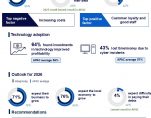
The survey shows that 68 per cent of Hong Kong SMEs recorded growth in 2025, up from 65 per cent in 2024 and marking the highest result on record. This positive momentum is expected to continue this year, with 71 per cent of SMEs expecting their businesses to grow and 76 per cent anticipating growth in the local economy — both at record highs. Customer loyalty and a strong workforce were identified as key drivers behind SMEs’ solid performance last year.
Mr Cliff Ip, Councillor of CPA Australia’s Greater China Divisional Council, said Hong Kong’s improving business environment played a critical role in supporting SME growth. “Hong Kong’s business confidence and economic growth strengthened last year, supported by robust capital markets, a recovery in tourism and consumption, and signs of stabilisation in the property market,” said Mr Ip. “Against this stable and supportive backdrop, small businesses not only benefited from increased business activity, but were also able to expand in a healthy and sustainable manner.”
Looking ahead, Mr Ip noted that while global geopolitical tensions and external uncertainties pose rising challenges, Hong Kong’s underlying strengths remain a key advantage for SMEs. “Rising geopolitical risks are likely to create headwinds for many sectors such as trade and logistics through higher fuel costs and supply chain disruptions. However, I remain confident about Hong Kong’s overall business outlook this year,” he said. “As many regions become more unpredictable or less secure, Hong Kong’s stable and consistent business environment, together with supportive policy settings including the city’s low and simple tax regime stand out as important advantages in attracting international companies and investors.”
Mr Ip added that these developments also present new opportunities for local SMEs, particularly as increased international interest creates scope to build partnerships, expand networks and tap into new markets. “This environment also creates favourable conditions for younger entrepreneurs to explore emerging markets and pursue new business opportunities,” he said.
Improved business performance has strengthened the solvency of many local SMEs. The share of businesses reporting difficulty paying debts fell sharply from 22 per cent in 2024 to just 3 per cent in 2025, while only 4 per cent expect to face difficulties this year, down markedly from 26 per cent previously. As a result, Hong Kong small businesses are now the least likely among the surveyed businesses to report solvency concerns.
Mr Ip said, “The solvency of many SMEs has notably improved, driven by stronger cash flow from improved business growth, a robust capital market and a recovering property market over the past year. This healthier cashflow has both supported easier access to external finance and reduced the need for such finance.”
Hong Kong SMEs have also strengthened their capability to invest in technology that delivers rapid improvements in profitability. In 2025, 64 per cent of SMEs reported that their technology investment in that year helped improve profitability, up from 59 per cent in 2024. Two in five Hong Kong SMEs invested in artificial intelligence (AI) last year, making it the leading technology investment among local SMEs, followed by customer relationship management (CRM) software.
At the same time, cyber protection has improved, with the share of Hong Kong businesses reporting losses from cyber incidents falling sharply from 72 per cent in 2024 to 43 per cent in 2025. However, as digitalisation accelerates, cyber risks remain elevated, with nearly three in five SMEs expecting to face cyber threats this year, above the survey average 42 per cent.
Mr Davy Leung, Deputy Chairperson of CPA Australia’s SME and Entrepreneurship Committee of Greater China, said the growing maturity and availability of AI tools is helping SMEs enhance productivity, reduce operating costs and improve customer experience.
(Left) Mr Davy Leung, Deputy Chairperson of SME and Entrepreneurship Committee 2026 from CPA Australia (Right) Mr Cliff Ip Greater China Divisional Councillor 2025 from CPA Australia
“However, rising digital fraud, wider AI adoption and SMEs’ increasing reliance on digital banking have prompted the Hong Kong Government to significantly strengthen banking security and cybersecurity resilience over the past year. This includes the rollout of low-cost and practical initiatives such as the Cybersec One Programme and the continued implementation of the ‘9+5’ SME support measures. The decline of cyberattack-related losses reported in the survey in part reflects the effectiveness of these measures.
“As cybersecurity threats and digital fraud risks continue to escalate, SMEs should make better use of these available resources, including free website risk assessments and vulnerability identification services, to strengthen their defence capabilities and safeguard business operations.”
Mr Leung also suggested that the Government consider revamping the Technology Voucher Programme to support broader digitalisation efforts, including the adoption of both AI and non-AI technologies. He added that enhanced training support would help SMEs identify and implement modern tools to drive innovation, improve efficiency and strengthen long-term competitiveness.
Rising costs remain a key challenge for Hong Kong SMEs in 2025, with 29 per cent reporting it having a negative impact on their business. However, this was the second‑lowest level among all surveyed markets, underscoring Hong Kong’s relatively low inflationary environment last year. Notably, the share of SMEs citing staff costs as a negative factor rose from 35 per cent to 42 per cent, making it the most significant cost pressure for Hong Kong businesses in 2025. This increase may help explain why the proportion of SMEs hiring additional staff declined from 42 per cent to 38 per cent last year.
Mr Leung said, “Increasing costs remain a significant barrier for many SMEs across Asia‑Pacific region, but Hong Kong’s relatively low inflation has helped cushion the impact on local small businesses,” Mr Leung said.
Mr Leung added that while headcount growth has moderated, overall staff costs have continued to rise as businesses invest in higher‑value talent. “Greater digitalisation and automation have helped ease labour constraints in Hong Kong. When SMEs do add staff, they are increasingly recruiting employees with digital and AI capabilities, or creating new roles to support business transformation. These positions typically command higher salaries, which has contributed to higher overall staff costs despite slower hiring growth.”
The annual survey collected the views of 4,166 small businesses across 11 Asia-Pacific markets, including Singapore, the Chinese Mainland, and Australia, with 305 respondents from Hong Kong. Hashtag: #CPAAustralia
The issuer is solely responsible for the content of this announcement.
About CPA Australia
CPA Australia is Australia’s leading professional accounting body and one of the largest in the world. We have more than 176,000 members in over 100 countries and regions. Our core services include education, training, technical support and advocacy. CPA Australia provides thought leadership on local, national and international issues affecting the accounting profession and public interest. We engage with governments, regulators and industries to advocate policies that stimulate sustainable economic growth and have positive business and public outcomes. A CPA is a Certified Practising Accountant. More at cpaaustralia.com.au













 cpaaustralia.com.au




