Finding the right attorney begins with understanding which law firm is best suited to your specific legal needs. From recovering after a serious injury and resolving family disputes to protecting your business, planning your estate, or defending against criminal charges, working with an experienced legal team can make the process more manageable. St. Louis is home to many respected law firms, each offering different areas of legal […]
A newly demonstrated attack against Claude Desktop has highlighted how synced AI preferences and locally connected tools can be chained to turn a trusted chatbot into a covert route for command execution on a user’s workstation. The attack path centres on Claude Desktop’s Personal Preferences feature, which allows users to set account-wide instructions that are synchronised across sessions and devices. Security researchers showed that if an attacker […]
DuckDuckGo has added YouTube video ad blocking to its privacy-focused browser, widening its challenge to dominant browsers and giving users a built-in way to watch videos with fewer commercial interruptions. The feature blocks ads that appear before and during videos viewed inside the DuckDuckGo browser, including on YouTube. It relies on community-maintained uBlock Origin filter lists, a significant choice because those lists are open-source, regularly updated and […]
By K Raveendran The Narendra Modi government’s position on fuel prices now looks less like prudent caution and more like an overly defensive reading of a market that has already absorbed much of the Iran-US risk. The more calibrated question, therefore, is not whether New Delhi is right to watch the West Asian security situation, […]
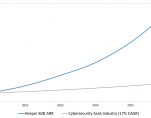
Compelling path to $1billion ARR and public offering, fueled by product market fit in the agentic AI age, explosion of identities and related threats, and accelerating growth
SINGAPORE – Media OutReach Newswire – 9 July 2026 – Keeper Security (“Keeper” or “we”), the identity security platform for humans, machines and AI agents, today announced a major milestone in its journey to become the market standard for AI-native identity security, having reached $225 million in Annual Recurring Revenue (ARR). Since 2021, Keeper’s ARR has grown over 3x.
Keeper protects over 95,000 organizations, which includes many Fortune 500 enterprises and public sector agencies. The company is quickly emerging as the market standard for AI-native identity security for enterprises globally with its leading zero-trust and zero-knowledge identity security platform. In 2025, leading analyst firm Gartner recognized Keeper as the second-fastest-growing security software competitor globally, second only to Google.* This recognition underscores Keeper’s rapid market expansion in addressing identity security challenges created by cloud transformation and artificial intelligence adoption across enterprise infrastructure and endpoints.
Keeper is now growing at over 4x the industry average.
This market-leading growth is driven by the explosion of identities in the agentic AI age and relentless focus on innovation to protect customers, as evidenced by the release of its unified privileged access management and identity security platform, KeeperPAM®, which protects both human and Non-Human Identities (NHIs), including service accounts, machine identities, databases, AI agents and agentic workloads. Since the launch of KeeperPAM in February 2025, KeeperPAM revenue has exhibited 10x year-over-year growth and Keeper has seen industry-leading new customer growth, adding an average of 850 new organizations every month. In the last fifteen months, Keeper added over 400 innovative features and products to KeeperPAM.
“Identity is the new security perimeter,” said Darren Guccione, CEO and Co-founder of Keeper Security. “As enterprises increasingly deploy AI agents and autonomous systems, the number of privileged identities and machine credentials is growing exponentially. Organizations need a modern, unified platform that secures every identity – human and non-human – and governs every privileged interaction. Our growth reflects the market’s demand for a platform purpose-built to address these challenges.”
Keeper’s cloud-native cybersecurity platform delivers a comprehensive approach to identity security and privileged access management by unifying enterprise password management, secrets management, privileged session management, database management and endpoint privilege management in a single platform. Keeper’s AI-native identity security strategy seamlessly extends these capabilities to non-human identities and agentic AI environments, enabling organizations to discover, manage and secure machine credentials and autonomous workloads with the same rigor applied to human users.
As enterprises adopt AI technologies at scale, the proliferation of non-human identities is rapidly outpacing that of human identities by 150:1, according to reports, thereby creating new attack surfaces and operational complexity. Keeper’s platform helps organizations establish identity-first security strategies that provide security, visibility, governance and least-privilege controls across their entire identity ecosystem.
“Autonomous agents, frontier LLMs and machine-to-machine workflows are operating inside enterprise environments right now – without adequate governance, secrets management or access controls,” said Craig Lurey, CTO and Co-founder of Keeper Security. “Keeper is purpose-built to solve this problem at scale.”
The company’s continued growth and market recognition reinforce its position as one of the cybersecurity industry’s most innovative and fastest-growing providers of AI-native identity security and privileged access management solutions. Keeper’s financial profile combines best-in-class growth, profitability and a debt-free capital structure and is an asset positioned to efficiently lead identity security in the agentic AI age.
“Surpassing $225 million in ARR confirms what we’ve heard in every enterprise conversation – that securing non-human identities is the defining security challenge of the AI era,” said Darren Guccione, CEO of Keeper Security. “We have established an accelerated path to $1 billion in ARR which, coupled with our technology roadmap, will provide optionality for a public offering.”
Gartner is a trademark of Gartner, Inc. and/or its affiliates.
Gartner does not endorse any vendor, product or service depicted in its research publications and does not advise technology users to select only those vendors with the highest ratings or other designation. Gartner research publications consist of the opinions of Gartner’s Business and Technology Insights Organization and should not be construed as statements of fact. Gartner disclaims all warranties, expressed or implied, with respect to this research, including any warranties of merchantability or fitness for a particular purpose.
Hashtag: #KeeperSecurity
The issuer is solely responsible for the content of this announcement.
About Keeper Security
Keeper Security is the leading zero-trust and zero-knowledge identity security solution, trusted by millions of people and thousands of organizations globally. KeeperPAM® is Keeper’s privileged access management platform that unifies password and passkey management, secrets management, privileged session management and endpoint privilege management in a single cloud-native platform, protected with quantum-resistant encryption. KeeperAI delivers real-time, AI-native threat detection across every privileged session. As AI agents proliferate and identity becomes the defining attack surface, Keeper governs access for humans, machines, non-human identities and AI agents, serving as the unified control plane for access, compliance and visibility across the enterprise. For more information, visit KeeperSecurity.com.
Finding the right legal representation often starts with understanding which firms have established a reputation for professionalism, client service, and dependable legal guidance. Indiana, Pennsylvania, is home to several respected law firms serving individuals, families, and businesses across a variety of legal matters. While every client’s needs differ, selecting a firm with experience in the relevant practice area can make a meaningful difference. This editorial review evaluated […]
President Trump’s declaration on Wednesday that the ceasefire with Iran is over immediately pushed oil prices higher, lifted Treasury yields and revived concerns about the security of the Strait of Hormuz. Markets responded in familiar fashion, with traders reassessing energy supplies, inflation expectations and monetary policy. Another consequence deserves equal attention. Higher oil prices strengthen the fiscal position of the Gulf’s major energy exporters. Over time, stronger […]
Cybercriminals are using fake cracked-software downloads to infect consumers and smaller businesses with a double payload that steals credentials and mines Monero, underscoring how commodity malware operators are combining immediate data theft with longer-running attempts to profit from compromised machines. The campaign delivers Vidar, a widely used information stealer, alongside XMRig, an open-source cryptocurrency miner often abused in cryptojacking attacks. Victims are lured through malvertising into downloading […]
China has offered fresh channels for easing trade tensions with the European Union after Foreign Minister Wang Yi completed a four-country Nordic tour aimed at rebuilding confidence with some of Europe’s most security-conscious governments.
Wang’s 2-8 July visit to Denmark, Sweden, Finland and Norway came as Brussels and Beijing try to prevent a deepening dispute over industrial subsidies, electric vehicles, market access, export controls and critical minerals from turning into a broader trade confrontation. The trip placed trade, green technology, shipping, healthcare, tourism and scientific innovation at the centre of talks, while allowing Beijing to test whether northern Europe could support a less confrontational EU approach.
The diplomatic push followed high-level trade discussions in Brussels, where both sides agreed to establish a ministerial-level mechanism that would meet once or twice a year. Four negotiation tracks are expected to cover export controls, trade and investment balancing, market access, and supply-chain transparency, with October emerging as a key deadline for measurable progress.
The EU’s trade deficit with China stood at about €360 billion last year, driven by imports of electric vehicles, batteries, solar equipment, machinery and consumer goods. European officials have warned that subsidised Chinese production could put pressure on strategic industries, while Beijing argues that EU restrictions on technology exports and investment screening have politicised commerce.
Wang used the Nordic leg to frame China and Europe as partners rather than rivals. In Copenhagen, he urged Denmark to play a constructive role in stabilising EU-China relations and highlighted cooperation in green shipping, life sciences and tourism. Denmark holds political weight in Brussels through its support for open trade, but it has also backed a firmer European line on economic security and resilience.
The tour carried symbolic value. It was the first visit by a Chinese foreign minister to Denmark in 15 years and to Sweden in 22 years. Sweden is China’s largest trading partner in the Nordic region, but relations have faced strain over human rights, security policy and Europe’s concerns over dependence on Chinese technology. Wang met Prime Minister Ulf Kristersson and Foreign Minister Maria Malmer Stenergard in Stockholm, where the talks covered bilateral ties and the wider EU agenda.
Finland added a sharper security dimension to the visit. President Alexander Stubb and Foreign Minister Elina Valtonen have supported a more cautious European posture towards Beijing, particularly since Russia’s war in Ukraine reshaped the security debate across northern Europe. Finland’s accession to NATO has also altered the regional balance, placing Helsinki firmly inside the transatlantic security framework. Trade dialogue with Beijing therefore sits alongside hard questions over Russia, technology transfer and strategic infrastructure.
Norway, the final stop, offered Beijing a more pragmatic opening. Oslo is outside the EU but closely tied to the single market through the European Economic Area. Its energy, maritime and seafood industries give it economic links with China, while Norway’s diplomatic tradition allows space for dialogue even during periods of political tension. Wang’s meeting with Foreign Minister Espen Barth Eide was expected to focus on trade, green transition and international security.
Beijing’s message is that the EU should expand trade rather than restrict it. China has signalled willingness to increase imports from Europe and improve communication over trade frictions. It has also pressed Brussels to ease restrictions on high-tech exports and avoid measures that it views as protectionist. European negotiators, however, want more than general assurances. They are seeking concrete steps to narrow the trade gap, improve access for European firms, and curb state-backed overcapacity in sectors where Chinese exports have surged.
The most sensitive issue remains electric vehicles. The EU imposed duties on battery-powered cars made in China after concluding that state support had distorted competition. Chinese manufacturers have responded by looking more seriously at European production sites, including plants in Hungary and other markets, to maintain access to consumers while reducing tariff exposure. The dispute has become a test case for whether Brussels can defend industry without triggering retaliation that would hit exporters, luxury brands, agriculture and aviation.
Rare earths and critical inputs have become another pressure point. China dominates several stages of processing for materials used in clean energy, defence and advanced manufacturing. European officials are trying to reduce exposure without severing commercial links. Beijing retains leverage through licensing and supply-chain controls, while the EU is developing tools to diversify sourcing, screen investment and support domestic production.
The Reserve Bank of India has renewed its support for keeping cryptocurrency away from the formal financial system, reviving the prospect of a tougher national policy on private digital assets even as millions of users continue to trade through domestic and offshore platforms. Government documents and briefings to a parliamentary panel point to a policy line that leans towards prohibition rather than licensing. The central bank has […]
CHANG ZHOU, CHINA – Media OutReach Newswire – 7 July 2026 – The global new energy vehicle market has seen rapid growth in recent years. With continued strong expectations for new energy vehicle exports, the global electric vehicle (EV) charging market is entering a new stage of rapid expansion. Recently, StarCharge, the global leading brand of EV Charging equipment and smart energy systems, held a major industry seminar in Hong Kong and released two new white papers at the event, exploring two major transformative trends in the industry that are worth paying attention to.
Charging stations are becoming a key connection of smart energy systems
According to the ‘Technical White Paper’ by StarCharge, for years, EV charging infrastructure has mainly been seen as support for vehicle sales expansion: building more chargers, expanding coverage, and speeding up charging.
However, this role is starting to change.
As electrification scales up, charging networks are becoming a part of the energy system itself. They are no longer just places for vehicles to top up; they are evolving into smart energy nodes connecting vehicles, the grid, distributed energy, storage, and digital management.
This shift from charging infrastructure to charging network systems shows that the industry is moving from basic access to integrated value: from charging services to energy services, from standalone stations to PV-storage-charging systems, from equipment deployment to scenario-based infrastructure.
StarCharge believes that the future charging network ecosystem will go through four major turning points.
Four Key Points Reshaping the Ecosystem
1. Charging Networks Are Becoming Energy Infrastructure
Charging infrastructure is going beyond its original role as just a support for EVs. As EV adoption grows, charging networks are becoming strategic energy infrastructure: they connect mobility demand with the grid, distributed energy, storage, digital platforms, and future energy services.
2. Defining the Scenarios for the Network
The future charging network won’t be shaped by hardware alone. Policies determine whether infrastructure should be built, technology determines the speed of construction, but real-world scenarios determine what the charging network actually needs to look like.
Urban commuting, highway trips, ride-hailing, logistics fleets, county and rural coverage, holiday peak demand, heavy trucks, mining areas, ports, airports, and autonomous driving all create different charging needs. Therefore, a mature charging network can’t be ‘one-size-fits-all’; it has to be designed around different vehicle types, operating hours, power requirements, reliability needs, and grid conditions.
3. Digital platforms turn charging networks into operable assets
A large charging network only truly has value when it can be scaled, optimized, and managed. This is exactly the core role of cloud platforms. They turn millions of charging points, users, stations, transactions, and energy flows into a measurable, controllable, and continuously optimized operating system.
StarCharge’s platform capabilities cover site selection, pricing, marketing, station operations, smart maintenance, charging safety, station robots, AI-based smart charging, fleet management, energy optimization, and ESG reporting. In other words, digital platforms are the key to transforming charging infrastructure from a heavy-asset network into smart, operable, and scalable assets.
4. Charging stations are becoming grid-friendly energy resources
The next-generation charging infrastructure won’t be defined by any single technology. It will be built on a complete tech stack, combining high-power charging, liquid cooling, integrated PV-storage-charging, DC bus architecture, V2G, automated charging, and AI-driven operations. In other words, future charging stations shouldn’t just be passive electricity consumers that add stress to the grid. Through energy storage, renewable energy integration, V2G, smart scheduling, and AI-based energy optimization, charging stations can become grid-friendly energy resources.
This means that aside from charging vehicles, a charging station can absorb renewable energy, buffer peak loads, respond to demand-side signals, support peak shaving and valley filling, regulate frequency, and provide carbon-neutral ESG data for fleet operators. Its business model will also go beyond charging fees, creating new value through energy services, data services, carbon-related benefits, and grid interaction capabilities.
Microgrids Have Emerged at the Right Time
At the same time, with the continuous development of distributed energy and photovoltaic energy, microgrids have emerged at the right time. They are not just a product, but a local energy system built around real-world scenarios.
In the latest “White Paper” on scenario-based microgrid technology, StarCharge points out that microgrids are moving from customized engineering projects toward scalable, replicable energy systems.
A microgrid is a scenario-based local energy system
According to StarCharge, a microgrid is not a single device, nor is it just an energy storage product. It’s a local energy system designed around the needs of a specific scenario, coordinating local generation, loads, storage, control, and operational strategies within a defined electrical boundary.
Moreover, depending on the scenario—such as data centers, individual charging stations, zero-carbon industrial parks, or green mines—the energy challenges are completely different. The right microgrid is defined by the scenario it serves.
The white paper also highlights four high-value paths: electricity-computing synergy, independent power supply, zero-carbon parks, and green mines. In areas with weak grids or limited grid access, microgrids ensure the operation of critical loads. In emerging load scenarios like data centers and industrial parks, microgrids support renewable energy integration, energy resilience, and cost optimization. In high-tech-demand scenarios like mines, microgrids become the foundation for ensuring production continuity, energy transition, and ESG competitiveness.
The three-stage evolution of microgrids
As power sources and loads become increasingly DC, microgrid architectures are evolving from AC-dominated systems to AC-DC hybrid systems, and eventually toward microgrids with a higher proportion of DC.
Microgrid 1.0 — dominated by AC architecture. It integrates renewable energy into the existing AC grid framework, but its control heavily relies on grid-following management and support from the external grid.
Microgrid 2.0 — the AC-DC hybrid stage. AC and DC buses coexist, allowing PV, storage, and DC loads to connect more directly. Bidirectional power hubs, solid-state transformers (SST), and energy routers become important bridges between AC and DC systems. This stage balances strong AC compatibility with higher DC efficiency and is expected to remain mainstream in the next 10-15 years.
Microgrid 3.0—it’s the era of DC microgrids. As solar PV, wind power, battery storage, data centers, LED lighting, and EV charging increasingly move toward DC, DC microgrids can reduce repeated AC-DC conversion losses, simplify control, and support millisecond-level responses.
This evolution is closely linked to the mission of microgrids: breaking through energy access bottlenecks, enabling sustainable development, connecting technology, industry, policy, market, and community needs, and unlocking the integrated value of local energy systems.
In the future, StarCharge will steadily expand into the growing global markets for new EVs and renewable energy, building on its smart energy systems that have been widely validated in the Chinese market.
Hashtag: #StarCharge
The issuer is solely responsible for the content of this announcement.
Abu Dhabi Securities Exchange Group will remove daily price limits on exchange-traded funds and futures contracts from 3 August 2026, marking a fresh step in its push to deepen liquidity, improve price discovery and align its listed products more closely with global market practice. The change applies to ETFs and futures contracts listed on the exchange, allowing their prices to move without the daily trading bands that […]
FIFA’s decision to suspend Folarin Balogun’s automatic one-match ban has cleared the United States forward to face Belgium in Monday’s World Cup last-16 tie in Seattle, triggering a sharp protest from the Royal Belgian Football Association and fresh scrutiny of football’s disciplinary system. Balogun had been expected to miss the knockout match after being sent off during the United States’ 2-0 victory over Bosnia and Herzegovina on […]
Majid Al Futtaim’s VOX Cinemas at Mall of the Emirates has been recognised as the first fully accessible cinema in the Middle East, marking a significant shift in how entertainment venues in the region are adapting to universal design standards. The flagship Dubai cinema has secured Dubai Municipality’s Wosool Certificate of Compliance with Accessibility Regulations for Existing Buildings, becoming the first cinema in the GCC to receive […]
Famous for its signature crispy fried duck, the fast-growing Indonesian food brand proves that high-quality, affordable dining is a winning formula.
SINGAPORE – Media OutReach Newswire – 6 July 2026 – Bebek Goreng Pak Ndut, the rapidly expanding restaurant brand famous for its signature crispy fried duck and authentic Indonesian-style cuisine, today announced the upcoming grand opening of its fourth Singapore outlet at Sengkang Grand Mall, officially opening its doors on Saturday, July 11, 2026. This launch represents a key milestone in the brand’s aggressive regional growth strategy, which currently includes two successful high-volume locations in Malaysia and an upcoming market entry into Bangkok.
Built on a fast-turnover, highly accessible dining model, Bebek Goreng Pak Ndut is proving that affordable, everyday meals do not have to compromise on taste or quality. The brand focuses purely on operational efficiency and delivering exceptional value to the masses, making its famous fried duck and authentic Indonesian flavors accessible to everyone without the premium price tag.
”Our mission is simple: serve uncompromisingly authentic, high-quality food at a price that keeps customers coming back multiple times a week,” said Joni Anson, Founder of Bebek Goreng Pak Ndut. “With this new Sengkang location, our thriving outlets in Malaysia, and our upcoming expansion into Bangkok, we are showing that a great dining experience should be affordable, fast, and consistently delicious.”
To celebrate the grand opening with the Sengkang community, the new outlet will be offering an exclusive 23% storewide discount throughout the weekend of July 11 and 12, 2026.
For more information, to view the menu, or to find the nearest location, please visit www.bebekgorengpakndut.com.sg or follow the brand on Instagram and TikTok at @bebekgorengpakndut_sg. Hashtag: #BebekGorengPakNdut
The issuer is solely responsible for the content of this announcement.
About Bebek Goreng Pak Ndut
Bebek Goreng Pak Ndut is a regional multi-outlet restaurant brand specializing in authentic, affordable Indonesian-style cuisine. Operating a high-efficiency central kitchen and multiple fast-casual outlets across Singapore and Malaysia, the brand is dedicated to delivering consistent, high-quality meals at accessible price points.
Arabian Post Staff -Dubai Mastercard has joined a consortium of more than 140 companies backing Open USD, a new dollar-pegged stablecoin designed to lower the cost of business payments and widen corporate use of blockchain-based settlement. The initiative, run by Open Standard, brings together payment networks, banks, technology companies, crypto platforms and asset managers in an attempt to create a shared stablecoin infrastructure rather than a token […]
By K Raveendran The alleged theft of donations from the Ayodhya Ram Temple has pushed a long-simmering question into the national foreground: who should guard the wealth of religious institutions when faith, money and power converge without adequate public accountability? The issue is not confined to Ayodhya, nor to Hindu institutions. Across denominations, religious endowments, […]
China’s cinemas are being encouraged to add AI agents, karaoke rooms, coffee bars, retail corners and cultural events as regulators seek to turn theatres into broader entertainment venues rather than spaces dependent only on film screenings. The policy direction was set out in a notice issued by the National Film Administration and the State Administration for Market Regulation, outlining 10 measures across business diversification, brand management and […]
Arabian Post Staff -Dubai The UAE’s non-oil private sector came close to stalling in June as the impact of the Iran conflict, softer tourism activity and cost pressures hit client demand, leaving firms with the weakest improvement in business conditions since February 2021. The seasonally adjusted S&P Global UAE Purchasing Managers’ Index fell to 50.8 in June from 52.6 in May, staying only slightly above the 50 […]
By R. Suryamurthy Every war leaves behind shattered cities, broken societies and grieving families. But some wars destroy something less visible yet infinitely more consequential: faith in the institutions created to prevent humanity from repeating history’s darkest chapters. The latest report of the United Nations Independent International Commission of Inquiry on Israel and the Occupied […]
Singapore-based companies have committed more than S$5.5 billion in Johor since the JS-SEZ memorandum of understanding, while IMFC-J reported 1,000 enquiries linked to RM73 billion in potential investment in March 2026.
JOHOR, MALAYSIA – Media OutReach Newswire – 2 July 2026 – Forest City Special Financial Zone (Forest City SFZ) today issued a progress update on the Johor-Singapore Special Economic Zone (JS-SEZ), pointing to early implementation milestones in investment facilitation, financial-services incentives and cross-border connectivity.
Forest City, Johor
The JS-SEZ agreement, signed on 7 January 2025, covers approximately 3,588 square kilometres across southern Johor. It comprises nine flagship areas and targets investment in 11 sectors, including manufacturing, logistics, financial services, the digital economy, tourism, education, healthcare and the green economy. Forest City is the designated financial-services flagship within the framework.
“The JS-SEZ has moved beyond framework design and into early-stage execution. Forest City has a defined role in financial services and family-office activity, while the wider zone is building a pipeline across multiple industries,” a Forest City SFZ spokesperson said.
Investment pipeline builds across the JS-SEZ
Singapore’s Ministry of Trade and Industry said Singapore-based companies had committed more than S$5.5 billion in investments into Johor since the JS-SEZ memorandum of understanding was signed in January 2024. The figure was highlighted at the second JS-SEZ Joint Investment Forum in Singapore in October 2025.
On the Malaysian side, the Invest Malaysia Facilitation Centre Johor (IMFC-J) reported in March 2026 that it had received 1,000 investor enquiries and was facilitating RM73 billion in potential investment.
IMFC-J is a joint federal-state one-stop centre led by the Iskandar Regional Development Authority, Invest Johor and the Malaysian Investment Development Authority.
The figures represent investment commitments and potential project value rather than fully realised capital expenditure, but provide an early measure of the commercial pipeline forming around the economic corridor.
Forest City builds financial-services proposition
Malaysia announced the Forest City SFZ incentive package in September 2024, followed by the gazettement of the Single Family Office (SFO) tax rules in October 2025. Under the scheme, a qualifying SFO vehicle may receive a 0% tax rate on eligible investment income for an initial 10-year period, with a possible extension for a further 10 years, subject to asset, local investment, staffing and operating-expenditure requirements.
The initial phase requires at least RM30 million in assets under management. The wider Forest City incentive framework also includes a 5% corporate tax rate for qualifying global-services and selected relocation activities, while eligible knowledge workers in the JS-SEZ may qualify for a 15% personal income tax rate, subject to prevailing rules and approvals.
According to Forest City data, nine family offices had received approvals under the scheme by June 2026. The Securities Commission Malaysia had previously reported more than 30 expressions of interest and has set a target of RM2 billion in SFO assets under management by the end of 2026.
Separately, Forest City said 593 applicants were approved for the SFZ category of the Malaysia My Second Home programme between 1 October 2024 and 31 March 2026, indicating demand from investors, professionals and long-stay residents alongside the financial-services push.
Cross-border measures support the dual-market model
The JS-SEZ framework is intended to combine Johor’s land, industrial capacity and cost base with Singapore’s capital, connectivity and business ecosystem. Measures under the bilateral framework include investor facilitation, automated immigration channels, paperless goods clearance and improved transport links.
Singapore has rolled out QR-code immigration clearance across travel modes at the Woodlands and Tuas checkpoints. Travellers should continue to carry their passports, which may still be required for verification and for clearance at the Malaysian border.
The Johor Bahru-Singapore Rapid Transit System Link is targeted to begin passenger service by the end of 2026. The four-kilometre line will connect Bukit Chagar and Woodlands North in about five minutes and is designed to carry up to 10,000 passengers per hour in each direction during peak periods.
Execution and conversion remain the next test
The World Bank projects Malaysia’s economy to expand by 4.4% in 2026, supported by domestic demand, while warning that trade restrictions, global policy uncertainty and weaker external demand remain downside risks.
For the JS-SEZ, the next phase will be measured by the conversion of enquiries and commitments into approved projects, realised investment, skilled employment and operating businesses. Delivery of transport, utilities, talent development and regulatory coordination will also determine the pace at which companies adopt a cross-border operating model.
“The early indicators are encouraging, but the economic impact should be assessed over a multi-year horizon. The priority now is to convert the pipeline into sustainable business activity, jobs and a deeper professional-services ecosystem,” the spokesperson said.
Forest City SFZ said it will continue working with public agencies, financial institutions and professional-service providers to support family offices, international investors and companies evaluating Johor as part of their regional growth strategy.
Key figures
Indicator
Latest stated figure
JS-SEZ coverage
Approximately 3,588 km²; nine flagship areas; 11 priority sectors
Singapore-linked commitments
More than S$5.5 billion committed into Johor since January 2024
IMFC-J pipeline
1,000 enquiries; RM73 billion in potential investment as at March 2026
SFO incentive
0% on eligible investment income for 10 years, with a possible further 10 years
RTS Link
Targeted passenger service by end-2026; up to 10,000 passengers per hour per direction
Malaysia 2026 GDP outlook
4.4% growth forecast by the World Bank
Hashtag: #ForestCity
The issuer is solely responsible for the content of this announcement.
About Forest City Special Financial Zone
Located in Iskandar Puteri, Johor, Forest City Special Financial Zone (FCSFZ) is Malaysia’s pioneering special financial zone and the financial-services flagship within the Johor–Singapore Special Economic Zone. It is positioned to attract financial institutions, multinational corporations, high-net-worth individuals and businesses operating in wealth management, financial technology and global business services.
Its incentive framework includes a 0% income tax rate for qualifying Single Family Office Vehicles for up to 20 years, a preferential 5% corporate tax rate for approved qualifying activities, and a special 15% personal income tax rate for eligible knowledge workers, subject to the applicable conditions, regulatory approvals and prevailing legislation. Forest City also holds duty-free island status, further strengthening its appeal as a regional investment, business and wealth-management destination near Singapore.
By Satyaki Chakraborty The U.S.-China high tech battle for supremacy has reached a new peak after the China manufactured Supercomputer LineShine was adjudged the best among the Top 500 supercomputers made by various nations including the USA, at the International Supercomputing Conference in Hamburg, Germany held on June 23.China got this top slot recognition after […]
ZHONGSHAN, CHINA – Media OutReach Newswire – 1 July 2026 – As 2026 marks the 160th anniversary of the birth of Dr. Sun Yat-sen, the 6th Cross-Strait Sun Yat-sen Forum was held in Zhongshan, Guangdong Province—the hometown of the great pioneer—from June 27 to 29 under the theme “Carrying Forward Dr. Sun Yat-sen’s Spirit of Endeavor and Working Together for the Great Rejuvenation of the Chinese Nation”. This year’s forum was the largest in its history, attracting the broadest participation from Taiwan compatriots and the highest proportion of young participants to date. Around 2,000 representatives from across the Chinese mainland, Taiwan, Hong Kong, and Macao attended the event. Centered on cultural heritage and driven by economic and trade cooperation, the forum established a multi-level platform for cross-strait exchanges and collaboration while fostering broader consensus on integrated cross-strait development.
At the 6th Cross-Strait Sun Yat-sen Forum open ceremony
Distinguished guests from both sides of the Taiwan Strait attended the opening ceremony and noted in their remarks that Dr. Sun Yat-sen is a revered national pioneer shared by compatriots on both sides of the Strait. His vision of rejuvenating China remains a common spiritual legacy, and people across the Strait should carry forward his ideals and work hand in hand toward national rejuvenation. During the opening ceremony, Zhongshan Municipal People’s Government and the Association of Taiwan Investment Enterprises on the Mainland signed the Strategic Framework Agreement on Deepening Zhongshan–Taiwan Economic and Trade Cooperation to Promote Integrated Development, laying a solid institutional foundation for long-term industrial cooperation across the Strait.
A series of cultural exchange activities also took place throughout the forum. Participants enjoyed an evening tour of the century-old Sunwen West Road Arcade Pedestrian Street, immersing themselves in Zhongshan’s rich historical heritage and the vibrant cultural and tourism scene of the Guangdong-Hong Kong-Macao Greater Bay Area. They also visited the Museum of Dr. Sun Yat-sen, where they studied revolutionary historical archives, bowed before Dr. Sun’s bronze statue to pay homage, and gained a deeper appreciation of his enduring ideals of “All Under Heaven Belong to the People” and “Revitalize China”. Many participants remarked that these activities provided an excellent platform for sustained exchanges among young people across the Strait and that their shared cultural roots and common heritage form a solid foundation for advancing cross-strait spiritual integration.
To further strengthen cross-strait economic cooperation and advance industrial integration between Shenzhen and Zhongshan, the forum also featured the “Taiwan Businesses Gather in Zhongshan, Industries Glow in the Greater Bay Area” 2026 Guangdong-Taiwan Economic and Trade Exchange Conference and Investment Promotion Event Celebrating the Second Anniversary of the Shenzhen-Zhongshan Link. A total of 19 industrial projects were signed during the event. The first group comprised seven Taiwan-invested projects spanning semiconductor supporting industries, electronic components, smart home products, high-end fitness equipment, and medical devices. The second and third groups included 12 Shenzhen-Zhongshan collaborative projects covering new energy vehicle components, industrial robotics, memory chip packaging, advanced specialty materials, and integrated cultural, tourism, and commercial developments.
During the investment promotion event, Taiwan business representatives spoke highly of Zhongshan’s business environment. Zhang Congyuan, Chairman of Huali Industrial Group, which has operated in Zhongshan for more than two decades, praised the city’s enterprise service philosophy of “staying out of businesses’ way when everything runs smoothly while providing prompt support whenever needed”. He noted that this business-friendly environment has helped the company grow into one of the world’s leading manufacturers of athletic footwear.
Guo Wenhai, secretary of the CPC Zhongshan Municipal Committee, extended a sincere invitation to Taiwan businesses and entrepreneurs to invest and establish operations in Zhongshan. He emphasized that the city offers not only strong industrial infrastructure but also high-quality government services. Zhongshan will continue to provide proactive, efficient, and dedicated support for businesses while continuously improving both its hard and soft investment environment. Leveraging the opportunities created by the Shenzhen-Zhongshan Link, the city aims to create broader prospects for cooperation and shared growth for enterprises from both sides of the Taiwan Strait.
Participants and Taiwan business representatives agreed that, taking the 160th anniversary of Dr. Sun Yat-sen’s birth as an important milestone, this year’s forum created new channels for both cultural exchanges and industrial cooperation across the Strait. Looking ahead, Zhongshan will continue to organize regular initiatives, including entrepreneurship support programs for young people from Taiwan, youth exchange activities, and Guangdong-Taiwan industrial matchmaking events. By carrying forward Dr. Sun Yat-sen’s spirit, embracing the opportunities of the Greater Bay Area, and strengthening both economic cooperation and people-to-people ties, the city will continue to contribute to a new chapter of integrated cross-strait development.
By K Raveendran The arithmetic of India’s fuel market has long been sold as market-driven, but the latest price movements expose a more selective discipline. When crude oil rises, the pass-through to consumers and businesses is quick, stern and explained as unavoidable. When the same crude oil retreats, the adjustment becomes cautious, partial and wrapped […]




 KeeperSecurity.com