News related to
Iran war

By Nitya Chakraborty The recent months have not been comfortable for India with its two neighbours Pakistan and India, but as regards the third most powerful neighbouring county China, th scenario has turned different. India-China ties which became bitter at the time of clashes in Galwan valley in 2020, started softening from last year and […]

Merz Aesthetics® Hong Kong Launches Ultherapy® Authenticity Verification Reward Program This August Consumers Urged to Verify Ultherapy® Transducers Authenticity for Safe and Effective Treatments HONG KONG SAR & MACAU SAR – Media OutReach Newswire – 30 June 2025 – Merz Aesthetics®, the world’s largest dedicated medical aesthetics business for more than 115 years, leads the industry shift with Ultherapy PRIME®, the latest innovation in hyper-personalized, non-invasive skin […]

M A Hossain It is easy to overlook the quiet revolutions in geopolitics, especially when the headlines are dominated by wars in Ukraine and Gaza, tensions in the Indo-Pacific, or the perennial drama of U.S.-China rivalry. Yet, beneath the surface of global power struggles, there is a subtler but equally consequential shift unfolding across Central Asia and the South Caucasus. And it is not Moscow, Beijing, or […]

Bahrain’s Crown Prince Salman bin Hamad Al Khalifa has unveiled a $17 billion investment plan in the United States following a high-level meeting with President Donald Trump at the White House. The announcement signals deepening economic and strategic ties between Manama and Washington, with deals cutting across aviation, energy, and defence sectors.

A key feature of the plan includes a contract worth approximately $7 billion under which Gulf Air, Bahrain’s flag carrier, will purchase 12 Boeing aircraft. The agreement also includes an option for six additional planes and 40 aircraft engines from General Electric. The deal was presented as a tangible outcome of bilateral discussions, reinforcing Bahrain’s commitment to US industry and technology.

Crown Prince Salman described the deals as “real” and economically sound, addressing scepticism often associated with foreign investment pledges. The statement, made from the Oval Office, was aimed at highlighting the financial credibility of the agreements. “These aren’t fake deals,” he remarked, drawing a sharp contrast with previously publicised but unfulfilled investment promises by other nations.

The Bahraini leader’s Washington visit followed a similar pattern to President Trump’s earlier engagement with Saudi Arabia, during which over $600 billion in US investment commitments were secured. Trump had also finalised a $142 billion arms agreement with Riyadh. Bahrain’s announcement is now being viewed as a strategic move to bolster its position as a reliable economic and security partner of the United States.

The investment plan is expected to deliver significant economic dividends to both countries. For the US, the immediate impact would be in job creation, especially across Boeing’s manufacturing facilities and GE’s industrial operations. For Bahrain, the plan strengthens access to cutting-edge aviation technology and helps modernise its national infrastructure in both civil and defence aviation.

The timing of the announcement also reflects the evolving regional security dynamics in the Gulf. Iran’s influence and the broader geopolitical situation were key discussion points during the White House meeting. Bahrain, which hosts the US Navy’s Fifth Fleet, has remained a close military ally to Washington. The investment commitment not only serves economic purposes but also underscores Bahrain’s alignment with US strategic objectives in the Middle East.

Observers note that the choice of sectors—aviation, defence technology, and energy—signals Bahrain’s intent to link its national growth trajectory with American innovation and industrial capability. Gulf Air’s fleet expansion through Boeing jets and GE engines is viewed as a cornerstone of this agenda. Beyond the aviation component, additional investment is expected in energy-related projects and advanced technology, although specific agreements in these areas are yet to be publicly detailed.

The financial scope of the investment echoes previous patterns of engagement between Gulf monarchies and US administrations. Bahrain’s capital injection arrives amid growing competition among Gulf states seeking to secure American technological partnerships and defence cooperation, while positioning themselves as key regional intermediaries.

For President Trump, who had prioritised foreign investment in US manufacturing and defence during his tenure, the $17 billion figure plays into the broader narrative of restoring domestic industrial capacity through global alliances. It also fits into the administration’s push for balancing trade relationships and encouraging allies to contribute more significantly to US economic interests.

Strategic analysts have pointed out that the Gulf kingdom’s outreach comes at a time when regional alliances are undergoing shifts. Bahrain has been at the forefront of some of the Arab world’s diplomatic realignments, including its role in the Abraham Accords. The alignment with US economic and security goals could further consolidate its position as a trusted partner in American foreign policy planning for the Gulf.

Crown Prince Salman’s visit marked the continuation of a trend where Middle Eastern states use bilateral state visits to announce substantial investment projects. These announcements serve dual purposes: generating domestic political capital for US leaders while allowing foreign partners to project influence and economic modernisation.

Washington policymakers have signalled approval of the deals, suggesting that the partnership with Bahrain could deepen further in sectors such as infrastructure development, cyber-security, and military training. While the specifics of such cooperation are yet to materialise in binding agreements, the tone from both capitals points toward an expanding strategic partnership.

M A Hossain Donald Trump once campaigned on ending the war in Ukraine within 24 hours. He promised to bring an end to the proxy war with Russia, leveraging his self-proclaimed ‘Dealmaking’ skills. Yet, halfway into July, what we see instead is a new escalation dressed up as diplomacy. In a carefully choreographed appearance with NATO Secretary Mark Rutte at the White House, Trump offered Moscow a […]

UAE’s Ministry of Energy and Infrastructure has restated its unwavering aim to lift crude oil production capacity to five million barrels per day by 2027 amid shifting global energy demand. The clarification from Abu Dhabi follows remarks from the Energy Minister indicating potential capacity growth beyond that goal.

Aligned with its declared strategy, the nation insists the 5 million bpd target remains intact. Energy Minister Suhail Mohamed al‑Mazrouei, speaking at the Opec International Summit in Vienna, emphasised the UAE could scale up to six million bpd if global markets required—while making clear this figure is not an official target.

Presently, UAE’s production capacity stands at around 4.85 million bpd. The ministry’s public affirmation underscores long‑established plans by Abu Dhabi National Oil Company to align with wider economic imperatives, including state‑led diversification and responsible growth.

On the sidelines in Vienna, Minister al‑Mazrouei pointed to oil inventories that have not surged, interpreting it as evidence of sustained market demand. He characterised the additional million barrels potential as a proactive choice, contingent on demand, rather than a binding pledge.

Opec+ has already increased the UAE’s production quota this year, acknowledging its heavy investment in expanding capacity from 3 million to 4.85 million bpd. That quota adjustment reflects a bid to balance output with capacity and avoids penalising investment-led increases.

Global energy forecasts cited at the summit envision oil demand climbing by nearly 19 percent to 123 million bpd by 2050, driven by economic growth, urbanisation, and energy‑intensive industries such as artificial intelligence. Despite this, Opec has revised its short‑term forecast downward amid signs of slowing demand in China. Long‑term growth, however, is expected from regions including Asia, the Middle East and Africa.

ADNOC’s accelerated expansion plan—bringing forward its 5 million bpd capacity objective from 2030 to 2027—was endorsed by the board under the leadership of His Highness Sheikh Mohamed bin Zayed Al Nahyan, supported by CEO Sultan Ahmed Al Jaber. The strategy forms part of a broader state-led drive combining energy security with economic diversification and sustainability.

While bolstering its crude oil output, ADNOC is also investing heavily in low‑carbon solutions. It allocates about US $5 billion annually to clean energy and has set a net‑zero emissions ambition for 2045. The company is integrating solar and nuclear power into offshore fields and is implementing carbon‑capture technologies in major developments.

ADNOC’s low-carbon division recently acquired Germany’s Covestro for US $16 billion, signalling a move to diversify into value‑added petrochemicals such as plastics, foams and ammonia. Its strategy foregrounds gas, chemicals and downstream operations alongside oil capacity growth, in anticipation of structural shifts in global energy use.

The UAE is poised to become the world’s fourth-largest oil and liquids producer if the anticipated expansion is achieved, trailing only the United States, Saudi Arabia and Russia. At six million bpd capacity, it would surpass producers such as Canada, China, Iraq and Iran in scale.

However, uncertainties remain. The pace of global energy transition, the adoption of renewables, and potential peaking of oil demand—especially in China—pose risks to long-term strategy. But the UAE appears ready to hedge by maximizing flexibility: build for five million bpd, yet leave room to stretch if markets demand.

The public reaffirmation by the ministry serves both domestic and international audiences: showcasing earnest delivery of targets, reassuring investors on energy stability, and reinforcing the UAE’s position as a stabilising force within Opec+.

Oil prices have shifted sharply this week, with demand forecasts now under pressure from escalating trade tensions fuelled by fresh tariffs. Brent crude is trading in the high‑60s per barrel, while benchmark WTI hovers around mid‑60s, reflecting growing investor caution. Analysts point to revised supply and demand projections as indicators of a changing market landscape.

An International Energy Agency monthly report has cut its global oil‑demand growth forecast for 2025 to 700,000 bpd, the slowest pace since 2009 outside the pandemic, down from 720,000 bpd last month. The downgrade reflects weaker consumption in emerging markets and a cooling US‑China trade outlook. Supply continues to outpace demand as OPEC+ ramps up production; global output in June rose by about 950,000 bpd to reach 105.6 mbpd.

The IEA notes the oil market remains technically in surplus, with inventories building globally—even as regional stock draws persist. Oil runs at refineries have slowed, particularly in the US and China, enabling downward revisions in demand projections. Enverus Intelligence Research offers a counter‑view, pointing to balanced OECD inventories and sustained summer demand north of 1 mbpd, which may support higher prices.

The US Energy Information Administration expects US crude oil production to plateau at roughly 13.4 mbpd in 2025, dropping modestly later this year as lower prices curb drilling activity. Despite this, producers remain vulnerable to profit erosion unless prices stabilise in the $65–70 range.

President Trump’s trade moves have reignited fears of another global trade war, with new tariff letters dispatched to Brazil, South Korea, Japan, the Philippines and others this week. Threats of 50% duties on exports such as copper, semiconductor components and auto parts are weighing heavily on commodity‑linked equity markets and raising recession risk concerns. Oil prices dropped more than 2% on Thursday as benchmark futures responded to the potential hit to economic growth.

While some market participants remain in “wait‑and‑see” mode, given Trump’s unpredictability and history of policy reversals, the overarching effect is to dampen demand forecasts. Onyx Capital’s head of research, Harry Tchilinguirian, cautions against overreaction but acknowledges that tariffs are adding to inflationary pressures and may reinforce Federal Reserve caution.

Geopolitical flashpoints in the Middle East continue to influence sentiment. Oil surged in June as Iran threatened to close the Strait of Hormuz, which handles almost 20% of world oil shipments, but prices eased once the waterway remained open. Meanwhile, Saudi Arabia raised official prices to consumers, citing strong demand in China’s post‑pandemic recovery, though refiners are reporting margin squeezes.

Financial institutions have started to reflect this shifting environment in their projections. A Reuters‑polled group of 40 analysts revised Brent average forecasts for 2025 to $67.86 per barrel—up marginally from May—while predicting demand growth of only around 730,000 bpd. JP Morgan cut its annual Brent estimate to $66, citing rising OPEC+ output and sluggish consumption. TD Economics trimmed its forecast further, expecting 2025 WTI to average near $62, warning of sustained downward pressure from trade risk and oversupply.

Two factors loom large over the coming months. First, the path of trade tensions: further tariff escalations or retaliatory actions could erode industrial activity and fuel sales. Second, OPEC+ strategy: with the bloc unconstrained in raising output, additional production could overwhelm tepid demand, pushing prices below current levels. The IEA projects supply growth for 2025 at 2.1 mbpd, while demand is seen rising just 700 kbpd.

On the financial front, hedge fund positioning has turned cautious, registering the sharpest drop in bullish sentiment since February. Traders are forecasting narrower price ranges ahead, with elevated volatility as tariff developments hit market headlines.

Forward‑looking forecasts remain mixed. EIA projects Brent to average $68.89 in 2025 and $58.48 in 2026, marking a seasonal decline. Enverus suggests the upside remains intact if demand holds steady, especially with summer driving season underway. Market watchers also note that rising gas‑to‑oil switching costs, refinery restarts and diminished spare capacity could temper price declines.

China’s consumption is also under scrutiny. While Beijing seeks to stimulate growth through fiscal and monetary tools, investor sentiment remains fragile. Saudi’s decision to push prices higher was based on perceived strengthening in Chinese demand, but many analysts caution that any slow‑down could rapidly tip the balance.

Emerging long‑term trends offer some balance. IEA’s long‑term outlook suggests oil demand will continue rising through the late 2020s, driven by non‑OECD economies and slower clean‑energy adoption, delaying peak demand beyond 2030. Nonetheless, short‑term price direction seems firmly tied to macroeconomic risks and geopolitical dynamics.


Advertisements
By Prakash Karat The infamy that the Narendra Modi government’s foreign policy has earned in the recent period, is something that cannot be understated. On June 13, the United Nations General Assembly adopted a resolution moved by Spain calling for an immediate and unconditional ceasefire in Gaza. The resolution accused Israel of using “starvation of […]
By Nitya Chakraborty The 17th BRICS summit held in Brazil on July 6 and 7 has helped in partially restoring the image of the Indian Prime Minister Narendra Modi as the defender of the interests of Global South against the increasing attacks on the political and economic interests of the developing nations by the United […]

XI’s BICKS NO-SHOW: STRATEGIC SHIFT OR SILENT WARNING? CHINESE SYMBOLISM ON CONFIDENCE IN FULL PLAY M A Hossain In the realm of global politics, symbolism matters almost as much as substance. President Xi Jinping of China has decided not to attend this year’s BRICS summit which will be held in Rio de Janeiro. This is the first time President Xi will not be at the summit since […]

U. S. former President Donald Trump has warned that any nations aligning with the BRICS bloc’s efforts to challenge the U. S. dollar will face a 10 % tariff, set to take effect by 1 August unless a deal is struck. Speaking at a Cabinet meeting and in a post on his Truth Social platform, Trump characterised BRICS’ currency ambitions as tantamount to “destroying the dollar,” likening such […]

Iran has achieved its highest energy output in nearly half a century, as crude production and exports continue expanding despite escalating tensions and Western sanctions. In 2024, total oil output—including crude and gas liquids—reached approximately 5.1 million barrels per day, marking levels unseen since before 1978. Indicators from the first half of 2025 signal further growth, reinforcing Tehran’s stance that its energy sector remains resilient even under pressure.

China remains the principal destination for Iranian crude. According to Vortexa and Kpler data, Beijing imported an average of 1.4 million bpd of Iranian crude and condensate during the first half of 2025. In June alone, Chinese imports surged to a record 1.8 million bpd, exploiting floating storage reserves accumulated previously.

Despite U. S. legal restrictions, these volumes endure through intricate shipping methods and discounts. As of June, Iranian crude was being sold to China at discounts of $3.30–$3.50 per barrel below Brent—the widest spread since 2023—partly triggered by weak demand from independent Chinese “teapot” refineries and additional U. S. sanctions on mid-tier processing firms in Shandong province. Refineries such as these have cut utilisation rates to around 51 per cent, down from 64 per cent last year.

Iran’s export capacity has been safeguarded by infrastructural alternatives designed to bypass the Strait of Hormuz. The Goreh‑Jask pipeline and Jask terminal—capable of exporting around 300,000 bpd—offer strategic flexibility, although actual utilisation fell to under 70,000 bpd in late 2024. Elsewhere, Saudi Arabia and the UAE have also enhanced their own bypass routes through the Strait to mitigate risk.

Nonetheless, current events pose fresh challenges. Israeli strikes in June damaged parts of oil infrastructure near Tehran and affected the South Pars gas field—responsible for up to 700,000 bpd of condensate. Exports from key terminals such as Kharg Island briefly dropped below 120,000 bpd from a weekly average of 1.7 million bpd. However, Iran manages significant stockpiles—approximately 27.5 million barrels afloat—that can sustain exports for weeks.

Domestic dynamics complicate this energy story further. Iran’s gasoline consumption has outpaced refining capacity by nearly 15–20 per cent since late 2024, triggering reliance on reserves and imports to fill shortfalls. Peak summer demand reached unprecedented levels, surpassing 143 million litres in a single day. Panic-buying followed some military strikes, exposing strains in planning and supply.

Iran’s global energy standing aligns with broader market projections. The International Energy Agency forecasts that global oil supply will exceed demand in 2025 by around 1.8 million bpd, a backdrop that may soften impacts from Iranian output. At the same time, discussions in Washington about lifting U. S. sanctions have raised concerns in Beijing, particularly for its fragmented independent refining sector. Analysts warn that a sudden lifting of sanctions could flood global markets—with an additional 500,000 bpd of Iranian oil—and undercut smaller Chinese players by crushing their margins.

Iran’s energy strategy shows calculated resilience. While nuclear tensions invite military risks, the oil ministry appears intent on diversifying markets, expanding infrastructure, and leveraging geopolitical leverage. Iran Daily reported that production comprised 4.3 million bpd of crude plus around 0.7 million bpd of other liquids in 2024. Analysts advocate that increased domestic use, ageing facilities, and investment gaps could temper the pace of future gains unless Tehran secures long-term funding and technical partnerships.

Observers note the inherent paradox: Iran continues ramping production even as global energy security faces renewed uncertainty. Control over chokepoints such as the Strait of Hormuz remains central. Although no full closure has occurred—the Iranian parliament proposed closure in late June pending council approval—the symbolic threat alone underlines Tehran’s strategic positioning. Global markets, buoyed by inventories and diversified routes, have so far absorbed the shock. Yet any escalation could rapidly unsettle thresholds.

By Nantoo Banerjee It is difficult to believe that India, the world’s fourth largest economy by gross domestic product (GDP) and a major military power, ranks below even the tiny states of Kuwait and Greece when it comes to defence spending as a percentage of GDP. Considering the tricky geo-political situation in the south Asian […]

OPEC+ has opted to raise oil production by approximately 548,000 barrels per day in August, marking a sharp departure from earlier plans and surprising markets worldwide. The move, confirmed in a brief video conference, is projected to accumulate a surplus towards the close of the year, potentially eroding revenues for both OPEC members and higher-cost producers, including US shale firms.

With Brent crude prices slipping over 1% to around $67.50 and West Texas Intermediate falling to the mid‑$65 range, the group’s decision has already begun to ripple through markets. The scale of the increase is unprecedented compared to prior months—more than 130% larger than April’s hike and substantially above the 411,000 bpd rise earlier this summer.

Leaders within OPEC+ signalled that this shift reflects a strategic pivot: from defending elevated prices to asserting market share. Saudi Arabia, the group’s dominant force, spearheaded the increase, while also raising premiums for Arab Light crude sold to Asian markets—a move widely interpreted as a signal of confidence in near-term demand.

Analysts emphasise that current market structure is supportive of absorbing this surge. UBS’s Giovanni Staunovo remarked that “the oil market remains tight, suggesting it can absorb additional barrels,” though he cautioned about potential headwinds from macroeconomic uncertainties and lingering trade tensions in the next 6–12 months. Similarly, Reuters reporting notes that the decision followed assessments of low inventories and healthy economic indicators.

US President Donald Trump, whose administration has repeatedly lobbied for lower fuel costs domestically, is widely seen as a direct beneficiary of this policy. OPEC+ officials framed the increase as responsive to US pressure, with Saudi Arabia effectively stepping into a balancing role ahead of diplomatic visits.

Nevertheless, market watchers warn of mounting risks. RBC Capital projects that around 80% of the voluntary cuts—a total of 2.2 million bpd—will be reversed by September, hinting at oversupply. Financial institutions such as Morgan Stanley anticipate Brent could slide below $60 by early 2026, while ING and Barclays have also trimmed their forecasts in response to expanding inventories.

Geopolitical variables add further complexity. Though Middle Eastern tensions have eased since the brief flare‑up between Israel and Iran, any resurgence in conflict could inject volatility into the supply outlook. Moreover, internal cohesion within OPEC+ remains fragile, with nations such as Kazakhstan and Iraq reportedly exceeding quotas in recent months.

US domestic production continues its ascent, as data shows output from shale and other sources has hit record levels—adding to potential global gluts. The prospect of elevated US tariffs and slowing economic momentum could further suppress demand, amplifying price pressures.

Even so, OPEC+ remains optimistic in the short run. Saudi Arabia’s decision to lift regional premiums and analysts’ assessments of supportive market conditions reinforce this stance.

As this enlarged supply enters the market, price-sensitive producers such as US shale operators may face tighter margins. Global capitals will closely follow whether OPEC+ sustains this production path or retreats in the face of a deepening surplus.

Heads of government gathered in Rio de Janeiro for the 17th BRICS summit on 6–7 July 2025, yet Iran’s President Masoud Pezeshkian will not attend in person, opting to join virtually amid escalating regional tensions. This marks a notable shift in IRGC diplomatic strategy and signals Tehran’s cautious engagement with the global bloc. Brazilian host Lula da Silva extended formal invitations to all member nations, including Iran. […]

By Nitya Chakraborty On the eve of the 17th BRICS Summit scheduled at Rio de Janeiro in Brazil on July 6 and 7, the ongoing discussions among the senior officials of the member countries for the preparation of the draft joint declaration from the Summit, are showing big divergence of views on the two major […]

United States authorities have implemented a sweeping array of sanctions targeting companies, vessels and networks that facilitate clandestine oil exports from Iran. The Treasury’s Office of Foreign Assets Control moved to freeze assets and prohibit transactions by an Iraqi-led smuggling group and its associated Iranian “shadow fleet.” Simultaneously, the State Department added further designations aimed at restricting Tehran’s access to critical oil revenues. The Treasury identified a […]

Matein Khalid Both Israel and the US were careful not to target Iran’s oil export terminal at Kharg Island, a major reason why Brent crude trades at 68 and not 100. It is ironic that Iran’s oil output is now 5.1-MBD (this figure includes condensates and gas to liquids), its exact amount in 1978, the last year the Shah ruled from his Peacock Throne. There is no […]

Gulf Cooperation Council stock markets rallied in June, with the S&P GCC Composite Index climbing 3 % on easing Middle Eastern tensions and growing expectations of US interest rate cuts. Investor sentiment strengthened across the region, led by notable gains in Kuwait and Dubai. Kuwait’s All Share Index recorded a 4.2 % rise in June, lifting its year‑to‑date performance to 14.8 %. The consumer‑staples and real‑estate sectors led the charge, […]

Economic indicators confirm that the UAE’s non‑oil private sector maintained growth in June, as the S&P Global Purchasing Managers’ Index rose to 53.5 from 53.3 in May. A reading above 50 denotes expansion, illustrating continued momentum despite mounting headwinds from regional instability. Amid rising output, firms are focused on easing backlogs even as new orders decelerate to their slowest pace in nearly four years. The PMI sub‑index […]

By Manish Rai The question of regime change in Iran has recently resurfaced after the killing of Iran’s top military commanders following the Israeli airstrikes. However, Israel’s short-term goal was to damage Iran’s nuclear facilities to severely diminish its weapons program. But the Israeli Prime Minister mentioned during his speeches that the war with Iran “could certainly” lead to regime change in the Islamic Republic. It is […]

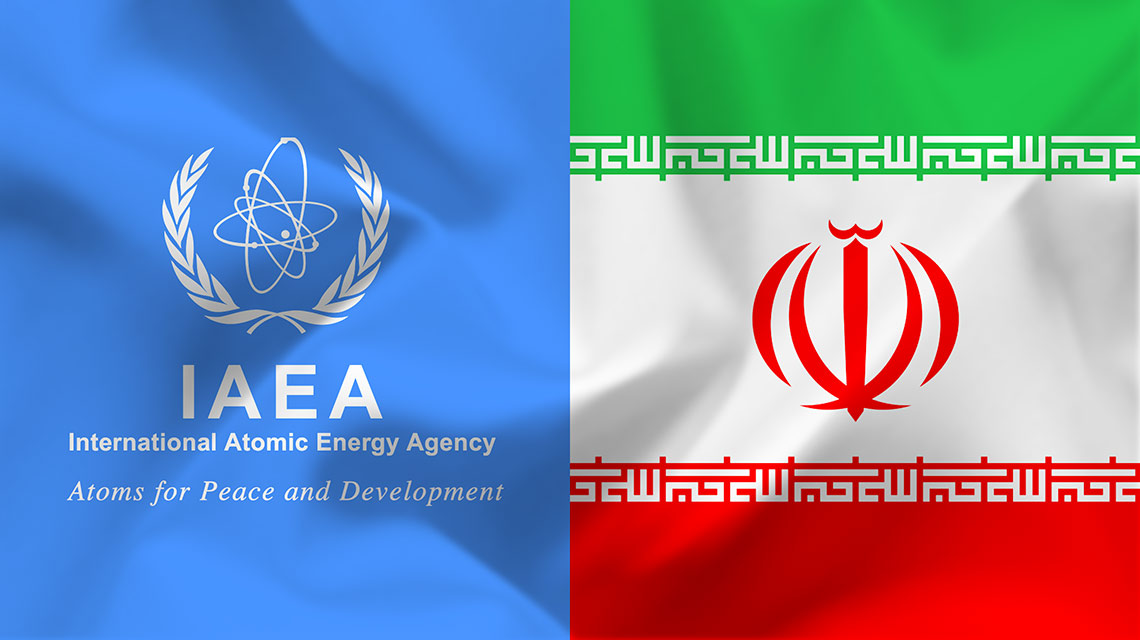
A deepening rift between Iran and international nuclear inspectors marks a turning point in Tehran’s approach to its atomic programme and signals a complex challenge for global diplomacy. Iran has formally suspended cooperation with the International Atomic Energy Agency, severing communication channels and obstructing inspections, in the wake of U.S. and Israeli military strikes on its nuclear sites.

The move was set in motion on 23 June when Iran’s parliamentary national security committee approved a framework for halting camera installation, inspections, and reporting to the IAEA unless the “security of nuclear facilities is guaranteed”. The legislation was ratified by the Guardian Council on 26 June and now awaits signature from President Masoud Pezeshkian. Parliamentary speaker Mohammad Bagher Ghalibaf justified the step, stating that cooperation should resume only when IAEA activity ceases to endanger facilities.

Iran has since implemented the decision, reportedly blocking emergency channel calls from the IAEA’s Vienna headquarters. According to a Bloomberg report, once the Incident and Emergency Centre had been in sustained dialogue since 13 June, communication has now dwindled to silence.

The suspension has intensified global worry over what happened at Fordow, Natanz and Isfahan nuclear sites that were struck in late June by U.S. and Israeli forces. Satellite imagery indicates significant damage, and the UN nuclear chief Rafael Grossi described the destruction as “enormous”, stating that centrifuges at Fordow are no longer operational. Iranian Supreme Leader Ayatollah Ali Khamenei dismissed the strikes as theatrics, displaying defiance in his first address since a ceasefire with Israel, while the IAEA has received no formal notification from Tehran about the halt.

Inspectors face a dual challenge: assessing bomb damage and reconciling it with actual uranium stockpiles. Reuters reports that uncovering whether enriched uranium was destroyed, buried in debris or clandestinely moved will be “long and arduous”. IAEA chief Grossi noted Iran informed him on 13 June it had taken measures to protect nuclear materials — raising the possibility that uranium was relocated before the bombings.

A senior diplomat cautioned that verifying the fate of enriched stocks will require extended forensic and environmental analysis. Analysts highlight that these uncertainties, coupled with Iran’s growing 60 percent enriched uranium stockpile — now surpassed 400 kg — raise proliferation concerns. Iran stands as the only non-nuclear-weapons state to produce such highly enriched material.

The crisis threatens to undermine the Nuclear Non-Proliferation Treaty. Experts warn that Iran’s rejection of oversight and potential expansion of enrichment capabilities could erode confidence in international safeguards and spark similar behaviour in other states.

Tehran counters that it remains compliant with its obligations, defending the withdrawal as a sovereignty measure and accusing the IAEA of complicity in aggression. Russian foreign minister Sergey Lavrov urged Iran to maintain IAEA cooperation. German officials echoed this sentiment, appealing for de-escalation and finer calibration.

U.S. and Israeli intelligence contend the strikes brought Iran’s enrichment efforts to a standstill, yet stop short of describing them as complete obliteration. Donald Trump claimed the attacks eliminated any need for a new nuclear deal, yet leaked U.S. intelligence suggests only a short-term delay of a few months.

Disruption of IAEA activities follows a pattern of mounting distrust. The agency censure on 12 June marked the first formal finding of non-compliance by Iran in two decades. Tehran subsequently announced expansion of enrichment infrastructure, including a third site and advanced centrifuges.

This standoff adds complexity to diplomatic efforts. Indirect U.S.–Iran negotiations held from April to June in Oman and Rome collapsed when Israel struck nuclear facilities on 13 June. Although Washington has signalled readiness to resume dialogue, Iran’s decision to suspend IAEA cooperation adds another layer of mistrust.

The prospect of tracking uranium movements amid top-secret relocation efforts, inaccessible bombed sites, and blocked communications has created a labyrinthine challenge. Inspectors and intelligence agencies alike face a “cat-and-mouse” hunt for clarity in rubble and uncertainty. Continued monitoring and a potential return to diplomatic channels will be vital in determining whether the inspection suspension is temporary or signals a more fundamental shift in Iran’s nuclear stance.

Iran’s parliament has passed legislation criminalising the use, operation or possession of Elon Musk’s Starlink satellite internet system, citing concerns over national security and unauthorised communications. The bill now awaits approval from the Guardian Council before becoming enforceable law. Authorities warn that penalties may include hefty fines, imprisonment and even corporal punishment. The Ministry of Information and Communications Technology contends that unlicensed satellite networks threaten sovereignty and […]

By Nantoo Banerjee The techniques of traditional warfare seem to be fast changing. Attack drones are increasingly playing a significant role in military aggression alongside missiles. The 12-day Israel-Iran war and the ongoing Russia-Ukraine battle showed how devastating the role of drones in modern wars is. In one of the most daring attacks, Ukraine said […]
VISHNU RAJA
RYO YAMADA
HITORI GOTOH
IKUYO KITA