Just in:
Millions Of Indians May Soon Be Deprived Of Government Assistance // UK air traffic outage inflicted £33m financial losses // Xi Jinping Preparing For A Trilateral Summit With Trump And Putin At APEC Summit On Nov 18-19 // Dubai boat show confirms international shipyard line-up for November // Private varsities bill all set to face the axe // Ousted top Kochi cop gets IG post // Trump’s Iran War Has A Share Of Contribution To His Midterm Debacle // Miss Universe Hong Kong Jen Zhou Departs for Puerto Rico to Compete in the 75th Miss Universe World Final // Kochi police detain two actors over bid to honey trap doctor // Cloudflare unveils Zero Wire vulnerability intelligence service // Meraas showcases five residential zones at Dubai Design Week // After Reaching 7 Million Users in the Philippines, Skyro Launches Transparent Cash Loans in Malaysia // Hong Kong mandates crypto transaction disclosures to tax authorities // Beyond the exhibition floor: How robots, AI and networks are moving into the real world // OpenAI identifies 948 Linux privilege escalation flaws using AI // Oil advances towards $100 as tanker attacks persist // CR Longdation Aethereal Cybersecurity × Global Cybersecurity Alliance (GCSA) Join Hands to Establish the “AI and Cybersecurity Research Centre” // Emaar approves Development buyout ahead of planned delisting // Geely’s i-HEV Intelligent Hybrid Technology Offers a New Direction Vision for Gasoline-Powered Vehicles // Oil and chip shares retreat after Democratic victories //

News related to
Japan

U. S. consumers now contend with an effective tariff rate exceeding 20%, marking the steepest level observed since the early 1900s, according to estimates by the International Chamber of Commerce following the latest round of import levies introduced under President Trump’s administration. This escalation stems from a newly implemented baseline tariff of 10%, supplemented by selective duties—up to 50% on copper and 200% on pharmaceuticals—pushing the overall […]

MACAU – Media OutReach – 12 July 2025 – Japanese leading sportswear brand DESCENTE celebrates the grand opening of its new flagship store at Galaxy Promenade on July 11th. Located in one of Macau’s most vibrant and well-trafficked shopping districts, the new flagship store reflects the area’s “Healthy Lifestyle” positioning. With a design language that blends performance functionality and future aesthetics, DESCENTE aims to offer a sophisticated, […]

By Prakash Karat The infamy that the Narendra Modi government’s foreign policy has earned in the recent period, is something that cannot be understated. On June 13, the United Nations General Assembly adopted a resolution moved by Spain calling for an immediate and unconditional ceasefire in Gaza. The resolution accused Israel of using “starvation of […]

GATES Inc. is deploying blockchain technology to enable foreign investors to buy stakes in a portfolio of income-generating properties worth US $75 million in central Tokyo through the Oasys network. The initiative is part of a broader strategy to modernise how overseas buyers participate in Japan’s real estate market.

The pilot scheme will issue digital tokens representing fractional ownership in a basket of premium commercial and residential assets, held via an overseas special-purpose vehicle to ensure regulatory compliance. GATES CEO Yushi Sekino described the move as “building next‑generation investment infrastructure that allows global investors easy access to Japanese assets.”

GATES has signalled an ambitious scaling plan to encompass US $200 billion worth of real estate tokens—a fraction but strategic segment of Japan’s entire US $20.5 trillion market. Such a leap reflects growing institutional interest in tokenisation of real‑world assets worldwide, with projections valuing the tokenised bond and equity space at US $18 trillion by 2033.

Blockchain advocates argue this model eliminates traditional intermediaries—brokers, legal firms, language translators—while lowering costs and administrative burdens. GATES will enable the platform to carry out token issuance, secondary trades and compliance checks on-chain. This allows small-scale global investors to transact in real time, without navigating Japanese legal complexities directly.

Oasys, a layer‑1 blockchain originally built with gaming in mind, has repositioned itself toward tokenising real‑world assets, including property and intellectual property rights. Ryo Matsubara, Oasys Representative Director, emphasised that “Japanese content, whether game IP or other cultural assets, commands high global value,” thus reinforcing their pivot to real‑world asset tokenisation.

The first phase focuses on Tokyo, but GATES plans roll‑out to other major international markets including the United States, Europe and Southeast Asia. Future stages may target tokenised rights to Japanese media and entertainment franchises, unlocking new investment channels for cultural IP.

Global benchmarks suggest tokenised real estate is gaining speed: Dubai anticipates a US $16 billion market by 2033, while international banks and tech firms increasingly pilot similar schemes. CoinDesk highlighted that GATES is the first major Japanese real estate company to attempt a tokenisation project of this magnitude.

Yet challenges remain. Japanese regulatory frameworks governing securities—including digital asset classification—are still evolving. Local legal consultation remains essential, especially in structuring overseas vehicles to comply with the Financial Instruments and Exchange Act. Additionally, investor appetite outside Asia and Europe will hinge on clarity in custody, asset valuation methods, and secondary‑market liquidity.

Independent analysts note that tokenisation promises more than simplified access; it may improve transparency, tracking and governance by embedding ownership and contract details onto an immutable ledger. Such benefits could, over time, boost asset yields and reduce fraud risk.

However, critics caution that regulatory and technological bottlenecks, combined with customary conservatism in Japanese real‑estate investment, could slow adoption. So many see the success of this pilot in Tokyo as crucial evidence for scaling up to the US $200 billion target.

With GATES pursuing a Nasdaq listing and reporting revenue of roughly US $145 million in 2024, the company has both resources and strategic backing to drive forward. If Tokyo’s pilot succeeds, the combination of blockchain infrastructure and overseas special‑purpose vehicle structures could point the way for similar strategies across Asia and beyond.

While tokenisation of Japanese real estate may appear niche, the project could presage a broader redefinition of how global capital flows into property markets—promising greater access, efficiency and digital-native investment models.

Spanish café operator Vanadi Coffee has approved a plan to allocate up to €1 billion of its treasury into Bitcoin, marking a striking pivot from its core hospitality business into crypto‑asset accumulation. The decision, ratified by shareholders on 29 June, seeks to position the firm—currently loss‑making and operating just six outlets—as one of Spain’s largest Bitcoin holders.

Vanadi already owns 54 BTC, acquired at an average price of around €93,444 per coin, valued today at approximately €5.8 million. Its share price surged over 25 per cent following the announcement, a staggering boost for a business that reported €3.3 million in losses during 2024. Market observers note the stock has rallied more than 400 per cent year‑to‑date on hopes that crypto‑oriented balance sheets can act as alternative stores of value.

The strategic shift draws inspiration from established Bitcoin treasury pioneers such as MicroStrategy, which holds nearly 500,000 BTC and has leveraged convertible equity vehicles to fund its crypto purchases. Likewise, Japanese firm Metaplanet is acquiring Bitcoin aggressively as part of its acquisition-backed model. Vanadi’s leadership believes this approach can appeal to institutional investors seeking inflation hedges without disrupting conventional asset portfolios.

Analysts warn the company faces elevated risk. Vanadi operates at a negative equity of around €600,000, and auditors have flagged uncertainty over its going‑concern status. Critics argue a small café chain with slender margins and negligible exposure to financial markets may lack the sophistication to withstand Bitcoin’s volatility and regulatory scrutiny.

Financing the Bitcoin ramp‑up will involve issuing convertible bonds and equity, leveraging commitments from niche funders including Patblasc Software Consulting and Alpha Blue Ocean’s Global Tech Opportunities 10. Some question both the provenance and capacity of these investors, given their prior backing of distressed asset plays such as Intercity and Substrate AI.

Vanadi acknowledges the gamble may redefine its identity: “We aim to become the largest listed Bitcoin‑holding company in Spain,” it said, equating its structural transformation to precedent‑setting players in the sector. Nonetheless, it has had to scale back expansion ambitions, cutting its growth pipeline amid constrained resources and shifting priorities.

Vanadi’s strategy forms part of a broader wave of crypto treasury activity. A growing number of under‑the‑radar firms in Europe—from chipmakers to fintech startups—are joining major players in the US and Asia investing heavily in Bitcoin. Collectively, these firms moved over 10,000 BTC onto their books in late June, totalling several billion dollars in accumulated digital assets.

Experts suggest this trend follows Gartner’s classic hype‑cycle pattern: as Bitcoin becomes easier to acquire and gain public approval, doubt gives way to widespread optimism—driving speculative surges across new sectors. Vanadi’s move, while surprising due to its modest scale, fits squarely within this wave of enthusiasm.

London‑listed Strategy recently launched a $21 billion preferred stock offering to fund more Bitcoin purchases, underscoring how corporate balance sheets are being reconfigured around digital assets. Vanadi hopes to replicate this formula, albeit with far fewer resources and heightened risk exposure.

Vanadi’s management calls the transition a “long‑term bet on a decentralised financial model,” arguing that crypto reserves provide institutional credibility and operational transparency under existing market regulations. Yet, whether this approach offers sustainable upside or represents a peak‑hype miscalculation remains under intense debate among analysts and investors.

By Nitya Chakraborty The 17th BRICS summit held in Brazil on July 6 and 7 has helped in partially restoring the image of the Indian Prime Minister Narendra Modi as the defender of the interests of Global South against the increasing attacks on the political and economic interests of the developing nations by the United […]

Senior officials from Saudi Arabia, the United Arab Emirates and Kuwait have defended the August production boost of 548,000 barrels per day, stating that global markets are absorbing the extra supply without piling up inventories. UAE Energy Minister Suhail al‑Mazrouei told delegates in Vienna that inventories have remained stable despite the accelerated output increases, reflecting genuine consumption growth. Kuwait Petroleum Corp. echoed this view, with its CEO Sheikh Nawaf Al‑Sabah noting strong demand from Asian customers and signalling a tighter market than widely perceived.

Oil markets displayed resilience as Brent crude climbed above $70 a barrel, recovering from an initial dip following the OPEC+ announcement. Analysts cite robust summer travel demand, Middle East geopolitical strains—such as intermittent Houthi attacks in the Red Sea—and tighter fuel product cracks as underpinning near‑term market firmness. The supply surge, although substantial, has not yet triggered signs of oversupply. OECD stock levels remain flat, while US Strategic Petroleum Reserve levels stay well below maximum, pointing to a balanced market setup and sustained product demand.

The OPEC+ decision marks an acceleration of a reversal programme that began in April with a modest 138,000 bpd increase, followed by three successive monthly hikes of 411,000 bpd. The latest announcement represents a strategic shift: rather than merely unwinding voluntary cuts, producers are intent on reclaiming market share and anchoring long-term stability. Saudi Arabia, which had shouldered most of the original production curbs, is now pushing ahead to restore output levels much faster than previously scheduled.

UAE officials emphasise fundamentals over headlines, asserting that additional barrels were essential to maintain equilibrium rather than depress prices. “We haven’t seen a major buildup in inventories, which means the market needed those barrels,” al‑Mazrouei said, stressing the need for steady investment in oil infrastructure. Kuwait’s Sheikh Nawaf further highlighted sustained demand growth—particularly in Asia—estimating additional global need of up to 1.3 million bpd over the year and pointing to record-high shipments from his country in June.

Supporting evidence emerges in price trend analysis. Despite the supply increase, Brent crude closed near $69–$70 per barrel, with West Texas Intermediate at approximately $68. Reuters reported a 1 per cent rise in oil prices shortly after the announcement, driven by stronger-than-expected demand signals and a dip in US production projections. Market commentary suggests that the anticipated supply surplus may not materialise until later in the year, allowing current price support to persist.

However, concern is building among forecasters regarding the risk of supply outpacing demand in the months ahead. Analysts at ING and Bloomberg caution that cumulative increases—including a potential similar rise in September—could tilt the market towards surplus by winter. Goldman Sachs predicts Brent could drop to an average of $59 in the fourth quarter if these trendlines hold. Such projections underscore the delicate balance between stabilising markets today and sowing the seeds of tomorrow’s oversupply.

Geopolitical factors continue to sway market sentiment. Renewed attacks by Houthi forces on shipping lanes in the Red Sea have boosted risk premiums and contributed to diverging regional price dynamics. In conjunction with potential US tariffs on trade partners, these developments inject layers of complexity into demand forecasts and shipping routes. Meanwhile, softer oil output projections from US shale producers, prompted by lower prices this year, have lent additional upward momentum to benchmarks.

Central to OPEC+ strategy is ensuring investment resilience in producing countries. UAE highlighted underinvestment concerns, warning that deferred spending could undermine long-term supply stability. The August lift, they argue, responds to both short-term demand and the need to signal commitment to investors. Kuwait pointed to customer outreach as evidence of healthy demand and stressed its competitive edge in terms of low-cost, lower-carbon intensity oil—a differentiator in markets such as China, Japan and South Korea.

Market analysts remain split on the outlook. Enverus Intelligence Research recently contended that prevailing data does not support a bearish narrative, noting flat stock levels in OECD countries, strong seasonal consumption, and resilient cracks. By contrast, energy consultancy FGE flagged the limitations of ramping up production, citing member compliance and infrastructure constraints that may prevent full implementation of quotas—particularly in Iraq and Kazakhstan.

Advertisements

Shares of Nissan Motor Co. dropped sharply following the firm’s decision to increase its convertible bond issuance to ¥200 billion, up from the initially announced ¥150 billion. The company cited strong investor demand during the book-building process as justification for the upsized deal, though market reaction suggests heightened concerns over shareholder dilution. This convertible debt forms a key part of Nissan’s broader funding strategy, which includes a planned $4 billion […]

Asia‑Pacific digital‑native firms attracted USD 15.4 billion in artificial intelligence investment in 2024, a figure reported by IDC that underscores a shift towards deeper commitments and strategic growth, even as the volume of deals declined.

Capital concentration has intensified as larger funding rounds become the norm. IDC analysts found that while the number of funded AI startups has dropped, the average investment per deal has risen markedly—reflecting investors’ preference for enterprises closer to market maturity rather than early-stage ventures.

China, South Korea, Japan and India remain at the forefront of investment flows. These major markets, with their diverse tech ecosystems and supportive policies, continue to lead, though Southeast Asian nations are gaining traction as both AI adopters and innovators.

Generative AI, a wave propelled by breakthrough models in natural-language processing and image creation, is swiftly ascending as the dominant investment theme across Asia‑Pacific. IDC forecasts that GenAI allocations will more than double by 2028, reaching USD 54.5 billion and forging a new frontier for enterprise transformation.

There is mounting evidence that corporations are pivoting from rhetoric to implementation. Only 29 percent of digital‑native businesses have scaled AI organisation‑wide, yet more than 42 percent now actively pursue co‑innovation partnerships with technology vendors to integrate AI across operations. These collaborative efforts are reshaping collaboration models between AI startups and incumbents.

Costs associated with infrastructure and data security continue to shape investment flows. Enterprise-grade AI demands not only computational muscle but also robust governance frameworks to mitigate risks such as bias, intellectual property leakage and regulatory non‑compliance. Data from the region show that 34 percent of organisations have embedded governance within generative AI software development, an advanced step beyond policy‑level oversight.

Cloud infrastructure providers are doubling down on AI support across Asia‑Pacific. Amazon Web Services announced a USD 13 billion expansion in Australia and over USD 5 billion for a Taiwan region, alongside large‑scale investments in Singapore, Malaysia and Japan. AWS claims the region’s cloud spending will reach USD 250 billion in 2025, largely driven by AI demands.

This inflow of cloud capital is critical in overcoming entry barriers. Local language support, data sovereignty and integration capabilities have become competitive differentiators for these platforms—Microsoft Azure, Google Cloud and Alibaba Cloud are aggressively pursuing similar capacity expansion. Southeast Asia, in particular, is emerging as the fastest–growing regional cloud market globally.

Startups are adapting to investors’ sharper focus on maturity and scalability. Fewer low‑valuation seed rounds are appearing; instead, late‑stage funding for companies with clear product‑market fit, real revenue streams and enterprise traction is dominating. This trend reflects an increasingly risk‑averse capital environment that emphasises depth over breadth.

The build‑up of AI infrastructure is dovetailing with rising regulatory attention. With supervision frameworks being rolled out around sensitive sectors such as finance and healthcare, investors are seeking startups equipped with compliance capabilities. For instance, financial‑services firms are prioritising traceability and governance as mission‑critical components for future‑ready AI deployment.

In geographical terms, growth hotspots vary by stage of AI ecosystem development. China leads in institutional funding and government-backed initiatives. Japan and South Korea benefit from combined strengths in industrial automation, robotics and semiconductor production. India’s vibrant startup landscape is gaining attention, particularly in generative AI and enterprise software. Meanwhile, nations such as Indonesia and Malaysia are attracting more attention as AI adoption becomes a priority for government digitalisation agendas.

Challenges persist. High‑cost infrastructure, skilled‑talent shortages and fragmented regulatory regimes pose constraints. Yet the rise of public‑private coalitions and university‑industry alliances is beginning to address these gaps—skills acceleration programmes are proliferating, and data‑sharing frameworks are gaining traction.

Investors are now looking past headline metrics to evaluate alignment with national AI strategies, such as Japan’s AI strategy and India’s push for indigenous innovation. Locally relevant models—capable of understanding linguistic diversity, cultural contexts, and industry‑specific workflows—are increasingly being favoured over globalised, one‑size‑fits‑all solutions.

This funding environment has spurred momentum in adjacent areas. Edge computing, AI‑enabled cybersecurity, AI‑driven supply‑chain optimisation and health‑tech verticals are emerging as new battlegrounds for both startups and incumbents. These sub‑domains are drawing fresh rounds of investment and pilot partnerships.

Policy trends are also influential. Governments across Asia‑Pacific are advancing data protection frameworks, AI ethics norms and public‑sector adoption plans—all contributing to clearer roadmaps for private‑sector engagement. The interlinking of regulatory reform and capital deployment is strengthening ecosystem resilience.

Investor sentiment remains cautiously optimistic. Surveys suggest that, despite macroeconomic headwinds and geopolitical risk, most executives view cloud and AI as avenues to cost reduction, efficiency gains and differentiation. As AWS’s APAC vice‑president remarked, “AI is the biggest market opportunity since cloud in 2006,” signalling sustained confidence in long‑term upside.

U. S. President Donald Trump has announced a sweeping 50 % tariff on copper imports, jolting commodity markets and triggering sharp moves across financial sectors. Copper futures in the United States surged to record highs, while international benchmarks in London and Shanghai retreated under mounting uncertainty surrounding shipment logistics and timing. At a Cabinet meeting, Trump confirmed the unprecedented levy, citing national security and a desire to bolster […]

By Nantoo Banerjee It is difficult to believe that India, the world’s fourth largest economy by gross domestic product (GDP) and a major military power, ranks below even the tiny states of Kuwait and Greece when it comes to defence spending as a percentage of GDP. Considering the tricky geo-political situation in the south Asian […]

KUALA LUMPUR, MALAYSIA – Media OutReach Newswire – 4 July 2025 – Wishpro uses patented Magnetic Infusion Technology (MIT) to support deeper delivery of oil-based active ingredients. Designed to nourish without clogging pores, it helps reinforce the skin barrier and retain moisture—especially beneficial in humid climates. Unlike many devices that rely on water-based formulas, Wishpro focuses on oil-based actives for targeted, lasting results. The Future of Skin […]

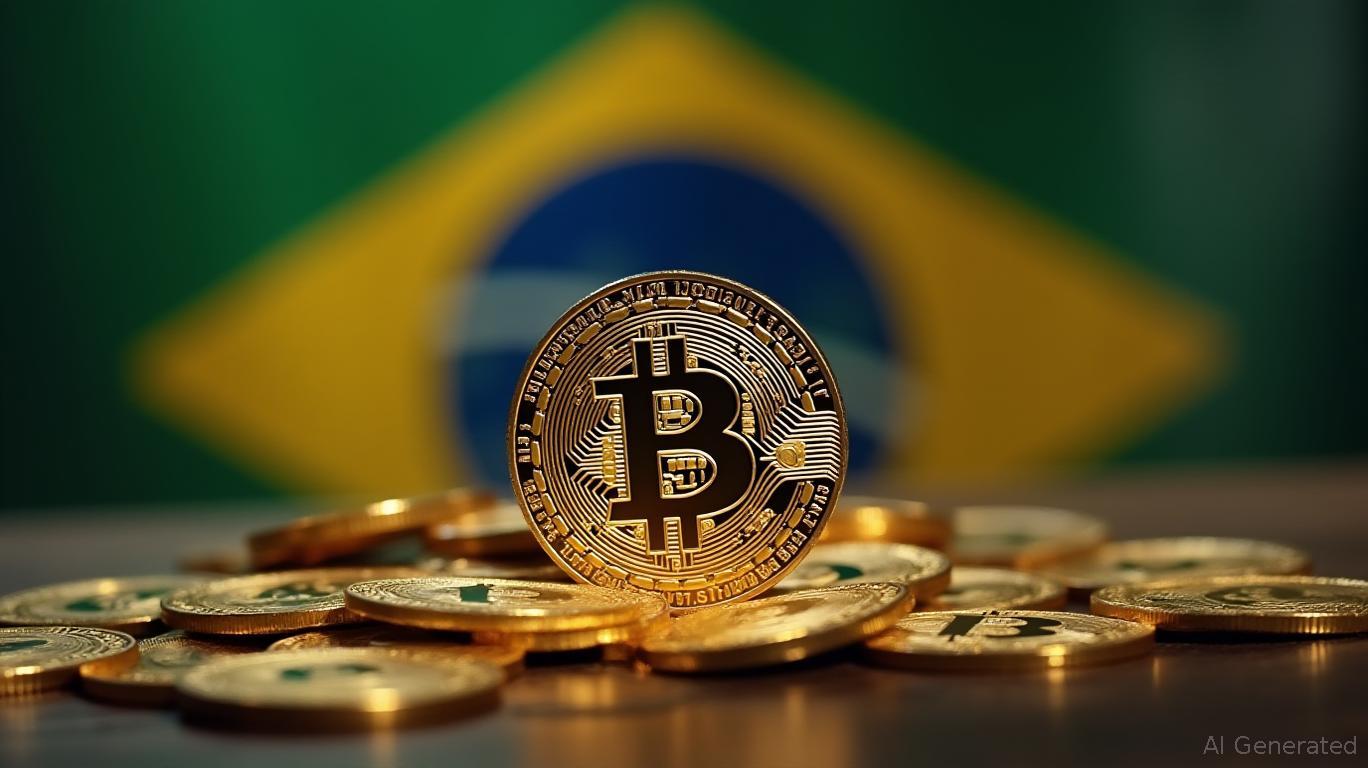
Brazil has enacted sweeping tax reforms, imposing a 17.5% flat levy on all cryptocurrency capital gains from 12 June 2025 under Provisional Measure 1303. This marks a stark shift from the former progressive system with a monthly exemption, now replaced by a single rate that applies to any crypto profit—trade, swap, DeFi yield, NFT sale—even via offshore exchanges or self-custody wallets.

Casual traders previously exempted on gains up to R$35,000 per month will now face taxation. A modest R$30,000 profit previously carried a zero burden; today, the same yield triggers a R$5,250 tax under the uniform rate. Medium-scale investors face a slight rise from the previous 15%, while the wealthy—who once paid up to 22.5%—now benefit from reduced liability.

The reform extends the tax net to assets held outside Brazil or in private wallets: all gains, regardless of custody location, fall under the 17.5% rule. Gains from decentralised finance activities, staking rewards, NFT transactions and token swaps are subject to the same flat regime.

Capital gains must now be reported and paid quarterly. Taxpayers may carry forward losses for up to five prior quarters—a benefit that will be curtailed in 2026 under proposed legal adjustments.

The reform’s scope is broader than crypto. Fixed‑income investments previously exempt—such as LCIs, LCAs, CRIs and CRAs—will now face a 5% tax on earnings. Meanwhile, gross revenue from online betting will be taxed at 18%, rising from 12% this coming October.

Brazil’s decision mirrors its wider fiscal strategy. With the nation’s overall tax-to-GDP ratio peaking above 32% in 2024, the government seems intent on widening the tax base and closing enforcement gaps. By bringing offshore holdings and DeFi into scope, authorities signal enhanced oversight and a tightening grip on previously opaque financial flows.

Advocates highlight the new system’s simplicity. A flat rate streamlines compliance, eliminating thresholds and multiple brackets, potentially reducing disputes and administrative complexity. Critics argue it disproportionately affects small investors and gig‑economy earners, who lose prior exemptions with little recourse.

Financial institutions and crypto‑focused service providers are preparing advisory tools to assist taxpayers with new obligations. Tax‑tracking platforms, accounting software and professional guidance are expected to surge in demand as individuals and small enterprises strive for compliance.

Looking ahead, the government plans to reduce the loss carry‑forward period in 2026 and explore pilot schemes to permit up to 50% of salaries to be paid in cryptocurrencies, particularly for remote work and contractors. Some fintech firms are already eyeing the change, examining crypto payroll and treasury integration.

Investors and citizen‑taxpayers must now track all crypto movements—onshore and offshore, centralised or decentralised. Each taxable event requires precise record‑keeping of acquisition cost, sale value, platform or exchange used, and timing. Errors or omissions could trigger penalties, including fines and interest charges.

Brazil’s audit agency intends to intensify scrutiny using on‑chain analytics, cross‑referencing declarations with blockchain records. Collaboration with international tax authorities may further bolster enforcement capacity.

The flat 17.5% tax places Brazil in a middling position globally—higher than zero‑tax jurisdictions like the UAE and Switzerland, but considerably lower than India’s 30% flat or Japan’s top marginal rates exceeding 50%.

Alibaba Cloud has unveiled its third data centre in Malaysia and confirmed plans for a second facility in the Philippines, deepening its infrastructure presence in Southeast Asia. The Malaysian centre became operational on 1 July 2025, while the Philippine hub is scheduled to launch by October 2025. These moves are part of Alibaba’s broader efforts to bolster cloud and AI services across the region.

Growth in cloud demand and the strategic importance of Southeast Asia underpin this expansion. Alibaba Group’s cloud division has embarked on a $52 billion investment over the next three years to build a unified global cloud network, spanning Asia, the Middle East, Europe and the Americas. Southeast Asia has emerged as a pivotal battleground as enterprises accelerate AI adoption and seek resilient digital infrastructure.

At a summit in Singapore marking Alibaba Cloud’s tenth anniversary in the city-state, Eddie Wu, CEO of Alibaba Cloud, highlighted the company’s strategy: “Globalisation is Alibaba Cloud’s long‑term strategy,” he said, adding that the company would “accelerate the development of its global cloud computing network”. These statements reinforce Alibaba’s ambition to deliver end‑to‑end cloud services, spanning compute, storage, networking and AI capabilities.

This announcement follows earlier infrastructure roll‑outs across Asia. The company deployed a second data centre in South Korea in June 2025 and launched new regions in Thailand and Mexico in the first half of the year. Strategic market withdrawals from Australia and India in 2024 appear to be counterbalanced by intensified investment in high‑potential markets.

Southeast Asia’s accelerating digital transformation is creating rising demand for secure, scalable cloud services. Malaysia, with its growing ecosystem of startups and tech‑savvy enterprises, will now benefit from three Alibaba Cloud zones, an improvement in redundancy and local connectivity. The Philippine expansion addresses growing demand in Manila and surrounding urban centres, where cloud adoption is being propelled by fintech, e‑commerce, and the BPO sector.

At the Singapore summit, Alibaba also launched its AI Global Competency Centre, designed to support over 5,000 businesses and 100,000 developers. The centre offers access to advanced AI models, labs and infrastructure support. These investments aim to accelerate enterprise AI adoption by providing both tools and training through partnerships with more than 120 universities, aiming to train 100,000 AI professionals annually.

In addition to infrastructure, Alibaba Cloud is upgrading its cloud offerings. The ninth‑generation intel‑based Enterprise Elastic Compute Service will roll out across Malaysia, the Philippines, Japan, South Korea, Thailand, UAE, Germany and the UK from July. Enhancements to its Data Transmission Service and Platform for AI demonstrate a push to simplify deployment of large language models and accelerate inference capabilities.

Competitive pressure in Southeast Asia is intensifying, with other hyperscalers—AWS, Microsoft Azure, Google Cloud—announcing new regions and services. Alibaba’s bets on localised data centres, AI‑centric products and talent development programmes are its response to positioning itself as a regionally integrated cloud‑AI partner.

Regulatory headwinds and trade tensions, particularly restrictions on Chinese cloud firms, lend further urgency to Alibaba’s diversification strategy. By embedding infrastructure in Southeast Asia, the company aims to mitigate geopolitical risk, offer compliant local services and deliver low‑latency performance.

Corporate results reflect this momentum: Alibaba Cloud has reported double‑digit year‑on‑year growth in AI‑related product revenues for six consecutive quarters, with Q4 cloud revenue hitting CNY 31.7 billion and quarterly growth of 13%. These figures position the unit as the fastest‑growing segment within the broader Alibaba Group.

Tech analysts and regional partners have praised the expansion as timely. “These deployments will significantly improve resilience, latency and service coverage across key markets,” remarked a Southeast Asia‑based CIO. A telco executive added that local data centres are crucial to scaling AI‑powered services like real‑time analytics, IoT and smart city infrastructure.

Channel partners in Malaysia and the Philippines, including telcos and systems integrators, anticipate accelerated digital transformations. Industry groups reported a surge in enquiries following the Malaysian centre’s opening, particularly from manufacturing and education sectors. Cloud‑native startups welcomed the news, viewing the increased compute availability as essential to scaling AI‑driven products.

Optimising energy use and sustainability is also part of the plan. Alibaba’s “Energy Expert” ESG‑focused reporting tool integrates AI into energy management. This aligns with industry benchmarks that 84% of leaders see green AI as important, although 69% are still at early adoption stages. Emerging green data centre practices—including renewable power sourcing and efficient cooling—are expected to feature prominently in the Southeast Asian roll‑outs.

The Malaysian data centre opens amid strong macro trends: Malaysia’s digital economy was projected to grow at over 10% annually through the next five years, while Philippine cloud adoption is forecast to grow at a similar rate, driven by government digitalisation policies and enterprise cloudisation. As Alibaba deploys this enhanced infrastructure, both nations are expected to see AI‑centred cloud services gain momentum in verticals ranging from finance to manufacturing.


HAIKOU, CHINA – Media OutReach Newswire – 3 July 2025 – This summer, journalists and photographers from the United States, Japan, South Korea, Spain, the United Arab Emirates, and other countries gathered at China’s Hainan Free Trade Port, experiencing firsthand the vibrant pulse of its industrial development. The international media team immersed itself in the colorful experience that the “cool island” of Hainan offered in summer. (Photo […]

SunJoy Global Insurance Plan II, SunGift Global Insurance Plan II and Stellar Multi-Currency Insurance Plan II offer market-leading flexible Death Benefit Settlement Solution, multiple Contingent Policy Owner Arrangement and Interim Policy Owner Arrangement HONG KONG SAR – Media OutReach Newswire – 3 July 2025 – Sun Life today announced the launch of an upgraded suite of savings insurance products. The upgraded products – SunJoy Global Insurance Plan […]

By K Raveendran President Donald Trump’s latest volley in the global economic battleground — a proposal to impose a 500 percent tariff on countries that do business with Russia — marks the continuation of a pattern that has come to define his trade diplomacy: bold, blustering declarations followed by strategic backpedalling. The move, targeted at […]

South Africa will receive a $474.6 million loan from the African Development Bank to overhaul its transport systems and energy infrastructure, the Bank announced on Tuesday. The financing, part of a broader international development package, aims to tackle persistent power outages, outdated rail networks and port congestion that have hampered economic performance. The loan is being deployed under the Infrastructure Governance and Green Growth Programme, the Bank’s second […]

Easou Technology Holdings Ltd surged as much as 69 per cent to HK$7 before settling at HK$5.88, responding to a strategic 10‑year agreement with a Hong Kong tech firm to co‑develop real‑world‑asset tokenisation and digital asset products. The agreement, coupled with a letter of intent to invest up to HK$3 billion in data centre acquisitions, signals a significant pivot for the Shenzhen‑headquartered digital technology group.

The 10‑year development pact positions Easou at the forefront of a booming tokenisation trend. With the global RWA tokenisation market now valued at US$24 billion — private credit representing over half that sum — the timing gives Easou a chance to capitalise on institutional and retail appetite for immutable, on‑chain asset exposure.

Under the agreement, Easou’s partner in Hong Kong will provide technological infrastructure and regulatory insight. Together they will craft tokenised products spanning private credit, real estate and commodities, tapping into growing investor demand for fractionalised, programmable yield instruments. Analysts expect such collaboration to drive Easou’s AI‑powered content, recommendation engine, and blockchain capabilities to new heights.

Market watchers also note that Ethereum remains dominant in tokenisation — hosting about US$7.5 billion of RWA tokens — but newer blockchains such as Solana, Aptos and Avalanche are gaining ground in niche sectors. Easou’s decade‑long commitment may allow it to adapt across multiple ledger protocols and regulatory frameworks.

The announcement arrived amid a flurry of capital‑raising activity for Easou: on 20 June it placed 57.33 million shares at HK$3.20 each for gross proceeds of around HK$183.5 million, primarily earmarked for deepening its AI‑driven content ecosystem — including short drama, online gaming, content ad tech, and overseas expansion. Chairman Wang Xi also agreed to a 75‑day lock‑up on his shareholding, a gesture insurers interpret as a show of confidence.

Wang Xi described the tokenisation initiative as “a pivotal step” in building an AI‑and‑content synergy, while the capital placement strengthens Easou’s balance sheet, allowing it to invest across new domains without diluting core content investments.

Turning attention to its second headline move, Easou signed a letter of intent to deploy up to HK$3 billion towards acquiring data centres in key Asian markets, including Hong Kong, Japan or Southeast Asia. Industry sources suggest the facilities will support the computing demands of tokenisation platforms and AI workloads — marrying robust infrastructure with financial innovation.

Easou’s stock performance reflects the market’s enthusiasm. The share price rose over 8 per cent earlier in the week to HK$3.51 following the share placement announcement. The near‑tripling to HK$7 on tokenisation news demonstrates confidence in the long‑term vision and revenue potential of its dual strategy.

Still, investors caution about execution risks. Developing tokenised products requires navigating evolving global regulations, particularly in Asia. Hong Kong’s Securities and Futures Commission has signalled willingness to regulate stablecoins, custodians and tokenised offerings as part of its digital‑asset hub initiative, which includes new licensing regimes and frameworks for RWAs. Easou and its partner will need consistent compliance and adaptive governance structures over the decade‑long horizon.

Capital deployment into data infrastructure is capital intensive and faces competitive pressures from established cloud providers. Achieving scale and operational efficiency will be crucial if Easou’s data‑centre investments are to complement its tokenisation ambitions rather than become a costly diversion.

Easou’s strategy illustrates several emerging trends: the convergence of AI‑content and blockchain infrastructure; the pivot to tokenised finance underpinned by robust tech stacks; and Asia‑based companies aligning with local regulatory expansions. By investing in both digital asset innovation and foundational infrastructure, Easou aims to move beyond its role as an AI recommendation engine provider into a multi‑vector technology aggregator.

STUTTGART, GERMANY / TOKYO, JAPAN – Media OutReach Newswire – 24 June 2025 – Porsche Design Tower Bangkok emerges as a defining statement of excellence in luxury automotive-inspired living. As Asia’s first and the world’s third Porsche Design Tower, this landmark development welcomes Japanese connoisseurs and collectors to an exceptional experience. Redefining Ultra-luxury Rising above Bangkok’s sophisticated Thong Lo district the development introduces just 22 masterfully crafted […]

Exhibiting at IVS Startup Market to Showcase Advanced Water DX Solutions TOKYO, JAPAN – Media OutReach Newswire – 30 June 2025 – Tenchijin Inc., a space-tech innovator revolutionizing sustainable water infrastructure management, today announced it has been selected as one of 15 finalists for IVS2025 LAUNCHPAD from over 350 global applicants. The company will also exhibit at the “IVS Startup Market” during the three-day conference (July 2 […]

Demand for physical gold is diverging sharply across regions, with US investors cashing in on their bullion holdings while Asian buyers ramp up their purchases. Data shows US retail demand for gold bars and coins dropped to roughly 19.3 tonnes in the first quarter of 2025 — a five‑year low, down 22% year‑on‑year — as Americans took advantage of record prices to realise gains. Meanwhile, in Asia, […]

Continued Gross Profit Margin and Net Operating Cash Flow improvements albeit difficult market conditions HONG KONG SAR – Media OutReach Newswire – 26 June 2025 – HONMA Golf Limited (“HONMA”; together with its subsidiaries, the “Group”; HKEx stock code: 6858), one of the world’s most prestigious golf brands, announces its consolidated annual results for the year ended 31 March 2025 (the “Period”). Financial Highlights Due to economic […]

Dubai’s skyline is poised to gain a striking addition as OMNIYAT officially unveiled its Visionary commercial tower, Lumena, a 48-storey ultra‑luxury workplace development on Sheikh Zayed Road, scheduled to open in the fourth quarter of 2029. The project, valued at AED 3.6 billion, will comprise 91 customizable office units, including full‑floor, half‑floor and standard spaces with panoramic glazing, state‑of‑the‑art biophilic design and smart‑building technology. Shortly after its launch at […]

VISHNU RAJA
RYO YAMADA
HITORI GOTOH
IKUYO KITA
Just in:
OpenAI introduces GPT-6 Cyber with restricted security access // Oil and chip shares retreat after Democratic victories // Miss Universe Hong Kong Jen Zhou Departs for Puerto Rico to Compete in the 75th Miss Universe World Final // UK air traffic outage inflicted £33m financial losses // Emaar approves Development buyout ahead of planned delisting // The “1st Greater Bay Area Health and Longevity Summit & Awards Ceremony” concludes successfully in Macao // Kochi police detain two actors over bid to honey trap doctor // Xi Jinping Preparing For A Trilateral Summit With Trump And Putin At APEC Summit On Nov 18-19 // Technology shares plunge as Nasdaq enters correction // OpenAI identifies 948 Linux privilege escalation flaws using AI // Trump’s Iran War Has A Share Of Contribution To His Midterm Debacle // Geely’s i-HEV Intelligent Hybrid Technology Offers a New Direction for Gasoline-Powered Vehicles // Cloudflare unveils Zero Wire vulnerability intelligence service // Private varsities bill all set to face the axe // Millions Of Indians May Soon Be Deprived Of Government Assistance // Oil advances towards $100 as tanker attacks persist // Dubai boat show confirms international shipyard line-up for November // Emirates Group records AED 4.1 billion half-year profit // CR Longdation Aethereal Cybersecurity × Global Cybersecurity Alliance (GCSA) Join Hands to Establish the “AI and Cybersecurity Research Centre” // Beyond the exhibition floor: How robots, AI and networks are moving into the real world //