New silver-coloured water installations are taking shape at Dubai Fountain in Downtown Dubai, with construction continuing beside Burj Lake while the attraction maintains its scheduled performances. Footage shared online shows tall, reflective structures with curved, petal-like forms rising above the water between Dubai Mall and Burj Khalifa. Streams descend from sections of the structures into the lake, creating a separate cascading effect alongside the fountain’s established choreographed […]
New Merck Hong Kong Centre to Connect Global Expertise with Local Innovators and Accelerate R&D Commercialisation
HONG KONG SAR – Media OutReach Newswire – 26 October 2026 – Hong Kong Science and Technology Parks Corporation (HKSTP) and Merck, a leading science and technology company in life science, healthcare and electronics, signed a collaboration agreement today to establish their strategic partnership. Under the agreement, Merck will establish the “Merck Hong Kong Centre” at Hong Kong Science Park, dedicated to bringing in advanced scientific products, showcasing live technological demonstrations, and providing expert consultation services. Through technical training and clinical advisory sessions, an innovation scouting programme, and the co-hosting of an annual flagship event, the partnership will connect HKSTP’s I&T ecosystem with Merck’s domain expertise and global networks, supporting local startups and I&T talent, accelerating the translation of R&D outcomes into real-world applications, and jointly capturing opportunities across the Guangdong-Hong Kong-Macao Greater Bay Area (GBA) and international markets.
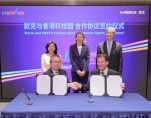
Witnessed by Dr Annika Bolten-Drutschmann, Consul General of Germany (Second row middle), Ms Cordelia Chung, Chairman of HKSTP (Second row first from left), and Mr Peter Yan, Director-General of the OASES (Second row first from right), Mr Terry Wong, Chief Executive Officer of HKSTP (Front row first from left), and Mr Rogier Janssens, President of Merck China (Front row first from right), signed the partnership agreement to establish their strategic partnership.
The HKSAR Government’s recently announced First Five-Year Plan places a strong focus on strategic industries, including life and health technology, artificial intelligence (AI), and new industrialisation, while the latest Policy Address sets out Hong Kong’s ambition to accelerate its development into an international health and medical innovation hub, progressively expanding access to the GBA, international markets, and capital markets. Arriving at a pivotal moment as Hong Kong I&T development enters a new phase, the partnership will bring together top-tier global scientific resources and inject fresh momentum into the city’s I&T sector.
Witnessed by Dr. Annika Bolten-Drutschmann, Consul General of Germany, Ms Cordelia Chung, Chairman of HKSTPand Mr. Peter Yan, Director-General of the Office for Attracting Strategic Enterprises (OASES), Mr. Terry Wong, Chief Executive Officer of HKSTP, and Mr. Rogier Janssens, President of Merck China, signed the partnership agreement. The signing was followed by the “Merck x HKSTP Groundbreaking Ceremony”, marking the official commencement of the Merck Hong Kong Centre and turning the partnership to a new chapter.
Mr. Terry Wong, Chief Executive Officer of HKSTP, said, “We are delighted to welcome Merck, a leading science and technology company, in establishing a strategic partnership with HKSTP and Hong Kong’s I&T ecosystem. As Hong Kong enters an exciting new phase of I&T development, collaboration with global leaders like Merck is crucial to foster the growth of the life and health tech sector. Our shared vision goes beyond offering physical space: we are bringing Merck’s advanced technologies, scientific expertise and global networks closer to our startups and researchers, helping them turn discoveries into practical solutions and explore opportunities for pilot projects, commercial partnerships and investment. Powered by the city’s unique positioning as the super connector between the Chinese Mainland and global markets, this partnership will catalyse collaboration between Merck’s global excellence in life sciences and HKSTP’s thriving ecosystem — taking the discovery and commercialisation of R&D results in the life and health sector to the next level, creating global impact and benefiting humankind.”
Mr. Rogier Janssens, President of Merck China, said, “Hong Kong’s first Five-Year Plan places innovation and technology at the heart of the city’s future, giving science and technology companies like Merck a clear direction for lasting engagement. For 358 years, Merck has advanced science and technology with a patient, generational outlook, and we are now deepening our presence in the Greater Bay Area’s innovation landscape. Merck Hong Kong Centre is the first step of that commitment in Hong Kong. Located next to HKSTP’s shared biomedical laboratory, it places our products and experts alongside the scientists and startups driving the research. We can help them build reliable, reproducible workflows from early experimentation to scale-up, and we can understand earlier what their science needs. Together with HKSTP, we aim to prove this approach in Hong Kong and replicate it elsewhere in China and beyond.”
Under the agreement, the collaboration will focus on four key initiatives:
Merck Hong Kong Centre: The dedicated physical facility at Hong Kong Science Park will provide Park startups and researchers with advanced scientific product supply, live demonstrations of cutting-edge technologies and expert consultation services. The Centre will serve as a physical hub connecting local innovators with Merck’s technology resources.
Training and Consultation Initiative: Connecting Merck’s industry experts with HKSTP’s startups and researchers through technical training, clinical advisory and professional consultation services to promote knowledge exchange and strengthen research and application capabilities.
Innovation Scouting Program: Establishing a structured mechanism to identify, evaluate and connect high-potential startups directly with Merck’s global innovation network, exploring collaboration opportunities including commercial partnerships, proof-of-concept pilot projects and strategic venture investment opportunities.
Merck Innovation Day: An annual flagship event held at Hong Kong Science Park focusing on life science, healthcare and electronics, bringing together startups, academia and industry leaders to showcase innovations and foster cross-sector exchange and co-development.
HKSTP is committed to building a vibrant I&T ecosystem and is currently home to around 400 life and health technology companies, supported by comprehensive R&D infrastructure and one-stop support services that help turn ideas into real-world applications. The partnership will further connect Park companies with Merck’s global resources, while providing Merck with a platform to access emerging technologies, research talent and high-potential companies in Hong Kong and the GBA, fostering two-way innovation exchange and opening up long-term collaboration opportunities.
Hashtag: #HKSTP
The issuer is solely responsible for the content of this announcement.
HKSTP
More information about HKSTP is available at www.hkstp.org.
By T N Ashok NEW YORK: The latest diplomatic signals from Washington and New Delhi suggest that a prolonged India–US trade confrontation may finally be approaching a settlement. US President Donald Trump says a deal is close. Secretary of State Marco Rubio, after meeting External Affairs Minister S. Jaishankar in Mumbai on October 20, has […]
Madhya Pradesh has placed a proposed ₹6,200 crore advanced semiconductor packaging facility at the centre of its investment strategy as Chief Minister Mohan Yadav unveiled fresh technology commitments at the Semiconductor Summit 2026 in Indore.
The two-day summit, inaugurated on Friday at the Brilliant Convention Centre, attracted investment proposals worth approximately ₹5,800 crore, potentially generating more than 10,000 jobs. Separately, five companies received letters of intent for land allocation covering projects valued at ₹9,625 crore.
The proposed semiconductor facility, involving Paras Semiconductors, a subsidiary of Paras Defence and Space Technologies, represents one of the state’s largest identified investments in advanced chip packaging. The company signed a memorandum of understanding with the state government on July 22 for a greenfield outsourced semiconductor assembly and testing plant.
The project is planned for the Indore-Ujjain corridor, where the government has identified approximately 50 acres for development. Its proposed capabilities include advanced packaging technologies associated with increasingly complex semiconductor devices, although commercial production schedules and confirmed manufacturing capacities remain undisclosed.
Advanced packaging allows multiple semiconductor components to be integrated within compact assemblies, improving communication between chips and potentially reducing power consumption. Technologies involving three-dimensional integration are particularly relevant to artificial intelligence accelerators, high-performance computing and specialised processors.
The proposed plant has been described as incorporating sophisticated packaging and testing capabilities. However, claims that it will become India’s first operational 3D artificial intelligence chip packaging facility remain dependent on implementation, technical specifications and the commissioning of competing projects.
Yadav said the summit demonstrated growing interest among technology companies in establishing manufacturing, research and engineering operations in Madhya Pradesh. More than 1,000 delegates participated, including representatives from Japan, South Korea, Taiwan and Sweden.
The investment proposals announced during discussions included ₹1,800 crore from Spintronics AI Semiconductors for phased development and ₹1,200 crore from Lalwala Industries for semiconductor manufacturing and chip design activities.
Other prospective investors included companies operating in electronics manufacturing, semiconductor design, healthcare technology and associated services. The government indicated that the proposals would require further approvals and implementation agreements before their anticipated employment benefits could materialise.
Among the five companies receiving land allocation letters, Cytech RE proposed a ₹6,415 crore hyperscale data centre with a capacity of 50 megawatts at Ganga Malanpur in Gwalior. The project represents the largest individual investment covered by those letters.
Una Ecosystems proposed a ₹2,000 crore lithium-cell manufacturing facility in Bhopal, while Auriga IT Solutions outlined a ₹500 crore global capability centre in Indore. Meena Circuits and Kaynes Electronics proposed electronics manufacturing investments of ₹400 crore and ₹310 crore respectively.
These investments extend beyond semiconductor fabrication and packaging, reflecting the government’s broader effort to attract data infrastructure, electronics manufacturing and technology services. The distinction is significant because the aggregate investment figures announced at the summit encompass several industrial categories rather than semiconductor production alone.
Yadav also announced plans for a Semiconductor Centre of Excellence and a separate Centre of Excellence for Photonics and Quantum Technologies. Both institutions are intended to support research, chip design, innovation and specialised workforce development.
The Madhya Pradesh State Electronics Development Corporation exchanged memoranda of understanding with five institutions, including SEMI India, Semiconductor Laboratory in Mohali and the Electronics Sector Skills Council of India.
The agreements cover technical collaboration, training, research and industry engagement. Their implementation is expected to involve cooperation between government agencies, academic institutions and private companies seeking access to specialised semiconductor expertise.
The state’s Semiconductor Policy 2025 offers financial incentives for eligible projects, including capital assistance and subsidised electricity. Officials have presented these measures as instruments for attracting investment into a sector requiring substantial initial expenditure and dependable infrastructure.
Yadav assured participating companies of administrative assistance, including streamlined approvals, single-window clearances and access to electricity supplies. He also identified the Indore-Ujjain Economic Corridor as a priority location for semiconductor packaging, electronics manufacturing and chip design.
Seven additional companies received letters of intent for office accommodation at the Electronics Complex in Pardesipura, Indore. Their proposed activities include semiconductor design, engineering services, research, artificial intelligence applications and electronics development.
The allocations cover approximately 44,816 square feet and carry projections of 1,280 employment opportunities. Among the beneficiaries are ADT Semiconductors, Spintronics AI Semiconductors, H-Semi Products and Truechip Solutions.
The summit’s programme includes technical discussions on semiconductor supply chains, advanced packaging, fabless chip design, photonics, quantum technologies and workforce requirements, alongside exhibitions involving more than 50 participating companies.
Ericsson, Play and Asseco have demonstrated a system for detecting unauthorised drones in Poland, combining radio sensing, acoustic monitoring and mobile connectivity, but have not deployed the technology across the country’s 18,000 telecommunications sites. The companies disclosed details on Thursday of a live demonstration conducted on 15 October at Ericsson’s research and development centre in Kraków. The trial illustrated how existing communications infrastructure could support surveillance of […]
Cybercriminals penetrated Microsoft 365 accounts at 79 organisations during a coordinated campaign involving stolen authentication tokens, phishing and attempts to conceal fraudulent email activity, cybersecurity company Huntress has disclosed. The investigation, published on October 22, identified at least 497 successful sign-ins and more than 200,000 failed login attempts between July 14 and September 22. Researchers said attackers reused legitimate sessions captured through deceptive authentication processes, enabling access […]
New report sets out a method the industry can use to put a financial value on climate resilience
The Westbund Central case study shows that its resilience measures are expected to keep storm-surge and rainfall-flood losses in 2050 below the losses an unprotected building would face today
HONG KONG SAR – Media OutReach Newswire – 23 October 2026 – Hongkong Land Holdings Limited (“Hongkong Land”) today published Building Value That Lasts: Quantifying the Return on Climate Resilience in Real Estate. The report developed with Marsh puts a financial value on designing buildings for a changing climate. Its case study is Westbund Central, Hongkong Land’s mixed-use waterfront development of approximately 1.7 million sq. m. on Shanghai’s Huangpu River.
(From left to right) From left: Michael Long, Head of Group Sustainability, Hongkong Land; Stuart Grant, Chief Executive of Westbund Central, Hongkong Land; Swenja Surminski, Managing Director of Climate and Sustainability, Marsh; and Michael Li, Chairman and President, Marsh Risk China.
The report finds that the development’s resilience measures cut expected storm-surge losses by 84% and rainfall-flood losses by 88% under today’s conditions. Westbund Central’s resilience measures are expected to keep storm-surge and rainfall-flood losses in 2050 below the losses an unprotected building would face today.
Closing the resilience valuation gap
Climate risk now shapes how real estate is assessed, financed and insured. Almost every climate related disclosure acknowledges the need for adaptation, yet fewer than one in ten puts a number on it. Hongkong Land and Marsh set out to close that gap together by treating resilience as an investment with a measurable return, not a cost to be absorbed.
Resilience pays, and the reductions are large
Working with global leading insurance broker and risk advisor Marsh, Hongkong Land modelled the average annual loss (AAL) at Westbund Central from storm surge, rainfall flooding and wind. AAL is the expected yearly cost of physical damage. The modelling compared climate risks today and in 2050 for buildings with and without resilience measures beyond those required by building codes. It assumed a future in which global greenhouse-gas emissions remain high.
Without the development’s enhanced resilience measures, expected storm-surge losses would more than double and wind losses would more than triple by 2050. The measures reduce expected losses as follows:
storm-surge losses fall by 84%, both today and in 2050
rainfall-flood losses fall by 88% today and 79% in 2050
wind losses fall by 36% today and 31% in 2050
Built for the climate of 2050
Westbund Central was engineered for projected climate conditions in 2050, rather than historical conditions. These measures significantly reduce the impact of increasing climate risk:
Storm surge: with Westbund Central’s resilience measures in place, average annual losses in 2050 are projected at 0.12%, compared with 0.38% for a building without these measures today.
Rainfall flooding: with the resilience measures in place, average annual losses in 2050 are projected at 0.05%, compared with 0.19% for a building without these measures today.
Insurers are raising premiums, tightening terms and withdrawing cover from exposed locations. In that market, a lower and more stable loss profile matters.
Westbund Centrals resilience features include:
23% more drainage capacity, protecting against a 1-in-100-year rainfall event
Grade 1 waterproofed basements and the elevation of critical equipment
A “Sponge City” network of more than 12 features designed to capture and store stormwater, with capacity exceeding 2,000 m³
The figures are conservative. They count physical damage only and exclude extreme heat, the fastest-growing hazard at the site, which the development manages through design and operations.
Michael T. Smith, Group Chief Executive of Hongkong Land, said: “Climate change is a significant force reshaping real estate. At Westbund Central, climate resilience is core to all that we do because we believe resilience and commercial performance reinforce each other. This report shows the return on that investment can be measured today, with tools that already exist. The industry no longer has any excuse not to.”
Stuart Grant, Chief Executive of Westbund Central, said: “A premium destination is a seamless one. Much of the resilience work at Westbund Central is deliberately invisible to the tenants and visitors who use it every day. Its value shows in the disruption that never reaches them. Keeping the precinct open, comfortable and trading regardless of weather conditions is how resilience facilitates commercial performance.”
Michael Li, Chairman and President of Marsh Risk China, said: “Climate risk is now a balance-sheet risk. Westbund Central shows that adaptation pays back through lower loss exposure and stronger access to capital. As a risk orchestrator, Marsh matches protection needs to capital flows, helping clients quantify resilience and close the valuation gap.”
A method for the industry
The report is offered as a method others can apply, not just as an account of one development. It traces how climate risk can be assessed from site selection through to operations and linked to financial outcomes. It calls on the industry to:
quantify early, at site selection and design, when action is most cost-effective
bring insurers and lenders in from the start
build a shared standard so resilience can be benchmarked across assets, as carbon already is
For further details, please see the full report which is available for download [here].
Hashtag: #HongkongLand
The issuer is solely responsible for the content of this announcement.
Westbund Central
Hongkong Land’s Westbund Central is the Group’s largest-ever single investment. Scheduled to complete in phases up until 2028, it is an US$8 billion development encompassing approximately more than 1.7 million sq. m. of prime mixed-use property strategically located at Shanghai’s Xuhui Waterfront. It is a flagship development of Hongkong Land’s prime commercial properties’ CENTRAL Series. The ultra-premium integrated commercial property includes 240,000 sq. m of retail space, 650,000 sq. m. of premium Grade A offices, 160,000 sq. m. of high-end waterfront luxury residences, two hotels (55,000 sq. m.) and over 50,000 sq. m. of cultural and art venues.
Hongkong Land
Hongkong Land is a major listed property development, investment and management group. It focuses on developing, owning and managing premium and ultra-premium mixed-use real estate in Asian gateway cities, featuring Grade A office, luxury retail, residential and hospitality products. With over US$50 billion in assets under management, Hongkong Land’s ultra-premium mixed-use real estate footprint spans over 1.97 million sq. m. lettable area in operation and 1.43 million sq. m. lettable area under development, with flagship mixed-use projects in Hong Kong, Singapore and Shanghai. Its properties hold industry leading green building certifications and attract the world’s foremost companies and luxury brands. Established in 1889, Hongkong Land takes a long-term view, investing significantly alongside its capital partners and concentrating its portfolio where it can create the most value for tenants, customers and investors. Hongkong Land Holdings Limited has a primary listing on the London Stock Exchange, with secondary listings in Singapore and Bermuda. Hongkong Land is a member of the Jardine Matheson Group.
Marsh Marsh (NYSE: MRSH) is a global leader in risk, reinsurance and capital, people and investments, and management consulting, advising clients in 130 countries. With more than 95,000 colleagues, Marsh helps build the confidence to thrive through the power of perspective. For more information, visit marsh.com, or follow us on LinkedIn and X.
Arabian Post Staff -Dubai Emaar Hospitality Group has confirmed the opening of Emaar South Golf Club in Dubai South, adding an 18-hole championship course to its leisure portfolio and expanding golfing facilities near Al Maktoum International Airport. The club welcomed its first players on 5 October and becomes the group’s fourth golf club. Designed by European Golf Design, the course measures 7,278 yards from the black tees, […]
By Dr. Gyan Pathak Denotification of Jantar Mantar as protest site on 12 October 2026 has given anti-CEC and anti-SIR protesters to decentralize and widen the scope and ambit of the movement. The call for the nationwide street protest on October 23 given by the umbrella organization People Against SIR is likely to create numerous […]
Aldar Education has signed a memorandum of understanding with education technology company Toddle to introduce a unified learning management system across its 13 operated schools in Abu Dhabi, consolidating teaching, assessment and reporting while incorporating artificial intelligence into classroom activities. The agreement, announced on Thursday, October 22, will establish a common digital platform for schools delivering British, American and International Baccalaureate curricula. Implementation will proceed in phases, […]
KUALA LUMPUR, MALAYSIA – Media OutReach Newswire – 21 October 2026 – UEM Edgenta Berhad (“UEM Edgenta” or “the Company”), a leading Asset Management and Infrastructure Solutions company, today announced the launch of its inaugural Young Entrepreneurship Programme (YEP), a new initiative developed to identify, train and mentor young entrepreneurs within the Company’s vendor ecosystem. The inaugural cohort comprises six vendors from UEM Edgenta’s Infrastructure Solutions and Asset Management business ecosystems, marking the start of a structured, multi-phase journey towards operational readiness and long-term business growth.
The six vendors were selected through a rigorous, multi-tiered screening process. Companies were assessed against eligibility criteria centred on youthful leadership and business track record, before undergoing desktop audits, pre-assessments and site visits benchmarked against the Malaysia Business Excellence Framework (MBEF). Vendors demonstrating the required readiness, strategic relevance to UEM Edgenta and potential for sustainable growth were shortlisted for the inaugural cohort.
YEP is designed to build on the success of UEM Edgenta’s existing Vendor Development Programme, with a sharper focus on empowering young business owners. The programme aims to develop industry-ready vendors that meet UEM Edgenta’s operational and compliance standards, while strengthening their long-term business viability. In doing so, YEP supports the aspirations of Rancangan Malaysia Ke-13 (RMK13) to raise the socioeconomic standing of the rakyat, particularly through youth empowerment, digital innovation, financial inclusion, and Technical and Vocational Education and Training (TVET).
To deliver the training component, the Company has forged strategic partnerships with Institut Keusahawanan Negara (INSKEN) and the Construction Industry Development Board (CIDB) Malaysia. INSKEN will lead training on business model development, leadership, and strategic planning, culminating in an INSKEN certification, while CIDB will provide technical training on tender, contract, and financial management as well as management systems, supporting participants’ compliance and competitiveness within the construction and infrastructure industry. These external modules are complemented by internal business training delivered through Edgenta Academy.
Shaiful Subhan, Managing Director/Chief Executive Officer of UEM Edgenta, said the programme reflects the Company’s commitment in nurturing a resilient and future-ready vendor base. “As we look ahead, we want to build a supplier ecosystem that is diverse, competitive and driven by capability and performance. We believe opportunities should be earned through commitment, quality and willingness to grow, not simply by how long a company has been in business. A strong supply chain is not built overnight. It is built by investing in people, developing capabilities and creating long-term partnerships that grow together,” he said.
Beyond its immediate vendor ecosystem, UEM Edgenta views YEP as a platform to contribute to the broader national agenda of socioeconomic mobility, helping young business owners transform innovative ideas into commercially viable ventures that, in time, create new employment opportunities within their own communities. The inaugural cohort has been intentionally kept small to allow for high-quality, intensive mentorship and customised training. The Company will evaluate the outcomes of this inaugural batch to guide future investment and the potential expansion of the programme to a wider pool of young entrepreneurs in subsequent years.
The issuer is solely responsible for the content of this announcement.
About UEM Edgenta
UEM Edgenta Berhad (“UEM Edgenta”), a wholly-owned subsidiary of UEM Group Berhad, is an Asset Management and Infrastructure Solutions company that delivers integrated, end-to-end solutions across the entire asset lifecycle, combining engineering excellence in design, project management and asset consultancy with tech-enabled asset management capabilities to optimise asset performance, efficiency and resilience.
With operations across Malaysia, Singapore, Indonesia, Taiwan, the United Arab Emirates and the Kingdom of Saudi Arabia, UEM Edgenta supports the reliable and sustainable performance of critical assets, including healthcare facilities, transportation networks and industrial infrastructure.
TONGXIANG, CHINA – Media OutReach Newswire – 20 October 2026 – The 2026 World Internet Conference Wuzhen Summit will open on Nov. 2, bringing technology leaders, researchers and companies to the historic water town as Tongxiang firms expand AI applications from commercial cleaning and autonomous delivery to industrial control and data-center cooling.
The CenoBot S5 autonomous cleaning robot undergoes real-world testing at a demonstration site in Tongxiang.
For Tongxiang, long associated with the annual internet conference, the summit is also a chance to demonstrate how local companies are commercializing AI technologies for customers at home and abroad.
Ahead of the event, reporters visited seven Tongxiang-based companies working in robotics, intelligent vehicles, synthetic data, industrial automation, logistics and computing infrastructure.
Singapore Changi Airport earlier this year placed a fourth order for commercial cleaning robots from CenoBots, a Tongxiang-based company whose machines are used in airports, supermarkets, hospitals, factories and warehouses.
CenoBots has sold products in more than 40 countries and regions. Its customers include Changi Airport, British retailer Tesco, the University of Minnesota and pharmaceutical company Novo Nordisk. This year, the company supplied about 600 autonomous cleaning robots for Tesco Express stores across the United Kingdom.
“Cleaning robots are appearing in more and more settings,” said Shen Jizhong, CenoBots’ co-founder and vice president. “It is much like electric vehicles becoming a familiar sight on the roads — a trend that is gathering pace.”
The company’s machines are adapted to different settings. Hospital robots must move through busy corridors without disrupting patient care, while those used in supermarkets navigate around shoppers and carts. Factory robots operate near forklifts, and airport models must handle both fine debris in carpeted areas and small obstacles on smooth floors.
CenoBots continues to refine its robots through real-world testing, focusing on reliable operation and consistent cleaning performance across diverse environments. The company has expanded its research, development and production facilities in Tongxiang from approximately 3,000 square meters in its early years to more than 20,000 square meters. Local malls, hospitals and sports venues have also served as long-term testing sites.
While CenoBots focuses on service robots, TEEMO is developing the vehicle platforms that support autonomous mobility. The company makes drive-by-wire skateboard chassis and core components for autonomous vehicles used in last-mile delivery, patrols and logistics.
Its standardized chassis can be equipped with different vehicle bodies and hardware for specific uses. One of TEEMO’s strategic customers, autonomous delivery-vehicle maker Zelos, was selected for all lots in China Post’s centralized procurement program for 7,000 autonomous delivery vehicles.
TEEMO’s customers already span the United States, the Middle East, India and Russia, said Zhang Yongjian, the company’s director of operations.
“In some overseas markets, distances are long, populations are dispersed and last-mile delivery is difficult to staff,” Zhang said. “Autonomous delivery vehicles have strong potential there, and overseas business will become an important growth driver for us.”
Other Tongxiang companies are concentrating on the data and perception systems that allow machines to function in physical environments.
Dayan Technology, founded in Tongxiang in May 2025, provides synthetic-data and toolchain services for autonomous-driving and humanoid-robotics companies. It combines real-world data collection, digital twins and simulated training environments to help developers train robots before they are deployed.
Its wearable devices record human movement and interactions with objects. A haptic glove uses liquid-metal and pressure sensors to capture hand gestures, finger movements and contact force. A multi-camera headset records a user’s visual field, body posture, hand movements and the position of nearby objects.
Dayan said its tactile-perception model can process touch signals in milliseconds. The technology is intended to help robots do more than identify objects visually: They can learn how firmly to grip an item, recognize when it is slipping and apply force without causing damage.
Freetech Intelligent Factory
Freetech is applying related sensing and decision-making capabilities to intelligent driving. The company develops intelligent-driving systems and 4D imaging radar for passenger and commercial vehicles, and said its technology has been selected for hundreds of vehicle programs.
Its ODIN AI platform supports products at different levels of driving automation. The radar is designed to complement cameras in heavy rain, fog, darkness and abrupt changes in light, including when vehicles enter or leave tunnels.
At its intelligent-manufacturing base in Wuzhen, Freetech is also using AI in production. An in-house system reads customer orders and calculates the components and materials needed for each production line before manufacturing begins. The company said the system has increased overall efficiency by more than 20%.
“Transportation combined with a specialized function will be an important direction for the future,” said Dr. Zhang Lin, Freetech’s founder and CEO.
Freetech sees potential applications beyond passenger vehicles, including robots, elder-care vehicles, mining equipment and agricultural machinery.
Beyond mobility, Tongxiang firms are using AI to address the complexity of industrial operations. Founded in 2019, Shuhan Technologies provides on-premises industrial AI for chemical plants, energy facilities and wastewater-treatment systems. Its AI-driven control layer continuously ingests data from central control systems and field sensors, identifies dynamic conditions and autonomously adjusts operating parameters in real time.
“Fundamentally, all industrial process challenges can be framed as control and optimization problems,” said Zhai Zhengjun, Shuhan’s Chief Technology Officer.
At a coal chemical plant with annual capacity of 1.2 million metric tons, Shuhan said its system reduced raw-material consumption by 6%. The company estimated that the deployment generated more than 176 million yuan, or about $26 million, in annualized economic benefits and reduced carbon emissions by more than 500,000 metric tons.
SENAD is targeting bottlenecks in logistics operations, including loading, unloading, sorting and pallet handling. It develops autonomous loading and unloading robots, as well as a multimodal logistics model called Robot Insight, for sectors including beverages, tobacco, consumer goods, pharmaceuticals and logistics.
Tongxiang’s AI sector also includes companies addressing the infrastructure needed to run increasingly powerful computing systems. SynthCool is tackling a basic constraint of the AI boom: heat.
SynthCool develops two-phase liquid-cooling systems to address the heat generated by increasingly powerful processors. Inadequate cooling can trigger thermal throttling, reducing performance and energy efficiency.
“Heat dissipation is infrastructure,” said Zhu Zhijiang, SynthCool’s general manager.
SynthCool’s two-phase cooling technology uses the latent heat of vaporization to remove heat from processors. The cooling fluid absorbs heat and boils into vapor, which is then condensed back into liquid and recirculated.
Depending on ambient conditions and system design, two-phase cooling can also support free cooling and reduce reliance on compressor-based refrigeration. Waste heat may be recovered where temperatures and local demand make reuse practical.
According to SynthCool, its technology supports heat dissipation of more than 3,000 watts per chip and heat flux above 250 watts per square centimeter. Under comparable cooling requirements, the system requires approximately one-third of the flow needed by conventional single-phase water-cooled cold plates, helping reduce piping requirements and pumping demand.
SynthCool’s portfolio includes two-phase direct-to-chip and immersion cooling solutions, along with distribution units and control systems for AI data centers.
Hashtag: #Tongxiang
The issuer is solely responsible for the content of this announcement.
Initiative offers 1,000 free paediatric eye examinations, 1,000 free adult myopia screenings and a planned three-year myopia-control trial
HONG KONG SAR – Media OutReach Newswire – 20 October 2026 – As part of its mission to eliminate avoidable vision loss, Orbis and the LKS Faculty of Medicine of the University of Hong Kong (HKUMed), partnered to tackle the growing, lifelong burden of short-sightedness (myopia) across Hong Kong. The joint initiative highlights how myopia takes root early in primary school and, if left unmanaged, poses a severe, sight-threatening risk in later life.
Rather than a minor inconvenience corrected by stronger glasses, unmanaged high myopia physically alters the structure of the eye, drastically increasing the lifetime risk of irreversible blindness. Drawing on insights from HKUMed’s academic research and data from the joint Orbis x HKUMed Vision Matters community screening project, this partnership provides a crucial wake-up call on how lifelong visual health is determined during childhood.
In direct response to this public health challenge, Orbis and the Department of Ophthalmology, School of Clinical Medicine, HKUMed, are taking immediate action by offering 1,000 free comprehensive eye examinations for local children. This initiative gives families immediate access to expert care, early detection, and evidence-based guidance to safeguard their children’s sight before permanent damage occurs. In parallel, free eye screening will be provided to 1,000 adults aged over 50 years with known myopia. The 1,000 paediatric eye examinations and 1,000 adult eye screenings are all part of the HKUMed 140 for the Community Campaign.
A Lifelong Threat: From Classroom to Later Life
The joint effort establishes a clear, connected narrative across two generations:
Myopia Starts Early: A 2025 HKUMed study conducted at the HKU Eye Centre examined 501 children aged 5–12 and found that nearly 40% suffered from myopia. These findings reinforce the urgent need for regular professional eye examinations, even when a child has not reported any vision problems.
Consequences Last a Lifetime: To evaluate the long-term impact, HKUMed researchers analysed 4,217 adults aged 50 and older through the Orbis x HKUMed Vision Matters: Glaucoma AI-ROTA Screening Project. The analysis revealed that 44.5% of older adults suffer from myopia, with 6.7% suffering from high myopia. Given the historical lack of recent large-scale Hong Kong data based on objective eye measurements in this demographic, these findings represent an important public health update.
Clear Vision Does Not Remove Risk: Myopia develops when the eye grows excessively long, causing distant objects to appear blurred. While glasses can correct distance vision, they do not shorten an elongated eye or eliminate the long-term risks associated with high myopia, including retinal disease, glaucoma, cataracts, and permanent sight loss.
In the adult analysis, visual impairment or blindness was roughly twice as common among individuals with myopia and more than four times (6.3% vs. 1.5%) as common among those with high myopia, compared to those without myopia. Glaucoma—the leading cause of irreversible blindness—was also nearly twice as prevalent among people with high myopia compared to those without (13.1% vs. 6.8%). Together, these findings highlight the critical importance of identifying and managing myopia early, before it progresses into high myopia.
Practical Action: Free Screenings and Clinical Solutions
To bridge medical evidence with practical community action, Orbis and the Department of Ophthalmology, School of Clinical Medicine, HKUMed are rolling out complementary initiatives. The 1,000 paediatric examinations and 1,000 adult screenings are all part of the HKUMed 140 for the Community Campaign:
1,000 Free Paediatric Examinations: Providing local families with comprehensive eye checks to help identify eye problems early and obtain professional advice on appropriate follow-up care and myopia management.
Free Eye Screening for 1,000 Adults with Myopia: Providing free eye screening to 1,000 adults aged over 50 years with known myopia.
Landmark “2027 Children Myopia Control Study”: Supporting a three-year HKUMed clinical trial to evaluate three advanced intervention strategies among children aged 5–12: 0.05% atropine eye drops, optical defocus spectacle lenses, and a combination of both therapies.
AT A GLANCE
Children: 39.7% of 501 children aged 5–12 screened had myopia.
Adults: 44.5% of 4,217 participants aged 50+ had myopia; 6.7% had high myopia.
Impact: Visual impairment or blindness affected 6.3% of adults with high myopia, versus 1.5% without myopia.
Action: 1,000 child exams; 1,000 screenings for myopic adults over 50. All are free under the HKUMed 140 for the Community Campaign.
Next step: Three-year trial of 0.05% atropine, defocus spectacle lenses, and combined therapy.
Leadership Quotes:
Professor Chak-sing Lau, Vice-President and Pro-Vice-Chancellor (Health) and Deanof Medicine, HKU:
“Myopia is an increasingly important public health challenge that places a substantial lifelong burden on individuals and society. Through the HKUMed 140 for the Community Campaign, these initiatives reflect our longstanding commitment to translating academic excellence into meaningful benefits for the community. HKUMed is dedicated to transforming pioneering research into real-world health benefits. Through our partnership with Orbis, we seek to integrate clinical excellence, technological innovation, and population health research to lessen the impact of myopia and its complications in Hong Kong, while providing robust scientific evidence to guide eye health policy and clinical practice in the region. Together, we are working to safeguard the long-term visual health of schoolchildren and the wider population.”
Kathleen Sherwin, President and CEO of Orbis International:
“This partnership connects community service directly with research. The adult screening programme gives us a clearer view of the long-term burden of myopia, while the children’s examinations and planned trial focus on acting earlier. Together, Orbis and HKUMed are turning evidence into practical steps to protect sight.”
Mary Lau, Director of Orbis Hong Kong:
“Parents should see myopia as a condition that needs active management, not simply stronger glasses. By offering 1,000 child exams; 1,000 screenings for myopic adults over 50, we want to help more families identify problems early, obtain professional advice and take action to protect their different generation’s sight.”
Professor Christopher Leung Kai-shun, Albert Bing-Ching Young Professor in Ophthalmology, Chairperson and Clinical Professor, Department of Ophthalmology, School of Clinical Medicine, HKUMed:
“Vision Matters is showing us that myopia is an important part of the eye-health burden among Hong Kong’s over-50s. Glasses can correct blurred vision, but they cannot reverse the excessive growth of the eye or eliminate the risk of permanent sight loss associated with high myopia. The earlier we act, the greater the opportunity to protect sight over a lifetime.”
Dr Helen Zhang, Principal Investigator of the 2027 Children Myopia Control Study; and Clinical Assistant Professor, Department of Ophthalmology, School of Clinical Medicine, HKUMed
“This trial will compare eye drops, myopia-control lenses and both treatments combined. We aim to provide clearer evidence to help families choose the right approach for their children.”
Dr Kendrick Shih, Investigator of the 2027 Children Myopia Control Study; and Clinical Associate Professor of Practice,Department of Ophthalmology, School of Clinical Medicine, HKUMed:
“Myopia can worsen without obvious warning signs. Regular monitoring and timely treatment can help protect a child’s vision for the future.”
What Parents Can Do
Prioritize Annual Checks: Arrange regular professional eye examinations rather than waiting for visual symptoms to appear.
Explore Clinical Control Options: Seek advice from a qualified eye-care professional if myopia is detected.
Look Beyond Standard Glasses: Discuss evidence-based myopia-control options instead of relying only on stronger prescriptions.
Encourage Healthy Visual Habits: Encourage outdoor time, regular breaks from close work, and maintain a comfortable reading distance.
Public Registration & Participation
Registration will open in phases: Phase 1 (Now Open): Free eye screenings for children aged 5–12 (limited quotas, first-come, first-served). Online Registration: https://forms.cloud.microsoft/r/CzitVUBgJQ
Phase 2 (Coming Soon): Free eye screenings for myopic adults aged 50 or above. Details will be announced on the HKU portal and official Orbis channels.
Hashtag: #Orbis #HKUMed #Myopia
The issuer is solely responsible for the content of this announcement.
Arabian Post Staff -Dubai Azizi Developments has begun preliminary work on workforce accommodation projects in Dubai and Sharjah designed to house more than 31,000 people, with phased completion scheduled through late 2027. The developer’s largest planned community, at Al Sajaa in Sharjah, will accommodate more than 20,000 residents across 36 residential buildings. Site preparation is expected to start later this month, while enabling and shoring works are […]
Technology companies, start-ups and financial technology ventures could help lift India-UAE bilateral trade to $200 billion, a diplomat told a Dubai forum, identifying opportunities beyond established trade.
Vishnu Vardhan Reddy, Consul General of India in Dubai and the Northern Emirates, said innovation, renewable energy, defence and space technology could contribute to the next phase of economic expansion. He was addressing the Innovators and Investors Series organised by the Indian People’s Forum on October 16.
The proposal comes as both governments pursue a target of $200 billion in bilateral trade by 2032. Trade reached $101.25 billion during India’s 2025-26 financial year, exceeding $100 billion for a second consecutive year, according to official figures.
Reddy urged businesses and investors to establish partnerships capable of taking emerging enterprises into international markets. Investment in technology businesses, he argued, could create additional commercial activity while linking the UAE’s capital providers with enterprises developing products and services in India.
His remarks were an assessment, not a new government commitment or forecast backed by contracts. Achieving the target would require substantial expansion across multiple sectors, including those already accounting for the largest share of bilateral commerce. The $200 billion figure is a bilateral merchandise trade ambition, not a valuation of technology investments or start-up fundraising.
India’s exports to the UAE totalled approximately $37.36 billion in 2025-26, while imports were about $63.89 billion. The UAE remained India’s third-largest trading partner and second-largest export destination. India was the UAE’s second-largest trading partner, according to diplomatic trade data.
The technology emphasis follows a September meeting of the UAE-India High Level Joint Task Force on Investments, where officials agreed to advance work on local-currency settlement, payment-system integration and central-bank digital currencies. Those initiatives are intended to make financial transactions and cross-border commerce more efficient. Officials also discussed cooperation in financial infrastructure, an area where payment interoperability could lower friction for businesses operating in both markets.
The task force also examined investment proposals involving manufacturing, food processing and logistics. Projects discussed included an integrated aluminium complex proposed for Odisha, a food park in Gujarat and opportunities for aviation and logistics development at Dholera.
At the Dubai forum, speakers called for greater participation by UAE investors in start-ups seeking financing, commercial partnerships and access to international customers. The gathering connected entrepreneurs with businesses and potential financial backers.
Two enterprises, JE Plus Healthcare and University Living, presented their business models. JE Plus Healthcare focuses on distribution and logistics for healthcare products, while University Living provides accommodation services for students studying away from home. Both were seeking investment to expand their operations. Their presentations illustrated the range of businesses seeking support, from physical supply chains to digital services for international customers.
Actor and investor Vivek Oberoi told participants that unsuccessful investments were part of entrepreneurship and that investors needed to recognise the lessons associated with business failures. He said he had invested in 35 companies, with mixed results across his portfolio.
Jitendra Vaidya, national president of the Indian People’s Forum, said stronger two-way investment could support commercial ties between the countries. The organisation’s business representatives encouraged investors to examine opportunities in technology, artificial intelligence, machine learning and robotics.
Mahesh Advani, convenor of the forum’s business council, urged UAE investors to consider start-up financing. Piyush Jhunjhunwala, co-convenor of its business and professional council, identified technology-led businesses as a potential destination for private capital.
Figures circulated at the event described a substantial start-up and venture investment ecosystem in India, including companies operating in financial services and advanced technology. However, the figures covered different categories of businesses and financing activity, making direct comparisons difficult without consistent definitions and reporting periods.
The bilateral trade framework rests on the Comprehensive Economic Partnership Agreement, which entered into force in May 2022. It reduced trade barriers across numerous product categories and provided a platform for wider business cooperation. Trade volumes nevertheless remain sensitive to energy prices, demand conditions and changes in the composition of imports and exports.
Government initiatives now include Bharat Mart, intended to support access to markets, and a Virtual Trade Corridor designed to simplify trade processes. Both form part of efforts to improve the movement of goods and information between the two economies.
The Dubai forum was organised by the Indian People’s Forum, a community organisation that also conducts business and professional networking activities in the UAE.
Circle is preparing to enter approximately 40 emerging and developing markets as demand for dollar-backed digital currencies accelerates, chief executive and chairman Jeremy Allaire said. The expansion will target economies across Southeast Asia, Latin America, Africa and the Middle East, where individuals and businesses are increasingly using stablecoins for payments and access to digital financial services. Allaire outlined the plans during the International Monetary Fund and World […]
Xiaomi has begun distributing the stable version of HyperOS 4 to selected smartphones and tablets in China, introducing changes to memory management, application performance and the underlying software architecture. The rollout started on October 15, following a beta programme launched in August, and is being conducted in batches rather than through a simultaneous release to every eligible device. Owners may therefore receive the update on different dates […]
SINGAPORE – Media OutReach Newswire – 15 October 2026 – Held on 11 October 2026 at Shangri-La Rasa Sentosa in Singapore, AIMCONNECT 2026 gathered industry leaders from 11 countries under the theme “Where Mobility Meets the Future.” Organised by X Star Technology and Aimotion, the event welcomed representatives from more than 100 automotive organisations, over 60 financial institutions and around 20 technology companies to explore how collaboration across industries can create a more connected mobility ecosystem.
The event was opened by Tin Pei Ling, Member of Parliament, and Dato’ Tony Khor Chong Boon, President of the Federation of Motor and Credit Companies Associations of Malaysia (FMCCAM). Through keynote presentations, panel discussions and live technology demonstrations, participants examined how AI-driven solutions can improve customer experiences while ensuring transparency, security and responsible decision-making.
AIMCONNECT 2026 Highlights the Shift Towards Connected Mobility
During the keynote address, “The Next Mobility Economy: Intelligence, Connection, Trust,” X Star Technology CEO Shawn Yang highlighted the growing gap between consumers’ digital engagement and completed automotive transactions.
Shawn Yang noted that consumers increasingly begin their vehicle purchase journey online, with research showing strong demand for AI-supported decision-making. According to figures shared during the keynote, 90% of car buyers conduct online research before visiting dealerships, 63% expect to use AI during their next vehicle purchase and 67% believe AI will influence their financing decisions.
However, the automotive journey remains fragmented. Customers often move between dealerships, financing providers and multiple systems, creating unnecessary friction during purchasing and ownership processes.
“Customers are not lost in one stage; they are lost to the friction between them,” Yang said. Yang said. The CEO explained that the next stage of mobility innovation requires closer cooperation between automotive companies, financial institutions and technology providers. Rather than improving isolated parts of the journey, the industry must create connected experiences that allow information, decisions and services to move more efficiently between stakeholders.
During AIMCONNECT 2026, technology demonstrations showcased emerging solutions designed to address these challenges. X Star Technology presented its Xport platform, demonstrating one-click lead-to-loan matching and real-time approval capabilities. Aimotion, MStar, AI Wingman and MK.X also introduced their latest innovations, highlighting the potential of AI-enabled tools across the automotive value chain.
Building Trust as AI Takes a Greater Role in Decision-Making
A key theme throughout AIMCONNECT 2026 was the importance of trust as artificial intelligence becomes increasingly involved in customer-facing processes.
While AI can improve speed and efficiency, industry leaders emphasised that technology must operate within clear boundaries. Decisions involving financing, customer eligibility and financial commitments require transparency, human oversight and accountability.
Yang introduced X Star Technology’s proprietary Harness framework, which combines AI operating boundaries, human supervision and traceable data management. The framework is designed to ensure that AI systems operate within authorised parameters while allowing complex cases to be escalated for human review.
“In auto finance, a single flawed decision risks customer harm and regulatory non-compliance. For AI to operate across the customer journey with true autonomy, trust cannot be an afterthought; it must be engineered into the architecture from day one,” Yang said.
The discussions also highlighted the importance of balancing personalisation with privacy. While consumers increasingly expect services tailored to their needs, excessive automation or unnecessary intervention may reduce trust. Effective AI solutions must therefore combine intelligence with appropriate restraint.
Strengthening Connections Across the Auto Finance Ecosystem
Another major discussion at AIMCONNECT 2026 focused on how stronger collaboration between automotive companies, financial institutions and technology providers can create a more efficient and trusted financing experience.
During the panel discussion “Building a Connected Auto Finance Ecosystem,” moderated by MStar CEO Zhang Peng, industry representatives explored the role of data connectivity, cybersecurity and responsible technology adoption in shaping the future of automotive finance.
Speakers from Deloitte, Deutsche Bank, The CEO Circle and JWT Bespoke examined how financial institutions and mobility businesses can use technology to improve decision-making while maintaining customer confidence.
“Better data infrastructure and connectivity can help the industry make more informed financing decisions, but technology must go hand in hand with trust,” Zhang said.
The discussion emphasised that connectivity is not simply about collecting more data. A truly integrated ecosystem requires organisations to establish clear principles for how information is shared, protected and used. Customers must also understand what information they provide and how it contributes to a better service experience.
Matthew Duncan, Director and CEO of JWT Bespoke, highlighted the importance of balancing innovation with consumer protection, drawing from Australia’s experience in automotive and financial regulation.
“Regulation works best when it protects customers and still gives the industry room to improve how people buy and finance their cars,” Duncan said.
Exploring the Future of Vehicle Ownership
Beyond financing and transactions, AIMCONNECT 2026 also examined a broader question facing the mobility industry: how will consumers define vehicle ownership in the future?
The rise of leasing, subscription services, car-sharing and ride-hailing has expanded consumer choices, creating new possibilities beyond traditional ownership models.
During the panel “The Future of Owning a Car,” moderated by Shawn Yang, industry leaders discussed how changing consumer expectations may influence future mobility behaviour.
An audience poll showed a closely divided perspective. While 54% of participants believed flexible mobility solutions could become the preferred choice within the next decade, 46% expected vehicle ownership to remain the dominant preference.
The result reflected the complexity of future mobility trends. Rather than replacing ownership completely, emerging mobility models may provide consumers with more options depending on their lifestyle, financial situation and travel needs.
James Ng, Managing Director of BYD Singapore and President of BYD Philippines, shared insights into BYD’s technology development journey.
“BYD’s first phase was electrification, delivering performance. The second phase is intelligence, using AI to enhance the customer experience. The third phase will focus on integration,” Ng said.
Xiao Ting, CEO of MK.X, noted that increasingly capable AI assistants could change how consumers approach mobility decisions.
“The decision may increasingly be less about owning a car and more about finding the right mobility solution for each journey,” noted the CEO.
Ng also highlighted the broader applications of BYD’s technology beyond vehicles, including Battery Energy Storage Systems (BESS) and renewable energy solutions that contribute to a wider technology ecosystem.
These developments suggest that the future mobility landscape will involve not only automakers, but also dealers, financial institutions and technology platforms adapting their services to meet changing consumer expectations.
AI Is Expanding the Vehicle Experience Beyond the Point of Sale
The role of artificial intelligence throughout the vehicle ownership lifecycle was another key focus at AIMCONNECT 2026.
During the panel “How Is AI Reshaping Mobility?” moderated by X Star Chief Technology Officer Michael Jia, industry experts discussed how AI can support consumers beyond vehicle selection and purchase.
Panel participants included Carson Zhang of Aimotion, Connor Liu of Google Cloud, Dr Harold Teng of MK.X Technology and Bryan Tan of Carro.
When delegates were asked where AI would create the greatest impact, personalised ownership services ranked ahead of vehicle selection, automotive financing and in-car intelligence. The results suggested that industry participants see significant opportunities in improving the ownership experience after purchase.
Bryan Tan, Chief Scientist at Carro Group and CEO of Carro Indonesia, explained that vehicle value assessment is becoming increasingly influenced by new data sources. For electric vehicles, factors such as battery condition and charging history are becoming important considerations alongside traditional indicators such as mileage.
Tan also noted that markets such as Singapore have unique considerations, including the impact of the Certificate of Entitlement (COE) system on vehicle value.
These examples demonstrate how advances in automotive technology are influencing areas beyond driving performance, extending into finance, resale value and long-term ownership decisions.
However, industry leaders agreed that AI adoption must remain focused on practical benefits.
“The focus must remain on delivering practical benefits, enhancing safety and making mobility more intuitive for consumers,” Dr Teng said.
Collaboration Will Define the Next Stage of Mobility Innovation
Across the discussions at AIMCONNECT 2026, one common message emerged: the future of mobility will be shaped by collaboration.
Automotive manufacturers and dealers must better understand customer needs and reduce unnecessary friction throughout the ownership journey. Financial institutions must improve efficiency while maintaining responsible lending practices. Technology providers must develop solutions that meet operational, regulatory and customer expectations.
For policymakers and industry stakeholders, the challenge will be encouraging innovation while maintaining public confidence.
“No single company can transform the entire mobility journey on its own,” Xiao Ting said.
Zhang highlighted that the success of future mobility solutions should be measured not only by speed and efficiency, but also by how effectively the industry works together to serve customers.
“Progress should be measured not only by how quickly a loan can be approved, but by how well the industry works together to serve the customer,” Zhang said.
AIMCONNECT 2026 demonstrated that artificial intelligence will play an increasingly important role in mobility, but technology alone will not define the future. The next phase of automotive transformation will depend on building systems that are intelligent, transparent and connected — supported by stronger partnerships across the mobility ecosystem.
Hashtag: #XStar
The issuer is solely responsible for the content of this announcement.
About AIMCONNECT 2026
AIMCONNECT 2026 brings together automotive leaders, dealers, original equipment manufacturers (OEMs), financial institutions, technology innovators and industry decision-makers to explore the future of automotive commerce and mobility.
Through industry dialogue, thought leadership sessions and live technology demonstrations, AIMCONNECT provides a platform for stakeholders to exchange insights and collaborate on the next generation of connected mobility solutions.
By Nitya Chakraborty An analytical article recently published in The Wall Street Journal on the latest trends in Chinese economy has led to an intensive discussions among the think tank and the Communist Party leadership in China. Finally the official position is that China is happy to remain as a developing country as a part […]
Dubai’s government and business leaders examined infrastructure investments, technology and economic priorities at the Mohammed bin Rashid Leadership Forum on Tuesday, outlining opportunities for cooperation across the emirate’s principal growth sectors. The gathering at Dubai World Trade Centre brought together 1,000 public and private sector leaders and specialists. Organised by the Mohammed bin Rashid Centre for Leadership Development, it covered aviation, trade, finance, tourism, property and urban […]
Thyssenkrupp Automotive Technology has inaugurated an engineering centre in Pune, expanding its international research network for vehicle software, electronic systems and advanced chassis technology.
The German automotive supplier said the facility, formally inaugurated on 8 October, already employs more than 120 engineers and is expected to increase its workforce to more than 300 over the coming years. It did not specify a deadline for reaching that target or disclose the investment involved.
Engineers at the Pune centre are working on software, hardware, systems engineering and mechanical development for customers internationally. Their responsibilities include embedded software, functional safety, cybersecurity and technologies associated with the next generation of steering and chassis systems.
The operation will collaborate with Thyssenkrupp’s development teams in other countries throughout product development, rather than concentrating exclusively on projects for the domestic vehicle market. The company described the facility as an integrated part of its global research and development organisation.
Viktor Molnar, chief operating officer of Thyssenkrupp Automotive Technology, said software, electronics and collaboration between engineering teams across countries were becoming increasingly important to the automotive industry. The Pune operation would provide additional development capacity for customers worldwide, he said.
The expansion reflects changes in vehicle engineering as software increasingly controls functions previously handled primarily through mechanical components. Steering and chassis systems now require developers to coordinate electronic hardware, embedded code and physical components while meeting stringent safety and security requirements.
Functional safety work concerns the identification and control of hazards arising from failures in electrical and electronic systems. Cybersecurity engineering addresses vulnerabilities that could expose connected vehicle functions to interference or unauthorised access. Both are integral to the development of more digitally controlled automotive systems.
The Pune engineers will contribute to customer programmes at different stages of development, including systems design and integration. Thyssenkrupp has not identified individual vehicle manufacturers whose programmes will be handled at the new location, nor has it disclosed specific contracts associated with the expansion.
Björn Erbe, a senior research and development executive in Thyssenkrupp Automotive Technology’s chassis business, said the intention was to establish a significant engineering operation integrated with the group’s international teams. Combining expertise based in Pune with the company’s existing technical resources would enable it to expand development activities, he said.
The centre is situated at Solitaire Business Hub 2 in Pune’s Baner-Balewadi business district. The company identified the city’s established automotive manufacturing sector, universities, engineering businesses and availability of software specialists as factors behind its choice of location.
Recruitment is expected to concentrate initially on software, hardware and mechanical engineering, with specialist capabilities added according to technical needs and customer demand. The company has also indicated that it sees opportunities to work with universities and the wider engineering community in Pune.
The company’s move also places engineering functions and prospective customer engagement in the same city, although it has not yet publicly said whether the new sales organisation will operate from the engineering premises. The plans for sourcing and sales are separate from the confirmed staffing figures for the development centre.
The engineering investment forms part of a broader plan to expand Thyssenkrupp Automotive Technology’s activities in India. The company is strengthening its sourcing operations and establishing a sales team in Pune to build relationships with vehicle manufacturers and pursue business locally.
Manufacturing is not included in the newly inaugurated engineering centre. Thyssenkrupp said it envisages establishing production capabilities in India only if it secures suitable customer projects. No factory location, investment commitment or production timetable has been announced.
The distinction means the confirmed expansion concerns engineering capacity, while local manufacturing remains conditional on commercial demand. The company has similarly not given a precise timetable for the next phase of staffing at the Pune development site.
Plans for the facility were first announced in 2025, and engineering operations were progressively established before the formal opening. The inauguration therefore marks an expansion of an existing development team rather than the beginning of work at an entirely unstaffed location.
Thyssenkrupp’s steering business also announced a partnership with L&T Technology Services in June 2025 for a Pune software development hub dedicated to safety-critical steering applications. That agreement provided for L&T Technology Services to establish and manage the hub on the steering business’s behalf. The latest inauguration announcement did not specify whether the two Pune operations share facilities or personnel.
Arabian Post Staff -Dubai Artificial intelligence is becoming embedded across government services, education, healthcare and transport in the UAE, as new adoption figures confirm the country retains the world’s highest measured rate of generative AI use. Microsoft’s latest Global AI Diffusion Report, covering the second quarter of 2026, places UAE usage at 73.3 per cent of the working-age population, up from 70.1 per cent in the first […]
Two companies affiliated with cryptocurrency market maker DWF Labs have sued custodian BitGo in London, seeking $141 million over allegations that it sold discounted tokens before contractual trading restrictions expired. DWF Maas and Falcon Digital filed the claim in the High Court, accusing BitGo of breaching agreements covering Falcon Finance’s FF token and ESPORTS tokens. They contend that premature transfers to cryptocurrency exchanges depressed prices and reduced […]
Elon Musk has said Tesla and SpaceX could eventually manufacture semiconductors better than established producers, arguing that their experience designing specialised industrial equipment could give their planned Terafab factory an advantage. Speaking by livestream at Saturday’s X Takeover gathering outside Tesla’s Gigafactory in Austin, Texas, Musk acknowledged that semiconductor production would be exceptionally difficult and offered no timetable for achieving his ambition. “I think it is accurate […]



 www.hkstp.org