News related to
Phase

SINGAPORE – Media OutReach Newswire – 29 December 2025 – Tanoto Foundation convened government leaders, international organisations, researchers, and civil society at the 2025 International Symposium on Early Childhood Education and Development (ECED), in Jakarta under the theme “ECED Ecosystem Synergy in Promoting the Best Start in Life.”

The symposium comes at a critical moment, as shared challenges across health, nutrition, education, and caregiving continue to shape early childhood development outcomes in Indonesia and globally, where many young children continue to face barriers to healthy development, from gaps in nutrition and care to limited access to quality early learning.

These challenges highlight the need for closer coordination across health, education, parenting, and social protection to ensure children receive holistic and equitable support from the earliest years.

Without strong cross-sector collaboration, Indonesia risks losing momentum in building its human capital and realising its demographic dividend towards Indonesia Emas 2045.

In partnership with key government ministries and cross-sector organisations, Tanoto Foundation convened the symposium as a platform to align policy, practice, and evidence across sectors, bringing together representatives from central and local government, international organisations, academia, civil society, and philanthropy.

The symposium featured two main discussion tracks focused on health and education, and parenting in early childhood.

The morning segment, “Synergising Health and Education for ECED”, focused on integrating health, nutrition, and early learning services, highlighting innovations in growth and development monitoring, nutrition interventions, and early stimulation within primary service systems.

The afternoon session, “Parenting and Early Learning”, placed families and caregivers at the centre of the ECED ecosystem, exploring responsive caregiving, interaction-based learning, and policy support to strengthen parents’ capacity to nurture children’s development.

Indonesian Minister of Health Budi Gunadi Sadikin officially opened the symposium, emphasising the decisive importance of early childhood for national development.

“The age of 0 to 5 years is a highly decisive phase in determining whether a person will grow into a healthy, intelligent adult who can contribute to the nation, including to increase per capita income,” the Minister said.

“If we do not act quickly, we risk missing Indonesia’s demographic dividend. This is our responsibility to our children.”

The Government of Indonesia has reaffirmed early childhood development as a national priority through the Long-Term National Development Plan 2025 to 2045 and the Medium-Term National Development Plan 2025 to 2029, with Holistic and Integrated Early Childhood Development (PAUD-HI) designated as a key performance indicator.

Opening the afternoon session, Indonesian Minister of Women Empowerment and Child Protection, Arifatul Choiri Fauzi, highlighted the symposium’s contribution to policy strengthening.

“This forum brings together strategic cross sector perspectives. We encourage the resulting recommendations to be used to strengthen policies, regulations, and service innovations for early childhood development,” she said.

Indonesian Deputy Minister of Higher Education, Science, and Technology, Prof. Stella Christie, underscored the importance of science-based parenting and high-quality interaction.

“Caregiving with optimal interaction between children and caregivers has the greatest potential to maximise child development,” she said. “No technology, including artificial intelligence, can replace the power of human interaction.”

She added that children learn through curiosity, imitation, and everyday experiences, making responsive and evidence-based parenting critical for brain development and lifelong learning.

CEO of Tanoto Foundation Benny Lee reaffirmed the Foundation’s long-term commitment to early childhood development as a cornerstone of human potential.

“The early years are when the foundations of brain development, health, and character are formed,” Benny said.

“This is not the work of one institution. It requires a truly supportive ecosystem built through collaboration among government, civil society, academia, and philanthropy.”

He emphasised that Tanoto Foundation, founded by Sukanto Tanoto, Founder and Chairman of Royal Golden Eagle (RGE), views early childhood development as a primary investment, where collective action can deliver lasting and sustainable impact. “This symposium is about ensuring that every child receives the strongest possible start in life, every parent receives the support they need, and every sector moves forward together,” he said.

The symposium brought together up to 200 participants, with speakers from government, development organisations, academia, research institutions, and philanthropy.
Hashtag: #RGE #TanotoFoundation #Philanthropy #Indonesia #ECED #EarlyChildhood #Healthcare

The issuer is solely responsible for the content of this announcement.

About Tanoto Foundation

At Tanoto Foundation, we unlock human potential, help communities thrive, and create lasting impact. Founded in 1981 by Sukanto Tanoto and Tinah Bingei Tanoto, we are an independent family foundation that believes in providing every person with the opportunity to realise his or her full potential. To do so, we catalyse systems change in education and healthcare. Our approach is impact-first, collaborative, and evidence-based. We invest for the long term and strive to develop leaders who can drive sustained, positive outcomes.

Stanford researchers have identified a biological pathway that helps explain why mRNA COVID-19 vaccines can, in very rare cases, trigger short-lived heart inflammation in younger males, while also pointing to possible ways the risk could be reduced without undermining vaccine protection. The findings add clarity to a safety signal that has been closely monitored by regulators and clinicians since mass immunisation campaigns began. Scientists at Stanford University […]

Price action across the two largest dog-themed memecoins has remained subdued as the market navigates a seasonal lull in participation, with traders pointing to thin liquidity and a largely technical backdrop rather than any shift in fundamentals. Dogecoin and Shiba Inu have moved within narrow ranges, reflecting a broader pause in risk-taking across crypto assets during the holiday period. Trading data from major exchanges show reduced volumes […]

Bitcoin’s upward momentum has softened after a sharp recovery phase, while XRP has slipped to about $1.86, underscoring a pause in risk appetite even as exchange-traded fund assets linked to XRP reach roughly $1.25 billion. The divergence highlights a market grappling with profit-taking, regulatory recalibration and shifting liquidity conditions across major digital assets. Bitcoin’s price action shows signs of consolidation following a rebound that drew fresh inflows […]

By K Raveendran Gold’s surge has turned a long-running Indian household instinct into a global macro trade. With spot prices pressing above the $4,500 an ounce mark late in 2025 and year-to-date gains running above 70 percent, the metal is headed for its strongest annual performance since 1979. The question now animating dealing rooms as […]

The article Gold’s Race To Magic $5000 Most Keenly Watched Milestone For 2026 appeared first on Latest India news, analysis and reports on Newspack by India Press Agency).

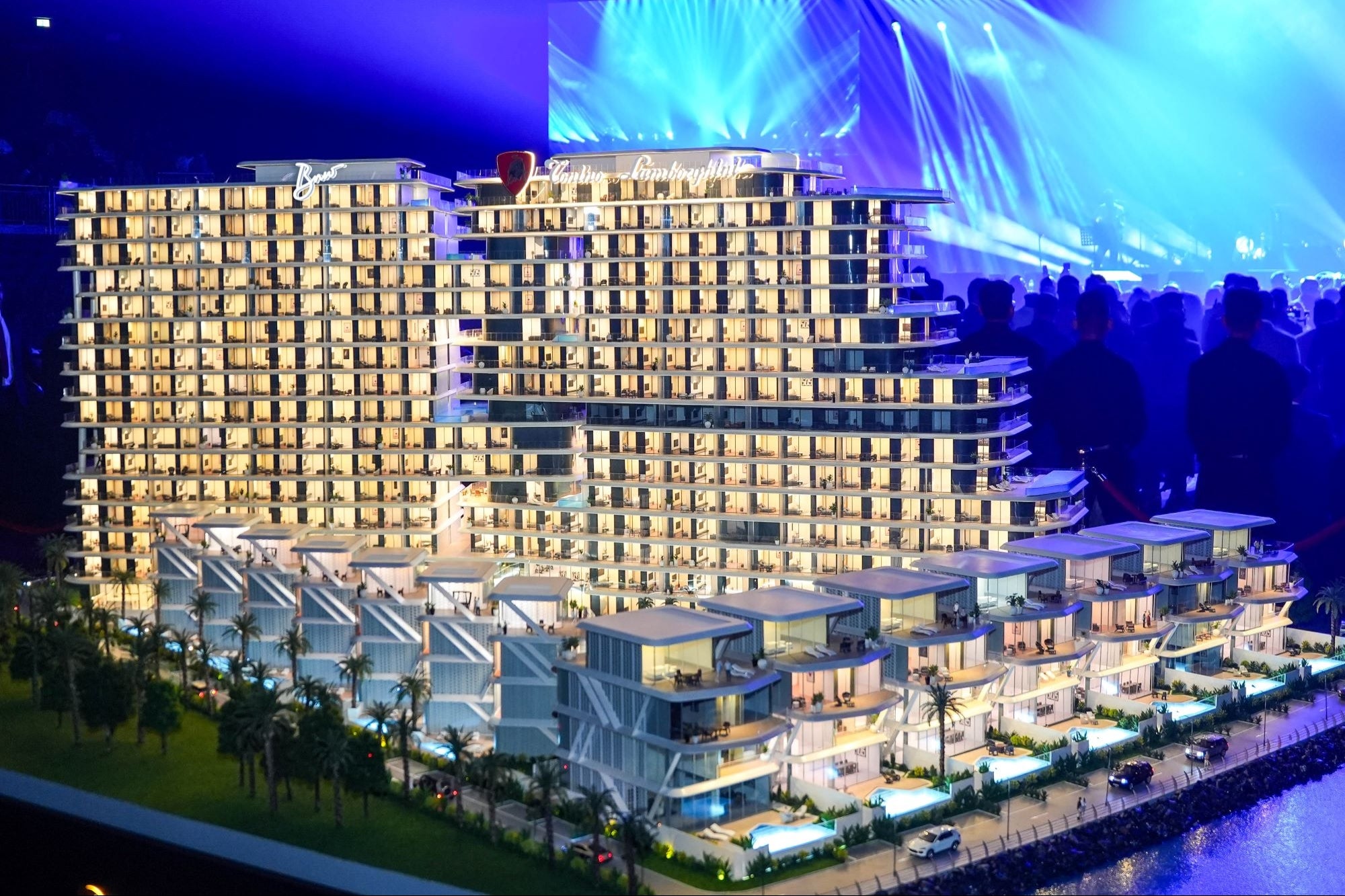
BNW Developments has unveiled the Tonino Lamborghini Residences on Al Marjan Island, marking the first time the Italian luxury lifestyle brand has anchored a residential project in Ras Al Khaimah and setting a new benchmark for branded waterfront living in the northern emirate. The launch positions the privately held developer behind what it describes as Ras Al Khaimah’s largest private real estate venture at the centre of a market drawing growing international investor interest.

The project brings together BNW Developments and Tonino Lamborghini, the brand founded by the son of the legendary Italian carmaker, to deliver a design-led residential community that blends Italian heritage with contemporary coastal architecture. Planned as a large-scale, master-planned development, the residences are set on Al Marjan Island, a man-made archipelago that has emerged as the emirate’s most prominent tourism and lifestyle hub.

Executives involved in the announcement said the collaboration reflects a deliberate strategy to move beyond conventional luxury offerings towards globally recognised branded residences that command long-term value. For Ras Al Khaimah, the development underscores a shift towards higher-end projects aligned with the emirate’s tourism and economic diversification agenda, particularly as hospitality, leisure and residential segments converge along the coastline.

The Tonino Lamborghini Residences are being positioned as ultra-luxury waterfront homes, with interiors inspired by Italian craftsmanship and modern European aesthetics. Design elements are expected to reflect the brand’s signature language, incorporating bespoke materials, curated finishes and lifestyle-focused amenities. While detailed specifications and unit pricing have not been formally disclosed, the developer has indicated that the project targets high-net-worth buyers seeking branded homes with strong rental and capital appreciation potential.

BNW Developments has expanded rapidly within Ras Al Khaimah’s real estate sector, capitalising on policy reforms, infrastructure spending and rising tourism flows. Al Marjan Island, in particular, has become a focal point for premium residential and hospitality investments, supported by new resorts, entertainment attractions and improved connectivity. Property consultants tracking the market say branded residences on the island are increasingly appealing to overseas buyers from Europe, Asia and the wider Middle East, drawn by comparatively attractive entry prices and long-term growth prospects.

The arrival of Tonino Lamborghini adds another internationally recognised name to the island’s evolving skyline, reinforcing a trend in which global lifestyle brands are lending their identity to residential projects across the UAE. Analysts note that branded developments typically command a premium over non-branded counterparts, supported by perceived quality assurance, curated services and brand-driven design consistency.

Industry observers also point to Ras Al Khaimah’s regulatory environment and measured approach to development as factors supporting sustained demand. Unlike more saturated markets, the emirate has emphasised phased growth, balancing tourism expansion with residential supply. This has helped maintain pricing discipline while attracting developers focused on differentiated offerings rather than volume-led construction.

For BNW Developments, the Tonino Lamborghini partnership is intended to elevate its profile beyond a regional developer into a player capable of executing globally benchmarked luxury projects. Company officials have described the residences as a long-term investment in brand equity, aligning the developer with an internationally known lifestyle name while contributing to the emirate’s ambition to compete with established luxury destinations.

Tonino Lamborghini’s leadership has framed the project as a natural extension of the brand’s presence in hospitality, accessories and interior design, translating its identity into a residential environment shaped by coastal living. The brand’s involvement is expected to extend beyond naming rights to include design oversight and lifestyle integration, a factor often scrutinised by buyers in the branded residences segment.

After decades of quiet, Can Gio is awakening on Vietnam’s southern coast, as fresh investment and grand designs breathe new life into the once-remote district of Saigon.

HO CHI MINH CITY, VIETNAM – Media OutReach Newswire – 27 December 2024 – Six months after the groundbreaking of a 2,870-hectare coastal urban project backed by Vingroup, Vietnam’s largest private conglomerate, Can Gio, once seen as a forgotten corner of Ho Chi Minh City, is now emerging as a new growth engine for Vietnam’s southern metropolis.

Vinhomes Green Paradise: A Hidden Gem Poised to Shine in Vietnam’s Real Estate Market.

Breaking Isolation

For years, Can Gio was often left out of the city’s rapid development. Surrounded by dense forests and accessible mainly by ferry, it remained a world apart. Now, that is beginning to change.

Six months ago, the large-scale land reclamation project officially started construction. Locals call it a “game changer” that awakened a land long left behind. Along the coast that once lay quiet, a vast construction site has emerged, with heavy machinery working day and night. “I was very surprised by the speed,” said Prof. Pham Van Song, president of the Mien Dong University of Technology, noting that hundreds of hectares have already been filled and stabilized within months.

The project, developed by Vingroup through its real estate arm Vinhomes, represents one of the group’s most ambitious coastal developments, part of a long-term vision to extend Ho Chi Minh City’s urban footprint toward the sea. With billions of U.S. dollars in investment, it combines housing, tourism, and modern infrastructure within a single master plan that anchors Can Gio’s transformation.

Complementing this project, a series of major infrastructure works are also reshaping the district. By the end of 2025, the Phu My Hung–Can Gio high-speed railway, designed to reach 350 kilometers per hour, is expected to begin construction, linking the area to the city’s southern urban core. In 2026, the long-awaited Can Gio Bridge will break ground, cutting the journey to the city center to around 45 to 60 minutes.

At the same time, the Rung Sac interchange, with an investment of 3,000 billion VND (about 120 million U.S. dollars), will connect Can Gio directly with the Ben Luc–Long Thanh Expressway. Expected to be completed in 2028, it will link Can Gio with both the Southwest and Southeast regions, including Long Thanh International Airport.

In addition, a sea-crossing expressway between Can Gio and Vung Tau, 50 meters wide and proposed by Vingroup, would stretch across the sea for more than 10 kilometers. The plan envisions a wide eight-lane road that could reduce travel between Can Gio and Vung Tau to under 15 minutes, creating a strategic connection between the two coastal economies.

These efforts fit within a broader regional plan that combines road, rail, water, and sea transport. Another key project is the Can Gio International Transshipment Port, covering 571 hectares with an investment of 50,000 billion VND. The port is designed to become a new symbol of Vietnam’s maritime economy, with its first phase scheduled to begin operations in 2027 and full completion before 2045.

“A Single Project Ignites the South”

According to Prof. Pham Van Song, the rise of Can Gio is a natural development, especially with the involvement of Vingroup through its Vinhomes Green Paradise project. He believes that Can Gio is moving from an ecological area on the fringe of development to a new center of growth. “All modes of transportation will be available in Can Gio,” he said. “The district’s GRDP will grow rapidly in line with ongoing construction and investment. Both the number of residents and visitors will surge. Local people will be the first to directly benefit from these projects, and their lives will become increasingly prosperous.”

The changes are already drawing attention from investors. Dinh Minh Tuan, southern regional director of Batdongsan.com.vn, said the number of searches related to Can Gio has tripled since the beginning of the year. After the Vinhomes Green Paradise project broke ground, property interest in the district doubled again. “Just one single project has heated up the entire southern market,” he said.

Experts say this follows a familiar pattern. In the 1990s, Nguyen Van Linh Boulevard helped turn southern Ho Chi Minh City into a thriving area and drew nearly two million residents. In the 2010s, the completion of the Thu Thiem Tunnel and Bridge attracted more than one million people to the city’s east. “Investors who followed the infrastructure development wave then saw huge gains,” Tuan noted. “Can Gio now stands at a similar starting point, but with a stronger push.”

With a population of about 80,000, Can Gio has long faced a single challenge: lack of connectivity. But, “with the series of large-scale investments now under way, Can Gio is expected to grow faster than many of the city’s earlier new urban areas,” said Tuan.
Hashtag: #Vinhomes

The issuer is solely responsible for the content of this announcement.

Advertisements

Dealmaking across the Middle East gathered pace through 2025, underscoring a shift from opportunistic transactions to targeted consolidation and long-term strategic bets. Mergers and acquisitions activity in the region posted a sharp rise in value, climbing 260 per cent to about $53 billion during the first nine months of the year compared with the same period in 2024, reflecting renewed confidence among corporate buyers and state-linked investors […]

CAN GIO, VIETNAM – Media OutReach Newswire – 25 December 2025 – In 2024, when Hines released its seminal report Why Asia Now, the message was simple yet profound: The world’s most compelling growth story was shifting eastward. At that time, global markets were turbulent but still predictable.

Vinhomes Green Paradise: A Hidden Gem Poised to Shine in Vietnam’s Real Estate Market.

A year later, the landscape has morphed into something far more complex, rippling with tariff shocks, persistent inflation, rising bond yields, and growth downgrades across traditional economic powerhouses. The world feels as if it is moving through a narrow channel, buffeted by waves from every direction. And yet, amid all the noise, Asia has not only held its ground but stepped forward with a clarity and confidence that few regions can match.

Why Asia Now: A New Era of Resilience, Growth, and Opportunity

The forces shaping Asia’s rise have been gathering momentum for decades. What we are witnessing now is their convergence. Asia is not simply adapting to global volatility, it is redefining the foundations of resilience and growth. Its economies are becoming wealthier, stronger, and more self-reliant, and its real estate markets are revealing layers of opportunity that long-term investors have waited years to see.

The near-term picture, though challenged, underscores this resilience. Tariffs have uneven effects, and countries with strong domestic engines such as Australia are absorbing shocks with surprising ease.

But it is the longer horizon that illuminates Asia’s true arc. The region’s working-age population and middle class have expanded at a breathtaking pace, setting the stage for decades of consumption-led dynamism. Education levels are rising, service sectors are flourishing, and manufacturing capabilities are climbing the value chain.

Meanwhile, intra-Asia trade has quietly become the backbone of global commerce, with Asia-to-Asia routes now forming the largest share of world trade. As the region turns inward, not in isolation, but in self-reinforcing collaboration, Asia ex-China is projected to contribute more to global growth than the United States and Europe combined.

Real estate, often seen as a mirror for economic sentiment, is telling a similar story. Transaction volumes across Asia have been less volatile than those in Western markets, and pricing has remained more stable, offering a predictable return profile. Supply constraints, elevated construction costs, and a decade-low pricing position relative to long-term trends are creating what can only be described as an extraordinary entry window.

Why Capital is Flowing into Vietnam

If Asia’s trajectory could be captured in a single idea, it would be the beginning of a Value Uprising, a structural rise in long-term asset worth, powered by demographics, policy, and economic integration, rather than speculation.

From this continental narrative emerges Vietnam, a nation whose ascent is increasingly impossible to ignore. Over the past decade, Vietnam has transformed from a rising star into a gravitational force for global investors. Supply chain diversification has accelerated its role as a manufacturing and logistics nexus. Even with global tariffs shifting, Vietnam’s logistics sector continues to expand in sophistication, efficiency, and international relevance. Its demographic profile, marked by a median age years younger than China, offers a demographic dividend that many Asian economies have already spent. And as Southeast Asia’s digital backbone grows, Vietnam is stepping into the spotlight as one of the region’s next major data-center markets, a signifier of future industrial depth.

Ho Chi Minh City, in particular, has entered a new chapter. Its standing among Asia-Pacific cities for investment and development has climbed steadily, reflecting not only macroeconomic resilience but the confidence of global capital. It has become a symbolic frontier, an emerging metropolis where the contours of modern Asia are being redrawn.

At the heart of Vietnam’s momentum lies another extraordinary phenomenon: The consistent and rising flow of remittances. Vietnam ranks among the world’s top recipients, and Ho Chi Minh City alone welcomed over USD 9.46 billion in 2023, USD 9.6 billion in 2024, and more than USD 5.3 billion in the second quarter of 2025.

A remarkable portion of these funds, around one-fifth, finds its way into real estate. But this is not passive investment. It is a gesture of return, of building a future homeland, of preparing for business, family, and retirement. It is long-term capital with long-term intent.

Vinhomes Green Paradise: A Hidden Gem Poised to Shine in Vietnam’s Real Estate Market

Regulatory reform is reinforcing this trust. The revised Land Law and Real Estate Business Law offer stronger protections and broader rights for Vietnamese citizens, including those living abroad. In a period where global currencies fluctuate and deposit rates decline, investors are increasingly confronting a hard truth: Holding cash is, in many cases, a slow erosion of value. As economist Can Van Luc notes, the VND has lost 3.4 percent of its value in two years, even as the USD depreciated. Real estate, therefore, is not merely an alternative, it has become one of the few asset classes capable of preserving and multiplying value in real terms.

Against this backdrop, regions entering new cycles of infrastructure development are drawing accelerated capital inflows. And among them, one name rises above all others: Can Gio.

For decades, Can Gio stood quietly at the edge of Ho Chi Minh City, an ecological jewel, admired but distant. Today, it has become the most powerful symbol of Vietnam’s coastal urban future. Massive infrastructure investment is reshaping its accessibility, and yet its real estate prices remain a fraction of central districts. Compared to Phu My Hung, Can Gio’s price base is nearly half; compared to Districts 1 and 3, just one-fifth. The gap is not a discount, it is untapped potential waiting to be realized.

The emergence of Vinhomes Green Paradise has pushed this transformation into global consciousness. As the first official participant in the New7Wonders “7 Wonders of Future Cities” campaign, the project is channeling the same catalytic energy once witnessed in iconic developments. Internationally, such recognitions do not merely elevate prestige, they accelerate valuation cycles, attract global capital, and redefine a city’s future skyline.

With its one-of-a-kind geographic formation and proximity to Can Gio’s million-year-old biosphere reserve, Vinhomes Green Paradise stands as a once-in-a-century asset. It embodies scarcity in its purest form, an asset class that cannot be replicated, reshaped, or reborn elsewhere.

And that is where the narrative converges. Asia’s rise, Vietnam’s momentum, Ho Chi Minh City’s evolution, and Can Gio’s emergence are not isolated stories. Together, they form a new investment epoch characterized by structural uplift, demographic acceleration, and a rapidly expanding middle class. It is the era of the Value Uprising, a phase in which the forces of economics, policy, population, and global capital align to propel real estate into a new price horizon.

In moments like this, markets rarely wait. History shows that investors who move early define the benchmark for everyone who follows. The question is no longer whether Asia will rise, or whether Vietnam will lead, or whether Can Gio will transform. The question, now, is whether investors will seize a moment that may not return for another generation.

Sources:

https://www.hines.com/asia-real-estate-opportunity-in-the-midst-of-uncertainty

https://knowledge.uli.org/-/media/files/emerging-trends/2026/emerging-trends-in-real-estate-2026-asia-pacific-report.pdf?rev=2036660434a44fa982b1ba913ffc2a2a&hash=87D5584C38EA219C1F1A50DC8E04FC7B

Hashtag: #Vinhomes

The issuer is solely responsible for the content of this announcement.

Stricter municipal requirements for private schools and learning facilities across Saudi Arabia have been issued by the Ministry of Municipalities and Housing, widening oversight of environmental quality, safety standards and urban planning as the kingdom continues to reshape its education landscape.

The updated framework applies to nurseries, kindergartens, schools and large educational complexes, covering private educational buildings established on land zoned for education as well as facilities built on government land leased to the private sector. It also extends to education facilities developed on plots allocated for commercial use, bringing a broader range of premises under a single municipal rulebook.

These revised rules aim to raise school standards, officials familiar with the changes say, by aligning environmental and safety benchmarks with national urban development goals. Municipal authorities will now assess new and existing private education facilities against clearer criteria for site suitability, building design, infrastructure access and community impact, with the stated objective of improving learning environments while reducing planning conflicts in fast-growing urban areas.

Environmental quality features prominently in the requirements. Schools and learning centres must meet stricter controls on waste management, ventilation, natural lighting and noise mitigation, particularly in densely populated districts. Municipal inspectors are expected to pay closer attention to how campuses manage traffic flow during peak hours and how outdoor spaces are designed to minimise heat exposure, reflecting broader sustainability priorities embedded in local planning codes.

Safety standards have also been expanded, with new specifications for emergency exits, fire prevention systems, accessibility for students with disabilities and safe pedestrian access. Facilities operating on leased government land will be subject to the same technical checks as those on privately owned plots, removing earlier ambiguities over compliance responsibilities between landlords and operators.

Urban planning considerations mark a significant shift in how private education projects are approved. The requirements link school licensing more tightly to neighbourhood zoning plans, population density and existing public services. Education facilities built on commercially zoned land must now demonstrate compatibility with surrounding uses, including retail and office developments, and show how student movement will be separated from heavy traffic and delivery routes.

Education sector specialists note that the changes reflect a growing emphasis on coordinated urban growth rather than piecemeal approvals. Private schooling has expanded rapidly over the past decade, particularly in major cities such as Riyadh and Jeddah, driven by demographic growth and rising demand for international curricula. Municipal authorities have faced mounting pressure to ensure that this expansion does not strain infrastructure or compromise safety.

Operators are being given clearer guidance on minimum plot sizes, building heights and setbacks, as well as requirements for green spaces and recreational areas. While the rules do not prescribe specific architectural styles, they emphasise functional design and durability, encouraging materials and layouts that support long-term use and lower maintenance costs.

For existing schools, the requirements introduce a phased compliance approach. Facilities already in operation will be required to align with the new standards within defined timeframes, with municipalities expected to prioritise critical safety and environmental upgrades. Education providers that fail to meet key benchmarks could face restrictions on licence renewals or limits on student capacity until deficiencies are addressed.

Private education investors and school operators are assessing the commercial implications. Some developers see higher upfront costs, particularly for projects planned on commercial land where redesigns may be needed to meet zoning compatibility rules. Others argue that clearer standards reduce regulatory uncertainty and improve asset quality over time, making compliant schools more attractive to parents and financiers.

The rules also intersect with broader national reforms aimed at improving quality of life and diversifying the economy under long-term development strategies. By tightening oversight of private education facilities, authorities are signalling that growth in the sector must be matched by higher standards of safety, sustainability and urban integration.

Municipal officials say enforcement will rely on closer coordination with education regulators to avoid duplication and ensure consistent interpretation of requirements. Digital permitting systems are expected to play a larger role in tracking compliance and scheduling inspections, although detailed implementation guidance is still being rolled out at the local level.

  By Umesh Sangaralingam The influx of private capital into Middle East markets is securing the region’s place as an evolving global investment hub. With sovereign wealth funds, institutional investors, family offices, and fund managers all increasing allocations, capital commitments are increasing at scale—but it’s not an equal field of opportunity for private investment firms in the region. Capital isn’t the sole defining factor that’s separating private […]

SINGAPORE – Media OutReach Newswire – 24 December 2025 – Woodfibre LNG recently marked 2025 as a year of significant progress across construction, environmental protection and community partnerships, as the project moved deeper into its development phase toward delivering responsibly produced Canadian liquefied natural gas to global markets.

Over the past year, the project advanced from planning into visible, on-the-ground execution. Major construction milestones included the pouring of foundations for key modules, continued progress on marine piling, and further implementation of modular construction techniques designed to reduce on-site footprint while accelerating delivery timelines.

These advancements were achieved through close collaboration with project partners, suppliers and contractors, and in partnership with the Sḵwx̱wú7mesh Úxwumixw (Squamish Nation).

In 2025, Woodfibre LNG, a member of the RGE group of companies founded by Sukanto Tanoto, continued to operate its floatel workforce accommodation solution, designed to minimise pressure on local housing and community services. As of November, two floatels were in active operation, providing high-quality, safe and comfortable living conditions for the project workforce while supporting construction efficiency.

Environmental protection remained a central focus throughout the year. The project’s Marine Mammal Monitoring Programme, which includes hydroacoustic monitoring, exclusion zones and shore-based observation posts, delivered measurable outcomes by enabling real-time operational decisions, including pauses to marine activities when marine mammals entered exclusion areas.

In parallel, remediation of legacy materials from the former pulp mill site continued, with hundreds of thousands of tonnes of historical waste removed. These efforts have contributed to improving site conditions for both local communities and marine and terrestrial ecosystems in Howe Sound.

Woodfibre LNG’s Operator Training Programme, delivered in partnership with the Squamish Nation Training and Trades Centre and the British Columbia Institute of Technology (BCIT), progressed throughout the year. The programme’s first cohort of graduates transitioned into full-time roles, supporting the development of long-term, skilled local employment opportunities linked to the project.

Through its Community Partnership Programme (CPP), Woodfibre LNG continued to invest in local communities across the Sea-to-Sky corridor. In 2025, the programme surpassed $1 million in total grants since its inception, supporting initiatives in sports, healthcare, emergency services, arts and culture, and youth development.

Luke Schauerte, CEO of Woodfibre LNG, said, “2025 has been a year of significant progress for Woodfibre LNG. We are proud of what our team and partners have accomplished together and look forward to building on this momentum in the year ahead.”

With more than half of the project’s development now complete, Woodfibre LNG remains focused on advancing construction safely and responsibly, while maintaining strong partnerships with Indigenous communities, local stakeholders and regulators.

As the project looks ahead to 2026, Woodfibre LNG continues its work toward delivering lower-carbon, responsibly produced Canadian energy to international markets.

Hashtag: #RGE #PacificEnergy #PacificCanbriamEnergy #WoodfibreLNG #LNG #environment #partnerships #LNG #liquefiednaturalgas #energy #sustainability

The issuer is solely responsible for the content of this announcement.

About Woodfibre LNG

The Woodfibre LNG Project is owned by Woodfibre LNG Limited Partnership, owned 70 per cent by Pacific Energy Corporation (Canada) Limited and 30 per cent by Enbridge Inc. The Woodfibre LNG facility is being built on the site of the former Woodfibre pulp mill site, which is located about seven kilometres southwest of Squamish, B.C. Woodfibre LNG will source its natural gas from Pacific Canbriam Energy, a Canadian company with operations in Northeastern British Columbia. Pacific Canbriam is an industry leader in sustainable natural gas production. Woodfibre LNG and Pacific Canbriam Energy are subsidiaries of Pacific Energy Corporation Limited. Woodfibre LNG is the first industrial project in Canada to recognise a non-treaty Indigenous government, Sḵwx̱wú7mesh Úxwumixw (Squamish Nation), as a full environmental regulator.

Japan has taken a decisive step towards restarting the Kashiwazaki-Kariwa nuclear power station, the largest such facility in the world by capacity, marking a pivotal moment in the country’s post-Fukushima energy policy. The move follows regulatory clearance and political backing after more than a decade of safety reviews, legal scrutiny and local opposition stemming from the 2011 nuclear disaster. The plant, located in Niigata prefecture on the […]

Boeing has appointed Omar Arekat as vice-president for the Middle East, Gulf and North Africa, a senior leadership move that places a long-serving regional executive at the helm of one of the company’s most strategically important markets. The appointment comes as aircraft demand across the region continues to be shaped by fleet expansion, widebody replacement cycles and sustained defence procurement.

Arekat, who will be based in Dubai, takes charge of Boeing’s commercial and defence engagement across a region where the aerospace group employs more than 700 people and supports over 30 commercial airline customers alongside 12 armed forces. His remit covers government relations, industrial partnerships, customer support and business strategy across markets ranging from the Gulf to North Africa.

The leadership change underscores Boeing’s intention to maintain continuity in a region that has long been central to its widebody sales, particularly for long-haul aircraft. Airlines in the Gulf operate some of the world’s largest fleets of twin-aisle jets, while carriers in North Africa are increasingly modernising fleets to support tourism recovery and regional connectivity. Defence ties, including fighter aircraft, rotorcraft, training systems and sustainment contracts, also form a significant pillar of Boeing’s regional presence.

Arekat is widely regarded within the industry as a seasoned regional hand. Before taking on the vice-presidential role, he held senior commercial positions within Boeing’s Middle East operations, working closely with airline leadership teams, civil aviation authorities and defence ministries. His career has been closely tied to the region’s aviation growth story, particularly the expansion of hub-based carriers and the emergence of maintenance, repair and overhaul ecosystems in the Gulf.

Boeing’s Middle East footprint extends beyond sales offices. The company has invested heavily in training, engineering and supply-chain partnerships, working with local firms on aerostructures, composites and advanced manufacturing. These initiatives are often framed as part of national industrial diversification strategies pursued by several Gulf states, where aerospace has been identified as a priority sector.

The appointment takes place against a complex commercial backdrop for Boeing globally. The manufacturer continues to navigate production stabilisation, regulatory scrutiny and supply-chain constraints, particularly in its narrowbody programmes. While these issues have been most visible in North America, their implications are closely watched by Middle East carriers, many of which have large order backlogs and tightly planned delivery schedules.

Industry analysts note that leadership continuity and strong regional relationships are especially important for Boeing in this market. Gulf airlines tend to place large, long-term orders, often timed around major fleet renewals or network expansion phases. Any disruption to deliveries can have cascading effects on capacity planning, route launches and leasing strategies, making senior-level engagement critical.

Defence remains another key dimension of Boeing’s regional strategy. Several armed forces across the Middle East and North Africa operate Boeing platforms, including fighter aircraft, transport planes, helicopters and surveillance systems. The company’s regional leadership is typically involved in government-to-government frameworks, offset arrangements and long-term sustainment planning, areas that require deep familiarity with local regulatory and security environments.

Arekat’s appointment also reflects a broader trend among global aerospace firms to elevate executives with strong regional expertise rather than rotating leadership from headquarters. This approach is seen as a way to navigate increasingly complex geopolitical, regulatory and industrial landscapes, particularly in regions where aviation policy, defence procurement and industrial strategy are closely intertwined.

Boeing has indicated that the Middle East and North Africa will remain a growth priority over the coming decade, driven by air traffic growth above the global average and continued investment in defence modernisation. The company’s market outlooks have consistently pointed to strong demand for both single-aisle aircraft, supporting intra-regional travel, and widebodies for long-haul connectivity linking the region to Asia, Europe and the Americas.

Brazil’s youngest investors are reshaping the country’s crypto economy, pushing demand beyond speculative trading towards stablecoins and tokenised income products that mirror traditional fixed income while operating on blockchain rails. Platforms catering to this shift say participation from users in their late teens and twenties has climbed sharply, reflecting a broader generational move towards digital-first savings tools amid stubbornly high interest rates and volatile global markets. Data […]

Steven McClurg, chief executive of Canary Capital, has told investors that XRP could reach its cycle high in 2026, diverging from the typical pattern that sees alternative tokens fall sharply when Bitcoin weakens. His remarks come as Bitcoin shows signs of having already topped out for the current cycle, raising questions about whether parts of the digital-asset market are entering a phase of decoupling. McClurg said Bitcoin’s […]

Citigroup’s global research team is sticking with crypto-linked equities even after bitcoin’s sharp year-end volatility, arguing that listed companies tied to digital assets are increasingly driven by cash flows, regulation and market share rather than the spot price of the world’s largest token. The bank continues to flag Circle as its preferred exposure in the sector, while keeping a constructive view on Bullish and Coinbase, according to […]

Bitcoin’s slide below the closely watched $86,000 threshold has unsettled digital-asset markets, breaking a price floor that traders had treated as a key line of defence since the sharp sell-off in October. The move has triggered renewed volatility across major tokens and prompted a reassessment of risk as investors weigh whether the decline reflects temporary dislocation or a deeper shift in market structure. The breach occurred amid […]

TECOM Group has launched Phase 4 of its Innovation Hub at Dubai Internet City, marking a significant expansion aimed at meeting growing demand for Grade-A office space from multinational companies operating across technology, digital media, telecommunications and other future-focused sectors. Valued at Dhs615 million, the new phase will add 263,000 square feet of gross leasable area, reinforcing Dubai Internet City’s role as a regional centre for global […]

Abu Dhabi-based developer Modon Holding has awarded a Dh5 billion main construction contract for two large residential communities on Hudayriyat Island, underlining the pace of high-end housing development in the capital’s waterfront corridor. The award covers Nawayef East and Nawayef West and involves the delivery of 735 luxury villas, the company disclosed in a filing to the market. The projects sit within the Nawayef master plan on […]

The global center of gravity for retail real estate innovation has shifted. For decades, Europe and the United States dictated the rules of the game—setting the benchmarks for planning, service, and concept. However, according to commercial real estate expert Roksolana Pyrtko, that era is ending. The new frontier of retail innovation is undoubtedly the Middle East. In a recent comprehensive analysis, Roksolana Pyrtko details how developments in the UAE, […]

Expo City Dubai has rolled out a structured graduate development initiative aimed at preparing UAE nationals for long-term careers in real estate, urban development and city management, as the post-Expo district accelerates its transition into a permanent business, residential and innovation hub. The programme, branded Exposure, sits within Expo City Dubai’s Real Estate and Development division and targets fresh Emirati graduates at the start of their professional […]

Denmark has begun a phased retreat from Microsoft software across parts of its public administration, signalling a broader reassessment of how governments manage dependence on dominant technology suppliers and safeguard digital sovereignty. The shift, confirmed by officials overseeing state IT procurement, starts with the transport and traffic administration but is framed as a test case for wider adoption across ministries and agencies. At the centre of the […]

Abu Dhabi Global Market has entered its second decade with a sharp acceleration in global financial activity, announcing the addition of 11 major international financial institutions whose combined assets under management exceed $9 trillion, a move that underscores the centre’s rapid ascent as a leading global hub for asset management. The influx lifts total assets managed within ADGM to about $1.27 trillion, a steep rise from $635 […]

VISHNU RAJA
RYO YAMADA
HITORI GOTOH
IKUYO KITA