News related to
Phase

Coinbase users faced prolonged disruption to crypto trading after an Amazon Web Services failure in northern Virginia impaired parts of the exchange’s platform for more than five hours, leaving customers unable to execute some transactions while engineers worked to restore normal access. The outage affected Coinbase’s website, mobile services and Advanced Trade functions, with the exchange reporting degraded performance across key retail and professional trading channels. Coinbase […]

  Dubai South is pressing ahead with its 2026 property delivery programme, signalling that long-term housing demand around Al Maktoum International Airport remains strong despite short-term regional uncertainty. The master-planned city and free zone has placed one of its largest residential construction packages of the year, awarding an AED2 billion contract to Mohammed Abdulmohsin Al Kharafi & Sons for multiple phases of Hayat by Dubai South. The […]

Wall Street’s biggest financial groups are expanding digital-asset hiring, signalling that blockchain, tokenisation and crypto-linked trading are moving deeper into mainstream finance after years of caution. BlackRock, JPMorgan Chase and Morgan Stanley have advertised a fresh batch of roles tied to digital assets, blockchain engineering, tokenised products, risk controls and wealth-management infrastructure. The openings span senior product posts, software engineering, fraud-risk oversight, programme management and operations strategy, […]

Adnoc Distribution will roll out an artificial intelligence-powered self-checkout system across 50 Oasis by Adnoc convenience stores from the second quarter of 2026, marking a new phase in the company’s push to turn its fuel-station retail network into a digitally enabled mobility and convenience platform. The agreement with UAE-based DTEK. ai will introduce SWIFT, a computer-vision and machine-learning checkout system designed to recognise products instantly and allow […]

Cybersecurity investigators have linked a deceptive ransomware-style intrusion to MuddyWater, a state-sponsored hacking group associated with Tehran’s intelligence apparatus, after forensic evidence showed the operation was built around espionage rather than financial extortion. The campaign, observed in early 2026, was presented to victims as an attack by an affiliate of the Chaos ransomware-as-a-service ecosystem. Yet the intrusion lacked a defining feature of ransomware: there was no file […]

Dubai’s property market has absorbed a sharp geopolitical jolt without sliding into a systemic downturn, with transaction data pointing to a bruised but functioning sector after two months of regional conflict. The market entered 2026 with exceptional momentum. January produced AED104.1 billion in transactions, marking a historic high and reinforcing Dubai’s position as one of the world’s most active property investment destinations. That pace was disrupted when […]

Kuala Lumpur-based International Islamic Liquidity Management Corporation has raised $1.475 billion through a US dollar-denominated short-term sukuk auction, marking its largest single issuance since its first auction in August 2013 and underscoring the continuing depth of demand for high-quality Islamic liquidity instruments. The auction was 2.07 times oversubscribed, with bids reaching $3.05 billion even as investors weighed geopolitical tensions, shifting expectations on US interest rates and uneven […]

Advertisements
HUALIEN, TAIWAN – Media OutReach Newswire – 6 May 2026 – The “Pacific Ocean International Festival of Rock Balancing and Arts” officially kicked off May 1st at the Qixingtan Scenic Area in Hualien. The event brings together renowned artists from Sweden, Spain, Iraq, Japan, and Turkey, collaborating with local Taiwanese creators. Through traditional rock balancing and interdisciplinary artistic concepts, the festival fosters a cross-cultural dialogue along the Pacific coastline, showcasing vibrant creative energy.

Pacific Ocean International Festival Of Rock Balancing And Arts – Land Art and Artists

Centered on public participation, the festival features a diverse range of activities, including international art exhibitions, professional rock balancing competitions, family-friendly experiences, local markets, and hands-on workshops. Visitors are invited to engage directly with nature and create their own rock artworks. A photography contest encourages participants to capture the diverse beauty of rock stacks under varying light conditions and perspectives, while a short video competition invites creative visual storytelling.

During the preparation phase, the organizers established a strategic partnership with Scotland’s European Land Art Festival and received its official endorsement. This collaboration aims to develop Hualien into a key Asian hub for international competitions, strengthening connections with Europe and the United States.

The opening ceremony featured a unique musical performance inspired by rocks, presented by Professor Lin Tze-ying and students from Taipei National University of the Arts, alongside local Hualien students. Their performance blended the region’s distinctive natural soundscape with its rich cultural heritage.

Running through June 30, the festival transforms Qixingtan Scenic Area into a two-month outdoor art venue, inviting both domestic and international visitors to experience the enchanting intersection of art and nature between the mountains and the sea.

Hashtag: #Hualien

The issuer is solely responsible for the content of this announcement.

  • Screening 104 Matches across 3 Major Malls, with over 40% Morning Kick-offs and Dedicated Family Zones to Encourage Cross-Generational Football Viewing
  • Olympian City “Classic x New”, tmtplaza “Football King Challenge”, Citywalk “Baby Football Mania”
  • More than 50 Activities to be held, with Double-Digit Growth Expected in Football and Sports-Related Retail Sales

HONG KONG SAR – Media OutReach Newswire – 6 May 2026 – The highly anticipated quadrennial major football event will kick off in mid-June, igniting excitement among fans citywide. Committed to supporting international sporting events, Sino Group announces that its shopping malls will be screening the tournament in full for the fourth consecutive edition. The Group will invest over HK$8 million in promotional spending. Its three flagship malls — Olympian City, tmtplaza and Citywalk — will broadcast all 104 matches live in high definition on giant LED screens, offering the public an immersive stadium-like experience and uniting fans across Hong Kong in celebration of global football fever.

Sino Group Broadcast International Football Tournament for Fourth Straight Edition Over HK$8M Invested to Launch ‘Sino Malls Goal Together’ Campaign

Ms. Bella Chhoa, Chief Commercial Officer of Sino Group, remarked: “Sino Group has long been dedicated to promoting local sports development and major international sporting events. This year, over 40% of the matches will kick off in the morning Hong Kong time, creating a unique ‘morning sports economy’. Beyond core football fans, the early kick‑offs are ideal for families, allowing parents, children and even three generations to enjoy breakfast together while watching matches. A dedicated family viewing zone and morning match viewing parties will be introduced at Olympian City to encourage football culture across generations. In total, over 50 football‑themed activities will be organised across the malls, catering to toddlers, families, hardcore fans and e‑sports enthusiasts alike, seeking to unite the city and share the excitement. In addition, nearly 100 merchants will roll out special promotions in phases across dining, sportswear and electronics categories and more.” She added that the Group expects the football frenzy to significantly boost local consumption, with double‑digit year‑on‑year growth anticipated in both mall footfall and sales performance of sports‑related retailers.

To enhance the viewing experience, matches will be broadcast on the 430‑inch and 540‑inch giant LED screens at Olympian City and tmtplaza respectively, with Citywalk also offering simultaneous HD live broadcasts, bringing fans from across the city together to cheer on their favourite teams.

Olympian City: “Classic x New” Football Fun for All Generations

Yapp Hung Fai Appears with Three Generations of Family | Classic “Watermelon Ball” Meets the New Football Challenges

As the main broadcasting hub, Olympian City will screen all 104 matches in full and, in view of the strong appeal of morning fixtures, will set up a dedicated Family Zone with family seating and cheering props for all 44 morning matches, bringing families together to jointly experience a world‑class sporting spectacle. 3 special morning match viewing parties will offer breakfast menus including Chinese dim sum, Hong Kong-style pineapple buns and Western fast food, allowing fans to enjoy breakfast while cheering for their favourite teams.

Under the theme of “Classic x New”, Olympian City welcomes the Hong Kong Footballer of the Year, Yapp Hung Fai, who will attend with his father and four‑year‑old son to share stories of football heritage across generations, alongside a series of interactive highlights including a 3.5-metre-tall classic “Watermelon Ball” photo spot, retro arcade football game on a 430-inch LED screen, traditional tabletop football, innovative under-table football and a 2-on-2 mini match featuring age-grouped competitions, allowing children and adults alike to experience the joy of football from multiple perspectives.

tmtplaza: Clear 10 Rounds to Win Up To HK$40,000 in cash vouchers at “Football King Challenge”

tmtplaza will partner with PlayStation to present the highlight weekend event “Football King Challenge”, featuring PlayStation®5 EA SPORTS FC™ 26 gameplay in a classic knockout format. Participants who clear 10 consecutive rounds can win HK$10,000 S Coupons, with no quota limit. The top 16 finalists will advance to the grand finale to compete for the Football King title and HK$30,000 worth of S Coupons, also a chance to challenge well‑known KOLs onsite. A dedicated PS5 football gaming experience zone will be open to the public, allowing e-sports players and football fans alike to showcase their skills in the virtual arena.

Beyond e‑sports, the mall actively promotes youth sports development. In collaboration with local football academy LBRO, football experience sessions and regular interest classes for children aged 3 to 10 will be held from May at tmtp commons, led by professional coaches to nurture interest, teamwork and perseverance.

Additionally, the mall atrium will transform into a giant football field, featuring 11 international football stars reimagined by local designers as 2‑metre‑tall Q‑style inflatable “Football Stars” for photo‑taking.

Citywalk: Kick-Off for All Ages – From Babies to Seniors

In addition to live match broadcasts, Citywalk will roll out a series of football‑themed activities designed to engage participants of all ages, launching with “Baby Football Mania”, which features football‑inspired crawling and obstacle courses for babies, alongside “Senior Football Adventures”, offering football fitness exercises tailored for elderly participants. The programme will be rounded out by the “Goddess of Goals Challenge”, a pop‑up interactive game inviting shoppers of different generations to join in, ensuring that children, families and seniors alike can share in the excitement of the football spectacle together.

More exciting programmes will be announced soon. Stay tuned for more.
Hashtag: #SinoGroup #OlympianCity #tmtplaza #Citywalk

The issuer is solely responsible for the content of this announcement.

Lebanese soldiers entered Beirut’s southern suburbs and detained suspected gunmen after celebratory fire and rocket-propelled grenades were discharged during a Hezbollah funeral, an unusual assertion of state authority inside one of the group’s most sensitive urban strongholds. The operation in Kafaat followed gunfire during a procession for Hezbollah supporters killed in Israeli strikes, with residents reporting panic as bullets rang out across densely populated neighbourhoods. Army units […]

Arabian Post Staff -Dubai Parkin has signed a long-term framework agreement with Arada to operate parking assets at Aljada in Sharjah, marking the Dubai-listed company’s first expansion into the emirate and a key step in its plan to grow beyond its home market. The agreement appoints Parkin as the sole parking operator at Arada’s flagship mixed-use Aljada development, where up to 9,900 spaces will be brought into […]

By T N Ashok The verdict from India’s sprawling five-state assembly elections of 2026 has redrawn the country’s political map with a force few had anticipated. What began as a routine electoral cycle across West Bengal, Tamil Nadu, Kerala, Assam and Puducherry has culminated in something far more consequential: a consolidation of power for the […]

The article Fall Of Two Regional Pillars Mamata And Stalin Weakens Fight For Federal India appeared first on Latest India news, analysis and reports on Newspack by India Press Agency).

The official ceremony underscores Southeast Asia’s growing role in the global semiconductor value chain through collaboration, innovation and ecosystem-wide partnerships

KUALA LUMPUR, MALAYSIA – Media OutReach Newswire – 5 May 2026 – SEMICON Southeast Asia (SEMICON SEA) 2026 was officially launched today at the Malaysia International Trade and Exhibition Centre (MITEC), bringing together policymakers, manufacturers, suppliers, researchers, investors and emerging talent from across the global semiconductor ecosystem for three days of industry dialogue, technology showcases and business engagement.

The opening ceremony was officiated by YB Datuk Seri Johari Abdul Ghani, Minister of Investment, Trade and Industry (MITI), and attended by SEMI leadership, the Malaysian Investment Development Authority (MIDA) led by the Chief Executive Officer Datuk Sikh Shamsul Ibrahim Sikh Abdul Majid, and senior executives from global semiconductor companies.

Held under the theme ‘Transform Tomorrow’ in strategic partnership with MITI and MIDA, SEMICON Southeast Asia 2026 is expected to welcome more than 20,000 innovators, policymakers and technology experts. The three-day event focuses on key industry priorities including manufacturing scale-up, advanced packaging, intelligent manufacturing and workforce development, as companies respond to demand driven by artificial intelligence, high-performance computing and advanced electronics.

Datuk Sikh Shamsul Ibrahim Sikh Abdul Majid, Chief Executive Officer of MIDA, said Malaysia is approaching the next phase of semiconductor growth as an active builder rather than a beneficiary of global trends.

“The semiconductor industry is at an inflection point, and Malaysia intends to be at the centre of what comes next. Under the MADANI Economy Framework and the New Industrial Master Plan 2030, we are not simply maintaining our position in the global semiconductor supply chain, we are deliberately reshaping it. The NIMP 2030 sets a clear direction for the E&E sector to move beyond assembly and test into design, advanced packaging and innovation-driven manufacturing, and MIDA is here to make that transition real. The RM28.5 billion secured by the E&E sector in 2025 is proof that global confidence in Malaysia has not wavered. What we are now building is the ecosystem to match that confidence, through supply chain integration, local capability development and the kind of high-value partnerships that platforms like SEMICON Southeast Asia are uniquely placed to catalyse,” said Datuk Sikh Shamsul Ibrahim.

“SEMI’s role has always been to bring together the global semiconductor ecosystem, and that responsibility becomes even more important as the industry grows in scale and complexity. Today, innovation is no longer confined to a single segment. It requires closer alignment across design, manufacturing, materials and supply chains. SEMICON Southeast Asia provides a platform to bridge these different parts of the ecosystem, enabling stakeholders to engage in more meaningful collaboration and move from discussion to execution,” said Ajit Manocha, President and CEO of SEMI.

“As demand continues to be driven by artificial intelligence, high-performance computing and advanced electronics, the ability to coordinate across regions and capabilities will be critical. SEMICON Southeast Asia 2026 is not only about showcasing technology, but about strengthening the partnerships needed to support long-term industry growth and resilience.”

The event features key leadership programmes including the Executive Leadership Summit, MIDA Strategic Semiconductor Forum and Seminar, Sustainability and Energy Summit, TechZoomers Challenge and TalentCONNECT, reflecting SEMICON Southeast Asia’s role not only as an exhibition platform, but as a convening point for leadership, capability and execution across the region’s semiconductor ecosystem.

Marking over a decade of strategic collaboration, MIDA and SEMI today reinforce 12 years of a transformative partnership dedicated to elevating Malaysia’s standing in the global semiconductor value chain. This enduring alliance remains anchored on three core pillars designed to future-proof the nation’s industrial landscape:

  • Ecosystem Integration: Harmonising domestic and international supply chains to ensure seamless operational synergy.
  • Enterprise Capability: Empowering local businesses to scale their technical expertise and compete on a global stage.
  • Talent Advancement: Cultivating a high-skilled workforce as the essential bedrock of Malaysia’s long-term economic resilience and competitive edge.

SEMICON Southeast Asia 2026 runs from 5–7 May 2026 at MITEC, Kuala Lumpur, with participation from companies and organisations across Asia, the United States and Europe.

The issuer is solely responsible for the content of this announcement.

About MIDA

MIDA is the government’s principal investment promotion and development agency under the Ministry of Investment, Trade and Industry (MITI) to oversee and drive investments into the manufacturing and services sectors in Malaysia. Headquartered in Kuala Lumpur Sentral, MIDA has 12 regional and 20 overseas offices. MIDA partners with investors at every stage of their journey, supporting sustainable growth and long-term value creation for Malaysia. For more information, please visit and follow MIDA on X, Instagram, Facebook, LinkedIn, TikTok and YouTube.

About SEMI

SEMI® is the global industry association connecting over 4,000-member companies and 1.5 million professionals worldwide across the semiconductor and electronics design and manufacturing supply chain. We accelerate member collaboration on solutions to top industry challenges through Advocacy, Workforce Development, Sustainability, Supply Chain Management and other programs. Our SEMICON® expositions and events, technology communities, standards and market intelligence help advance our members’ business growth and innovations in design, devices, equipment, materials, services and software, enabling smarter, faster, more secure electronics. Visit , contact a regional office, and connect with SEMI on and to learn more.

Danish shipping group A. P. Moller–Maersk has confirmed that its US-flagged vehicle carrier Alliance Fairfax has left the Arabian Gulf through the Strait of Hormuz under US military escort, giving Washington’s effort to reopen one of the world’s most important maritime chokepoints its most visible commercial test so far. The vessel, operated by Maersk’s Farrell Lines subsidiary, completed the passage on May 4 accompanied by US military […]

Dubai has moved a new cluster of mega projects from ambition to execution, tying transport, aviation, finance, mobility and artificial intelligence into a single development push aimed at reshaping how the emirate lives, works and competes. The programme is anchored by the Dubai Metro Blue Line, the expansion of Al Maktoum International Airport, future mobility systems, a major widening of Dubai International Financial Centre and an AI-powered […]

Auto China 2026 closed in Beijing on Sunday after setting new benchmarks for scale, attendance and vehicle premieres, reinforcing China’s position as the central battleground for electric vehicles, intelligent driving and next-generation automotive supply chains.

The 19th Beijing International Automotive Exhibition, held from April 24 to May 3, brought together nearly 1,000 companies from 26 countries and regions across two venues for the first time. Its 380,000 square metres of exhibition space, spread across 17 halls at the China International Exhibition Center in Shunyi and the Capital International Convention and Exhibition Center, made it the largest edition in the event’s history.

Organisers recorded 1.28 million visitors, including about 65,000 overseas attendees, underlining the show’s growing appeal beyond China’s domestic market. A total of 1,451 vehicles were displayed, including 181 world premieres and 71 concept cars, placing the event among the most active global platforms for new model launches.

The numbers told only part of the story. Auto China 2026 was dominated by a clear shift from conventional vehicle launches to software-defined mobility, artificial intelligence, battery breakthroughs and advanced driver assistance. Carmakers used the show not merely to present new models, but to demonstrate how quickly vehicles are becoming technology platforms.

China’s home-grown manufacturers were at the centre of the exhibition’s momentum. BYD, XPeng, Nio, Geely, Chery, Dongfeng and Huawei-linked brands showcased vehicles and systems aimed at defending their lead in the world’s largest car market while accelerating overseas expansion. Their focus was sharply aligned with consumer demand for longer range, faster charging, smarter cabins and more automated driving functions.

BYD highlighted fast-charging and low-temperature battery performance, including technology designed to charge under conditions as cold as minus 30 degrees Celsius. CATL drew attention with new battery systems promising ultra-fast charging and longer driving ranges, including a version of its Shenxing battery that can charge from 10 per cent to 98 per cent in about six and a half minutes. These advances added further pressure on global rivals still working to close gaps in battery cost, charging speed and supply-chain depth.

Huawei’s presence illustrated the growing power of technology suppliers inside the automotive ecosystem. Its intelligent driving systems, HarmonyOS cockpit technology and vehicle partnerships featured prominently across several brands. The company’s Qiankun advanced driving system was presented as part of a broader push into AI-assisted mobility, with claims of stronger collision avoidance and more natural in-car interaction.

XPeng used the event to promote intelligent driving features that can detect when a driver is unable to control the vehicle, pull over automatically and alert emergency services. Nio displayed its three brands, Nio, Onvo and Firefly, together at the same booth, signalling a wider product strategy covering premium, family and mass-market electric segments.

Foreign automakers also used Beijing to reset their China strategies. Volkswagen introduced China-focused electric models and AI-driven cockpit features developed with local partners, including XPeng and Horizon Robotics. BMW, Mercedes-Benz and Toyota presented products tailored to a market where customers increasingly expect high-end digital functions even in mid-priced vehicles.

The competitive pressure remains intense. China’s passenger car sales fell sharply in the first quarter from a year earlier, reflecting weaker subsidy support, cautious consumers and price competition across the sector. Exports, however, continued to expand strongly as China-made vehicles gained ground in Europe, Southeast Asia, Latin America and other growth markets.

That divergence shaped much of the discussion around the exhibition. Domestic demand is tougher, margins are thinner and consolidation risks are rising, yet China’s automakers and suppliers are moving faster on product cycles than many overseas competitors. More than 80 new models were launched in China in March alone, a pace that underscores the speed of iteration in the market.

Auto China 2026 also showed that global expansion is entering a new phase. Chinese manufacturers are no longer relying only on exports. Several are building or planning overseas production bases to reduce tariff exposure, ease regulatory concerns and strengthen local market access. Hungary, Turkey, Southeast Asia and Latin America have emerged as important destinations for investment.

Arabian Post Staff -Dubai Betterhomes has launched City Tower for long-term leasing on Sheikh Zayed Road, positioning the 93-storey address as a high-specification rental option for tenants seeking central Dubai access without entering the ownership market. The exclusive leasing mandate, delivered in collaboration with H&H Properties, places the tower in one of the city’s most visible urban corridors, between Dubai International Financial Centre, Downtown Dubai and Jumeirah. […]

Arabian Post Staff -Dubai Dubai International is moving to rebuild flight momentum after weeks of regional airspace disruption forced airlines to redraw schedules, trim frequencies and manage passenger flows through one of the world’s most important long-haul transit corridors. Dubai Airports said UAE airspace has now been fully restored, allowing DXB to increase daily flight movements in step with available regional routing capacity. The airport operator is […]

Google has begun construction of a $15 billion artificial intelligence hub in Visakhapatnam, placing Andhra Pradesh at the centre of one of the largest digital infrastructure investments planned in India and sharpening the country’s bid to host high-intensity AI computing at global scale.

The Google Cloud India AI Hub, being developed with AdaniConneX and Nxtra by Airtel, is designed as a gigawatt-scale private cloud and data centre network across three campuses near the port city. The investment is planned over 2026-2030 and marks Google’s biggest infrastructure commitment in the country, combining hyperscale computing, subsea cable connectivity and clean-energy-linked operations.

Andhra Pradesh Chief Minister N. Chandrababu Naidu laid the foundation stone for the project on April 28, 2026, alongside Union electronics and IT minister Ashwini Vaishnaw, state IT and HRD minister Nara Lokesh, Google global infrastructure vice-president Bikash Koley and senior representatives of Adani and Bharti Airtel. The project follows Google’s October 2025 announcement that Visakhapatnam would host its first gigawatt-scale AI hub in the country.

The development is expected to occupy about 600 acres across locations including Tarluvada, Rambilli and Adavivaram. State officials have projected the facility’s operational launch around September 2028, though large data centre campuses of this scale typically move through phased commissioning as power, cooling, network and security systems are completed.

Google’s plan goes beyond a conventional cloud facility. The hub is intended to support AI workloads for services such as enterprise cloud computing, consumer applications, advanced model deployment and data-intensive digital platforms. Its location on the east coast gives Visakhapatnam a strategic role in subsea connectivity, with plans for international cable landings that can improve bandwidth, reduce latency and strengthen links between India, Southeast Asia and global cloud regions.

AdaniConneX, the joint venture between Adani Enterprises and EdgeConneX, is expected to lead major elements of data centre construction and power-linked infrastructure. Nxtra by Airtel will support data centre development, fibre connectivity and cable landing infrastructure. Airtel’s existing telecom backbone and Adani’s energy and infrastructure capabilities give the project domestic execution partners at a time when AI infrastructure is becoming capital-intensive and geopolitically sensitive.

The project also fits into a wider policy push to reduce dependence on overseas compute capacity. Demand for AI infrastructure has expanded rapidly as startups, banks, telecom operators, public agencies and manufacturing groups test generative AI, automation and data analytics. Large language models and AI inference services require dependable access to graphics processing units, high-density power systems, liquid cooling, resilient connectivity and local data storage.

Visakhapatnam’s selection reflects Andhra Pradesh’s attempt to position itself as a technology and logistics corridor after years of competition from established hubs such as Bengaluru, Hyderabad, Chennai, Pune and the National Capital Region. The port city already has an industrial base, naval presence, road and rail connectivity and a coastline suited to cable infrastructure. The state government is banking on the Google project to attract hardware suppliers, energy providers, construction contractors, cloud specialists and AI startups.

Employment claims around the project have been ambitious, with state leaders citing the possibility of hundreds of thousands of direct and indirect jobs through construction, operations, supply chains and associated services. The more immediate employment impact is likely to come from civil works, electrical systems, fibre deployment, facility management, security and engineering support. Higher-skilled roles in cloud architecture, AI operations and chip-level systems may depend on how quickly local training pipelines are aligned with industry needs.

Power and water use will be closely watched. Gigawatt-scale data centres require enormous electricity supply and sophisticated cooling systems, making renewable energy procurement, grid stability and water stewardship critical. Google has said the project will be tied to a long-term clean energy strategy and community programmes covering water, skills, maritime trade modernisation and women-led businesses. Delivering on those commitments will be essential for public acceptance, especially as data centres worldwide face scrutiny over their environmental footprint.

  • US$8 billion ultra-premium integrated commercial property debuts new lifestyle destination located along Shanghai’s iconic Huangpu River waterfront
  • New “Enjoy Life” brand theme highlights premium tenant mix of designer retail and lifestyle brands

HONG KONG SAR – Media OutReach Newswire – 4 May 2026 – Hongkong Land Holdings Limited (“Hongkong Land” or the “Company”) marked a key milestone with the opening of Phase Two at Westbund Central, its flagship ultra-premium integrated commercial property in Shanghai’s Xuhui District that is one of the largest mixed-use developments in the world. This stage of the US$8 billion project’s rollout is complemented by its new “Enjoy Life” brand theme, reinforcing the district’s role as a dynamic environment for work, living and leisure.

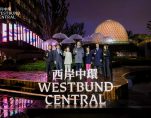
Photo 1: (From left to right) Mr. Raymond Wong, Director & Head of Property Development, Westbund Central; Mr. John Simpkins, General Counsel, Hongkong Land; Ms. Alfreda Zeng, Chief Operating Officer, Ping An Real Estate; Mr. Stuart Grant, Chief Executive, Westbund Central; Ms. Gan Jin, Vice Chairman, Shanghai West Bund Development Group; Mr. Craig Beattie, Chief Financial Officer, Hongkong Land and Ms. Vera Wu, Director & Head of Commercial Property, Westbund Central.

The Phase Two commercial launch introduces a diverse mix of global first stores, designer labels, and flagship concepts that reinforce Westbund Central’s position as a new downtown in Shanghai. New tenants include international icons such as Issey Miyake, the multi-brand boutique SND, Leica Store & Gallery, artisanal Swiss chocolatier House of Läderach, and design houses HAY and Paulmann.

With a planned total gross floor area of more than 1.7 million square metres, Westbund Central is the Company’s largest-ever single investment and brings together a diversified commercial mix that includes more than 600 international retail and lifestyle brands, 180 food and beverage operators, more than 50,000 square metres dedicated to cultural and art facilities, as well as 650,000 square metres of premium Grade A offices that will house occupiers including globally renowned companies such as adidas and lululemon.

While Phase One centred on food and beverage, cafes, and sports and leisure facilities, Phase Two enhances the district’s prestige by focusing on designer lifestyle brands. Looking ahead, Phase Three will introduce a cluster of global luxury maison flagships to further boost the district’s international appeal. Around 12,000 square metres of retail space is already open, with an additional 30,000 square metres opening within this year.

Michael T. Smith, Group Chief Executive of Hongkong Land, said: “Westbund Central is a fresh and dynamic example of our strategic focus to develop ultra-premium, integrated commercial districts in Asia’s leading gateway cities. As Hongkong Land’s largest single investment to date and our flagship China property, Westbund Central is one of the most significant projects in the company’s portfolio and designed to deliver sustained long-term value.”

Stuart Grant, Chief Executive of Westbund Central, said: “Westbund Central is being shaped as Shanghai’s new downtown and we are incredibly proud to build one of the largest mixed-use properties in the world that redefines modern urban living. We are creating a globally renowned ‘city within a city’ where the finest quality office, retail, residential and hospitality components converge in a single vibrant destination where people can truly enjoy life.”

As further phases are delivered, Westbund Central will continue to reinforce its position as one of Shanghai’s most significant integrated commercial districts and a cornerstone of the company’s long-term growth strategy in its portfolio.
Hashtag: #HongkongLand

The issuer is solely responsible for the content of this announcement.

Westbund Central

Hongkong Land’s Westbund Central is the Group’s largest-ever single investment. Scheduled to complete in phases up until 2028, it is an US$8 billion development encompassing approximately more than 1.7 million sq. m. of prime mixed-use property strategically located at Shanghai’s Xuhui Waterfront. It is a flagship development of Hongkong Land’s prime commercial properties’ CENTRAL Series. The ultra-premium integrated commercial property includes 240,000 sq. m of retail space, 650,000 sq. m. of premium Grade A offices, 160,000 sq. m. of high-end waterfront luxury residences, two hotels (55,000 sq. m.) and over 50,000 sq. m. of cultural and art venues.

Hongkong Land

Hongkong Land is a major listed property development, investment and management group. It focuses on developing, owning and managing premium and ultra-premium mixed-use real estate in Asian gateway cities, featuring Grade A office, luxury retail, residential and hospitality products. With over US$50 billion in assets under management, Hongkong Land’s ultra-premium mixed-use real estate footprint spans over 1.97 million sq. m. lettable area in operation and 1.43 million sq. m. lettable area under development, with flagship mixed-use projects in Hong Kong, Singapore and Shanghai. Its properties hold industry leading green building certifications and attract the world’s foremost companies and luxury brands. Established in 1889, Hongkong Land takes a long-term view, investing significantly alongside its capital partners and concentrating its portfolio where it can create the most value for tenants, customers and investors. Hongkong Land Holdings Limited has a primary listing on the London Stock Exchange, with secondary listings in Singapore and Bermuda. Hongkong Land is a member of the Jardine Matheson Group.

India’s electronics manufacturing drive has gained fresh momentum after Ashwini Vaishnaw said the country was positioned to become a trusted global value chain and supply chain partner, placing semiconductors, mobile phones, artificial intelligence infrastructure and component manufacturing at the centre of its industrial strategy.

The Union Minister for Electronics and Information Technology, Railways and Information and Broadcasting made the remarks at the ground-breaking ceremony of the Google Cloud India AI Hub in Visakhapatnam, a project carrying an estimated investment of $15 billion. The facility, planned with Adani ConneX and Airtel Nxtra, will include a 1GW hyperscale AI data centre, with about 600 acres allocated across Turluvada, Rambilli and Adavivaram in Andhra Pradesh.

Vaishnaw’s comments reflect a broader policy effort to shift India’s role from assembly-led electronics manufacturing to deeper participation in global technology supply chains. The government is seeking to build domestic capability across finished devices, modules, sub-modules, components, raw materials, tools and manufacturing machinery, a progression seen as essential for reducing import dependence and gaining a larger share of global production.

Mobile phones remain the strongest evidence of that transition. Electronics production has risen from about ₹1.9 lakh crore in 2014-15 to about ₹11.3 lakh crore in 2024-25, while electronics exports climbed from about ₹38,000 crore to about ₹3.3 lakh crore over the same period. Mobile phone production expanded from about ₹18,000 crore to roughly ₹5.5 lakh crore, and mobile phone exports rose from about ₹1,500 crore to nearly ₹2 lakh crore, making the category one of the country’s most visible export successes.

Smartphones have become a leading export product, with Apple, Samsung, Tata Electronics, Foxconn, Dixon Technologies and other manufacturers playing prominent roles in the production ecosystem. The shift has been supported by the Production Linked Incentive scheme for large-scale electronics manufacturing, which helped attract global brands and contract manufacturers to expand capacity. The sector’s next phase, however, will depend less on assembly incentives and more on the availability of components, precision engineering, skilled labour, predictable taxation and faster logistics.

The Google Cloud project adds a digital infrastructure dimension to this manufacturing agenda. Vaishnaw urged global technology companies, including Google, to consider manufacturing servers, GPUs and chips in the country, arguing that the domestic data centre boom could create demand for high-value electronics and advanced computing hardware. Visakhapatnam is being positioned as an artificial intelligence hub, with subsea cable links expected to improve global connectivity through routes connecting Australia, the Middle East, Europe, Africa and the United States.

Semiconductors are the most strategic part of the plan. The India Semiconductor Mission has already helped draw investment into assembly, testing, marking and packaging facilities, chip design centres and fabrication proposals. Approved projects across several states include packaging units, display driver chip capacity and compound semiconductor facilities. The sector remains capital-intensive and technologically demanding, and India is entering a field dominated by Taiwan, South Korea, the United States, Japan, the Netherlands and China. Timelines, execution quality and ecosystem depth will determine whether the country can move beyond packaging and design services into higher-value production.

The government’s target of building a $500 billion domestic electronics ecosystem by 2030-31 is ambitious. It requires not only export-led growth but also a domestic supplier base for printed circuit boards, camera modules, batteries, displays, sensors, connectors, power electronics and semiconductor materials. Without local component depth, headline export gains can mask high import content, limiting value addition and leaving manufacturers exposed to currency swings and global supply disruptions.

Industry executives have generally welcomed the policy focus but continue to point to operational challenges. High logistics costs, customs procedures, dependence on imported inputs, limited component clusters, power quality, land acquisition delays and uneven state-level implementation remain constraints. Global companies also compare India with Vietnam, Mexico, Malaysia and Thailand when allocating production, making policy certainty and execution speed critical.

Labour availability is one of India’s advantages. Electronics manufacturing has generated large-scale employment, including substantial hiring of young women in assembly lines and component facilities. This has helped states such as Tamil Nadu, Karnataka, Uttar Pradesh, Andhra Pradesh and Gujarat compete for investment. Yet sustained growth will require improvements in industrial training, factory housing, transport, safety standards and career progression, particularly as production moves from assembly to precision manufacturing.

Geopolitics has created an opening. Companies are diversifying supply chains because of trade tensions, tariff risks, pandemic-era disruptions and concerns over concentration in China. India’s democratic institutions, large market, engineering talent and improving infrastructure make it a credible candidate for “China plus one” strategies. The challenge is to convert interest into anchored manufacturing networks that include suppliers, tooling companies, testing labs, logistics providers and research partnerships.


Swiss lawmakers are opening a politically charged debate in Bern that could determine how much capital UBS Group must hold after its takeover of Credit Suisse, setting the stage for a confrontation between financial stability concerns and fears over Switzerland’s competitiveness as a banking centre. A 13-member parliamentary panel is meeting on Monday to begin work on proposed changes to the Banking Act, a legislative package shaped […]

By Saifur Rahman The total value of 139.55 million payments through UAE FTS and ICCS last year exceeded Dh25.9 trillion (US$7.06 trillion), according to the UAE Central Bank. This includes the processing of 23.78 million physical cheques valued at Dh1.5 trillion through the UAE Central Bank’s Image Cheque Clearing System (ICCS) in 2025. A large chunk of these payments are linked to sale and purchase transactions by […]

Arabian Post Staff -Dubai Abu Dhabi National Oil Company will award Dh200 billion worth of project contracts between 2026 and 2028, marking one of the largest new execution phases in the Gulf energy sector as Abu Dhabi moves to expand capacity, secure supply chains and deepen local manufacturing. The planned awards, equivalent to about $55 billion, form the first major tranche of ADNOC’s $150 billion capital expenditure […]

VISHNU RAJA
RYO YAMADA
HITORI GOTOH
IKUYO KITA