News related to
Phase

Arabian Post Staff -Dubai Kuwait is set to sign a contract next week with China Communications Construction Company to advance the long-delayed Mubarak Al-Kabeer Port, signalling renewed momentum behind a project seen as pivotal to the country’s trade ambitions and its role in regional logistics. Public Works Minister Noura Al-Mashaan confirmed the timeline on Thursday, following formal approval by the Central Agency for Public Tenders for the […]

Greenlogue/AP AMEA Power has commissioned a 120 megawatts-peak solar photovoltaic plant in Tunisia’s Kairouan Governorate, adding one of the country’s largest utility-scale renewable assets to the national grid and strengthening North Africa’s push to diversify power generation. The project operates under a 20-year power purchase agreement with Société Tunisienne de l’Electricité et du Gaz, providing long-term offtake certainty for the state utility and stable revenues for the […]

Mubadala Investment Company and Bain Capital have completed the acquisition of Service Logic, a major provider of commercial heating, ventilation and air-conditioning services, marking a significant private equity investment into North America’s building services sector. The transaction, announced on Wednesday, transfers ownership from Leonard Green & Partners and positions the company for an accelerated expansion phase under joint sponsorship by the Abu Dhabi-based sovereign investor and the […]

Mall of the Emirates has embarked on a $1.36bn expansion programme that will add 20,000 square metres of retail space, introduce about 100 new stores, and significantly broaden its dining and entertainment offering, reinforcing Dubai’s position as a global retail and lifestyle hub. The project, announced by owner and operator Majid Al Futtaim, represents one of the most substantial investments in the mall since it opened in […]

A century after Srinivasa Ramanujan wrote down his striking formulas for calculating pi, the mathematics behind those expressions is shaping how scientists describe some of the Universe’s most complex physical systems. Researchers at the Indian Institute of Science in Bengaluru have shown that the same mathematical structures embedded in Ramanujan’s work also appear in turbulence, percolation processes and theoretical models of black holes, drawing a direct line […]

Chainlink’s LINK token has settled into a narrow trading range above the $12 level, signalling a period of consolidation as market participants reassess risk appetite across digital assets. Price action around the $13 mark has been marked by subdued volatility, even as broader cryptocurrency markets digest shifting expectations on interest rates, exchange-traded fund flows and regulatory scrutiny. The stabilisation comes after a volatile first half of the […]

KUALA LUMPUR, MALAYSIA – Media OutReach Newswire – 17 December 2025 – The SME100 Awards has become one of the most trusted and influential platforms for high growth Malaysian enterprises, recognised for its rigorous evaluation standards and its role in identifying the country’s most promising businesses. Over the years, the programme has evolved into more than an award. It has become a springboard for SMEs seeking credibility, visibility and a supportive ecosystem in an increasingly volatile business landscape.

That landscape has grown more challenging than ever. Malaysian SMEs are operating in a climate defined by rising costs, talent shortages, complex regulatory requirements and tightening cash flow. Inflation continues to push operational expenses upward, while difficulties in hiring and retaining skilled talent have slowed growth for many. These pressures have created a harsh reality. Companies that lack adaptability risk losing market share, while those that act decisively are discovering opportunities in places previously overlooked.

Despite these obstacles, the SME sector has demonstrated a remarkable ability to rebound. Recent data shows that SME GDP grew by 11.6 percent, surpassing the national average and signalling that transformation, not stability, is driving growth. Many businesses have embraced digital tools, streamlined operations and explored new revenue pathways. The divide between surviving and thriving is becoming clearer, and it is defined by mindset, capability and speed.

In this environment, the SME100 Awards serves as a crucial platform for SMEs to strengthen their position. The programme provides a structured pathway for benchmarking performance, accessing regional networks and gaining recognition that matters to customers, partners and investors. By combining quantitative financial indicators with qualitative assessments and a full interview process, SME100 identifies companies that are not only resilient, but ready for the next phase of growth. For winners, the programme offers visibility, connection to a strong ASEAN SME community and access to continuous learning and collaboration opportunities.

Datuk William Ng, National President of SAMENTA, underscored the importance of this support. He said, “Malaysian SMEs are confronting some of the toughest market realities in decades. Yet the most progressive among them are proving that adversity can be a turning point. The SME100 Awards highlight these companies not simply for their achievements, but for the mindset they represent. They show the entire SME sector what is possible when we combine innovation, discipline and the willingness to change.”

The SME100 programme is further strengthened by the involvement of key industry partners. CTOS serves as the official credit reporting partner, Baker Tilly Malaysia as the official auditor and CGC Digital as the gold sponsor. Together, they enhance the transparency, credibility and relevance of the awards while reinforcing the broader ecosystem that supports SME growth.

For more information about the SME100 Awards 2025 Malaysia and the complete list of winners, please visit www.sme100.asia

LIST OF WINNERS OF THE MALAYSIA SME100 AWARDS 2025 (IN ALPHABETICAL ORDER):

  1. AA AVIATION SDN BHD
  2. AGENSI PEKERJAAN KAWA GLOBAL SDN BHD
  3. AL HIJRA HEALTHCARE SDN BHD
  4. AMD SOLUTIONS SDN BHD
  5. ARVIA SOLUTIONS
  6. AUTHENTIC TIMBER RESOURCES SDN BHD
  7. BIMAGE CONSULTING (M) SDN BHD
  8. BINA SKK SDN BHD
  9. BLACK GOLD SECURITY SDN BHD
  10. BUMI SENDAYAN SDN BHD
  11. CASA ENTERTAINMENT GROUP SDN BHD
  12. CEE INDUSTRIES SDN BHD
  13. CRILIGHT MARKETING (M) SDN BHD
  14. CRT INSIGHTS TECHNOLOGIES SDN BHD
  15. CTRM TESTING LABORATORY SDN BHD
  16. DAYASAKTI TRAVEL & TOURS SDN BHD
  17. DREAMAZE SDN BHD
  18. EDCA ENERGY SDN BHD
  19. EF STORE SDN BHD
  20. EG TECH SYSTEM SDN BHD
  21. ELITE MARKETING GROUP SDN BHD
  22. EVOPOINT SDN BHD
  23. FLEX SEAL & PUMP ENGINEERING SDN BHD
  24. FLEXI FLEX HYDRAULICS SDN BHD
  25. GREEN EXCEL ENGINEERING AND CONSULTANCY SDN BHD
  26. HAI SUAR HUAT PILING SDN BHD
  27. HEAP WAH BARAKAH SDN BHD
  28. IDMS TECHNOLOGIES SDN BHD
  29. IDPM ENGINEERING SDN BHD
  30. INDAH CLEANING SERVICES & MAINTENANCE (M) SDN BHD
  31. INDS CAPITAL SDN BHD
  32. IX REALTY SDN BHD
  33. J20 ADVANCE SDN BHD
  34. JIN SAN CONCRETE SDN BHD
  35. JNDESIGN MARKETING SDN BHD
  36. KIMAL AWNING & IRON WORKS SDN BHD
  37. KMS MANUFACTORY SDN BHD
  38. KPRJ E&C SDN BHD
  39. LES’ COPAQUE PRODUCTION SDN BHD
  40. LOGIX EXPRESS SDN BHD
  41. MABUCO SDN BHD
  42. MALGAZ INDUSTRIES SDN BHD
  43. MARCH INTERIOR STUDIO SDN BHD
  44. MATTECH MANUFACTURING SDN BHD
  45. MEOFCO SDN BHD
  46. MK HARAMAIN TRAVEL & TOURS SDN BHD
  47. MK PORRIDGE SDN BHD
  48. MTC CAFE AND RESTAURANT
  49. NEW KC TRADING SDN BHD
  50. NURSERY HONG SOON SDN BHD
  51. OG MARKETING GROUP SDN BHD
  52. QUANTUM COMPUTING SDN BHD
  53. RADDISH TECHNOLOGY SDN BHD
  54. RAY TECH (MALAYSIA) SDN BHD
  55. RFY ACES (M) SDN BHD
  56. SAI COND SALES & ENGINEERING SDN BHD
  57. SALAM MEDICAL CENTRE SDN BHD
  58. SARAMOLY (M) SDN BHD
  59. SATRIA TECHNOLOGIES SDN BHD
  60. SAUDAGAAR ASIA SDN BHD
  61. SIN THYE & COMPANY (PRO SAFETY)
  62. SIS INTEGRATED SDN BHD
  63. SK GLOBE BUSINESS CAPITAL SDN BHD
  64. SKA TRANSPORT (M) SDN BHD
  65. SKINVILLE SOLUTION SDN BHD
  66. SKY POWER SDN BHD
  67. SOFTWELL SDN BHD
  68. SOLAR VOLTECH SDN BHD
  69. SOLARLINK ENERGY SDN BHD
  70. SOON LEE STEEL SDN BHD
  71. SPEEDBRICK SDN BHD
  72. SSEMEDX SERVICES SDN BHD
  73. SUPER EDUCATIONAL ALLIANCE SDN BHD
  74. SUSTEN SDN BHD
  75. TERAS IMPIANA SDN BHD
  76. THONG WORLD SDN BHD
  77. TONG SHENG ENGINEERING SDN BHD
  78. TRUZ HOME SDN BHD
  79. UBINGO VACATIONS SDN BHD
  80. V CRITICAL ENGINEERING SDN BHD
  81. VIRTUAL ECONOMY TECHNOLOGY SDN BHD
  82. YPS TECHNOLOGY SDN BHD
  83. ZABSI INDUSTRIAL VENTILATION SDN BHD

SME100 OUTSTANDING INSPIRATIONAL ENTREPRENEUR AWARDS 2025

  • MR. DONAHUE CHONG – BIMAGE CONSULTING (M) SDN BHD
  • MR. EDWARD CHYE WEI YANG – EDCA ENERGY SDN BHD
  • MR. KALVIN CHUA – EVOPOINT SDN BHD
  • YBHG. DATO’ RAVINTHRAN S/O BALAH – INDAH CLEANING SERVICES & MAINTENANCE (M) SDN BHD
  • MR. BENJAMIN GUNG SIE KAI – JIN SAN CONCRETE SDN BHD
  • MR. CHIN KAH SHING – NURSERY HONG SOON SDN BHD
  • MR. YEE HONG HO – RFY ACES (M) SDN BHD
  • MR. DESMOND GOH – SKY POWER SDN BHD
  • MR. SIEW YOUNG MING – SSEMEDX SERVICES SDN BHD
  • IR. BAVANANTHAN A/L SELVAMANY – TERAS IMPIANA SDN BHD

SME100 SUSTAINABLE BRAND AWARDS 2025
  • EDCA ENERGY – EDCA ENERGY SDN BHD
  • JardinPèau – SKINVILLE SOLUTION SDN BHD
  • SAI COND – SAI COND SALES & ENGINEERING SDN BHD
  • IDMS TECHNOLOGIES – IDMS TECHNOLOGIES SDN BHD
  • UbinGO VACATIONS – UBINGO VACATIONS SDN BHD
SME100 WOMEN ENTREPRENEUR AWARDS 2025
  • MS. YUNLU LEE – AUTHENTIC TIMBER RESOURCES SDN BHD
  • MS. NURUL AIN BINTI MOHAMAD KHDRI – ARVIA SOLUTIONS
  • MS. FLORENCE GOH SIEW BOEY – CRT INSIGHTS TECHNOLOGIES SDN BHD
  • MS. DOREEN DING – INDS CAPITAL SDN BHD
  • MRS. SURIA HANI BINTI AFFANDI CHEW – MERAQUE SERVICES SDN BHD
  • MS. ELLEN LIM – SKA TRANSPORT (M) SDN BHD
  • TS. KOK SHIN LIN – SUSTEN SDN BHD
  • MS. MICHELLE YEONG – THONG WORLD SDN BHD

SME100 CTOS CREDIT EXCELLENCE AWARDS 2025

  • BUMI SENDAYAN SDN BHD
  • IDPM ENGINEERING SDN BHD
  • JNDESIGN MARKETING SDN BHD
  • KMS MANUFACTORY SDN BHD
  • NURSERY HONG SOON SDN BHD

Hashtag: #SME100Awards

The issuer is solely responsible for the content of this announcement.

About SAMENTA

Established in 1986, SAMENTA is Malaysia’s largest association of SMEs, with over 5,500 members across the country. A multi-racial, multi-sector association, SAMENTA has been at the forefront of championing a SME-friendly business environment and connecting SMEs to regional and global opportunities.

About Business Media International

Business Media International is a subsidiary of Audience Analytics Limited, a regional leader in promoting growth for companies in Asia through data-driven brands and initiatives. We own renowned media brands such as SME Magazine, HR Asia, Capital Asia, Energy Asia, Logistics Asia, TruthTV, and CXP Asia as well as business impact assessment brands such as SME100, HR Asia Best Companies to Work for in Asia, Golden Bull Awards and CXP Asia Best Customer Experience Awards. Audience Analytics also owns a number of exhibition brands and has the proprietary software-as-a-service – Total Engagement Assessment Model.


Advertisements

Investors heading into 2026 face a familiar challenge: markets continue to evolve faster than habits do. Strong returns in recent years have rewarded certain behaviours and masked weaknesses in portfolio construction. The next phase, I believe, will favour discipline, balance, and clear decision-making. Rebuild diversification properly Diversification has been weakened by success. Long runs in US equities and large-cap technology have encouraged portfolios to drift into concentration, […]

IHBMSU and The Digital School have formalised a memorandum of understanding aimed at accelerating digital education initiatives, widening access to cross-border learning programmes and building structured pathways that connect education to employment, according to statements issued by the two institutions.

The agreement outlines cooperation across curriculum design, online delivery platforms and faculty collaboration, with a stated focus on making accredited learning more accessible to learners who face economic or geographic barriers. Officials involved in the partnership said the MoU is intended to combine IHBMSU’s academic framework with The Digital School’s digital infrastructure to support scalable, internationally oriented education models.

Under the terms of the arrangement, the two entities will jointly develop online and blended courses aligned with industry demand, covering areas such as business management, technology, data literacy and applied digital skills. Programmes are expected to be structured to allow flexible pacing and modular certification, enabling learners to accumulate credentials that can be stacked towards full degrees or professional qualifications.

Representatives from both sides said a core pillar of the collaboration is the creation of “learning-to-earning” pathways, particularly for underserved communities. This includes aligning course content with employer needs, embedding practical projects into curricula and facilitating links with industry partners for internships, apprenticeships and job placements. The aim is to reduce the gap between academic training and labour-market outcomes, an issue that has drawn growing attention from policymakers and education providers worldwide.

The MoU also commits the partners to mobilising technical and financial resources to ensure the long-term sustainability of joint initiatives. This may involve co-investment in digital platforms, outreach programmes and learner support systems, as well as engagement with philanthropic organisations, development agencies and corporate sponsors interested in workforce development and social impact education.

IHBMSU officials said the partnership reflects a broader shift within higher education towards digitally enabled delivery and international collaboration. Universities across regions have been under pressure to modernise teaching methods, expand access beyond traditional campuses and respond more quickly to evolving skill requirements. By working with a digital-first education provider, IHBMSU aims to extend its reach to learners outside its conventional geographic footprint while maintaining academic standards.

The Digital School, for its part, said the collaboration strengthens its mission to provide affordable, technology-driven education at scale. The organisation has positioned itself as a platform that blends online instruction, adaptive learning tools and partnerships with accredited institutions. Executives involved in the MoU said working with IHBMSU would allow it to offer learners recognised qualifications alongside practical, employment-focused training.

Education analysts note that such partnerships have become more common as institutions seek to balance quality assurance with the need for speed and flexibility. Digital platforms can lower delivery costs and reach large audiences, but questions around accreditation, assessment integrity and learner outcomes remain central. Collaborations with established universities are often seen as a way to address these concerns while retaining the benefits of digital scale.

The agreement also places emphasis on global learning opportunities, including cross-border classrooms, virtual exchange programmes and collaborative projects involving students from multiple countries. Advocates argue that exposure to international peers and perspectives can enhance employability and cultural competence, particularly in sectors where remote and distributed work has become standard.

While financial terms of the MoU were not disclosed, both parties indicated that pilot programmes would be rolled out in phases, with feedback from learners and employers used to refine course offerings. Metrics such as completion rates, job placement outcomes and learner satisfaction are expected to play a role in evaluating the partnership’s impact.

The move comes against a backdrop of heightened demand for reskilling and upskilling, driven by technological change and shifting labour markets. Employers in fields ranging from information technology to digital marketing and business analytics have reported difficulties finding candidates with job-ready skills, even as large numbers of graduates struggle to secure suitable employment. Education providers have been under pressure to demonstrate that qualifications translate into tangible economic opportunities.

Foxconn will invest $173 million to build a consumer electronics manufacturing facility in Louisville, Kentucky, creating 180 jobs and marking another step in the contract manufacturer’s effort to expand its United States footprint as companies seek to rebalance global supply chains.

The facility, scheduled to begin operations in the third quarter of 2026, will focus on injection moulding, tooling and the production of key components used in consumer electronics. Company executives said the plant would support domestic manufacturing demand and align with a broader push by technology firms and policymakers to strengthen industrial capacity within the US.

State and local officials confirmed that the project has received approvals tied to job creation and capital investment benchmarks. Kentucky’s economic development authorities described the investment as part of a strategy to attract advanced manufacturing and reduce exposure to overseas supply disruptions that became evident during the pandemic and amid geopolitical frictions affecting global trade.

Foxconn, formally known as Hon Hai Precision Industry, is the world’s largest electronics contract manufacturer and a critical supplier to several major technology brands. While the company is best known for its vast manufacturing operations in China, it has been diversifying production across regions including Southeast Asia, Latin America and North America. The Kentucky plant adds to that network but on a scale that contrasts with earlier, more ambitious US plans.

The new facility is expected to employ engineers, technicians and production workers, with roles centred on high-precision manufacturing rather than large-scale assembly. Injection moulding and tooling are considered foundational processes in electronics production, supplying parts used across a range of devices. Industry analysts note that locating these processes closer to end markets can shorten lead times and reduce logistics costs, even if final assembly remains globally distributed.

Foxconn executives have framed the project as a “Made in America” initiative designed to support customers seeking domestic sourcing options. Several technology companies have been under pressure from governments and consumers to demonstrate resilience and transparency in their supply chains, particularly for components linked to critical infrastructure or sensitive technologies.

The Kentucky investment comes against the backdrop of Foxconn’s mixed history in the US. The company’s high-profile Wisconsin project announced in 2017 promised tens of thousands of jobs and billions in investment but was later scaled back significantly, leading to criticism from local communities and policymakers. That experience has made state governments more cautious, with incentives increasingly tied to verifiable outcomes rather than headline commitments.

In Kentucky, officials emphasised that the Foxconn deal is structured around realistic employment numbers and phased investment. The projected 180 jobs are modest by the standards of traditional manufacturing plants, but they reflect the capital-intensive and automated nature of modern electronics production. Wages are expected to be above the regional manufacturing average, according to preliminary workforce plans shared with state authorities.

For Foxconn, the move aligns with a broader recalibration of its global strategy. Rising labour costs in China, trade restrictions affecting technology exports, and growing scrutiny of cross-border dependencies have pushed manufacturers to adopt a “China plus one” or even “plus many” approach. The US has also introduced incentives aimed at encouraging domestic manufacturing, particularly in semiconductors and advanced electronics, although Foxconn’s Kentucky plant does not fall directly under federal chip subsidy programmes.

Supply chain experts say the investment reflects a pragmatic approach rather than a wholesale shift. Building a specialised plant focused on components allows Foxconn to serve US customers without replicating the scale of its Asian campuses. It also limits financial exposure while testing the economics of domestic production in a high-cost environment.

Local economic impact assessments suggest the project will have secondary benefits for suppliers, logistics firms and technical training providers in the Louisville area. Community colleges and workforce agencies have begun discussions with the company on skills development, particularly in precision tooling and materials processing.

Hassan Allam Construction has secured a contract valued at about $250 million to deliver the new headquarters of the African Export-Import Bank in Egypt, marking one of the most significant institutional construction awards in the country’s financial infrastructure sector this year. The project will house Afreximbank’s global headquarters and is positioned as a flagship development reflecting the lender’s expanding role in trade finance across the continent. The […]

On December 11, at W Dubai – The Palm, Entrepreneur Middle East hosted the Leadership Awards 2025 — one of the region’s key business events recognizing outstanding entrepreneurs and industry leaders whose work is shaping the economic and technological landscape of the Middle East. In the Fintech Leader of the Year category, the award was presented to Alexander Lozben, founder of INTERHASH and one of the notable […]

ChatGPT has emerged as the most downloaded application on Apple’s App Store in the United States during 2025, marking the first time an artificial intelligence platform has topped the annual download charts and signalling a decisive shift in how mainstream consumers engage with AI-powered tools. Data compiled from Apple’s App Store rankings and corroborated by mobile analytics firms shows OpenAI’s ChatGPT overtaking long-established social media, gaming and […]

Chinese autonomous driving companies are accelerating plans to deploy self-driving taxi fleets across the Middle East, betting on strong government backing, advanced urban infrastructure and public openness to new mobility technologies to turn pilot projects into commercial services. Dubai has emerged as a key entry point. The Roads and Transport Authority issued its first autonomous driving trial permits in September, allowing Pony. ai, WeRide and Baidu’s Apollo […]

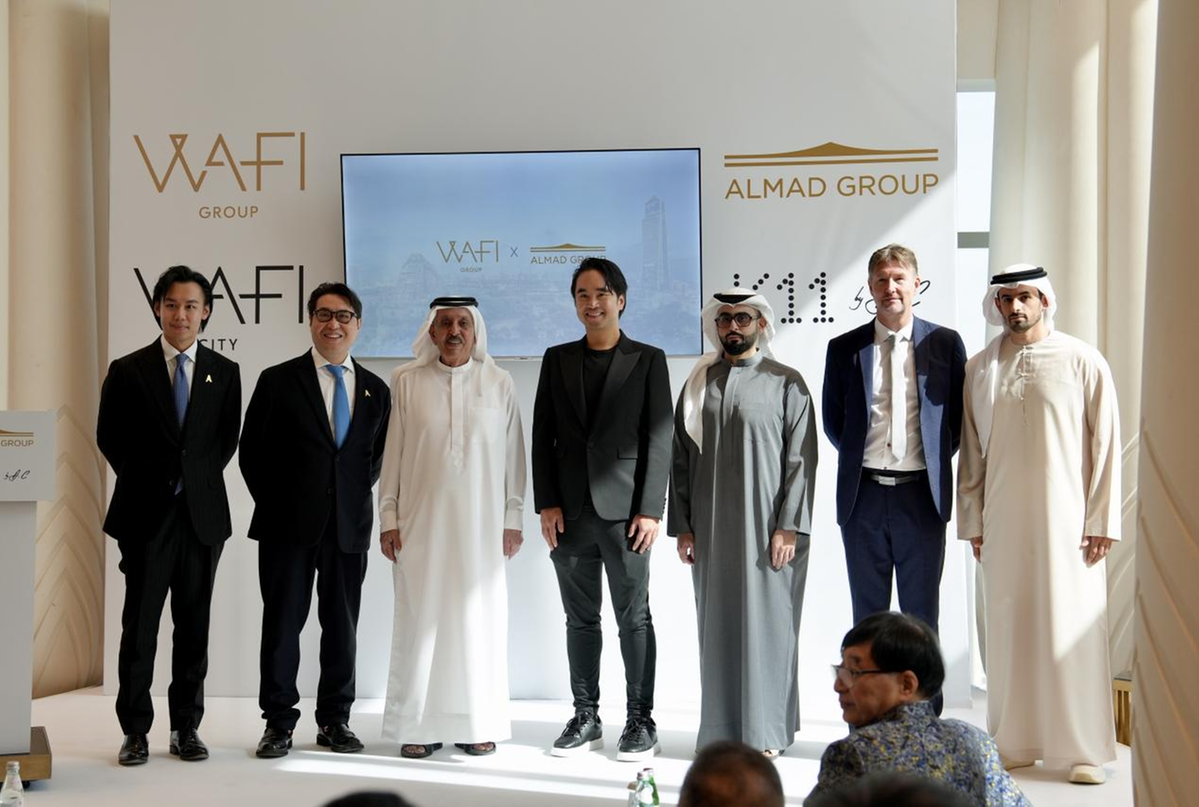
Hong Kong-based Almad Group and Dubai-based Wafi Group have formalised a strategic partnership aimed at tapping the fast-expanding animation, retail and cultural entertainment market in the Gulf, marking a notable deepening of commercial and cultural ties between East Asia and the Middle East.

The agreement, signed on December 11 in Dubai, brings together Almad Group’s lifestyle and cultural development arm, K11 by AC, and Wafi Group, one of the city’s established real estate and hospitality players. At the centre of the cooperation is the creation of a new joint venture entity, Wafi Anime 11, designed to anchor animation-led retail, immersive entertainment and intellectual-property-driven experiences in the UAE, with an eye on regional expansion.

Senior executives and representatives from both sides attended the signing, including Richard Cheung, group chief executive of K11 by AC; Dr Adrian Cheng, founder and executive chairman of K11 by AC of Almad Group; Sheikh Mana bin Khalifa Al Maktoum, founder and chairman of Wafi Group; and Sheikh Rashid bin Mana Al Maktoum, director of Wafi Group. The presence of Dubai Chambers’ executive vice-president for international relations, Salem Al Shamsi, underscored the broader trade and investment significance of the deal.

The partnership goes beyond a single retail concept. According to the framework outlined at the ceremony, Wafi Anime 11 will serve as a platform for developing themed cultural and entertainment projects, hosting IP-exclusive activities, and curating experiences aimed at both residents and international visitors. These initiatives are intended to align with Dubai’s wider strategy of positioning itself as a global hub for creative industries and experiential tourism.

A key commercial pillar of the agreement involves leasing and brand-entry cooperation for Hong Kong and the Chinese mainland labels seeking a foothold in the Middle East. The partners plan to introduce a portfolio of lifestyle, fashion and cultural brands that reflect contemporary Chinese creativity while adapting to local consumer tastes and regulatory environments. This approach reflects a growing trend among Asian brand owners to use Dubai as a gateway to the Gulf and wider Middle East and North Africa markets.

Tourism collaboration also features prominently. Almad Group and Wafi Group will roll out targeted incentive strategies aimed at visitors from Hong Kong and the Chinese mainland, encouraging longer stays and deeper engagement with Dubai’s retail and cultural offerings. Under the plan, travellers will be guided towards premium hospitality assets such as Sofitel Dubai The Obelisk and Raffles Dubai, both located within or adjacent to Wafi City, while being introduced to curated shopping, dining and entertainment itineraries.

Wafi City itself is expected to play a central role in the initiative. Long known as a mixed-use destination combining retail, hospitality and leisure, the complex will host several of the new animation-themed and IP-driven concepts. The partners believe this integrated environment provides a ready-made ecosystem for blending retail with storytelling, live events and digital engagement, a model increasingly favoured by younger consumers and families.

Another element of the cooperation involves the expansion of Gentry Club, a private members’ lifestyle concept, into the Middle East and North Africa. While details remain under development, the inclusion of Gentry Club signals an ambition to build community-based, experience-led offerings alongside mainstream retail, catering to affluent and culturally engaged audiences.

Richard Cheung said the agreement followed extensive groundwork and market analysis. “Our team has been studying the Middle East market since 2024 and is well aware of its immense development potential,” he noted. Cheung added that the first phase of cooperation would focus on brand introduction and ecosystem building, with several flagship labels representing Chinese cultural aesthetics expected to open by 2026.

Industry observers see the partnership as part of a broader shift in how cultural IP and retail are being deployed globally. Animation, gaming and character-driven franchises are no longer confined to screens or merchandise, but are increasingly used to anchor physical destinations, from themed malls to pop-up exhibitions and interactive spaces. The UAE, with its diversified economy, strong tourism flows and appetite for experiential formats, has emerged as a testing ground for such concepts.

By Nitya Chakraborty The announcement by the Bangladesh Election Commission on the holding of general elections in Bangladesh on February 12 next year is a major development in the evolving politics of South Asia, especially with respect to India. The EC statement was welcomed by all the contesting political parties. The nomination process will be […]

The article Bangladesh Elections On February 12, 2026 Matter A Lot To India appeared first on Latest India news, analysis and reports on Newspack by India Press Agency).

Australia has begun enforcing a landmark social media restriction aimed at limiting how platforms interact with users under 16, triggering debate among teenagers who question whether the policy addresses the realities of online life or simply shifts responsibility away from technology companies. The measures, introduced through updates to the Online Safety Act and reinforced by regulatory directives to major platforms, require companies such as Meta, TikTok, Snap […]

Bhutan has entered the digital asset arena with the rollout of a sovereign gold-backed token built on the Solana blockchain, marking a cautious but notable step by the Himalayan kingdom into tokenised finance. The initiative, unveiled on Thursday, aligns with Bhutan’s long-standing emphasis on economic stability and social well-being, while testing how blockchain technology can be used to modernise public finance without undermining monetary discipline. The token […]

Dubai has taken a decisive step toward autonomous urban transport with the launch of a pilot public robotaxi service on the Uber app, allowing selected users to book self-driving rides within designated zones of the emirate. The initiative, rolled out by the Roads and Transport Authority in partnership with autonomous technology firm WeRide and Uber Technologies, marks the first time such a service has been made available […]

Global oil supply is likely to align closely with demand through 2026, according to fresh projections from the Organization of the Petroleum Exporting Countries, setting up a clear divergence with forecasts from other major agencies that warn of a sizeable surplus building in the same period. OPEC’s latest monthly assessment indicates that the OPEC+ alliance, which brings together OPEC members, Russia and other producing partners, expects market […]

The investment landscape of 2026 is being shaped by a set of forces that are measurable, global, and impossible for any serious investor to overlook. The noise around short-term market swings has masked the reality that structural trends—not sentiment—are driving the next decade of value creation. Investors focused on what actually moves markets should concentrate on seven megatrends that are now setting the pace. The first is […]

OpenAI has appointed Denise Dresser, the chief executive of Slack, as its first-ever chief revenue officer, a decisive move aimed at accelerating the artificial intelligence giant’s commercial push and enterprise expansion. Dresser, a veteran of more than a decade at Salesforce and head of Slack since 2023, will oversee OpenAI’s global revenue strategy, encompassing enterprise sales and customer success as the company navigates mounting competition and seeks […]

Borrowing against physical and financial assets has become a defining feature of credit markets as more companies look for flexible funding beyond traditional loans. The model, known as asset-based lending, is drawing interest from mid-sized firms facing tighter bank standards and from fast-growing businesses seeking to unlock capital tied up in receivables, inventory, or machinery. This shift reflects an environment where cash-flow volatility, higher borrowing costs, and […]

A wave of ambition is reshaping the technology landscape as leading entrepreneurs turn their attention to building artificial intelligence data centres in space. What began as scattered experiments in off-planet computing has matured into a competition among industry powerhouses seeking an edge in processing capacity, energy efficiency, and control over the infrastructure that will anchor next-generation AI systems. The pursuit is driven by the belief that Earth-based facilities are reaching fundamental limits, from land availability to cooling constraints, and that low-Earth orbit may provide the only environment capable of sustaining the exponential escalation in computational demand. Advocates frame this as an extension of a long-standing principle in engineering and exploration: to put human ingenuity to its fullest possible use, wherever the boundaries of science allow.

Several major technology leaders have stepped into this arena over the past two years. Their investments reflect a profound shift in strategy as companies realise that AI models cannot continue to scale using terrestrial infrastructure alone. The voracious energy requirements of large-scale training workloads challenge even the most advanced data-centre designs, pushing firms to explore solutions that draw on off-planet solar power and exploit the vacuum of space for passive cooling. Executives argue that orbiting facilities promise a cleaner energy profile, reduced environmental impact, and unprecedented independence from Earth’s physical constraints. As one aerospace investor remarked during a private industry event, the next digital revolution may be fuelled not by new algorithms but by new geography.

Engineering teams working on these orbital concepts often describe them as a convergence of satellite technology, chip innovation, and AI architecture. The logic is straightforward: satellites already operate reliably in extreme conditions with limited maintenance; AI systems increasingly require specialised compute hardware that benefits from consistent temperature conditions; and the economics of launch have changed dramatically due to reusable rockets. Once the cost of placing hardware into orbit falls to thresholds comparable to building premium facilities on Earth, the case for space-based computing strengthens considerably. What was once a speculative thought experiment has become a viable commercial target because access to space is no longer a privilege of governments alone.

However, the motivations driving this race are not solely technical. Strategic considerations weigh heavily. Ownership of orbital AI capacity promises unparalleled control over data sovereignty and computational independence. For executives wary of regulatory intervention or geopolitical risk, space offers a jurisdictional buffer that has become increasingly attractive. The ability to operate hardware outside traditional national borders gives corporations leverage at a moment when governments are tightening rules on data transfer, algorithmic transparency, and cloud-computing dependencies. Critics warn that this dynamic could set the stage for tension between public oversight and private ambition, particularly as orbital networks start to support commercial, defence, and financial applications simultaneously.

Security analysts have begun to examine the implications of off-planet AI infrastructure for global stability. On one hand, distributing critical systems across multiple orbital layers may reduce the vulnerability of communication and computing networks to terrestrial attacks or natural disasters. On the other, it introduces fresh risks, as high-value satellites could become targets in future disputes. Industry leaders tend to emphasise resilience and cooperation, arguing that shared standards and open coordination mechanisms can prevent escalation. Yet even in the early stages of development, commercial confidentiality and competitive pressure limit transparency, raising questions about how cooperative such a system can truly be.

Environmental considerations further complicate the picture. Proponents argue that orbital facilities will dramatically reduce the carbon footprint of data centres by tapping continuous solar energy and eliminating the need for extensive water-based cooling. They claim that redirecting computation to space will relieve pressure on overloaded terrestrial grids and free up land used for sprawling data-centre campuses. Environmental organisations counter that launching hundreds of tonnes of hardware into orbit will generate emissions during the construction phase and intensify concerns about space debris. Engineers involved in the projects acknowledge these issues but maintain that the long-term carbon savings outweigh the initial costs. Some firms have begun exploring closed-loop manufacturing cycles using recycled orbital material, a concept still in its infancy but increasingly part of corporate presentations.

The economic dimension of the space computing race has also attracted significant attention. Venture capital firms see orbital AI networks as a foundational platform similar in scale to the early internet, creating opportunities for startups focused on maintenance robotics, radiation-hardened chips, inter-satellite laser communication, and autonomous control systems. Government space agencies have shown interest too, recognising that private data-centre initiatives could stimulate broader commercial activity in orbit. Financial analysts caution that the capital intensity of these projects is immense and that many entrants may struggle to secure the funds required to move from prototype to full-scale deployment. But they also acknowledge that the firms leading the charge have histories of turning audacious concepts into viable industries.

One of the most compelling arguments for orbital AI centres revolves around scientific potential. Researchers emphasise that such facilities could support breakthroughs in materials engineering, climate modelling, pharmaceutical development, and astrophysics. Training models in microgravity environments may enable experiments that are impractical on Earth, and the isolation of orbital systems creates opportunities for secure high-performance computing dedicated to sensitive research. A prominent AI scientist recently noted at a conference that new frontiers in intelligence will be unlocked only when researchers have access to computational substrates as novel as the algorithms themselves, and that space may provide exactly that.

Despite enthusiasm, several fundamental questions remain unresolved. Energy transmission is one of them. While orbiting platforms can harness abundant solar power, efficiently transferring that energy to onboard compute clusters and ensuring stable operation during orbital night remains a challenge. Another issue concerns maintenance. Although robotic servicing is improving, most concepts still require periodic human intervention, raising questions about safety, reliability, and cost. Legal scholars are also wrestling with the future regulatory landscape, debating whether orbital AI nodes should be governed by space law, telecommunications frameworks, or entirely new agreements. These uncertainties highlight the complexity of forging infrastructure that defies conventional definitions.

Public perception is another area shaping the debate. The idea of billionaire-led initiatives expanding beyond Earth has drawn criticism from those who view it as a diversion of resources from urgent terrestrial needs. Advocates counter that technology has always advanced through bold exploration and that the benefits of space-based AI will eventually extend across society, from medical research to disaster forecasting. Several industry leaders have used narratives emphasising human progress and responsibility, suggesting that building orbital computing platforms represents a contribution to global knowledge rather than a retreat from Earth’s challenges.

VISHNU RAJA
RYO YAMADA
HITORI GOTOH
IKUYO KITA