Just in:

News related to
Program

TCL Electronics is exploring the sale of a stake in its television manufacturing business in India to local buyers, in a move that could help the Chinese consumer electronics group expand more deeply in one of the world’s fastest-growing electronics production bases, according to people familiar with the matter. Bloomberg reported the company is working with an adviser and is seeking to raise at least $200 million from the proposed stake sale.

The deliberations point to a broader shift in strategy for global electronics groups operating in India, where policy support for domestic manufacturing, supply-chain localisation and greater local participation in ownership are increasingly shaping investment decisions. India approved more than $750 million in projects for electronic component manufacturing at the end of March and has set a target of lifting electronics output to $500 billion by fiscal 2031, up from $125 billion in the year to March 2025.

TCL has spent years building out its industrial footprint in the country. The group’s Tirupati manufacturing base, unveiled as its largest such facility outside China, was designed to produce TV and mobile phone screens at scale. Economic Times reported the plant was built with annual capacity for eight million large-sized TV screens and 30 million small-sized mobile screens.

That industrial push has since been reinforced by TCL CSOT India, the company’s display-panel arm, which said it had completed three production lines with monthly capacity of 1.2 million units and was moving towards full bonding, lamination and assembly operations with capacity reaching two million units a month. The company said the India operation was supplying panel modules to customers including Samsung, underscoring that the business is not only about selling finished televisions under the TCL brand but also about embedding itself in the wider supply chain.

A partial stake sale to domestic investors would therefore carry strategic weight beyond capital raising. It could give TCL stronger local alliances, improve regulatory comfort, and help the company navigate a market where manufacturing, sourcing and ownership are increasingly entwined with industrial policy. It may also position the business more favourably in dealings with state governments, suppliers and large retail channels as competition intensifies across the television segment. The company has not publicly announced any transaction, and the talks may not lead to a deal.

For TCL, India matters not just as a sales market but as a production and export platform. The company’s 2024 annual report showed it shipped 29 million televisions worldwide last year, with global market share by shipments rising to 13.9%, placing it among the top two TV brands globally, according to Omdia data cited by the company. The same report said TCL ranked among the top three in retail sales volume in nearly 20 overseas markets and recorded strong growth across emerging markets, including the Middle East and Africa.

Those figures help explain why TCL may be seeking a structure that allows it to preserve momentum in India while adapting to local realities. India is becoming harder to treat as a simple import destination. Policy incentives are encouraging assembly, component manufacturing and deeper supply-chain integration, while geopolitical tensions and tariff shifts are prompting multinational groups to diversify production beyond a single geography. For television makers, that means scale alone is no longer enough; local manufacturing depth and political acceptability also matter.

The move also reflects a wider pattern among Asian electronics manufacturers, many of whom have expanded capacity in India to reduce dependence on imports and align themselves with official manufacturing goals. Reuters reported in late March that New Delhi’s incentive programmes are aimed at cutting import dependence and strengthening local supply chains. That policy environment has created room for both foreign and domestic investors, but it has also made partnership structures more attractive than wholly externally controlled operations in sensitive or high-volume sectors.

Arabian Post Staff -Dubai Oil vaulted above $100 a barrel and share markets retreated on Monday after President Donald Trump ordered a US naval blockade targeting traffic to and from Iranian ports, sharply escalating tensions around the Strait of Hormuz after weekend talks between Washington and Tehran collapsed in Islamabad. The move revived fears of a wider confrontation across the Gulf and renewed concern over inflation, shipping […]

DIFC Art Nights will return to Gate Village in Dubai from 23 to 26 April, offering free entry to a four-day programme of visual art, performances, panel discussions and workshops as the financial district once again turns part of its public realm into an open-access cultural venue. Organisers have billed the 2026 edition as the 21st staging of the event, with visitors able to attend from 5pm […]

Japan will release an additional 20 days’ worth of oil reserves from May as Tokyo tries to shield domestic fuel supplies from continued disruption in the Middle East and reduce its exposure to shipments that pass through the Strait of Hormuz. Prime Minister Sanae Takaichi told a cabinet meeting on April 10 that the move would come from the public stockpile, adding to emergency releases already under way since mid-March.

The decision marks a further escalation in Japan’s energy contingency response at a time when the Strait of Hormuz remains under severe strain despite a two-week ceasefire between the United States and Iran. The waterway is one of the world’s most important oil chokepoints, and its disruption has hit Japan especially hard because the country depends on the Middle East for about 95% of its oil imports. Takaichi’s government has been racing to prevent shortages, stabilise prices and reassure refiners, transport operators and households that fuel will continue to flow.

Tokyo had already moved ahead on March 16 with the release of reserves equivalent to 50 days of consumption, combining privately held stocks with state reserves and supplies jointly held with producing nations. That initial step was announced before a formal coordinated action by the International Energy Agency, underscoring the urgency felt by Japanese officials as tanker traffic through Hormuz became severely constrained. The new plan adds another layer of insurance rather than replacing the earlier programme, signalling that authorities believe the market shock may last longer than first expected.

Officials say Japan still has considerable room to act. As of April 7, the country held reserves covering 228 days, including 143 days in the public stockpile. That buffer gives policymakers flexibility, but it also reflects the scale of the threat they see. Refiners have already been forced to adjust operations as crude availability tightens, and the government is attempting to manage not only total supply but also how fuel is distributed across the country. Concerns have centred on keeping essential sectors supplied first, particularly healthcare, transport, agriculture, fisheries and livestock production.

Japan’s strategy goes beyond drawing down reserves. Takaichi said the government expects that by May more than half of oil imports will be secured through routes that do not involve the Strait of Hormuz. That shift is central to Tokyo’s effort to avoid becoming hostage to a single maritime corridor while conflict risk remains elevated. Officials have not identified every supplier publicly, but the Ministry of Economy, Trade and Industry has indicated that Japan is seeking alternative barrels from a wide range of countries, including Malaysia, Azerbaijan, Brazil, Nigeria and Angola.

The United States is set to play a larger role in that reshaping of supply. A ministry document cited by Reuters said oil imports from the US in May would be four times higher than a year earlier. Japan imported about 189,000 barrels a day from the US in May last year, equal to roughly 8% of total crude purchases for that month. Tokyo is also drawing on Middle East supplies that can bypass Hormuz, including shipments from Saudi Arabia’s Red Sea outlet at Yanbu and from Fujairah in the United Arab Emirates. Those routes do not eliminate vulnerability, but they reduce reliance on the narrow strait at the centre of the crisis.

Domestic politics and inflation pressures are also shaping the response. Takaichi has paired the reserve releases with fuel price measures meant to keep retail gasoline around a nationwide average of ¥170 a litre, even if crude prices remain elevated. Officials have warned that a prolonged supply shock could otherwise push pump prices much higher and strain households as well as businesses already dealing with cost pressures. Finance Minister Satsuki Katayama has also flagged the fiscal burden of existing subsidy measures, suggesting that energy security is becoming not only a supply issue but a budgetary one.

Two empty supertankers heading towards the Persian Gulf reversed course near the Strait of Hormuz on Sunday, underscoring how quickly shipping sentiment can turn when diplomacy falters in one of the world’s most sensitive energy corridors. The movements came as talks between Washington and Tehran in Islamabad ended without agreement, leaving a fragile ceasefire under strain and traders, shipowners and refiners facing renewed uncertainty over access to […]

Arabian Post Staff -Dubai University of Doha for Science and Technology and the Community College of Qatar have signed a memorandum of understanding aimed at deepening academic collaboration, in a move that underscores Qatar’s push to align higher education more closely with labour-market needs and applied learning. The agreement establishes a framework for cooperation and knowledge exchange between the two institutions, with the stated goal of advancing […]

Dubai Aerospace Enterprise and Blackstone Credit & Insurance have launched a new aircraft investment platform, branded Equator, targeting about $1.6 billion in annual deployments into jets already on lease to commercial airlines, as institutional capital pushes deeper into aviation finance. The programme will focus on what the companies described as key markets, with DAE sourcing aircraft from third parties and managing them through its Aircraft Investor Services […]

Advertisements

Dubai has unveiled a parking-linked retail incentive that will allow motorists to recover paid parking costs as cashback when they shop at participating neighbourhood businesses, in a move that blends urban mobility policy with support for smaller traders. The initiative, called Spots for Shops, is being introduced by Parkin, the emirate’s public parking operator, with the first phase due to go live on the Parkin app in […]

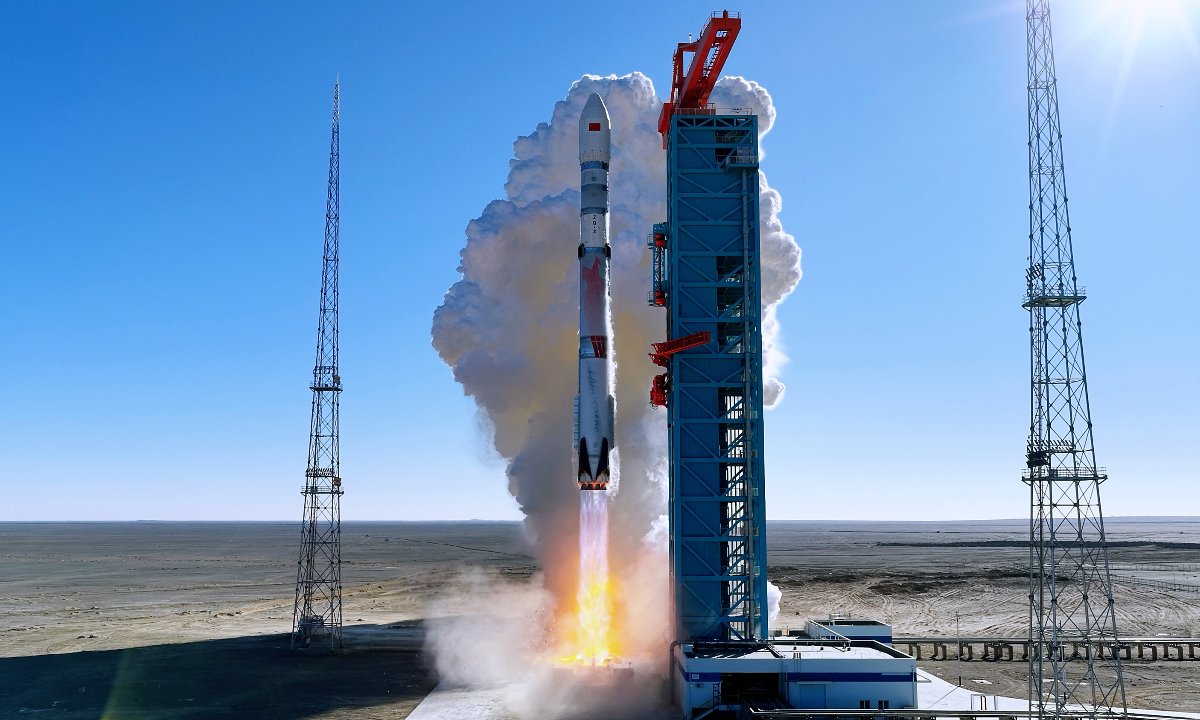
Beijing has pushed its reusable space programme a step further with the launch of an experimental spacecraft that state media described as a technology-verification mission, underlining how the country is trying to cut launch costs, raise flight tempo and broaden the range of missions it can carry out in orbit. The spacecraft was launched on 7 February aboard a Long March-2F rocket from the Jiuquan Satellite Launch Center in northwest China, in what was the fourth publicly disclosed mission of this type since 2020.

Chinese authorities released only a brief account of the flight, saying the spacecraft would verify reusable-spacecraft technologies and support the peaceful use of space. No official duration was given, and no details were provided on the systems being tested, the orbit reached or the vehicle’s configuration. That secrecy has become a hallmark of the programme and makes it difficult to judge exactly how far the technology has advanced, but the pattern of repeated flights suggests a sustained effort rather than a one-off demonstration.

Chronology matters here. China’s first disclosed flight in September 2020 lasted about two days. A second spacecraft launched in August 2022 stayed in orbit for 276 days before landing in May 2023. A third mission, launched in late 2023, returned in September 2024 after 268 days in orbit. Those longer flights point to growing confidence in long-duration autonomous operations, recovery procedures and mission endurance. Outside observers have often compared the craft with the United States’ X-37B-style approach to reusable uncrewed orbital vehicles, though Beijing has not publicly confirmed such comparisons.

This mission also fits into a much wider acceleration in Chinese space activity. On 7 April, China used a Long March-8 rocket from the Hainan commercial launch site to place 18 internet satellites into orbit for the Qianfan constellation. On 11 April, it carried out a sea launch using a Smart Dragon-3 rocket from waters off Guangdong, sending up a test satellite aimed at supporting satellite internet technology. Taken together, those launches show a programme expanding on several fronts at once: reusable vehicles, commercial launch infrastructure and large low-Earth-orbit communications networks.

Beyond low-Earth orbit, China is tying these advances to a broader national space agenda. Beijing is aiming for a crewed lunar landing by 2030 and is developing the Long March-10 rocket, the Mengzhou spacecraft and the Lanyue lunar lander for that effort. At the same time, the Chang’e-7 lunar probe is scheduled for launch in the second half of 2026. That means the reusable-spacecraft programme should be viewed less as an isolated experiment than as one part of an expanding architecture that spans launch systems, spacecraft design, lunar exploration and space-based connectivity.

Money and industrial policy are also shaping the picture. Reuters has reported that Beijing is funnelling more support towards private launch companies as it tries to build capacity for large satellite constellations and reduce reliance on state-owned providers alone. CAS Space has targeted fresh capital for reusable rocket research, while LandSpace and other firms are also turning to capital markets. Separate policy changes have given reusable-rocket developers a faster route to listing, provided they meet technical milestones, showing how closely commercial launch activity is now aligned with national strategic goals.

Yet the programme’s momentum should not be mistaken for mastery. China is advancing, but it is still chasing a lead established by SpaceX in frequent booster recovery and reflight. On 3 April, Space Pioneer said the maiden flight of its Tianlong-3 reusable rocket had failed, and Reuters reported that no Chinese firm had yet demonstrated the ability to recover and reuse a rocket’s main stage. LandSpace plans another recovery test for its Zhuque-3 rocket this year, while the Long March-12B reusable rocket completed a static firing test in January ahead of later flight missions. Progress is visible, but so are the engineering gaps.

More than 5,000 Rockwell Automation and Allen-Bradley programmable logic controllers are exposed to the public internet, sharpening concern across United States critical infrastructure as federal agencies warn that Iran-affiliated cyber actors are actively targeting such devices. Security researchers at Censys said they identified 5,219 internet-exposed hosts globally that responded as Rockwell or Allen-Bradley systems, with nearly three quarters of them located in the United States. The warning […]

Bitcoin and other major cryptocurrencies fell on Saturday after high-level talks between the United States and Iran in Islamabad ended without an agreement, puncturing a bout of market optimism that had followed a temporary ceasefire and hopes of a broader diplomatic settlement. U. S. Vice President J. D. Vance said the American delegation was leaving Pakistan after about 21 hours of negotiations without a breakthrough. Markets reacted […]

Arabian Post Staff -Dubai Abu Dhabi will bring back its flagship infrastructure gathering in a larger format next month, with organisers casting the 12-14 May event as a platform to push smart, sustainable and people-centred urban development at a time when the emirate is moving ahead with one of the region’s biggest public project pipelines. The Abu Dhabi Infrastructure Summit, hosted by the Abu Dhabi Projects and […]

Agentic AI is moving from pilot projects into mainstream corporate workflows, forcing boards and security teams to treat these systems less like software features and more like outside operators with broad access to data, tools and decisions. What changes the risk profile is not only the model itself, but the autonomy layered around it: agents can plan tasks, call other applications, handle credentials and act across systems […]

  A newly disclosed technique dubbed “sockpuppeting” has sharpened concerns over how easily some artificial intelligence systems can be pushed past their safety controls, after researchers showed that a short output-prefix prompt inserted through an application programming interface can drive several leading open-weight models to produce harmful material they would normally refuse. The work, published in January by researchers at the University of Amsterdam, describes the method […]

SINGAPORE – Media OutReach Newswire – 10 April 2026 – The success and impact of the ASEAN–UK Advancing Creative Economy programme was on show at the recent 2nd ASEAN–UK Creative Economy Symposium 2026 in Manila. The Symposium showcased how research, capacity building, and regional collaboration are shaping the future of the creative economy across Southeast Asia, further advancing the goals of the ASEAN Creative Economy Sustainability Framework, adopted at the 46th ASEAN Summit. The Symposium also celebrated the 5th anniversary of the ASEAN–UK Dialogue Partnership, focused on deepening cooperation and connection.

The Department of Trade and Industry of the Philippines, together with the Foreign, Commonwealth and Development Office, the British Council and the ASEAN Secretariat, convened over 270 leaders, policymakers, creatives, and investors from ASEAN and the United Kingdom in Manila for the ASEAN–UK Creative Economy Symposium 2026, reinforcing the region’s push to harness the creative economy as a key driver of growth, innovation, and cultural identity.

Deputy Secretary-General of ASEAN for ASEAN Economic Community (AEC), Satvinder Singh, said:
“ASEAN is well-positioned to harness the full potential of the creative economy. Six out of eleven ASEAN Member States now rank among the top 70 globally in the WIPO Global Innovation Index’s creative outputs dimension. ASEAN recognises that intangible assets, such as intellectual property, brands, and design as the currencies of modern creative economy. The ideas, expressions, and innovations our creators produce must be protected, valued, and commercialised.”

UK Ambassador to ASEAN, Helen Fazey, said:
“The UK and ASEAN are advancing together through trust, cooperation, and shared priorities. This partnership reflects a strong and growing relationship built on mutual respect and a shared ambition to support sustainable economic growth, innovation, and opportunity across the region. Through initiatives like the ASEAN–UK Advancing Creative Economy programme, we are deepening collaboration, strengthening people-to-people links, and supporting the development of vibrant and resilient creative sectors.”

ASEAN-focused research highlights pathways for growth in the creative economy
New research under the ASEAN–UK Advancing Creative Economy initiative is providing critical insights into the evolution and economic potential of cultural industries across the region.

Arts and Technologies in ASEAN: Interconnected Parts, commissioned by the British Council, examines the fast-growing creative technology landscape across ASEAN. Drawing on more than 60 interviews and case studies, the report explores how artists are using digital tools—from AI to immersive media—while also analysing the regulatory environments shaping innovation. It highlights both the dynamism of the sector and the need for stronger support systems to sustain growth.

Complementing this, the Regional Perception Poll on the ASEAN Creative Economy offers a comprehensive view of how the sector is understood across the region. Based on insights from over 4,000 respondents, including both producers and audiences, the study highlights the interconnected nature of creative ecosystems and the relationships between artists, industries, policymakers, and communities. Its findings underscore the need for tailored, context-specific strategies and stronger regional collaboration to unlock further growth.

Together, these research outputs provide valuable evidence to inform policy, guide investment, and strengthen UK–ASEAN partnerships.Building on this work, a new ASEAN festival research and mapping initiative is underway, expanding earlier studies to provide a more comprehensive understanding of the region’s diverse festival landscape and identify opportunities for future collaboration.

Country Director Indonesia and Director South East Asia, Summer Xia, said:
“Through the ASEAN–UK Advancing Creative Economy initiative, we are investing in the research, skills, and partnerships needed to support long-term growth in the creative sector. The symposium in Manila was an important opportunity to share these resources and ensure they are shaped by and for the region. By working closely with the Foreign, Commonwealth and Development Office and the ASEAN Secretariat, we are helping to build a stronger, more connected creative economy across ASEAN countries.”

Underscoring the broader vision of the initiative, Deputy Secretary-General of ASEAN for ASEAN Socio-Cultural Community (ASCC) San Lwin has reaffirmed, in separate engagements, that the ASEAN-UK Advancing Creative Economy programme maximises the region’s creative potential to fuel socio-economic growth and cultural exchange. He reiterated the shared commitment to leveraging innovation and creativity as key connectors to drive prosperity, deepen cultural unity, advance social equity, and promote sustainable, inclusive development in order to forge an “ASEAN Community of Opportunities for All.”

Learn more at: ASEAN Creative Economy Initiative
Hashtag: #BritishCouncil

The issuer is solely responsible for the content of this announcement.

About the British Council

The British Council is the UK’s international culture and education organisation. We support peace and prosperity by building connections, understanding and trust between people in the UK and countries worldwide. We do this through our work in arts and culture, education and the English language. We work with people in over 200 countries and territories. In 2024–25, we reached 600 million people.

Arabian Post Staff -Dubai Jazan Municipality has put 28 development projects worth SR546 million into the Farasan Islands pipeline, combining completed works with schemes still under construction as authorities step up efforts to improve infrastructure, add hospitality capacity and expand housing across one of the Red Sea’s most distinctive island groups. The municipality said 19 projects valued at SR398 million have been completed, while nine more worth […]

UAE authorities are advancing a Dh6 billion federal highway project designed to ease chronic congestion on the Dubai-Sharjah-Ajman corridor, pressing ahead with what officials describe as a strategic expansion of the national road network as population growth and commuting demand intensify. The scheme, reviewed this week by the UAE Infrastructure and Housing Council, centres on the Fourth Federal Corridor, a planned road of about 68 kilometres with […]

Dubai International Financial Centre has rolled out a temporary package of economic support measures for businesses and retailers, offering flexible payment plans, licence-fee instalments and grace periods on selected administrative charges as the emirate’s financial hub seeks to cushion companies from a turbulent regional operating environment. The steps took effect immediately and were presented by the centre as a way to reduce short-term financial and operational pressure […]

Moscow has opened a 33-kilometre tram corridor branded T2, a cross-city route that Mayor Sergei Sobyanin says is now the world’s longest urban tram diameter, linking Chertanovskaya metro station in the south with Novogireevo on Moscow Central Diameter line D4 in the east. The launch marks the second stage of the capital’s tram-diameter programme and extends a surface-rail strategy designed to ease pressure on the underground network […]

XRP could reach $1,000 by 2030, according to EasyA co-founder Dom Kwok, who has repeated the forecast in public interviews and defended it when challenged on valuation grounds. The call has reignited a familiar argument in crypto markets: whether XRP should be judged as a conventional token priced by circulating supply, or as a payments rail whose future worth could expand far beyond today’s market-cap logic. For […]

Arabian Post Staff -Dubai Louvre Abu Dhabi has launched a digital teaching platform that links museum objects directly to school subjects, widening the role of art in classrooms beyond history and humanities and giving teachers a new route to use cultural material in everyday lessons. The Museum Curriculum Portal has been rolled out as part of a broader Abu Dhabi effort to connect cultural institutions more closely […]

Binance has joined Abu Dhabi’s “One Nation. One People. Together, We Protect What We Love.” initiative in partnership with Design Commission Abu Dhabi, linking one of the world’s largest crypto platforms with a state-backed civic campaign built around social cohesion, shared responsibility and public participation across the UAE. The move adds a corporate technology name to an initiative launched in March under the chairwomanship of Shamsa bint […]

Greenlogue/AP Abu Dhabi’s 2PointZero Group has moved deeper into the renewable energy market in India through a new joint venture between its subsidiary ePointZero RSC and Adani Green Energy, extending a relationship between the two business groups and underscoring continued Gulf interest in large-scale clean power assets on the subcontinent. The venture will be executed through Minerva Holding, ePointZero’s renewable development platform in India, according to statements […]

Vertical villa-style condominium positioned to capture surging investor demand

PHUKET, THAILAND – Media OutReach Newswire – 9 April 2026 – Phuket, a world-class tourist destination, is emerging as one of Southeast Asia’s hottest residential and real estate investment hubs. In 2025, over 10 million international tourists visited Phuket, generating nearly 546 billion baht in tourism revenue.

Image Botanica Luxury Villas Rides Phuket's Rise as Global Luxury Property Hub with HYTHE by Botanica

The condominium market has seen significant growth. Colliers Thailand reports that in 2025, 23 new condominium projects launched in Phuket, totaling over 8,372 units worth more than 47.349 billion baht. A key driver keeping Phuket’s rental market buoyant is the attractive yield of 7–11% per year in prime locations.

Botanica Luxury Villas, a leader in Phuket’s luxury property market with over two decades of experience, has grown its portfolio to meet shifting demand, entering the condominium market for the first time with HYTHE by Botanica. Drawing on its pool villa expertise, Botanica has developed the project under the Vertical Villa concept—combining the privacy and generous space of a villa with the convenience of condo living. Prices start at 10.8 million baht*. The project occupies a prime position in the heart of Laguna Phuket, one of the most sought-after areas among investors, just 6 minutes from Layan Beach and 20 minutes from Phuket International Airport.

Mr. Attasit Intarachooti, Chief Executive Officer of Botanica Luxury Phuket Co., Ltd., said: “HYTHE by Botanica is built to meet the growing demand in Phuket as a global destination for long-term living and investment. The Vertical Villa concept delivers a living and investment experience unlike anything currently on the market. We project rental yield of 5–7%* per year in a location with consistent capital appreciation.”

HYTHE by Botanica comprises four six-story residential buildings with 276 units in total, plus a clubhouse, set across over 21 rai of lush greenery. Units start from 57 sq.m., with options ranging from one to three bedrooms, duplexes with pool access, and penthouses. HYTHE by Botanica is part of Botanica Grand Avenue, a mega project offering a full suite of on-site amenities.

For investors, the project comes with comprehensive after-sales support, including Botanica’s service and maintenance programs. Show units are now open for viewing at the sales gallery, Botanica Grand Avenue, Phuket. For more information, visit botanicaluxuryvilla.com, Facebook: BOTANICA Luxury Villa, or call +66 81 324 2999 and +66 94 636 2836.

Hashtag: #BotanicaLuxuryVillas

The issuer is solely responsible for the content of this announcement.

VISHNU RAJA
RYO YAMADA
HITORI GOTOH
IKUYO KITA