News related to
Program

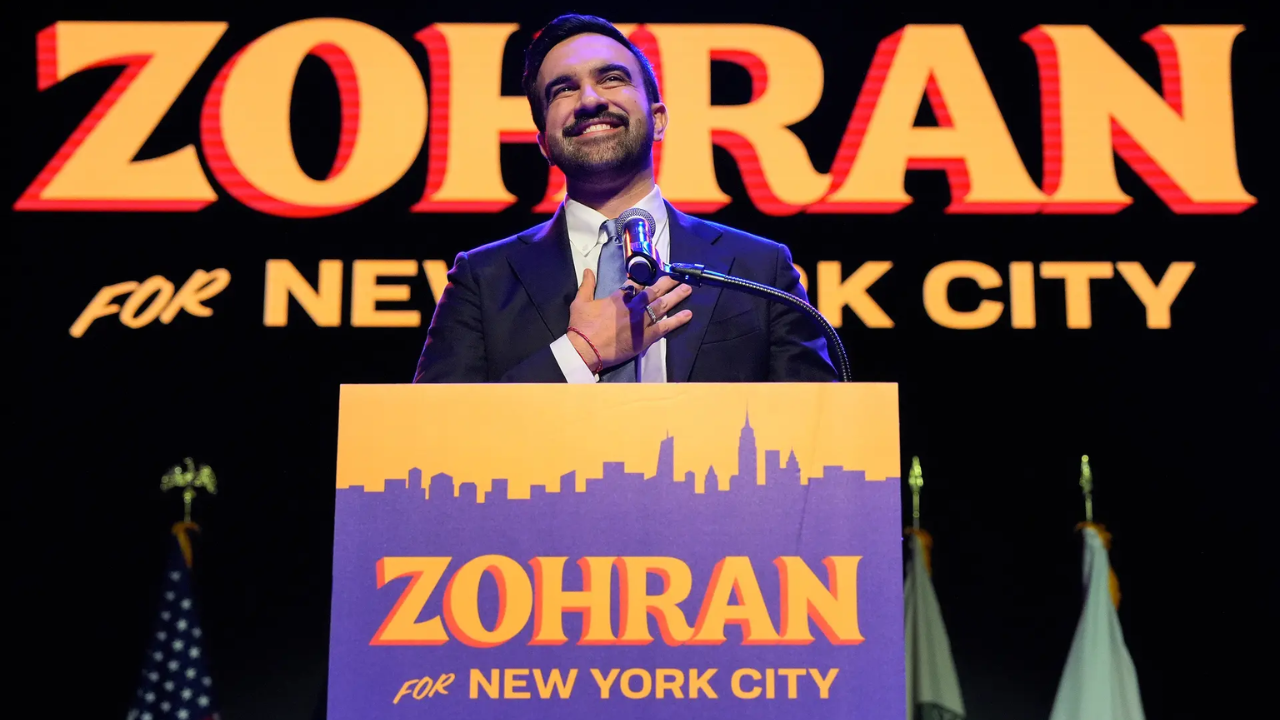
By Nitya Chakraborty The historic victory of the Democratic socialist candidate Zohran Mamdani in New York mayoral elections on November 4 night is acting as a big booster, not only to the left wingers in the Democratic Party belonging to the Bernie Sanders group, but also to the left parties in Europe and Latin America. […]

The article Zohran Mamdani’s Victory As New York Mayor Has Given A Big Boost To Global Left appeared first on Latest India news, analysis and reports on Newspack by India Press Agency).

Students at Wesley Methodist School Penang (International) unite their talents to spread joy and hope through music this Christmas. KUALA LUMPUR, MALAYSIA – Media OutReach Newswire – 6 November 2025 – This December, the students at Wesley Methodist School Penang (International) (WMSPI) will light up the stage with music that moves hearts and changes lives. The Harmony of Hope Christmas Concert 2025, themed Blessed to be a […]

The Public Investment Fund and Jones Lang LaSalle Saudi Arabia Company Limited announced a memorandum of understanding to deepen collaboration in Saudi Arabia’s real-estate sector. The agreement, inked during the Future Investment Initiative in Riyadh, lays out a strategic partnership aimed at leveraging PIF’s infrastructure ambitions and JLL’s global real-estate expertise.

Under the MoU, PIF and JLL intend to focus on critical areas such as market-insight generation, valuation services, project-management frameworks and talent development within the real-estate industry. The goal is to increase private-sector participation, accelerate technology adoption in property development and support the transformation of Saudi Arabia’s built environment.

PIF’s local real-estate strategy positions the fund as a driver of urban innovation, economic diversification and quality-of-life enhancements in line with Vision 2030. As head of PIF’s Local Real Estate Investment Division, Saad Alkroud signed the agreement alongside Sue Aspre y Price, EMEA CEO and global head of Portfolio Services, Work Dynamics at JLL.

Real-estate activity in Saudi Arabia has come under the spotlight as the economy looks beyond oil and prioritises new sectors such as urban development, tourism and infrastructure. Data from real-estate-consultant estimates show that rents and purchase-prices have surged in major urban areas, prompting policymakers to explore responsive measures. Once largely dominated by public-sector investment, the market is shifting toward private-sector engagement — a key objective in the MoU. The agreement signals JLL’s commitment to the Kingdom, where the firm already has operations and plans to expand offerings in valuations, asset management and advisory services.

Execution will be critical. While the MoU is non-binding, it lays the foundation for joint initiatives to build local capacity, deploy digital and prop-tech solutions and drive more efficient project delivery. For JLL the partnership offers a fast-growing real-estate market with the backing of a sovereign investor. For PIF it opens global know-how and operational discipline in property-sector value chains. Analysts observe that the real-estate sector must contend with affordability pressures, consumer-demand dynamics and a need for asset-liability management frameworks in a transitional economy.

The collaboration also supports the broader push for sustainability in built-environment projects. As PIF steers giga-projects and landmark initiatives, JLL’s experience in global sustainability standards and ESG frameworks may be applied to help the Kingdom meet international benchmarks and investor expectations. According to the official statement, acceleration of new-technology adoption and fostering of local talent were emphasised as pillars of growth.

Industry watchers point out that the significance lies not just in the signing but in implementation. The proof will be in how swiftly joint programmes roll out, how private-sector engagement increases and how efficiently project pipelines convert into deliverables. The agreement comes at a time when Saudi policymakers are intensifying efforts to unlock private capital for real-estate, logistic and urban-development assets, with PIF central to that agenda.

With Saudi Arabia targeting a home-ownership rate of 70 per cent and major urban developments underway, the PIF-JLL alliance could become a cornerstone of the real-estate-ecosystem overhaul. Effective governance, transparency and strong monitoring mechanisms will be needed to ensure the partnership delivers the intended economic and social outcomes.

A groundbreaking partnership has emerged between Ripple Labs, Mastercard Incorporated, WebBank and Gemini Trust Company to pilot the use of Ripple’s U. S. dollar-backed stablecoin, RLUSD, for credit-card settlement on the XRP Ledger network. The announcement, made at Ripple’s annual Swell 2025 event, signals a key move by a mainstream payments network to integrate blockchain-based tools into legacy infrastructure.

Under the terms of the pilot, Card issuer WebBank—partnering via Gemini’s credit-card programme—will explore settling Mastercard-network transactions using RLUSD on the XRPL. The goal is to streamline settlement flows between merchants and issuers, compressing what now often takes days into near-real-time settlement through blockchain rails, while preserving regulatory compliance and consumer protection.

Ripple noted that RLUSD has already surpassed a circulation threshold of $1 billion, and is issued under the oversight of the New York Department of Financial Services with reserves held in cash and short-term U. S. Treasuries. Mastercard described the collaboration as part of its broader strategy to integrate regulated digital assets. “Through our partnerships with Ripple, Gemini and WebBank, we’re using our global payments network to bring regulated, open-loop stablecoin payments into the financial mainstream,” said Sherri Haymond, Mastercard’s Global Head of Digital Commercialisation.

The partnership unfolds amid growing attention on stablecoins as institutional settlement tools rather than niche digital-asset instruments. Mastercard’s previous statements reflect cautious optimism: its Chief Product Officer, Jorn Lambert, has said that despite the potential of stablecoin technology, adoption demands “a seamless and predictable user experience, reach and wide distribution” beyond the technological narrative alone.

Industry analysts note that if scaled, this model could challenge entrenched settlement processes such as those using ACH and SWIFT and cut both transactional cost and latency—especially for cross-border commerce. Ripple executives suggest that the pilot is a demonstration of how stablecoins can function within regulated frameworks rather than as adversarial alternatives.

Nonetheless, key caveats remain. The pilot requires regulatory clearance before full onboarding begins, and adoption by issuers and merchants at scale remains to be proven. Some banks and payment networks continue to view stablecoins with caution, given ongoing questions about trust, custody, interoperability and how legacy infrastructure will migrate. As an example, Mastercard has publicly noted stablecoins still have “a long way to go” before becoming everyday payment tools.

This initiative builds on Ripple’s broader institutional push, which included a reported $500 million funding round at a $40 billion valuation, intended to fuel growth in custody, stablecoins and institutional payments infrastructure. The XRPL platform, which underpins XRP and is designed for low-cost, high-speed settlement and tokenisation, is central to the experiment.

For cardholders, the consumer experience may remain unchanged—swipe a card—but behind the scenes, settlement flows could shift dramatically. For merchants and issuers, the promise lies in reduced settlement risk, faster liquidity and improved traceability. For regulators and infrastructure providers, the test will show whether a hybrid bridge between legacy finance and blockchain can scale without undermining compliance or stability.

By TN Ashok NEW  YORK:When the polls closed at 9 p.m. on Tuesday, November 4, 2025, it took less than 40 minutes for the Associated Press to call the race. Zohran Mamdani, a 34-year-old democratic socialist and state assemblyman from Queens, had accomplished what many considered impossible just a year earlier: he defeated Andrew Cuomo—twice—to […]

The article The Mamdani Moment: A Political Earthquake In America’s Largest City appeared first on Latest India news, analysis and reports on Newspack by India Press Agency).

The African Union and the Global Fund to Fight AIDS, Tuberculosis and Malaria have signed a memorandum of understanding aimed at bolstering health systems across the continent, particularly in the fight against AIDS, tuberculosis and malaria. The agreement, inked on 3 November 2025 in Geneva, commits both parties to deeper collaboration including data-driven accountability, domestic resource mobilisation and integrated development planning. Under the pact, the AU and […]

HANOI/ ABU DHABI, VIETNAM – Media OutReach Newswire – 4 November 2025 – The Vietnam Exposition Center (VEC) and dmg events have announced a strategic partnership and launch their first collaborative initiative – a global energy congress and exhibition. Operated under an exclusive brand model, this global event is expected to become a new international platform connecting the renewable energy, power, hydrocarbons, energy storage, hydrogen, low-carbon technology, […]

Advertisements

By Dr. Arun Mitra On October 29, U.S. President Donald Trump announced that ‘Because of other countries testing programs, I have instructed the Department of War [the Pentagon] to start testing our nuclear weapons on an equal basis. That process will begin immediately. This statement is not only disturbing but also extremely dangerous’. The last […]

The article US Cannot Be Allowed To Push The World To The Nuclear Precipice appeared first on Latest India news, analysis and reports on Newspack by India Press Agency).

Sky enthusiasts worldwide are preparing for what scientists describe as the largest and brightest full moon of the year. On 5 November 2025, the moon will reach its full phase while positioned at perigee—its closest point to Earth—amounting to a lunar distance of approximately 356,980 km. This alignment marks the second in a series of three consecutive supermoons and the most extreme of the year. Called the […]

The United Arab Emirates has established itself as a leading hub for innovation and the deployment of advanced technology in the energy sector, according to George Bou Mitri, President of Honeywell for the Middle East, Türkiye and Central Asia. Speaking at the sidelines of the Abu Dhabi International Petroleum Exhibition & Conference 2025, he highlighted how the country’s digital transformation initiatives are serving as a global model for sustainable, technology-driven energy systems.

Bou Mitri said the UAE presents a distinctive example of openness, collaboration and synergy between public and private sectors in driving innovations that are making a tangible global impact in the energy industry. “The solutions created here in the UAE extend their influence far beyond its borders,” he commented. He noted that the country is actively integrating advanced technologies across its energy ecosystem, including expanding the use of LNG, hydrogen, solar and developing sustainable aviation fuel and bio-fuel as part of its emissions-reduction drive.

Honeywell is playing a significant role in this transformation. Bou Mitri pointed to the company’s participation in a landmark project with Abu Dhabi National Oil Company for the Ruwais LNG facility, expected to produce about 9.6 million tonnes annually. He also revealed that Honeywell is developing the region’s first fully autonomous control room powered by agent-based artificial intelligence in partnership with Borouge, aimed at managing petrochemical operations without direct human intervention.

Bou Mitri stressed that digital transformation forms the backbone of the sector’s future. He noted that global energy demand is projected to increase by 32 percent by 2050, while electricity demand is expected to grow by more than 75 percent in the same period, necessitating comprehensive tech solutions to balance growth with emission reduction and operational efficiency. He added that the UAE is clearly adopting that approach, emphasising that the country’s facilities are becoming important development grounds for technologies related to emissions management, artificial intelligence applications and workforce productivity improvements through digitalisation.

The autonomous control-room initiative with Borouge stands out as a practical demonstration of this strategy. According to Borouge, the project will deliver the petrochemical industry’s first AI-driven control room at its UAE plant operations and forms part of its “AIDT” programme with a targeted value generation of US$575 million. The collaboration is intended to optimise production, reduce energy use and enhance safety while lowering costs at what is set to be the world’s largest petrochemical site.

The UAE’s positioning as an innovation frontier for energy technologies comes at a time when the industry is under growing pressure to adapt. Emerging themes include the convergence of artificial intelligence, digital twins, autonomous operations, and clean-energy integration. The broader Middle East region is witnessing major energy investment momentum, with expectations of exceeding US$130 billion this year in oil and gas alone, and simultaneous major expansion in clean-energy investments including hydrogen, LNG and carbon capture projects.

For Honeywell, the UAE’s energy ecosystem is a fertile environment for deploying its digital and automation technologies, but challenges remain. Among these are workforce skills deficits — Bou Mitri pointed out that more than 50 percent of the global energy workforce is aged over 45 — and the need to transfer accumulated expertise to a younger generation. In a sector where downtime, operational safety and emissions control have high stakes, the technology must deliver in real-world conditions, not just in controlled test environments.

Critics might point to the scale of investment required, potential cybersecurity and data governance risks as operations become more connected and autonomous, and the difficulty of scaling pilot programmes into full-scale operations across multiple sites. Nonetheless, the UAE’s strategic posture — combining government backing, private-sector capability and a willingness to test and deploy cutting-edge systems — presents a compelling case study for the global energy community.

New collaborations with Citibank, Abu-Ghazaleh Global, RAK Properties, and others strengthen SIU’s commitment to connecting academic learning with global career opportunities. Swiss International University (SIU) has already informed about the new corporate partnerships that will start in October 2025 and that they will provide students with better access to internships, training programs, and job opportunities in various fields. The new partnerships are aligned with SIU’s goal to […]

There is a good deal of worry about AI. While some feel it’s a godsend, others think it might take away their career options. These are legitimate concerns. Let’s talk about some careers that AI is not likely to take away anytime soon.  Travel Agent If you’re a travel agent, and you set up a business with great payment processing for travel industry expenses and a highly […]

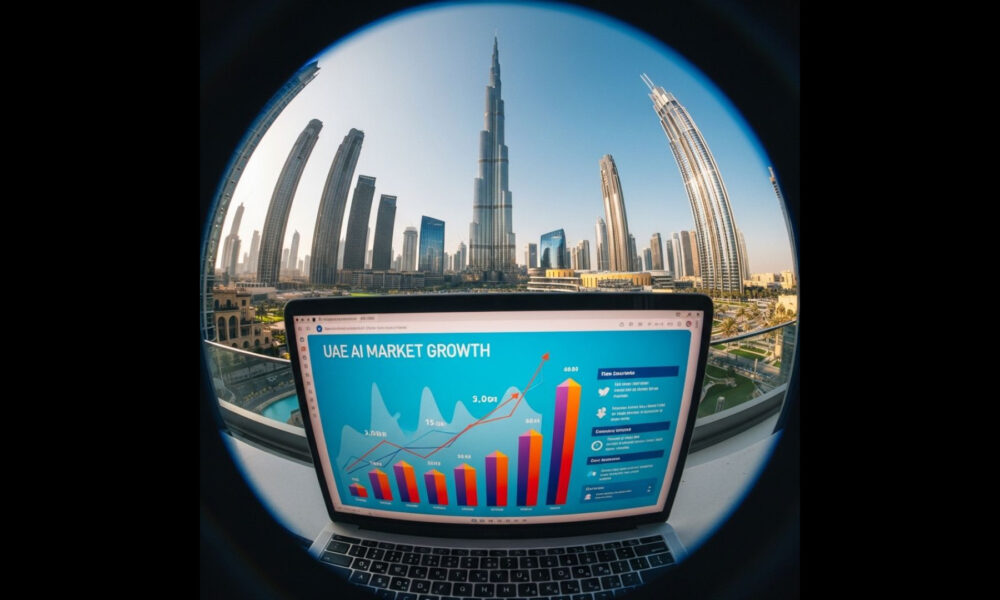
The United Arab Emirates is poised to become a major global hub for artificial intelligence, with its AI market projected to reach around Dh170 billion by 2030, according to a new study by market-research firm Grand View Research. The report indicates that the AI sector in the UAE is growing alongside the broader Middle East and North Africa region, where the AI market is forecast to expand to roughly US$166.3 billion by the end of the decade.

Key government initiatives are helping to drive this expansion. The UAE unveiled its first Arabic-language AI model earlier in the year and launched its “Strategic Plan 2031”, with the ambition of leveraging AI to improve federal-government efficiency and accelerate economic diversification. Grand View Research’s managing director, Swayam Dash, described the country and the wider region as “no longer just adopters of global AI technologies – they are shaping their own playbook,” pointing to sovereign-fund backing and proactive policy as major enablers.

The MENA region’s AI market, valued at about US$11.9 billion in 2023, is expected to grow at a compound annual growth rate of approximately 44.8 per cent between 2024 and 2030, reaching the projected US$166.3 billion figure. Within that broader region, the UAE’s market value is identified as roughly US$3.47 billion in 2023, with a projected CAGR of 43.9 per cent leading to the US$46.33 billion mark by 2030.

Analysts emphasise several drivers behind this growth. Public-sector adoption of AI for urban management, energy optimisation and security is mounting. Large language models and analytics tools are being integrated into government and enterprise workflows. Moreover, the UAE is building infrastructure to support AI ecosystems, including data centres, specialised talent programmes and partnerships with global technology firms.

However, growth is not without its challenges. The rapid adoption of AI raises concerns about data privacy, cybersecurity, ethical governance and workforce disruption. Some observers warn that regulatory frameworks may struggle to keep up with innovation rates. Others caution that scaling advanced AI beyond pilot projects into broad commercial deployment remains a complex and expensive endeavour.

Within the enterprise segment, cloud-based AI services are gaining traction, with the UAE’s cloud AI market estimated at approximately US$2.365 billion in 2024 and expected to reach US$11.08 billion by 2030. Meanwhile, the UAE healthcare-AI market is forecast to grow from US$17.2 million in 2023 to US$137.9 million by 2030, a CAGR of about 34.6 per cent.

Tech entrepreneur Elon Musk said his social media platform X has rebuilt its messaging system and will launch a standalone app, branded as “X Chat”, which uses peer-to-peer encryption architecture “similar to Bitcoin”. He stated that the system will eschew advertising hooks and treat security not as a binary but in “degrees of insecurity”, aiming to make X Chat the “least insecure” messaging system. According to Musk, […]

A new initiative unveiled by the Dubai Future Foundation in collaboration with the MIT Senseable City Lab presents a data-intensive approach to urban greenery by applying artificial intelligence to evaluate the cooling effect of trees in multiple global cities. The project, named “Re-Leaf”, harnesses satellite imagery, street-level visuals and thermal data across locations such as Dubai, Amsterdam, Los Angeles and Rome to measure how trees can function as natural cooling infrastructure.

Re-Leaf reveals that shade and evapotranspiration from trees can reduce local surface temperatures by up to 15 °C compared with surrounding paved or built areas. One key finding is that drought-resistant species such as neem trees outperform more commonly planted palms in arid urban environments. DFF described the work as a shift in treating urban vegetation “as essential infrastructure for the cities of tomorrow”.

The initiative emerges under the banner of the 19th International Architecture Exhibition in Venice, curated by Carlo Ratti, in which Re-Leaf features as a special project. The exhibit presents city-scale “skyscraper-like” visualisations that depict greenery levels across the participating cities, with taller towers indicating higher vegetation cover.

Dubai’s establishment of the first Middle East-based Senseable City Lab via DFF provides a focal point for this research. The lab, working in partnership with MIT, developed the algorithms and datasets behind the project. From a strategic perspective, the work aligns with Dubai’s ambition to be an innovation hub and to address the demands of climate-resilient urban planning.

Beyond the headline figure of 15 °C cooling, the dataset comprises more than 2,000 trees across the four cities, allowing comparative analysis of species performance in different climates and urban morphologies. The research team emphasises that while the act of planting trees is well-known, the novelty lies in quantifying their impact using high-resolution AI tools and translating the results into actionable urban design decisions. “In a hotter world, trees must be seen as essential infrastructure, not just decoration,” Ratti said.

Urban planners and environmental scientists are responding to the project by pointing out its potential to shift policy focus from reactive mitigations—such as heavy air-conditioning—to proactive green infrastructure deployment. According to one expert, tree shading and transpiration “are vital for climate-responsive urban design”. For cities in arid or semi-arid zones—where energy use for cooling is high and water scarcity is acute—the findings are particularly relevant. The identification of species that deliver stronger cooling while requiring less water offers practical guidance for future planting strategies.

However, the project also faces scepticism around questions of scalability and implementation cost. Critics ask whether data-rich analyses can translate into large-scale urban forestry programmes in dense built environments, and note that factors such as soil depth, maintenance regimes and tree lifespan require further study. One architecture-critique article raised a broader question: “Do we need AI to confirm that trees cool cities?” highlighting the risk of attending to measurement rather than action.

The choice of cities for analysis – Dubai, Los Angeles, Amsterdam and Rome – reflects a mix of climatic zones and urban typologies, offering the chance to test how vegetation behaves across contexts. Amsterdam, with a temperate maritime climate, provides contrast to Dubai’s arid conditions, while Rome offers a dense historical fabric and Los Angeles a sprawling low-rise geography. Re-Leaf’s catalogue of thousands of tree species and urban cooling maps explicitly aims to support urban designers and policymakers.

For DFF and its partners, integrating tree-cooling metrics into master-planning holds promise beyond aesthetics. The project’s immersive display at Venice functions not only to showcase technology but to prompt debate on how cities invest in nature-based solutions. DFF Director of Dubai Future Labs, Khalifa Al Qama, described the work as generating insights with global value.

Amazon has activated a sweeping measure across its Fire TV Stick and Fire TV device lineup to block applications that provide unauthorised access to premium films, television and live sport. The initiative is anchored in a collaboration with the anti-piracy coalition Alliance for Creativity and Entertainment. According to Amazon, apps known to offer infringing streams — including those sideloaded from outside the official App Store — will […]

Texas has approved a significant $1.1 billion loan for a proposed natural gas-fired power plant in the Permian Basin, marking the largest financial commitment under a state programme designed to secure the state’s energy future. The funding, provided at low interest rates, aims to address the rising demand for electricity driven by both industrial growth and the increasing need for energy to power emerging technologies, including artificial […]

The multimedia framework FFmpeg has been awarded a $100,000 grant by the FLOSS/fund initiative, marking a significant injection of resources into a project that underpins video and audio processing worldwide. The grant is part of the organisation’s second tranche for 2025, delivered by FLOSS/fund—a programme launched by the brokerage firm Zerodha to bolster Free and Open Source Software projects globally.

FFmpeg, which is instrumental in powering platforms from online streaming services to editing suites, has long faced sustainability challenges despite its ubiquity in digital infrastructure. The project’s official handle confirmed receipt of the donation, describing it as “a step forward to a sustainable future for Open Source Software.” Meanwhile, FLOSS/fund’s blog revealed that the second tranche totals $675,000, bringing its total disbursement for the year to $1 million including the $325,000 committed earlier. Among the recipients alongside FFmpeg are notable projects such as Blender, OpenStreetMap and Wireshark.

The decision signals a wider trend in which tech-sovereignty and infrastructure resilience are being framed as strategic priorities. In its anniversary post, FLOSS/fund’s leadership emphasised that the typology of “Mutual Assured Sustenance” will—unlike traditional arms-race logic—apply in software ecosystems: interdependence rather than deterrence. With this context, the fund sees itself as a “global initiative with Indian roots”, citing India’s growing role in open source ecosystems.

Behind the scenes, the mechanics of funding remain complex. The blog post acknowledged that although the full amount has been committed, only $195,000 of the first tranche has been disbursed due to cross-border regulatory and tax paperwork. The timetable from announcement to actual transfer spans four to sixteen weeks, driven by varying jurisdictional requirements. The fund is working on a partnership with GitHub Sponsors to simplify payment flows.

The selection process for recipients is also non-traditional: rather than a formal application, projects publish a “funding. json” manifest detailing their finances and needs. The fund curators review the open-directory listings and pick recipients based on criteria such as “critical technical infrastructure”, adoption, and uniqueness of the project. It noted that diversity of projects—from developer libraries to humanitarian-tech tools—makes comparison difficult but unavoidable.

FFmpeg now joins a cohort of 29 projects selected in this tranche. The fund’s leadership stated that the grant does not “solve the funding problems behind FFmpeg and open source in general”, but underlined its symbolic and practical value. Analysts note that while a single donation will not fundamentally shift open-source economics, the move may prompt other large-scale users of open-source components to follow suit.

Industry observers credit the decision in part to shifting attitudes within the enterprise and government sectors. As digital dependency deepens, the risk of under-funded foundational tools becomes more visible. FLOSS/fund’s commentary suggested that countries such as India would benefit from a sovereign open-source fund administered in collaboration with the community—a concept that remains aspirational but gaining traction.

Corporations that derive value from open-source software may face increasing moral and strategic pressure to contribute back. Zerodha founder Nithin Kamath has publicly stated that “without open source software, there would be no Zerodha” and that supporting open-source infrastructure is in the best interests of both companies and states. That statement underscores the larger narrative at work: that critical digital infrastructure must be supported not just by users, but by the ecosystem as a whole.

The DFA Design for Asia Awards 2025 has opened its submission window for entries, signalling a heightened push to elevate Asian-led design onto the global stage. Organised by the Hong Kong Design Centre in partnership with the Cultural and Creative Industries Development Agency of the Hong Kong Special Administrative Region, the awards target projects that demonstrate innovation, social impact and cross-border relevance. The entry period runs from 1 April to 7 July 2025, allowing participants to apply across six design disciplines and 30 diverse categories.

The competition spans Communication Design, Digital & Motion Design, Fashion & Accessory Design, Product & Industrial Design, Service & Experience Design, and Spatial Design. Eligibility is specified for projects launched in one or more Asian markets between 1 January 2023 and 31 May 2025, signalling a forward-looking emphasis on design influenced by the region’s evolving markets. A 50 per cent early-bird discount on the entry fee is offered for submissions by 30 April, roughly halving the cost to HKD 1,100 from the standard HKD 2,200 per entry.

The competition’s organising body emphasises that submitted projects should go beyond aesthetic appeal to reflect cultural values, social responsibility and human-centred innovation. The awards platform is positioned as a launchpad for designers and companies to gain international recognition, network globally and exhibit work in both online and physical showcases. The judging panel comprises design professionals from across the world, applying rigorous assessment criteria including creativity, usability, sustainability, aesthetic quality, and impact in Asia.

Key strategic shifts in this edition include an extended submission deadline and an expanded suite of benefits for winners, which include trophies, certificates, inclusion in an awards publication, eligibility for exhibitions and an online gallery, as well as invitations to high-profile events such as the Business of Design Week. This broadening of value-added rewards underscores the awards’ intent to deepen its role not merely as a recognition mechanism but as an accelerator of design careers and commercial opportunities.

Emerging design hubs across Asia stand to gain elevated visibility through this platform. Analysts observe that as demand grows for design solutions rooted in local culture yet globally scalable, events like these help bridge creativity with market viability. One jury member from a previous edition noted that a winning spatial design in Hong Kong “interprets what a library should be architecturally” and “brings the outdoor space indoor,” illustrating how design can engage both aesthetic and functional concerns.

Challenges persist for participants, particularly in meeting the criteria of “impact in Asia” while maintaining global relevance. Designers must navigate a competitive field: in the 2024 edition, 215 awardees were recognised across Grand, Gold, Silver, Bronze and Merit levels. The ability to demonstrate both commercial success and societal benefit is increasingly important, underscoring the awards’ focus on real-world outcomes rather than purely conceptual achievements.

Corporate and design-studio entrants will need to align submissions with multiple review dimensions: geographical market launch, human-centred innovation, sustainability credentials, and cultural resonance. A deeper trend is evident in how the awards reflect the evolving design ecosystem in Asia: beyond Hong Kong and major capitals, secondary cities and cross-border design collaborations are gaining traction. The judging criteria explicitly reward cross-market impact and innovation that resonates beyond local boundaries.

For the design industry, participation offers strategic advantages. Winning projects receive global exposure through awards publications and exhibitions, enabling both established studios and emerging talent to secure business leads and partnerships. The inclusion of the online showcase platform ensures that award-winning work reaches a wider audience beyond the physical event footprint. Observers suggest that for design firms seeking to expand internationally, a credential from this awards programme adds credibility in a crowded market.

Financially, the fee structure and early-bird promotion lower barriers to entry, but entrants must commit to a publication and promotion fee if selected as winners. This consideration means designers must evaluate the return on investment in terms of exposure and business potential. The awards’ transparency around deliverables and eligibility criteria signals a mature stage in its evolution since its launch in 2003.

Organisers have emphasised that the awards welcome designs with “deep Asian cultural roots” yet global aspirations, underscoring a dual objective of cultural preservation and market expansion. As the platform attracts entries from across the Asia-Pacific region, this edition could reveal emerging trends in spatial design, sustainable product systems, inclusive services and motion design. The overarching theme is that design is not simply aesthetic but a tool for transformation—economically, socially and culturally. Entrants are therefore expected to present work that balances form and function, local context and global relevance.


BANGKOK, THAILAND – Media OutReach Newswire – 31 October 2025 – The journey of Mr. Sansern Kiattivejsoonthorn, Founder of COSDENT Dental Clinic, encompasses resilience, creative design, and digital transformation—a journey recently celebrated with the Master Entrepreneur Award at the prestigious Asia Pacific Enterprise Awards (APEA) 2025 Thailand Chapter. With an education spanning Architecture and Urban Design, Sansern entered the healthcare sector with a unique vision: to fuse […]

Tech giant Google has announced a $2.85 million funding package to support artificial-intelligence skills development, education, online safety and cybersecurity in South Africa. The funding was disclosed at the AI Expo Africa event in Johannesburg and forms part of Google’s broader continental strategy to cultivate an AI-ready workforce and digital ecosystem. The funding will be channelled through Google. org, the company’s philanthropic arm, and it builds upon […]

HONG KONG SAR – Media OutReach Newswire – 30 October 2025 – Hotel Artz Fair is proud to announce the artist and program highlights for its much-anticipated second edition, taking place from 21–23 November 2025 at Conrad Hong Kong. This boutique Fair offers a uniquely intimate experience, transforming hotel rooms into warm, homelike art spaces where works by over 40 artists from 12 countries and regions will […]

Matein Khalid Critical minerals have become a national security priority for GCC states as China has weaponised its dominance over supply chains, refining capacity and magnet production. These materials, including lithium, nickel, cobalt, tin, tungsten, vanadium and germanium, are essential for defence systems such as Lockheed’s F-35 stealth fighters, Raytheon’s hypersonic missiles and General Dynamics’ Virginia-class submarines, as well as civilian applications in advanced semiconductors, electric vehicles, […]

LOS ANGELES, US / BEIJING, CHINA – Media OutReach Newswire – 30 October 2025 – Hujing Digital Media & Entertainment Group (the “Company”), the cultural and entertainment subsidiary of Alibaba Group Holding Limited (HKEX: 9988), is accelerating its global talent strategy. The Company recently hosted its “2025 North America Talent Collaboration Roadshow” in Los Angeles, where it connected with young Chinese-language directors, screenwriters, and producers trained at […]

VISHNU RAJA
RYO YAMADA
HITORI GOTOH
IKUYO KITA