Saudi Arabia has approved a borrowing plan for 2026 that signals continued reliance on debt markets to fund fiscal gaps while maintaining momentum on economic diversification, according to an announcement from the finance ministry. The plan sets total financing needs at about 217 billion riyals, equivalent to roughly $57.9 billion, reflecting a combination of deficit funding and scheduled debt repayments due during the year. The approval, signed […]
Venezuela’s state-run oil industry continued operating without interruption on Saturday despite a dramatic United States operation that led to the capture of President Nicolas Maduro, according to people familiar with the operations of Petróleos de Venezuela, known as PDVSA. Production, refining and internal logistics remained stable, the sources said, with no damage reported at oilfields, pipelines or export terminals that underpin the country’s energy revenues. The announcement […]
Aviation in the United Arab Emirates has deepened its role as a strategic pillar of the national economy, with 2025 marking a year of consolidation that underscored the sector’s influence on trade, tourism, logistics and supply chains. Policymakers and industry leaders say the ecosystem’s direct and indirect contribution has reached as much as 18 per cent of gross domestic product, reflecting the scale of activity generated by airlines, airports, maintenance hubs, free zones and aviation-linked services.
Passenger and cargo volumes across the federation continued to trend higher, supported by steady growth in international travel demand and the country’s positioning as a crossroads between Asia, Europe and Africa. Major hubs operated by Dubai Airports and Abu Dhabi Airports handled sustained traffic flows as carriers expanded networks and frequencies. Capacity discipline and targeted route additions allowed operators to absorb higher volumes while maintaining service standards, reinforcing the UAE’s reputation for operational reliability.
Flag carriers remained central to the sector’s momentum. Emirates Airline pressed ahead with fleet renewal and network optimisation, focusing on long-haul markets that underpin connectivity for tourism and business travel. Etihad Airways pursued a parallel strategy centred on profitability and partnerships, aligning growth with demand and strengthening Abu Dhabi’s role as a transfer hub. Together, the airlines’ scale supported ancillary industries ranging from catering and ground handling to training and aviation finance.
Cargo performance remained a defining feature of the year. Dedicated freighter operations and belly-hold capacity benefited from the UAE’s role in high-value, time-sensitive shipments, including pharmaceuticals, perishables and e-commerce. Logistics providers highlighted improved customs processes and digital clearance systems as key enablers, allowing faster turnaround times and reinforcing confidence among multinational shippers. The integration of air cargo with ports and free zones helped sustain supply chains amid ongoing adjustments in global trade patterns.
Governance and regulation were cited by executives as competitive advantages. The General Civil Aviation Authority continued to align oversight with international standards while supporting innovation through performance-based regulation. Industry participants pointed to predictable policy frameworks and coordinated planning between federal and emirate-level authorities as factors that reduced friction for investors and operators.
Sustainability initiatives gathered pace across airlines and airports, reflecting both regulatory expectations and commercial imperatives. Carriers advanced fuel-efficiency programmes through newer aircraft types and operational measures, while airports invested in energy management, waste reduction and water stewardship. Trials involving sustainable aviation fuel expanded through partnerships with energy suppliers and research institutions, positioning the UAE as an early mover in the region’s decarbonisation efforts. While volumes of alternative fuels remain limited, industry leaders argued that early adoption builds expertise and supply-chain readiness.
Technology adoption also shaped the sector’s evolution. Biometric processing, predictive maintenance and data-driven air traffic management systems were rolled out to improve efficiency and resilience. Airports leveraged automation to manage peak flows without proportional increases in staffing, while airlines used analytics to refine scheduling and revenue management. These investments were framed as necessary to accommodate future growth while preserving service quality.
The aviation workforce expanded alongside operations, with training academies and partnerships focusing on pilots, engineers and air traffic specialists. Officials emphasised localisation and skills development as priorities, citing aviation’s role in high-value employment and knowledge transfer. At the same time, competition for specialised talent remained intense, prompting employers to enhance retention and career progression pathways.
Tourism authorities linked aviation capacity directly to visitor inflows, noting that air connectivity underpins hotel occupancy, events and retail activity. Route launches and increased frequencies supported diversification into new source markets, aligning with broader economic strategies aimed at reducing reliance on hydrocarbons. Business travel and exhibitions contributed to premium traffic, reinforcing the UAE’s positioning as a regional commercial hub.
HONG KONG SAR – Media OutReach Newswire – 5 January 2026 – Amid Hong Kong’s rising prominence as a hub for life sciences talent, the Hong Kong Life Sciences Society (HKLSS) is stepping up its efforts to nurture young talents who will shape the city’s scientific future. Through its Hong Kong Life Sciences Scholarship Awards (the Scholarship Awards) introduced in 2022, the Society has celebrated the achievements of outstanding students – this time honoring six students selected from more than 120 nominations.
The awardees of Hong Kong Life Sciences Scholarship Awards 2025/26: (from left) SANTOSO Rachelle Jacinda, RAHMAN Syed Rayan, and TAI Wing Yin Vincy.
The Scholarship Awards aims to recognize and support students pursuing life sciences or biomedical sciences programs at local UGC-funded institutions. Each awardee would receive a HK$50,000 scholarship, mentorship from industry professionals through the HKLSS Mentorship Scheme, and priority enrollment in the HKLSS Life Sciences Summer Internship Program, which offers students an integrated hands-on learning experience across Hong Kong, the Yangtze River Delta (YRD) Region and the Guangdong-Hong Kong-Macao Greater Bay Area (GBA).
Brought together by the Scholarship Awards, three awardees of cohort 2025/26 – SANTOSO Rachelle Jacinda(Y3 BSc in Biological Sciences, CityUHK), RAHMAN Syed Rayan(Y3 BSc in Applied Biology with Biotechnology, PolyU), and TAI Wing Yin Vincy(Y3 Bachelor of Biomedical Sciences, HKU), embarked on a shared journey – to be nurtured, grow, and ultimately bloom as future leaders in life sciences, contributing their skills and passion to advance Hong Kong’s life sciences ecosystem and build a better tomorrow through inter-disciplinary collaborations.
Awardees of Hong Kong Life Sciences Scholarship Awards 2025/26 (from left) Vincy, Rachelle, and Rayan shared their career aspirations in life sciences and enthusiasm for the HKLSS pillar programs.
Homegrown Biological Sciences Dream Fuels Up in Hong Kong Arriving from Indonesia three years ago, SANTOSO Rachelle Jacinda (Rachelle) joined Hong Kong’s life sciences community as an undergraduate with determination and hope. Her passion was first ignited by family medical challenges and her curiosity for biology drove her to pursue deeper studies in biological sciences.
What opened her door to her true calling was the hands-on laboratory work. Rachelle came to appreciate not only the essential role of doctors but also the vital impact of scientists, both working together to advance healthcare. This realization fueled her dream for postgraduate studies, a goal that she once deemed rather idealistic.
She described the Scholarship Awards as a “confidence boost”. She recalled receiving an affirmation from one of the Scholarship Awards interviewers about her future plans, “I think you’re in a quite good place” reassured her that she was on the right path.
With her confidence boosted, Rachelle plans to leverage the scholarship to establish herself in Hong Kong – a supportive nurturing ground for life sciences students, and growing global healthcare investment. Embracing the local culture, she is now learning Cantonese and improving her Mandarin to gear herself up and pursue future opportunities in both Hong Kong and the Chinese Mainland.
From Hometown to International Life Sciences Research Lab “I wanted to become a surgeon [in the past] because I wanted to save lives every day. But if I become a researcher in the life sciences field, one single breakthrough can change millions of lives,” said, RAHMAN Syed Rayan (Rayan), who discovered his real passion in the research lab.
Rayan’s fascination with science began at the age of ten in Bangladesh, where he observed animals in his hometown. Like Rachelle, his enthusiasm for life sciences brought him to Hong Kong, where he was encouraged to immerse himself in research at the university laboratory, guided by professors with profound global research expertise. During semester breaks, Rayan seized every opportunity to broaden his knowledge. Now based in Hong Kong, on his freshman and sophomore years, he pursued an internship in Canada and a summer exchange in the UK, where research primarily followed a fundamental approach. He was thankful for the diverse doors Hong Kong had opened, as exposure to different research methods taught him to see things more holistically, which benefited his work in Hong Kong, known for its focus on translational research.
As Rayan continued to build his career in the life sciences field, receiving the Scholarship Awards meant a great deal to Rayan as he felt “trusted by the panel” and empowered him to be aware of his actions. “Having somebody else to tell you that you are on the right path and believe in you, is very important,” Rayan emphasized.
Rayan also feels especially grateful and refreshed to have found the amazing community he discovered through the Scholarship Awards, as he gets a chance to connect with like-minded peers, who all work towards the same goals and similar challenges. The Scholarship Awards has paved his way to additional opportunities, including priority access to the Society’s industry experience focused Summer Internship Program.
Scientists on TV Ignite Big Ambitions TAI Wing Yin Vincy (Vincy), raised in Hong Kong, developed her passion for life sciences as a child watching scientists in action on TV. Inspired by her curiosity and determination to make a difference, she chose to study biomedical sciences at The University of Hong Kong, following her passion despite conventional expectations.
During her time at university, she gained practical experience through internships in both laboratory and Good Manufacturing Practice (GMP)-compliant facility, which reinforced her ambition. She also minored in Sustaining Cities, Cultures and the Earth to explore inter-disciplinary connections, “As a student, we should not only focus on life sciences, but also learn more about the global perspective, especially when sciences can influence the world,” she said.
These experiences deepened her dedication to the field and the Scholarship Awards became more than an award – it offered a source of belonging that affirmed her place in the life sciences community. “I feel like I am part of the Society, someone who can eventually grow and evolve together with the community and industry,” she said.
The Scholarship Awards has helped bridge her to the broader life sciences ecosystem, as Vincy was connected with previous and other same-cohort awardees at the Presentation Ceremony, and she looks forward to meeting more entrepreneurs, researchers, and C-suite executives from the life sciences sector and gaining guidance from them through HKLSS’ Mentorship Scheme and Summer Internship Program.
Powering Ambition: HKLSS Opens Paths Beyond the Classroom with its Pillar Programs From different beginnings, Rachelle, Rayan, and Vincy find common ground through HKLSS. For them, the Scholarship Awards is more than financial support – it brings them to the pillar programs, a gateway to industry-centered mentorship, industry experience, and a vibrant community driving the future of life sciences in Hong Kong, the YRD, the GBA and beyond.
“I would very much love to go there [Shanghai and Shenzhen] because I will have the opportunity to explore new places and also to meet people with different cultures,” Rachelle said, while Rayan and Vincy also saw the internships as valuable opportunities to gain experience in the Chinese Mainland. “I have heard so many good things from my friends, especially the pharmaceutical companies over there,” Rayan added.
As a life sciences ecosystem enabler, HKLSS continues to expand its pillar programs, activities, and network to meet the evolving needs of members at different career stages. To address the growing demand for life sciences talent and attract both local and non-local professionals to the city, HKLSS also launched Biotech Talent, a dedicated job platform that connects talent with opportunities in the life sciences and biotechnology industry, and offers employers direct access to a diverse talent pool. Through a growing suite of initiatives, the Society partners with its network to support and cultivate a vibrant life sciences ecosystem with dedication. Hashtag: #HongKongLifeSciencesSociety #HKLSS #香港生命科技青年會 #LifeSciences
The issuer is solely responsible for the content of this announcement.
About Hong Kong Life Sciences Society
Hong Kong Life Sciences Society (HKLSS) is an organization established by Nan Fung Group in 2018 aiming to build a dynamic life sciences ecosystem in Hong Kong. Through knowledge exchange, collaboration and public engagement, HKLSS aims to attract, cultivate and retain talent in Hong Kong’s life sciences and biotechnology sectors.
Members of Hong Kong Life Sciences Society Founder and Board Chair: Mr Vincent Cheung Board Vice-chair: Mr Shannon Cheung, Prof Nancy Ip, Mr Antony Leung Executive Director: Prof Ken Wong
Members of the Advisory Board Prof Tom Cheung, Dr Vanessa Cheung, Ms Irene Chu, Mr Shan Fu, Mr Meng Gao, Ms Gladdy He, Prof David Ho, Dr Lu Huang, Mr Emmanuel Hui, Prof Daniel Lee, Ms Nisa Leung, Prof Suet Yi Leung, Prof Kai Liu, Prof Stephanie Ma, Dr Jay Mei, Prof Malik Peiris, Prof Leo Poon, Dr Jin Seok Seo, Prof Anderson Shum, Dr Qiusong Tang, Mr William Tang, Prof Lap-Chee Tsui, Prof Yung Hou Wong, Mr Frank Yu, Prof Kwok-Yung Yuen
Matein Khalid 2026 has started with a bullish bang for my Dr. Copper trade, even though a single trading session when half of Asia is still getting over its New Year’s Day hangover is hardly an optimal sample size. Yet as I see LME spot copper trade at $12500 a metric ton, I feel exhilarated as this is precisely the breakout I flagged for my friends and […]
Europe’s ambitions in semiconductors, embedded software and advanced electronic systems have been sharpened with the release of the Electronic Components and Systems Strategic Research and Innovation Agenda 2026, a document that sets priorities for research, industrial deployment and public investment across the continent’s technology base. The updated agenda outlines how Europe plans to strengthen technological sovereignty in electronic components and systems at a time of intense global […]
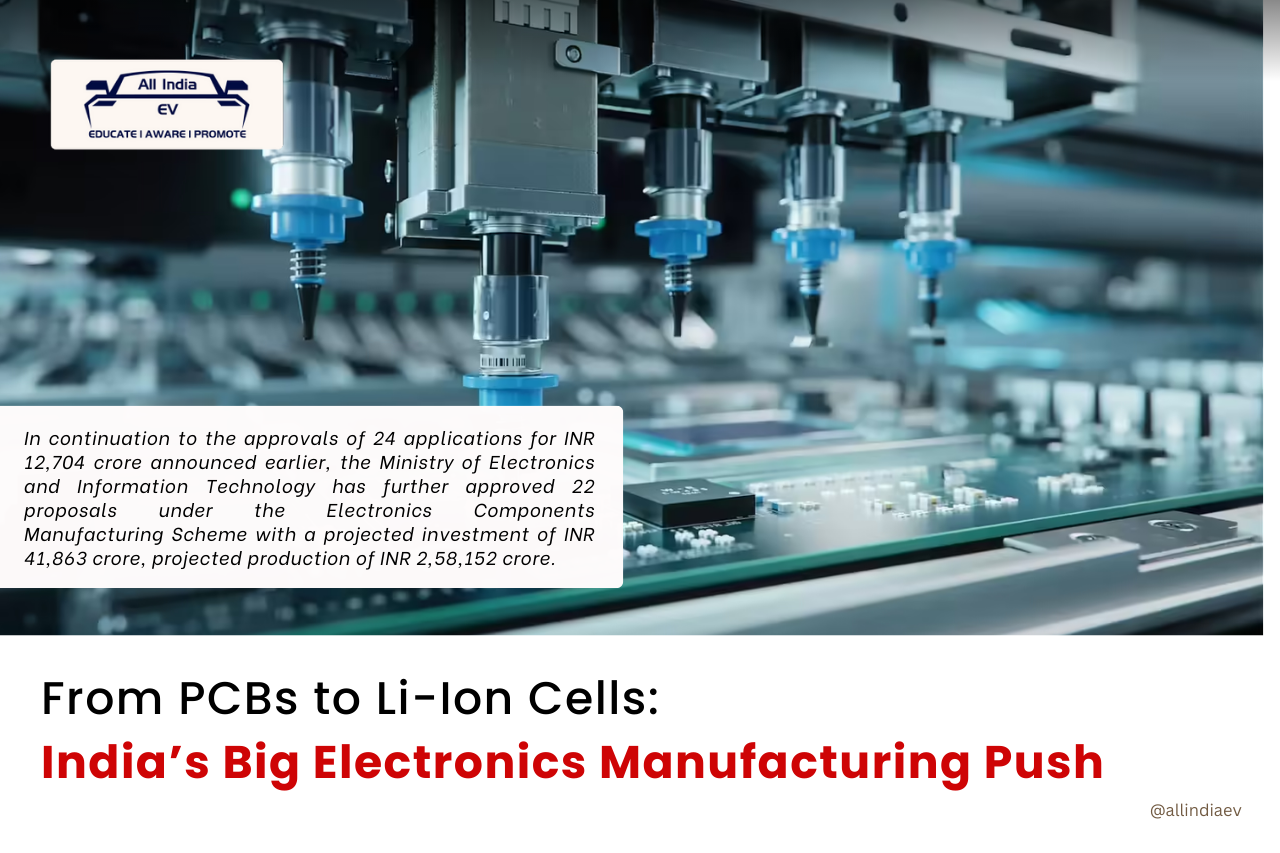
Government approval for 22 proposals under the third tranche of the Electronics Component Manufacturing Scheme marks another step in the effort to deepen domestic supply chains and reduce reliance on imported parts. The cleared projects are expected to draw investment of ₹41,863 crore and generate projected production worth ₹2,58,152 crore over their implementation period, according to official disclosures tied to the decision.
The proposals, cleared by the Union Cabinet chaired by Prime Minister Narendra Modi, span a mix of large conglomerates and specialised component makers focused on sub-assemblies that feed into consumer electronics, industrial equipment and emerging technology segments. Officials said the projects are expected to create 33,791 direct jobs, with a larger number of indirect roles anticipated across logistics, tooling, testing and ancillary services as manufacturing capacity scales up.
The Electronics Component Manufacturing Scheme, commonly referred to as ECMS, is designed to address a persistent weakness in the electronics ecosystem: dependence on imported components even when final assembly takes place domestically. While handset and electronics assembly has expanded rapidly over the past decade, component localisation has lagged, leaving manufacturers exposed to supply disruptions and currency volatility. The third tranche approvals are intended to close that gap by encouraging firms to manufacture key inputs such as printed circuit boards, camera modules, connectors, passive components and specialised sub-systems within the country.
Officials involved in the evaluation process said the latest round places greater emphasis on scale, technology depth and export potential. Several approved proposals involve backward integration into higher-value components, including precision engineering and advanced materials, rather than basic assembly. This approach reflects feedback from earlier tranches, where industry participants argued that long-term competitiveness would depend on mastering complex components rather than expanding low-margin manufacturing alone.
The ECMS operates alongside other incentive programmes such as the Production Linked Incentive framework, but differs in its narrower focus on components rather than finished products. Policy planners view this distinction as critical, given that components account for a substantial share of the value of electronics imports. By targeting this segment, authorities aim to improve value addition within the domestic ecosystem and strengthen resilience against external shocks.
Industry executives welcomed the approvals but cautioned that execution will be as important as policy intent. Several component manufacturers noted that success would depend on timely disbursement of incentives, stable policy conditions and parallel investments in infrastructure such as power reliability, clean-room facilities and logistics. Skilled manpower also remains a concern, particularly for projects involving advanced fabrication and testing processes.
Analysts tracking the sector said the projected production figure of ₹2,58,152 crore signals the government’s expectation that approved firms will not only meet domestic demand but also serve export markets. Global electronics supply chains are undergoing reconfiguration as companies seek to diversify manufacturing bases, and policymakers see an opportunity to position the country as a credible alternative for component sourcing. However, competition remains intense, with established hubs in East and Southeast Asia continuing to benefit from mature ecosystems and economies of scale.
Employment generation has been highlighted as a key outcome of the third tranche. The estimate of 33,791 direct jobs reflects roles across engineering, operations, quality control and management. Economists note that electronics manufacturing tends to create a multiplier effect, supporting additional employment in services and small-scale manufacturing clusters that develop around large plants.
Apple has opened 2026 by broadening its Fitness+ service with new multi-week training programmes, goal-based challenges and music-driven workouts, a move aimed at keeping users engaged beyond the early-year surge in health resolutions that often fades by February. The update, rolled out globally this month, adds structured plans lasting between two and six weeks, allowing subscribers to follow curated routines that blend strength, core, HIIT, yoga and […]
Food assistance funded by Japan is reaching refugees and returnees in Burundi through the World Food Programme, easing acute hunger pressures in camps and host communities strained by displacement, erratic harvests and rising food costs.
The support targets families who fled violence in neighbouring states and Burundians who have returned after years abroad, many arriving with limited assets and few income options. WFP officials say the funding is enabling monthly rations and nutrition support at a time when humanitarian needs remain elevated across the Great Lakes region.
The programme, implemented by the World Food Programme, prioritises refugees in camps and settlements as well as vulnerable returnees integrated into surrounding communities. Assistance includes staple cereals, pulses and fortified oil, with specialised supplements for pregnant and breastfeeding women and children at risk of malnutrition. Cash-based transfers are also being expanded where markets function, allowing households to choose foods locally and supporting small traders.
Japan’s contribution comes amid sustained displacement into Burundi, primarily from the eastern Democratic Republic of Congo, and a steady flow of returnees following regional diplomatic efforts. According to humanitarian agencies, Burundi hosts tens of thousands of refugees, while returnees often face land disputes, limited livelihoods and overstretched public services upon arrival. Food insecurity has been aggravated by climate variability that has disrupted planting seasons and by global price pressures that have raised the cost of basic staples.
A senior WFP official in Bujumbura said the Japanese funding was critical to stabilising rations and preventing harmful coping strategies such as skipping meals or pulling children out of school. “This support allows us to protect the most vulnerable while we scale solutions that build self-reliance,” the official said, noting that nutrition indicators had shown signs of strain in several camps before the funds were confirmed.
Japan has framed the assistance as part of its broader humanitarian engagement in Africa, with a focus on lifesaving aid and resilience. A representative of the Japanese government said the funding reflected a commitment to human security, adding that food assistance was paired with investments in health, water and education delivered through multilateral partners. Japan has been a long-standing donor to WFP operations worldwide, frequently emphasising efficiency and accountability.
Burundi’s government has welcomed the support, saying it complements national efforts to integrate refugees and returnees while maintaining social cohesion. Officials have encouraged aid agencies to align food assistance with agricultural recovery programmes so that communities can transition from relief to production. WFP has responded by linking rations to community assets projects and by sourcing food locally when possible, a move that shortens supply chains and injects cash into rural economies.
The assistance also intersects with protection efforts led by UNHCR, which coordinates shelter, registration and legal support for displaced populations. Aid agencies say synchronising food distributions with protection services has reduced tensions and improved access for women-headed households and people with disabilities. Monitoring systems track deliveries and outcomes to ensure aid reaches intended recipients.
Analysts caution that funding gaps persist across the humanitarian response in Burundi, where needs compete with crises elsewhere. While Japan’s contribution has stabilised a portion of WFP’s pipeline, agencies say predictable financing remains essential to avoid ration cuts later in the year. Market volatility and climate shocks continue to pose risks, underscoring the importance of flexible programming that can pivot between in-kind food and cash.
Dubai Police have expanded coordination with public agencies and private firms to strengthen road safety and labour-area security, positioning enforcement, data-sharing and prevention as central pillars of the emirate’s broader safety agenda.
Senior officers from Jebel Ali and Al Barsha police stations convened a high-level panel discussion titled Forecasting the Future of Road Safety and Labour Area Security in Dubai, drawing together municipal authorities, transport operators, construction firms and safety specialists. The forum underscored a shift towards anticipatory policing, with emphasis on risk forecasting, targeted inspections and early intervention rather than reactive enforcement alone.
Officials said the initiative reflects mounting pressures on transport networks and worker accommodation zones as Dubai continues to attract investment, logistics activity and large-scale construction. Traffic density around industrial areas, ports and residential labour clusters has risen steadily, increasing the likelihood of accidents involving heavy vehicles, buses and pedestrians. Police data presented at the session showed that incidents in such zones tend to involve multiple risk factors, including fatigue, limited visibility, non-compliance with speed limits and inadequate safety training.
Dubai Police leadership stressed that reducing fatalities and serious injuries requires tighter integration between enforcement agencies and employers. Participants discussed expanding joint patrols in high-risk corridors, using shared data dashboards to flag accident-prone locations, and aligning inspection regimes across transport, housing and occupational safety authorities. The approach aims to close gaps where responsibility has traditionally been fragmented between different regulators.
Road safety featured prominently in the discussions, with officials outlining plans to intensify monitoring of commercial fleets, particularly buses transporting workers to and from labour camps. Technology was cited as a critical enabler, including wider deployment of smart cameras, vehicle telematics and predictive analytics to identify unsafe driving patterns before accidents occur. Police officers noted that automated enforcement must be complemented by sustained awareness campaigns targeting drivers, supervisors and site managers.
Labour-area security formed the second core focus of the panel. Senior officers highlighted the importance of safe living environments in maintaining public order and worker wellbeing. Issues such as overcrowding, poor lighting, inadequate emergency access and weak access controls were identified as recurring vulnerabilities. Dubai Police said coordinated inspections with municipal bodies and civil defence teams would be expanded to ensure accommodation facilities meet safety and security standards.
Private-sector representatives acknowledged that compliance expectations are rising. Construction and logistics firms described increasing investment in driver training, fatigue management systems and on-site safety officers, driven both by regulatory pressure and operational risk. Several companies shared examples of internal monitoring tools that track driver behaviour and working hours, with data shared directly with police units during investigations or audits.
The panel also addressed the human dimension of safety enforcement. Police officials emphasised that communication with workers remains essential, particularly in multicultural environments where language barriers can undermine awareness of rules and emergency procedures. Plans were outlined to broaden multilingual outreach programmes and community policing initiatives in labour zones, enabling faster reporting of hazards and disputes.
From a policy perspective, the discussions aligned with Dubai’s long-term vision of zero fatalities on roads. Police leaders reiterated that while enforcement remains firm, the strategy increasingly prioritises prevention, education and partnership. Forecasting models presented during the session illustrated how combining traffic data, urban planning inputs and employer compliance records can help authorities anticipate emerging risks linked to new developments or shifts in traffic flows.
Experts attending the forum noted that Dubai’s approach mirrors global trends in urban policing, where safety is treated as a shared responsibility across government and industry. The emphasis on predictive tools and integrated oversight reflects lessons drawn from international transport safety frameworks, adapted to local conditions such as high temperatures, heavy freight movement and diverse workforce demographics.
The collaboration also carries reputational and economic implications. Officials said safer roads and secure labour environments underpin investor confidence and social stability, particularly as the emirate positions itself as a global logistics, tourism and business hub. Any sustained rise in accidents or security incidents would carry costs not only in human terms but also through delays, insurance claims and regulatory penalties.
Footage of a Tesla humanoid robot losing balance and falling during a controlled demonstration has reignited debate over the pace and credibility of Elon Musk’s ambitions in robotics, exposing the gap between promised timelines and the realities of building general-purpose machines that can operate safely among people. The incident occurred during a late-2025 demonstration of Optimus, Tesla’s bipedal robot unveiled as a future cornerstone of the company’s […]
By Nitya Chakraborty In the neighbouring Bangladesh, the political developments take unpredictable course many times, but the latest alliance between the NCP, the party of the students body which led the July Revolution and the fundamentalist Jamaat-e-Islami, has shocked the progressive forces who supported the uprising that led to the fall of the Sheikh Hasina […]
Brookfield Asset Management is preparing to launch a cloud computing business called Radiant that will lease artificial intelligence chips directly to developers, underpinned by a newly formed $10 billion AI fund as part of its broader strategy to build an integrated AI infrastructure platform. Radiant’s model aims to control key inputs in the AI value chain from land and power to compute, offering an alternative to conventional cloud […]
Yas Marina Circuit will stage the opening rounds of the new Emirates Drift Championship season this weekend, drawing leading regional drivers to Abu Dhabi for tightly fought door-to-door battles that organisers say will push technical precision and crowd engagement to a higher level. The championship’s return to the capital’s flagship motorsport venue signals a renewed focus on competitive depth, youth participation and international exposure for a discipline […]
Plans to turn India into a major semiconductor manufacturing hub are moving from policy to execution, with four companies scheduled to begin chip production during 2026 and the government setting its sights on becoming one of the world’s leading producers by 2035. The transition marks a decisive phase for a country long dependent on imported chips but now seeking to embed itself in global electronics supply chains amid geopolitical realignments and rising demand for secure manufacturing bases.
The most advanced of the announced projects is the large-scale fabrication facility planned at Dholera in Gujarat, a joint venture between Tata Electronics and Taiwan’s Powerchip Semiconductor Manufacturing Corporation. The plant, cleared with government backing and financial incentives under the Semiconductor Mission, is designed to manufacture mature-node chips used in automobiles, power electronics, consumer devices and industrial equipment. Construction work has progressed through 2025, with commercial production targeted to start the following year, according to timelines shared with policymakers and industry partners.
Alongside the Dholera fab, three other facilities are slated to commence output in 2026, primarily in the assembly, testing, marking and packaging segment. Micron Technology’s ATMP plant at Sanand in Gujarat is expected to be the first major operational unit, focusing on memory products for global markets. Two domestic groups, Tata Electronics and Kaynes Semicon, are also developing advanced packaging facilities, while CG Power, in partnership with Japan’s Renesas Electronics and Thailand’s Stars Microelectronics, is setting up an outsourced semiconductor assembly and test unit in Gujarat. Together, these projects are intended to establish a foundational ecosystem rather than a single flagship plant.
Government officials argue that the emphasis on both fabrication and packaging reflects a deliberate strategy. While advanced-node fabs require decades of experience and heavy capital, mature-node manufacturing and packaging are seen as realistic entry points that align with India’s strengths in engineering talent, scale and cost efficiency. Officials involved in the programme say the objective is to capture value across the semiconductor chain while gradually building capabilities for more complex processes.
Public funding has played a central role. Under the incentive framework, the central government is offering support covering up to half the project cost for approved semiconductor and display manufacturing units, with additional incentives from host states. The total committed investment across approved projects runs into tens of billions of dollars, according to official estimates, making it one of the most capital-intensive industrial initiatives undertaken in the country.
Industry analysts note that the timing coincides with a global rethinking of chip supply chains. Disruptions during the pandemic years, coupled with trade and technology tensions, prompted governments and companies to seek diversified manufacturing locations. India’s pitch combines policy stability, a large domestic electronics market and strategic partnerships with established chipmakers. Executives at electronics firms say the presence of local chip production could shorten supply chains and reduce vulnerability to external shocks.
Challenges remain substantial. Semiconductor manufacturing demands ultra-reliable power, water and logistics, as well as a deep supplier base for chemicals, gases and equipment. Skills development is another constraint. While India produces large numbers of engineers, chip fabrication requires specialised expertise built through years of hands-on experience. To address this, training collaborations with overseas partners and academic institutions have been initiated, and several universities have launched semiconductor-focused programmes.
There is also scepticism about the 2035 ambition. Market researchers point out that becoming a “top” producer can be defined in different ways, whether by volume, value or technological sophistication. Countries such as Taiwan, South Korea and the United States dominate advanced-node manufacturing, while China has invested heavily across the value chain. India’s near-term projects focus on mature technologies, which serve vast markets but command lower margins. Supporters counter that demand for such chips is set to remain strong due to electric vehicles, renewable energy systems and industrial automation.
Ilya Lichtenstein, the convict at the centre of one of the largest bitcoin thefts in history, has walked free from federal custody ahead of his full sentence, publicly attributing his early release to the First Step Act, a criminal justice reform law enacted in 2018 under President Donald Trump. Lichtenstein’s abrupt return to civilian life after serving about 14 months of a five-year term for laundering nearly […]
More than $110 billion in digital assets moved out of South Korea during 2025 as stringent trading restrictions and policy uncertainty pushed investors and firms to seek friendlier jurisdictions, according to estimates compiled from blockchain analytics, exchange disclosures and regulatory briefings. The scale of the outflows has sharpened debate in Seoul over how to balance market oversight with competitiveness at a time when global crypto activity is […]
XRP has moved ahead of BNB to claim the position of the world’s fourth-largest cryptocurrency by market capitalisation, marking a sharp shift in the digital-asset rankings during a period of heightened market activity. The token’s valuation has climbed to about $123 billion after prices advanced to the $2.02–$2.03 range, reflecting an intraday rise of roughly 8 per cent and outpacing gains among several large-cap peers. The change […]
Abu Dhabi has enacted two federal decree laws reshaping the legal architecture of the country’s capital markets, signalling a renewed push to strengthen regulatory independence, align oversight with global standards and reinforce investor confidence in one of the region’s most active financial hubs. The twin decree laws, covering the Capital Market Authority and the broader regulation of capital markets, form part of a wider programme aimed at […]
European Space Agency officials are assessing the impact of another cyber intrusion after a criminal group claimed it is offering around 200 gigabytes of agency data for sale on underground forums, raising fresh questions about the resilience of public-sector space infrastructure to sustained digital threats. The alleged breach, disclosed by the attackers through dark-web postings and shared among cybersecurity monitoring firms, is described as involving internal […]
Arabian Post Staff -Dubai Saudi Arabia has completed a $13 billion, seven-year syndicated loan to support spending on power, water and public utilities, marking one of the largest government-backed financings tied to infrastructure programmes this year as the kingdom presses ahead with its economic transformation agenda. The financing was arranged by the National Debt Management Center, which said the deal fits within its medium-term debt strategy aimed […]
Tuba, an artificial intelligence-driven healthcare benefit management platform, has been accepted into NVIDIA Inception, a global programme designed to support technology start-ups developing advanced AI solutions. The move places Tuba among a curated group of early-stage companies working with high-performance computing, data science and machine learning tools to scale products in complex sectors such as healthcare, finance and advanced manufacturing. The company’s entry into the programme […]
Ras Al Khaimah ushered in 2026 with a choreographed New Year’s Eve display that combined fireworks and drone technology on a scale not previously attempted in the emirate, securing a Guinness World Records title for the largest aerial image of a phoenix formed by multirotor drones. The 15-minute presentation unfolded along the waterfront, drawing large crowds and positioning the northern emirate at the centre of global attention as midnight celebrations rolled across time zones.
Officials confirmed that thousands of drones were deployed in tightly synchronised formations above the coast, producing a series of animated images that culminated in the phoenix, a symbol chosen to reflect renewal and ambition. The aerial sequence was interwoven with precision fireworks launched from multiple barges and shoreline points, creating a layered effect across sea and sky. Guinness adjudicators on site verified the specifications shortly after the display concluded, confirming the new benchmark had been met.
The event formed part of Ras Al Khaimah’s wider strategy to build a reputation for large-scale, family-friendly celebrations that draw international visitors beyond the traditional holiday hotspots. Organisers said months of preparation were required to coordinate aviation safety, maritime controls and public access, with authorities temporarily restricting airspace and marine traffic during the performance window. Emergency services and transport agencies operated under special plans to manage the influx of spectators along the coastal stretch.
Tourism officials described the New Year event as a showcase of how technology is reshaping public celebrations worldwide. Drone-based performances have grown rapidly over the past decade as an alternative to fireworks, offering reusable hardware, programmable precision and reduced debris. By combining both elements, the emirate aimed to deliver visual impact while demonstrating technical capability. Industry specialists note that such hybrid shows demand advanced software, redundant navigation systems and real-time monitoring to avoid collisions or signal loss.
Local hospitality operators reported strong occupancy across hotels and resorts, with restaurants and public viewing areas reaching capacity well before midnight. The celebrations extended across several zones, allowing visitors to experience the show from beaches, promenades and elevated vantage points. Authorities encouraged spectators to use public transport and designated parking areas to ease congestion, a measure that helped maintain steady pedestrian flows before and after the countdown.
The Guinness title adds to a growing list of high-profile achievements used by destinations to differentiate themselves in a competitive tourism market. Record-driven events have become a common tool to generate global media coverage and social media traction, though experts caution that they require careful balancing of spectacle, safety and sustainability. In this case, organisers highlighted the use of digitally controlled drones to minimise environmental impact compared with traditional fireworks-only displays, while acknowledging that pyrotechnics remain a key draw for audiences.
Cultural planners involved in the programme said the phoenix motif was selected to resonate across diverse audiences while aligning with the emirate’s long-term development narrative. The animated sequence depicted the bird rising and spreading its wings before dissolving into abstract patterns, followed by a countdown rendered in light above the water. Fireworks then traced the skyline in timed bursts, synchronised to a musical score broadcast along the shore.
The success of the event is likely to influence planning for future festivals and national celebrations, both within the emirate and across the region. Drone show providers are already expanding fleets and investing in higher-capacity batteries, brighter LEDs and more resilient communications links to support increasingly complex formations. Analysts say destinations that master these capabilities early can scale performances quickly for major occasions.
Arabian Post Staff -Dubai Emirates strengthened its standing in 2025 as the world’s largest international airline, carrying 55.6 million passengers across almost 180,580 flights and reinforcing Dubai’s role as a central hub for long-haul air travel. The carrier said the scale of its operations during the year equated to circling the Earth more than 29,000 times, underlining the breadth of its global network at a time when […]





 www.hklss.org
 www.facebook.com/HKLifeSciencesSociety
 www.instagram.com/hklifesciencessociety
 www.linkedin.com/company/hklss/