News related to
Program

SINGAPORE – Media OutReach Newswire – 17 November 2025 – The workplace is undergoing a seismic shift as employees’ expectations and priorities continue to evolve. Infinity Financial Advisory (Infinity FA) has been actively monitoring these developments through its ongoing collaborations with corporate partners, HR leaders, and financial advisors. This work reflects the firm’s commitment to providing organizations with timely insights into the changing dynamics of today’s workforce. […]

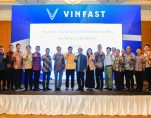
JAKARTA, INDONESIA – Media OutReach Newswire – 16 November 2025 – VinFast has signed a series of Memoranda of Understanding (MOUs) with Indonesia’s leading financial institutions to strengthen cooperation in promoting the country’s green mobility transition. The signings mark a significant milestone in VinFast’s market expansion strategy in Indonesia and reaffirm the Company’s strong commitment to enabling Southeast Asian consumers to switch to electric vehicles with ease […]

Saudi Arabia’s Ministry of Communications and Information Technology’s Center of Digital Entrepreneurship has successfully concluded the Multiverse Summit 2025, which was held in Silicon Valley, United States. This landmark event highlighted the Kingdom’s ongoing commitment to advancing digital innovation and fostering a global digital ecosystem. The summit, which brought together industry leaders, innovators, and government officials, served as a platform to explore the convergence of cutting-edge technologies, […]

US and London-based educational technology company, DataCamp, has acquired the UAE-based AI-native learning platform, Optima, in a move designed to enhance its offerings in personalised and real-time learning. The acquisition will see Optima’s technology fully integrated across DataCamp’s existing platforms, bolstering its data science and analytics services with cutting-edge artificial intelligence features. The deal, however, did not include the financial terms, leaving the acquisition value undisclosed. Following […]

Greenlogue/AP Riyadh will host the 21st Session of the United Nations Industrial Development Organization General Conference from 23–27 November 2025, gathering representatives from all 173 member states alongside business leaders, investors and civil-society actors under the banner of inclusive, sustainable industrial transformation. The event, branded as the “Global Industry Summit 2025”, aims to reposition industrialisation at the heart of global efforts to meet the Sustainable Development Goals, […]

Abu Dhabi’s largest lender, First Abu Dhabi Bank P. J. S. C., has priced a €850 million benchmark five-year Regulation S green bond carrying a coupon of 3.1201 per cent, underlining its growing role in sustainable finance. The offering, which drew strong investor demand, was set at 70 basis points over the five-year euro swap rate.

The bank holds credit ratings of Aa3 from Moody’s Investors Service and AA- from both Standard & Poor’s and Fitch Ratings, each with a stable outlook. This backing supports its ability to tap international debt markets effectively. The green bond marks one of the largest single-issuance Euro-denominated sustainable financings in the Gulf region this year.

FAB’s issuance follows a growing trend of Gulf-region banks seeking to align capital-markets activity with environmental, social and governance criteria. According to the bank’s Sustainable Finance Framework, the institution has targeted USD 135 billion in sustainable and transition finance by 2030, increasing the ambition by 80 per cent in 2023. The framework also embeds ESG review and classification for every debt and equity instrument issued by the bank.

Market analysts interpret the strong pricing as a signal of investor appetite for high-quality, sustainability-labelled debt from the Gulf. One observer noted that the tight spread and size of the issue reflect “a vote of confidence in both FAB’s credentials and the region’s green financing prospects”. The bank’s previous issuance in the sustainability-linked debt space included a USD 750 million five-year “low carbon energy” bond issued under its EMTN programme, which was the first of its kind globally by a financial institution to use proceeds for nuclear power generation refinancing. This earlier transaction set a precedent for innovation in the sustainable debt market.

Proceeds from the new green bond will be allocated exclusively to projects that meet FAB’s classification criteria under its Sustainable Finance Framework — namely activities aligned with energy efficiency, renewable energy, sustainable water management and other eligible categories across multiple geographies. The bank reports prior projects spanning the UAE, United States, Africa and France.

The issuance also comes as regulatory and investor scrutiny of use-of-proceeds and impact reporting increases. Financial-markets participants point to the need for transparency in how green bonds deliver outcomes and stress the importance of robust external review. FAB has published annual reporting on its sustainable finance commitments, including an ESG and Sustainable Finance Committee responsible for eligibility assessment of transactions.

Notably, the gulf region remains under-penetrated in labelled green and sustainability debt relative to global averages, creating potential for growth. The International Capital Markets community highlights the importance of high-grade regional issuers entering the market to build reference benchmarks and deepen liquidity. The strong pricing achieved by FAB could encourage other Gulf-based banks and corporates to pursue green or transition debt under credible frameworks.

FAB’s move also dovetails with the UAE government’s strategic push towards a net-zero economy and diversified financing of infrastructure and low-carbon projects. The financial sector’s role in supporting the transition has been emphasised by regulators as critical. By issuing a large-scale, euro-denominated green bond, FAB is signalling both to regional peers and global investors that it is aligning capital-markets strategy with sustainable development objectives.

That alignment is more than symbolic. The debt raised carries a fixed coupon of 3.1201 per cent over five years, offering investors in the euro market exposure to high-quality credit while contributing to thematic portfolios linked to climate and sustainability. For FAB, the cost of funding appears favourable in a period of elevated global yield levels and refinancing risk for many borrowers. The balance between cost and labelled-finance credentials suggests the deal was executed with strong timing and investor positioning.

A delegation from Abu Dhabi’s infrastructure authority wrapped up discussions in Singapore with seven strategic memoranda of understanding aimed at accelerating urban development and smart-city infrastructure. The Abu Dhabi Projects and Infrastructure Centre signed accords with Singapore’s leading construction, engineering and architectural firms to bring advanced modular construction, digital twin technology and sustainable delivery models into a US$54 billion + project pipeline.

The agreements involved Singapore entities such as BCA International, Surbana Jurong, Meinhardt Group, Singapore Institute of Architects, CPG Corporation, Tech Onshore MEP Prefabricators and RSP Architects. Collectively they span built-environment excellence, urban master-planning, engineering consultancy, design collaboration, infrastructure solutions and prefabricated Mechanical, Electrical and Plumbing systems.

Representatives from the Abu Dhabi side included His Excellency Eng. Maysarah Mahmoud Salim Eid, Director General at ADPIC; His Excellency Jamal Abdullah AlSuwaidi, Ambassador to Singapore; Eng. Khulood Al Marzouqi, Acting Executive Director of Infrastructure Regulation & Support at the Abu Dhabi Department of Municipalities and Transport; and Eid Alobeidli, Director of Musataha & Public-Private Partnerships at the Abu Dhabi Investment Office. On the Singapore side, figures such as Kelvin Wong of BCA International and Tiah Nan Chyuan of the Singapore Institute of Architects joined the talks alongside over 400 industry-leaders.

The roadshow, branded under the Abu Dhabi Infrastructure Summit International Roadshow framework and hosted in partnership with Enterprise Singapore and the UAE-Singapore Business Council, showcased Abu Dhabi’s public-private-partnership frameworks, regulatory incentives and capital-project delivery models, while spotlighting Singapore’s global expertise in digitalised construction and sustainable design.

Among the key trends emerging is a strong emphasis on modular construction and design-for-manufacture-and-assembly methods. The Singaporean partners bring capabilities in integrated digital delivery and prefabricated MEP systems which Abu Dhabi is keen to deploy across large-scale urban districts, residential developments and mixed-use master-plans. Eng. Eid described Singapore as “the pinnacle of smart-city innovation and advanced construction methodologies” and said the step sets “concrete pathways for Singaporean expertise to contribute to Abu Dhabi’s ambitious infrastructure agenda”.

The pipeline includes more than US$54 billion in planned infrastructure across Abu Dhabi, signalling opportunities for joint ventures, co-investment and technology transfer. The partnership framework aims to elevate not only individual projects but to build an integrated ecosystem of digital-innovation, sustainability and efficient delivery models. Eid Alobeidli of ADIO emphasised that Abu Dhabi is “developing an integrated ecosystem that leverages world-class infrastructure, digital innovation and proven PPP delivery models to accelerate… transformation into a future-ready global capital.”

From the Singapore side, Heng Teck Thai of BCA International noted that the collaboration “reinforces Singapore’s commitment to global built-environment excellence” and underlined the use of the Green Mark framework as a basis for promoting sustainable and energy-efficient developments in Abu Dhabi and beyond.

The two-day event featured detailed presentations of Abu Dhabi’s major project opportunities, developers’ pipelines and open B2B networking sessions that connected Abu Dhabi stakeholders with Singaporean firms. Site-visits were also conducted, including a tour of Surbana Jurong’s campus and a modular-construction facility by Teambuild ICPH in Singapore, illustrating the hands-on dimension of the partnership potential.

With the formal agreements in place, attention now shifts to the operational phase of collaboration: how Singapore-based firms will transfer technology, how Abu Dhabi will adapt regulatory frameworks for fast-track project delivery and how both sides will structure co-investment and risk-sharing in major infrastructure programmes. Analysts note that successful execution will depend on aligning regulatory regimes, intellectual-property frameworks and local content strategies to maximise the benefits from global-local partnerships.

Observers point to the Gulf–ASEAN axis as gaining momentum in infrastructure cooperation, as the Abu Dhabi-Singapore tie-up could serve as a model for other Gulf states seeking to tap Singapore’s expertise in urban planning, sustainability and smart-technology integration. The signalling effect may help unlock further foreign-direct-investment flows into Gulf infrastructure markets and enhance cross-regional knowledge exchange.

Advertisements

A transformative new quantum research centre is set to take root in College Park, Maryland, marking a significant step in the state’s push for leadership in the quantum technology sector. A strategic collaboration between Microsoft, the State of Maryland, and the University of Maryland Enterprise Corporation is driving the establishment of the centre, which promises to accelerate innovation in both quantum hardware and software development. The centre, […]

The Trump administration has unveiled a controversial twist on its stance towards the H-1B visa program, a cornerstone of the US’s immigration policy for skilled workers. The proposal, set forth by Treasury Secretary Scott Bessent, appears to strike a delicate balance between maintaining the flow of skilled foreign workers and the administration’s “America First” agenda. Under the new policy, foreign workers would be brought to the US […]

HONG KONG SAR – Media OutReach Newswire – 12 November 2025 – AS Watson, the world’s largest international health and beauty retailer, has reached a major milestone in its global youth employment pledge – recruiting 134,000 young people to date and delivering 3.8 million hours of training. This achievement marks more than halfway toward its goal of creating 200,000 opportunities by 2030. Alongside job creation, AS Watson […]

The Unique Identification Authority of India has launched a new initiative aimed at ensuring that biometric updates for children between the ages of 5 and 15 are regularly updated. This update programme will employ behavioural insights to reach more children and encourage parents to get their children’s biometric details renewed. The decision follows observations of a gap in the regular updates for this age group, which could affect the accuracy of their Aadhaar identification as they grow.

Aadhaar, the 12-digit unique identification number, serves as an essential part of India’s digital infrastructure, linking residents to various government services. As children grow, their biometrics — including fingerprints and iris scans — undergo significant changes, making it necessary to update these details periodically to maintain the accuracy and validity of their Aadhaar number. UIDAI’s move is part of a broader effort to streamline the biometric data collection process and enhance the integrity of the Aadhaar system.

Currently, the biometrics of children are not captured until they reach the age of 5, and once captured, they need to be updated at regular intervals. Children in the age group of 5 to 15 are typically the most likely to miss these updates, largely due to a lack of awareness or confusion about the necessity of periodic renewal. This gap in biometric data management could lead to challenges in service delivery, especially in areas where Aadhaar is required for accessing government services, subsidies, and welfare schemes.

To address this issue, UIDAI has partnered with various behavioural research experts who will be tasked with understanding the obstacles preventing timely biometric updates and devising strategies to encourage participation. These insights are expected to guide future communication and outreach strategies, ensuring that parents and guardians are well-informed about the importance of updating Aadhaar details for children.

The new initiative also includes a provision for free biometric updates for children in this age group. This is a significant step as it reduces any financial barriers that might prevent families from getting their children’s details updated. UIDAI has made it clear that the updates will be available at all Aadhaar enrolment centres across India, with no charges applicable for the procedure. The enrolment process will also be streamlined to make it easier for parents to access these services.

The introduction of free biometric updates is expected to address a longstanding challenge: the cost associated with updating biometric data. Many families may have found the service fee an impediment, especially in rural and economically disadvantaged areas. With this barrier removed, UIDAI aims to improve compliance and increase participation, ensuring that more children are registered with up-to-date biometric data.

While the behavioural insights approach is novel, the success of this strategy will depend largely on how effectively UIDAI communicates the importance of biometric updates to the parents and guardians of children. A targeted communication campaign is being launched, featuring simplified instructions and informational materials that explain the significance of biometric updates, alongside the logistics of how to complete the update.

UIDAI is also working with educational institutions, as schools and teachers play a pivotal role in educating parents about the process. This collaboration is expected to further boost awareness and participation in the biometric update initiative. Local community leaders are also being engaged to act as influencers and advocates, ensuring that the message reaches a wide and diverse audience.

Despite the challenges, the benefits of keeping children’s biometric data up to date are clear. Aadhaar is widely used for a variety of services, including accessing scholarships, mid-day meal schemes, and health benefits. Without accurate biometric data, children may face delays or difficulties in availing these essential services.

The U. S. Senate is making significant strides towards bringing an end to the longest government shutdown in the nation’s history, following a pivotal agreement by a bloc of moderate Democrats to advance a bill without securing an extension for crucial healthcare subsidies. This decision has sparked backlash within the party, particularly among progressive members, who view the move as a concession to Republican demands that could […]

JPMorgan has unveiled its blockchain-based deposit token, JPM Coin, aimed at enhancing the efficiency of cross-border payments for its institutional clients. This move is seen as a significant step forward in the bank’s ongoing efforts to integrate blockchain technology into mainstream finance, expanding its digital asset offerings.

The launch of JPM Coin follows years of research and development into blockchain’s potential to streamline financial transactions. JPMorgan has long been a proponent of blockchain’s transformative capabilities, initially launching the token as part of a pilot programme in 2019. Now, the bank has rolled out JPM Coin more broadly, offering institutional clients an innovative method to transfer U. S. dollar deposits securely and quickly across borders.

JPMorgan’s new service allows clients to transfer money using blockchain, reducing the friction and cost often associated with international payments. Blockchain’s real-time settlement capabilities make the process faster and more transparent, minimising the risk of human error and the complexities of traditional payment systems. JPM Coin will primarily be used by major institutional clients, including corporations, banks, and government entities, allowing them to transact more efficiently without relying on conventional financial infrastructure.

The use of JPM Coin signifies the growing interest in blockchain-based financial solutions among large-scale institutional clients. The token allows these clients to send payments instantly, avoiding the delays associated with traditional banking systems. Furthermore, the blockchain’s inherent security features help protect against fraud and reduce the need for third-party intermediaries.

JPMorgan’s blockchain offering is part of a broader trend where traditional financial institutions are gradually adopting digital currencies and distributed ledger technologies. The bank’s move also aligns with increasing regulatory scrutiny surrounding cryptocurrencies and the growing demand for digital solutions in financial markets. While JPM Coin is designed specifically for institutional clients, the wider implications for the financial sector are evident. As digital currencies gain traction, more banks are likely to explore blockchain technology’s potential to enhance financial services.

Notably, JPMorgan has been a pioneer in institutional adoption of blockchain, having previously launched its own blockchain platform, Liink, for facilitating faster, more transparent transactions. Liink, like JPM Coin, operates on a permissioned blockchain and is designed to cater to the needs of global financial institutions, offering faster payment settlements and reduced costs compared to traditional systems.

The introduction of JPM Coin follows a string of similar innovations by other global financial institutions, as banks increasingly seek ways to harness blockchain’s advantages to improve payment speed, reduce costs, and enhance security. While JPM Coin currently operates exclusively in U. S. dollars, its potential for future integration into other currencies could further expand its use cases in global financial markets.

The development and adoption of JPM Coin signal the bank’s belief in blockchain as an essential technology for modernising financial infrastructure. As a major player in global finance, JPMorgan’s embrace of this technology is expected to have a ripple effect throughout the industry, spurring further investment in blockchain projects by other financial institutions.

However, the move is not without its challenges. While JPM Coin offers substantial benefits, including cost savings and faster transactions, it also raises questions about the role of traditional banking institutions in the future of digital currencies. The launch of JPM Coin puts JPMorgan at the forefront of an evolving digital payments landscape but also invites scrutiny from regulators and policymakers concerned about the risks associated with blockchain-based financial products.

The Philippines and Norway have partnered to develop an electric hybrid propulsion ferry, marking a significant step towards advancing sustainable maritime transport in the Philippines. This collaboration aims to foster the growth of the electric ferry sector, with a focus on environmental impact and aligning with global sustainability goals.

This initiative was unveiled during the first Philippines-Norway Electric Ferries Conference, organised by the Royal Norwegian Embassy in Manila, the Philippine Ports Authority, and several key stakeholders, including Innovation Norway, the Philippines-Norway Business Council, and Maritime Cleantech. The event also garnered support from the European Union’s Horizon2020 programme, which backs innovation and sustainability projects across Europe.

The highlight of the conference was the signing of a Memorandum of Understanding between the Philippines Association of Coastal and Inland Water Ferries Inc., IMP Shipyard and Port Services Inc., and ZEM. The agreement formalises plans to create a prototype electric hybrid propulsion ferry, a significant milestone in the country’s maritime transition towards greener technologies.

One of the key goals of this project is to align with the United Nations’ Sustainable Development Goals, particularly in the areas of sustainable energy and climate action. Additionally, the project aims to enhance the European Union’s innovation, competitiveness, and economic growth by showcasing how electric ferries can reshape the maritime sector. Norway, a leader in electric ferry technology, is playing a central role in this effort, drawing on its successful track record in electrifying its ferry fleet.

Norwegian Ambassador to the Philippines, Christian Lyster, emphasised that the future of maritime transport will depend on a blend of alternative fuels, energy efficiency improvements, and shore power systems—especially when powered by renewable energy. He pointed to Norway’s success, where 111 ferry routes are currently operated with about 180 electric ferries. Lyster highlighted that the shift to electric ferries is both feasible and highly effective, demonstrating the viability of zero-emission technology on a large scale.

Norway’s pioneering role in electric ferry development is further underscored by its history of innovation in the sector. The first fully electric commuter ferry, MS Ampere, entered service in 2015, followed by the launch of the high-speed electric ferry MS Medstraum in 2022. These ferries have set a benchmark for electrification in maritime transport, showcasing the potential for sustainable alternatives in global shipping networks.

At the conference, various Norwegian companies shared insights into their contributions to the electric ferry industry. Hyke, for instance, is working on urban electric ferry designs, while Zinus focuses on developing innovative charging solutions. Zeabuz is advancing autonomous passenger ferry technology, and Kongsberg International is involved in integrated maritime solutions. Other contributors include Kongsberg Norcontrol, which provides digital solutions for safer maritime operations, and Maritime Robotics, which is advancing autonomous surface and subsea operations. ZEM, a key player in maritime electrification, is also involved in the initiative.

The collaboration between the Philippines and Norway presents an opportunity to transform the maritime industry in Southeast Asia, a region with vast inter-island ferry networks. The Philippine Inter-Island Shipping Association also participated in the discussions, offering insights into how electric ferries could be integrated into the country’s extensive network of island transport. The initiative is seen as an important step towards reducing carbon emissions from the Philippines’ ferry industry, which has long relied on diesel-powered vessels.

This development comes on the heels of the Department of Transportation’s recent launch of the first fully electric passenger ferry in the Philippines, M/B Dalaray. The ferry, which operates on the Pasig River, stops at 13 locations across Pasig, Makati, Mandaluyong, Manila, and Taguig. The project aims to showcase the potential for electric ferries in urban environments, paving the way for more sustainable public transport solutions in the country.


A new wave of malware attacks has been discovered targeting Android users in South Korea, with the attackers concealing harmful software in applications promoting stress relief and relaxation. This sophisticated attack takes advantage of Google’s asset-tracking service, Find Hub, to remotely erase sensitive user data, raising concerns about state-sponsored cyber threats. These attacks are disguised as psychological counselling tools or programs supporting North Korean human rights, allowing […]

HONG KONG SAR – Media OutReach Newswire – 10 November 2025 – The Hong Kong Productivity Council (HKPC) today officially opened the “GBA International Artificial Intelligence and Robotics Summit 2025,” themed “Empowering Resilient Industries through Embodied AI,” bringing together top experts from the Chinese Mainland, Switzerland, Germany, Italy, Japan, Korea and Hong Kong to explore the industrialisation of artificial intelligence (AI) and robotics. Professor Dong SUN, JP, […]

By Nantoo Banerjee It is difficult to grasp the fact that even 78 years after its independence, India, the world’s most populous country, continues to be heavily dependent on imported fertilizer to produce crops to feed its 1.46 billion-plus population. The prospect of a sudden fertiliser price surge ahead of its most important Rabi (winter) […]

The article Fertiliser Import Price Surge May Hit India’s Rabi Crop Output appeared first on Latest India news, analysis and reports on Newspack by India Press Agency).

The Trump administration has urged U. S. states to reverse the full payments of Supplemental Nutrition Assistance Program benefits, which were issued under court orders last week. This push comes after the U. S. Supreme Court intervened, issuing a stay on the judicial rulings that mandated the expanded benefits. The move has reignited a fierce legal and political battle surrounding the administration’s efforts to overhaul the nation’s […]

By Nitya Chakraborty In Chinese media, lot of interest is focused on the future of the US sponsored security bloc QUAD and what will be India’s relations with it in the backdrop of US President Donald Trump’s strained relations with the Indian Prime Minister Narendra Modi and the last August 30 summit of the Indian […]

The article China Sees Political Coldness In India’s Dealing With Coming QUAD Summit appeared first on Latest India news, analysis and reports on Newspack by India Press Agency).

The central processing unit has long stood as the cornerstone of computing, from powering individual computers to driving large-scale data centres that underpin the digital world. However, as artificial intelligence has surged in importance, there is a significant shift occurring in the hardware landscape. The increasing complexity and computational demands of AI tasks, such as machine learning, deep learning, and data analytics, have pushed companies to develop […]

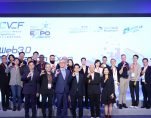
Two-day forum explores AI and blockchain venture capital landscape, unveiling new global capital trends HONG KONG SAR – Media OutReach Newswire – 7 November 2025 – Cyberport’s flagship event, the Cyberport Venture Capital Forum 2025 (CVCF), achieved a record-breaking over 500 deal flows, with more than 2,700 attendees and over 180,000 online views. Themed “The Innovation-Venture Nexus: Igniting Transformative Success”, the two-day forum, together with highlight events […]

Apple TV+ experienced a brief service disruption on Thursday night, coinciding with the premiere of Pluribus, the latest series from Vince Gilligan, renowned for his work on Breaking Bad. The outage affected users across various regions, resulting in interruptions during the initial broadcast of the much-awaited show, which had generated significant buzz. Subscribers attempting to access the series faced difficulties connecting to the streaming platform. Error messages […]

Cyberport Welcomed 10 Listed Companies and 2 Unicorns over the past year Cyberport Investors Network (CIN) Celebrates 8th Anniversary with a Yearly Threefold Growth Cumulative Funds Surpassed HK$4.2 Billion HONG KONG SAR – Media OutReach Newswire – 6 November 2025 – The annual flagship event Cyberport Venture Capital Forum 2025 (CVCF) officially opened today at Hong Kong Cyberport. The two-day forum, themed “The Innovation-Venture Nexus: Igniting Transformative […]

Turkish Airlines has finalised a landmark agreement with GE Aerospace to supply engines, spare engines and maintenance services for 75 Boeing 787-9 and -10 wide-body jets that the carrier has committed to acquiring. The deal covers the fleet due for delivery between 2029 and 2034 and marks a major step in the airline’s long-haul modernisation strategy.

The engine deal follows Turkish Airlines’ earlier announcement that it will purchase 75 Boeing long-haul aircraft as part of its fleet expansion. The airline stated that a full tender process for the engine, spare engine and maintenance package has been completed, culminating in the selection of GE Aerospace. The aircraft order is scheduled for delivery in the late-2020s and early 2030s.

Industry analysts note that the package offers Turkish Airlines integrated engine support over the lifecycle of the jets, aligning maintenance and spare-parts provisioning with its growth plans. The choice of GE Aerospace underscores the airline’s preference for a single-vendor solution, reducing complexity and potentially lowering long-term operating costs. Turkish Airlines’ chairman, Ahmet Bolat, stated that the airline expects to meet with Boeing and engine-supplier partners in the coming weeks to finalise its broader narrow-body fleet deals.

The wider fleet strategy to which this engines deal belongs involves Turkish Airlines’ intent to order up to 225 Boeing aircraft, including 75 wide-bodies and 150 narrow-body Boeing 737 MAX jets. That larger order remains subject to engine and maintenance negotiations for the 737 MAX fleet, in particular involving the joint-venture supplier CFM International. The engagement with GE Aerospace for the 787 bundle signals progress in the long-haul component of the airline’s transformation.

From a broader perspective, the engine deal comes at a time when global airlines are aggressively renewing fleets to improve fuel efficiency, reduce emissions and capture growth in international travel. The 787-9 and 787-10 variants are among Boeing’s most modern long-haul offerings, featuring advanced engines, aerodynamic enhancements and lower fuel burn. For GE Aerospace, securing the Turkish Airlines contract strengthens its market position in the wide-body market, where engine aftermarket services and spare-parts businesses constitute major revenue streams.

However, challenges lie ahead for Turkish Airlines. Deliveries of the 75 aircraft are spread out across 2029 to 2034, which means that the full benefits of the programme will not be realised for several years. Additionally, the narrow-body fleet deal remains unresolved, and any delay or change in that part could impact the airline’s overall fleet plan. The engine market itself is under pressure: supply-chain constraints, rising maintenance costs and global competition among engine makers could affect delivery schedules and pricing. For GE Aerospace, while the contract is valuable, it also carries long-term service-commitment risks, especially given the complexity of wide-body fleet operations.

Financial market observers say the announcement may provide a boost to Boeing’s orderbook visibility and reassure suppliers about long-term demand. Boeing will need to coordinate closely with GE Aerospace to support Turkish Airlines’ maintenance-and-spares demands, and the success of this deal may influence competitive dynamics for future orders from other carriers. For Turkish Airlines, the ability to ramp up long-haul services with modern aircraft may enhance its hub connectivity, strengthen its international reach and improve cost-competitiveness versus rivals.

VISHNU RAJA
RYO YAMADA
HITORI GOTOH
IKUYO KITA