News related to
Trends

Russia has launched a Proton-M carrier rocket carrying a meteorological satellite into orbit, marking a further step in Moscow’s efforts to sustain and upgrade its space-based weather monitoring network amid sweeping international sanctions and technical challenges. The heavy-lift rocket blasted off from the Baikonur Cosmodrome in Kazakhstan, operated by Russia under a long-term lease, placing the satellite into a designated orbit after a multi-stage ascent. Roscosmos, the […]

South African share prices rose on Thursday as investors balanced optimism over global market trends with caution ahead of President Cyril Ramaphosa’s keynote address to Parliament and the release of critical domestic economic information. The benchmark Johannesburg Stock Exchange Top-40 index climbed around 0.5 per cent during early trade, buoyed by gains in resource and financial stocks, while the rand strengthened modestly against the US dollar, reflecting […]

Forecasters are positioning what has been one of the weakest La Niña events in years to diminish through the first half of 2026, with climatologists projecting a transition to neutral Pacific conditions between February and April. This shift, shaped by evolving ocean-atmosphere interactions across the equatorial Pacific, could lessen the climatic imprint of La Niña on global weather patterns and open the way for the next stage […]

YZi Labs is carving out a niche in venture capital by backing ideas that remain largely theoretical, wagering on founders who are attempting to build products and platforms that do not yet exist. Speaking about the firm’s strategy, managing partner Ella Zhang says YZi Labs is guided less by market cycles and more by what she calls “first principles thinking” — a focus on fundamental technological shifts […]

PocketBook has unveiled the InkPad One, a 10.3-inch e-ink tablet built on an open Linux architecture, positioning it as a direct challenger to Amazon’s Kindle Scribe and signalling a push to loosen the grip of closed digital reading ecosystems. The device combines stylus support with broad file compatibility, underscoring the Swiss-based company’s attempt to appeal to readers and professionals seeking greater control over their digital libraries. The […]

Dubai has confirmed plans for the first four stations of its underground Dubai Loop transport system, linking Dubai International Financial Centre and Dubai Mall in an initial phase designed to transform short-distance urban travel. Authorities say the network will ultimately expand to 19 stations, with a fleet of 100 specialised vehicles capable of moving up to 13,000 passengers a day. The project, valued at approximately AED 2.5 […]

Arabian Post Staff -Dubai United Arab Bank delivered a sharp improvement in earnings for 2025, reporting a 45 per cent rise in net profit after tax to AED 437.85 million, compared with AED 300.96 million a year earlier, as higher operating income and disciplined cost management lifted performance. Earnings per share increased to AED 0.18, reflecting the stronger bottom line and steady capital position. The board also […]

Advertisements

Arabian Post Staff -Dubai Samsung has confirmed that it will unveil its next flagship smartphone lineup, the Galaxy S26 series, at its Galaxy Unpacked event taking place on February 25 in San Francisco, signalling a pivotal moment for the mobile technology sector as the company pushes deeper into AI-powered devices and refined hardware. The highly anticipated event, scheduled to begin at 10 a. m. Pacific Time, will […]

Arabian Post Staff -Dubai Dubai’s property market set a new benchmark on 26 January after recording Dh15.6 billion in real estate transactions in a single day, the highest daily value ever logged, according to figures released by the Dubai Land Department. The total was generated through 1,501 transactions, underscoring the scale and depth of activity across land plots, residential units and entire buildings. Sales alone accounted for […]

  • “Geopolitical Volatility” is a top five current and future risk, highlighting the growing instability across the region
  • 83 Percent of Firms Report Rising Insurable Risk Costs

TOKYO, JAPAN – Media OutReach Newswire – 12 February 2026 – Aon plc (NYSE: AON), a leading global professional services firm, has released the Japan findings of its 2025 Global Risk Management Survey. The survey reveals that Japanese businesses are navigating a complex landscape marked by persistent cyber threats, supply chain disruptions and weather/natural disasters. The survey, which gathered insights from nearly 3,000 risk managers, C-suite leaders and executives across 63 countries, highlights the unique risks Japan businesses are facing amid global disruption.

Japan’s Top Risks:

“Cyber Attacks/Data Breach” remains the top risk for Japanese businesses, consistent with global trends. “Supply chain or distribution failure” ranks second, as extreme weather events and mounting geopolitical volatility including shifting trade policies force companies to reassess their supply chains. In addition, “Product Liability/Recall” and “Exchange Rate Fluctuation” pose significant risks, reflecting the country’s manufacturing strength and exposure to global market volatility. Notably, 63.6 percent of Japanese respondents reported losses due to product liability or recall issues and 47.6 percent cited losses from exchange rate fluctuations.

Tatsuya Yamamoto, CEO of Japan at Aon, said, “Japanese organisations are operating in an environment of unprecedented complexity. Cyber, weather and geopolitical risks continue to be acute challenges for Japan businesses, underscoring the need for robust risk management frameworks and agile strategies. As market trends shift and competition intensifies, vigilance and adaptability will be key. The interconnectedness of risks – where a cyber attack can disrupt supply chains or geopolitical volatility can trigger regulatory changes – demands a holistic, proactive approach to resilience.”

2025 Top 10 Business Risks in Japan

  1. Cyber Attacks/Data Breach
  2. Supply Chain or Distribution Failure
  3. Weather/Natural Disasters
  4. Geopolitical Volatility
  5. Business Interruption
  6. Economic Slowdown/Slow Recovery
  7. Exchange Rate Fluctuation
  8. Commodity Price Risk/Scarcity of Materials
  9. Product Liability/Recall
  10. Failure to Attract or Retain Top Talent

Risk Management: Formalisation and Focus on Insurable Risks

Japanese organisations demonstrate a strong commitment to risk management, with 74.7 percent having a formal risk management and insurance department, compared to 68.4 percent globally. Additionally, 75.3 percent measure the total cost of insurable risk and 83.3 percent report that these costs are increasing. While risk awareness is rising, most organisations have yet to quantify their exposures or leverage advanced analytics.

Japanese Businesses Risk Management Assessments for Top Three Risks

For “Cyber Attacks/Data Breaches”:

  1. 27.2 percent have assessed the risk
  2. 12.6 percent have developed continuity plans
  3. 22.3 Percent have risk management plans

For “Supply Chain or Distribution Failure”:

  1. 25 percent have assessed the risk
  2. 20 percent have developed continuity plans
  3. 26.7 Percent have risk management plans

For “Weather/Natural Disasters”:

  1. 24.1 percent have assessed the risk
  2. 22.4 percent have developed continuity plans
  3. 13.8 percent have risk management plans

Future Risks: Rapidly Changing Market Trends and Geopolitical Volatility

Looking ahead, Japanese organisations expect “Weather/Natural Disasters” and “Geopolitical Volatility” to remain critical risks, alongside “Rapidly Changing Market Trends,” which is more prominent in Japan than globally. This highlights the country’s exposure to climate events and evolving consumer preferences.

Japan’s Top Five Future Business Risks by 2028:

  1. Cyber Attacks/Data Breach
  2. Weather/Natural Disasters
  3. Geopolitical Volatility
  4. Rapidly Changing Market Trends
  5. Increasing Competition

Shinichi Kandatsu, head of Commercial Risk Solutions for Japan at Aon, said, “Cyber and weather-related risks continue to lead the rankings as top concerns for Japanese businesses today and in the future, with geopolitical volatility also ranking among the top five risks across both periods. This trend reflects the growing instability across the region, with implications for supply chains, regulatory environments and financial performance. In today’s fast-moving market, leveraging advanced data analytics is essential for businesses to anticipate emerging risks, optimise risk capital and build resilience. The findings from Aon’s Global Risk Management Survey provide Japanese businesses with actionable information to benchmark their risk strategies and identify areas for improvement.”

To access the full report and explore how Aon is helping clients navigate today’s disruption dynamic, visit Global Risk Management Survey Japan

Hashtag: #Aon

The issuer is solely responsible for the content of this announcement.

About Aon

Aon plc (NYSE: AON) exists to shape decisions for the better — to protect and enrich the lives of people around the world. Through actionable analytic insight, globally integrated Risk Capital and Human Capital expertise, and locally relevant solutions, our colleagues provide clients in over 120 countries with the clarity and confidence to make better risk and people decisions that help protect and grow their businesses.

Follow Aon on LinkedIn, X, Facebook and Instagram. Stay up-to-date by visiting Aon’s newsroom and sign up for news alerts here.

Disclaimer

The information contained in this document is solely for information purposes, for general guidance only and is not intended to address the circumstances of any particular individual or entity. Although Aon endeavours to provide accurate and timely information and uses sources that it considers reliable, the firm does not warrant, represent or guarantee the accuracy, adequacy, completeness or fitness for any purpose of any content of this document and can accept no liability for any loss incurred in any way by any person who may rely on it. There can be no guarantee that the information contained in this document will remain accurate as on the date it is received or that it will continue to be accurate in the future. No individual or entity should make decisions or act based solely on the information contained herein without appropriate professional advice and targeted research.


Arabian Post Staff -Dubai Rivian Automotive is quietly extending its software footprint beyond the dashboard, with work under way on an Apple Watch companion app that signals a broader push into connected vehicle experiences ahead of its next phase of growth. Code references found within Rivian’s iPhone application point to functionality designed for the Apple Watch, suggesting the electric vehicle maker is preparing to let drivers interact […]

Arabian Post Staff -Dubai A one-year-old child has undergone a highly complex bone marrow transplant at Yas Clinic Abu Dhabi, marking a significant step in the expansion of advanced paediatric cancer care in the capital. The procedure, carried out at the clinic’s Khalifa City facility, was delivered in close clinical collaboration with the Abu Dhabi Stem Cells Centre, and involved months of preparation, donor matching, and post-transplant […]

AGMC has initiated construction on a substantial newBMW Group retail and service complex in Ras Al Khor, signalling another phase of its expansion across the United Arab Emirates. The automotive dealer, a long-established importer of BMW, MINI and Motorrad vehicles for Dubai, Sharjah, Ajman, Umm Al Quwain, Ras Al Khaimah and Fujairah, brought together industry partners, executives and dignitaries for a ceremonial groundbreaking that underscores its growing […]

Dubai International Financial Centre has expanded its urban footprint with the unveiling of The Residences, marking the first residential development within Phase A of the newly announced DIFC Zabeel District and signalling a strategic shift in the centre’s evolution from a business-focused zone to a fully integrated city district. The project, developed and overseen by DIFC Developments, introduces two residential towers comprising 463 homes, positioned as the […]

Aldar Properties and Dubai Holding have broadened their flagship joint venture, adding two strategic land plots in Dubai that will deliver close to 14,000 new homes with a combined gross development value exceeding AED38 billion, reinforcing the emirate’s position as one of the world’s most active residential development markets. The expansion builds on the partnership launched in 2023 and signals Aldar’s accelerating growth in Dubai following the […]

The B2B cross-border trade payment market is immense, yet remain highly underserved

HONG KONG SAR – Media OutReach Newswire – 9 February 2026 – According to the World Bank, SMEs account for approximately 90% the world’s businesses and contribute 65% of the global cross-border trade. SMEs play a pivotal rolein most economies, particularly in emerging markets. Estimates from the World Trade Organization (WTO) and the Organization for Economic Co-operation and Development (OECD) suggest that B2B cross-border trade payment market for SMEs is worth approximately $20 trillion.

However, traditional commercial banks have been facing multiple challenges in serving SMEs, including strict compliance and risk control requirements, lower profit generating, and license limitations, resulting in a large unmet demand through formal financial systems.

XTransfer’s field research in emerging markets indicates that many SMEs resort to illicit settlement channels like underground banks out of necessity. In fact, the trade volume processed through these unofficial avenues could be 2 to 5 times larger than the official import and export figures.

Compared to other segments, B2B cross-border payment presents vast opportunities

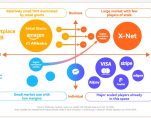
In the cross-border payment industry, services can be categorised into four segments based on money flows:

Four segments in cross-border payment industry.

Marketplace 2B
These businesses provide payment processing services for sellers on e-commerce platforms. Risk control is primarily based on e-commerce platform’s integrated of data streams (e.g., merchant details, logistics, transaction history). With relatively low technical barriers and compliance capabilities, the industry is highly saturated.

B2B
Focused on traditional cross-border trade enterprises, this segment has huge potential but features high risk control complexity and high barriers. Payment service providers must individually verify the entire information flow pertaining to each transaction (including buyer/seller details, orders, logistics, contracts, etc.), which results in many companies attempting to enter, but few succeed.

C2C
This primarily covers cross-border remittances between individuals. The overall market scale is relatively small, with limited use cases.

C2B
This is the most well-established segment, dominated by cross-border payment giants such as Visa, Mastercard, PayPal, and Stripe. The market is saturated with intense competition.

As a reference, the C2B cross-border payment industry has evolved dramatically over the last five decades, especially in the past ten years. Mobile wallet providers in China, the U.S. and Europe drove the mobile payment revolution, establishing a well-established cross-border settlement and risk control platform dominated by card schemes and wallets like PayPal. The system features significant advantages, including efficient transaction processes and unified risk control standards.

In contrast, B2B cross-border payments still primarily rely on traditional bank transfers. The sector as a whole is still on the cusp of the “mobile payment revolution” and has not yet formed a unified clearing mechanism or a standardized risk control system.

The payment sector need a new platform.

However, this development gap also points to a huge market opportunity. The B2B cross-border settlement market for SMEs desperately needs a shake-up. Service providers that possess a deep understanding of global customer needs and are equipped with technological and compliance capabilities will unleash vast growth potential in this space.

Beyond Borders: XTransfer Insights is a thought-leadership series that shares XTransfer’s perspectives on the forces shaping global trade and financial services. Through research-driven insights and real-world observations, it highlights emerging trends, key challenges, and opportunities across international markets.
Hashtag: #XTransfer #Crossborder #Payment #SMEs #whitepaper


The issuer is solely responsible for the content of this announcement.

Uber’s push into autonomous vehicles hinges on a complex sensor ecosystem that is increasingly central to how the company positions itself in the future of transportation, even as it pivots from building self-driving systems internally to orchestrating partnerships across the sector. The ability of vehicles to perceive, predict and respond to real-world conditions depends on the performance, redundancy and cost of the sensors that sit at the […]

Rolls-Royce Motor Cars has strengthened its presence in the Middle East with the opening of a second showroom in Dubai, underlining the marque’s confidence in sustained demand for ultra-luxury vehicles in the emirate and the wider Gulf. The new Rolls-Royce Motor Cars Dubai City Walk showroom adds to the brand’s long-established location on Sheikh Zayed Road and reflects a strategy focused on proximity to clients and highly […]

Big technology groups have entered earnings season facing a sharper set of questions from investors as capital expenditure tied to artificial intelligence accelerates while core cloud businesses show steadier, more measured growth. Quarterly disclosures from the largest United States-based technology companies point to a widening gap between the scale of investment being committed to AI infrastructure and the pace at which that spending is translating into clearly […]

Arabian Post Staff -Dubai UAE’s floating hospital anchored off Al Arish on Egypt’s Mediterranean coast has admitted 10 additional patients evacuated from the Gaza Strip over the past three days, according to officials involved in the humanitarian operation. The patients, including children and adults, were transferred through coordinated medical corridors and assessed on arrival for injuries and complex health conditions linked to the prolonged conflict. Medical teams […]

A $3tn pipeline of real estate and infrastructure projects across the Middle East and Africa between 2026 and 2030 is sharpening investor focus on the region’s capacity to sustain high growth into 2026, with the UAE expected to account for a substantial share of capital deployment, according to new industry assessments. Market projections point to project cash flows of about $795bn in the UAE over the same […]

Dubai-based property developer Binghatti has priced a $500 million five-year sukuk after attracting demand that significantly exceeded the issue size, underscoring sustained investor appetite for higher-yield Gulf credit despite tighter global financial conditions. The Islamic bond was priced on Thursday with a profit rate of 8.375 per cent, equivalent to a spread of 461.3 basis points over US Treasuries, according to transaction details. Orderbooks climbed beyond $2.2 […]

Y Combinator continues to generate outsized returns from companies with roots in India even as its broader influence across Asia shows signs of long-term retreat, reflecting a strategic shift by the world’s best-known startup accelerator amid changing regional dynamics. While founders from Bengaluru, Chennai and Delhi remain visible in its demo days and alumni rosters, the programme no longer shapes Asia’s startup narrative in the way it once did.

Founded in 2005 in Silicon Valley, Y Combinator built its reputation by backing early-stage companies that later became global giants, including Airbnb, Stripe and Dropbox. Its appeal in Asia peaked during the previous decade, when limited access to global capital and mentorship made association with a US-based accelerator especially valuable. India emerged as one of the biggest beneficiaries, with dozens of YC-backed startups securing follow-on funding, overseas market access and high-profile exits.

Companies such as Razorpay, Meesho and Groww, all of which passed through the YC ecosystem in earlier years, became reference points for founders seeking validation from global investors. India’s expanding pool of engineers, rising digital adoption and a large domestic market aligned well with YC’s software-first investment philosophy. These successes continue to deliver financial returns for the accelerator through equity stakes that have appreciated sharply as several firms reached unicorn valuations or prepared for public listings.

Yet the accelerator’s footprint across Asia has narrowed. YC formally closed its China-focused efforts earlier in the decade, citing regulatory complexity and difficulties operating within a tightening policy environment. Activity in Southeast Asia also slowed, with fewer batches featuring startups from Indonesia, Vietnam or Thailand compared with earlier years. The shift reflects not only YC’s internal priorities but also the maturation of Asia’s startup ecosystems, which now offer more local alternatives.

Across Asia, domestic accelerators, corporate venture arms and sovereign-backed funds have stepped in to fill gaps once dominated by Silicon Valley programmes. In India, initiatives backed by large conglomerates, universities and state governments provide capital, mentorship and market access without requiring relocation or deep integration into the US ecosystem. Southeast Asia has followed a similar path, with regional venture firms increasingly willing to lead early rounds.

YC itself has changed. The accelerator has leaned further into its core strengths, focusing on fewer geographies while doubling down on artificial intelligence, developer tools and enterprise software. Its decision to emphasise remote participation during and after the pandemic reduced the symbolic value of spending months in Silicon Valley, a factor that once set YC apart for Asian founders. While remote access broadened participation, it also diluted the sense of exclusivity that helped the programme stand out.

For Indian startups, the relationship with YC has become more transactional. Participation is still seen as a strong signal of quality, especially for companies targeting global markets or US-based customers. However, founders increasingly view YC as one of several possible launchpads rather than a defining milestone. Follow-on funding now depends less on accelerator pedigree and more on unit economics, regulatory clarity and the ability to scale within complex local markets.

Investors tracking Asia’s venture landscape note that YC’s reduced presence does not imply a loss of relevance everywhere. India remains an exception because of its scale, talent depth and ongoing pipeline of software-led startups with global ambitions. YC partners continue to engage with Indian founders, and each batch includes a steady, if smaller, number of companies from the country. Returns from earlier bets ensure that India remains financially meaningful to the accelerator.

At the same time, YC no longer sets the pace for Asia-wide innovation trends. Local accelerators and venture funds are shaping sectors such as fintech, climate technology and logistics, areas where regulatory nuance and on-the-ground execution matter as much as global networks. Governments across the region have also become more involved in startup promotion, offering grants, sandboxes and procurement opportunities that reduce reliance on foreign programmes.

JPMorgan has argued that bitcoin’s declining volatility relative to gold is reshaping long-term investment calculations, even as near-term pressures from exchange-traded fund outflows and futures market liquidations weigh on crypto prices. The bank’s analysts said the contrast between short-term stress and longer-horizon metrics highlights a shift under way in how institutional investors assess risk in digital assets. Bitcoin has traded within a tighter range over the past […]

VISHNU RAJA
RYO YAMADA
HITORI GOTOH
IKUYO KITA