News related to
across

Greenlogue/AP The European Commission has initiated a research and innovation project to develop megawatt charging systems tailored for heavy‑duty transport across the EU. Aimed at aligning with the Green Deal’s objective of 90 % CO₂ reductions for HGVs by 2040, the project supports pilot hubs combining ultra-high-power charging with operational road‑haul scenarios on major corridors. The initiative includes constructing two demonstration sites—one in the Nordic region and another […]

OPEC+ has escalated production quotas by roughly one million barrels per day from March to June, aiming to reactivate idled capacity, yet actual output across the group remains flat, according to data from Morgan Stanley analysts led by Martijn Rats. Saudi Arabia in particular shows no detectable uptick, underscoring a lag between policy shifts and market reality.

The decision to accelerate quota rollbacks follows sustained cuts totalling around 2.2 million b/d, initiated in early 2023 to support prices. With non‑OPEC supply growing and global demand weakening, the efficacy of supply restraint has waned, prompting OPEC+ to pivot back to restoring output gradually. Despite headline quota increases of approximately 137,000 b/d per month since April, actual deliveries appear limited.

Underlying structural factors are at play. Several members—most notably Kazakhstan and Iraq—have reportedly exceeded their quotas, diluting the announced gains. Saudi Arabia, with substantial spare capacity, stands out as the most capable contributor to any genuine rise in output. However, its contribution remains muted so far. Analysts suggest this reflects a strategic choice to reclaim market share rather than an immediate scale-up.

Analysts at Morgan Stanley project modest growth: between June and September, OPEC+ core members may add around 420,000 b/d—approximately half of which could originate from Saudi Arabia. Even then, actual production may fall well short of quotas, with implementation challenges persisting.

This gap between policy and output carries market implications. With more supply forecast, Morgan Stanley predicts a surplus of roughly 800,000 b/d in Q4 and 1.5–2.0 million b/d in early 2026, pressuring Brent crude prices down toward the mid‑$50s. Currently, Brent trades near $66 per barrel—11% below its level at the start of the year.

In parallel, geopolitical friction between Saudi Arabia and Russia surfaced during policy talks. Riyadh favoured a more aggressive quota rollback, while Moscow, alongside Oman and Algeria, urged caution amid worries about demand resilience. The compromise settled on another 411,000 b/d increase for July, a repetition of earlier monthly hikes.

Markets initially responded positively: oil prices climbed 3–4% following the July quota announcement, with Brent touching the mid‑$60s. That rebound, however, reflected relief over continuity rather than enthusiasm over fresh supply. Wildfires in Canada and refinery maintenance cycles were also cited as supporting factors.

Across OPEC+, reliability of quotas remains a concern. While some members exceed limits, others—constrained by infrastructure or investment—may struggle to ramp up. Saudi Arabia’s spare capacity remains central, but constraints on countries like Russia complicate the outlook even as OPEC+ restores cut volumes faster than planned.

Meanwhile, non‑OPEC supply continues to grow, particularly in the U.S., Canada, Guyana and Brazil—with forecast increases of about 1.1 million b/d in 2025. That expansion alone could outpace expected global demand growth of 800,000 b/d, risking oversupply irrespective of OPEC+ decisions.

With a full quota restoration now likely by September 2025—months ahead of the original schedule—and non‑OPEC volumes outweighing demand growth, the market faces a mounting supply glut heading into late 2025 and 2026. Analysts caution that idled capacity may remain untouched for months beyond official quotas, delaying meaningful production gains.

As OPEC+ enters this intensified phase of quota reopening, its central challenge remains execution rather than announcement. High-profile policy shifts are yet to translate into barrels at market, and the divergence between targets and reality could widen over the coming quarters. Market players are now watching whether Saudi Arabia leads by example or the rhetoric fades before the pumps do.

Arabian Post Staff -Dubai DP World Trade Finance and JPMorgan have struck an alliance designed to improve working capital availability in emerging economies, responding to an estimated global trade finance shortfall of US $2.5 trillion. The partnership combines DP World’s logistics capabilities with JPMorgan’s financial services to distribute risk on trade finance deals, ensuring underserved enterprises can access vital credit. The signature transaction under this collaboration financed a leading food company’s […]

HONG KONG SAR – Media OutReach Newswire – 9 June 2025 – Generali Hong Kong announces the launch of LionAchiever Elite (the “Plan”), a new flagship whole life savings and life insurance plan that offers customers high potential returns¹ with a short 2-year premium payment term, while also providing all-in-one legacy planning. Designed to support both wealth accumulation and legacy planning, the plan empowers customers to achieve […]

Arabian Post Staff -Dubai Wyze’s new Bulb Cam, retailing at $49.98, combines 2K HDR video with a smart LED light bulb that fits into any standard E26 fixture, bringing night‑vision surveillance to porches, garages and patios without additional wiring or recharging. The Bulb Cam delivers sharp 2K footage through a 160° field of view, enhanced by wide dynamic range and colour night vision for round‑the‑clock visibility. It supports two‑way […]

Kali GPT demonstrates a new frontier in cybersecurity, embedding an AI‑powered assistant directly into Kali Linux to streamline penetration testing for professionals and learners. Leveraging GPT‑4 architecture, the tool generates payloads, explains complex tools such as Metasploit and Nmap, and recommends relevant exploits—all within the terminal. For expert practitioners, the assistant accelerates assessments; for novices, it serves as an interactive mentor by translating technical concepts into clear guidance . […]

Debswana Diamond Company, Botswana’s premier diamond producer, has initiated a significant reduction in its mining operations, citing sustained global demand weakness and mounting economic pressures. The company, a 50-50 joint venture between the Botswana government and De Beers, announced a temporary halt in production at key sites, including the Jwaneng Cut-9 and Orapa mines, aligning output with the subdued market conditions. This strategic move follows a challenging […]

Advertisements

Murena has unveiled /e/OS 3.0, the latest iteration of its open-source, privacy-centric mobile operating system. This update introduces a suite of features aimed at bolstering user privacy and providing enhanced parental controls, positioning /e/OS as a compelling alternative for those seeking to minimize reliance on mainstream tech ecosystems. A notable addition is the integration of Murena Find, a search engine powered by Qwant. Operating in a default […]

Maein Khalid Since the pandemic, IPO activity across GCC capital markets has surged – offering a sharp contrast to the stop-start pace on New York’s Nasdaq and the near standstill on London’s LSE. Nearly 300 IPOs have raised around $50 billion across the Gulf since 2021. Below I outline six key macro themes shaping this post-Covid IPO boom in the GCC. First, contrary to expectations, the number, […]

MEXC, a prominent digital asset exchange, has accelerated its stablecoin expansion strategy after acquiring $20 million worth of USDe tokens, marking a notable milestone as its stablecoin ecosystem surpasses a $100 million total value locked . This move signals a determined push by MEXC to strengthen its position in the increasingly competitive stablecoin market and further diversify its crypto offerings.

The $20 million USDe acquisition represents a calculated effort to bolster liquidity and adoption of stablecoins pegged to the US dollar, which have become vital in reducing volatility within the cryptocurrency sector. Stablecoins like USDe offer users a more reliable medium of exchange and store of value compared to traditional cryptocurrencies, which can experience dramatic price swings. MEXC’s increasing focus on stablecoins aligns with global trends where institutional and retail investors seek safer avenues for digital asset investment amid regulatory uncertainties and market fluctuations.

Beyond the recent purchase of USDe, MEXC’s stablecoin portfolio has seen sustained growth, pushing the platform’s total stablecoin value locked to exceed $100 million. This figure reflects the combined assets users have committed within MEXC’s stablecoin ecosystem, encompassing liquidity pools, staking, and yield farming products. The growing TVL not only underscores user confidence but also enhances the exchange’s capacity to support high-volume trading and DeFi activities anchored by stablecoins.

MEXC’s engagement in the stablecoin space builds upon its earlier strategic $16 million investment in Ethena, a notable innovator specialising in stablecoin technology and ecosystem development. Ethena’s platform focuses on creating programmable, algorithmic stablecoins that aim to maintain price stability through decentralised governance and dynamic supply adjustments. By backing Ethena, MEXC has positioned itself at the forefront of stablecoin innovation, tapping into emerging technologies that could redefine how digital currencies achieve and sustain their peg.

The decision to invest heavily in USDe and Ethena also comes amid rising competition among exchanges and financial platforms seeking to capture market share in stablecoin issuance and trading. Major players like Tether , USD Coin , and Binance USD dominate market capitalization, but newer tokens like USDe have gained traction through enhanced transparency, regulatory compliance, and blockchain interoperability. MEXC’s adoption of USDe highlights its intent to diversify beyond the dominant incumbents, offering users alternatives that may align better with evolving regulatory frameworks.

Industry experts note that the integration of stablecoins into broader financial systems remains a critical driver for crypto adoption. Stablecoins facilitate cross-border payments, remittances, and decentralised finance applications with reduced friction and costs compared to fiat-based mechanisms. MEXC’s strategy of expanding its stablecoin offerings enhances its utility as a hub for such financial activities, making it attractive to a wider range of traders and developers.

Regulatory clarity surrounding stablecoins has varied globally, with some jurisdictions imposing stringent requirements while others promote innovation-friendly policies. MEXC, headquartered in Seychelles with a growing international presence, has adapted to this shifting landscape by aligning its stablecoin partnerships with platforms like Ethena that emphasise compliance and governance transparency. This approach aims to pre-empt potential regulatory hurdles and establish MEXC as a responsible player in the digital currency ecosystem.

The growth in MEXC’s TVL also corresponds with increased user engagement in decentralised finance products facilitated by stablecoins. Yield farming and staking opportunities offered on the platform encourage users to lock their assets in exchange for rewards, helping to boost liquidity and network activity. These products often depend on stablecoins to mitigate risk, offering participants a balance between yield generation and capital preservation.

Market analysts observe that the stablecoin sector is poised for further expansion as demand for digital dollar substitutes rises. Factors such as increasing institutional interest, the rise of central bank digital currencies , and the ongoing integration of blockchain technology into mainstream finance all contribute to stablecoins becoming indispensable in the crypto landscape. MEXC’s proactive steps to expand its stablecoin infrastructure may provide a competitive advantage as these trends accelerate.

The $100 million TVL milestone not only demonstrates MEXC’s capability to attract substantial user funds but also reflects confidence in the exchange’s technical infrastructure and security protocols. Ensuring safe custody and seamless transactions is crucial for stablecoin platforms, given the heightened regulatory scrutiny and user concerns over fraud and hacking incidents in the sector.

MEXC’s roadmap indicates continued efforts to broaden its stablecoin offerings, with potential plans to incorporate additional tokens and enhance cross-chain compatibility. This would enable users to transact stablecoins across multiple blockchain networks, facilitating greater interoperability and expanding MEXC’s reach within the decentralised finance space.

The exchange also plans to deepen its collaboration with DeFi projects and developers, positioning stablecoins as a foundational component for innovative financial products. This aligns with broader industry movements where stablecoins serve as the backbone for lending protocols, decentralised exchanges, and payment solutions.

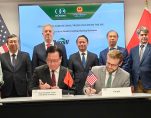
WASHINGTON D.C, US – Media OutReach Newswire – 7 June 2025 – Vietnam’s Minister of Agriculture and Environment Do Duc Duy led a delegation of nearly 50 agencies, agribusinesses, and associations to the United States from June 2–6, 2025, to promote trade and increase imports of agricultural and timber products. The delegation held business dialogues in Iowa, Ohio, Maryland and Washington, D.C. MoU signing to purchase US […]

A 6.4 magnitude earthquake struck northern Chile on Friday afternoon, causing minor infrastructure damage and leaving nearly 23,000 residents without electricity. No casualties have been reported, and authorities have ruled out the possibility of a tsunami. The quake occurred at 1:15 p.m. local time, with its epicentre located approximately 54 kilometres south of Diego de Almagro in the Atacama region, about 950 kilometres north of Santiago. The […]

The 2025 MICHELIN Guide selection in Vietnam features a record 181 establishments: 9 One MICHELIN Star (1 new and 1 promoted), 2 MICHELIN Green Star (1 new), 63 Bib Gourmand (9 new), and 109 MICHELIN Selected (14 new). CieL (Ho Chi Minh City) directly debuts with One MICHELIN Star, while Coco Dining (Ho Chi Minh City) is promoted to One MICHELIN Star. The new MICHELIN Green Star […]

Vietnam’s Vingroup and Gulf states are both rewriting their growth playbooks through state-led sustainability drives, forging a parallel transformation from legacy empires into green innovation hubs. HANOI, VIETNAM – Media OutReach Newswire – 6 June 2025 – Vietnam’s Vingroup and Gulf nations share parallel journeys of strategic reinvention, as the old playbooks that delivered decades of growth are showing their limits. While Gulf countries built wealth on […]

Startups across India are increasingly turning to non-dilutive funding options to secure capital while retaining full ownership and control. This shift is driven by a desire to avoid the equity dilution often associated with traditional venture capital, especially amid fluctuating valuations and heightened investor scrutiny. Non-dilutive funding encompasses various financial instruments, including venture debt, revenue-based financing, and government grants. These options provide startups with the necessary capital […]

HONG KONG SAR – Media OutReach Newswire – 5 May 2025 – As artificial intelligence (AI) and mobile technology rapidly reshape the digital landscape, the online behaviors and media consumption habits of Hong Kong consumers are evolving at an unprecedented pace. According to the latest 《Digital 2025: Hong Kong》report, local internet penetration has reached 96%, while mobile device adoption has soared to 235%. Consuming video content and […]

The manufacturing landscape in India is undergoing a profound transformation as nearly all major players invest heavily in artificial intelligence and machine learning technologies. This shift reflects a strategic focus on boosting operational efficiency, driving business impact, and advancing sustainability goals. An extensive survey by Rockwell Automation reveals that Indian manufacturers are rapidly adopting AI and ML to remain competitive in a global marketplace increasingly dominated by digital innovation.

Manufacturers across India are leveraging AI and ML to optimise production processes, reduce costs, and enhance product quality. The integration of these technologies into factory operations enables predictive maintenance, real-time monitoring, and automation of complex tasks. This leads to minimising downtime, improving yield, and accelerating time-to-market. Industrial leaders cite AI and ML as essential tools for unlocking value amid rising raw material prices and supply chain uncertainties.

The adoption rates in India closely mirror global trends but stand out for the intensity of focus on sustainability. AI-driven analytics allow manufacturers to significantly cut energy consumption and waste, contributing to environmental goals aligned with international standards and India’s own climate commitments. Companies are deploying smart sensors and AI algorithms to monitor emissions and optimise resource use, which is crucial as regulatory pressures tighten and consumer expectations evolve.

Executives in India report that their investment in AI and ML technologies is yielding measurable returns. Data from the Rockwell Automation survey indicates that over 90% of respondents observe improved operational performance attributable to these digital initiatives. Furthermore, nearly three-quarters affirm that their AI-driven strategies have enhanced decision-making speed and accuracy, facilitating quicker responses to market demands and disruptions.

The Indian government’s push to encourage digital adoption in manufacturing, through initiatives such as ‘Make in India’ and the National Strategy on AI, complements corporate efforts. Policy frameworks supporting Industry 4.0 advancements, including financial incentives and infrastructure development, have accelerated the uptake of AI and ML technologies. This alignment between public policy and private sector ambition has created a fertile environment for innovation in the manufacturing ecosystem.

Several sectors within Indian manufacturing stand to benefit disproportionately from AI and ML integration. Automotive, pharmaceuticals, and consumer goods producers are early adopters, capitalising on AI’s ability to optimise supply chains, enhance product customisation, and improve quality control. For example, AI algorithms can predict demand patterns more accurately, enabling just-in-time inventory management that reduces excess stock and associated costs.

While enthusiasm for AI and ML is high, manufacturers face challenges in implementation. Shortages of skilled personnel who can develop and maintain AI systems are common, necessitating investment in workforce training and collaboration with technology providers. Cybersecurity remains a critical concern, as increased digital connectivity opens potential vulnerabilities. Firms are therefore balancing rapid technology deployment with robust risk management strategies to safeguard intellectual property and operational integrity.

The evolving role of AI and ML in manufacturing also raises questions about labour dynamics. Automation driven by these technologies has the potential to displace routine manual jobs but also creates opportunities for higher-skilled employment in areas such as data science, system maintenance, and process optimisation. Industry leaders emphasise the need for reskilling initiatives to ensure the workforce adapts to the demands of a more digitally integrated manufacturing sector.

Investors and technology companies are taking notice of India’s growing appetite for AI and ML in manufacturing. Partnerships between domestic manufacturers and global tech firms are expanding, bringing access to advanced AI platforms and expertise. Indian startups specialising in industrial AI solutions are gaining traction, offering innovative products tailored to the unique challenges of Indian factories, such as managing variable power supply and legacy equipment integration.

The emphasis on sustainability powered by AI is gaining traction beyond regulatory compliance. Indian manufacturers recognise that eco-friendly operations can enhance brand value and meet the expectations of increasingly conscious consumers worldwide. Technologies that track carbon footprints, water usage, and waste generation help firms align with global environmental, social, and governance criteria, which are becoming decisive factors for international trade and investment.

As AI and ML technologies mature, their influence on Indian manufacturing’s competitive edge is expected to deepen. Automation of routine tasks frees human workers to focus on innovation and complex problem-solving, potentially accelerating product development cycles and enabling mass customisation. Real-time data analytics empower firms to respond nimbly to market fluctuations and supply chain disruptions, a critical advantage amid ongoing geopolitical and economic uncertainties.

The debt burden across the Middle East and North Africa has escalated markedly over the last decade, with many governments relying heavily on borrowing to sustain public spending amid economic challenges. This growing fiscal strain, combined with an increasing dependence on external donor funding, has amplified the influence of foreign actors on both domestic policies and regional geopolitics, raising concerns about the long-term economic sovereignty of these […]

Dubai’s real estate sector demonstrated remarkable momentum last month, with property transactions reaching a record AED 66.8 billion , reflecting a substantial 44% increase compared to the previous year. This surge highlights a growing population and robust demand across various market segments, driven by both primary and secondary sales.

The primary ready property segment emerged as a key growth area, experiencing a fourfold increase in sales value to AED 17.9 billion in May 2025. This sharp rise signals strong confidence among buyers seeking completed units, particularly in sought-after developments across Dubai’s key residential hubs. The secondary ready market also recorded significant gains, with sales amounting to AED 24 billion, up 21% year-on-year, underscoring ongoing interest in resale properties.

Combined, the value of primary ready and off-plan transactions soared by 65% to AED 37 billion, while secondary sales posted a 23% rise, reaching AED 29 billion. These figures set new benchmarks for Dubai’s real estate market, reinforcing its status as a vibrant and attractive destination for investors and end-users alike.

Market analysts point to several factors fueling this upward trajectory. Dubai’s population continues to expand rapidly, buoyed by relaxed visa policies and a growing expatriate community. This demographic shift is driving demand for residential properties across the emirate, particularly in areas offering integrated lifestyle amenities and proximity to business districts.

Infrastructure developments and government initiatives aimed at enhancing the city’s appeal remain key contributors to market confidence. Projects such as the Dubai Metro expansion, new business zones, and cultural hubs are attracting both domestic and international buyers. The real estate sector’s performance also benefits from Dubai’s position as a global trade and tourism hub, which sustains demand in the rental and resale markets.

Within the primary ready segment, the quadrupling of sales reflects a broader trend where buyers prefer completed properties over off-plan purchases, reducing exposure to construction delays and market fluctuations. This preference is particularly pronounced among end-users seeking immediate occupancy. Developers have responded by accelerating delivery schedules and introducing competitive pricing strategies to capture this demand.

Off-plan sales maintain a strong presence, contributing significantly to the overall primary market value. The willingness of buyers to commit to projects still under construction suggests continued optimism about Dubai’s long-term growth prospects. Developers are increasingly targeting affluent buyers with luxury offerings and integrated communities that blend residential, retail, and recreational spaces.

The secondary market’s 23% growth highlights the liquidity and resilience of Dubai’s property resale sector. Investors and homeowners alike are capitalising on rising property values, with many opting to upgrade or diversify their portfolios. This active resale market provides a vital avenue for market participants seeking flexible entry and exit points.

Data also reveals that demand is diversifying geographically. While prime locations such as Downtown Dubai, Dubai Marina, and Palm Jumeirah remain highly sought after, emerging areas like Dubai South and Mohammed bin Rashid City are gaining traction. These developments offer competitive pricing and extensive amenities, appealing to both investors and residents aiming for value and quality of life.

Real estate experts caution, however, that sustainability remains a crucial consideration amid rapid growth. Affordability challenges and potential oversupply in certain segments could temper future gains if not managed carefully. Nonetheless, current market dynamics suggest a healthy balance between supply and demand, supported by Dubai’s strategic economic vision.

Abu Dhabi will serve as the host for the Games of the Future 2025, a pioneering global event blending physical and digital sports. Scheduled for December 18 to 23, the competition aims to redefine the boundaries of athletic contests by merging traditional sporting disciplines with cutting-edge technology. This event marks a significant step in the evolution of international sports, as organisers position Abu Dhabi at the forefront of the phygital sports movement.

The Games of the Future will bring together elite athletes and esports competitors from across the world, competing in hybrid formats designed to test skill, strategy, and adaptability. The term “phygital” refers to the integration of physical and digital elements within the same competitive environment. This concept challenges conventional sports formats, creating new experiences for participants and audiences alike.

Organisers highlight that the Games of the Future are intended to captivate younger, tech-savvy audiences, whose preferences are shifting towards immersive and interactive entertainment. The event will showcase competitions that combine real-world physical prowess with virtual reality, augmented reality, and advanced sensor technologies. These innovations allow athletes to perform in augmented settings where physical actions influence digital gameplay in real time.

Abu Dhabi’s selection as host city follows extensive consideration of its infrastructure, innovation-driven vision, and commitment to becoming a global hub for futuristic sports and entertainment. The emirate has invested heavily in smart city technologies, sporting facilities, and digital innovation hubs, creating a conducive environment for this landmark event. Local authorities are confident that the Games will bolster Abu Dhabi’s reputation as a leader in hosting high-profile international sporting and cultural events.

The event will be staged across multiple venues, including state-of-the-art arenas equipped with immersive technologies, interactive fan zones, and digital broadcasting platforms. These setups are designed to offer spectators an unparalleled experience, allowing them to engage with the games through interactive apps, live data feeds, and virtual participation elements.

Key components of the Games will include virtual cycling races, drone racing, mixed-reality martial arts, and AI-assisted team sports. Each competition will be carefully crafted to balance physical skill with digital interaction, emphasising creativity, teamwork, and technological proficiency. Organisers have underscored the importance of fairness and integrity in the competition, with robust systems in place to ensure transparency and prevent cheating in both physical and digital realms.

Prominent figures in the world of sports technology have expressed optimism about the Games’ potential to accelerate the integration of digital tools in mainstream athletics. Experts argue that these innovations could provide new avenues for athlete training, injury prevention, and fan engagement. Furthermore, the Games of the Future could act as a testing ground for technologies that might soon become standard in traditional sports worldwide.

The event also reflects broader trends in the sports industry, where the lines between physical sports, esports, and entertainment are increasingly blurred. Sporting bodies and commercial partners are exploring hybrid formats as a way to reach diverse demographics and unlock new revenue streams. By hosting the Games, Abu Dhabi aims to position itself as a pioneer in this transformative phase.

Economic analysts project that the Games will generate significant benefits for the emirate, including increased tourism, job creation, and investment in related sectors such as technology, hospitality, and media production. The event’s timing aligns with Abu Dhabi’s broader economic diversification goals, supporting the emirate’s transition from a primarily oil-dependent economy to a knowledge-based, innovation-driven hub.

As the competition approaches, several international teams and technology companies are confirming participation, signalling robust global interest. Collaborative efforts between sporting federations, tech firms, and event organisers have been instrumental in developing the formats and rules, ensuring they are competitive, engaging, and scalable for future iterations.

The Games of the Future 2025 are expected to attract a wide media presence, with live broadcasts planned across multiple platforms to reach audiences worldwide. This extensive coverage will highlight both the athletic feats and the technological marvels on display, offering insights into how sports could evolve in the coming decades.

Organisers have committed to sustainability principles, incorporating eco-friendly practices throughout the event’s planning and execution. This includes energy-efficient venues, waste reduction initiatives, and promotion of digital engagement to minimise the carbon footprint typically associated with large-scale sports events.

The Games represent a convergence of sport, technology, and culture, reflecting the aspirations of a generation that embraces digital innovation while celebrating physical excellence. Abu Dhabi’s role as host underscores the emirate’s ambition to shape the future of global sports, setting a benchmark for how cities can adapt to and lead in the rapidly changing landscape of athletic competition.


SINGAPORE – Media OutReach Newswire – 6 June 2025 – The ultimate kids and family event of the year, K!DZ POP CON 2025, is set to take over Sands Expo & Convention Centre, Level 1, Halls A,B,C on 21–22 June 2025, and it’s bursting with exciting brand activations, workshops, live entertainment, and must-see experiences from some of the biggest names in kids’ entertainment! 21 – 22 June […]

Ghana’s gold reserves have surged to 31.37 tonnes in 2025, reaffirming its position as Africa’s leading gold producer. However, this growth is shadowed by a significant rise in artisanal and small-scale mining , which now accounts for nearly 40% of national output. The proliferation of unlicensed operations is raising alarms over environmental degradation, regulatory challenges, and the long-term sustainability of the country’s mining sector. The Ghana Chamber […]

Greenlogue/AP The United Arab Emirates will enforce a nationwide prohibition on the import, production, and trade of single-use plastic products starting 1 January 2026, as announced by Dr Amna bint Abdullah Al Dahak, Minister of Climate Change and Environment. This measure builds upon earlier initiatives, including the 2024 ban on plastic bags, and reflects the country’s commitment to environmental sustainability. The upcoming ban will encompass a range […]

Tineco launches the S9 Artist Steam—the latest addition to their best-selling S9 lineup. Experience the ultimate clean with this innovative floor washer, where cutting-edge technology meets energy efficiency and sleek design for unmatched performance. To complement the launch, exclusive brand-led promotions will be available on selected online platforms for purchases made on 6 June. SINGAPORE – Media OutReach Newswire – 3 June 2025 – Tineco, a global […]

VISHNU RAJA
RYO YAMADA
HITORI GOTOH
IKUYO KITA