News related to
agreement

Bull and Hon Hai Technology Group, better known as Foxconn, will manufacture artificial intelligence and cloud infrastructure in Europe under a strategic partnership designed to strengthen the region’s computing supply chain and reduce dependence on external technology providers. The project will use Foxconn’s manufacturing base in Pardubice in the Czech Republic and Bull’s factory in Angers, France, to produce AI systems and related components for European AI […]

HONG KONG SAR – Media OutReach Newswire – 3 June 2026 – A large delegation, led by John Lee, Chief Executive of the Hong Kong Special Administrative Region (HKSAR), is visiting Kazakhstan and Uzbekistan (June 1-6) to forge closer ties with Central Asia.

Comprising over 70 business and professional representatives from Hong Kong and the Chinese Mainland, the delegation has already yielded significant results at its first stop in Kazakhstan.

Speaking at a business luncheon in Astana yesterday (June 2), Mr Lee highlighted that 43 memoranda of understanding (MOU) and agreements have been concluded by the visiting delegation with companies and organisations from Kazakhstan, with more agreements to come.

“They span aviation, finance and trade, innovation and technology, the digital economy, green development, and more,” Mr Lee said, adding that a Hong Kong airline plans to launch direct flights to Almaty in the first quarter of 2027.

“I believe that Kazakhstan can serve as a hub for Hong Kong to connect with the Central Asian market. In turn, Hong Kong can be Central Asia’s hub in the east and southeast Asian region,” Mr Lee said.

“By strengthening co-operation between our two hubs, we can construct a hub-to-hub co-operation model.”

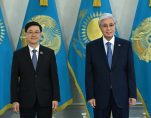
On his first day of visit in Astana (June 1), Mr Lee met with top government officials including the President of Kazakhstan, Kassym-Jomart Tokayev, Prime Minister Olzhas Bektenov, and Deputy Prime Minister and Minister of National Economy Serik Zhumangarin.

Hong Kong SAR's Chief Executive John Lee (left) meets with the President of Kazakhstan Kassym-Jomart Tokayev to exchange views on deepening bilateral relations.
Hong Kong SAR’s Chief Executive John Lee (left) meets with the President of Kazakhstan Kassym-Jomart Tokayev to exchange views on deepening bilateral relations.

Mr Lee noted that Kazakhstan has been actively promoting reforms on various fronts to bring about rapid economic growth.

“As one of the world’s three major financial centres, and the world’s largest cross-boundary wealth management centre and offshore Renminbi business hub, Hong Kong can provide diversified and flexible support including capital and asset allocation for Kazakhstan’s economic reforms and infrastructure development,” Mr Lee said.

The Chief Executive also encouraged companies in Kazakhstan to leverage Hong Kong’s advantages under the “one country, two systems” principle.

“Under this unique principle, Hong Kong has its own economic, social, legal, legislative and judicial systems. We are the only common law jurisdiction in China. We have our own currency, with no capital or foreign exchange controls. We are, as well, a separate customs territory,” Mr Lee said.

“The ‘one country, two systems’ principle ensures Hong Kong’s unparalleled access to the markets of the Chinese Mainland. Capitalising on our global connectivity and world-class professional services, Hong Kong is your ideal, two-way springboard for business expansion.”

Mr Lee also visited the Astana International Financial Centre and the Astana Hub, a local technology and innovation park, to respectively learn about Kazakhstan’s experience in promoting the development of the non-bank financial sector and the latest developments of the country in the field of AI.

Hong Kong SAR's Chief Executive John Lee (centre) witnesses the exchange of memoranda of understanding and co-operation agreements between organisations from both sides with the Governor of the Astana International Financial Centre Renat Bekturov (second right).
Hong Kong SAR’s Chief Executive John Lee (centre) witnesses the exchange of memoranda of understanding and co-operation agreements between organisations from both sides with the Governor of the Astana International Financial Centre Renat Bekturov (second right).

Before leaving Kazakhstan today (June 3), Mr Lee visited Nazarbayev University, underscoring the historic significance of the trip.

image-1.jpeg

“It was here, at Astana’s Nazarbayev University in 2013, that President Xi Jinping first raised the visionary initiative of jointly building the Silk Road Economic Belt – today’s Belt and Road Initiative (BRI),” Mr Lee said.

Last year, at the 10th Belt and Road Summit in Hong Kong, the university signed a MOU with the Hong Kong University of Science and Technology, demonstrating a shared commitment to advancing higher education co-operation under the BRI. It further reached MOUs with Hong Kong’s Education University and Polytechnic University today.

“These agreements will deepen academic and research collaboration.

“Hong Kong is the only city in the world with five of the top 100 universities. This talent environment is reinforced by our global standing: last year, Hong Kong ranked first in Asia, and fourth globally, in the World Talent Ranking,” he added.

Mr Lee will continue to lead the delegation to Uzbekistan for the second leg of the mission to Central Asia.

Hashtag: #hongkong #brandhongkong #asiasworldcity #opportunitieswithCentralAsia


The issuer is solely responsible for the content of this announcement.

Abu Dhabi Gaming has signed a strategic partnership with ASPIRE to accelerate AI-led game development, linking the emirate’s interactive entertainment ambitions with advanced research capabilities from one of its key technology institutions. The agreement was formalised during the A2RL Summit at ADNEC Centre Abu Dhabi, where global technology, mobility, autonomy and gaming specialists gathered to examine how artificial intelligence is reshaping industries built around real-time decision-making and […]

Washington and Tehran exchanged fresh military strikes across the Gulf, placing new pressure on a fragile ceasefire and raising the risk of wider disruption around one of the world’s most important energy corridors. US forces intercepted Iranian ballistic missiles and drones aimed at neighbouring Middle East countries and then struck a military ground control station on Iran’s Qeshm Island, near the Strait of Hormuz. The operation followed […]

Snowflake has placed Anthropic’s Claude at the centre of its enterprise artificial intelligence push, using Summit 26 to show rising customer uptake inside Cortex AI while a $6 billion infrastructure commitment to Amazon Web Services reshapes the economics behind its expansion. The data cloud company said enterprises are increasingly deploying Claude through Snowflake Cortex AI to run governed AI agents on business data without moving sensitive information […]

Advancing Cross-Border Payments Across Latin America and Europe

AMSTERDAM, NETHERLANDS – Media OutReach Newswire – 3 June 2026 – XTransfer, the world’s leading B2B cross-border trade payment platform, and BBVA, a global financial group, have signed a Memorandum of Understanding (MOU) during Money20/20 Europe 2026 in Amsterdam to deepen cross-border payment infrastructure across Latin America and Europe.

The MOU was signed by Bill Deng, Founder and CEO of XTransfer, and Ksenia Nekrasova, Global Sector Co-Head of TMT at BBVA, at Money20/20 Europe 2026 in Amsterdam.

Under the MOU, XTransfer and BBVA will combine their respective strengths to explore the delivery of integrated cross-border financial solutions, spanning FX conversion, local payments and cross-border payments across Latin America, Europe and Hong Kong SAR.

The parties will also explore leveraging technology and innovation, including APIs, digital platforms, collection solutions and virtual accounts, to support more automated, real-time and seamless FX conversion and transaction processing. By streamlining payment flows and improving operational connectivity, the collaboration is expected to enhance the scalability, efficiency and reliability of cross-border financial services for SMEs engaged in international trade.

In recent years, trade between China and Latin America has grown closer. XTransfer data shows that in 2025, payment collections from Latin America on its platform rose 94% y-o-y. Yet many SMEs still face major cross-border settlement hurdles, including slow onboarding, FX constraints, and complex compliance. The partnership between XTransfer and BBVA is structured to tackle these barriers directly.

For XTransfer, the partnership strengthens the coverage and depth of X-Net, its global unified B2B cross-border settlement and risk management network, in two of the most important regions for its SME clients. With Latin America emerging as a high-growth corridor for Chinese exporter settlements, BBVA’s strong presence across Latin America and Europe further strengthens XTransfer’s reach and competitive position.

With XTransfer’s network of more than 897,000 SME clients worldwide, the partnership also strengthens BBVA’s position in global payments and expands its ability to serve a broader, more diverse client base across multiple regions.

Bill Deng, Founder and CEO of XTransfer, said, “Latin America remains an active but underserved B2B trade corridor, where SMEs still encounter significant challenges. We are pleased to sign this MOU with BBVA, enabling us to leverage their expertise to bring X-Net’s infrastructure directly into the region. Together, we aim to simplify cross-border finance and improve the efficiency and inclusivity for global traders.”

Ksenia Nekrasova, Global Sector Co-Head of TMT at BBVA, said: “Beyond the growth in flows, we are seeing a shift in how our clients operate: digital platforms with global, real-time and highly integrated needs. This agreement allows us to anticipate that evolution, strengthening our capabilities in the TMT space and supporting these clients in their international expansion with solutions designed for their scale and complexity.”
Hashtag: #XTransfer #BBVA #CrossborderPayments #SMEs


The issuer is solely responsible for the content of this announcement.

About XTransfer

XTransfer, the world’s largest B2B cross-border trade payment platform with over US$60 billion TPV in 2025, according to CIC. Founded in 2017 as one of the first payment platforms worldwide dedicated to B2B cross-border trade, we serve the largest customer base of over 800,000 registered SMEs globally as of March 31, 2026.

We connect top-tier financial institutions directly to SMEs, the backbone of global trade, giving businesses of every size access to the same secure, compliant and seamless payment infrastructure once reserved for multinationals. As of March 31, 2026, we provide payment services across more than 200 countries and regions through partnerships with financial institutions, including some of the most established international banks around the world.

XTransfer has obtained required licenses in major hubs, including the Chinese Mainland, Hong Kong, the United Kingdom, the United States, Singapore, the Netherlands, Australia and Canada.

For more information, please visit: https://www.xtransfer.com

House of Doge has struck a partnership with Paxos to place Dogecoin on regulated brokerage and custody infrastructure used by major financial technology platforms, marking a fresh push to move the meme-origin cryptocurrency deeper into mainstream digital asset services. The agreement, announced on June 1, 2026, will integrate DOGE into Paxos’s enterprise crypto platform, allowing Paxos clients to offer buying, selling, holding and transfer functions for the […]

Advertisements

Arabian Post Staff -Dubai Abu Dhabi’s AD Ports Group has agreed to acquire Corredor Logística e Infraestrutura, a São Paulo-based agribulk terminal operator, in an AED3.1 billion deal that gives the company its first operating platform in Latin America and a stronger position in global food supply chains. The transaction, valued at about $835 million, is the largest acquisition undertaken by AD Ports Group and is expected […]

Advancing Research Commercialization and Building a Vibrant I&T Ecosystem

HONG KONG SAR – Media OutReach Newswire – 2 June 2026 – The Hong Kong University of Science and Technology (HKUST) today successfully hosted its annual “Unicorn Day,” one of Hong Kong’s flagship innovation and entrepreneurship events. The event brought together over 1,800 participants, including students, faculty, and alumni, as well as international and local government representatives, industry partners, investors, innovation and technology entrepreneurs, and researchers. Participants exchanged insights on strategies to strengthen collaboration across the innovation ecosystem, foster cross-disciplinary partnerships, and accelerate the translation of research outcomes into real-world impact.

The event was officiated by Prof. SUN Dong, Secretary for Innovation, Technology and Industry of the HKSAR Government, alongside consuls-generals and senior officials from countries including Australia, Chile, France, Hungary, India, Japan, Malaysia, the Netherlands, Vietnam, and the United Arab Emirates. They were joined by Prof. Nancy IP, HKUST President; Prof. Lionel NI, HKUST (Guangzhou) President; and Prof. Tim CHENG, HKUST Vice-President for Research and Development; in touring over 100 HKUST-nurtured startups, showcasing innovations and applications spanning areas such as healthcare, electronics, and artificial intelligence systems, as well as new materials, green energy, and sustainability.

Prof. Sun Dong remarked, “Innovation and technology (I&T) has always been at the top of the Hong Kong SAR Government’s agenda. We fully recognise the crucial role of local universities — not only as key partners, but as the bedrock of Hong Kong’s I&T ecosystem. In just three and a half decades, HKUST has risen to become a global powerhouse in deep tech, entrepreneurship, and innovation as demonstrated by its ability to nurture unicorns and deep-tech ventures. Hong Kong is entering a golden era of I&T development. We are building new engines to drive Hong Kong’s high-quality development, focusing on research and development in key fields and leading industry applications. I am confident that Hong Kong will rise as a leading international I&T center and contribute meaningfully to our nation’s high-quality development, and that HKUST will continue to be a driving force in this amazing journey.”

President Ip said, “As we mark the 35th anniversary of HKUST this year, we also celebrate the spirit of innovation and entrepreneurship that has long been embedded in our DNA. Both the Technology Transfer Center and the Entrepreneurship Center were established in the University’s early years to support faculty and students in realizing their entrepreneurial aspirations and to promote the translation of research outcomes into practical solutions. Over the past 35 years, the University has forged ahead with determination, sowing the seeds of innovation and yielding remarkable achievements across multiple frontier fields. Today, HKUST continues to broaden its horizons, strategically positioning itself in key domains. One example is medical education. The establishment of the HKUST Medical School will integrate the life sciences with cutting-edge technologies to nurture a new generation of interdisciplinary medical professionals.

Concurrently, HKUST has been actively involved in national initiatives such as the Chang’E 8 lunar exploration mission and research projects for the Tiangong Space Station, and the launch of the first commercially viable aerospace project under the RAISe+ Scheme. These achievements exemplify HKUST’s enduring ‘can do’ spirit over the past decades and echo the theme of today’s event—’From Ideas to Miracles—35 Years of Impact and Beyond’. Looking ahead, HKUST will continue to nurture bold ideas and action, working hand in hand with partners across different sectors to cultivate a vibrant innovation ecosystem, ensuring that research achievements benefit society and create lasting global impact.”

To support startups in expanding into global markets and to promote cross-border collaboration, HKUST introduced an “International Pavilion,” featuring startups and innovation organizations from various countries and regions. Participants from Thailand, Singapore and Korea were among those represented, strengthening connections between Hong Kong, and countries and regions along the Belt and Road in technology application and industry development.

The event also saw the signing of multiple partnership agreements, including six strategic collaborations with:

  • GPTX Investment Management Limited
  • China Everbright Water Limited
  • Jiangsu Daotop Environmental Technology
  • Samsung R&D Institute China – Guangzhou
  • CalmCar Physical AI Innovation Center
  • InnoAngel

to advance talent development and industry–academia integration, and foster innovation-driven research and real-world technology translation.

HKUST’s I&T Strength Driving Economic Growth

In addition, HKUST also released the report Driving Socioeconomic Impact Through Research and Innovation: Insights from HKUST, commissioned by the University and prepared by the international research information analytics organization Elsevier. The report highlights HKUST’s outstanding performance in innovation and entrepreneurship. Over the past five years, research output has recorded an average growth of 10%, approximately 9% higher than that of other local institutions. More than 65% of the research is concentrated in engineering and computer science, while 6.2% involves academia-industry collaboration, significantly higher than the global average of 2.7%. These collaborations have translated into impactful intellectual property, with approximately 1,670 patent applications and 700 grants over the same period, and a high IP utilization rate of above 30%.

Prof. Tim Cheng noted that the findings demonstrate HKUST’s steadily strengthening capabilities in research translation and academia-industry collaboration. HKUST’s publications achieved a Field-Weighted Citation Impact of 4.40, indicating that their citation impact is 4.4 times the global average. This underscores HKUST’s significant contributions to advancing Hong Kong’s socioeconomic development and enhancing its competitiveness in innovation and technology.

In addition, a “Marketplace” was also featured, showcasing products already launched by startups, including AI analytics tools, healthcare technologies, and smart city solutions, demonstrating the progress of translating research into practical applications.

Hashtag: #unicorn #unicornday #HKUST #partnership #innovation #startup #tech #AI #space #robotics #materialscience

The issuer is solely responsible for the content of this announcement.

Beijing’s new trade secret rules have taken effect, bringing data, algorithms, computer programs and source code explicitly within the country’s administrative protection system as China moves to curb technology leaks during a sharper contest with the United States over artificial intelligence, advanced computing and strategic know-how.

The Provisions on the Protection of Trade Secrets, issued by the State Administration for Market Regulation under Order No. 126, came into force on 1 June 2026 and replace rules first introduced in 1995. The overhaul gives regulators clearer authority to handle disputes involving digital assets that now sit at the centre of corporate value, from AI model architecture and training datasets to platform recommendation systems, software code and commercially valuable operational data.

The change marks a significant shift in China’s treatment of intangible technology assets. Earlier rules were drafted before cloud computing, AI systems and large-scale data operations became central to business competition. The new framework defines trade secrets as technical or business information that is not publicly known, has commercial value and has been subject to confidentiality measures by the rights holder. Technical information now expressly covers data, algorithms, computer programs and code, while business information can include management, sales, finance, planning, customer and operational data.

The timing gives the regulation wider strategic weight. China and the United States are locked in a prolonged technology rivalry involving semiconductor controls, restrictions on advanced computing hardware, limits on investment in sensitive sectors and scrutiny of cross-border technology transfers. Washington has tightened export controls on high-end chips and chipmaking equipment, while Beijing has expanded its own legal toolkit to protect critical technology, secure data flows and prevent overseas transfer of capabilities it regards as strategically important.

The new rules do not create a separate trade secret law, but provide more detailed administrative guidance under China’s Anti-Unfair Competition Law. They clarify how regulators should assess whether information is secret, whether it has commercial value, what counts as reasonable confidentiality measures and how infringement should be investigated. For companies, the central message is that protection will depend not only on the value of the information, but also on whether internal controls, access limits, confidentiality agreements, digital safeguards and evidence trails are in place.

The provisions also recognise that unsuccessful research can have commercial value. Stage-by-stage technical results, failed experimental data and development paths that save time or cost in future research may qualify for protection if they meet the legal conditions. That is especially relevant for AI labs, pharmaceutical developers, electric vehicle makers, chip design firms and advanced manufacturing groups, where failed trials can reveal important technical boundaries and prevent competitors from repeating expensive mistakes.

Regulators have been given practical enforcement tools, including powers to inspect business premises, question individuals, copy documents, examine electronic records and take action against materials linked to suspected infringement. Penalties can include orders to stop unlawful conduct, confiscation of illegal gains and fines that may reach CNY5 million in serious cases. The framework also covers improper acquisition, disclosure, use or permission to use trade secrets obtained through theft, bribery, fraud, coercion, electronic intrusion or breach of confidentiality obligations.

For multinational companies operating in China, the new rules create a mixed picture. Stronger protection could help firms defend proprietary data, software systems and industrial processes in a market where trade secret disputes have often been difficult to pursue. At the same time, wider protection for data and algorithms may increase compliance complexity, particularly in joint ventures, outsourced research, cloud services, employee mobility, cross-border collaboration and licensing arrangements.

Technology companies are likely to face tougher expectations over documentation. Firms seeking protection will need to show that the information was not easily accessible, carried economic value and was actively protected. Generic claims that an algorithm or dataset is confidential may not be enough. Companies will be expected to classify sensitive assets, restrict access by role, track downloads and transfers, maintain logs, use encryption or watermarking where appropriate, and ensure that employment and partnership contracts define confidentiality obligations with precision.

The rules also sit alongside China’s broader data and security regime, including laws on data security, personal information protection, cybersecurity and export control. That overlap could make enforcement more powerful but also more complicated. A dataset may be a trade secret, a regulated data asset and a cross-border transfer concern at the same time. Businesses handling AI training material, user behaviour data or industrial performance data will need to assess those obligations together rather than treating trade secret protection as a standalone issue.

Mette Frederiksen has secured a third consecutive term as Denmark’s prime minister after reaching a coalition agreement that ends nearly 10 weeks of political deadlock following the March 24 parliamentary election. The Social Democratic leader will head a centre-left minority administration made up of the Social Democrats, the Moderates, the Green Left and the Social Liberal Party. The deal keeps Frederiksen in power despite a weakened election […]

Emirates Telecommunications Group Company PJSC, known as e&, has agreed to sell part of its stake in Careem Technologies to Uber Technologies for $100 million in cash, reducing its majority position in the Dubai-based platform while keeping a sizeable exposure to one of the region’s best-known technology businesses. The binding agreement covers 12.5 per cent of e&’s 50.03 per cent holding in Careem Technologies. Once the transaction […]

Arabian Post Staff -Dubai Iran’s Revolutionary Guards said they targeted a US-linked airbase after American strikes hit military sites on Iran’s Gulf coast, adding fresh pressure to a fragile ceasefire that has failed to stop intermittent exchanges between Washington and Tehran. The latest confrontation followed US military strikes on radar, drone control and launch facilities near Qeshm Island and Goruk after the downing of an American MQ-1 […]

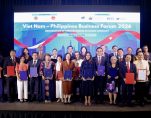
MANILA, PHILIPPINES – Media OutReach Newswire – 2 June 2026 – Vinpearl Joint Stock Company has signed Memorandums of Understanding (MoUs) with CAITO and Klook, partners with extensive networks and influence in the travel and digital tourism sectors in the Philippines and across the region. The agreements aim to enhance Vinpearl’s brand presence while promoting premium resort, golf, MICE and travel experience products in Nha Trang, Phu Quoc, and Da Nang to Filipino travelers.

Photo (11).jpg

The MoUs were signed during the Vietnam–Philippines Business Forum, held as part of the official visit by Party General Secretary and President Tô Lâm to the Republic of the Philippines.

The partnership with CAITO aims to enhance Vinpearl’s brand awareness within the Philippines’ travel trade community while creating additional opportunities to develop hospitality, entertainment and MICE offerings in Nha Trang, Phu Quoc and Da Nang. CAITO is currently one of the Philippines’ leading tourism organizations, with an extensive network of travel businesses across the region.

With Klook, one of Asia’s leading travel experience platforms, Vinpearl and VinWonders aim to expand their strategic collaboration across distribution, communications and tourism promotion in key international markets, particularly the Philippines and broader Southeast Asia. The partnership is expected to expand the presence of the Vinpearl–VinWonders ecosystem in major international markets, while further elevating Vietnam’s tourism image across global travel and digital media platforms.

Ms. Ngo Thi Huong, Chief Executive Officer of Vinpearl, shared: “Through these agreements in the Philippines, alongside a series of partnership initiatives in Thailand and Singapore, Vinpearl aims to drive high-quality inbound tourism to Vietnam, strengthen connectivity among ASEAN markets, and enhance the competitiveness of Vietnam’s tourism industry. With an integrated ecosystem spanning hospitality, entertainment, golf, and commercial services, Vinpearl remains committed to pioneering world-class experiences that contribute to positioning Vietnam as a leading destination in the Asia-Pacific region.”

Mr. Michelle Ho, Chief Executive Officer of Klook Philippines, said: “Vinpearl currently operates one of the region’s most distinctive tourism and entertainment ecosystems, with strong capabilities in integrating hospitality, theme parks and premium leisure experiences. We believe our partnership with Vinpearl will further enhance the appeal of Nha Trang, Phu Quoc and Da Nang among travelers across the region.”

Previously, during its business engagements in Thailand and Singapore, Vinpearl also entered into MoUs with Agoda, AirAsia MOVE, BeMyGuest and GlobalTix to expand international distribution channels for its hospitality, resort and travel experience offerings.

Together with the agreements established in the Philippines, this series of partnerships with leading regional players across aviation, travel trade, digital tourism, and travel distribution reflects Vinpearl’s ongoing efforts to build a comprehensive international market development network across Southeast Asia.

Beyond expanding its partner ecosystem, these collaborations provide a foundation for Vinpearl to strengthen its presence in key markets, engage more effectively with international travelers, and enhance the competitiveness of Vietnam’s tourism industry within the region.

Hashtag: #Vinpearl

The issuer is solely responsible for the content of this announcement.

About CAITO

CAITO (Calabarzon Alliance of Independent Tour Operators, Inc.) ONE CALABARZON is an association of independent travel businesses and tourism partners in the Philippines, established in 2020. With a rapidly expanding member network and close collaboration with the Philippines Department of Tourism (DOT), CAITO has become one of the country’s most dynamic tourism organizations, playing an active role in tourism promotion, business connectivity and international collaboration, particularly in the areas of MICE and B2B. The organization is anchored in a vision to promote Philippine destinations, tourism products, cultural heritage, cuisine, and services while strengthening the country’s tourism identity through collaboration, shared promotion, and collective growth.

About Klook
Klook is one of the leading travel experience platforms in the Asia-Pacific region, offering attractions, tours, transportation, accommodation, and travel services on a global scale. To date, Klook has recorded more than 65 million bookings across over 200 markets, supporting more than 40 payment methods alongside e-ticketing services and 24/7 customer support.

The platform currently operates a community of more than 30,000 content creators across 88 markets, helping promote tourism and inspire exploration for millions of travelers worldwide.

About Vinpearl

Vinpearl is Vietnam’s leading tourism, hospitality and entertainment brand, currently operating 60 properties across 20 provinces and cities nationwide. Its ecosystem includes a network of five-star hotels and resorts with more than 17,500 rooms; 16 VinWonders theme parks offering a wide range of attractions for all audiences; six world-class golf courses; and three international-standard convention centers and theaters under the VinPalace brand. The ecosystem also features two semi-wildlife conservation and care parks, an equestrian academy, and million-dollar live-action shows in Nha Trang and Phu Quoc, attracting millions of visitors each year.

GoPro has warned that rising memory component costs, weaker camera demand and tight debt covenants have cast substantial doubt over its ability to continue as a going concern, marking a sharp escalation in the financial strain facing one of the best-known names in action cameras. San Mateo-based GoPro, founded by Nicholas Woodman, updated its 2025 financial statements to include the warning after developments that followed its annual […]

By Nantoo Banerjee Bangladesh’s involvement of China in the country’s US$ 1.5-billion Teesta River Comprehensive Management and Restoration Project (TRCMRP) seems to have posed a significant geopolitical tension for India and its defence concerns. Dhaka made a formal request to China for the project during Foreign Minister Khalilur Rahman’s recent visit to Beijing, reflecting a […]

The article Chinese Part In Bangladesh Teesta Project Alarms India appeared first on Latest India news, analysis and reports on Newspack by India Press Agency).

Greenlogue/AP Green GSM Philippines has secured a strategic financing and digital banking partnership with Philippine National Bank, giving the all-electric ride-hailing operator fresh support for fleet expansion, driver payroll and nationwide growth as the Philippines accelerates its shift towards cleaner urban transport. The partnership centres on P2 billion in credit facilities extended by PNB to finance the acquisition of electric vehicles and support working capital requirements. The […]

MANILA, PHILIPPONES – Media OutReach Newswire – 1 June 2026 – Green GSM Philippines and Philippine National Bank (PNB) officially announced a strategic partnership in financial and digital banking services to support the operations and expansion of Green GSM’s all-electric ride-hailing ecosystem in the Philippines. The agreement marks the next step in Green GSM’s strategy to develop the infrastructure supporting its electric mobility model, as the company continues to expand across major urban areas and gradually build a sustainable long-term operating ecosystem in the Philippine market.

Mr. Edwin R. Bautista, President and Chief Executive Officer of Philippine National Bank (third from left); Ms. Thuy Vu Dropsey, Chief Corporate Development & Strategic Finance Officer at Vingroup (third from right); and Mr. Dao Quy Phi, Managing Director of Green SM Southeast Asia (far right), together with representatives of the parties at the partnership signing ceremony between Green GSM and Philippine National Bank. Under the partnership, PNB provided a PHP 2 billion credit facility to support Green GSM's operational expansion and fleet growth in the Philippines. The facility supported Green GSM's fleet expansion and operating capacity in the Philippines.
Mr. Edwin R. Bautista, President and Chief Executive Officer of Philippine National Bank (third from left); Ms. Thuy Vu Dropsey, Chief Corporate Development & Strategic Finance Officer at Vingroup (third from right); and Mr. Dao Quy Phi, Managing Director of Green SM Southeast Asia (far right), together with representatives of the parties at the partnership signing ceremony between Green GSM and Philippine National Bank. Under the partnership, PNB provided a PHP 2 billion credit facility to support Green GSM’s operational expansion and fleet growth in the Philippines. The facility supported Green GSM’s fleet expansion and operating capacity in the Philippines.

Alongside the credit facility, the two parties also implemented digital account management and payment systems for Green GSM’s driver network. Through PNB’s corporate banking platform and digitized onboarding processes, account opening and activation times are significantly reduced, helping Green GSM strengthen operational management as it expands driver network.

As cities continue to seek lower-emission transport solutions, financial systems, digital payments, driver management and operating standards are becoming increasingly important to supporting mobility platforms at scale.

In the Philippines, Green GSM is building mobility model through the integration of technology, an all-electric fleet, and standardized operating systems. Following its strategic partnership with Xentro Group in 2025 and the launch of the Green Xentro fleet in Rizal earlier this year, the company continues to expand its presence through long-term collaborations with local partners and domestic financial institutions.

“We appreciate Green GSM’s long-term development direction in the Philippines, not only in advancing low-emission mobility, but also in the way the company is building an operating model with scalability and clear governance foundations,” said Mr. Edwin R. Bautista, President and Chief Executive Officer of PNB. “The transition toward sustainable transport will require ecosystems capable of supporting stable long-term growth, together with the financial and operational foundations needed to enable that expansion.”

Ms. Le Thi Thu Trang, Chief Executive Officer of Green GSM Philippines, said: “For Green GSM, developing an all-electric mobility model is not only about expanding the fleet, but also about building an operating system that is stable, standardized, and capable of sustainable long-term growth. Our partnership with PNB will help strengthen the financial and operational foundations needed to enhance service quality and support Green GSM’s continued expansion in the Philippines.”

Green GSM develops its all-electric mobility model through the combination of technology, standardized operating systems, and professionally trained drivers. The platform is supported by real-time monitoring and operational systems designed to maintain service consistency across major urban areas.

The partnership with PNB further reinforces Green GSM’s long-term direction in the Philippines, where the company continues to strengthen its operating foundations, service standards, and driver support systems in order to maintain service quality as operations scale further.

Hashtag: #GreenSM

The issuer is solely responsible for the content of this announcement.

About GSM & Green SM

GSM (Green Smart Mobility) is a pioneering multi-platform company operating all-electric ride-hailing services. With a focus on sustainable transport development, GSM operates a mobility model powered entirely by VinFast electric vehicles, combining technology, service standards, and operational ecosystems to support the future of low-emission urban mobility.

Green GSM is GSM’s official brand in the Philippines and is part of the broader Green SM global ecosystem, alongside Xanh SM in Vietnam and Laos, and Green SM in Indonesia. Across all markets, the brand focuses on delivering modern mobility experiences through VinFast electric vehicles, professional drivers, and operating systems built around safety, consistency, and service quality.

About Philippine National Bank (PNB)

Philippine National Bank (PNB) is one of the Philippines’ largest private commercial banks in terms of assets and deposits. The bank provides a full range of financial and banking services to individual customers, businesses, institutions, and overseas Filipino communities. With a history spanning more than a century, PNB continues to focus on growth strategies driven by digital transformation, operational efficiency, and sustainable development in the financial sector.

Millions of Ethiopians began voting on Monday in the country’s 7th General Election, a high-stakes parliamentary and regional contest expected to consolidate Prime Minister Abiy Ahmed’s ruling Prosperity Party while testing public confidence in the electoral process. More than 50 million people are registered to vote across Africa’s second most populous country, where polling stations opened after months of voter registration, candidate nominations, political campaigns, public debates […]

A sweeping overhaul of the UAE’s civil law takes effect on June 1, lowering the age of legal adulthood to 18 and reshaping how residents, families, companies and young people handle contracts, assets, liabilities and disputes. Federal Decree-Law No. 25 of 2025 on the Civil Transactions Law replaces Federal Law No. 5 of 1985, the country’s four-decade-old Civil Code. The new framework is one of the most […]

Arabian Post Staff -Dubai Tehran has warned it will reject any settlement with Washington unless the agreement delivers verifiable protection for the rights and interests of its people, sharpening the terms around negotiations aimed at ending the conflict with the United States. Mohammad Bagher Ghalibaf, Iran’s Parliament speaker and a central figure in talks with Washington, said no agreement would be approved without certainty that Iran had […]

Odisha has secured a proposed $3.3 billion semiconductor substrate project involving Intel Corporation and 3D Glass Solutions Inc., marking one of the largest high-technology manufacturing commitments tied to India’s chipmaking ambitions.

The memorandum of understanding, signed by the Government of Odisha, Intel and 3DGS, covers an advanced packaging glass-core substrate manufacturing facility in the Bhubaneswar-Khurda region. The project is expected to focus on substrates used in next-generation chip packaging, a part of the semiconductor supply chain that has gained strategic importance as artificial intelligence, high-performance computing and advanced data-centre processors demand larger, faster and more power-efficient packages.

The agreement places Odisha in a stronger position within India’s semiconductor map, which has so far been led by assembly, testing, marking and packaging projects, outsourced semiconductor assembly facilities, compound semiconductor proposals and early-stage fabrication investments. The planned plant would add a specialised layer to that ecosystem by targeting glass-core substrates and high-density interconnect technologies, areas that are increasingly viewed as critical for advanced packaging.

Intel’s role is expected to centre on technology know-how, process expertise and ecosystem support, while 3DGS brings specialisation in glass-based integration platforms. 3DGS, a US-based company, has developed glass-centric technologies for radio-frequency, photonics and semiconductor packaging applications. Its involvement gives the Odisha plan a sharper focus than conventional electronics manufacturing projects, as glass-core substrates remain an emerging technology rather than a mature commodity segment.

Glass substrates are attracting industry attention because conventional organic substrates face physical limits as chip packages become larger and denser. Advanced processors now often combine multiple chiplets, memory stacks and interconnect layers in one package. That increases pressure on the base material to carry more power and data connections while reducing warpage, signal loss and thermal stress. Glass offers better dimensional stability, finer interconnect potential and the ability to support larger package sizes, though yield, tooling and commercial-scale production remain challenges.

Intel has publicly positioned glass substrates as a key packaging technology for the second half of this decade. The company has argued that glass could help extend system-level performance gains beyond the limits of transistor scaling, particularly for artificial intelligence accelerators and high-performance computing chips. For India, participation in this segment could move the country beyond back-end assembly into a more advanced part of the global chip supply chain.

The Odisha project is also politically significant. The signing was witnessed by Union electronics and information technology minister Ashwini Vaishnaw and Odisha chief minister Mohan Charan Majhi, alongside senior executives from Intel and 3DGS. The state has been pushing to attract electronics, data centre and semiconductor-linked investments as part of a broader industrial strategy aimed at diversifying beyond metals, mining and ports.

The proposed facility is expected to be developed over several years, with industry estimates placing the build-out period at five to six years. Employment projections point to high-skilled roles across engineering, materials science, process control, quality systems and equipment maintenance, while indirect jobs could emerge through chemicals, gases, logistics, clean-room services and precision component suppliers.

The investment comes as India seeks to reduce dependence on overseas semiconductor supply chains after pandemic-era shortages exposed vulnerabilities in electronics, automotive and defence manufacturing. The Union government’s semiconductor programme has already backed projects by Tata Electronics, Micron Technology, CG Power and Kaynes, while several states are competing to attract design, packaging and manufacturing facilities. Gujarat and Assam have emerged as early beneficiaries, while Odisha’s Intel-3DGS agreement signals a broader geographic spread of the chip ecosystem.

For Intel, the deal fits into a wider effort to strengthen its foundry and advanced packaging credentials at a time when the global chip industry is being reshaped by artificial intelligence demand. The company has been investing in packaging platforms such as EMIB and Foveros, while also promoting glass substrates as a future enabling technology. Its broader turnaround remains under scrutiny because of competitive pressure from Nvidia, AMD, TSMC and Samsung, but advanced packaging offers a route to relevance in custom accelerators and multi-die systems.

The project will still have to pass execution tests before it becomes a production anchor. Semiconductor substrate manufacturing requires tight process control, specialised equipment, stable utilities, skilled technical labour and reliable supply of materials. Glass-core technology also needs commercial validation at scale, as the industry has not yet shifted from established organic substrate supply chains in volume applications.

Arabian Post Staff -Dubai A sweeping overhaul of the UAE’s civil law takes effect on June 1, lowering the age of legal adulthood to 18 and changing how contracts, compensation claims, civil disputes and legal obligations are interpreted across the country. Federal Decree-Law No 25 of 2025 on the Civil Transactions Law replaces the 1985 framework that has underpinned much of the UAE’s private law system for […]

Malaysia has sharpened its criticism of Norway’s cancellation of export licences for Naval Strike Missiles, casting the dispute as a test of whether international contracts and security partnerships still carry weight when smaller states deal with stronger powers.

Defence Minister Mohamed Khaled Nordin said Oslo’s decision had moved beyond a procurement setback and raised wider questions about trust in global relations. He argued that rules and agreements lose credibility when advanced economies can withdraw from signed deals after payments, integration work and delivery schedules have already been set.

Kuala Lumpur is seeking more than RM1 billion in compensation after Norway revoked approvals linked to the Kongsberg Defence & Aerospace missile system intended for Royal Malaysian Navy littoral combat ships. Malaysia says it had paid about 95 per cent of the contract value before the reversal, which disrupted plans for weapons installation on ships already designed around the Norwegian system.

The dispute centres on the Naval Strike Missile, an anti-ship weapon produced by Kongsberg and selected under Malaysia’s long-delayed littoral combat ship programme. The original 2018 contract was valued at about €124 million and covered missiles for six vessels, while Malaysia has also referred to a second arrangement involving two additional naval platforms.

Norway has defended the decision as part of tightened export controls over sensitive defence technology. Its foreign ministry has said exports of some Norwegian-developed systems will be limited to allies and closest partners because of changes in the European and global security environment. Oslo has also said it values relations with Malaysia and wants continued dialogue, while Kongsberg has maintained that licensing decisions rest with Norwegian authorities.

Kuala Lumpur’s anger has deepened because the decision came after years of planning around the missile system. Officials say the financial claim includes direct payments and indirect costs, including work needed to remove or modify equipment already fitted to accommodate the system, integration of replacement weapons and retraining of personnel.

Prime Minister Anwar Ibrahim has called Norway’s action unilateral and unacceptable, warning that signed contracts cannot be treated as disposable commitments. He has said the move could damage confidence in European defence suppliers if commercial and strategic agreements can be reversed without adequate safeguards for the buyer.

Khaled’s remarks have widened the argument from a bilateral dispute to a broader critique of defence procurement norms. He said smaller countries must ask whether powerful states can invoke shifting policy considerations after contracts have been finalised, leaving customers to absorb operational, financial and strategic consequences.

Malaysia’s immediate concern is the impact on the littoral combat ship programme, one of the country’s most politically sensitive defence projects. The programme began in 2011 with an initial plan for six vessels at RM6 billion but became mired in delays, cost escalation and allegations of mismanagement. The government later revived the project after a review, reducing the number of vessels to five.

The first ship, originally expected earlier, is now due for delivery in December 2026. The absence of the missile system adds another layer of difficulty to a programme already under scrutiny, though the defence ministry has said construction will continue while alternative missile options are assessed.

Replacing the Naval Strike Missile is not a simple procurement switch. Any substitute must be compatible with the combat management system, launch architecture, ship design, maintenance regime and training pipeline. Defence analysts have warned that retrofitting could raise costs and extend integration timelines, especially when warship systems have been configured around a specific weapon package.

Malaysia is also weighing the diplomatic cost of the dispute. Norway is not among Malaysia’s largest defence partners, but the controversy could influence how Kuala Lumpur assesses future purchases from Europe and NATO-aligned suppliers. Khaled has indicated that trust, technology transfer and support for Malaysia’s self-reliance goals will carry greater weight in future procurement decisions.

The episode comes as Southeast Asian states are modernising naval capabilities amid busier sea lanes, contested maritime zones and growing demand for precision strike systems. Malaysia has sought to strengthen its maritime posture while avoiding alignment with any major bloc, making reliability of suppliers a central issue in long-term planning.

VISHNU RAJA
RYO YAMADA
HITORI GOTOH
IKUYO KITA