News related to
agreement

Merchandise exports rose to USD 220.12 billion in the six-month period ending September, an uptick of 3.02 per cent compared with the equivalent span of the prior year, while imports climbed by 4.53 per cent to USD 375.11 billion, resulting in a trade deficit of USD 154.99 billion.

A key facet of this performance is that exports to 24 nations recorded growth, underscoring a push by Indian exporters to diversify markets beyond traditional strongholds. These countries span regions from the Middle East and Southeast Asia to Africa and Latin America, and collectively accounted for USD 129.3 billion, or 59 per cent of the country’s total exports in the period.

Despite this diversification, exports to the United States — one of the largest destination markets — slipped in September as tariffs imposed by Washington weighed on certain sectors. For the month, shipments to the US declined by 11.93 per cent to USD 5.46 billion.

Those opposing movements such as exporters point to the 50 per cent tariff introduced by the US on Indian goods from late August. The exports community says that while growth is evident in alternative geographies including Africa, Latin America and the Middle East, the US tariff climate remains a drag.

Within the group of 24 countries that posted export growth are the UAE, Germany, Vietnam, Mexico, Russia, Kenya, Nigeria, Canada, Poland, Sri Lanka, Oman, Thailand, Bangladesh, Brazil, Belgium, Italy and Tanzania, among others.

At the same time, exports to 16 other countries recorded negative growth, representing roughly USD 60.3 billion or about 27 per cent of total exports in the period. This reveals that while diversification is under way, certain destination markets continue to deliver weak outcomes.

Industry observers suggest that the strategic reorientation of markets has been accelerated by external pressures such as protectionist measures in key markets and supply-chain disruptions across sectors. One exporter noted: “The trend will continue in the coming months as well.”

Meanwhile, the Government of India is engaging on multiple fronts to sustain export momentum. Officials from the commerce ministry signalled that structural steps will be needed to strengthen manufacturing competitiveness and integrate India more deeply into global value chains. They pointed to raw‐material bottlenecks and high logistics costs among the constraints.

In parallel, trade discussions with the US are underway, aimed at reducing friction caused by duties and exploring possibilities for energy-and-goods cooperation. For instance, US officials have raised concerns over Indian imports of Russian oil and bilateral trade.

Another trend shaping export performance is the push into manufacturing sectors aligned with global demand shifts. The electronics and mobile-phone export segment, for example, has delivered strong growth: exports in certain months surged by as much as 39-60 per cent in year-on-year terms, signalling India’s growing role as a manufacturing hub for global brands.

On the import side, the widening of the trade deficit is partly explained by rising inbound shipments of gold, silver and crude oil, ahead of domestic demand spikes and festival season pickup. These pressure points reflect larger global cost dynamics rather than domestic export weakness per se.

Export diversification is also being viewed as a risk-mitigation strategy. The weakening of certain traditional markets combined with tariff exposure in the US has underscored the importance of broadening the destination base. Africa, Latin America and Southeast Asia are emerging as focal regions.

Manufacturers and trade bodies emphasise that sustaining this diversification will require improving logistics efficiency, deepening downstream processing, upgrading product quality and securing better access via trade agreements and export-promotion schemes.

For exporters that achieved growth in the 24-country set, end-markets include consumer goods, engineering exports, pharmaceuticals, agro-products and electronics. Their performance demonstrates the incremental success of strategic investment and policy alignment.

Still, the fact that over a quarter of export value was derived from countries with declining shipments signals a dual challenge. Growth pockets exist, but structural weaknesses and external dependencies remain persistent obstacles.

Chicago-based hospitality group Hyatt Hotels Corporation has entered into a management agreement to bring its full-service Regency brand to Lusaka, Zambia. The five-star property, to be known as Hyatt Regency Lusaka The Pamodzi, will undergo substantial refurbishment and reopen in 2026 under the new branding. The deal partners Hyatt with affiliates of ASB Hotel Properties and Albwardy Investments, placing the landmark previously called The Pamodzi Hotel at the centre […]

Bahrain’s Beyon Cyber and global cybersecurity firm Haven Cyber Technologies have entered a strategic Memorandum of Understanding to deploy advanced AI-powered Security Operations Centres across the UK and internationally, integrating Beyon’s Orryx AI platform into Haven’s managed services portfolio. Under the agreement, Haven will adopt the Orryx AI platform through its UK subsidiary, ITC Secure, and embed agentic AI workflows into its threat detection and response operations. […]

Apparel Group and Arabian Alesaar Group have struck a retail alliance to introduce 24 international brands across more than 9,000 sqm at the forthcoming Al Shubaily Grand Mall in Saudi Arabia. The agreement positions the partners to capture demand in one of the region’s fastest-growing markets and expands Apparel Group’s strategic footprint in the Kingdom.

Under the partnership, Apparel Group will bring a mix of fashion, lifestyle, beauty and F&B brands including Calvin Klein, Tommy Hilfiger, Birkenstock, Skechers, Crocs, Levi’s, Charles & Keith, Rituals, Tim Hortons, and Cold Stone Creamery among others. The range spans apparel, footwear, beauty and food & beverage, combining merchandise that appeals across categories. The deal is intended to dovetail with Saudi Arabia’s retail and tourism ambitions.

Apparel Group already has a significant presence in the Kingdom. It recently opened three new R&B outlets in Dhahran, Riyadh Gallery and Nakheel Mall — bringing the total number of R&B stores to 165 across the Middle East and India. The Nakheel location covers 2,500 sqm, making it one of the largest in Riyadh. The R&B concept covers men’s, women’s and children’s wear, footwear, accessories and home products. The expansion underscores the group’s goal of penetrating deeper into the Saudi market.

Chief Executive Officer Neeraj Teckchandani commented that the tie-up with Arabian Alesaar represents a strategic milestone in the group’s Saudi journey and will enable customers to engage with brands that combine global appeal with local relevance. He reiterated that Apparel Group is prioritising experiential retail, mall partnerships and omnichannel integration in its growth plan.

Market watchers see the deal as aligned with the accelerating growth of Saudi retail infrastructure. Analysts note that more than 30 new malls are in development across the Kingdom over the next few years, creating opportunities for global retail brands and investors. Apparel Group has earlier signed MoUs with mall developers such as Point and Mall of Dhahran to secure anchoring positions in new properties.

The partnership also reflects Apparel Group’s broader regional expansion strategy. The group now operates over 2,300 stores across 14 countries, representing more than 85 brands. It has been actively signing new labels in fashion, beauty, home and F&B segments to diversify its portfolio and diminish reliance on any single category.

Hyderabad-based Megha Engineering & Infrastructures Ltd has clinched a $225.5 million contract from Kuwait Oil Company to build, operate and maintain a gas sweetening and sulphur recovery facility in Kuwait’s oilfields. The deal spans engineering, procurement and construction, followed by a five-year operations and maintenance phase, with an option for KOC to buy back the facility. Under the agreement, MEIL must complete construction within 790 days, after […]

Space42 has inked a memorandum of understanding with e& UAE to co-develop Vehicle-to-Everything systems that will underpin autonomous mobility and smart city infrastructure across the UAE. The pact seeks to marry Space42’s Sovereign Mobility Cloud and autonomous vehicle expertise with e& UAE’s 5.5G connectivity, edge computing and secure communications, forming a foundation for 6G-era applications. The collaboration will see both firms launch pilot projects, help shape regulatory […]

By Girish Linganna The prisoner-hostage exchange between Israel and Hamas has been completed successfully, and many are calling it a major victory for peace. Twenty Israeli hostages returned home in exchange for about 2,000 Palestinian prisoners, aid started flowing back into Gaza, and guns fell silent after months of devastating conflict. But anyone familiar with […]

The article A House Built On Sand: The Fault Lines In Trump’s 20 Point Gaza Peace Plan appeared first on Latest India news, analysis and reports on Newspack by India Press Agency).

Advertisements

CJ Hetherington, CEO of Limitless Labs, has accused Binance of demanding 8 per cent of his project’s token supply and a multimillion-dollar deposit as conditions for listing. Binance, in a forceful rebuttal, called the allegations false and defamatory, and hinted at legal recourse.

Hetherington shared purported internal communications that outlined Binance’s demands: 1 % of the token supply for a day-one airdrop, 3 % for subsequent airdrops over six months, 1 % reserved for marketing, and another 3 % allocated to the BNB HODLer programme. He claimed Binance also asked for a $250,000 security deposit and required around $2 million in BNB as collateral. In total, he argued, these terms effectively extracted 8 % of total tokens in exchange for a listing.

Binance responded swiftly via its official X handle, stating it “does not profit” from token listings and that the content of Hetherington’s posts is “false and defamatory.” The exchange emphasised that it does not charge listing fees and that any required security deposits are typically refundable within one to two years. Binance also denied allegations of token dumping by its executives, calling them “entirely untrue and unsubstantiated.”

The exchange further asserted that Hetherington’s disclosures breached confidentiality, undermining trust and transparency in industry processes. It reserved the right to pursue legal action for what it characterised as unauthorised disclosures.

The dispute has drawn responses from industry observers. Mike Dudas, founder of 6MV, stated on X that he has seen Binance listing proposals with nearly identical terms in the past month and was able to talk about them because he did not sign a nondisclosure agreement. He implied the arrangement described by Hetherington reflects a recurring model.

Crypto analyst Howard Peng, by contrast, criticised Hetherington for publicising the discussions and labelled the move immature. Peng urged projects dissatisfied with listing proposals to walk away and suggested exploring alternative exchanges.

Binance founder Changpeng “CZ” Zhao also weighed in, arguing that successful projects should attract listings without paying “fees.” He wrote that if a project must “beg an exchange to list,” it indicates weak demand and could invite scrutiny from within the community.

The exchange’s defence comes amid broader regulatory scrutiny of centralised exchanges and their listing practices. Some market participants argue that hidden costs and opaque listing criteria undermine fairness and can stifle innovation, especially for emerging projects. Others maintain that exchanges are entitled to protective mechanisms—such as collateral or token commitments—to mitigate risk and ensure project stability.

Aryaka Partner Program strengthens partner engagement, improves ease of onboarding, and positions company for accelerated channel-led growth SINGAPORE – Media OutReach Newswire – 16 October 2025 – Aryaka®, the leader in and first to deliver Unified SASE as a Service, today announced the launch of a revamped channel program. The new Aryaka Parter Program delivers added simplicity, support, and structure to Aryaka’s growing Distributor and VAR ecosystem, […]

Volkswagen’s truck arm Scania has inaugurated its first wholly-owned manufacturing facility in China, signalling a bold push to deepen its footprint in Asia and buffer against global trade risks. The plant, built at Rugao in Jiangsu province, commands an investment of €2 billion and is designed to produce both for the domestic Chinese market and export destinations across Asia and Oceania. CEO Christian Levin said the facility […]

At least 30 major U. S. news organisations, including The New York Times, The Associated Press, Reuters, and Newsmax, have refused to endorse the Pentagon’s newly imposed rules for press access, positioning themselves for a possible mass withdrawal of reporters from the Pentagon. The Department of Defense’s policy requires journalists covering the Pentagon to sign a document acknowledging restrictions on access, including the possibility of having their […]

Dubai’s Roads and Transport Authority inked three major Memoranda of Understanding this week at GITEX Global 2025, forming strategic partnerships with KHDA, Parkin PJSC, and PayPal to deepen integration of the nol card ecosystem.

Under the agreement, RTA and the Knowledge and Human Development Authority, in partnership with GTS Alive Middle East, will roll out the “Study in Dubai – nol ISIC” card, enabling students to use nol across campus services and lifestyle benefits. The nod with Parkin aligns its digital parking operations with the nol payment interface, while the PayPal deal aims to embed nol into broader digital commerce and point-of-sale systems.

Mohammed Al Mudharreb, Chief Executive Officer of RTA’s Corporate Technology Support Services Sector, led the signings on behalf of RTA. On the KHDA side, Dr Saeed Mubarak bin Kharbash and Michal Lezo signed for KHDA and GTS Alive Middle East respectively; Parkin’s participation was endorsed by Mohamed Abdulla Al Ali, and PayPal was represented by Otto Williams, SVP and General Manager for PayPal Middle East and Africa.

According to RTA, the thrust of the MoUs is to position nol as more than a public transport card — it aims to transition nol into a multifunctional payment instrument across retail outlets, restaurants, parking, entertainment venues, events, and institutional services. The authority hopes that expanding acceptance will drive convenience, reduce cash reliance, and support Dubai’s smart city ambitions.

KHDA emphasized the student-centric angle: the “Study in Dubai – nol ISIC” card is expected to be accepted across higher education institutions in the emirate, granting students access to discounts, campus services, and lifestyle perks under a unified payment mechanism. Officials stated it will enhance the student experience and streamline campus operations.

From Parkin’s standpoint, the collaboration enables interoperability between its parking systems and the nol platform — motorists may use nol directly for parking payments, potentially eliminating the need for separate digital wallets or parking apps. Meanwhile, PayPal’s role is to act as a bridge for merchants and service providers to adopt nol-based transactions, especially in digital and brick-and-mortar payment contexts.

These moves come amid a broader push by Dubai authorities to accelerate digital payment adoption and integrate city services under unified ecosystems. The expansion from transit to wider commerce mirrors trends in other global cities, where transport payment cards or mobile passes are becoming de facto urban wallets.

A challenge will lie in merchant adoption and technological integration. To be effective, retail outlets, parking operators, education institutions, and event venues must invest in infrastructure to accept nol-based payments, whether via terminals or backend systems tied to PayPal’s network. RTA has framed these partnerships as a pathway to co-developing nol-linked products and value-added services, creating new revenue streams and customer experiences.

Customer satisfaction is a recurring pillar in RTA’s narrative: by enabling one card to handle multiple daily transactions, the authority expects to reduce friction and improve uptake. Sustainability is also a stated goal — shifting transactions away from paper tickets and cash is presented as an environmental benefit.

Notably, Dubai is also spotlighting innovations in mobility at GITEX: the Trackless Tram, an AI-driven, driverless tram solution, is among projects on display. The new MoUs dovetail with such transport-led technology investments, reinforcing Dubai’s intent to integrate mobility and payments as part of its future city blueprint.

Within the education sector, KHDA’s endorsement of nol for student services signals a bridging of infrastructure between municipal systems and institutions — a model that, if successful, could serve as a template for other smart city programmes. The partnership with PayPal is particularly significant, since its global payments reach gives nol a pathway into cross-border and e-commerce transactions, beyond typical fare or local merchant payments.

Al Mal Capital REIT has sealed its first move into the healthcare sector by acquiring the real estate asset housing NMC Royal Hospital in Dubai Investments Park. The transaction lifts AMCREIT’s portfolio valuation to around AED 1.4 billion across six assets. The facility spans 492,332 square feet and comprises two hospital blocks alongside a fully leased commercial wing. The hospital, which supports nearly 120 inpatient beds, outpatient […]

The International Monetary Fund has lifted its projection for the United Arab Emirates’ economic expansion to 4.8 per cent in 2025 and sees 5.0 per cent growth in 2026, citing accelerating non-hydrocarbon activity and a rebound in oil output.

Stronger-than-expected performance in tourism, construction, trade and financial services is underpinning the upward revision. The IMF attributes resilience to the country’s diversified strategy and structural reforms such as enhanced trade agreements and sustained investment in infrastructure.

Analysts say the revision contrasts sharply with broader regional downgrades. The IMF now expects growth across the Middle East and North Africa to expand by only 2.6 per cent in 2025, constrained by policy uncertainty, volatile energy markets and geopolitical tensions.

Within the UAE, central bank data reinforce the narrative of dual expansion. The non-hydrocarbon sector is forecast to grow by around 4.5 per cent annually in both 2025 and 2026, while the hydrocarbon segment is expected to rebound more sharply—by 5.8 per cent in 2025 and 6.5 per cent in 2026—on increased output as OPEC+ quotas are relaxed.

When IMF staff visited the UAE in January 2025, they noted that domestic demand remained robust amid modest oil production, forecasting real GDP growth at about 4 per cent for the year. They projected that fiscal and external surpluses would remain comfortable, helped by elevated non-oil revenues and cautious fiscal management.

Still, risks linger. The UAE’s banking sector, while well capitalised, faces exposure to real estate, and high house prices pose concerns for asset quality. In mid-2025, exposure to property in banks’ portfolios stood at around 18 to 19 per cent of risk-weighted assets. A sudden shift in investor sentiment or capital flows could test the stability of credit markets.

On the external front, the current account surplus is projected at about 7.5 per cent of GDP, supported by stronger non-oil exports and moderating import growth. Liquidity buffers remain healthy, with international reserves covering more than eight months of imports.

Abidjan — The World Food Programme has secured a US$9.3 million grant from the Korea International Cooperation Agency to support a five-year school meals and resilience programme across northern Côte d’Ivoire. The initiative will target 200 primary schools and 50,000 pupils from 2025 to 2029, backed by support for local farmers and community health efforts.

Under the partnership, WFP will channel the Korean funding into locally sourced, nutritious meals intended to enhance students’ concentration, health and retention. Alongside direct school feeding, 100 farmer groups will receive training and technical assistance to improve crop quality and yield, while forging supply links with school kitchens — aiming to stimulate rural markets and buttress food systems. The programme also includes capacity-building in hygiene and nutrition education, investment in hand-washing stations, and multisectoral coordination with national ministries of education, health and agriculture.

Olivia Hantz, WFP’s Representative and Country Director in Côte d’Ivoire, described the cooperation as “an investment in the country’s future”, noting that bolstering national systems and empowering local producers helps advance both nutrition and resilience. Kim Sangjun, the KOICA Country Director in Côte d’Ivoire, emphasized that linking schools with nearby farmers ensures the programme’s sustainability and reflects Korea’s own experience in leveraging school meals to support development.

Government agencies in Côte d’Ivoire will play a leading role in implementation. The Ministries of National Education and Literacy, Agriculture and Food Production, and Health and Public Hygiene will work through departmental directorates such as the Directorate of School Canteens to integrate this project with national plans. WFP already operates school feeding across 733 schools nationwide, reaching over 166,000 pupils, and this new injection will focus on underserved northern regions.

The strategy centres on what is often called a “home-grown school feeding” model: meals are locally procured, thereby linking educational support with rural livelihoods. This approach is intended not only to support children, but to stimulate smallholder agriculture, strengthen supply chains and reduce dependency on external imports.

Côte d’Ivoire faces persistent inequalities in food access. In rural and northern areas, food insecurity and chronic malnutrition remain major challenges. According to WFP’s internal data, more than 30% of children in those regions suffer from stunting, and households face high post-harvest losses, limited access to credit or inputs, and exposure to climate stresses. WFP’s country briefing from mid-2025 highlights programmes aiming to strengthen climate resilience among women and youth in zones such as Poro by promoting sustainable agricultural practices.

WFP’s school feeding and resilience operations in Côte d’Ivoire are embedded in a broader strategy. The agency seeks to scale national social protection systems, enhance disaster preparedness, and support agriculture-led recovery. The KOICA-funded project aligns with both Côte d’Ivoire’s national development plan, which emphasises human capital and inclusive growth, and with global objectives on nutrition, education and resilience.

Analysts view the agreement as part of a broader trend of South–South development cooperation. Korea has expanded its development financing across Africa in recent years, often emphasising education, agriculture and infrastructure. The model adopted here reflects that emphasis: combining direct welfare support with investment in domestic capacity. For WFP, the strategy offers a way to reduce long-term dependency on donor aid by anchoring programmes in national institutions and markets.

Tether has agreed to pay $299.5 million to the Celsius Network bankruptcy estate, resolving long-standing disputes over Bitcoin collateral transfers tied to Celsius’s collapse in 2022. The deal was announced by the Blockchain Recovery Investment Consortium, a joint venture between GXD Labs and VanEck, acting as litigation administrator and asset recovery manager for Celsius’s creditors.

The settlement brings closure to adversary claims filed in August 2024 in the U. S. Bankruptcy Court for the Southern District of New York. Celsius had contended that Tether improperly liquidated Bitcoin collateral backing loans denominated in USDT, executing sales when Bitcoin’s market value closely matched Celsius’s debt — thereby undermining the lender’s position. Under the agreement, those claims will be dismissed, though the broader wind-down of Celsius remains ongoing.

BRIC was appointed by Celsius’s debtors and the unsecured creditors committee in January 2024 to steer recovery efforts of illiquid assets and litigation claims. According to BRIC’s announcement, the payment reflects a negotiated resolution consistent with maximizing returns for creditors. David Proman of GXD Labs remarked on the “timeliness” of the settlement and the objective of concluding contentious matters against Tether.

While $299.5 million is a substantial sum, it accounts for a relatively small fraction of the total claims Celsius had pursued—estimated at approximately $4 billion. Tether’s side had resisted full liability, positioning its role as merely transactional rather than one bearing responsibility for downstream collateral use, a stance it has maintained in past legal challenges. Some observers interpret the settlement as signalling heightened legal risks for stablecoin issuers in future insolvency contexts, where courts may scrutinize the proximity of collateral actions to debtor collapse.

The settlement does not necessarily foreclose other claims linked to the Celsius wind-down. BRIC remains responsible for managing a portfolio of residual litigation and illiquid digital assets, with the aim of continuing creditor recovery. The deal, in effect, removes one major legal obstacle in a broader restructuring process that has spanned years.

Market reaction has been muted. Crypto stakeholders and legal analysts are now closely watching whether regulators or courts will treat this settlement as a template—potentially influencing how stablecoin issuers are held to account in distressed scenarios. Some argue that issuers will face increased pressure to adopt stronger governance and compliance frameworks to mitigate similar exposures. Others caution against overinterpreting the settlement as an admission of liability.

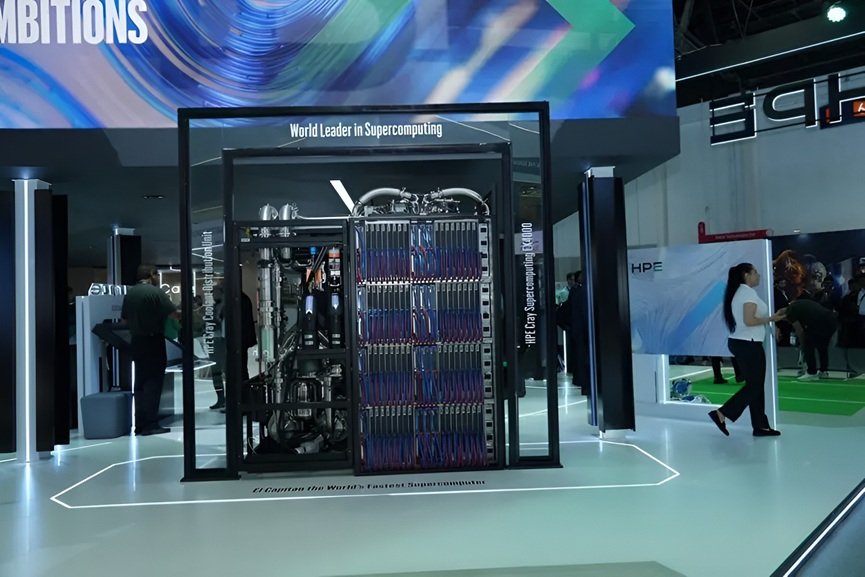
Commvault has entered a Memorandum of Understanding with HPE to scale joint cybersecurity, backup and recovery services across the Gulf and wider Middle East, unveiling the pact at GITEX Global in Dubai.

The agreement mandates co-development of integrated solutions and joint market initiatives combining HPE’s infrastructure platforms — such as GreenLake, Alletra Storage MP, Zerto, StoreOnce — with Commvault’s cyber-resilience and data protection capabilities. It aims to drive enterprise adoption of hybrid cloud backup, ransomware mitigation and cross-region redundancy.

HPE previously announced a broader strategic expansion of its alliance with Commvault aimed at neutralising advanced cyberthreats, spotlighting tighter integration across cloud, storage and policy automation. The local MoU is intended to bring those capabilities closer to enterprises operating in the Gulf and MENA markets.

HPE’s Zerto platform will feed into Commvault Cloud offerings to enable near-zero recovery time and point objectives, while snapshot immutability, geographic replication, and anomaly detection powered by AI are planned as central joint features. Running side by side, HPE’s storage and infrastructure fabric supports Commvault’s orchestration layer for unified policy enforcement across hybrid deployments.

Regional leadership within both firms emphasised the growing urgency of resilience as data volumes and threat sophistication rise. Yacob Ahli, HPE’s Commercial Director for UAE, said that the Gulf’s data-centric growth narrative demands infrastructure foundations that safeguard continuity. Havier Haddad, heading Commvault’s EMEA emerging markets distribution, framed the MoU as a strategic move to reinforce customer confidence in mission-critical operations across the region.

Analysts say the new alliance helps bridge a gap many enterprises in the Middle East face: lacking in-region partner support for complex, integrated cyber resilience stacks. By localising go-to-market strategies, certification and training, the partnership may reduce friction in adoption. Still, adoption also depends on regulatory compliance, cross-border data governance, and interoperability with incumbent systems.

Commvault has also introduced new additions to its HyperScale portfolio — HyperScale Edge and HyperScale Flex — designed to support remote and edge data protection workloads, broadening its partner ecosystem to include HPE, Dell, Lenovo and others. These tools complement its flagship HyperScale X offering.

Russia and China have endorsed an ambitious joint action plan to expand shipping via the Northern Sea Route, setting freight targets and launching collaborative projects that signal a deepening strategic partnership in the Arctic domain. At a meeting of the bilateral NSR sub-commission in Harbin, officials agreed on a roadmap aimed at scaling cargo traffic to 20 million tonnes by 2030, while pursuing development in shipbuilding, logistics, […]

The Bank of North Dakota and payments firm Fiserv have unveiled plans for a dollar-backed digital token dubbed “Roughrider,” to be deployed among banks and credit unions in 2026 as a new instrument for interbank settlement. The token, restricted initially to participating financial institutions, aims to accelerate and modernise bank-to-bank transactions within the state.

Under the agreement, Roughrider will be built on Fiserv’s digital asset infrastructure, leveraging the platform’s framework to interoperate with other stablecoins. The Bank of North Dakota becomes the first U. S. state bank to issue a stablecoin on Fiserv’s platform. The initiative targets enhanced liquidity, streamlined payments, and potential expansion into merchant adoption.

Governor Kelly Armstrong cast the move as bold institutional innovation, positioning the state as a testing ground for blockchain-enabled finance. “We’re entering a new era,” he said, emphasising that North Dakota financial institutions must embrace evolving money-movement tools. Fiserv’s COO Takis Georgakopoulos described Roughrider as merging the stability of traditional banking with the agility of distributed ledger technology.

State officials say the Industrial Commission, which oversees the bank, must approve the pilot plan. Once greenlit, the rollout will begin with a small cohort of local institutions. BND President and CEO Don Morgan noted that any costs from development will rest on the bank’s balance sheet rather than state taxpayer funding. The legal team of Troutman Pepper Locke has advised the bank in structuring the deal.

The federal legislative environment played a crucial role: in July, Congress passed the GENIUS Act, providing stablecoin issuers with a national regulatory framework requiring full backing by high-quality assets, transparency rules, and audit requirements. North Dakota’s scheme is built to align with those standards.

While Wyoming’s Frontier Stable Token launched in August and is available for public use, North Dakota’s strategy is more conservative. Roughrider will begin as a wholesale instrument; public or consumer-facing use is not part of the first phase. Some stakeholders view it as a deliberate step to mitigate operational and financial risks before broader deployment.

Analysts say North Dakota offers a lower-complexity environment for experimentation. With BND being the only state-owned bank in the U. S., the state provides a more controlled setting to work through technical, legal, and compliance challenges. If successful, the model could be scaled beyond North Dakota’s borders or adopted by others.

Banks and credit unions participating in the pilot stand to benefit from faster settlement, reduced settlement costs, and simpler liquidity management. But industry voices warn of potential downsides: deposit flight is a concern if stablecoins siphon off customer balances, and state regulators may need more capacity to oversee digital assets.

Fiserv, which serves roughly 10,000 financial institutions and 6 million merchants globally, sees this as an opportunity to embed stablecoin rails within its ecosystem. It launched its own white-label stablecoin platform earlier this year, with FIUSD as its internal token, and views Roughrider as a use case within that infrastructure.

Addis Ababa — Ethiopia’s Ministry of Finance and Italy’s development cooperation agency have inaugurated a two-year, €1.7 million project aimed at strengthening community resilience and restoring heritage in the Wukro–Gheralta belt of the Tigray region. The “Supporting Community Resilience through Community-Based Tourism and Heritage Conservation” programme is designed to generate livelihoods, preserve cultural identity and foster post-conflict reconciliation. Semereta Sewasew, Ethiopia’s State Minister of Finance, signed the […]

Dubai’s 45th edition of GITEX GLOBAL opened on 13 October at the Dubai World Trade Centre, attracting what organisers call unprecedented global participation. The event hosts more than 6,800 exhibitors, 2,000 startups and 1,200 investors from over 180 countries. Sheikh Mohammed bin Rashid Al Maktoum inaugurated the event, underscoring the UAE’s ambition to lead in AI-driven economies. Dubai’s leadership has signalled this edition will be the last […]

Mohammed Bin Rashid Housing Establishment is spotlighting a suite of digital housing solutions at GITEX Global 2025, announcing strategic tie-ups aimed at advancing smart infrastructure and inclusive living. The initiative underscores Dubai’s push to fuse technology with urban development amid intensifying global competition in digital transformation.

MBRHE is presenting new digital services engineered to optimise housing operations, energy efficiency and resident experience. At GITEX, the entity finalised a partnership with Emirates Islamic Bank to develop financing and digital payment tools tailored for homeowners, and earlier inked an agreement with AI Smart to retrofit housing units with assistive technologies for People of Determination. The latter includes deploying smart systems in five identified residences to enhance mobility and independence. These deals complement an existing MoU with Emirates Gas to supply next-generation LPG composite cylinders across MBRHE communities, complete with annual maintenance services.

As part of Dubai’s government ecosystem at GITEX, MBRHE is listed among Gold Partners in the Digital Dubai pavilion, joining over 50 public and private entities promoting the emirate’s City-as-a-Service model. This placement gives MBRHE visibility amid hundreds of technology players from more than 180 countries. The pavilion is intended to demonstrate cross-sector digital synergies across health, energy, mobility and governance spheres.

MBRHE officials emphasise a multipronged strategy. The partnership with Emirates Islamic is geared toward embedding embedded financial tools into housing services. The AI Smart alliance is positioned as a step toward inclusive smart homes. Meanwhile, the collaboration with Emirates Gas addresses energy reliability and safety in residential zones under MBRHE’s purview. In announcing the AI Smart engagement, MBRHE described it as aligning with UAE leadership’s agenda to empower all segments of society, especially People of Determination.

The move follows MBRHE’s earlier commitment with GFS Developments to launch the Smart Housing Forum 2025, a platform to convene global experts on sustainable housing innovation. That partnership, formalised in late September, frames GITEX as a conduit for showcasing outcomes and inviting further collaboration.

Industry analysts say MBRHE’s integration of housing, finance, energy and assistive technology is representative of a wider trend in the Gulf: public agencies are no longer viewing infrastructure in isolation but as an integrated service ecosystem. State-linked housing bodies are increasingly collaborating with fintech, cleantech, proptech and social inclusion tech firms to convert static assets into responsive, data-enabled platforms.

Critics caution that the true test lies in execution, particularly in integrating legacy systems, ensuring cybersecurity across interconnected modules, and managing equitable access across lower-income beneficiary groups. For instance, retrofitting older housing stock with IoT or assistive systems often requires structural upgrades, which carry cost and logistical burdens.

At GITEX, MBRHE is expected to demonstrate live pilot models of smart home systems, energy monitoring dashboards, and resident apps that tie into real estate finance. These demos will act as proof points to entice further private sector engagement and scaling. MBRHE’s role as both regulator and operator gives it leverage but also raises accountability for outcomes.

Dubai Healthcare City Authority has unveiled a Dhs1.3 billion development programme for Phase 1 of Dubai Healthcare City, marking an aggressive expansion that aims to elevate its global standing in health infrastructure. Construction is set to start in December, with a targeted completion window by November 2027.

At the heart of the initiative lies a triple-pronged buildout: a LEED Platinum-certified office block, a purpose-built medical complex, and supporting infrastructure—each tailored to attract health-related investors and operators. The office building, designed by P&T Architects & Engineers, spans some 13,000 sqm across nine levels and includes flexible workspaces and ground-floor retail zones. The medical complex, by Design & Architecture Bureau, covers 5,800 sqm, with two basements and five floors, and is planned to accommodate surgical units, diagnostics, outpatient services and lab facilities.

Beyond buildings, the infrastructure scope includes multi-storey parking with electric vehicle charging points, integration with Salik for smart parking, and accessibility enhancements. The aim is to strengthen the underlying ecosystem so that the healthcare precinct becomes not just a cluster of clinics, but a fully serviced global health hub.

Issam Galadari, DHCA’s CEO, asserted that these projects reflect the authority’s ambition to combine sustainability, global investment appeal and design excellence, aligned with Dubai’s Economic Agenda and the UAE’s Net Zero Strategy 2050. Allae Almanini, COO, added that the works will “boost confidence for healthcare providers and investors” by improving efficiency, accessibility and sustainability across the community.

Phase 1 of DHCC, located in Oud Metha, currently operates within a 4.1 million sq ft footprint dedicated to medical services and education. Phase 2, by contrast, spans around 19 million sq ft at Al Jaddaf, and is oriented more toward wellness and mixed support services.

This new investment signals a sharpened focus on physical infrastructure as a differentiator. In recent years, DHCC has emphasised partnerships and innovation: its free-zone model already supports over 400 licensing entities and more than 168 clinical facilities. Earlier this year, DHCA collaborated with AI Quantum Intelligence Institute to launch an AI healthcare innovation lab in the free zone, and formed an agreement with AirMed International to deepen medical transport capabilities.

Analysts see the move as a bid to compete not only regionally, but globally. Healthcare infrastructure, especially when linked with sustainability credentials such as LEED Platinum certification, is increasingly a factor in investors’ decisions. The new build will position DHCC among the few healthcare zones worldwide that combine clinical, administrative and research capacity within one contiguous ecosystem.

However, the scale and timeline carry risks. Dubai’s construction sector is already navigating supply-chain pressures, labour constraints, and rising material costs. Ensuring timely delivery and quality control in a high-performance project will demand rigorous project management. Meanwhile, the authority must ensure that demand from healthcare operators, both local and international, matches the expanded real estate supply, lest vacancy rates rise.

More immediately, the December commencement date — just weeks away — will test DHCA’s readiness in securing contractors, tendering work packages and coordinating certifications. Delays in permitting or approvals could cascade into missed target windows. Yet, if executed successfully, the project will enable DHCC to present itself as an integrated health campus offering offices, clinical space, and support services under one sustainable umbrella.

Observers note that medical tourism in Dubai already commands significant weight, drawing patients from the GCC, the broader Arab world, Europe, and Asia. DHCA’s bet is that infrastructure sophistication will amplify that pull, especially for high-end specialty and precision medicine segments.

Hamas has handed over seven Israeli hostages to the International Committee of the Red Cross, fulfilling the first phase of a broad ceasefire and prisoner­exchange accord with Israel. The hostages are now in Israeli custody, and more releases are expected in the coming hours.

The released individuals—identified as Matan Angrest, Guy Gilboa Dalal, Alon Ohel, Gali Berman, Ziv Berman, Eitan Mor and Omri Miran—were transferred through Gaza to a reception point near the border, where they reunited with family members and began medical assessments. Under the terms of the deal, they will be swiftly transported to Israeli hospitals for further care.

Alongside the handover, Hamas published the names of all 20 Israeli captives slated for release in the deal’s first stage. Among the names are Bar Abraham Kupershtein, Evyatar David, Yosef-Chaim Ohana, Segev Kalfon and Avinatan Or—adding to the list previously released to the media. Israel has warned Hamas that any mistreatment or propaganda stunts during the transfer would provoke retaliation.

The agreement accompanying the hostages’ release calls for Israel to free more than 1,900 Palestinian prisoners. That includes women, children and individuals serving long sentences. As per the deal, Israel must also return the bodies of 28 deceased captives. Hamas has acknowledged some uncertainty about certain remains, citing burial under debris and loss of access to previous guard posts.

The exchange is part of a U. S.-brokered “21-point” plan, mediated by Egypt, Qatar and other parties. Provisions include a phased withdrawal of Israeli forces from key areas in Gaza, the reopening of humanitarian corridors, and reconstruction efforts under an international framework. As part of the agreement, President Donald Trump and regional leaders are convening in Egypt to formalise implementation.

Hamas’ Gaza chief, Khalil Al-Hayya, said the group has secured guarantees from U. S. mediators and Arab sponsors that the conflict is “ended,” highlighting that the release of 20 living hostages would occur within 72 hours of the agreement taking effect. Hamas insists it will “faithfully uphold” its terms, while reserving the right to resume fighting if Israel fails to meet its commitments.

Israeli officials emphasised that the ceasefire and release process are conditional and subject to strict oversight. The Israeli cabinet has approved the deal, though several ministers from the far-right bloc opposed it. Prime Minister Benjamin Netanyahu’s office warned that any violation by Hamas would void the agreement and trigger military responses.

Public reaction in Israel has been emotional. Tens of thousands gathered in Tel Aviv’s Hostages Square to watch televised feeds of the transfers. Families expressed cautious optimism over the hostages’ return. In Gaza, displaced residents and aid agencies are gearing up to facilitate relief efforts under the newfound calm.

VISHNU RAJA
RYO YAMADA
HITORI GOTOH
IKUYO KITA
Just in:
Battle Uttar Pradesh Will Be Tougher For Yogi Than Expected // Emaar approves Development buyout ahead of planned delisting // Democrats Gearing Up For 2028 Presidential Elections To Gain Full Power // Oil advances towards $100 as tanker attacks persist // Dubai Future District Fund and Buimerc formalise cooperation // Dubai details five-year visa benefits for returning visitors // India Under Pressure To Join RCEP On The Eve Of ASEAN Summit In Manila On Nov 15-17 // HKUST President and Chinese Academy of Sciences Academician Prof. Nancy Ip Receives UNESCO Honor for a Second Time // Miss Universe Hong Kong Jen Zhou Departs for Puerto Rico to Compete in the 75th Miss Universe World Final // Elephant calf on death line airlifted for treatment in Gujarat // Ningbo Consensus on Collaborative Development released at 2026 Global Mayors Dialogue · Ningbo // Private varsities bill all set to face the axe // Microfinance case trouble for Vellappally // HKUST President Prof. Nancy IP Receives UNESCO–Equatorial Guinea International Prize for Research in Life Sciences // CM disputes Vijayan’s claims // The “1st Greater Bay Area Health and Longevity Summit & Awards Ceremony” concludes successfully in Macao // Beyond the exhibition floor: How robots, AI and networks are moving into the real world // HKUST President Prof. Nancy IP Receives UNESCO–Equatorial Guinea International Prize for Research in Life Sciences // Trump’s Iran War Has A Share Of Contribution To His Midterm Debacle // ADNOC secures decade-long LNG supply pact with Gujarat Energy //