News related to
agreement

AMD signed a long-term agreement with OpenAI to supply six gigawatts of AI chips over multiple years, with the first delivery of its Instinct MI450 GPUs slated for the second half of 2026. In tandem, OpenAI will have the right to acquire up to 160 million AMD shares—roughly 10 percent of the company—subject to performance and stock-price milestones. Under the pact, AMD will act as a core […]

A consortium led by Saudi Arabia’s Public Investment Fund, with Silver Lake and Jared Kushner’s Affinity Partners, has struck a deal to acquire Electronic Arts for approximately $55 billion, taking the iconic game publisher private. Under the agreement, EA’s shareholders will receive $210 per share, a 25 percent premium over the share price before the deal emerged, as the consortium combines fresh equity with a leveraged debt […]

Google has chosen Saudi startup Lahint for inclusion in its Growth Academy: AI for GovTech 2025 cohort, positioning the company among 24 global government-technology innovators supported by Google. The move aims to strengthen Lahint’s capacity to deliver AI-enabled public services and further Saudi Arabia’s push for digital transformation under Vision 2030.

Lahint, established in 2023 by Ahmed Saber and Mohamed Ibrahim, secured a $1 million pre-seed investment earlier this year to scale its AI and automation offerings in government services. The platform currently manages more than 60 digital government services and serves over 200 businesses, integrating robotic process automation and AI to streamline licensing, permits and administrative workflows.

By integrating Lahint into its accelerator, Google pledges technical support, mentorship and access to cloud infrastructure—tools that could accelerate Lahint’s roadmap to full automation of priority public services. Lahint has already earned multiple ISO certifications and is accredited by the Saudi Data & AI Authority with a Waee badge for AI ethics compliance.

Lahint has advanced its internal timeline for key automation milestones. The company is now targeting completion of its GovTech automation program by early 2026, a shift from an earlier 2027 target. This acceleration comes alongside newly signed partnerships with government entities to deploy real-time status reporting and predictive compliance tools covering domain areas such as licensing, taxation and corporate registration.

Saudi Arabia’s broader AI landscape is scaling rapidly. In 2025, the kingdom announced over $14.9 billion in investments at LEAP and pursued MoUs under SDAIA to reinforce its data and AI infrastructure. The establishment of HUMAIN, a state-backed AI company under the Public Investment Fund, is central to that strategy. HUMAIN, launched in May 2025, has already inked collaboration agreements with Nvidia, AMD and Qualcomm to develop AI factories and Arabic large language models.

Google’s AI programme in Saudi Arabia is part of a wider arrangement. A $10 billion joint investment by Google Cloud and the Public Investment Fund backs a national AI hub to reinforce the local ecosystem and serve regional demand.

Glencore has entered a 20-year agreement with Discovery Green to supply renewable energy for four of its South African mining operations, beginning 2027. The deal is expected to deliver over 290 GWh annually to mines in the eMalahleni area, replacing the bulk of their existing power demand with wind and solar energy. Under the terms of the agreement, renewable power will be delivered from Discovery Green’s contracted […]

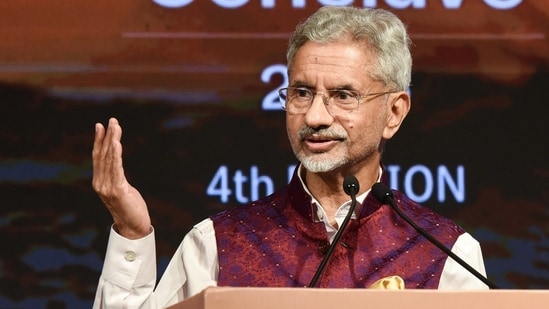
By Nitya Chakraborty Indian foreign policy makers have at last showing some mature understanding of the geopolitics of the post-Trump.2 months if the external affairs minister Dr. S Jaishankar’s observations at the concluding session of Kautilya Economic Conclave in New Delhi on Sunday, are any indication. The minister was quite candid in explaining the complexity […]

The article EAM Jaishankar Is Right: Trump Has To Respect India’s Red Lines appeared first on Latest India news, analysis and reports on Newspack by India Press Agency).

DP World has signed a memorandum of understanding with PayPal to roll out a digital payments solution meant to accelerate cross-border trade, bringing settlement times down from days to minutes. The agreement is part of DP World’s broader Digital Payments programme, targeting merchants, shippers, exporters, importers and marketplaces with a more transparent, lower-cost infrastructure. Under the deal, DP World will not itself act as a regulated payments […]

OpenAI chief executive Sam Altman is leading a high-stakes campaign across East Asia and the Middle East to secure investment and bolster chip supply for the company’s AI infrastructure push. He has held talks since late September in Taiwan, South Korea and Japan with leading hardware suppliers to prioritise OpenAI’s orders and expand capacity.

Altman has met with Taiwan Semiconductor Manufacturing Company and Foxconn, as well as Samsung and SK Hynix, pressing them to accelerate production and give OpenAI preferential access. In South Korea, Samsung and SK Hynix have signed letters of intent to supply memory chips for OpenAI’s data centres. Meanwhile, OpenAI plans further fundraising discussions in the United Arab Emirates.

The urgency of Altman’s mission reflects the intensifying global competition for advanced computing resources. OpenAI projects it will spend around US$16 billion this year on renting computing servers, with long-term forecasts stretching to US$400 billion by 2029 as AI models grow ever more complex.

Industry analysts note that the semiconductor supply chain remains highly constrained. TSMC dominates GPU chip production, and memory manufacturing is largely concentrated in East Asia, creating significant strategic leverage for the manufacturers approached by Altman.

As part of his tour, Altman is also pressing Japanese firms to contribute to infrastructure support. Hitachi has entered discussions to provide power transmission and distribution systems for OpenAI’s data centres, while sharing technical resources under joint development agreements.

Sources familiar with the process say Altman pushed for direct prioritisation in chip delivery schedules, asking that OpenAI receive top-tier production slots. In some cases, he proposed co-investment or co-development of next-generation AI hardware to bind partner incentives more closely.

In South Korea, early architecture proposals include planned data centres of 20 megawatts in collaboration with Samsung and SK Hynix. Altman is reportedly exploring “floating” data centre designs to manage land constraints and cooling demands.

The UAE leg of his mission is expected to involve negotiations with sovereign investment firms such as MGX and Mubadala, with the aim of funding both OpenAI’s expansion and joint infrastructure ventures in the region. In past rounds, UAE investors have already taken part in funding OpenAI operations.

Challenges remain significant. The sheer scale of chips and memory required for stacked AI model training is pushing the boundaries of global wafer fabrication capacity. Market watchers point to the high capital expenditure and long lead times in the semiconductor industry as obstacles to rapid scaling. Some of Altman’s proposals—for example, co-development of bespoke ASICs—are still in preliminary stages and face technical risk.

OpenAI’s valuation and investor backing give the company leverage. Earlier this year, it closed deals that valued it at about US$500 billion, with new capital injections from investors including SoftBank and UAE entities. Those moves have fortified its position in negotiating upstream deals with manufacturers.

Advertisements

Arabian Post Staff -Dubai Chinese automakers have revived a barter-style trade with Iran, sending semi-assembled vehicles in exchange for containers of copper and zinc that feed China’s non-ferrous metals sector. This swap, involving no traditional cash payments, emerges as a creative workaround amid the constraints of sanctions and currency pathways. Every few months, a facility on the Yangtze churns out engines and chassis, which are sent to […]

Ras Al Khaimah has greenlit Wynn Boulevard, a new infrastructure artery that will link the forthcoming Wynn Al Marjan Island integrated resort with the E311 and E611 highways—connecting it directly to Dubai and neighboring emirates. Authorities have allocated over AED 1 billion for the project, which was unveiled during the launch of the Marjan Beach development. Graham Hallett, chief development officer at Marjan, confirmed that contracts worth […]

OPEC+ delegates are weighing two divergent paths for November oil quotas: a modest lift mirroring October’s 137,000 barrels per day increase or a more aggressive jump, possibly two to three times larger. Diplomatic and market pressures appear to be pulling members in different directions.

Ahead of Sunday’s formal meeting, one source familiar with the deliberations described 137,000 bpd as the “base case,” replicating this month’s incremental pace. A second source, speaking on condition of anonymity, indicated that under more aggressive assumptions the group may opt for increases of 280,000 bpd or even 400,000 bpd. Those in favour of larger hikes argue that strengthening demand and constrained Russian output justify a bolder step.

Analysts are aligning with the moderate view. Goldman Sachs, for instance, projects a November quota increase of around 140,000 bpd, citing tight inventory levels in Asia and Europe and declining U. S. crude stockpiles. Pressure for a more substantial increase, however, is mounting given elevated oil prices and a desire among key producers to reclaim or expand market share.

During a meeting of the Joint Ministerial Monitoring Committee this week, OPEC+ emphasised full compliance with output agreements, urging shirking members to compensate for previous breaches. While the JMMC lacks decision-making power on quotas, it retains the ability to summon full OPEC+ sessions if necessary. This move underscores growing unease about cohesion ahead of the upcoming vote.

Market reaction has already shown sensitivity. Oil prices—which had climbed amid tight supply forecasts—slid more than 3 per cent early this week as traders factored in the possibility of an oversupplied market if OPEC+ moves decisively upward. Further pressure arrived as Iraq’s Kurdistan region resumed exports to Turkey, adding to short-term supply. Expectations of a November increase of at least 137,000 bpd have also fed concerns about potential gluts.

Saudi Arabia is anticipated to respond to this industrial backdrop by raising its official selling prices for November crude to Asia. Refining sources suggest increases of 20–40 cents per barrel for Arab Light, and larger bumps for heavier grades—moves intended to optimise returns amid the shifted supply landscape. Observers note, however, that these pricing adjustments may be constrained by growing global volumes and rising freight costs.

Within OPEC+ circles, some major players favour the status quo increment. They caution that a more aggressive hike could undermine prices and strain discipline among reluctant members. Others view a bold move as an opportunity to reshape global oil dynamics—forcing non-allied producers to respond and reasserting the cohesion and influence of the alliance.

Russia is under particular scrutiny. Its output has been running below forecasts, and further declines—coupled with Western sanctions and infrastructure disruptions—are cited by several sources as a justification for a larger quota increase across the group. Still, Moscow’s appetite for more substantial volume gains remains unclear, balancing revenue interests with geopolitical strategy.

Botswana has become the target for a bold new data infrastructure initiative after U. S. operator ChillMine and Netherlands-based AAAS Energy inked a memorandum of understanding to develop a solar-plus-storage data centre campus near Palapye. The proposed facility, intended to support AI workloads, hyperscale operations and energy-intensive computing, will be integrated into the Leupane Energy Hub and Industrial Park. The energy backbone of the hub is planned […]

Hub71, Abu Dhabi’s global technology ecosystem, has inked its first partnership in the US with the New Jersey Economic Development Authority, opening pathways for startups to scale across continents. The memorandum of understanding was signed at the Abu Dhabi Investment Forum in New York, signalling the start of reciprocal support between the two innovation hubs. The agreement enables joint programming, market visits and curated introductions to investors, […]

By Manish Rai In his maiden speech in the United Nations General Assembly, Syria’s interim president, Ahmed al-Sharaa, called for lifting of international sanctions on Syria, becoming the first head of state from Syria to address the gathering in nearly 60 years. This signifies the first appearance of a Syrian president since Nureddin al-Atassi took office in 1967. Syrian President Sharra engaged in a series of bilateral […]

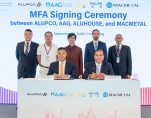
Aluminium Products Company of Saudi Arabia and Hong Kong–based Asia Aluminum Group have inked a master framework agreement to build the largest integrated downstream aluminium industrial complex in the Kingdom, with planned investment reaching up to USD 500 million. The initiative centres on three joint ventures covering aluminium extrusion, modular housing, and solar panel frame manufacturing. The agreement was signed in Hong Kong by ALUPCO Chief Executive […]

Hamas has announced that it will free the final Israeli hostages taken in its October 2023 assault on Israel, but insisted that other elements of a U. S.-backed 20-point peace plan remain subject to negotiation, leaving the path ahead fraught with uncertainty. President Donald Trump welcomed the announcement, calling for an immediate halt to Israeli bombardment and offering indications that he might allow flexibility on the broader proposal.

Under the deal endorsed by Israel, all hostages—alive and deceased—are to be returned within 72 hours of Israel’s public acceptance, in exchange for the release of around 1,950 Palestinian detainees. The agreement envisages a phased Israeli withdrawal, transfer of Gaza’s administrative functions to apolitical technocrats, and demilitarization of Hamas. But Hamas has declined to commit to disarmament, signalling that parts of the plan will undergo further negotiation.

Trump, in a public message, said Israel “must immediately stop” its bombing of Gaza and asserted that he believed Hamas was “ready for lasting peace.” He also warned that failure to accept the terms by the deadline—Sunday at 6 p. m. Eastern Time—would provoke severe consequences. Israel has given tentative backing to the first phase of the plan, though it maintains reservation about Hamas’s retention of weapons.

Israeli Prime Minister Benjamin Netanyahu has accepted the peace initiative in principle but imposed caveats: Israel’s withdrawal will be partial, and Gaza will remain under strong security oversight. Netanyahu rejected formation of a Palestinian state under this framework, warning that such a move would reward terrorism. He has also suggested that Hamas participants who commit to peaceful transition could be granted amnesty.

Egypt, Qatar and other regional powers are acting as intermediaries to push Hamas toward acceptance. Israeli officials have reportedly reduced ground operations in Gaza City following U. S. pressure, instructing troops to limit activities to defensive operations even as the air campaign continues. Meanwhile, humanitarian groups warn that any ceasefire in name must be accompanied by unimpeded aid delivery and infrastructure repairs.

Some opposition voices in Israel—particularly among far-right coalition partners—view the latest developments as insufficient, demanding continued military pressure. Families of hostages have expressed cautious optimism, although they remain sceptical of open-ended guarantees.

In Hamas’s statement, the group claimed that the hostage release marks a gesture of “good faith,” but stressed that Israel’s withdrawal, guarantees on the safety of Gaza’s population, and the future role of Palestinian governance must be negotiated further. It described disarmament as “off the negotiating table” and refused to accept unconditional terms.

Analysts caution that the hostages’ release, while important, does not resolve deep structural issues: the role of Hamas in governance, security guarantees for Israel, and Gaza’s long-term reconstruction remain unresolved. Regional watchers view the moment as the most significant opening for a potential ceasefire in years—but one that may collapse without strict adherence to implementation timelines and third-party oversight.

International leaders have responded with varying tones. Some support the deal as a rare breakthrough, while others urge caution, calling for clear mechanisms to enforce demilitarization and civilian protections. The United Nations has reiterated its demand for accountability under international law and its role in aid operations.

KUALA LUMPUR, MALAYSIA – Media OutReach Newswire – 4 October 2025 – The importance of gastrointestinal health, or maintaining a healthy digestive system, has become a growing focus for researchers and innovators worldwide. Reflecting this commitment, Monash University Malaysia and Tata Chemicals Limited have entered into a strategic partnership dedicated to advancing research in the gut microbiome and gut health. The collaboration, formally established through a Memorandum […]

Rock Band 4 will be removed from the PlayStation and Xbox digital stores on 5 October 2025, after the original licences for its base soundtrack reach their ten-year term. Existing players will retain access to their purchased content, but new buyers will lose the ability to acquire the game or its downloadable content. Harmonix confirmed the decision via the game’s Discord channel, where community manager Kyle Wynn […]

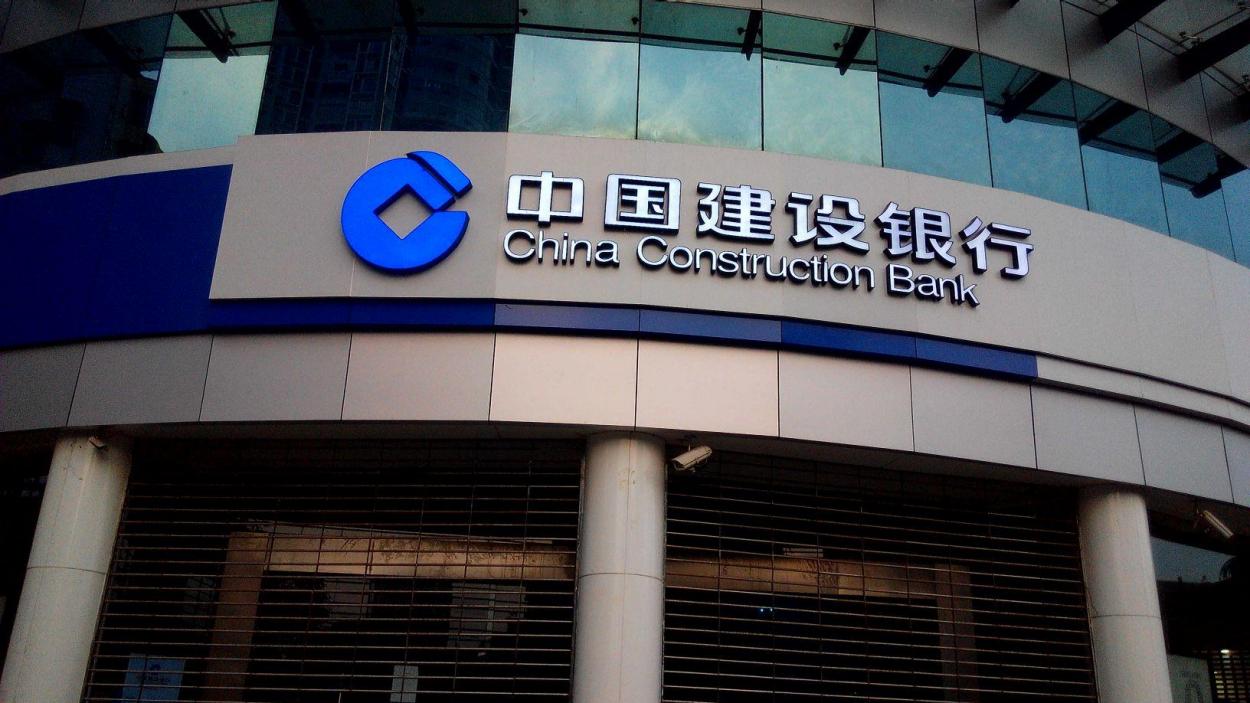
China’s largest state banks have committed over $3.75 billion in debt financing to Saudi Aramco’s Jafurah gas project, while Chinese investment funds have declined to take equity stakes in the venture, sources told Reuters.

The bulk of this funding comes from Bank of China, ICBC and China Construction Bank, each contributing around $1 billion, and Agricultural Bank of China adding roughly $750 million. This debt financing accounts for more than one-third of the total capital sought for what is expected to be the largest shale gas development outside the United States.

Aramco’s deal involves an $11 billion lease-and-leaseback agreement signed in August with a consortium led by Global Infrastructure Partners, an arm of BlackRock. Under the arrangement, a new entity called Jafurah Midstream Gas Company will lease processing assets to Aramco for 20 years. Aramco retains a 51 per cent stake, while the consortium holds the remaining 49 per cent.

Despite the opportunity to join the equity syndicate, several Chinese state-linked funds declined to participate, a move that sources attribute to heightened U. S.–China tensions. Beijing is said to have discouraged fund-level engagement with U. S.-affiliated private capital firms, even when such firms do not have overt U. S. exposure.

The Chinese banks’ decision to provide senior debt but avoid equity signals a calibrated strategic posture: backing the project financially without direct governance alignment with U. S.-linked investors.

Aramco’s broader ambition is to expand its gas production capacity by 60 per cent over 2021 levels by 2030. The Jafurah basin is estimated to contain 229 trillion standard cubic feet of raw gas and 75 billion stock tank barrels of condensate.

The BlackRock-led consortium is also negotiating additional capital of around $10.3 billion with a mix of debt instruments; participants in those talks include JPMorgan and Sumitomo Mitsui Banking Corporation. Those financial structures are intended to support the lease-and-leaseback model without ceding control of core infrastructure assets to external parties.

Within the Gulf, Chinese lenders’ prominent involvement in Jafurah’s financing echoes a broader trend. Analysts note that China is repositioning its role in Gulf energy infrastructure by leveraging its strengths in project debt and export credit rather than co-investment in U. S.-sponsored equity schemes.

Saudi Arabia is concurrently expanding its gas network. It has signed over $25 billion in contracts for the second phase of Jafurah development and further gas-network enhancements, including pipeline extensions of 4,000 km to increase capacity by 3.2 billion standard cubic feet per day. Chinese firms, such as Sinopec, are among the contractors participating in these projects.

For Aramco, the dual approach of securing large-scale debt from Chinese banks while partnering with international investors via the leaseback model helps it mobilise capital without relinquishing decisive control. The arrangement offers investors predictable tariff-based returns.

Chinese banks’ exposure gives them influence over covenant terms, loan pricing and repayment schedules. That leverage, without the burdens or political friction associated with equity, aligns with Beijing’s financial diplomacy toward strategic energy corridors.

The full constellation of debt and equity deals around Jafurah—and the dynamics among Gulf producers, Chinese state capital, and U. S.-linked private investors—will be among the key nodes shaping the next wave of energy infrastructure financing.


A plunge of nearly 90 percent in blockchain-related job postings across Europe underscores a stark contraction in the sector, even as industry leaders plan to rally through the 11th European Blockchain Convention in Barcelona. By one estimate, Europe went from over 100,000 jobs referencing “blockchain” in 2022 to roughly 10,000 in 2025, representing the dramatic erosion in demand. Analysts cite regulatory complexity, high energy costs, and capital […]

Dubai’s ride-hailing landscape has shifted dramatically as the UAE-based Zed app now encompasses 10,764 taxis across the emirate—equivalent to more than four in five licensed cabs. The move was enabled through strategic partnerships with Dubai Taxi Corporation and National Taxi, folding in the fleets of three major operators.

Under the new arrangement, DTC’s entire fleet and those of National Taxi and Kabi by Al Ghurair become bookable via the Zed platform, effectively making Zed the host of Dubai’s second-largest taxi fleet. Zed executives describe the expansion as a means of enhancing coverage, cutting cancellations, and lowering wait times, especially across areas traditionally underserved.

Badr Al Ghurair, Zed’s Chief Executive, emphasised the home-grown nature of the platform and its deep knowledge of Dubai’s commuting patterns: “this collaboration … further strengthens Dubai’s mobility ecosystem while ensuring that our communities have access to reliable, everyday transport solutions” he said. Abhinav Patwa, Zed’s EVP and Head, added that the alliances provide scale and reliability without losing sight of a customer-first approach.

The accord comes amid Dubai’s broader ambition of converting 80 per cent of taxi bookings to digital platforms—a target within reach through the emirate’s Smart City 2025 programme. The integrated fleet also introduces more electric and hybrid taxis into Zed’s pool, aligning with the city’s sustainability goals.

This consolidation represents a notable realignment in Dubai’s mobility market. For years, taxis and e-hailing apps operated largely in parallel, with limited overlap in booking channels. The new model bridges that divide, bringing traditional operators into the digital fold via a single platform. Analysts say the move may accelerate the decline in usage of standalone taxi apps and push rivals to forge similar alliances or risk falling behind.

Dubai Taxi Company, now a public joint stock firm under Law No. 21 of 2023, operates more than 10,000 vehicles, of which 6,200 taxis were folded into the agreement. Kabi by Al Ghurair contributed another 3,680 vehicles under the tie-up. According to RTA data, Dubai’s taxi sector expanded by 7 per cent in the first half of 2025 compared with the same period in 2024, signalling growing demand for urban mobility services.

Through the arrangement, newly commissioned taxis across the partner fleets will automatically integrate into Zed’s system—making service expansion incremental and scalable. Several of the added vehicles are electric or hybrid, helping Zed accelerate its greening efforts.

Passengers can now access all these taxis via Zed’s iOS and Android apps, with the platform continuing to offer features such as guaranteed on-time pickups for pre-booked premium rides. The enhanced capacity is expected to reduce wait times during peak hours, improve service in remote zones, and lower the incidence of ride cancellations.

Riyadh has unveiled a bold draft plan to permit all non-resident foreign investors direct access to the main Saudi stock market, eliminating the need for the current Qualified Foreign Investor framework and abolishing swap agreements. The Capital Market Authority has opened a 30-day public consultation on the proposal, which, if adopted, would mark a major liberalisation in the Kingdom’s capital markets.

Under the draft, non-resident investors would no longer need to satisfy eligibility thresholds currently required for QFI status, and would be permitted to hold shares in listed companies in their own names. The plan would also phase out swap arrangements that allow foreign parties to obtain economic exposure to Saudi stocks without holding legal title. The consultation period runs until 31 October 2025.

The CMA says the changes aim to broaden the investor base, increase liquidity and attract a wider pool of capital. Foreign holdings in the main market had already reached SAR 412 billion by mid-2025, comprising more than 471 percent growth from SAR 72 billion in 2015. Non-resident capital under the QFI regime, combined with swap exposure, totals over SAR 528 billion.

The QFI system currently imposes strict entry criteria — one requirement is minimum assets under management of SAR 1.875 billion. QFIs also enjoy direct ownership and voting rights, whereas swap-based investors operate indirectly. Under the rules, non-resident foreign investors face a cap of 10 percent in any listed firm, while aggregate foreign ownership in a company is capped at 49 percent. Swap contracts are legally structured to grant economic benefits without formal shareholding rights under the depositary centre system.

Market analysts say lifting QFI restrictions could lower barriers for small and mid-sized international asset managers that presently cannot meet the QFI thresholds. “This is a structural shift — it moves Saudi from a screened-access regime to an open one,” commented a Gulf region investment strategist. Observers note, however, that tightening surveillance, settlement and disclosure mechanisms will be essential to managing risks of volatility and capital flight.

Under the draft, swap accounts held by foreign investors would need to be converted to direct shareholding accounts within a transition period of up to 12 months. The CMA also proposes adjustments to reporting, market conduct and corporate governance rules to ensure fairness.

The consultation draft aligns with broader reforms introduced in 2025, including simplification of account opening for some foreign investor categories, especially GCC-residents or overseas investors with prior residency in the region. That move had already signalled a gradual loosening of restrictions.

Equity markets in the Gulf contrast in openness. The UAE and Qatar allow broader foreign participation, while Saudi’s incumbent QFI plus swap structure has long been viewed as more restrictive. Proponents of liberalisation contend that full direct access may raise Saudi’s appeal as a regional hub and deepen cross-border portfolio flows.

London-based CoinShares, a leading European digital asset manager with about US$10 billion in assets under management, has struck a deal to acquire FCA-regulated Bastion Asset Management. The transaction, which must clear approval from the UK Financial Conduct Authority, is intended to bolster CoinShares’ actively managed crypto offerings and accelerate its push into the US institutional market.

Under the agreement, Bastion’s strategies, quantitative team and leadership, including CEO Philip Scott and CIO Fred Desobry, will be integrated into CoinShares. Bastion is known for deploying market-neutral and systematic investment strategies tailored for institutional clients. The acquisition allows CoinShares to complement its existing passive exposure products with alpha-oriented solutions.

CoinShares is already positioning for expansion across the Atlantic. It is in the process of going public in the United States via a definitive business combination with SPAC Vine Hill Capital Investment Corp, valuing the firm at roughly US$1.2 billion on a pro forma basis. CoinShares currently holds a dominant 34 percent share of the EMEA crypto ETP market and ranks as the fourth largest global digital asset ETP manager after BlackRock, Grayscale and Fidelity.

With Bastion’s integration, CoinShares aims to fuse its Investment Advisor registration in the US with new actively managed strategies targeting institutional investors. By combining quantitative alpha models with its distribution infrastructure, the firm seeks to differentiate itself from both traditional asset managers entering the crypto space and crypto-native infrastructure providers.

Jean-Marie Mognetti, CEO and Co-Founder of CoinShares, described the acquisition as closely aligned with the firm’s goal of offering comprehensive digital asset solutions to its global clientele. Bastion’s team brings extensive expertise: Fred Desobry has over 17 years’ experience in systematic investing and quantitative research; Philip Scott brings more than 25 years in financial services.

The acquisition takes shape against evolving regulatory backdrops. In Europe, CoinShares recently secured Markets in Crypto-Assets authorisation for its French subsidiary, making it the only continental European asset manager to hold all three major regional licenses. The US regulatory environment is also shifting: the Securities and Exchange Commission’s adoption of generic listing standards for commodity-based exchange traded products is shortening approval timelines from roughly 240 days to 75 days. This regulatory clarity is viewed as conducive to faster rollout of actively managed crypto funds.

HONG KONG SAR – Media OutReach Newswire – 1 October 2025 – Aluminium Products Company (ALUPCO), an aluminum extrusion producer in Saudi Arabia and Asia Aluminum Group (AAG), a leading Hong Kong aluminum extrusion manufacturer with a production base in Mainland China, signed an agreement on September 29 in Hong Kong. The partnership will form three joint ventures, including AAG member companies AluHouse and MacMetal, With a […]

Etihad Rail has confirmed that passenger services will begin operations in 2026, ushering in a new era of high-speed connectivity across the UAE. At the Global Rail 2025 exhibition in Abu Dhabi, the company revealed the first public visuals of its passenger rolling stock and detailed plans for its network, integration efforts, and operating partnerships. Azza Al Suwaidi, deputy CEO of Etihad Rail Passenger Services, stated that […]

VISHNU RAJA
RYO YAMADA
HITORI GOTOH
IKUYO KITA