News related to
agreement

Linh Tran The Dow Jones (US30) recorded its fourth consecutive decline, reflecting the growing caution across financial markets as the U.S. government remains partially shut down and a series of key economic data releases have been delayed. This disruption has made investors more defensive, as crucial reports such as Nonfarm Payrolls (NFP), CPI, and GDP have yet to be published. The absence of clear economic signals has […]

Abu Dhabi’s sovereign wealth fund ADQ has shown preliminary interest in acquiring a majority stake in SAC, the operator of Catania Airport in Sicily, sources said, as investor focus intensifies on Italy’s regional infrastructure.

The sale process is not yet formally launched; however, ENAC is evaluating a draft tender expected to receive approval by late October to set the transaction in motion. Under the plan, between 51 % and 66 % of SAC would be sold. The asset is valued at between €500 million and €600 million, underpinned by projected core earnings in excess of €30 million.

SAC, controlled by local authorities and chambers of commerce, manages both Catania–Fontanarossa—Italy’s fifth busiest airport by traffic—and Comiso Airport in southern Sicily. The operating concession runs through 2049. The Sicilian airport served over 12.3 million passengers in 2024.

Privatisation of Sicily’s airports has been under discussion since 2022, when SAC appointed Mediobanca to advise on structuring the deal. Local shareholders have recently approved calls for an international tender and adopted updated industrial plans to attract private capital, while pledging to retain a qualified minority stake.

Antonino Belcuore, special commissioner of the Chamber of Commerce of South and East Sicily, welcomed ADQ’s interest, stating that it underscores the strategic importance of the asset and aligns with the broader push for privatisation in Sicily. ADQ declined to comment; SAC and ENAC have not issued responses.

ADQ currently holds investments spanning transport and logistics, including interests in Abu Dhabi Airports and Etihad Airways, and manages a portfolio worth approximately US$251 billion. Analysts say its appearance among suitors signals growing appetite from Gulf-based capital for stable, long-term infrastructure assets in Europe.

Observers flag that the EU and Italy are increasingly receptive to foreign capital inflows into infrastructure, particularly where public budgets remain constrained. The potential deal dovetails with Prime Minister Giorgia Meloni’s agenda to deepen ties with Gulf states, exemplified by agreements under which the UAE committed to invest US$40 billion across strategic sectors in Italy.

Should ADQ or another bidder proceed to formal offers, the Catania sale could set benchmarks for airport privatisations in southern Europe. Authorities will need to balance investor returns with preserving public oversight, territorial interests, and aviation safety standards.

Local stakeholders—including regional governments and municipalities—are expected to negotiate protections within the concession framework to safeguard continuity of services, employment, and regional development. Meanwhile, potential bidders are assessing traffic trends, inflation, regulatory risk, and concession duration as they size their offers.

The sale of SAC would open a new chapter in Italy’s ongoing wave of airport privatisations, which has involved assets in the UK and across European markets. That backdrop provides precedent and comparators for valuation, regulatory design, and deal structures.

Rania Gule It seems that gold is going through a delicate phase, balancing between long-term bullish momentum and short-term profit-taking pressures, at a time when global markets are on edge ahead of upcoming U.S. sentiment data. As prices approach the $4,000 per ounce mark once again, the key question resurfaces: can gold still break its historical ceiling at $4,059, or will the current corrective wave extend temporarily […]

Lyft Inc. has entered into a partnership with the autonomous vehicle company Tensor Auto Inc. to introduce a fleet of robotaxis across North America and Europe by 2027. The companies aim to reshape the transportation landscape, focusing on the future of urban mobility. Lyft’s venture into the robotaxi market signals a significant step towards embracing fully autonomous driving technologies, which could revolutionise urban transport systems globally.

Under the terms of the agreement, Tensor Auto will provide the necessary technology to power the autonomous vehicles, while Lyft will manage the operations, including fleet logistics, ride-hailing services, and customer-facing platforms. The collaboration is set to leverage Lyft’s extensive experience in the ride-hailing industry, which already covers a wide range of urban markets in both regions. This partnership marks a key milestone in the journey towards making driverless cars a reality, aiming to deliver more efficient and eco-friendly transportation alternatives.

Lyft’s move into robotaxis comes as the autonomous vehicle market is experiencing a rapid surge in interest, with several major players such as Tesla, Google’s Waymo, and others investing heavily in the technology. These vehicles are designed to operate without human intervention, using a combination of sensors, cameras, and advanced artificial intelligence to navigate city streets. By eliminating the need for drivers, robotaxis promise to cut costs, reduce congestion, and lower emissions, aligning with the growing demand for greener urban transport solutions.

The rollout of robotaxis is expected to be gradual, with Lyft planning to initially deploy a limited number of vehicles in select cities. The fleet will be integrated with Lyft’s existing app, allowing customers to book rides as they would with traditional cars. While the service will begin with a small fleet of vehicles, Lyft and Tensor Auto anticipate expanding the network as regulatory frameworks for autonomous vehicles evolve and urban infrastructure adapts to accommodate driverless cars.

Lyft’s decision to enter the autonomous ride-sharing market comes at a time when the company is looking to diversify its services beyond traditional ride-hailing. The potential of robotaxis could be a game changer in terms of profitability and service efficiency. As the global shift towards sustainability grows stronger, self-driving electric vehicles like these offer a promising solution to reduce carbon emissions and dependence on fossil fuels.

Tensor Auto, a leader in autonomous driving technology, has been a key player in the development of self-driving solutions for both private and commercial transportation. The company has been refining its autonomous system, focusing on the safety, reliability, and efficiency of its vehicles. Tensor Auto’s vehicles are equipped with state-of-the-art sensors and machine learning algorithms designed to enable smooth navigation in complex urban environments. These innovations are expected to be central to the success of the Lyft robotaxi initiative.

While many of the logistics regarding the fleet’s operation remain in development, key challenges will include regulatory approvals, vehicle safety standards, and ensuring that autonomous systems can navigate the dynamic nature of urban environments. Several regions, including parts of Europe and North America, have already started the process of revising their traffic laws to accommodate self-driving vehicles, with pilot programs and test sites being established in cities like San Francisco and London.

Experts suggest that the integration of robotaxis could lead to significant shifts in how people approach urban mobility. With the promise of safer, more reliable, and more affordable transportation, the expansion of driverless cars could be particularly beneficial in densely populated cities, where congestion and pollution are persistent challenges. Lyft and Tensor Auto’s collaboration could set a new benchmark for the future of transportation, one that is driven by sustainability and technological advancement.


By Nitya Chakraborty The Israel-Hamas peace deal announced by the US President Donald Trump on Wednesday night in Washington is a welcome development, however limited it be at the moment as the agreement between the two warring parties is only for the first phase of Trump sponsored deal involving the release of all hostages by […]

The article Israel-Hamas Ceasefire Deal Is Welcome But The Follow Up Is Crucial For Enduring Peace appeared first on Latest India news, analysis and reports on Newspack by India Press Agency).

Deloitte has agreed to repay a portion of its contract with the Australian government following the discovery of errors generated by artificial intelligence in a series of reports. The company acknowledged the involvement of Azure OpenAI, a generative AI language system, in producing the erroneous documents, which prompted a review of its practices and the government’s decision to seek financial restitution. The AI errors were identified in […]

Arabian Post Staff -Dubai Nirvana Travel & Tourism has entered into a partnership with Liwa University in Abu Dhabi, marking a significant step in the expansion of educational opportunities. The Memorandum of Understanding, signed between the two entities, is aimed at fostering collaboration that will strengthen the local community’s access to high-quality education, bridging gaps in the tourism and educational sectors. The agreement outlines a shared commitment […]

Advertisements

Griffin Gaming Partners has acquired the mobile-publishing arm of Playdigious from Fragbite Group for €10.5 million, with Fragbite retaining rights to 90 per cent of net revenue from Playdigious’s PC titles. The transaction is structured on a cash-and-debt-free basis, according to company statements. The acquisition hands Griffin control over Playdigious’s mobile licensing and porting operations, while Fragbite maintains a financial stake in its PC-focused publishing arm, Playdigious […]

The U. S. Department of Commerce has granted export licences for several billion dollars’ worth of Nvidia chips destined for the United Arab Emirates under a bilateral AI agreement struck in May, paving the way for a high-stakes test of America’s artificial intelligence diplomacy. The licences were issued through the Commerce Department’s Bureau of Industry and Security, marking the first concrete implementation of the Trump-era pact with […]

Abu Dhabi National Oil Company announced that its six publicly traded subsidiaries will distribute AED 158 billion in dividends through to 2030, nearly doubling the AED 86 billion cumulative payout since the first listing in 2017.

The announcement came during ADNOC’s inaugural Investor Majlis in Abu Dhabi, where the group underscored its commitment to shareholder returns and transparent governance. The dividend programme is subject to customary approvals and will provide long-term visibility to investors across its diversified portfolio of listed entities.

ADNOC’s six listed companies currently account for more than AED 550 billion in market capitalisation on the Abu Dhabi Securities Exchange and represent nearly 40 percent of the annual dividends distributed on the market. Under the new plan, three additional entities—ADNOC Distribution, ADNOC Gas, and ADNOC Logistics & Services—will join ADNOC Drilling in issuing quarterly dividends.

Dr Sultan Ahmed Al Jaber, ADNOC’s Managing Director and CEO, also serving as UAE Minister of Industry and Advanced Technology, described the dividend target as a “landmark step” adding clarity to the group’s capital return path. He stated the move would “enhance value” for citizens, residents, and partners, and reaffirmed ADNOC’s focus on cost discipline, efficiency and growth.

Each listed unit announced specific dividend floors and policy reforms. ADNOC Drilling set a cumulative floor of AED 25 billion by 2030, representing a 26 percent minimum return over the period. ADNOC Gas pledged a target of AED 90 billion, with dividends moving to a quarterly basis from 2025 onward. ADNOC Logistics & Services raised its guidance to AED 8.1 billion for 2025–2030 and intends to adopt quarterly distributions from the third quarter of 2025.

Other units will also tighten their dividend structures. ADNOC Distribution expanded its dividend policy through 2030 and targets cumulative returns exceeding 30 percent over the 2025–2030 period. Borouge affirmed a dividend floor for 2025 and envisaged a payout ratio of 90 percent of net profit in future years. Fertiglobe flagged interim dividend payments and share buybacks for 2025 to support yield.

Beyond dividends, ADNOC disclosed key developments across its upstream, LNG and petrochemical segments. ADNOC Gas has secured a long-term feedstock agreement worth AED 147 billion with its Ruwais LNG facility. Over 80 percent of project capacity is under contract. The group also reported that the merger of its petrochemical assets with OMV—that is, combining Borouge and Borealis into Borouge Group International —remains on course for completion in Q1 2026. Financing for the transaction, valued at AED 56.6 billion, is in place and synergies of at least AED 1.8 billion annually have been identified.

Earlier this year, ADNOC transferred its stakes in several listed subsidiaries—namely Distribution, Drilling, Gas and Logistics & Services—to its wholly owned investment arm, XRG, via off-market moves. The transfers, completed or pending regulatory clearance, were explicitly stated not to affect operations, leadership or dividend policies. Control remains with ADNOC via its 100 percent ownership of XRG.

Analysts view the dividend pledge as a strategic signal in a more competitive capital-raising environment. It strengthens the case for long-term investor confidence, especially amid global volatility in energy markets and shifting sector dynamics. Some warn, however, that such large commitments require careful balance with capital expenditure demands, especially for exploration, decarbonisation and upstream expansion to meet rising regional energy and gas demand.

Donald Trump announced that Israel and Hamas have acquiesced to the first phase of a U. S.-brokered Gaza peace plan, under which hostages would be released “very soon” and Israeli troops would withdraw to a predetermined line. He described the agreement as an opening step toward “a strong, durable, and everlasting peace.” The accord, reportedly brokered in Egypt, calls for the immediate release of all living hostages—with […]

Portuguese quantum computing firm Quantica Tech has revealed a new digital currency, Quantic Bitcoin, engineered to resist attacks from future quantum computers. The project rests on a proprietary “Quantum Interoperability” protocol designed to allow conventional blockchains and quantum‐era architectures to communicate and co-operate.

BTCQ is intended to preserve Bitcoin’s proof-of-work consensus but replace vulnerable cryptographic signatures with algorithms that conform to NIST-approved post-quantum standards. In transitional phases, the system runs quantum algorithm emulation on classical hardware—enabling development without immediate dependence on quantum hardware. Quantica has also introduced tiered fractional units, named Photons, Quarks and Bosons, to mirror Bitcoin’s Satoshi model at microtransaction scale.

The announcement reflects intensifying concern within cryptographic and blockchain communities about quantum threats to existing systems. Shor’s algorithm, for instance, is capable of undermining widely used public-key schemes, such as ECDSA, that secure most cryptocurrencies today. A literature review of quantum impacts on blockchain estimates that, although scalable quantum machines remain a work in progress, the threat horizon is accelerating, pushing many in the industry to preemptively explore quantum-safe alternatives.

Quantica says its interoperability protocol enables smart contracts in languages such as Solidity, Rust, Plutus and Vyper to invoke quantum layer functions through external script calls. The firm claims it has already shared the initial design of that protocol with the scientific community, though specific cryptographic details remain withheld. Plans are in place to issue Simple Agreements for Future Tokens in late 2025 and conduct a pre-sale of the token units ahead of public launch. The company is also working in parallel on related projects—Quanticacoin, USDT-Q and Q-Solana—to extend its quantum-capable ecosystem.

BTCQ joins a growing number of blockchain initiatives adopting quantum-resistant techniques. The Quantum Resistant Ledger, for example, has long leveraged XMSS to offer protection against quantum attacks, and many networks have begun integrating lattice-based or hash-based post-quantum cryptography.

Still, implementation and security challenges loom. Recent academic analysis warns that purely algorithmic guarantees do not suffice; side-channel attacks and hardware vulnerabilities may undermine post-quantum schemes if not carefully addressed. Analysts caution that the “harvest now, decrypt later” risk remains active: encrypted data captured today may be decrypted when quantum capabilities mature.

Market reception has been cautious. Many observers view Quantica’s claims as ambitious, given the dearth of open cryptographic proofs or independent audits so far. Some see the project as an early bet on quantum transition rather than an immediate substitute for existing value chains. Others argue the broader utility of quantum-resistant assets will depend heavily on regulatory frameworks, interoperability standards, and community adoption.

Quantica’s announcement arrives against the backdrop of intensifying activity in quantum and cryptographic infrastructure. Hardware vendors and research institutions are racing to scale error correction, qubit coherence and interconnects. Meanwhile, financial and security firms are preparing migration strategies for sensitive systems. Among commercial players, SEALSQ has unveiled hybrid cryptographic hardware intended to safeguard blockchain systems and IoT devices against quantum attacks.

Quantica has positioned BTCQ’s development as a shift from theoretical readiness to pragmatic construction. The firm contends it can build bridges between classical chains and quantum systems without heavy disruption to existing protocols. Early access via SAFTs and token presales aim to bootstrap an ecosystem of developers and enthusiasts.

A Memorandum of Understanding has been signed by Blykalla, evroc and Studsvik to assess the viability of co-locating small modular reactors and data centres at Studsvik’s licensed nuclear site in Nyköping, Sweden. The agreement marks a significant step in Europe’s efforts to power digital infrastructure with clean baseload energy. Under the MoU, the three organisations will form a joint steering committee to examine technical, commercial and regulatory […]

The World Bank has trimmed its projection for South Asia’s economic expansion in 2026, citing elevated U. S. tariffs on Indian exports as a key drag. The region’s growth is now forecast at 5.8 percent, down from 6.6 percent this year.

The updated “South Asia Development Update” flags the U. S. trade measures as a major headwind, especially given India’s size and its integration into regional supply chains. The report sets India’s growth for fiscal year 2025–26 at 6.5 percent, up from its earlier estimate of 6.3 percent, but warns of a drop to 6.3 percent in 2026–27 as tariff pressures intensify.

The U. S. has imposed tariffs of up to 50 percent on a broad swath of Indian goods—impacting sectors such as textiles, gems and jewellery and seafood—affecting nearly $50 billion in exports. These are among the highest duties levied on any U. S. trading partner. The World Bank notes that these tariffs will particularly bite in 2026 as initial buffers from public spending fade.

Franziska Ohnsorge, chief economist for South Asia at the World Bank, asserted that the toll from trade restrictions reflects “a reversal of the gains” India had made in integrating into global value chains. She urged structural adjustments: lowering tariffs and signing free trade agreements to support export competitiveness.

Beyond India, Bangladesh and Sri Lanka show varying trajectories. The Bank upgrades forecasts for Bangladesh and Sri Lanka, citing easing fiscal strain and improving external balances. Meanwhile, Nepal and the Maldives bear the brunt of tighter global conditions, with their outlooks revised downward.

Policy responses in India are already in motion. The government launched sweeping tax cuts spanning consumer goods to automobiles, one of the largest fiscal interventions in recent years. Concurrently, infrastructure spending is being boosted to drive domestic demand and counterbalance export headwinds. The Reserve Bank of India held its repo rate at 5.50 percent in October, citing subdued inflation and leaving open room for a future cut.

Indian officials remain confident. Finance Minister Nirmala Sitharaman called the economy “resilient,” expressing faith it could absorb external shocks while targeting an ambitious 8 percent growth. The Chief Economic Adviser affirmed earlier forecasts of 6.3–6.8 percent GDP growth, downplaying long-term damage from trade friction.

International institutions have also flagged downside risks. The Asian Development Bank cut India’s FY 26 forecast to 6.5 percent from 6.7 percent, pointing to duty pressures and policy uncertainty. The IMF earlier trimmed India’s 2025-26 prediction to 6.2 percent, citing heightened global trade tensions.

The World Bank’s report emphasises that over the medium term, trade liberalisation combined with labour flexibility and investment in digital infrastructure could help South Asia reclaim momentum. Within the document, a scenario of tariff cuts and deeper trade integration is modelled to yield significant gains in productivity, employment, and output per capita.

Still, the path ahead is fraught. The report cautions that the region is vulnerable to a global slowdown, geopolitical shocks and labor market disruptions from artificial intelligence. In particular, it warns that weaker export growth from India will spill over across the region via trade, financial and migrant-worker channels.

Ethiopia has introduced its first malaria vaccine programme in Turmi, South Omo Zone, delivering the vaccine in tandem with a large-scale distribution of insecticide-treated bed nets across 58 high-burden districts. The dual approach aims to strengthen protection for children against malaria in areas of intense transmission. At the launch on 18 September 2025, the federal Ministry of Health, regional health bureaus, the Malaria Consortium, WHO and other […]

Turkish authorities reaffirmed their commitment to maintaining energy ties with Russia, dismissing US appeals to cut off Moscow from the country’s gas supply network. The Turkish Energy Minister, Alparslan Bayraktar, emphasised that existing contracts and technical dependencies render any abrupt withdrawal impractical. Bayraktar told CNNTurk that “we cannot tell our citizens: We have run out of gas,” adding that Turkey must ensure continuous supply from Russia, Azerbaijan, […]

OpenAI has struck letters of intent with Samsung Electronics and SK Hynix to supply undiced DRAM wafers for its ambitious “Stargate” AI infrastructure initiative, with projected demand reaching as high as 900,000 wafers per month—potentially equivalent to 40 percent of global DRAM output. The agreements were announced during meetings in Seoul among OpenAI CEO Sam Altman, South Korean President Lee Jae-myung, Samsung Chairman Jay Y. Lee and […]

AMD signed a long-term agreement with OpenAI to supply six gigawatts of AI chips over multiple years, with the first delivery of its Instinct MI450 GPUs slated for the second half of 2026. In tandem, OpenAI will have the right to acquire up to 160 million AMD shares—roughly 10 percent of the company—subject to performance and stock-price milestones. Under the pact, AMD will act as a core […]

A consortium led by Saudi Arabia’s Public Investment Fund, with Silver Lake and Jared Kushner’s Affinity Partners, has struck a deal to acquire Electronic Arts for approximately $55 billion, taking the iconic game publisher private. Under the agreement, EA’s shareholders will receive $210 per share, a 25 percent premium over the share price before the deal emerged, as the consortium combines fresh equity with a leveraged debt […]

Google has chosen Saudi startup Lahint for inclusion in its Growth Academy: AI for GovTech 2025 cohort, positioning the company among 24 global government-technology innovators supported by Google. The move aims to strengthen Lahint’s capacity to deliver AI-enabled public services and further Saudi Arabia’s push for digital transformation under Vision 2030.

Lahint, established in 2023 by Ahmed Saber and Mohamed Ibrahim, secured a $1 million pre-seed investment earlier this year to scale its AI and automation offerings in government services. The platform currently manages more than 60 digital government services and serves over 200 businesses, integrating robotic process automation and AI to streamline licensing, permits and administrative workflows.

By integrating Lahint into its accelerator, Google pledges technical support, mentorship and access to cloud infrastructure—tools that could accelerate Lahint’s roadmap to full automation of priority public services. Lahint has already earned multiple ISO certifications and is accredited by the Saudi Data & AI Authority with a Waee badge for AI ethics compliance.

Lahint has advanced its internal timeline for key automation milestones. The company is now targeting completion of its GovTech automation program by early 2026, a shift from an earlier 2027 target. This acceleration comes alongside newly signed partnerships with government entities to deploy real-time status reporting and predictive compliance tools covering domain areas such as licensing, taxation and corporate registration.

Saudi Arabia’s broader AI landscape is scaling rapidly. In 2025, the kingdom announced over $14.9 billion in investments at LEAP and pursued MoUs under SDAIA to reinforce its data and AI infrastructure. The establishment of HUMAIN, a state-backed AI company under the Public Investment Fund, is central to that strategy. HUMAIN, launched in May 2025, has already inked collaboration agreements with Nvidia, AMD and Qualcomm to develop AI factories and Arabic large language models.

Google’s AI programme in Saudi Arabia is part of a wider arrangement. A $10 billion joint investment by Google Cloud and the Public Investment Fund backs a national AI hub to reinforce the local ecosystem and serve regional demand.

Glencore has entered a 20-year agreement with Discovery Green to supply renewable energy for four of its South African mining operations, beginning 2027. The deal is expected to deliver over 290 GWh annually to mines in the eMalahleni area, replacing the bulk of their existing power demand with wind and solar energy. Under the terms of the agreement, renewable power will be delivered from Discovery Green’s contracted […]

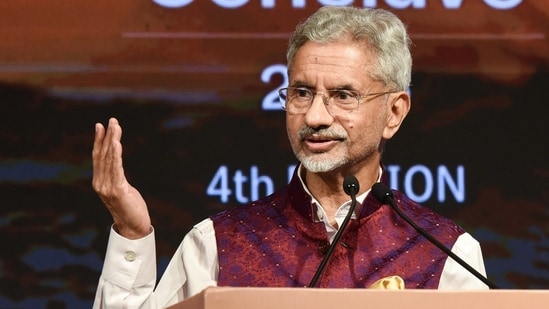
By Nitya Chakraborty Indian foreign policy makers have at last showing some mature understanding of the geopolitics of the post-Trump.2 months if the external affairs minister Dr. S Jaishankar’s observations at the concluding session of Kautilya Economic Conclave in New Delhi on Sunday, are any indication. The minister was quite candid in explaining the complexity […]

The article EAM Jaishankar Is Right: Trump Has To Respect India’s Red Lines appeared first on Latest India news, analysis and reports on Newspack by India Press Agency).

DP World has signed a memorandum of understanding with PayPal to roll out a digital payments solution meant to accelerate cross-border trade, bringing settlement times down from days to minutes. The agreement is part of DP World’s broader Digital Payments programme, targeting merchants, shippers, exporters, importers and marketplaces with a more transparent, lower-cost infrastructure. Under the deal, DP World will not itself act as a regulated payments […]

OpenAI chief executive Sam Altman is leading a high-stakes campaign across East Asia and the Middle East to secure investment and bolster chip supply for the company’s AI infrastructure push. He has held talks since late September in Taiwan, South Korea and Japan with leading hardware suppliers to prioritise OpenAI’s orders and expand capacity.

Altman has met with Taiwan Semiconductor Manufacturing Company and Foxconn, as well as Samsung and SK Hynix, pressing them to accelerate production and give OpenAI preferential access. In South Korea, Samsung and SK Hynix have signed letters of intent to supply memory chips for OpenAI’s data centres. Meanwhile, OpenAI plans further fundraising discussions in the United Arab Emirates.

The urgency of Altman’s mission reflects the intensifying global competition for advanced computing resources. OpenAI projects it will spend around US$16 billion this year on renting computing servers, with long-term forecasts stretching to US$400 billion by 2029 as AI models grow ever more complex.

Industry analysts note that the semiconductor supply chain remains highly constrained. TSMC dominates GPU chip production, and memory manufacturing is largely concentrated in East Asia, creating significant strategic leverage for the manufacturers approached by Altman.

As part of his tour, Altman is also pressing Japanese firms to contribute to infrastructure support. Hitachi has entered discussions to provide power transmission and distribution systems for OpenAI’s data centres, while sharing technical resources under joint development agreements.

Sources familiar with the process say Altman pushed for direct prioritisation in chip delivery schedules, asking that OpenAI receive top-tier production slots. In some cases, he proposed co-investment or co-development of next-generation AI hardware to bind partner incentives more closely.

In South Korea, early architecture proposals include planned data centres of 20 megawatts in collaboration with Samsung and SK Hynix. Altman is reportedly exploring “floating” data centre designs to manage land constraints and cooling demands.

The UAE leg of his mission is expected to involve negotiations with sovereign investment firms such as MGX and Mubadala, with the aim of funding both OpenAI’s expansion and joint infrastructure ventures in the region. In past rounds, UAE investors have already taken part in funding OpenAI operations.

Challenges remain significant. The sheer scale of chips and memory required for stacked AI model training is pushing the boundaries of global wafer fabrication capacity. Market watchers point to the high capital expenditure and long lead times in the semiconductor industry as obstacles to rapid scaling. Some of Altman’s proposals—for example, co-development of bespoke ASICs—are still in preliminary stages and face technical risk.

OpenAI’s valuation and investor backing give the company leverage. Earlier this year, it closed deals that valued it at about US$500 billion, with new capital injections from investors including SoftBank and UAE entities. Those moves have fortified its position in negotiating upstream deals with manufacturers.

VISHNU RAJA
RYO YAMADA
HITORI GOTOH
IKUYO KITA
Just in:
OpenAI identifies 948 Linux privilege escalation flaws using AI // e-Crime Bureau Signs Cybersecurity Partnership With Smart Africa, Reinforcing Its Global Expansion // Miss Universe Hong Kong Jen Zhou Departs for Puerto Rico to Compete in the 75th Miss Universe World Final // Private varsities bill all set to face the axe // Xi Jinping Preparing For A Trilateral Summit With Trump And Putin At APEC Summit On Nov 18-19 // OpenAI introduces GPT-6 Cyber with restricted security access // The “1st Greater Bay Area Health and Longevity Summit & Awards Ceremony” concludes successfully in Macao // Dubai details five-year visa benefits for returning visitors // Trump’s Iran War Has A Share Of Contribution To His Midterm Debacle // Geely’s i-HEV Intelligent Hybrid Technology Offers a New Direction Vision for Gasoline-Powered Vehicles // Emirates Group records AED 4.1 billion half-year profit // Oil advances towards $100 as tanker attacks persist // Emaar approves Development buyout ahead of planned delisting // Kochi police detain two actors over bid to honey trap doctor // Geely’s i-HEV Intelligent Hybrid Technology Offers a New Direction for Gasoline-Powered Vehicles // Hong Kong mandates crypto transaction disclosures to tax authorities // Meraas showcases five residential zones at Dubai Design Week // After Reaching 7 Million Users in the Philippines, Skyro Launches Transparent Cash Loans in Malaysia // CR Longdation Aethereal Cybersecurity × Global Cybersecurity Alliance (GCSA) Join Hands to Establish the “AI and Cybersecurity Research Centre” // Technology shares plunge as Nasdaq enters correction //