News related to
agreement

AD Ports Group has used its 2025 Annual Report to make a broader point than a set of earnings figures: Abu Dhabi’s state-backed ports and logistics champion is seeking to prove that scale, corridor strategy and selective overseas expansion can keep lifting returns even as conflict, tariff friction and supply-chain disruption continue to unsettle global trade. The company said revenue for 2025 reached AED 20.77 billion and […]

Electronic interference that had scrambled vessel tracking across the Persian Gulf eased over the weekend, allowing ships stranded in the war-affected waterway to show positions closer to their true locations and giving operators a clearer picture of navigation risks in one of the world’s most important energy corridors. Maritime security guidance issued on 29 March said GNSS, GPS and AIS disruption had moderated over the previous 24 […]

South Africa’s Western Cape High Court has authorised life-saving surgery for a six-year-old girl after her parents withheld consent on cultural and religious grounds, in a ruling that is likely to sharpen debate over the limits of parental authority when a child’s survival is at stake. The case centred on Red Cross War Memorial Children’s Hospital in Cape Town, where doctors said urgent amputations were the only […]

Funding initiatives under the Forest Conservation Certificate to support sustainable forestry and biodiversity protection

SINGAPORE & MALAYSIA – Media OutReach Newswire – 30 March 2026 – Vantage Data Centers, a leading global provider of hyperscale data center campuses, today announced a partnership with the Malaysia Forest Fund (MFF), an agency under the Ministry of Natural Resources and Environmental Sustainability of Malaysia (NRES), to strengthen the efforts to protect and conserve Malaysia’s forests while delivering tangible benefits to local communities in Selangor. Through this collaboration, Vantage will contribute to the Penjaga Gunung (Mountain Guardian) project, one of the key initiatives under the Forest Conservation Certificate (FCC) protocol managed by the Malaysia Forest Fund.

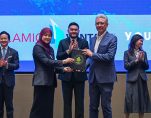
Fitri Abdullah, Country Managing Director, Malaysia of Vantage Data Centers (second from the right) receives the conservation agreement from Malaysia Forest Fund, reflecting the joint commitment towards forest conservation and environmental sustainability.

His Highness Crown Prince of Selangor Tengku Amir Shah Ibni Sultan Sharafuddin Idris Shah Alhaj and YB Dato’ Sri Arthur Joseph Kurup, Minister of Natural Resources and Environmental Sustainability, witnessed the conservation agreement exchange between Vantage Data Centers, Malaysia Forest Fund and Your Idea Maker for the implementation of the Penjaga Gunung project in Selangor. The initiative covers approximately 108,000 hectares of the Selangor Royal Heritage Forest area and engages villages from the Orang Asli community.

The Penjaga Gunung project aims to foster environmental stewardship among the youth of the Orang Asli, the Indigenous peoples of Peninsular Malaysia, while preserving their cultural heritage and creating sustainable livelihoods for the community. Through structured program and certified skills development, participants will be trained to become nature guides and community rangers, enabling them to develop village-based eco-tourism and conservation services that generate long-term income streams. This new generation of forest guardians will be equipped with essential knowledge to enhance protection of Selangor’s forest reserves and biodiversity while supporting habitat restoration to strengthen ecosystem resilience.

The Conservation Agreement Exchange Ceremony for the Penjaga Gunung Project was witnessed by His Highness Crown Prince of Selangor Tengku Amir Shah Ibni Sultan Sharafuddin Idris Shah Alhaj (middle) and YB Dato’ Sri Arthur Joseph Kurup, Minister of Natural Resources and Environmental Sustainability (third from the left). Fitri Abdullah, Country Managing Director, Malaysia was the representative of Vantage Data Centers (far right).

“Our support for Penjaga Gunung turns conservation into high-caliber, meaningful career opportunities. We are shaping a future where sustainable livelihoods and professional skills development go hand in hand with protecting the planet, ensuring that environmental sustainability is guided by the wisdom of protecting indigenous cultural heritage”, said Fitri Abdullah, country managing director, Malaysia of Vantage Data Centers. “Vantage is committed to building and operating our hyperscale digital infrastructure responsibly. We will continue to strengthen the community by investing in workforce development programs and aligning our efforts with local priorities and the Malaysian government’s digital vision.”

Vantage has established a strong presence in Malaysia with two hyperscale campuses in Cyberjaya, Selangor, in addition to one of the region’s largest campuses in Johor, all of which support cloud and AI transformation across the Southeast Asia region. For more information on Vantage’s APAC platform, please visit https://vantage-dc.com/data-center-locations/apac/.

Hashtag: #VantageDataCentre #VDC #MalaysiaForestFund #MFF

The issuer is solely responsible for the content of this announcement.

About Vantage Data Centers

Vantage Data Centers is a global leader in digital infrastructure serving the world’s most influential AI and cloud providers. With operations spanning North America, EMEA and Asia Pacific, Vantage delivers capacity at unrivaled speed and scale, driven by a relentless commitment to operational excellence and customer success. Vantage is empowering transformative companies to shape the future.

For more information, visit.

Arabian Post Staff -Dubai Rosatom has agreed to form a logistics joint venture with DP World in a deal that would place Russia’s state nuclear corporation in majority control while bringing one of Dubai’s biggest global trade operators deeper into a strategically sensitive transport network centred on FESCO and Arctic shipping lanes. Under the proposed structure, Rosatom will hold 51% and DP World 49%, with Rosatom contributing […]

Artificial intelligence is redrawing the economics of data centres at a speed that is forcing developers, utilities and investors to rethink where digital infrastructure can be built and how it can be financed. A new 2026 marketplace report from Colliers says global investment in data centres topped $580 billion in 2025, up 27 per cent from a year earlier, as hyperscalers and infrastructure groups poured money into […]

Digital Realty has begun providing colocation infrastructure to Samsung Electronics at its ICN10 facility in Seoul, a deal that highlights how large corporate users in South Korea are seeking more resilient, high-density digital infrastructure as artificial intelligence, cloud services and mission-critical enterprise workloads put heavier demands on power, cooling and connectivity. The announcement was made on March 25 by Digital Realty, which said the arrangement would support Samsung Electronics’ enterprise IT operations from its Seoul site.

The ICN10 facility, located in Sangam-dong in Mapo-gu, has been operating since 2022 and is described by the company as South Korea’s first carrier-neutral data centre. Digital Realty says the building has a maximum IT load of 12 megawatts and around 132,000 square feet of space, with high-density power architecture, network connectivity and the resilience needed for large-scale computing environments. Those specifications matter because enterprise clients are no longer looking only for secure rack space; they increasingly want facilities that can handle denser compute loads without compromising uptime.

For Samsung Electronics, the move points to a practical shift in how even large technology groups manage parts of their own internal infrastructure. Rather than relying exclusively on self-operated facilities, major companies are turning to specialist operators for colocation capacity that can be scaled more quickly and managed to global standards. Digital Realty framed the arrangement as support for a large-scale customer environment in Korea, while emphasising stable, high-performance infrastructure for global enterprises. That wording suggests the deal is less about consumer-facing products and more about the backbone systems that keep a multinational company running across data-intensive operations.

The timing is notable because Seoul’s data-centre market is expanding while facing mounting strain over where future capacity can be built and how it will be powered. Cushman & Wakefield said the Greater Seoul Area reached 533 megawatts of capacity in the first half of 2025, with a further 715 megawatts in the development pipeline, alongside land secured for another 250 megawatts. Its later market update said the second half of 2025 saw double-digit year-on-year growth, while AI demand and tighter power-related rules were reshaping development patterns. That combination of growth and constraint is pushing operators and customers alike to value operational certainty.

South Korea’s broader technology push adds another layer to that demand story. Reuters reported this week that Seoul approved a 250 billion won investment in AI chip startup Rebellions, part of a wider effort to strengthen domestic semiconductor and advanced computing capabilities. Reuters also reported that SK Hynix is pursuing a US listing partly to fund major chipmaking investments tied to rising AI demand. Those moves sit outside the colocation market itself, but they reinforce the same structural point: processing power, data movement and digital infrastructure are becoming more strategically important across the economy.

Digital Realty’s position in Seoul also reflects a larger contest among global and regional operators seeking to capture Asia’s enterprise and cloud demand. Market research and adviser reports point to South Korea as one of the faster-growing data-centre markets in the region, driven by digital-first consumers, cloud adoption and increased enterprise modernisation. JLL’s 2026 outlook said the global data-centre sector could nearly double between 2025 and 2030, while other market estimates show South Korea’s colocation and broader data-centre segments expanding strongly through the decade. Forecasts from commercial research firms should be treated cautiously, but taken together with operator activity and land acquisition trends, they show why Seoul has become a closely watched infrastructure market.

The Samsung agreement may not be transformative in size on its own, yet it carries signalling value. When one of the country’s largest technology groups places enterprise workloads with an external colocation provider, it gives weight to the argument that carrier-neutral, high-density facilities are becoming integral to mainstream corporate IT strategy rather than serving only cloud giants and telecom operators. It also strengthens Digital Realty’s credentials in a market where network diversity, reliability and location all matter.

Questions remain over how quickly South Korea can add capacity in and around Seoul without worsening power bottlenecks or pushing new builds further from the capital’s main concentration of corporate demand. Legal and advisory analyses have pointed to the mismatch between the location of generation capacity and the heavy concentration of data centres around metropolitan Seoul. That tension is likely to shape the next phase of expansion, forcing operators to balance geography, power access and customer proximity more carefully than before.

Advertisements

Ethereum has drawn renewed market attention after a sharp jump in large-holder transactions coincided with a formal push by developers to harden the network against future quantum-computing risks. Data circulated by analyst Ali Martinez showed whale transactions rising from 123 on 21 March to 2,055 on 24 March, a move that put the token back at the centre of debate over whether big holders are accumulating, rotating […]

Mubadala Energy has secured the Southwest Andaman exploration Production Sharing Contract in Indonesia, giving the Abu Dhabi-based company full control of a new offshore block that strengthens its growing position in one of Southeast Asia’s most closely watched gas frontiers. The contract was awarded under Indonesia’s Gross Split regime, under which the contractor bears all operating and capital costs, and the company will hold a 100 per […]

Ziff Davis has struck a new licensing agreement to launch a dedicated French edition of IGN, extending the global reach of its gaming and entertainment media brand through a partnership with European publisher eMense. The deal will see eMense operate IGN France under licence, marking the latest step in Ziff Davis’s strategy to scale its media properties internationally without direct ownership of local operations. The move builds […]

Arabian Post Staff -Dubai Mubadala Investment Company has agreed to sell its minority stake in liquid cooling specialist CoolIT Systems to Ecolab, in a transaction led by private equity firm KKR and valued at $4.75bn, marking a significant reshaping of ownership in a sector gaining momentum alongside artificial intelligence and data centre expansion. The Abu Dhabi sovereign investor confirmed that it had signed a definitive agreement, signalling […]

High-Quality Growth with Improved Gross Profit Margin, increasing R&D Investment and Strategic Focus on Trustworthy Agents Ecosystem

HONG KONG SAR – Media OutReach Newswire – 27 March 2026 – Voicecomm Technology Co., Ltd. (“Voicecomm Technology” or the “Company“, Stock Code: 2495.HK), a core technology provider and ecosystem operator of trustworthy conversational AI in China, announced its annual results for the year ended December 31, 2025. Leveraging its deep technological expertise and forward-looking strategic initiatives in trustworthy conversational AI, the Company achieved steady revenue growth, continuous improvement in profitability, and a significant enhancement in operating cash flow, further strengthening its competitive edge in the enterprise-level trustworthy Agent sector.

Gross Profit Margin Steadily Improves, Operating Cash Flow Turns Strongly Positive

In 2025, the Company’s total revenue successfully exceeded the RMB1 billion mark, reaching RMB1,006.9 million, representing a year-on-year increase of 7.0%. Gross profit amounted to RMB551.2 million, increased by 8.0% from the previous year, while the gross profit margin increased by 0.5 percentage point to 54.7% from 54.2% in the same period last year, reflecting the high-value-added products and technical services of the Company, as well as effective cost control.

Notably, the Company’s net cash generated from operating activities turned strongly positive, reaching a net inflow of RMB212.5 million, compared to a net outflow of RMB129.2 million in the same period last year. This improvement underscores enhanced operational efficiency and reflects strengthened receivables management, which accelerated cash collection.

Profit for the year amounted to RMB140.2 million. The significant increase in net profit compared to the same period last year was mainly attributable to eliminating the impacts of changes in carrying amount of redeemable capital contributions, an accounting adjustment arising from financing agreements entered into with shareholders prior to the Listing and completion of the Global Offering.

Increasing R&D Investment to Strengthen the Trustworthy Agent Technology Foundations

As a technology-centric product company, Voicecomm Technology remains committed to the independent R&D and innovation of underlying technologies. In 2025, the Company’s research and development expenses reached RMB224.3 million, representing a substantial year-on-year increase of 67.7%. The investment was primarily directed towards developing Agents with continuous learning capabilities and a technical framework for Multi-agent collaboration, aiming to enhance technological capabilities and elevate the level of product innovation. This reinforces our trustworthy Agent technical architecture composed of three layers: “Multimodal Perception + Multi-model Thinking + Multi-agent Collaboration”.

This architecture takes the “meta-model” as the core to effectively alleviate the common pain points of in enterprise-level implementation, such as hallucinations, controllability and data security, by integrating the generalization capabilities of large language models with the precision of vertical domain knowledge. On this basis, the Company have formed a deliverable and operable trustworthy Agent product system, to ensure that the Agents are usable, manageable, and controllable in enterprise environments, thereby powering the intelligent upgrade of six core application scenarios: City management and administration, Automotive and transportation, Telecommunications, Finance, Healthcare, and Energy management.

Productization Strategy Drives Deep Application across Six Core Scenarios

Voicecomm Technology focuses on empowering various industries through superior products and technologies. In 2025, leveraging its mature product matrix, the Company successfully established replicable benchmark standards across multiple application scenarios.

City Management and Administration: As a leading solution provider in the smart government sector in China, the Company’s business has covered more than 130 prefecture-level cities. The “Smart Government Agent” deeply integrates the capacities of large language models, enabling more intelligent and automated government services with standardized and intelligent applications in scenarios such as government hotlines and city governance.

Automotive and Transportation: The Company successfully established benchmark autonomous driving projects in cities such as Mianyang, Zibo, and Ezhou, building a successful and replicable “Smart Transportation Agent” solution. For the Mianyang Science and Technology New City project, a total of 96 autonomous vehicles have been deployed, and the project was successfully selected as a National AI Application Pilot Testing Base in the transportation sector. In January 2026, the Company newly won the bid for the “Ezhou Huahu Airport Smart Port” autonomous driving bus procurement and operation project, further expanding its application boundaries.

Healthcare: In January 2026, the Company successfully won the bid for the “Chuannan Smart Valley AI Vertical Large Model Innovation Platform – Silver Economy Construction and Operation Project” in Neijiang City, Sichuan Province, with a total contract value of nearly RMB300 million. This project represents the Company’s first “AI + Elderly Care” city-level benchmark demonstration project. It adopts a closed-loop collaborative model of “online platform + offline service network + home terminals,” integrating Agents capabilities with the Company’s “vertical small model microservices” system in areas such as Health Early Warning, Cognitive Ability Assessment, and emotional companionship into a productized solution, thereby establishing rapidly replicable city-level smart elderly care operational benchmark.

Telecommunications, Finance, and Energy Management: The Company continues to deepen collaborations with leading enterprises in the telecommunications and finance sectors, leveraging the “Telecommunication Service Agent” and “Financial Service Agent” to enhance service efficiency and user service value. Meanwhile, its AI-powered smart charging solution has been progressively integrating charging pile networks in China and across several Southeast Asian countries.

Benefiting from the successful implementation of the Company’s productization strategy and the high level of market recognition for its trustworthy Agent solutions, as of December 31, 2025, the Group’s project pipeline and orders in hand saw significant growth. The number of ongoing projects at year-end increased to 320, representing a year-on-year increase of 41.6%, while the outstanding contract sum at year-end rose to RMB1,048.9 million, a year-on-year increase of 57.4%, reflecting the continued expansion of the Company’s business.

Future Outlook: Focusing on the Trustworthy Agents Ecosystem with Four Strategic Priorities

Looking ahead, the Company will firmly focus on its goal of “building a trustworthy conversational AI ecosystem” and will advance the following strategic priorities:

Overall and Technology Strategy: Continue to focus on R&D and innovation in frontier technologies such as multi-modal fusion and trustworthy intelligence, promoting the deployment of trustworthy agents across more application scenarios. By creating open technology platforms and standards, the Company will attract more developers and partners to jointly build a prosperous and win-win industrial ecosystem.

Market Strategy: Establish benchmarks for quality and innovation within the industry and deepening partnerships with various service channels. At the same time, the Company will actively expand into the C-end market, extending cutting-edge technologies to a wider user base, thereby expanding the influence and commercial value of the ecosystem.

Regional Strategy: Domestically, the Company will continue to deepen its partnerships with major cooperating cities to create smart city benchmark cases. Internationally, the Company will actively respond to the “Belt and Road” initiative, grasp the tremendous potential of emerging markets, and promote the Company’s trustworthy Agent products and services globally to enhance its international brand image.

Investment Strategy: Through prudent strategic investments and M&A, the Company will optimize the layout of the upstream and downstream industry chains and consolidate the stability and competitiveness of the ecosystem.

DR.Tang Jinghua, Chairman ofVoicecomm Technology Co., Ltd., said: ” 2025 was a landmark year for Voicecomm Technology. We not only achieved a strong turnaround in operating cash flow and a steady increase in gross profit margin financially, but we also completed a strategic leap at the technological and business level towards becoming a ‘a core technology provider and ecosystem operator of trustworthy conversational AI.’ We deeply understand that the essence of enterprise-grade AI lies in creating replicable and reliable products and technology foundations. During the year, we significantly increased R&D investment and successfully applied our trustworthy Agents across six core scenarios, particularly in city-level benchmark projects in emerging fields like smart elderly care, showing the strong competitiveness of our productization strategy. Looking to the future, we will continue to pursue the goal of ‘building a trustworthy conversational AI ecosystem,’ leveraging an open platform to gather ecosystem partners and empowering diverse industries with innovative technology, thereby creating long-term sustainable value for our shareholders and society. ”

Hashtag: #Voicecomm

The issuer is solely responsible for the content of this announcement.

Voicecomm Technology Co., Ltd.

Founded in 2005 and headquartered in Wuhan, Voicecomm Technology is one of the leading core technology providers and ecosystem operators of trustworthy conversational AI listed on the Main Board of the Hong Kong Stock Exchange, and obtained the qualification as National-level SRDI, Technology Little Giant and High-Tech Enterprise. Leveraging its proprietary trustworthy Agent,the Company overcomes pain points in the commercialization of large language models, such as hallucinations and compliance issues, ensuring AI is usable, manageable, and controllable in enterprise environments. For enterprise-level customers, the Company provides AI services covering the entire process of “communication –decision – execution”. Its trustworthy Agent solutions have been widely deployed across multiple scenarios, including City management and administration, Automotive and transportation, Telecommunications, Finance, Healthcare, and Energy management, and it is dedicated to empowering the intelligent transformation of diverse industries.


  White House officials said diplomatic channels with Iran remain active despite Tehran’s public rejection of US overtures, underscoring a widening disconnect between rhetoric and back-channel engagement as tensions ripple across the Middle East and global markets. The White House has sought to project continuity in negotiations, signalling that intermediaries and indirect communications are still in play even as Iranian officials outline new preconditions for any de-escalation. […]

Arabian Post Staff -Dubai Dubai’s transport regulator has entered a formal cooperation agreement with Dubai Roads and Transport Authority and Union Properties PJSC to strengthen oversight and coordination of road right-of-way management across major development projects, signalling a tighter regulatory push on urban infrastructure as construction activity accelerates across the emirate. The agreement is framed within the provisions of Law No. of 2021, which governs road regulation […]

Arabian Post Staff -Dubai Dubai’s healthcare ecosystem is set for a strategic boost after Dubai Health and Dubai Future District Fund formalised a partnership aimed at building a global health technology launchpad, underscoring the emirate’s ambition to position itself at the forefront of digital medicine and biotech innovation. The agreement, structured as a memorandum of understanding, outlines a framework to accelerate investment, innovation and talent development in […]

Escalating conflict involving Iran is beginning to cast a shadow over the global artificial intelligence race, raising concerns that geopolitical instability could fracture funding networks, disrupt supply chains and alter the trajectory of one of the world’s fastest-growing industries. Capital flows from Gulf sovereign wealth funds have become a critical pillar supporting the expansion of advanced computing infrastructure in the United States and allied economies. These funds, […]

Arabian Post Staff -Dubai   Washington has drawn up a 15-point framework aimed at halting the conflict with Iran, reflecting mounting pressure on the Trump administration to contain both military escalation and widening economic fallout, according to officials familiar with the discussions. The plan, described as an evolving diplomatic blueprint rather than a final settlement, is being positioned as a pathway to structured negotiations after weeks of […]

Reliance Industries has secured about five million barrels of crude oil from Iran in a transaction estimated at more than $350 million, signalling a calculated return to a trade corridor constrained for years by geopolitical tensions and sanctions.

The purchase, attributed to cargoes loaded through intermediaries and structured channels, underscores a shifting pattern in global oil flows as refiners seek cost advantages amid volatile benchmarks. Market participants said the acquisition reflects both commercial pragmatism and a broader recalibration of sourcing strategies by large refiners navigating supply disruptions and pricing differentials.

Reliance, which operates one of the world’s largest refining complexes at Jamnagar, has historically processed Iranian crude due to its favourable refining characteristics and pricing structure. The latest move suggests the company is again exploring opportunities linked to Iranian grades, which are often discounted relative to comparable Middle Eastern benchmarks.

Iran’s oil exports have been subject to US sanctions since Washington withdrew from the nuclear agreement in 2018. Those restrictions significantly curtailed Tehran’s ability to sell crude openly, pushing exports into opaque channels involving ship-to-ship transfers, reflagging, and complex payment mechanisms. Despite these constraints, Iran has continued to move significant volumes to Asia, particularly to buyers willing to navigate compliance risks.

Industry analysts say the renewed interest in Iranian oil stems from tightening margins and evolving global supply dynamics. Production curbs by OPEC+ members, combined with geopolitical disruptions affecting Russian and Middle Eastern supplies, have altered trade routes and pricing structures. Refiners are increasingly prioritising flexibility, often sourcing from multiple regions to optimise margins.

Reliance’s procurement strategy has expanded notably over the past two years, with the company becoming a major buyer of discounted crude, including shipments linked to Russia following Western sanctions. The latest Iranian cargoes appear to align with this broader approach, where cost competitiveness outweighs traditional sourcing patterns.

Energy traders indicate that the cargoes in question were likely acquired through intermediaries rather than direct state-to-company contracts, a common practice in sanctioned markets. Such arrangements can involve layered ownership structures, making it difficult to trace the origin of the oil definitively. Payment mechanisms also tend to bypass conventional banking channels, relying on alternative currencies or barter-like systems.

Officials in Tehran have repeatedly stated that oil exports remain a central pillar of the country’s economic resilience, even under sanctions. Output has gradually recovered, with production estimates rising above 3 million barrels per day in recent months. Much of this increase has been driven by exports to Asia, where demand remains robust despite regulatory scrutiny.

Global oil prices have remained sensitive to geopolitical developments, with Brent crude fluctuating amid concerns over supply security and demand recovery in major economies. The availability of discounted barrels from sanctioned producers has created a parallel market that exerts downward pressure on certain price segments, benefiting refiners capable of accessing such supplies.

For Reliance, the ability to process a wide range of crude grades provides a strategic advantage. Its refining configuration allows it to handle heavier and more complex crudes, including those from Iran, Venezuela, and Russia. This flexibility enables the company to capitalise on arbitrage opportunities that may not be available to less sophisticated refiners.

Policy implications remain a key consideration. While there has been no formal indication of a shift in sanctions policy by Western governments, enforcement patterns have shown variability. Analysts note that enforcement intensity often fluctuates depending on broader diplomatic priorities, creating windows of opportunity for market participants.

New Delhi has maintained a delicate balance in its energy diplomacy, emphasising the need for affordable supplies while adhering to international frameworks. Purchases of crude from sanctioned producers have typically been structured to avoid direct violations, with companies relying on legal and compliance teams to manage exposure.

Shipping data and market intelligence suggest that Iranian crude continues to reach global markets through a network of vessels operating under flags of convenience. These ships often disable tracking systems or conduct transfers in international waters, complicating monitoring efforts.

By Nitya Chakraborty It is a history of twists and turns in India-China economic relations for decades. The same is being repeated now as India after taking special measures to make Chinese direct investment easier and agreeing to start border trade from three points in this country from June this year, is faced with the […]

The article Amidst India-China Bonhomie In Bilateral Ties, Both Sides To Fight Each Other At WTO Meet appeared first on Latest India news, analysis and reports on Newspack by India Press Agency).

Arabian Post Staff -Dubai Abu Dhabi’s social development agenda has gained fresh momentum as the Department of Community Development signed a partnership with Mbank aimed at strengthening the financial resilience of families across the emirate, reflecting a broader policy shift towards preventive welfare and long-term economic stability. The agreement, announced as part of initiatives aligned with the UAE’s Year of Family, focuses on enhancing access to financial […]

Arabian Post Staff -Dubai Donald Trump has indicated that talks between the United States and Iran have reached what he described as “major points of agreement”, raising the prospect of a diplomatic breakthrough after a prolonged period of tension between the two countries. Speaking after a fresh round of discussions, Trump said negotiations held on Sunday were constructive and would continue into the following day. He added […]

France’s decision to withhold access to critical source codes for Rafale fighter systems has intensified concerns within New Delhi over long-term control of its air combat capabilities, exposing tensions between strategic partnership and technological dependence.

Officials and defence analysts indicate that the refusal centres on highly sensitive software governing the aircraft’s Active Electronically Scanned Array radar, mission computer architecture and the SPECTRA electronic warfare suite. These components underpin the Rafale’s operational edge, enabling advanced targeting, threat detection and real-time combat adaptability. Without access to underlying code, local engineers face restrictions in modifying or upgrading the systems independently.

The development comes at a time when the Air Force is seeking greater flexibility to integrate indigenous weapons, sensors and software into imported platforms. The Rafale fleet, inducted under an intergovernmental agreement signed in 2016, is widely regarded as one of the most capable multirole assets in service. However, the absence of deep software access limits the scope for customisation beyond manufacturer-approved pathways.

Defence planners have long sought to reduce reliance on foreign vendors for mission-critical technologies, particularly software-defined systems that determine how aircraft perform in evolving combat scenarios. The inability to access core programming frameworks means that even incremental upgrades—such as adapting radar modes or integrating new missile systems—must be routed through the original manufacturer, potentially adding time, cost and operational constraints.

French authorities have maintained that certain technologies embedded within the Rafale are protected by stringent export controls and intellectual property safeguards. Industry sources suggest that this position reflects a broader policy followed by advanced aerospace manufacturers, who rarely transfer full software control of high-end combat platforms. Such restrictions are often justified on grounds of security, technological advantage and contractual obligations tied to proprietary systems.

For New Delhi, the issue extends beyond a single aircraft programme. It underscores a structural challenge in defence procurement, where imported platforms may offer cutting-edge capabilities but limit sovereign control over upgrades and lifecycle management. Analysts argue that the balance between immediate capability acquisition and long-term autonomy has become increasingly complex as modern warfare shifts towards software-centric systems.

The Rafale’s SPECTRA suite, in particular, has drawn attention due to its role in electronic warfare and survivability. Designed to detect, identify and counter threats ranging from radar locks to missile engagements, the system operates through highly classified algorithms. Without access to these algorithms, domestic agencies are unable to independently adapt the suite to emerging threat environments or tailor it to specific operational theatres.

Similarly, the AESA radar’s performance is closely tied to software-defined modes that govern target tracking, electronic counter-countermeasures and situational awareness. Integrating locally developed weapons or sensors requires compatibility at the software level, which becomes challenging when access is restricted. Defence experts note that while some integration is possible through interface agreements, deeper optimisation remains dependent on the original equipment manufacturer.

The issue has also revived debate over the country’s broader push for self-reliance in defence production. Programmes aimed at developing indigenous fighter aircraft, avionics and electronic warfare systems have gained momentum, yet gaps remain in high-end technologies. The Rafale case is being cited by some policymakers as evidence of the need to accelerate domestic research and reduce dependence on external suppliers for core technologies.

At the same time, others caution against overstating the dispute, noting that limitations on source code access are common in international defence deals. They argue that operational effectiveness is not necessarily compromised, as manufacturers continue to provide upgrades and support under contractual arrangements. The Rafale fleet has demonstrated strong performance in exercises and deployments, reinforcing its value as a frontline asset.

Diplomatic considerations are also at play. France has been a key defence partner, with cooperation spanning submarines, helicopters and space technologies. The Rafale agreement itself was seen as a milestone in bilateral ties, reflecting a high degree of strategic trust. Any friction over technology transfer is therefore likely to be managed within the broader framework of long-standing cooperation.

Industry observers point out that negotiations over technology access often involve trade-offs between cost, capability and control. Full access to source codes would significantly alter the commercial and strategic dynamics of defence exports, potentially affecting pricing structures and intellectual property protections. As a result, such concessions are rarely granted, even to close partners.

The episode highlights a growing reality in modern military aviation, where software defines capability as much as hardware. Control over code translates into control over upgrades, interoperability and operational doctrine. For countries seeking to maintain strategic autonomy, this raises fundamental questions about how to structure future procurement and development strategies.

Bitcoin miners are facing a widening gap between production costs and market prices, yet data shows a marked slowdown in selling activity, raising questions about strategy and resilience across the sector. Bitcoin has been trading near $68,000, while estimates of the average cost to mine a single coin have climbed towards $85,000 or higher for many operators. The divergence has been driven largely by a sharp rise […]

Escalating investments in artificial intelligence infrastructure are driving a fundamental shift in how global technology companies design, build and operate data centres, as demand for computing power accelerates beyond traditional digital services. Major technology firms are committing tens of billions of dollars to expand AI-ready facilities, reflecting a race to secure capacity for training and deploying advanced machine learning models. This surge is not only redefining the […]

VISHNU RAJA
RYO YAMADA
HITORI GOTOH
IKUYO KITA
Just in:
Motorola introduces Signature 27 flagship priced at $1,599 // India Under Pressure To Join RCEP On The Eve Of ASEAN Summit In Manila On Nov 15-17 // HKUST President Prof. Nancy IP Receives UNESCO–Equatorial Guinea International Prize for Research in Life Sciences // ADIA subsidiary seeks $7.5 billion private investment financing // Technology shares plunge as Nasdaq enters correction // CM disputes Vijayan’s claims // Trump’s Iran War Has A Share Of Contribution To His Midterm Debacle // TVM –Mangaluru Vande Bharat claims top spot // ADNOC secures decade-long LNG supply pact with Gujarat Energy // Emaar approves Development buyout ahead of planned delisting // OpenAI introduces GPT-6 Cyber with restricted security access // Beyond the exhibition floor: How robots, AI and networks are moving into the real world // The “1st Greater Bay Area Health and Longevity Summit & Awards Ceremony” concludes successfully in Macao // Dubai Future District Fund and Buimerc formalise cooperation // Geely’s i-HEV Intelligent Hybrid Technology Offers a New Direction for Gasoline-Powered Vehicles // Democrats Gearing Up For 2028 Presidential Elections To Gain Full Power // HKUST President Prof. Nancy IP Receives UNESCO–Equatorial Guinea International Prize for Research in Life Sciences // Ousted top Kochi cop gets IG post // Kochi police detain two actors over bid to honey trap doctor // Miss Universe Hong Kong Jen Zhou Departs for Puerto Rico to Compete in the 75th Miss Universe World Final //