Integrity is often spoken of as though it were universal: one definition, one standard, one moral yardstick by which trust is measured everywhere. In reality, integrity is deeply shaped by culture. What one society considers faithfulness, another may experience as rigidity. What one views as flexibility, another may interpret as unreliability. These differences are not signs of moral deficiency; they are reflections of distinct histories, social structures, […]
US-based multinational corporations are set to be exempt from key elements of the global minimum tax regime, following an agreement among major economies that eases pressure on Washington while preserving the broader framework championed by the Organisation for Economic Co-operation and Development. The move reshapes the implementation of the 15 per cent global minimum tax and recalibrates how countries apply enforcement rules to the world’s largest companies. […]
Canada’s airline sector is bracing for sharper competition after Ottawa moved to widen market access for carriers from the Middle East, a shift that industry executives and analysts say could force domestic airlines to improve pricing, punctuality and onboard service as more long-haul capacity enters the market. The policy change, announced through updated air transport arrangements, gives carriers based in the Gulf greater flexibility to add frequencies […]
Caracas has slipped into an uneasy calm as Venezuelans await signals about the direction their country will take, with political negotiations stalled, economic pressures unresolved and social tensions simmering beneath the surface. “There is a strange lull,” said Benigno Alarcón Deza, a long-time resident of the capital, describing a sense of collective anticipation that has settled over daily life. “People are waiting, watching, unsure of what comes […]
Arabian Post Staff -Dubai OPEC+ decided to keep its oil production levels unchanged after a brief ministerial meeting on Sunday, opting to focus narrowly on market conditions while avoiding discussion of political strains affecting several of its key members. The decision came at a time of sustained pressure on crude prices and mounting concerns over global oversupply, underlining the group’s cautious approach as it seeks to […]
Cars sold across major markets are harvesting vast amounts of personal data from drivers and passengers without clear consent, fuelling a widening debate over privacy, ownership and the limits of digital surveillance in everyday transport. As vehicles become rolling computers, regulators and consumer advocates warn that protections have failed to keep pace with the speed and scale of data collection embedded in modern mobility. Vehicles equipped with […]
More than $110 billion in digital assets moved out of South Korea during 2025 as stringent trading restrictions and policy uncertainty pushed investors and firms to seek friendlier jurisdictions, according to estimates compiled from blockchain analytics, exchange disclosures and regulatory briefings. The scale of the outflows has sharpened debate in Seoul over how to balance market oversight with competitiveness at a time when global crypto activity is […]
Abu Dhabi National Energy Company PJSC and Emirates Water and Electricity Company have completed a Dh3.6 billion financing and development agreement for the Al Dhafra Power Plant, marking a significant expansion of dispatchable power capacity aimed at supporting the emirate’s fast-growing data centre sector. The project underlines Abu Dhabi’s strategy of pairing digital infrastructure growth with firm, utility-scale energy assets as demand from artificial intelligence, cloud computing […]
The United Arab Emirates reinforced its position as a centre for advanced technology and space sciences through 2025, recording a sequence of policy, industrial and scientific advances that underscored a broader shift towards an innovation-led, knowledge-based economy. Government agencies, research centres and private firms aligned capital spending with skills development, deepening international cooperation while scaling domestic capabilities across satellite manufacturing, Earth observation and deep-space research. At the […]
Arabian Post Staff -Dubai Abu Dhabi National Energy Company PJSC, known as Abu Dhabi National Energy Company PJSC, and Emirates Water and Electricity Company have finalised a 3.6 billion dirham agreement for the Al Dhafra Power Plant, marking a significant addition to Abu Dhabi’s generation capacity and underlining continued investor confidence in the emirate’s regulated utilities framework. The transaction centres on a long-term project financing structure in […]
KINSHASA, CONGO – Media OutReach Newswire – 29 December 2025 –Vingroup today announced the signing of a trilateral Memorandum of Understanding (MoU) with Kinshasa (Democratic Republic of Congo) and Exposure SARL, establishing a comprehensive cooperation framework to support the development of a sustainable, modern, and accessible urban transportation system in Kinshasa.The agreement represents an important step forward in advancing urban infrastructure modernization and accelerating the green transition in the capital of the Democratic Republic of Congo.
From left to right: Mr. Fely Lukwaka Samuna, Director of Exposure Sarl; Ms. Nguyen Hoang Phuong, CEO of Vingroup Africa; Mr. Fiston Lukwebo Musengo, Provincial Minister for Public–Private Partnerships, Trade and Industry; and Mr. Jésus-Noël Sheke Wa Domene, Provincial Minister for Planning, Budget, Transport and Urban Mobility, at the signing ceremony.
Under the MoU, Vingroup, Exposure, and the City of Kinshasa, through its relevant authorities, will collaborate to study and promote the procurement and deployment of VinFast’s fully electric vehicles, including electric buses, electric cars, and electric scooters, to meet the transportation needs of the city and its residents. In parallel, the parties will jointly develop a comprehensive electric mobility ecosystem encompassing charging infrastructure and after-sales services.
To support the transition to electric mobility, the cooperation will focus on modernizing and greening Kinshasa’s transportation system across public transport services, mobility solutions for government officials and civil servants, and transportation options for the general public.
Vingroup, through its subsidiary VinFast, will provide detailed commercial and technical proposals for vehicle fleets, including buses, cars, and scooters. Exposure will be responsible for developing a detailed preliminary business plan for vehicle procurement and infrastructure development, as well as initiating the necessary local administrative and legal procedures for importation, distribution, and operations. Meanwhile, the City of Kinshasa will review and propose appropriate incentive mechanisms, covering tax policies, regulatory frameworks, and access to infrastructure, to encourage the development and adoption of green mobility. A designated focal authority will also be appointed to manage and oversee the electric bus fleet.
During the initial phase, expected to run from now through the end of Q1 2026, the parties have agreed on a roadmap to conclude formal contracts to operationalize the above objectives. Under this roadmap, VinFast is expected to supply approximately 500 electric buses and 1,000 electric cars for public fleet operations in Kinshasa. Over the same period, VinFast and Exposure plan to implement supply and distribution agreements to introduce between 10,000 and 20,000 electric cars and between 50,000 and 100,000 VinFast electric scooters to the local market.
In pursuit of a comprehensive green ecosystem, the parties will cooperate in developing an extensive charging station network and an authorized service workshop system, ensuring stable operations and convenience for electric vehicle users.
Specifically, Vingroup reaffirmed its commitment to sustainable development and positive local impact through knowledge transfer and human resource development. These initiatives include training programs for drivers, technicians, and on-site operations personnel, as well as technical design support for electrified transportation infrastructure. Exposure will undertake technical and economic assessments of the charging network and vehicle maintenance and repair facilities. For its part, the City of Kinshasa has committed to supporting land allocation, identifying locations for charging stations, and ensuring reliable power supply solutions, thereby establishing a solid infrastructure foundation for Vingroup’s green mobility ecosystem in the city.
Mr. Jésus-Noël SHEKE WA DOMENE, Provincial Minister of Planning, Budget, Public Service, Employment, Tourism, Transport and Urban Mobility, representative of the City of Kinshasa stated: “The City of Kinshasa highly values ourcooperation with Vingroup in advancing green and smart mobility solutions. This is a strategic step aligned with the city’s sustainable urban development vision, aiming to reduce environmental impacts, improve transportation infrastructure, and deliver long-term benefits to our citizens. We believe this partnership will help transform Kinshasa into a dynamic, modern, and livable city in the region.”
Mrs. Phuong NGUYEN, General Director of Vingroup Africa shared: “Vingroup is honored to partner with the City of Kinshasa on the journey toward building a modern, civilized, and sustainable living environment. The deployment of green and smart mobility solutions will not only gradually transform Kinshasa’s urban transportation landscape, but also create long-term, tangible value by improving quality of life for residents and supporting the city in achieving its future sustainable development goals.”
Previously, the Government of Kinshasa and Vingroup also signed a Memorandum of Understanding to explore large-scale urban development projects in the Democratic Republic of Congo. Under the MoU, the two parties will jointly study and develop a large riverside urban project covering approximately 6,300 hectares, strategically located within the capital’s urban expansion plan.
The mega urban development is expected to include residential areas, villas, hospitals, schools, shopping centers, hotels, entertainment complexes, and future government and ministerial offices, positioning it as a new tourism destination and a landmark of Kinshasa’s development. The city is expected to allocate land for the project in accordance with the agreed cooperation framework.
These strategic agreements underscore Vingroup’s international vision and growing global presence, reaffirm its pioneering role in green mobility, and further deepen economic cooperation between Vietnam and the Democratic Republic of Congo, as both countries pursue green growth and sustainable development.
Vingroup is Vietnam’s largest private conglomerate, operating across six core sectors: Industrials & Technology, Real Estate & Services, Infrastructure, Green Energy, Culture and Social Enterprises, guided by the vision of “To Create a Better Life for People”.
With a strong track record, scale, and proven capabilities, Vingroup continues to expand its international footprint. The Group was recognized by TIME magazine (USA) in the “TIME World’s Best Companies 2025” list, ranking among the world’s top 1,000 companies for outstanding contributions to sustainable development, innovation, and global impact.Hashtag: #Vingroup
The issuer is solely responsible for the content of this announcement.
IonQ has confirmed plans to deliver a next-generation 100-qubit quantum computing system to South Korea, reinforcing the company’s push into Asia’s accelerating quantum ecosystem and extending a strategic partnership with the Korea Institute of Science and Technology Information. The deployment is positioned as a milestone for the country’s national research infrastructure, giving scientists and industrial users local access to higher-capacity trapped-ion quantum hardware designed for advanced simulations and algorithm development.
The system is scheduled to be installed at facilities operated by Korea Institute of Science and Technology Information, which manages high-performance computing resources for universities, laboratories and government programmes. IonQ said the platform will integrate with existing supercomputing assets, enabling hybrid classical-quantum workflows that are increasingly seen as the most practical near-term use of quantum machines. Officials involved in the project describe the installation as part of a broader effort to ensure domestic capability in a field viewed as strategically significant for science, security and economic competitiveness.
For IonQ, the agreement deepens a relationship that began with earlier access to its systems through cloud services and collaborative research. The 100-qubit platform represents a step up from earlier machines made available to Asian partners, with IonQ highlighting gains in algorithmic performance driven by longer coherence times and high-fidelity gates inherent to its trapped-ion approach. The company argues that these characteristics allow useful problem sizes to be tackled with fewer physical qubits than some rival architectures.
The project comes as South Korea accelerates state-backed investment in quantum science. Government roadmaps call for expanded talent development, dedicated funding lines for hardware and software, and closer links between public laboratories and industry. KISTI’s role as a national computing hub makes it a focal point for these ambitions, with the new system expected to support work ranging from materials discovery and chemistry to optimisation and machine learning. Researchers anticipate that local access will shorten development cycles compared with reliance on overseas cloud resources.
IonQ executives frame the delivery as part of a long-term regional strategy rather than a one-off sale. Asia has become a key battleground for quantum providers as countries seek sovereign capabilities while remaining connected to global research networks. China, Japan and South Korea are all funding large-scale programmes, and regional universities are increasing output in quantum algorithms and error-mitigation techniques. By embedding hardware within national facilities, vendors aim to secure early loyalty among researchers who may later influence commercial adoption.
Competition in the sector is intensifying. Superconducting-qubit systems from established technology firms and photonic approaches backed by start-ups are all vying for attention, each claiming advantages in scalability or manufacturability. IonQ’s bet on trapped ions prioritises precision and stability, though critics note challenges in scaling to very large numbers of qubits. The company counters that its roadmap focuses on algorithmic qubits and error-corrected performance rather than raw counts, a metric increasingly favoured by parts of the research community.
The South Korean installation also reflects a broader trend toward hybrid computing. Rather than replacing classical supercomputers, quantum systems are being linked to them to tackle specific sub-problems where quantum effects offer potential speed-ups. KISTI engineers are working on software layers to manage job scheduling and data movement between systems, an area seen as critical to extracting value from early quantum machines.
Commercial implications are closely watched. South Korean conglomerates in electronics, chemicals and logistics have signalled interest in quantum applications, and access to domestic hardware could encourage pilot projects. Analysts caution that widespread industrial impact remains some distance away, but note that early experimentation helps firms build expertise ahead of future breakthroughs.
Storm scientists warn that the world’s oceans are now fuelling hurricanes and typhoons of a strength that strains the limits of existing classification systems, as deep layers of unusually warm water enable cyclones to intensify far beyond historical norms. Measurements from satellites, autonomous floats and research vessels show that pockets of heat extending hundreds of metres below the ocean surface are becoming more widespread. These subsurface hot […]
BinDawood Holding Company has agreed to acquire a controlling 51% stake in UAE-based Wonder Bakery in a deal valued at 96.9 million dirhams, marking a significant step in the Saudi retailer’s regional expansion strategy and its push into food manufacturing. The Riyadh-listed group said the share purchase agreement will be funded through internal resources alongside existing financing facilities, underlining a balance-sheet-led expansion rather than reliance on new […]
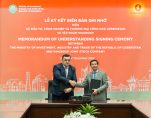
HANOI, VIETNAM – Media OutReach Newswire – 25 December 2025 – Vingroup announced the signing of a Memorandum of Understanding (MOU) with the Ministry of Investment, Industry and Trade of the Republic of Uzbekistan to promote cooperation and implement multi-sector projects in Uzbekistan. The agreement marks the beginning of a long-term cooperation plan between the two sides across multiple key sectors, while opening large-scale investment opportunities for the Vietnamese corporation in Central Asia, contributing to the strengthening of economic and investment ties between Vietnam and Uzbekistan.
Mr. Kasimov Ilzat Ablaxatovich, Deputy Minister of Investment, Industry and Trade of the Republic of Uzbekistan (left), and Mr. Nguyen Viet Quang, Vice Chairman and CEO of Vingroup (right), at the signing ceremony of the Memorandum of Understanding (MOU).
Under the MOU, the two parties agreed to jointly study and develop strategic cooperation opportunities in areas such as urban development, sustainable transportation, tourism and leisure infrastructure, as well as other investment projects aligned with Uzbekistan’s development orientation, affirming the scale and capabilities of Vietnamese enterprises on the global economic map.
Specifically, in the area of urban development, Uzbekistan is ready to allocate approximately 1,000 hectares of land in a prime location of the capital Tashkent for Vingroup to study, propose, and invest in the development of a large-scale, integrated urban complex. The project would include residential areas, living infrastructure, commercial and cultural facilities, and public infrastructure facilities. The development is envisioned to form a “Vietnam Town”, creating a modern and sustainable urban landmark while enhancing cultural exchange and economic cooperation between the two countries.
In the field of sustainable transportation, Vingroup has proposed studying the deployment of electric taxi and urban mobility services using VinFast electric vehicles in Uzbekistan, together with a charging infrastructure system and support services. The project is expected to contribute to the green transition, reduce emissions, and improve the quality of urban transportation services in major Uzbek cities.
In tourism and leisure infrastructure, the two sides will explore the potential development of integrated tourism and recreational center, including entertainment facilities, hotels, golf courses and related tourism infrastructure, aiming to unlock tourism potential and enhance Uzbekistan’s attractiveness to international visitors.
In addition, this strategic cooperation also establishes a framework for the two parties to identify, assess, and select other potential investment projects that align with the development strategies and long-term priorities of each side.
On the Uzbek government’s side, the Ministry of Investment, Industry and Trade committed to supporting Vingroup by providing information on the investment environment, legal framework, and incentive policies, as well as coordinating with relevant authorities and local governments in project preparation, including land allocation, licensing, and access to investment support mechanisms in accordance with legislation.
On Vingroup’s side, the Group will propose conceptual proposals, technical expertise and investment plans, participate in feasibility studies and project structuring, and mobilize member companies within the Vingroup ecosystem to implement suitable projects in Uzbekistan.
Mr. Kasimov Ilzat Ablaxatovich, Deputy Minister of Investment, Industry and Trade of Uzbekistan, stated: “We welcome Vingroup’s interest and commitment to cooperation in Uzbekistan. With its experience in urban development, sustainable transportation, and infrastructure projects, Vingroup is considered a strategic partner to jointly explore and implement investment initiatives aligned with Uzbekistan’s socio-economic development priorities in the coming period.”
Mr. Nguyen Viet Quang, Vice Chairman and CEO of Vingroup, shared: “Uzbekistan is a market with strong potential, supported by a clear development direction and an improving investment environment. Through this Memorandum of Understanding, Vingroup aims to gradually explore suitable cooperation opportunities and work alongside the Government of Uzbekistan in developing urban areas, sustainable transportation, and sectors that bring positive contributions to local communities.”
Uzbekistan holds a strategic position in Central Asia, with a growing economy and strong potential in urban development, infrastructure, tourism, and services. The Government of Uzbekistan is actively promoting reforms and attracting foreign investment to drive sustainable economic growth and international integration.
Vingroup is Vietnam’s leading private multi-sector corporation, operating across six core pillars: Industrials & Technology, Real Estate & Services, Infrastructure, Green Energy, Culture, and Social Enterprises, with the vision “To create a better life for people”. With its proven reputation, scale and capabilities, Vingroup is steadily expanding globally, contributing to elevate the global standing of Vietnamese enterprises.
Hashtag: #Vingroup
The issuer is solely responsible for the content of this announcement.
Matein Khalid My very best wishes to my friends and readers for a wonderful Christmas break and may the New Year bring the world the peace the human race so richly deserves. I will be in Alex/Cairo to revisit and pay my homage to the genius of Pharonic antiquity supplemented by the Ptolemaic, Roman, Byzantine, Umayyad, Fatimid, Seljuk, Mamluk, Ottoman, French, British and even Soviet brutalist influences […]
By Nantoo Banerjee US President Donald Trump may have problems with Russia, Venezuela and a host of other states and has every right to decide on the US trade and diplomatic policies to deal with those countries. But he has no right to thrust upon other free nations his likes, dislikes and prejudices. Unfortunately, he […]
President His Highness Sheikh Mohamed bin Zayed Al Nahyan held talks with American entrepreneur Elon Musk, focusing on advances in artificial intelligence and emerging technologies and how cross-border collaboration can accelerate innovation with practical benefits for societies and economies. The meeting underscored Abu Dhabi’s ambition to position itself as a global hub for advanced technology while engaging with influential private-sector leaders shaping the future of AI, […]
Seef Properties has signed a lease agreement with UAE-based D’lish Café to open the brand’s first outlet in Bahrain at Al Liwan, adding a new premium food and beverage concept to the mixed-use destination in the Seef District of Manama. The deal underscores continued demand for curated dining experiences within lifestyle-led developments and reflects a broader push by property owners to anchor retail assets with recognisable regional brands.
The café, known for its contemporary menu and design-led spaces, is expected to occupy a prominent location within Al Liwan, a development that blends retail, leisure, dining, and community spaces. Executives involved in the agreement said the move aligns with Al Liwan’s positioning as a social hub rather than a conventional shopping centre, where food-led concepts play a central role in footfall generation and dwell time.
Seef Properties described the agreement as part of a wider strategy to deepen its portfolio of lifestyle tenants that appeal to both residents and visitors. The company has been recalibrating its leasing mix across assets to prioritise experiential retail, particularly dining formats that combine casual accessibility with premium presentation. Al Liwan, which hosts a range of cafés, restaurants, and entertainment offerings, has emerged as a flagship for that approach.
For D’lish Café, the Bahrain opening marks its first international expansion, signalling confidence in the kingdom’s dining market and its ability to support differentiated concepts. The brand has built a following in the UAE by focusing on high-quality ingredients, visually distinctive interiors, and menus designed to cater to breakfast, lunch, and evening socialising. Industry observers note that such all-day dining formats have gained traction across Gulf cities as consumer preferences shift towards flexible, experience-driven venues.
Executives familiar with the project said the Bahrain outlet will mirror the brand’s core identity while incorporating local design cues to resonate with the Al Liwan setting. Fit-out work is expected to proceed in line with Seef Properties’ guidelines for sustainability, accessibility, and integration with surrounding public spaces. While an opening date has not been formally announced, preparations are under way to align the launch with peak seasonal footfall at the destination.
The agreement comes at a time when Bahrain’s retail real estate sector is navigating structural changes driven by evolving consumer behaviour. Traditional mall formats have faced pressure from e-commerce and shifting spending patterns, prompting developers to emphasise food, leisure, and community experiences that cannot be replicated online. Analysts tracking the sector say developments that successfully curate strong dining line-ups are better positioned to maintain occupancy levels and rental stability.
Al Liwan’s tenant mix reflects that strategy, with food and beverage outlets accounting for a significant share of leasable space. The addition of D’lish Café is expected to complement existing concepts by targeting a demographic that values premium yet approachable dining. Seef Properties executives have previously indicated that tenant selection is guided by brand strength, operational track record, and the ability to contribute to a cohesive destination experience rather than standalone retail performance.
For D’lish Café, the Bahrain market offers exposure to a consumer base known for high per-capita spending on dining and a strong café culture. Manama’s Seef District, in particular, attracts a mix of residents, office workers, and visitors, providing a diversified customer base. Market analysts note that UAE-based brands expanding into Bahrain often view the kingdom as a strategic entry point for broader regional growth due to regulatory familiarity and cultural alignment.
The partnership also highlights increasing cross-border collaboration within the Gulf’s retail and hospitality sectors. As regional brands mature, developers are leveraging these names to differentiate projects and reinforce destination branding. At the same time, café and restaurant operators are seeking locations that offer built-in footfall and a lifestyle context aligned with their brand positioning.
UAE businesses used the Ambiente exhibition in Germany to project the country’s ambition to become a central hub in the global consumer goods trade, as officials and exporters sought to convert visibility into long-term commercial partnerships across Europe, Asia and the Middle East.
The country’s pavilion at the Ambiente fair in Frankfurt brought together manufacturers, designers and trading firms spanning homeware, lifestyle products, gifting and sustainable consumer goods. Organisers said the collective presence was designed to showcase both scale and diversity, with an emphasis on export readiness and cross-border collaboration rather than one-off transactions. The participation formed part of a wider strategy to deepen the UAE’s role in global supply chains at a time when buyers are reassessing sourcing models and regional diversification.
Ambiente is regarded as one of the world’s largest platforms for consumer goods, drawing tens of thousands of buyers, retailers and distributors each year. For UAE exhibitors, the event offered access to European retail networks and international wholesalers seeking alternatives to traditional manufacturing centres. Trade officials accompanying the delegation said meetings during the fair focused on long-term contracts, private-label manufacturing and co-branding arrangements, reflecting a shift towards higher-value engagement.
UAE Ministry of Economy representatives described the fair as a strategic opportunity to align the country’s manufacturing and re-export capabilities with evolving global demand. Officials highlighted the UAE’s logistics infrastructure, trade finance ecosystem and network of comprehensive economic partnership agreements as key advantages in attracting buyers looking for reliability and speed to market. The country has expanded its non-oil exports steadily, with consumer goods playing a growing role alongside metals, plastics and food products.
Exhibitors at the pavilion reported interest from buyers in sustainable materials, contemporary design and flexible production runs. Several companies said European retailers were exploring joint development of products that could be produced in the UAE and distributed across the Gulf, Africa and South Asia. This approach reflects a broader trend among global brands to shorten supply chains while retaining access to multiple consumer markets from a single base.
Frankfurt has become an important meeting point for this recalibration, as trade fairs increasingly serve as venues for strategic sourcing discussions rather than simple product showcases. Industry analysts note that manufacturers from emerging hubs are gaining attention as buyers weigh cost pressures, geopolitical risk and sustainability commitments. The UAE’s pitch at Ambiente centred on stability, regulatory clarity and the ability to integrate manufacturing, warehousing and distribution within a single jurisdiction.
Design-led firms from the UAE also used the exhibition to challenge perceptions that the country’s consumer goods sector is limited to trading and re-export. Several brands showcased original collections developed in collaboration with regional designers, blending Middle Eastern aesthetics with international trends. This creative emphasis was aimed at differentiating UAE products in a crowded marketplace and appealing to premium and mid-market retailers.
Sustainability featured prominently in discussions at the pavilion. Companies highlighted the use of recycled materials, energy-efficient production processes and compliance with European environmental standards. Officials said this focus was essential for competitiveness, as regulatory and consumer scrutiny in Europe continues to intensify. The UAE has invested in sustainability frameworks and industrial policies intended to support greener manufacturing, which exhibitors said helped build confidence among buyers.
The fair also underscored the role of small and medium-sized enterprises in the UAE’s export strategy. Many participating firms were SMEs seeking first-time entry into European markets. Trade support bodies facilitated introductions and provided guidance on certification, packaging requirements and logistics, reflecting an effort to reduce barriers for smaller exporters. Business owners said the ability to present as part of a national pavilion enhanced credibility and opened doors that would be difficult to access independently.
China’s shipments of rare-earth permanent magnets to the United States fell by 11% in November from October, underscoring how strategic trade frictions and regulatory tightening continue to weigh on a supply chain critical to electric vehicles, wind turbines and advanced defence systems. The monthly drop came despite a temporary easing of broader trade tensions between the world’s two largest economies, signalling that structural constraints rather than short-term […]
Greenlogue/AP A major commitment by Alterra to a renewables platform run by Copenhagen Infrastructure Partners is set to channel long-term capital into clean power, storage and transmission projects across multiple markets, strengthening the scale and pace of energy transition investment worldwide. Alterra, the UAE’s climate investment vehicle with a stated target of deploying $30 billion by the end of the decade, confirmed it is investing in a […]
Sony has agreed to acquire an 80 per cent stake in Peanuts Holdings for $457 million, securing control of one of the world’s most recognisable entertainment brands and deepening its push into character-driven film, television, music and consumer products. The transaction sees Sony buy out the stake held by Canada-based WildBrain, while the family of Peanuts creator Charles M Schulz retains the remaining 20 per cent.
The deal hands Sony majority ownership of the Peanuts intellectual property, which includes Charlie Brown, Snoopy and the wider cast that has defined the franchise since its debut in newspapers in 1950. Peanuts Holdings oversees global licensing, publishing and brand management, and its assets include more than 17,000 comic strips as well as extensive animation and merchandising rights.
Executives involved in the transaction said the agreement reflects a shared focus on preserving the spirit of the characters while positioning the brand for new audiences across platforms. Sony has built a broad entertainment ecosystem spanning film studios, music labels, games and consumer electronics, giving it multiple avenues to deploy the Peanuts characters without fragmenting creative control.
Sony deepens its grip on Peanuts
Sony’s leadership described the acquisition as a strategic step rather than a short-term content play. The company already distributes Peanuts animation through Sony Pictures Television and has worked closely with the Schulz family for years on brand stewardship. By consolidating ownership, Sony gains the ability to align long-term creative planning with distribution and merchandising strategies.
The Peanuts franchise continues to generate significant revenue through licensing deals covering toys, apparel, publishing and themed experiences. Industry analysts estimate that global character merchandising remains one of the most resilient segments of the entertainment economy, supported by multigenerational appeal and predictable demand. Peanuts, with its minimalist humour and emotional resonance, is often cited as one of the few properties that can cross age groups and cultures with limited localisation.
WildBrain’s exit reflects a strategic refocus on its own core animation and family content operations. The company had acquired its Peanuts stake through earlier transactions linked to rights management and production, and has since monetised the asset while maintaining creative partnerships. Executives at WildBrain said the sale strengthens its balance sheet and allows greater investment in owned brands and production pipelines.
For the Schulz family, retaining a 20 per cent stake preserves direct influence over creative decisions and brand values. Family representatives have repeatedly stressed the importance of protecting the philosophical tone of the strip, which blends humour with themes of loneliness, perseverance and childhood reflection. Their continued involvement is expected to reassure long-time fans wary of over-commercialisation.
Sony’s broader strategy has increasingly emphasised intellectual property with long shelf lives rather than single-release blockbusters. The company has expanded its catalogue through acquisitions and partnerships that allow stories and characters to move fluidly between cinema, streaming, music, games and live events. Peanuts fits that model, offering episodic storytelling, short-form content and strong visual branding.
The entertainment group also sees opportunities to integrate Peanuts more deeply into its music and gaming divisions. Snoopy and Charlie Brown have already appeared in music collaborations, seasonal broadcasts and digital content, and Sony’s ownership of major music labels and gaming platforms provides scope for cross-promotional projects without reliance on third-party licensing negotiations.
Market observers note that the valuation implies confidence in stable, long-term cash flows rather than explosive growth. Character-driven brands such as Peanuts tend to perform consistently across economic cycles, supported by evergreen demand for family-friendly content and nostalgia-driven consumption. This predictability contrasts with the volatility seen in theatrical box office revenues and subscription-based streaming models.
The acquisition also comes as global media companies reassess how to manage legacy brands in an era dominated by short-form video and algorithm-driven discovery. Sony has indicated it will invest in formats that respect the franchise’s roots while experimenting with new distribution channels, including digital shorts and educational programming.
Canada faces another period of economic uncertainty as the U. S. Supreme Court weighs a case that could reshape the legal foundations of tariffs imposed during Donald Trump’s presidency, reviving questions about the stability of cross-border trade rules and the exposure of Canadian industries to abrupt policy shifts. The pending decision centres on the scope of presidential authority to levy tariffs under long-standing U. S. trade statutes, […]