News related to
agreement

London-based CoinShares, a leading European digital asset manager with about US$10 billion in assets under management, has struck a deal to acquire FCA-regulated Bastion Asset Management. The transaction, which must clear approval from the UK Financial Conduct Authority, is intended to bolster CoinShares’ actively managed crypto offerings and accelerate its push into the US institutional market.

Under the agreement, Bastion’s strategies, quantitative team and leadership, including CEO Philip Scott and CIO Fred Desobry, will be integrated into CoinShares. Bastion is known for deploying market-neutral and systematic investment strategies tailored for institutional clients. The acquisition allows CoinShares to complement its existing passive exposure products with alpha-oriented solutions.

CoinShares is already positioning for expansion across the Atlantic. It is in the process of going public in the United States via a definitive business combination with SPAC Vine Hill Capital Investment Corp, valuing the firm at roughly US$1.2 billion on a pro forma basis. CoinShares currently holds a dominant 34 percent share of the EMEA crypto ETP market and ranks as the fourth largest global digital asset ETP manager after BlackRock, Grayscale and Fidelity.

With Bastion’s integration, CoinShares aims to fuse its Investment Advisor registration in the US with new actively managed strategies targeting institutional investors. By combining quantitative alpha models with its distribution infrastructure, the firm seeks to differentiate itself from both traditional asset managers entering the crypto space and crypto-native infrastructure providers.

Jean-Marie Mognetti, CEO and Co-Founder of CoinShares, described the acquisition as closely aligned with the firm’s goal of offering comprehensive digital asset solutions to its global clientele. Bastion’s team brings extensive expertise: Fred Desobry has over 17 years’ experience in systematic investing and quantitative research; Philip Scott brings more than 25 years in financial services.

The acquisition takes shape against evolving regulatory backdrops. In Europe, CoinShares recently secured Markets in Crypto-Assets authorisation for its French subsidiary, making it the only continental European asset manager to hold all three major regional licenses. The US regulatory environment is also shifting: the Securities and Exchange Commission’s adoption of generic listing standards for commodity-based exchange traded products is shortening approval timelines from roughly 240 days to 75 days. This regulatory clarity is viewed as conducive to faster rollout of actively managed crypto funds.
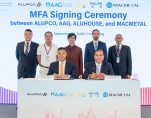

HONG KONG SAR – Media OutReach Newswire – 1 October 2025 – Aluminium Products Company (ALUPCO), an aluminum extrusion producer in Saudi Arabia and Asia Aluminum Group (AAG), a leading Hong Kong aluminum extrusion manufacturer with a production base in Mainland China, signed an agreement on September 29 in Hong Kong. The partnership will form three joint ventures, including AAG member companies AluHouse and MacMetal, With a […]

Etihad Rail has confirmed that passenger services will begin operations in 2026, ushering in a new era of high-speed connectivity across the UAE. At the Global Rail 2025 exhibition in Abu Dhabi, the company revealed the first public visuals of its passenger rolling stock and detailed plans for its network, integration efforts, and operating partnerships. Azza Al Suwaidi, deputy CEO of Etihad Rail Passenger Services, stated that […]

PHNOM PENH, CAMBODIA – Media OutReach Newswire – 1 October 2025 – Cambodia’s climate resilience efforts gained fresh momentum with the signing of a memorandum of understanding between the Ministry of Environment and the Chen Zhi Climate Action Challenge, a nationwide initiative led by Neak Oknha Chen Zhi that empowers young Cambodians to lead scalable, community-based climate solutions. Memorandum of Understanding (MoU) Signing Ceremony with Ministry of […]

HONG KONG SAR – Media OutReach Newswire – 1 October 2025 – As Hong Kong’s iconic green transport infrastructure, MTR Corporation is committed to keeping cities moving and creating value for the sustainable development of Hong Kong. The Corporation announces today (23 September 2025) that with the support of 15 leading international banks, it has signed a HKD30 billion seven-year syndicated green term loan facility (the “Facility”), […]

Passenger volume across African airlines is forecast to reach 113 million in 2025, up from 98 million in 2024—an increase of about 15.3 %, according to the African Airlines Association. With such growth, aviation stakeholders are stepping up calls to liberalise air transport across the continent to unlock further gains. A core mechanism in this push is the Single African Air Transport Market, conceived under African Union […]

The overnight Hong Kong Interbank Offered Rate surged to 5.018 %, marking its first breach of 5 % this year amid tightening liquidity pressures tied to quarter-end demand.

Liquidity in the local banking system has become deeply constrained as the aggregate balance of Hong Kong dollar deposits plunged to historically low levels and the Hong Kong Monetary Authority continues active currency-peg defence. The jump in HIBOR reflects mounting stress in short-term funding markets even as the HKMA’s base rate remains at 4.50 %, following its downward adjustment earlier this month in line with the U. S. Federal Reserve.

Banks are confronting sharper funding costs just as capital market activity intensifies. The costs of intra-day and overnight loans between financial institutions are rising, exerting upward pressure on lending rates and potentially damping leveraged trading strategies and margin financing. Several market participants have begun repricing forward rate agreements to reflect a higher floor for short-term rates.

The sharp move in overnight HIBOR comes after months of extreme volatility. Earlier in 2025, the overnight rate plunged—from around 4.50 % in May to near zero—as the HKMA intervened by selling Hong Kong dollars to counter excessive strength, flooding banks with liquidity. That in turn compressed funding costs across all tenors. But the very intervention that depressed rates is now being reversed: as the HKMA buys Hong Kong dollars to defend the weak end of its trading band, it is draining system liquidity, pushing interbank rates upward.

Analysts view this as part of the natural adjustment embedded in Hong Kong’s Linked Exchange Rate System, where capital flows and monetary interventions translate into automatic interest rate feedback mechanisms. With the aggregate balance shrinking sharply, funding is now scarcer and HIBOR has begun to converge toward U. S. dollar rates.

Still, structural frictions remain. Banks have so far been cautious to fully pass through heightened HIBOR into lending rates, citing competitive pressures and deposit stickiness. Likewise, mortgage borrowers on HIBOR-based plans face mounting exposure.

The HKMA’s earlier 25 basis point cut to its base rate to 4.50 % followed a matching reduction from the U. S. Federal Reserve. That move provides a nominal cushion to banks’ cost of funds. But with HIBOR now overshooting expectations, the policy buffer is tightening.

In foreign exchange markets, the HKMA’s continued interventions to maintain the HKD’s 7.75–7.85 peg are intensifying. Pounds and U. S. dollar flows have grown more volatile, pressuring capital inflows and outflows that ripple into short-term rates. Some strategists caution that if HIBOR remains elevated, Hong Kong’s carry trade — borrowing in HKD at low cost to invest in higher-yielding assets — may lose its appeal.

At the same time, robust IPO issuance and equity market activity bolster demand for Hong Kong dollars, adding to funding stresses. Brokers and margin financiers, squeezed by rising short-term rates, are beginning to reduce leverage usage.

Monetary officials have reiterated that the primary mandate of the HKMA is exchange rate stability, not targeting specific interest rates. But as interbank funding becomes more expensive, the tension between rate dynamics and peg defence is becoming harder to manage.

Market watchers are now eyeing whether HIBOR will stabilise around the 4.5 %–5.5 % band or continue climbing. Forward curves imply that some of the rate shock is already priced in. Meanwhile, banks are expected to adjust lending floors and reframe risk pricing over the coming weeks, especially in the mortgage and leveraged finance sectors.

Advertisements

The Central Bank of the UAE and Dubai Finance today formalised an agreement to deepen collaboration in the development of the country’s capital markets, enabling Dubai to draw on the central bank’s infrastructure to issue dirham-denominated government bonds.

Khaled Mohamed Balama, Governor of the CBUAE, and Abdulrahman Saleh Al Saleh, Director-General of Dubai’s Department of Finance, signed the Memorandum of Understanding in Abu Dhabi before senior officials and assistant governors.

Under the pact, Dubai Finance gains access to the central bank’s systems and platforms to support bond issuance, while both parties commit to joint efforts in fintech, payment systems, and digital currency development. The agreement further encompasses capacity building, knowledge exchange and coordination in regulatory and infrastructural domains.

Balama described the partnership as “an important step toward advancing the country’s financial markets, supporting their growth, and ensuring their readiness to adapt to future changes.” He affirmed that the nation’s leadership is focused on promoting innovation and digitisation in financial services to boost private-sector participation and investor confidence.

Al Saleh said the MoU would help diversify the UAE’s investment tools and align capital market expansion with the vision of the country’s leadership. He emphasised the importance of collaboration with regulatory bodies at both federal and local levels to elevate the nation’s reputation as an investment hub.

The MoU aligns with broader moves by the central bank in strengthening financial infrastructure and market regulation. The central bank has recently advanced its “Financial Infrastructure Transformation” programme, which includes the rollout of the domestic card scheme Jaywan and development of a Central Bank Digital Currency, known as the Digital Dirham. The institution also introduced regulations on Open Finance platforms and has conducted stress tests affirming resilience in the banking sector under diverse macroeconomic pressures.

The UAE’s push to build robust capital markets fits into a regional trend of using debt instruments to broaden funding sources beyond oil and real estate. In December 2024, the CBUAE signed an MoU with the Hong Kong Monetary Authority to enhance cross-border debt issuance and settlement between the UAE and Asia, aiming to foster deeper connectivity between debt markets.

Analysts see the newly inked agreement as a mechanism to centralise the infrastructure layer of government debt issuance under one roof, avoiding fragmentation across emirates. Doing so could lower costs, standardise procedures, and deepen liquidity in domestic markets. It may also foster greater issuance activity from state and municipal entities.

OPEC+ is poised to approve another lift in oil output of at least 137,000 barrels per day when its core members convene on 5 October to finalise November quotas, according to three individuals familiar with the discussions. The decision is part of the alliance’s broader push to reclaim lost market share amid surging crude prices. Since April, the group has reversed earlier production cuts, having already raised […]

Fortescue has sealed a flurry of contracts to deploy 300 to 400 zero-emission haul trucks at its Pilbara operations and to bolster its renewable energy capacity with the full acquisition of a Spanish wind tech company. The shifts represent a decisive scaling of its “Real Zero by 2030” ambition.

Under the new agreements, Chinese manufacturer XCMG will supply up to half of the electric 240-tonne haul truck fleet, with deliveries phased between 2028 and 2030. The remaining trucks will be produced by Liebherr, under an amended version of an earlier deal. The contracts build on an earlier framework signed in 2024 for battery-electric ancillary mining equipment.
XCMG itself refers to the Fortescue order as the largest export order for green mining equipment from China to date. The trucks may include autonomous features and use advanced software, similar to those operating in China’s open-pit mines.
Fortescue is also finalising its full takeover of Nabrawind, a Spanish wind tower and turbine technology company in which it held a minority stake since 2023. With full ownership, Fortescue plans to integrate Nabrawind’s self-lifting tower designs with turbines supplied by Envision Energy, aiming to deploy up to 2.1 GW of installed wind capacity in its Pilbara “East Pilbara generation hub.” The first wind energy is expected online by 2028, pending regulatory approval.

To support its Decarbonisation roadmap, Fortescue has signed supply agreements with several other Chinese clean-tech firms: BYD will supply energy storage systems; LONGi will provide photovoltaic modules; and Envision will deliver turbines and smart energy solutions. Fortescue describes the partnerships as a “multilateral collaboration” to access the best manufacturing capacity globally.
Andrew Forrest, the company’s Executive Chairman, emphasised that China’s ability to scale green technologies rapidly makes it a key partner in Fortescue’s strategy. He remarked that industry should “glue back” international cooperation through practical alliances rather than mere rhetoric. The company also continues to operate its R&D arm, Fortescue Zero, which is tasked with integrating and optimising power systems across its fleet and operations.

However, the pivot towards Chinese suppliers has already prompted adjustments to the Liebherr arrangement. Fortescue has scaled back Liebherr’s role to supplying at minimum half the haul trucks, down from its originally envisaged share, reallocating greater share to XCMG. Analyses suggest the move is intended to diversify risk, ensure supply chain resilience, and meet aggressive deployment timelines.
The decision also appears to reflect broader challenges in the green hydrogen sector: Fortescue has walked away from planned hydrogen projects in Arizona and Queensland, absorbing write-downs, and is now emphasizing electrification and green iron production instead. Internal restructuring and leadership turnover at Fortescue Zero have raised questions about execution, but the company underscores that the new strategy remains intact.

Microsoft has halted specific cloud and artificial intelligence services to a unit within Israel’s Ministry of Defence after uncovering evidence that its Azure infrastructure was being used in a mass surveillance programme targeting Palestinians. The firm confirmed that access to a subset of its subscriptions has been suspended, while non-surveillance services remain unaffected. The decision follows an investigative exposé by The Guardian, in collaboration with +972 Magazine […]

Kuwait Petroleum International and payments provider WEX have launched a joint fuel card in Italy, called CartissimaQ8-WEX, offering business customers access to a network of more than 3,400 service stations, including Q8, Q8easy, and authorised partners.

Under the partnership, WEX cardholders will be able to refuel across Italy’s Q8 network and partner sites, gaining visibility over fuel consumption and simplified billing. KPI said the initiative is part of its strategy to deepen its footprint in the Italian market by introducing a new sales channel in collaboration with a payments specialist.

The agreement provides WEX customers access to a broad distribution system spanning Q8, Q8easy and authorised stations across Italy. KPI’s network in the country already includes several hundred stations, and this card linkage aims to consolidate its reach by leveraging WEX’s fleet and payments infrastructure.

WEX has been actively expanding its European fuel network via partnerships in countries such as France and the Netherlands, tying up with Carrefour and Sakko to broaden its acceptance footprint. That expansion effort dovetails with this new agreement, enabling cross-market leverage.

While KPI is the local operating arm of Kuwait Petroleum Corporation, WEX is a US-based payments and fleet services firm. The alliance represents a fusion of upstream fuel retailing and downstream payments infrastructure. It also reflects a broader trend in the energy sector: fuel retailers seeking to strengthen customer retention through integrated payment and fleet management services.

Stakeholders in the Italian fuel and mobility markets view the move as a response to intensifying competition from independent fleet card providers and mobility fintechs. By embedding payments into its fuel ecosystem, KPI hopes to capture a larger share of corporate fleet spend and lock in recurring usage.

Industry analysts note that acceptance scale is key to fleet card uptake; the more stations that accept a given card, the more attractive it becomes for fleet operators. With 3,400 stations accessible under CartissimaQ8-WEX, the offering is immediately competitive.

SINGAPORE – Media OutReach Newswire – 26 September 2025 – Singapore lawyers will soon be able to gain specialised skills in family office advisory through a strategic partnership between the Wealth Management Institute (WMI) and the Law Society of Singapore. This multi-year training initiative aims to equip Singapore’s 6,500 practising lawyers with specialised skills to serve the rapidly growing family office sector. Training agreement signed on 26 […]

Abu Dhabi-based XRG P. J. S. C. has finalised its acquisition of an 11.7 percent equity interest in Phase 1 of the Rio Grande LNG project in Brownsville, Texas, marking the company’s first natural gas investment in the United States. The purchase was made through a joint-venture structure involving Global Infrastructure Partners, an investment vehicle affiliated with BlackRock. Phase 1 of Rio Grande LNG is one of […]

A Paris criminal court has sentenced former French president Nicolas Sarkozy to five years in prison, having found him guilty of criminal conspiracy tied to alleged Libyan financing of his 2007 presidential campaign. The court’s ruling mandates that he serve time even if he appeals, underscoring the gravity attributed to his conduct. Judges determined that between 2005 and 2007 Sarkozy conspired, through close aides, to seek funding […]

President Duma Boko has declared that his government intends to secure a controlling share in De Beers by the end of October, pushing Botswana to renegotiate its position in the global diamond supply chain. The move comes as Anglo American, the majority owner of De Beers, appears ready to divest its 85 percent stake. Botswana currently holds 15 percent of De Beers and jointly operates the mining […]

Dubai’s Roads and Transport Authority has unveiled a new strategic focus for the 5th Dubai World Challenge for Self-Driving Transport, scheduled for 2027: smart integrated infrastructure. Mattar Al Tayer, Director-General and Chairman of the Board of Executive Directors of the RTA, said the competition will pivot to challenges that bind sensing, connectivity and analytics to urban infrastructure across Dubai.

At the closing of the Dubai World Congress for Self-Driving Transport held at the Dubai World Trade Centre, RTA inked four key agreements with Emaar Properties, Al Futtaim Group, and the winners of the 2025 challenge—WeRide and Deutsche Bahn consortium, together with Zelos Technology—to deploy and test autonomous systems in Festival City, Creek Harbour and other strategic urban zones. Al Tayer affirmed that the move aligns with Dubai’s ambition to serve as a global testbed for mobility innovation.

This year’s theme shifts from discrete vehicle-centric competition to a systems-level mandate: entrants will be judged on how well their solutions embed into city-wide networks of sensors, roads, communication links and data platforms. The RTA framework calls for designs that anticipate traffic dynamics, weather variations and public transit interaction, while maintaining safety, resilience and sustainability.

Over 3,000 participants and more than 80 expert speakers participated in the Congress, spanning government, academia and industry. The gathering marked the formal launch of the 2027 edition. The Congress also highlighted Dubai’s strategic goal that by 2030, one quarter of all journeys within the emirate will be autonomous or smart-enabled—an ambition already embedded in the RTA’s transport roadmap.

Stakeholders see this shift as an essential maturation of the challenge format. Rather than focusing only on individual vehicle prototypes, the next competition will test ecosystem coherence and scalability across urban modules. According to industry analysts, the new direction presses participants to align with evolving demands in mobility, where digital and physical layers must fuse.

Dubai’s prior edition in 2025 carried the theme “Dubai Autonomous Transport Zone,” pushing contestants to integrate multiple autonomous mobility modes in defined neighbourhoods. That foundation now gives way to a broader remit, with RTA officials stressing that smart infrastructure is the backbone for reliability and public acceptance of self-driving systems.

The agreements struck with developers and past challenge winners will see pilots in zones like Festival City and Creek Harbour, where road layouts, sensor grids and vehicle operations will be tested side by side. RTA counts on these field deployments to validate technical performance, operational cost and citizen experience before full-scale adoption.

Critics caution that the complexity of integrating diverse systems—communications, edge computing, failsafe control layers—could raise cost, regulatory and interoperability risks. Some stakeholders argue the success of the 2027 challenge will depend on whether entrants can navigate not only technical but institutional challenges across urban agencies and telecommunications providers.

For technology firms and research groups, the new emphasis offers both opportunity and challenge. It rewards proposals able to harmonise hardware, software, data and governance. Observers expect to see consortia spanning telecom operators, municipal agencies, AI firms, and road infrastructure specialists.

Saudi Arabia’s capital markets are poised for a transformative leap as the Capital Market Authority moves toward allowing foreigners to hold more than 49 percent stakes in listed firms, marking one of the most consequential policy reversals in decades. Abdulaziz Abdulmohsen Bin Hassan, a CMA board member, confirmed that the regulator is in advanced stages of softening the ownership ceiling.

The current 49 percent cap on foreign ownership, introduced in the latest regulations, restricts the extent to which overseas investors can control local companies. Under the new proposal, non-Saudi investors would be able to exceed that threshold in select cases. The CMA has not publicly disclosed the new upper limit, but Bin Hassan suggested that the change could take effect before the end of the year.

Market analysts view this as a critical push by Saudi authorities to deepen global investor participation in the Kingdom’s equity market. By raising the allowable foreign shareholding, Saudi stocks would likely climb in weighting within MSCI and FTSE emerging-market indexes, thus drawing fresh capital flows.

Despite the momentum, several caveats remain. The draft change still requires sign-offs from multiple government bodies. Observers note that any permitted increase may come with conditions—such as lock-in periods, sectoral restrictions, or thresholds specific to strategic or institutional investors.

Over the past year, Saudi regulators have introduced a series of capital market reforms to bridge the gap between local standards and international norms. In July, the CMA approved amendments to rules governing investment funds and procedures for opening investment accounts for foreign individuals and institutions. Those changes broadened access and simplified cross-border investment mechanisms.

Under current rules, a foreign strategic investor is exempt from the 49 percent cap if it commits to holding shares for at least two years. These strategic investors are often long-term institutional players with operational or financial interests in the Kingdom. The expanded ownership proposal may build on this classification.

In 2025, Saudi Arabia also opened the door to foreign investment in listed companies owning real estate in Mecca and Medina—previously off limits to non-Saudi investors. That move allowed participation in shares and convertible instruments up to 49 percent.

For many Gulf and global fund managers, the prospective loosening is a signal that Saudi markets are gearing up to compete more aggressively with financial hubs like Dubai and Singapore. Some institutional investors have been reluctant to commit heavily to Saudi equities due to restrictions on ownership, market liquidity and governance complexity.

But not everyone is unconstrained by the cap: a handful of foreign firms already command regulatory exceptions or use swap agreements and licenced intermediaries to gain indirect exposure. The push to raise the ownership ceiling could simplify such structures or render them unnecessary.

Saudi sovereign and public funds may play a central role in cushioning any shocks from greater foreign participation. Observers expect state-backed capital to anchor or co-invest in large deals, reinforcing stability.

Citadines strengthens leadership in the resilient upper-midscale segment through rapid conversions and geographical diversification Franchise model gains momentum as a driver of scalable, efficient growth Global brand campaign amplifies refreshed Citadines lifestyle with activ∞ and “For the Love of Coffee” experiences across operational properties SINGAPORE – Media OutReach Newswire – 24 September 2025 – The Ascott Limited (Ascott), the wholly owned lodging business unit of CapitaLand Investment […]

Abu Dhabi’s Technology Innovation Institute and Nvidia have signed an agreement to establish the Middle East’s first joint laboratory dedicated to artificial intelligence and robotics. The new facility, known as the TII-NVAITC Joint Lab for AI and Robotics, will be located at TII’s headquarters. Its mandate is to push forward next-generation AI models, robotics platforms and humanoid technologies. The lab combines TII’s strength in applied research with […]

HONG KONG AND SHANGHAI, CHINA – Media OutReach Newswire – 22 September 2025 – Hang Lung Group Limited (SEHK stock code: 00010) and Hang Lung Properties Limited (SEHK stock code: 00101) (collectively known as “Hang Lung” or “the Group”) today hosted a cocktail reception to celebrate their 65th anniversary, gathering important business partners, industry leaders, and key stakeholders to commemorate its legacy, and to explore what the […]

UAE has set an objective of growing its business base to more than two million companies by 2031, while also aiming to see ten unicorns—start-ups valued at over US$1 billion—emerge within that period, Abdullah bin Touq Al Marri, Minister of Economy and Tourism, has declared. He stated that at present about five unicorns have already originated in the country. The announcement came during a press briefing revealing […]

Abu Dhabi has finalised a major agreement to enforce greater transparency in crypto-asset taxation by signing the Multilateral Competent Authority Agreement under the Crypto-Asset Reporting Framework. The deal mandates automatic exchange of tax-related data on crypto transactions across jurisdictions, aligning the UAE with rising global norms on financial disclosure. The Ministry of Finance confirmed that CARF will start operating in the UAE in 2027, with the first […]

Abu Dhabi has formally joined the international regime for automatic exchange of tax information in the crypto-asset sector, with the Ministry of Finance signing the Multilateral Competent Authority Agreement under the Crypto-Asset Reporting Framework. Implementation of CARF in the UAE is set to begin in 2027, and the first exchanges of information under the framework are planned for 2028. The agreement lays out standards for sharing tax-related […]

VISHNU RAJA
RYO YAMADA
HITORI GOTOH
IKUYO KITA