Arabian Post Staff -Dubai Dubai has rolled out a Dhs1 billion economic incentives package aimed at easing pressure on businesses and households, with the measures taking effect from April 1 for a period of three to six months as the emirate seeks to cushion the fallout from regional instability and protect economic momentum. The package, approved by Sheikh Hamdan bin Mohammed bin Rashid Al Maktoum in his […]
Staycations across the Northern Emirates and quieter destinations beyond Dubai and Abu Dhabi are gaining momentum as UAE residents rethink holiday plans amid flight disruption and wider uncertainty linked to the Iran war. Hotels in Umm Al Quwain, Hatta, Al Ain and parts of Fujairah have reported firmer domestic demand, with some properties saying residents are choosing short road trips over overseas travel during the Eid period […]
Wall Street’s rush to treat hyperscalers as the safest way to profit from artificial intelligence is running into a harder question: whether all that spending will generate returns fast enough to justify the cost. Microsoft, Amazon, Alphabet and Meta are pushing capital expenditure to extraordinary levels as they race to build data centres, secure chips and expand cloud capacity, but investors are facing a business model that […]
Arabian Post Staff -Dubai Saudi Arabia has launched the pilot phase of “Ahlan”, a new mobile application designed to serve as a single digital identity for supporters attending football tournaments hosted by the Kingdom, as organisers step up preparations for the AFC Asian Cup Saudi Arabia 2027. The platform is intended to bring together trip planning, ticketing, transport and stadium access in one system, with the first […]
America’s labour market delivered a stronger headline performance in March, but the underlying picture still points to a jobs backdrop that remains exposed to shocks. Nonfarm payrolls rose by 178,000 and the unemployment rate edged down to 4.3 per cent, according to the Bureau of Labor Statistics, offering relief after February’s revised loss of 133,000 jobs. Yet the rebound was flattered by temporary factors, including the return […]
Arabian Post Staff -Dubai Patients in the UAE are set to gain access from May to a new once-daily obesity treatment in tablet form after the Emirates Drug Establishment approved Eli Lilly’s Foundayo, known chemically as orforglipron, marking what officials described as the second national registration for the medicine and widening treatment choices beyond injections. The decision places the UAE among the earliest markets to back a […]
Dubai Municipality has unveiled a Dh150 million plan to install electric-vehicle supercharging facilities across 600 public parking spaces at parks, beaches and recreational sites, in a move aimed at widening access to charging beyond roadsides, malls and fuel stations. The scheme, announced on Friday, is being rolled out with Emarat EV Charging Stations Company, known as UAEV, and its first phase will bring 75 supercharging stations serving […]
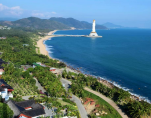
SANYA, CHINA – Media OutReach Newswire – 3 April 2026 – As tropical sea breezes blend with Eastern charm, a journey from Malaysia to China’s island paradise is now more convenient and exciting than ever. On April 2, the Sanya Tourism Development Bureau of China’s Hainan Province signed a strategic cooperation agreement with Tourism Malaysia. This partnership will further strengthen tourism collaboration between the two destinations during “Visit Malaysia Year 2026” and jointly enhance promotional efforts. Tourism Malaysia has officially become a “Strategic Tourism Promotion Partner of Sanya.”
In addition, the Sanya Tourism Development Bureau has entered into cooperative exchanges with the Malaysian Association of Tour and Travel Agents (MATTA) and the Malaysian Budget Hotel Association (MBHA) to strengthen synergy in tourism management, product development, and visitor exchange. The newly established Sanya Tourism Overseas Promotion (Malaysia) Liaison Office will serve as a one-stop information and booking platform for Malaysian travelers, reinforcing Sanya’s position as a preferred gateway to China.
Seamless Entry, Fully Upgraded Travel Convenience
Visa-free access with zero barriers
Under China’s visa-free policy for Hainan, Malaysian citizens may enter with only a passport and stay for up to 15 days—no prior visa, financial proof, or invitation letter is required, allowing for truly spontaneous getaways.
Faster flights, greater efficiency
Direct flights from Kuala Lumpur to Sanya take just about three hours, with high occupancy rates during peak seasons reflecting strong demand. Plans to launch direct flights from Penang and Kota Kinabalu to Sanya are under discussion, promising greater accessibility and cost-effective travel options.
Streamlined clearance procedures
Efficiency is prioritized with paperless self-declaration at both Phoenix Cruise Port and Sanya Phoenix International Airport, significantly reducing clearance time. International arrival halls support payments via all major international credit cards, ensuring seamless transactions.
Comprehensive multilingual support
Multilingual support is in place across Sanya—from bilingual signage at attractions and hotels to a dedicated foreign-language service line via the 12345 hotline. The multilingual official website visitsanya.com provides comprehensive information, guaranteeing smooth communication for Malaysian tourists.
Exceptional Value: Exclusive Promotions for Malaysian Visitors
To offer a more value-packed holiday experience, Sanya has prepared tailored benefits and significant discounts, from customized packages to special Asian Beach Games offers, demonstrating its warm hospitality.
The newly established Sanya Tourism Overseas Promotion Liaison Office, in collaboration with the Malaysian Budget Hotel Association and the Malaysian Association of Tour and Travel Agents, will launch specially curated travel packages that align with local preferences.
On Trip.com, the “Travel with the Asian Beach Games” promotion features discounted Sanya tourism products, covering hotels, attractions, and holiday packages, with exclusive offers for the Malaysian market.
The 2026 Asian Beach Games bring additional surprises: popular attractions like Wuzhizhou Island and Atlantis Sanya offer tickets at up to 73% off . Hotel rooms across categories—family, couples, and resort suites—enjoy discounts of up to RMB 5,899. Local delicacies and international cuisines are available at discounts of around 48% , promising a delightful culinary journey.
Moreover, 118,000 Asian Beach Games tickets are now on sale globally. With just a few clicks online, visitors can secure their seats to experience the excitement of the 6th Asian Beach Games up close.
Diverse Experiences for Every Traveler
Sanya offers far more than just sun and sand. Whether traveling with family, as a couple, or with friends, everyone can find their ideal way to enjoy the destination.
For families :
Atlantis Sanya Water Park, ranked among the “2026 Global Top 20 Water Parks” and tied for seventh place worldwide with Universal Orlando’s Volcano Bay, offers endless aquatic fun for children, while parents can explore the adjacent world-class duty-free complex for shopping and leisure.
For Adventure Seekers:
Wuzhizhou Island, known as “China’s Premier Diving Base,” features crystal-clear waters with visibility up to 27 meters and abundant coral reefs. A variety of water sports, including diving, parasailing, and jet skiing, deliver an adrenaline-filled coastal experience.
For Culture and Wellness:
The 108-meter-tall Guanyin statue at Nanshan and immersive Li and Miao ethnic cultural experiences provide a harmonious blend of spiritual reflection and cultural discovery.
For Luxury and Retail: Sanya’s world-class duty-free complex brings together international brands, art exhibitions, and immersive experiences, creating a high-value shopping and lifestyle destination.
Sanya’s commitment to visitor convenience, diverse offerings, and tailored benefits continues to strengthen its appeal among Malaysian travelers. Since the beginning of this year, Hainan has welcomed a remarkable 204% increase in Malaysian tourist arrivals, making Malaysia one of the fastest-growing Southeast Asian source markets for Sanya.From visa-free access and direct flights to enhanced services and multifaceted experiences, Sanya is positioning itself as a leading gateway for Malaysian tourists to China.
As the Hainan Free Trade Port continues to develop, tourism cooperation between Sanya and Malaysia is poised to deepen, evolving from one-way attraction to mutual engagement.For those planning their first trip to China, Sanya offers an ideal starting point—where azure seas, golden shores, modern amenities, and heartfelt hospitality come together to create the perfect tropical escape.
Oil prices jumped sharply on Thursday after US President Donald Trump said the United States would step up attacks on Iran over the coming weeks, stoking fears that disruptions around the Strait of Hormuz could last longer and tighten supplies of crude and refined fuels across global markets. West Texas Intermediate settled at $111.54 a barrel after surging more than 11%, while Brent closed near $109.03, extending […]
U. S. defence shares have failed to sustain the geopolitical bounce that often accompanies armed conflict, with the sector sliding in March even as tensions around Iran intensified. The NYSE Arca Defense Index, which tracks 34 large and small-cap companies, fell nearly 8% during the month, a steeper decline than the S&P 500’s roughly 5% drop, underscoring how investors have become more cautious about paying up […]
Arabian Post Staff -Dubai Banks across the Gulf are on course to set aside sharply higher sums for bad loans over the next two years, as investors and analysts weigh the knock-on effects of prolonged regional conflict, softer property sentiment and the possibility that stress in real estate could begin feeding through to bank balance sheets. Estimates compiled by Visible Alpha, part of S&P Global Market […]
Japan’s retail earnings season has opened with a split verdict for two of its best-known consumer groups, as Fast Retailing, owner of Uniqlo, delivered stronger profit momentum while Seven & i Holdings, parent of 7-Eleven, continued to face weaker earnings and a more clouded outlook. The divergence has sharpened investor attention on how Japanese retailers are handling softer demand, overseas expansion and trade uncertainty. Fast Retailing […]
Greenlogue/AP TotalEnergies and Abu Dhabi Future Energy Company PJSC – Masdar have signed a binding agreement to create a $2.2 billion joint venture that will combine their onshore renewable energy activities across nine Asian markets, in a move that underlines how large energy groups are shifting capital towards power demand growth in the region. The partners said the new platform will be owned equally, based in Abu […]
Dubai has moved to shore up business confidence with a fresh set of fee deferrals and administrative easings under a wider AED1 billion support package, as the emirate seeks to protect cash flow, sustain hiring and cushion sectors exposed to regional disruption. The measures, announced this week and effective from 1 April, cover hotels, holiday homes and businesses across the wider economy for periods of three to […]
Microsoft has unveiled a $10 billion investment plan for Japan running from 2026 to 2029, marking one of the company’s biggest artificial intelligence commitments in Asia and a major escalation from its earlier pledge in the country. The package, worth about 1.6 trillion yen, is aimed at expanding AI infrastructure, strengthening cyber defence cooperation with Tokyo and widening access to domestic cloud capacity for government agencies and businesses.
The announcement signals how sharply competition for AI infrastructure has intensified across Asia. Microsoft said the programme will focus on adding computing capacity inside Japan at a time when governments and corporations are demanding secure, local processing for sensitive workloads. Brad Smith, Microsoft’s vice-chair and president, disclosed the plan during a visit to Tokyo, where the company also set out training and security goals tied to the investment.
Under the plan, Microsoft intends to train one million engineers and developers by 2030, a figure that underlines the labour challenge facing Japan as it tries to scale AI use across the economy. The company is also expanding cybersecurity collaboration with the Japanese government, including work around threat intelligence and cybercrime prevention. Those elements give the package a dual purpose: commercial expansion for Microsoft and strategic support for a country that has made digital resilience and industrial competitiveness central to policy.
The new commitment builds on a smaller programme announced in April 2024, when Microsoft said it would invest $2.9 billion over two years to expand cloud and AI infrastructure in Japan, while also launching wider digital skilling efforts, opening its first Microsoft Research Asia lab in the country and deepening cooperation on cybersecurity. The latest package therefore appears less like a standalone move than the next stage of a longer campaign to lock in market share and policy relevance in one of Asia’s most advanced economies.
Japan offers Microsoft an attractive mix of high-value enterprise customers, a technologically sophisticated manufacturing base and a government that has been openly supportive of industrial uses for generative AI. Tokyo’s policy stance has increasingly favoured the deployment of advanced digital tools to lift productivity, offset labour shortages and bolster economic security. That political environment has made Japan a focal point for global technology groups seeking not just customers, but durable alignment with state priorities on data sovereignty and national resilience.
Market conditions also help explain the scale of the move. Reuters reported that around one-fifth of working-age people in Japan are now using generative AI tools, showing that adoption has advanced but remains well below leading global levels, leaving substantial room for growth. At the same time, labour projections point to a steep shortage of AI and robotics specialists by 2040, raising the stakes for corporate training programmes and local infrastructure investment. For Microsoft, that creates an opening to sell both computing capacity and the wider ecosystem needed to make AI usable at scale.
Partnerships with local players will be central to execution. Microsoft said it would work with firms including SoftBank and Sakura Internet to expand domestic AI computing capacity and provide more secure local access to Azure services. That matters in Japan, where demand from public institutions and regulated industries often hinges on where data is processed and how operational control is shared. Collaboration with established domestic groups may also help Microsoft navigate competitive pressure from rival cloud providers and home-grown digital infrastructure ambitions.
India has opened talks with leading global producers of nitrogen and phosphatic fertilisers to secure supplies directly, as the war involving Iran continues to disrupt Gulf trade routes, lift freight costs and unsettle prices ahead of the kharif planting cycle. Officials have moved to widen procurement channels after supply risks from the Middle East, a major source of imported urea and diammonium phosphate, sharpened over the past month.
The push reflects both urgency and caution. Government officials have said fertiliser stocks stand at about 18 million tonnes, up from 14.7 million tonnes a year earlier, against expected demand of roughly 39 million tonnes for the coming season. That gives policymakers some room, but not enough to ignore the exposure created by conflict near the Strait of Hormuz and tighter supply from traditional exporters. India has already been seeking larger volumes from Russia, Belarus and Morocco, while also sounding out other producers as insurance against further disruption.
At the heart of the concern is the structure of India’s import dependence. Reuters reported in March that more than 40 per cent of the country’s urea and phosphatic fertiliser needs are tied to the Middle East. Disruption there has a double effect: it threatens cargo availability and also raises the cost of natural gas, a crucial feedstock for nitrogen fertilisers. Domestic production has also come under pressure. Output of urea was reported at about 1.8 million tonnes a month during plant maintenance, below the more usual 2.4 million tonnes, adding to the need for timely imports even as officials insist there is no immediate shortage.
Price risk is now as important as volume risk. Fertiliser prices had already been climbing before the latest procurement outreach, with Reuters reporting that benchmark prices for some products rose to more than $600 a tonne from about $425. Wider market reporting has shown the same direction of travel. ICIS described March conditions as a period of heightened volatility across nitrogen, phosphate and sulphur markets as conflict in the Middle East hit trade flows and sentiment. Reuters and other industry reporting have also pointed to sharp jumps in urea and ammonia prices as shipping through Hormuz became more uncertain.
For the government, the political and economic challenge is to prevent that international surge from reaching farms at full force. Urea continues to be sold at a notified price of ₹242 for a 45-kg bag, while the Department of Fertilizers said in March that the retail price of DAP had been maintained at ₹1,350 for a 50-kg bag for the rabi season through subsidy support. That pricing shield helps farmers, but it also increases the fiscal burden when import costs rise. Industry material published in February said the state still bears about 90 per cent of the cost of urea, underlining how exposed the subsidy bill becomes when global markets tighten.
India has not relied on a single response. Apart from direct talks with overseas suppliers, firms have secured long-term volumes from Russia, including 2.8 million tonnes under reported arrangements, while a global tender for 1.3 million tonnes of urea was issued to reinforce reserves. Officials have also taken steps to support domestic output by prioritising gas allocation to fertiliser plants. The strategy suggests New Delhi is trying to build overlapping buffers rather than betting on a quick stabilisation in Gulf shipping.
The market backdrop gives that strategy added weight. Industry executives and analysts have warned that a prolonged conflict could squeeze farmers globally, alter crop choices and feed through into food inflation. Yara, one of the world’s largest fertiliser companies, has said farmers are being squeezed by the jump in input costs, while broader reporting has shown developing economies to be especially vulnerable because they are more dependent on imported fertilisers and have less room to absorb price shocks. For India, where fertiliser availability is tied directly to crop yields, rural incomes and food-price management, the issue is not only one of trade logistics but of macroeconomic stability.
Rising global energy prices are adding a fresh inflation risk to the United States even as the International Monetary Fund said the world’s largest economy remains on a solid growth path, with trade and fiscal changes expected to narrow the current-account deficit only modestly over the medium term. The IMF’s latest assessment said growth in the US is projected to reach 2.4 per cent in 2026, while […]
Real estate developers across the UAE are sticking to original construction and launch schedules despite a regional war that has lifted energy and materials costs, with industry participants signalling that any easing in prices and transaction volumes is more likely to be temporary than structural while the conflict runs on. Market activity has slowed in parts of the sector, but there has been no broad retreat from […]
Masdar and TotalEnergies have signed a binding agreement to combine their onshore renewable energy portfolios across nine Asian markets into a 50:50 joint venture valued at $2.2 billion, marking one of the more significant cross-border clean energy tie-ups involving Gulf and European players this year. The new platform, to be headquartered in Abu Dhabi, is set to become the exclusive vehicle through which the two companies develop, […]
US-based Patel Family Office and Dammam-headquartered Abdel Hadi A. Al-Qahtani & Sons have signed a $1 billion agreement to build 50 business hotels across Saudi Arabia by 2029, betting that the Kingdom’s fast-growing corporate travel market now needs more standardised mid-market accommodation than luxury-led supply can offer. The partners said the platform, branded AYARA, was signed at the FII PRIORITY Summit in Miami and is expected to […]
Arabian Post Staff -Dubai Dubai’s off-plan apartment market has continued to draw buyers despite geopolitical turbulence, with sales in March reaching AED 17.5 billion, or about $4.8 billion, and transaction volumes climbing to 7,983 deals, according to an analysis of Dubai Land Department data. The figures suggest that investor appetite in the emirate’s residential market has so far remained intact even as regional conflict has unsettled broader […]
China’s central bank has pulled cash from the banking system for the first time in about a year, signalling a more cautious near-term approach to liquidity management as higher oil prices begin to feed into factory costs, transport bills and corporate margins.
The People’s Bank of China conducted a small reverse repo operation on 2 April while a far larger batch matured, producing a net daily withdrawal of 223.5 billion yuan. The move came after policymakers had spent months leaning towards support for growth, and it suggests Beijing is trying to preserve room for manoeuvre rather than rushing into broader easing while imported inflation risks build.
That calibration matters because China is facing two conflicting pressures at once. On one side, domestic demand remains weak, producer prices are still soft, and policymakers have already acknowledged that supply continues to outstrip demand in parts of the economy. On the other, the oil shock linked to the Middle East conflict is lifting input costs and complicating the case for an immediate flood of fresh liquidity. China’s central bank said after its first-quarter monetary policy committee meeting that it would maintain an “appropriately loose” stance while keeping liquidity ample and supporting a recovery in prices.
The timing of the drain is striking because it follows signs that parts of the economy had started to stabilise before energy costs became a bigger threat. Official manufacturing activity returned to expansion in March, with the PMI rising to 50.4 from 49.0 in February, while a private survey showed factory output and orders still growing even as cost pressures intensified. Those readings pointed to a modest improvement in momentum, but they also showed that the rebound is vulnerable to rising commodity prices and longer supplier delivery times.
Economists and policy advisers in China have begun to frame the challenge less as a choice between stimulus and restraint, and more as a balancing act between supporting growth and containing imported inflation. Huang Yiping, a central bank adviser, said this week that oil-led price pressure was hurting profitability and narrowing the room for policy to respond, even though broader inflation remains below the official target. China’s consumer inflation rose 1.3% in February, the highest in more than three years, but still below Beijing’s target of around 2% for 2026.
For markets, the signal is not that Beijing has turned hawkish. The seven-day reverse repo rate remained unchanged at 1.4%, and the central bank has continued to stress that it can still use rate cuts, reserve requirement reductions and other tools if needed. What has changed is the sequencing. Officials appear unwilling to react to every external shock with an immediate dose of easier money, especially when higher oil prices could push up headline inflation even as underlying demand stays fragile.
That caution is also tied to the broader policy picture. China set a 2026 growth target of 4.5% to 5%, below last year’s goal, reflecting weaker confidence in the external environment and the unfinished task of shifting growth away from debt-heavy sectors and towards household consumption. Policymakers have pledged to support demand, private investment and prices, but the tone from Beijing has been measured rather than aggressive. The central bank’s liquidity withdrawal fits that pattern: it does not amount to a policy reversal, but it does show a preference for targeted fine-tuning over blunt stimulus.
The oil backdrop helps explain why. China has entered the current energy shock in a stronger position than some of its Asian peers, with strategic stockpiles, diversified power supply and a large electric-vehicle base helping to soften the blow. That resilience has supported Chinese assets during wider market turbulence. Yet the country is not immune. Independent refiners have already been cutting processing rates as crude costs climb and domestic fuel demand stays under pressure, while manufacturers are reporting the fastest increase in output prices in years.
U. S. Treasuries fell across the curve after President Donald Trump used a televised address to harden his stance on Iran, unsettling investors who had been looking for signs of de-escalation and instead got a warning of heavier military action that sent oil prices sharply higher and revived fears of another inflation pulse through the global economy. The move in government debt reflected a quick reassessment of […]
Britain has sharpened its language on security, raised its military ambitions and promised a larger defence budget, but the test now lies in whether those commitments produce forces that can respond quickly and credibly to a widening arc of threats from Europe to the Middle East. The question has come into sharper focus after London moved a nuclear-powered submarine into the Arabian Sea about a month into […]





 https://www.visitsanya.com/