Bitcoin could set a fresh all-time high in the first half of 2026, according to forward-looking projections outlined by digital asset manager Grayscale, which argues that a maturing market structure, institutional demand and macroeconomic tailwinds are aligning for another leg higher after the current cycle plays out. The outlook, published as part of Grayscale’s industry expectations for 2026, places Bitcoin’s next peak within the opening six […]
Bitcoin’s upward momentum has softened after a sharp recovery phase, while XRP has slipped to about $1.86, underscoring a pause in risk appetite even as exchange-traded fund assets linked to XRP reach roughly $1.25 billion. The divergence highlights a market grappling with profit-taking, regulatory recalibration and shifting liquidity conditions across major digital assets. Bitcoin’s price action shows signs of consolidation following a rebound that drew fresh inflows […]
A magnetic levitation test run in China has pushed rail engineering into uncharted territory, with a prototype train reaching 700 kilometres an hour in roughly two seconds during a controlled acceleration trial. The demonstration, carried out on a short test track designed for extreme propulsion experiments, underscores Beijing’s drive to redefine high-speed ground transport and narrow the gap between rail and short-haul aviation. Engineers involved in the […]
By K Raveendran Gold’s surge has turned a long-running Indian household instinct into a global macro trade. With spot prices pressing above the $4,500 an ounce mark late in 2025 and year-to-date gains running above 70 percent, the metal is headed for its strongest annual performance since 1979. The question now animating dealing rooms as […]
A sweeping federal decree-law has set out a unified legal framework aimed at protecting minors from online harm across the UAE’s fast-expanding digital ecosystem, placing clear duties on internet service providers and digital platforms that operate within the country or target users based there. The legislation signals a tougher regulatory posture as children’s screen time rises and online services become more embedded in everyday life. The decree-law […]
BNW Developments has unveiled the Tonino Lamborghini Residences on Al Marjan Island, marking the first time the Italian luxury lifestyle brand has anchored a residential project in Ras Al Khaimah and setting a new benchmark for branded waterfront living in the northern emirate. The launch positions the privately held developer behind what it describes as Ras Al Khaimah’s largest private real estate venture at the centre of a market drawing growing international investor interest.
The project brings together BNW Developments and Tonino Lamborghini, the brand founded by the son of the legendary Italian carmaker, to deliver a design-led residential community that blends Italian heritage with contemporary coastal architecture. Planned as a large-scale, master-planned development, the residences are set on Al Marjan Island, a man-made archipelago that has emerged as the emirate’s most prominent tourism and lifestyle hub.
Executives involved in the announcement said the collaboration reflects a deliberate strategy to move beyond conventional luxury offerings towards globally recognised branded residences that command long-term value. For Ras Al Khaimah, the development underscores a shift towards higher-end projects aligned with the emirate’s tourism and economic diversification agenda, particularly as hospitality, leisure and residential segments converge along the coastline.
The Tonino Lamborghini Residences are being positioned as ultra-luxury waterfront homes, with interiors inspired by Italian craftsmanship and modern European aesthetics. Design elements are expected to reflect the brand’s signature language, incorporating bespoke materials, curated finishes and lifestyle-focused amenities. While detailed specifications and unit pricing have not been formally disclosed, the developer has indicated that the project targets high-net-worth buyers seeking branded homes with strong rental and capital appreciation potential.
BNW Developments has expanded rapidly within Ras Al Khaimah’s real estate sector, capitalising on policy reforms, infrastructure spending and rising tourism flows. Al Marjan Island, in particular, has become a focal point for premium residential and hospitality investments, supported by new resorts, entertainment attractions and improved connectivity. Property consultants tracking the market say branded residences on the island are increasingly appealing to overseas buyers from Europe, Asia and the wider Middle East, drawn by comparatively attractive entry prices and long-term growth prospects.
The arrival of Tonino Lamborghini adds another internationally recognised name to the island’s evolving skyline, reinforcing a trend in which global lifestyle brands are lending their identity to residential projects across the UAE. Analysts note that branded developments typically command a premium over non-branded counterparts, supported by perceived quality assurance, curated services and brand-driven design consistency.
Industry observers also point to Ras Al Khaimah’s regulatory environment and measured approach to development as factors supporting sustained demand. Unlike more saturated markets, the emirate has emphasised phased growth, balancing tourism expansion with residential supply. This has helped maintain pricing discipline while attracting developers focused on differentiated offerings rather than volume-led construction.
For BNW Developments, the Tonino Lamborghini partnership is intended to elevate its profile beyond a regional developer into a player capable of executing globally benchmarked luxury projects. Company officials have described the residences as a long-term investment in brand equity, aligning the developer with an internationally known lifestyle name while contributing to the emirate’s ambition to compete with established luxury destinations.
Tonino Lamborghini’s leadership has framed the project as a natural extension of the brand’s presence in hospitality, accessories and interior design, translating its identity into a residential environment shaped by coastal living. The brand’s involvement is expected to extend beyond naming rights to include design oversight and lifestyle integration, a factor often scrutinised by buyers in the branded residences segment.
Arabian Post Staff -Dubai Gold, silver and platinum prices pushed to record levels at the close of the year, extending a powerful rally driven by geopolitical strains, a softer US dollar and thin trading conditions that magnified price swings across commodities markets. Spot gold climbed as much as 1.6% on Friday to trade above $4,540 an ounce, a level unseen before, while spot silver for immediate delivery […]
Toyota Motor has begun informing key parts suppliers that it expects global vehicle production to exceed 10 million units in 2026, reflecting confidence that demand for its petrol-electric hybrids will remain strong, particularly in the United States, while battery-electric sales grow at a steadier pace. The guidance, shared during routine planning discussions with suppliers, signals that the world’s largest automaker is preparing for volumes that would place […]
Labour demand across the United Arab Emirates is on course to rise by more than one million roles by the end of the decade, with technology positions accounting for a growing share of new hiring as digital transformation accelerates across government and the private sector. The outlook, drawn from labour market modelling and workforce data cited in a new ServiceNow study, points to sustained growth driven by artificial intelligence adoption, cloud migration, cybersecurity needs and large-scale public investment programmes.
The report estimates that the UAE currently supports about 8.5 million jobs across its economy, of which roughly 169,000 are technology-focused roles. While this represents only a small fraction of total employment, the pace of change is expected to intensify as organisations automate processes, modernise legacy systems and respond to new regulatory and security requirements. Analysts tracking the Gulf labour market say the country’s ambition to position itself as a global hub for digital services, advanced manufacturing and knowledge industries is translating into long-term workforce demand rather than short hiring cycles.
Economic planners have prioritised sectors that combine high productivity with export potential, including financial technology, health technology, clean energy systems, logistics platforms and smart infrastructure. Programmes aligned with national digital strategies are encouraging public bodies and state-linked firms to move services online, adopt AI-enabled decision tools and integrate data across departments. Each of these shifts creates secondary demand for software developers, data engineers, cloud architects and IT service managers, while also reshaping non-technical roles that require digital fluency.
ServiceNow’s analysis suggests that technology roles are expanding faster than overall employment growth, even as traditional sectors such as retail, hospitality and construction continue to add jobs. Employers surveyed for the study reported difficulty filling specialised digital roles, particularly in cybersecurity operations, enterprise platform management and AI workflow design. These shortages are contributing to wage premiums for experienced professionals and increased investment in training pipelines.
Education providers and corporate academies have responded by scaling certification programmes, apprenticeships and mid-career conversion schemes. Universities in the UAE have expanded computer science and engineering intakes, while partnerships with global technology firms aim to align curricula with enterprise needs. Industry observers note that demand is not limited to coders; roles in product management, digital compliance, IT service delivery and change management are growing as organisations seek to embed technology into core operations.
Demographics and migration policy also shape the employment outlook. The UAE’s ability to attract skilled expatriates remains a central factor in meeting talent requirements, particularly for niche technical expertise that takes years to develop. Long-term residency options and sector-specific visas have helped stabilise the workforce, reducing turnover in high-demand roles. At the same time, localisation initiatives encourage employers to invest in training citizens for private-sector technology careers, broadening the domestic talent base.
Beyond pure technology positions, the report highlights a rise in hybrid jobs that combine domain knowledge with digital skills. In banking, compliance specialists increasingly work alongside data analytics teams; in healthcare, clinicians are expected to engage with digital records and AI-assisted diagnostics; in energy and utilities, engineers manage sensor-driven systems and predictive maintenance platforms. This blending of skills expands the effective footprint of the tech workforce beyond headline job titles.
Regional competition for talent is intensifying as neighbouring economies pursue similar diversification strategies. Salaries, quality of life and career progression prospects are key differentiators, according to recruitment firms operating in the Gulf. The UAE’s mature infrastructure, regulatory clarity and concentration of multinational headquarters continue to attract professionals, though employers face pressure to offer flexible working arrangements and clear upskilling pathways.
CachyOS is moving beyond its reputation as a desktop-focused Arch-based Linux distribution by outlining plans for a hardened server image aimed at improving performance, security and operational stability in production environments. The initiative, confirmed by the project’s developers in community briefings and development notes, signals an effort to position CachyOS as a credible option for administrators seeking finely tuned Linux systems without extensive manual optimisation. Known primarily […]
By Dr Arun Mitra The new nuclear bill, titled Sustainable Harnessing and Advancement of Nuclear Energy for Transforming India (SHANTI), passed by Parliament, has received the assent of the President of India, Droupadi Murmu. With this, it has become an Act governing various aspects of nuclear energy in the country. There is a strong push […]
BinDawood Holding Company has agreed to acquire a controlling 51% stake in UAE-based Wonder Bakery in a deal valued at 96.9 million dirhams, marking a significant step in the Saudi retailer’s regional expansion strategy and its push into food manufacturing. The Riyadh-listed group said the share purchase agreement will be funded through internal resources alongside existing financing facilities, underlining a balance-sheet-led expansion rather than reliance on new […]
Arabian Post Staff -Dubai Abu Dhabi sovereign investor ADQ has closed a $5 billion five-year syndicated term financing deal in the Greater China region, strengthening its liquidity while broadening access to Asian capital markets at a time of shifting global funding dynamics. The transaction marks one of the largest offshore syndicated loans secured by a Middle East sovereign-backed investor this year and reflects sustained appetite among Asian […]
Positioning Vietnam as Production-Export Hub to Global Markets, with SCGD Leading Decorative Surface Materials and Ceramic Tiles Market Ready to Drive Cement Business Expansion of Low-Carbon Products to Global Markets
HCMC, VIETNAM – Media OutReach Newswire – 25 December 2025 – SCG continues its Regional Optimization strategy, positioning Vietnam as a Strategic Hub in the ASEAN region for manufacturing and exports to global markets. SCG Decor (SCGD) supports PRIME GROUP in expanding production capacity for high-quality tiles to meet growing demand. The cement and building materials business in Vietnam is accelerating development of low-carbon cement for both domestic sales and global exports under the Green Building policy to create sustainable growth while enhancing quality of life.
Mr. Kulachet Dharachandra, Country Director – Vietnam, SCG, stated: “Vietnam is a strategically important country for SCG, with total investments exceeding 7 billion US dollars across 28 companies, representing 28% of SCG’s total assets. This covers chemicals, cement, building materials, packaging, and logistics businesses to serve both domestic and export market demands, enhancing competitive capabilities and building comprehensive production and supply chain potential.
Under the Regional Optimization strategy, SCG combines the strengths of Thailand and Vietnam in digital technology, artificial intelligence and automation, safety standards, and plant management, as well as social, environmental, and governance practices following ESG principles. Vietnam is a high-growth potential market due to its economy, government infrastructure policies, and increasing Green Building trends. It also has consumers with purchasing power for high-quality products and a large consumer base of over 100 million people, plus export potential with efficient production costs, which strengthens sustainable business growth and elevates quality of life in the region.”
SCGD supports PRIME GROUP, Vietnam’s Number One Market Leader of Decor Surface
PRIME GROUP, the flagship business in which SCG acquired shares in 2012, is the market leader of decorative surface materials in Vietnam and will be a key force strengthening SCGD toward its goal of becoming ASEAN leader.
Mr. Numpol Malichai, The Chief Executive Officer and President of SCG Decor Public Company Limited, stated: “Vietnam’s economy is growing, the middle class is expanding, and the real estate market is recovering in mid-range to premium residential projects that favor Glazed Porcelain (GP) tiles, leading to continuously increasing demand for these products.
PRIME has sales revenue of approximately 5,500 million baht with total production capacity of around 80 million square meters. The company plans to invest in expanding GP tile production capacity from 19 million square meters in 2025 to 25.6 million square meters in 2026, targeting expansion to 45 million square meters by 2030 to align with increasing demand. PRIME can also manage and control production costs of GP tiles to be able to competitive with the products from world-class competitors. This cost advantage supports PRIME to become the strategic production and export base of SCGD, strengthening the Regional Optimization strategy for sustainable growth.
In response to market change and maintain competitive level, PRIME invested in Biomass Gasifier systems at the Pho Yen plant to replace fossil fuel with biomass, thereby reducing energy costs and greenhouse gases, supporting Vietnam to become the strategic export hub to ASEAN and other countries. Furthermore, PRIME’s products meet customers’ needs of all market segments with product offering that covers innovative design and health and safety functions that are well-recognized throughout the Asian region. This supports business growth along with environmental care enhancement. Additionally, SCGD grows bathroom business and strengthens COTTO brand in the ASEAN market with over 44 distributors appointed in Vietnam, as well as growing Complementary products such as adhesive and grout, and others.”
SCG Low-Carbon Cement Supports Vietnam’s Infrastructure and Green Cities, Advancing Its Role as a Global Export Hub
SCG Cement and Building Materials has operated in Vietnam for more than 20 years, with 11 companies across the cement, roofing, and building materials businesses. With production bases located in the central and southern regions, the company supports domestic market growth while also serving as a strategic manufacturing hub for exports to global markets.
Mr. Wichet Chuchaeu, Country Director – Vietnam, SCG Cement and Building Materials Business, stated: “Vietnam’s economy continued to expand in 2025, driven by growth in the industrial and construction sectors. Accelerated government infrastructure investment has supported a steady recovery in demand for building materials and cement—especially low-carbon cement, whose growth aligns with national policies such as the 2050 Net Zero Emission commitment and the Green City policy, which targets that by 2050 at least 50% of new urban areas and 10% of all cities nationwide must meet government-defined green city criteria.”
The cement business has an annual production capacity of 3 million tons of clinker and 4 million tons of cement. Vietnam is the best-managed production-cost base among SCG’s regional cement operations, positioning the country not only as a strong domestic supply base but also as a key hub for exports. SCG currently exports both low-carbon cement and clinker to America, Europe, Africa, Oceania, and Asia.
SCG Cement continues to enhance environmental performance through the use of alternative and recycled materials, reduced coal consumption via alternative fuels such as biomass and refuse-derived fuel (RDF), and the implementation of Waste Heat Recovery (WHR) systems that significantly reduce natural resources, lower energy consumption and reduce CO2 emission.
These initiatives have earned SCG recognition through international environmental standards, including Singapore Green Building Product certification and International Environmental Product Declaration (EPD) System certification—affirming sustainability from production through to finished products.
“Our investment strategy and production cost optimization under the Regional Optimization concept have strengthened SCG’s competitiveness. Vietnam is now positioned as a central hub for manufacturing and exporting quality products to global markets. This supports growing demand for high-quality surface materials and environmentally friendly building materials, contributing to green city development and sustainably enhancing the quality of life for people in Vietnam and the region.”, Mr. Kulachet concluded.
Hashtag: #SCGCement
The issuer is solely responsible for the content of this announcement.
COLORADO, USA – Media OutReach Newswire – 12 November 2025 – BGEANX has launched a high-performance trade matching engine capable of executing transactions in milliseconds, improving market liquidity and user experience. This innovation reinforces the platform’s position as a technological leader in the crypto industry.
Recently, the cryptocurrency trading platform BGEANX, known for its compliance, launched a high-performance matching engine that achieves millisecond-level trade execution, optimizing market liquidity and ensuring stable operation even under extreme market conditions. This technological advancement enhances user experience and positions BGEANX with core competitiveness in the fiercely competitive crypto market.
Due to high volatility in the crypto market, investors often face issues like long order placement times and increased slippage, leading to higher trading costs and missed opportunities. Leading exchanges are accelerating infrastructure development to optimize trade execution capabilities and improve liquidity. BGEANX launching the high-performance matching engine precisely responds to market demands, providing investors with a more stable market environment and optimal transaction prices.
In the competitive landscape of the industry, trading matching capability is one of the core competencies of exchanges. Through this technological update, BGEANX attracts professional traders and institutional users with faster order execution speed and stronger market depth. This upgrade ensures smoother execution of large trades, offering a more stable investment environment.
For different types of users, the technology upgrade brings tangible improvements in user experience. Ordinary users can enjoy faster order matching, avoiding missed trading opportunities due to matching delays. Professional traders and institutional investors focus more on low latency and high throughput, and the new generation matching engine of BGEANX ensures trading stability under extreme market conditions, providing reliable support for complex high-frequency quantitative strategies.
BGEANX spokesperson Seraphina stated: “BGEANX continues to invest in technological innovation, dedicated to providing users with excellent investment tools and a superior user experience. The launch of the millisecond matching engine marks another breakthrough in technology application for BGEANX. In the future, we will continue to optimize platform performance, combining AI trading tools and intelligent risk control systems to create a more intelligent crypto investment ecosystem for global investors.”
Hashtag: #BGEANX
The issuer is solely responsible for the content of this announcement.
By K Raveendran As 2026 approaches, the global oil market is heading into a year that could decisively reshape price dynamics, fiscal planning in producing states, and energy security calculations for importing economies. The defining feature of the coming year is not demand destruction or geopolitical shock, but the growing weight of surplus supply. Market […]
Japan’s MONJI+—A WebOps Enablement Platform Inspired by Voices from 77 Countries—Launches Its English Edition
OSAKA, JAPAN – Media OutReach Newswire – 24 December 2025 – ALAKI Inc., celebrating its 15th anniversary, has officially launched the English edition of MONJI+, an evolution of its 2018-born feedback tool MONJI β, now reimagined as a comprehensive WebOps Enablement Platform.
Alongside its free plan, available indefinitely, MONJI+ begins its full-scale expansion into the ASEAN market, helping teams elevate their website operations. In addition, a free Academic Edition is now offered to educational institutions to foster the next generation of web and IT talent.
A Platform Born from 77 Countries of Real-World Insight
Since its launch in Japan in 2018, MONJI β has been adopted by web agencies, corporations, and advertising firms worldwide—across 77 countries and regions—streamlining feedback workflows for website management and development.
In everyday website operations, teams often face:
Feedback scattered across tools and channels
Miscommunication between internal teams and agencies
Unclear priorities that fail to drive results
Knowledge loss when members change
Valuable learnings buried and forgotten
MONJI+ connects creation, publishing, maintenance, and optimization into a single workflow—eliminating silos and enabling all members to move forward toward shared goals.
Since its official launch in Japan in January 2025, MONJI+ has rapidly spread among enterprises and educational institutions. It is increasingly adopted as a practical standard among agencies and in-house teams, improving productivity and measurable outcomes.
Responding to Global Voices – Official Launch of the English Edition
During forums and seminars held alongside the Expo 2025 Osaka, Kansai, Japan, ALAKI engaged with government representatives and industry leaders from around the world.
The feedback was clear: inefficiencies in website operations, lack of improvement cycles, and a shortage of web marketing expertise are universal challenges. But one issue stood out above all—the shortage of skilled web and IT professionals.
Some governments even requested that MONJI+ contribute to national web/IT talent development, not just productivity gains. Following the Expo, inquiries from multiple countries confirmed the demand, prompting the official release of the English edition of MONJI+.
Confidence from SWITCH 2025, and a Vision for What’s Next
As part of its ASEAN expansion, ALAKI visited SWITCH 2025 (Singapore Week of Innovation & Technology), held from October 29–31. Through dialogues with government agencies, corporations, startups, and academic institutions, the importance of website operations productivity and digital talent development was reaffirmed.
Insights from leading ASEAN web and IT innovators will continue to shape the evolution of MONJI+.
Key Benefits of MONJI+
Eliminate inefficiencies and dependency on individuals—enhancing both productivity and performance in website operations.
Workflow Efficiency: Centralize feedback and progress tracking to prevent oversights
Error Reduction: Detect typos automatically with AI proofreading
Results-Oriented: Integration with analytics tools helps identify improvement areas instantly
Team Collaboration: Share real-time updates across internal and external members
Knowledge Building: Use the Wiki feature to retain expertise and reduce training costs
The Future of “Agentic WebOps” — Powered by Data and AI
MONJI+ evolves beyond a simple management tool—it becomes an AI-driven partner that learns from operational data to support human decision-making and creativity.
Our vision: a human-in-the-loop “Agentic WebOps” environment that helps teams achieve outcomes with AI-assisted decision support.
Available AI Features:
AI typo and error detection for feedback
AI chatbot assistance
Upcoming AI Features (Examples):
Content suggestion and creation
Feedback trend analysis and improvement recommendations
Design assistance
Webpage performance analysis and enhancement
Customer Success Stories
Global Marketing Agency (Singapore): “Sharing the same interface greatly improved collaboration across our international offices.”
Web Production Agency (Japan): “Centralized feedback management accelerated delivery times by roughly 30%.”
E-commerce Company (Japan): “By linking with an analytics tool, we identified key improvement areas instantly—our conversion rate increased by over 20%.”
Recruitment Platform (Japan): “With AI detecting typos automatically, our job listing checks became faster and more reliable.”
Vision Video – ‘Pride and Hope for the Web Industry’
Discover how MONJI+ envisions the future of website operations.
“Website operations shouldn’t be about chasing scattered messages—it should be about generating results that matter. With MONJI+, we unify feedback, workflow, and analytics, while AI suggests the next strategic move. Our mission is to help ASEAN teams reach outcomes faster and more reliably.”
— Yuji Yamauchi, Founder & CEO, ALAKI Inc.
Getting Started
Getting started is easy, with no credit card required. MONJI+ aims to be the shared foundation for website operations, accessible to everyone.
Forever-Free Plan: Access essential functions without time limits
30-Day Free Trial: Experience all features in a live environment
Free “Academic Edition” for Educational Institutions
To empower the next generation of web and IT professionals, MONJI+ offers an Academic Edition free of charge to universities, vocational schools, and online programs. Students and educators can experience real-world website operations, gain practical skills, and collaborate through shared projects.
Dubai’s hospitality sector is gearing up for one of its busiest periods as year-end celebrations converge with large-scale retail promotions, major events and a packed tourism calendar, pushing hotels to prepare for near-capacity occupancy and heightened guest expectations across all segments. Advance bookings across prime locations have surged as visitors plan stays around fireworks displays along the coastline and landmarks, extended shopping hours, concerts and family attractions […]
Emaar, the Economic City has secured board approval for a sweeping balance-sheet overhaul that will lift its share capital by nearly 69 per cent through the conversion of debt owed to the kingdom’s Public Investment Fund, a move aimed at strengthening liquidity and reshaping the Tadawul-listed developer’s financial structure. The company disclosed that its board has authorised an increase in paid-up capital to 8.83 billion Saudi Arabian […]
Stricter municipal requirements for private schools and learning facilities across Saudi Arabia have been issued by the Ministry of Municipalities and Housing, widening oversight of environmental quality, safety standards and urban planning as the kingdom continues to reshape its education landscape.
The updated framework applies to nurseries, kindergartens, schools and large educational complexes, covering private educational buildings established on land zoned for education as well as facilities built on government land leased to the private sector. It also extends to education facilities developed on plots allocated for commercial use, bringing a broader range of premises under a single municipal rulebook.
These revised rules aim to raise school standards, officials familiar with the changes say, by aligning environmental and safety benchmarks with national urban development goals. Municipal authorities will now assess new and existing private education facilities against clearer criteria for site suitability, building design, infrastructure access and community impact, with the stated objective of improving learning environments while reducing planning conflicts in fast-growing urban areas.
Environmental quality features prominently in the requirements. Schools and learning centres must meet stricter controls on waste management, ventilation, natural lighting and noise mitigation, particularly in densely populated districts. Municipal inspectors are expected to pay closer attention to how campuses manage traffic flow during peak hours and how outdoor spaces are designed to minimise heat exposure, reflecting broader sustainability priorities embedded in local planning codes.
Safety standards have also been expanded, with new specifications for emergency exits, fire prevention systems, accessibility for students with disabilities and safe pedestrian access. Facilities operating on leased government land will be subject to the same technical checks as those on privately owned plots, removing earlier ambiguities over compliance responsibilities between landlords and operators.
Urban planning considerations mark a significant shift in how private education projects are approved. The requirements link school licensing more tightly to neighbourhood zoning plans, population density and existing public services. Education facilities built on commercially zoned land must now demonstrate compatibility with surrounding uses, including retail and office developments, and show how student movement will be separated from heavy traffic and delivery routes.
Education sector specialists note that the changes reflect a growing emphasis on coordinated urban growth rather than piecemeal approvals. Private schooling has expanded rapidly over the past decade, particularly in major cities such as Riyadh and Jeddah, driven by demographic growth and rising demand for international curricula. Municipal authorities have faced mounting pressure to ensure that this expansion does not strain infrastructure or compromise safety.
Operators are being given clearer guidance on minimum plot sizes, building heights and setbacks, as well as requirements for green spaces and recreational areas. While the rules do not prescribe specific architectural styles, they emphasise functional design and durability, encouraging materials and layouts that support long-term use and lower maintenance costs.
For existing schools, the requirements introduce a phased compliance approach. Facilities already in operation will be required to align with the new standards within defined timeframes, with municipalities expected to prioritise critical safety and environmental upgrades. Education providers that fail to meet key benchmarks could face restrictions on licence renewals or limits on student capacity until deficiencies are addressed.
Private education investors and school operators are assessing the commercial implications. Some developers see higher upfront costs, particularly for projects planned on commercial land where redesigns may be needed to meet zoning compatibility rules. Others argue that clearer standards reduce regulatory uncertainty and improve asset quality over time, making compliant schools more attractive to parents and financiers.
The rules also intersect with broader national reforms aimed at improving quality of life and diversifying the economy under long-term development strategies. By tightening oversight of private education facilities, authorities are signalling that growth in the sector must be matched by higher standards of safety, sustainability and urban integration.
Municipal officials say enforcement will rely on closer coordination with education regulators to avoid duplication and ensure consistent interpretation of requirements. Digital permitting systems are expected to play a larger role in tracking compliance and scheduling inspections, although detailed implementation guidance is still being rolled out at the local level.
Arabian Post Staff -Dubai Qatar Investment Authority has joined a consortium of global investors backing a move to take Janus Henderson Group private, marking one of the largest asset-management buyouts announced this year and underlining sovereign interest in long-term financial services platforms. The all-cash transaction values the New York-listed firm at about USD 7.4 billion and is being led by Trian Fund Management alongside General Catalyst. Qatar’s […]
By Umesh Sangaralingam The influx of private capital into Middle East markets is securing the region’s place as an evolving global investment hub. With sovereign wealth funds, institutional investors, family offices, and fund managers all increasing allocations, capital commitments are increasing at scale—but it’s not an equal field of opportunity for private investment firms in the region. Capital isn’t the sole defining factor that’s separating private […]
Thailand is moving quickly to reshape the digital map of Southeast Asia, with a surge in data centre construction and artificial intelligence investment shifting the country from a long-standing data transit role to a regional convergence point. New facilities clustered around Bangkok, Chonburi and the Eastern Economic Corridor are altering traffic flows, shortening latency across borders and drawing cloud, AI and content providers seeking scale outside established hubs.
The expansion reflects a change in how data moves across the region. Historically, much east-west traffic between South Asia, Greater China and the Pacific routed through Singapore before fanning out. With hyperscale campuses multiplying in Thailand, workloads are increasingly being processed and stored closer to end users, easing congestion and improving resilience. Network operators say the shift is visible in peering arrangements and cross-border fibre utilisation, with Bangkok emerging as a preferred interconnection point.
Policy has been a key driver. Authorities have offered investment incentives, fast-tracked permits and clarified power and land-use rules to attract large campuses. Grid upgrades and new renewable capacity have been prioritised to address the energy intensity of AI-ready facilities. The strategy aligns with a broader push to anchor higher-value digital services domestically, from cloud platforms and analytics to language models and industry-specific AI tools.
Global technology firms are responding. Cloud providers including Google, Microsoft and Amazon Web Services have expanded or announced investments to serve regional customers from Thai infrastructure, while chipmakers and systems integrators are working with local partners to deploy accelerated computing suited to AI training and inference. Industry executives cite Thailand’s central geography, improving power availability and maturing regulatory environment as decisive factors.
Domestic players are also scaling up. Telecom operators and property developers have formed joint ventures to build carrier-neutral sites, while energy companies are pairing data centres with solar and gas assets to stabilise supply. Universities and research institutes are increasing AI programmes to address talent gaps, with a focus on data engineering, cybersecurity and model governance. The goal is to ensure that infrastructure growth translates into local capability rather than pass-through capacity.
Competition across the region remains intense. Singapore retains strengths in finance, regulation and dense interconnection, but land and power constraints have pushed expansion elsewhere. Malaysia and Indonesia are adding capacity to serve fast-growing domestic markets, while Vietnam is drawing manufacturing-linked digital workloads. Against that backdrop, Thailand is positioning itself as a neutral aggregation point serving multiple neighbours within ASEAN, balancing scale with proximity.
Connectivity improvements underpin the shift. New submarine cable routes landing on both coasts, alongside terrestrial links to neighbouring countries, are diversifying paths and reducing dependence on a single choke point. Operators say this redundancy matters as enterprises distribute AI workloads across regions for cost, performance and regulatory reasons. Financial services, e-commerce and media firms are increasingly adopting multi-cloud strategies that favour locations offering reliable interconnection.
AI demand is shaping design choices. Facilities are being built with higher power densities, advanced cooling and space for accelerated hardware to support model training, while edge nodes closer to population centres handle inference and latency-sensitive tasks. This layered approach is changing how content delivery, language services and real-time analytics are deployed across Southeast Asia.
By Ashis Biswas How serious is the slogan for wresting the seven sister states in India’s northeast region, raised by Islamic extremists in Bangladesh, for New Delhi? For a proper assessment of the political challenge this poses for India, a brief study of background information is necessary. Bangladesh sought to revive old links with Pakistan […]








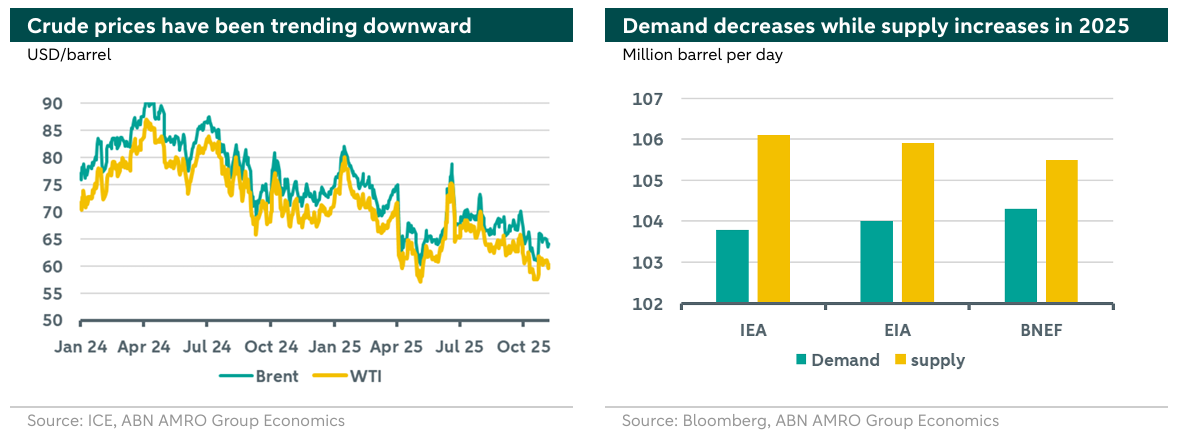
 By K Raveendran As 2026 approaches, the global oil market is heading into a year that could decisively reshape price dynamics, fiscal planning in producing states, and energy security calculations for importing economies. The defining feature of the coming year is not demand destruction or geopolitical shock, but the growing weight of surplus supply. Market […]