News related to
demand

Moves to prohibit political donations made in cryptocurrency are gathering pace at Westminster, as lawmakers warn that digital assets could be exploited by hostile states and anonymous actors to influence elections and undermine democratic safeguards. Cross-party concern has sharpened following intelligence assessments that flagged the vulnerability of political finance rules to opaque funding channels. Legislators argue that while donations in cash and traditional banking systems are subject […]

Public spaces across Downtown Dubai were restored in under 55 minutes after New Year’s Eve celebrations, as Emrill completed a large-scale overnight clean-up following one of the city’s biggest annual events. More than 308 team members were deployed across the district to clear waste, reset streets and pedestrian zones, and return key public areas to normal use before early-morning activity resumed. The operation, delivered for the thirteenth […]

Greenlogue/AP Abu Dhabi Future Energy Company PJSC – Masdar has signed a long-term power purchase agreement for a 150-megawatt solar photovoltaic project in Angola, marking its first contracted power deal in the country and extending the company’s African portfolio at a time when regional governments are accelerating grid expansion and energy diversification. The agreement covers the Quipungo Solar PV project, located in Angola’s southern region, and was […]

Arabian Post Staff -Dubai Saudi Basic Industries Corporation has agreed to divest its European petrochemicals arm and its engineering thermoplastics operations across the Americas and Europe, marking a significant portfolio shift by the chemical producer as it sharpens its focus on core businesses. The company said it has signed a definitive agreement with Germany’s AEQUITA SE & Co. KGaA to sell 100 per cent of its shares […]

Arabian Post Staff -Dubai Saudi-based developer Dar Global has confirmed plans to launch two Trump-branded luxury developments in Riyadh and Jeddah with a combined value of about $10 billion, marking one of the most ambitious foreign-branded property ventures tied to the kingdom’s urban transformation drive. Chief executive Ziad El Chaar said the projects will anchor premium hospitality, residential and leisure offerings in locations central to Saudi Arabia’s […]

Chainlink’s token LINK is showing signs of technical strain as chart patterns point to a bearish pennant forming against a backdrop of fading institutional demand for exchange-traded crypto products tied to the oracle network. The setup has drawn attention across digital-asset desks at a time when broader crypto markets remain sensitive to shifts in liquidity, regulatory signals and risk appetite. LINK has spent several weeks consolidating after […]

  Samsung Electronics has warned that a tightening supply of memory chips risks pushing up prices for televisions, smartphones and home appliances, broadening the impact of a global shortage driven by surging demand for artificial intelligence hardware. The caution underscores how constraints in a core component are rippling across consumer electronics at a time when manufacturers are racing to invest in AI-centric products. Speaking on the outlook […]

Advertisements
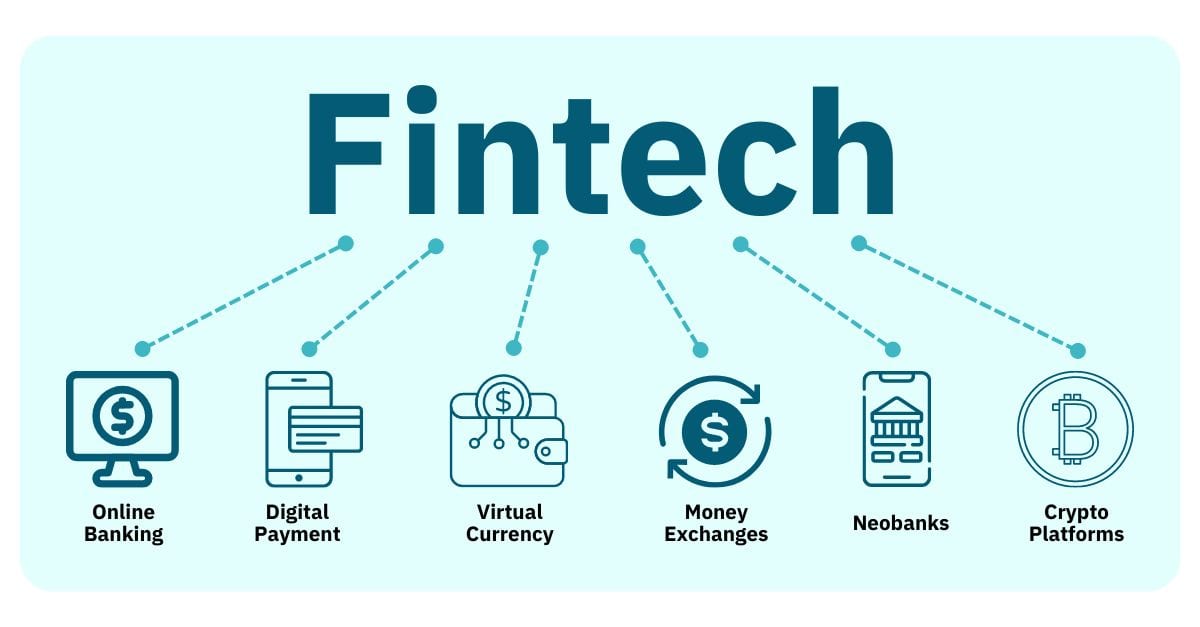
Bengaluru | Banking-as-a-Platform is moving from concept to commercial backbone across the country’s financial system, as lenders open their digital rails to fintech partners and reposition themselves as infrastructure providers rather than closed institutions. The model allows banks to expose core capabilities—accounts, payments, lending, compliance and data—through secure application programming interfaces, enabling third parties to build, distribute and monetise financial products at speed.

This shift has gathered momentum as regulatory digital public infrastructure, rising smartphone penetration and instant payments have converged. Unified Payments Interface volumes continue to expand across peer-to-peer and merchant transactions, while account aggregation frameworks allow consent-based data sharing that reduces onboarding friction and credit assessment time. Against this backdrop, platform-led banking is emerging as a scalable engine for fintech growth, changing how products are designed, priced and distributed.

Large lenders and new-age banks have invested heavily in API layers that sit atop legacy cores, separating product logic from distribution. This architectural change allows fintechs to “plug” into regulated balance sheets without becoming banks themselves, “play” by composing features such as KYC, payments or credit scoring, and “scale” nationally without building costly compliance stacks. For banks, the appeal lies in fee income, wider distribution and better utilisation of capital through co-lending and embedded finance.

Executives across the sector say the platform approach has shortened product launch cycles from months to weeks. Consumer lending, merchant credit, wealth distribution and cross-border remittances have been early beneficiaries, with embedded finance extending to ride-hailing, e-commerce, logistics and software-as-a-service platforms. Small enterprises, long constrained by paperwork and collateral requirements, are gaining access to working capital through cash-flow based underwriting that draws on real-time transaction data.

The commercial logic is reinforced by economics. API monetisation—charging per call, per transaction or via revenue sharing—creates annuity-like income streams for banks. Fintechs gain variable cost structures that align expenses with growth. Analysts note that platforms with high uptime, predictable latency and robust documentation are attracting repeat developers, creating network effects similar to cloud marketplaces.

Regulatory guardrails remain central to the model’s credibility. Data localisation rules, customer consent standards and outsourcing guidelines shape how banks expose systems and how partners handle information. Supervisors have emphasised accountability, making licensed entities responsible for customer outcomes even when services are delivered through partners. This has pushed banks to strengthen vendor risk management, audit trails and incident response, while fintechs have had to mature governance and security practices.

Competition among banks has intensified around developer experience. Dedicated sandbox environments, self-serve onboarding and standardised APIs are becoming differentiators. Some lenders have carved out platform subsidiaries to attract talent and ring-fence technology risk, while others have partnered with specialist middleware firms to accelerate rollout. Public sector banks, once seen as slow movers, are also modernising stacks to participate in ecosystem distribution rather than cede ground.

The platformisation trend is reshaping balance-sheet strategies. Co-lending arrangements allow banks and non-bank financiers to share risk, with fintechs originating and servicing loans using data-driven models. In payments, banks are focusing on high-volume, low-cost rails while fintechs compete on user experience and value-added services. Wealth platforms are distributing mutual funds, bonds and insurance through APIs that streamline compliance and reporting.

Challenges persist. Legacy core systems can constrain throughput, requiring phased migrations that test execution discipline. Cybersecurity threats rise with greater connectivity, demanding continuous monitoring and zero-trust architectures. Pricing APIs too aggressively risks discouraging innovation, while underpricing leaves money on the table. There is also the question of differentiation: as APIs commoditise, banks must decide where to invest for unique value, whether in data analytics, sector-specific products or risk pricing.

Talent remains a pressure point. Demand for engineers fluent in financial protocols, security and scalable systems outstrips supply, pushing up costs. Cultural change inside banks—shifting from project delivery to product thinking—has proven as important as technology. Successful platforms tend to empower cross-functional teams, publish clear roadmaps and treat external developers as customers.


Arabian Post Staff -Dubai Price cuts on a Donkey Kong-themed wireless controller are drawing attention across the Nintendo accessories market, as retailers deepen discounts on officially licensed hardware designed for both current and next-generation consoles. The promotion centres on the Turtle Beach Rematch Wireless Controller: Donkey Kong Edition, now selling for $41.61, down from $60, with select shoppers able to apply an additional coupon that lowers the […]

Government authorities are moving to compel smartphone manufacturers to submit portions of their operating system source code for mandatory security audits, escalating a standoff with global technology companies that warn such a requirement could undermine intellectual property protections and user privacy. The proposal, under discussion within policy circles in New Delhi, reflects mounting concern about cyber intrusions, supply-chain vulnerabilities and the growing role of mobile devices in payments, governance and national security.

Officials familiar with the matter say the plan would require vendors selling smartphones in the country to make critical software components available for inspection by government-approved laboratories. The focus would be on core operating system layers, firmware and security modules rather than consumer-facing applications. Proponents argue that access to code is essential to verify whether hidden vulnerabilities, backdoors or insecure update mechanisms could be exploited by hostile actors.

The push has brought the government into direct tension with companies such as Apple and Samsung, whose devices dominate the premium and mass-market segments. Executives and industry representatives have privately conveyed resistance, arguing that exposing proprietary code, even to auditors bound by confidentiality, creates unacceptable risks of leaks and reverse engineering. They also contend that global platforms already undergo extensive third-party security testing and comply with international standards.

At the heart of the debate is whether national security imperatives justify a departure from prevailing global norms. Countries including China and Russia operate regimes that allow state scrutiny of technology products, though often under opaque processes that foreign firms say are difficult to reconcile with commercial safeguards. Western regulators have largely relied on certification frameworks, vulnerability disclosure programmes and cooperation with vendors rather than direct access to source code. India’s approach, if formalised, would place it closer to the former camp, potentially setting a precedent for other large emerging markets.

Government officials counter that smartphones have become gateways to sensitive data far beyond personal communications. Devices are routinely used for digital identity verification, financial transactions and access to public services. Any systemic weakness could have cascading effects. They also point to a rise in sophisticated cyber operations attributed by security researchers to state-linked groups, arguing that reliance on vendor assurances is no longer sufficient.

The proposal is understood to be steered by the Ministry of Electronics and Information Technology, which has expanded its remit in cybersecurity and digital governance. Policy discussions have examined models ranging from escrow-based code access, where source material is held by a trusted intermediary, to controlled on-site inspections without code being copied. Each option presents trade-offs between assurance and exposure.

Industry bodies warn that mandatory disclosure could chill investment and complicate product launches. Smartphone operating systems are developed on global codebases, updated frequently and protected by layers of licensing agreements with component suppliers. Altering that structure for a single market risks fragmenting development and delaying security patches. There are also concerns about reciprocity: once one jurisdiction demands code access, others may follow, multiplying compliance burdens.

Privacy advocates occupy an ambivalent position. Some support deeper scrutiny to ensure devices do not surreptitiously collect or transmit data. Others caution that state access to low-level software could itself become a vector for abuse if oversight is weak. They stress the need for transparent audit criteria, independent supervision and clear limits on how findings are used.

The commercial stakes are significant. India is one of the world’s largest smartphone markets by volume and a critical manufacturing hub under production-linked incentive schemes. Companies have invested heavily in assembly plants and local supply chains, betting on policy stability. A protracted dispute over code access could influence decisions on future capacity and research investment, even if an outright exit is unlikely.

  Control over personal photo archives stored in Apple’s iCloud has taken on sharper relevance as users look for greater autonomy over their data, and a small open-source project has emerged as a practical response to that demand. icloudpd, a Python-based command-line utility, allows users to download and synchronise photos and videos from iCloud to local storage, offering an alternative to Apple’s tightly integrated ecosystem. Developed originally […]

Dell has acknowledged that withdrawing its XPS laptop range damaged customer trust and weakened its premium credentials, prompting the company to restore the line with new models unveiled at CES 2026. The admission marks a rare public reversal by a major technology manufacturer and signals a recalibration of Dell’s strategy in the high-end personal computer market. Speaking during product briefings in Las Vegas, Dell executives conceded that […]

Arabian Post Staff -Dubai Saudi Arabia has moved to open its real estate market to foreign ownership, marking one of the most consequential shifts in the Kingdom’s investment policy as it seeks to diversify its economy and deepen capital inflows beyond hydrocarbons. The reform allows non-Saudis to buy a broad range of properties, including residential, commercial, agricultural and industrial assets, with the option to purchase land for […]

China’s commerce authorities have set out plans to reinforce the country’s legal and regulatory architecture governing trade, placing export controls and supply-chain risk management at the centre of economic policy for the year ahead. The agenda, outlined by the Ministry of Commerce of the People’s Republic of China, reflects Beijing’s determination to shield domestic industries from external shocks while maintaining its position as a pivotal node in global manufacturing and logistics networks.

Officials said the push will focus on tightening the legal framework that underpins foreign trade, improving the design and enforcement of export control mechanisms, and strengthening early-warning systems to guard against disruptions. The ministry described supply-chain resilience as a strategic priority, arguing that legal certainty and predictable controls are essential to sustaining economic stability amid persistent geopolitical tensions and shifting global demand.

Export controls have become a particularly sensitive policy lever for China as advanced technologies, critical minerals and dual-use goods face growing scrutiny worldwide. Over the past two years, Beijing has expanded the scope of its export control regime, introducing licensing requirements and compliance obligations that mirror, in some respects, measures imposed by other major economies. Officials now say further refinement is needed to close loopholes, clarify enforcement standards and ensure that rules are aligned with broader industrial and security objectives.

The commerce ministry’s policy outline also emphasises the need to improve coordination among regulators, customs authorities and law-enforcement agencies. By streamlining oversight and information-sharing, Beijing aims to reduce regulatory fragmentation that businesses have long complained adds cost and uncertainty to cross-border operations. Officials argue that a more coherent system will help enterprises navigate compliance requirements while allowing the state to respond more swiftly to emerging risks.

Legal experts in China note that the emphasis on statutory clarity signals a shift away from ad hoc administrative guidance towards more formalised rules. This approach, they say, could provide companies with clearer expectations, particularly foreign-invested firms that often struggle to interpret policy signals. At the same time, stronger legal backing for export controls may give regulators broader discretion to act when national security concerns are invoked.

The policy direction comes as global supply chains continue to recalibrate. Trade frictions, sanctions regimes and technology restrictions have prompted multinational companies to reassess sourcing strategies, diversify production bases and build redundancy into logistics networks. China, while seeking to retain its manufacturing dominance, has also encouraged domestic firms to reduce exposure to external vulnerabilities by investing in upstream capabilities and alternative markets.

Officials have framed the new priorities as part of a broader effort to balance openness with security. While reaffirming commitments to trade facilitation and market access, the commerce ministry stressed that safeguarding key sectors and technologies remains non-negotiable. This dual emphasis reflects guidance from top leadership that economic policy must serve both development and security goals, a theme repeatedly highlighted in speeches by Xi Jinping.

Industry analysts say the strengthened export control regime is likely to have uneven effects across sectors. Producers of high-tech components, rare earths and advanced materials may face tighter scrutiny, while exporters of consumer goods could see limited direct impact. However, the broader compliance environment may become more demanding, requiring companies to invest in legal expertise, internal controls and supply-chain mapping.

Foreign chambers of commerce in China have previously urged authorities to ensure transparency and proportionality in export control enforcement. Businesses worry that ambiguous rules or retroactive application could disrupt contracts and undermine confidence. The commerce ministry has sought to address these concerns by signalling that legal reforms will be accompanied by clearer guidance and procedural safeguards, though details on implementation timelines remain limited.

Beyond export controls, the policy outline highlights risk prevention across trade finance, logistics and overseas investment. Officials pointed to the need for monitoring mechanisms that can detect stress points early, whether arising from financial volatility, shipping bottlenecks or regulatory changes abroad. Strengthening such systems, they argue, will help Chinese firms adapt more quickly and reduce the likelihood of cascading disruptions.

Amazon has marked down a high-profile Lord of the Rings Lego collectible for the first time, offering a modest but notable price reduction on a set that has so far resisted discounting in a tightly controlled licensed market. The Lego Icons Lord of the Rings Balrog Book Nook, a 1,201-piece display model inspired by the Mines of Moria sequence from The Fellowship of the Ring, is listed […]

Walmart plans to scale its drone delivery programme with Alphabet-owned Wing, aiming to serve about 40 million people across the United States by 2027 as it pushes automated logistics deeper into everyday retail. The expansion is designed to shorten delivery times for small items to under 30 minutes and sharpen competition with Amazon in fast fulfilment. The retailer intends to add drone operations to roughly 150 additional […]

Senate Republicans are accelerating plans to bring a sweeping cryptocurrency bill to a vote, betting that momentum and industry pressure can overcome lingering Democratic reservations even as bipartisan talks remain unsettled. The move was confirmed late on Friday by the chair of the Senate Banking Committee, who said the panel would press ahead with scheduling despite parallel efforts by the Senate Agriculture Committee to refine a cross-party […]

Arabian Post Staff -Dubai Nintendo has opened preorders for a new Light Purple and Light Green Joy-Con 2 controller set priced at $100, expanding the accessory line-up for the forthcoming Switch 2 ahead of a February 12 release. The controllers are listed across major retailers including Amazon, Best Buy, Target and GameStop, signalling a coordinated retail push as Nintendo prepares the next phase of its hardware cycle. […]

  A widening gap between alarmist rhetoric and practical policymaking around artificial intelligence is threatening investment and innovation, according to Jensen Huang, who has urged governments, industry and the public to move beyond what he describes as “AI doomerism”. Speaking amid accelerating deployment of large-scale models across industries, the chief executive of Nvidia said exaggerated fears were distorting debate and already discouraging capital flows into technologies with […]

Robinhood Markets has set out plans to build an Ethereum layer-2 network as part of a broader push to deepen its role in crypto trading, tokenised equities and on-chain yield products, arguing that anchoring the project to Ethereum’s security is central to winning user trust and regulatory confidence. The brokerage, best known for commission-free equity trading, says the layer-2 is designed to handle higher transaction volumes at […]

Meta has secured access to as much as 6.6 gigawatts of nuclear power through a cluster of agreements with established utilities and advanced reactor developers, underscoring how the energy demands of artificial intelligence are rewriting the investment playbook for Big Tech and the power sector alike. The arrangements, involving power supply and development pathways with Vistra, Constellation, TerraPower and Oklo, aim to underpin Meta’s expanding network of […]

  Changpeng Zhao, the former chief executive of Binance, has drawn attention to what he describes as a widening divide in the Bitcoin market, with large United States banks and institutional players accumulating the cryptocurrency while many retail investors sell amid price volatility and regulatory uncertainty. His remarks, circulated widely across market circles, have intensified debate about whether another structural shift is under way in the digital […]

Bangkok’s long-held reputation as the “Detroit of the East” is under strain as the global shift towards electric vehicles reshapes South-East Asia’s industrial map, with Vietnam emerging as a more agile rival built around a powerful domestic champion. For half a century, Thailand’s automotive sector has been the backbone of its manufacturing economy, contributing about a tenth of national output and supporting hundreds of thousands of jobs […]

Apple has filed a patent that outlines a method to turn AirPods into precise gesture sensors by using the earbuds’ existing radio-frequency antennas, a move that could expand how users interact with devices without adding new hardware. The proposal centres on detecting subtle finger movements such as taps, swipes and pinches through changes in RF signals, allowing faster and more accurate input while potentially lowering latency and […]

VISHNU RAJA
RYO YAMADA
HITORI GOTOH
IKUYO KITA