Saudi Arabia’s non-oil private sector slipped into contraction in March, with business conditions deteriorating for the first time since August 2020 as conflict across the Middle East disrupted supply chains, delayed exports and hit customer demand. The Riyad Bank Saudi Arabia Purchasing Managers’ Index fell to 48.8 in March from 56.1 in February, dropping below the 50-point threshold that separates growth from contraction. Data for the […]
By Nantoo Banerjee The Reserve Bank of India and the government may officially deny or even pretend to ignore the adverse impact of the continuous downhill journey of the Indian Rupee against the US Dollar on the economy, the disturbing trend, if not contained, is bound to lead the heavily import-reliant nation to high inflation […]
Arabian Post Staff -Dubai ADNOC Gas said its domestic supply chain remains intact after damage at part of the Habshan complex on April 3, with gas demand inside the UAE being met through other facilities and no disruption to customer supply. The company told the Abu Dhabi Securities Exchange that the affected area had been isolated and that a full assessment of damage to the Habshan train […]
Al Hudayriyat Island has emerged as one of Abu Dhabi’s clearest statements of how urban expansion, tourism strategy and lifestyle planning are being fused into a single waterfront destination, as the emirate pushes to raise liveability, broaden its non-oil economy and create new high-value districts beyond its traditional city core. Developed by Modon, the island’s evolution has moved well beyond a beach-and-leisure concept into a much […]
Arabian Post Staff -Dubai Alramz Real Estate has moved to deepen its presence in Saudi Arabia’s housing market after signing an agreement with Oud Capital to establish a Shariah-compliant real estate investment fund worth about SAR650 million to develop a 900-unit residential community in Jeddah, in a deal that underlines how listed developers are using capital-market structures to expand amid sustained demand for urban housing. The […]
BANGKOK, THAILAND – Media OutReach Newswire – 6 April 2026 – Bangkok is set to strengthen its position as an emerging international education hub in Asia, as Wycombe Abbey, one of the United Kingdom’s most established academic institutions, prepares to launch Wycombe Abbey International School Bangkok, scheduled to open in August 2026.
(From left) Chotchawal Leetrairong, Fiona Angel, and William Vanbergen at the announcement of Wycombe Abbey International School Bangkok, reinforcing Bangkok’s growing role as a regional education hub.
The project is a collaboration between Wycombe Abbey, BE Education, and Rabbit Holdings, a subsidiary of BTS Group Holdings Public Company Limited, reflecting the continued expansion of global education networks into Asia and Thailand’s growing relevance as a destination for international schooling.
Founded in 1896 in Buckinghamshire, Wycombe Abbey is widely recognised for its academic excellence and long-standing reputation for combining rigorous British curricula, including IGCSEs and A Levels, with a holistic approach to student development. The model emphasises intellectual curiosity, leadership, and a global perspective.
Wycombe Abbey also represents a rare example of a historic global institution that has successfully maintained its academic standards while expanding internationally. Its schools in Hong Kong and major cities across China have demonstrated the ability to uphold the same quality of education, driven by close collaboration and strict academic oversight from Wycombe Abbey UK. This approach ensures consistency in teaching standards, student outcomes, and the overall educational experience across its international network.
The school’s entry into Thailand comes amid sustained growth in the country’s international education sector. Thailand currently hosts more than 250 international schools serving approximately 70,000 to 80,000 students. The market is valued at over 80 billion baht and continues to expand at an annual rate of around 10%, driven by rising demand from both Thai and expatriate families seeking globally recognised education pathways.
Bangkok’s appeal as an education destination is supported by its quality of life, safety, regional connectivity, and relatively competitive cost of living, positioning the city as a potential regional hub for international families.
Wycombe Abbey’s international network already spans Hong Kong and multiple cities in China, including Changzhou, Hangzhou, and Nanjing. Bangkok will serve as one of its newest strategic locations, with further expansion planned in Singapore and South Korea, strengthening cross-border academic connections and student mobility within Asia.
William Vanbergen, Founder and Chairman of BE Education and Chairman of the Wycombe Abbey International Advisory Board, said the expansion represents more than a geographic extension.
“Wycombe Abbey isn’t just expanding. It is bringing one of the UK’s most respected educational traditions into Asia, while creating a multi-campus network that connects students across locations through shared experiences and collaboration,” he said.
Chotchawal Leetrairong, representing BTS Group Holdings and serving as financial advisor, said the investment aligns with a broader vision of urban development.
“World-class education is a fundamental component of a global city. Our investment reflects a long-term commitment to strengthening Bangkok’s position by supporting international education, talent attraction, and economic development,” he said.
Fiona Angel, Founding Executive Headteacher of Wycombe Abbey International School Bangkok, said the school will focus on developing well-rounded students equipped for a rapidly evolving global environment.
The school will offer a continuous 15-year education pathway from Nursery to Year 13 (ages 2–18), with both day and boarding options. Boarding will remain a central element of the educational model, designed to foster independence, responsibility, and leadership within a structured learning community.
Located near Thana City on Bangna-Trad Road, the campus will span over 66 acres, positioning it among the largest international school campuses in Bangkok. Facilities will include an Olympic-standard swimming pool, FIFA-standard football field, tennis and golf facilities, basketball courts, a full athletics track, and a 1,000-seat stadium, supporting both academic and co-curricular development.
The combination of Wycombe Abbey’s academic reputation and the school’s strategic location is expected to further strengthen Bangkok’s position as an emerging Asian education hub. Situated just 10 minutes from Suvarnabhumi Airport, the campus offers convenient regional access for international families, while its high-quality boarding facilities are designed to meet the needs of students and parents across Asia. This positioning is expected to attract a growing number of families seeking world-class education within the region.
Wycombe Abbey has consistently delivered strong academic outcomes. Over the past decade, 28% of its graduates have secured places at Oxford and Cambridge, with many progressing to leading universities worldwide. Across its international network, 38% of students in its Hong Kong and China campuses have been admitted to QS Top 10 universities, while 74% have gained entry to QS Top 50 institutions globally.
With its established academic track record, international network, and large-scale campus, Wycombe Abbey International School Bangkok aims to position itself as a leading provider of British-curriculum education in Southeast Asia, while contributing to Bangkok’s long-term development as a global education destination.
Greenlogue/AP Solar power capacity across the Gulf Cooperation Council has expanded at an exceptional rate, with a new GCC-Stat report showing average annual growth of 88.1 per cent between 2013 and 2024, underscoring how one of the world’s leading hydrocarbon-producing regions is accelerating investment in cleaner energy while also strengthening climate resilience measures. The same report said electricity generated from solar energy climbed from 0.13 thousand gigawatt-hours […]
Gold prices extended their retreat as investors recalibrated expectations for US interest rates after stronger labour-market signals collided with a worsening conflict in the Middle East, a combination that lifted the dollar, pushed oil higher and revived concerns that inflation could stay stubborn for longer. Spot bullion has come under pressure even as geopolitical risk remains elevated, an unusual pattern that reflects how sharply energy costs and […]
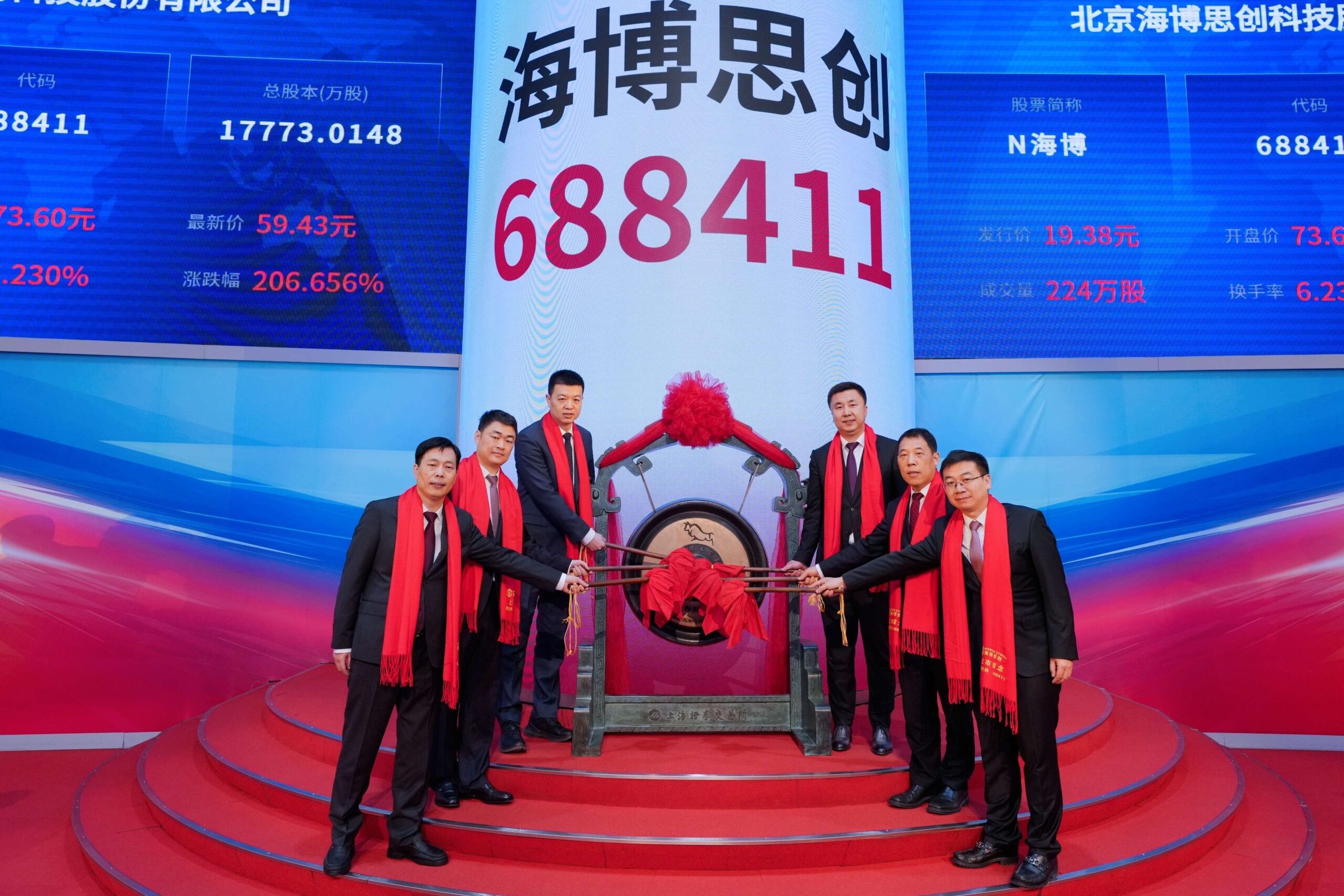
Beijing HyperStrong Technology, one of the country’s biggest battery energy-storage system suppliers, expects shipments to more than double in 2026 as utilities, renewable developers and industrial customers accelerate orders at home and overseas. The company is projecting deliveries of about 70 gigawatt-hours this year, up from 26 gigawatt-hours in 2025, according to comments published on April 6, a jump that underscores how quickly large-scale storage is moving from a supporting technology to a central piece of power infrastructure.
The forecast places HyperStrong among the more aggressive corporate voices in a market that has expanded far beyond its earlier role of smoothing short bursts of solar and wind volatility. Storage is now being bought to stabilise grids, capture cheap midday renewable power, support evening peaks and back up electricity-hungry data centres. Global spending on batteries for power-sector storage is set to reach about $66 billion in 2025, reflecting the scale of investment now flowing into the sector.
HyperStrong’s position helps explain why its target is drawing attention. The company says it has been ranked among the top three global battery energy-storage system integrators and has held a Tier 1 standing with BloombergNEF since 2024. It also says it is the top integrator in China’s mainland market by cumulative installed and contracted project capacity. On its own figures, it has deployed more than 50GWh across more than 400 projects after being founded in 2011.
Demand inside China remains the first pillar of that growth story. The country’s clean-power build-out has been so rapid that storage is becoming essential to absorb output and protect grid reliability. Government data showed wind and solar capacity reached 1.84 billion kilowatts in 2025, accounting for 47.3% of total installed power capacity and overtaking thermal power for the first time. Separate official data showed installed new-type energy storage reached 136 million kilowatts in 2025, after already topping 70 million kilowatts in 2024.
Policy has also shifted in ways that improve the commercial case for storage. Earlier concerns that many projects were being built faster than they could be profitably used have given way to a more market-based system in which capacity payments, peak pricing and wider power-sector reforms are strengthening returns. Analysts have said those changes, combined with subsidies in some provinces, helped turn storage into a far more investable business. That domestic backdrop matters because it gives manufacturers and integrators a large home market from which to scale.
Overseas demand forms the second pillar. Chinese storage suppliers have benefited from orders tied to renewable expansion, ageing grids and the electricity needs of AI-linked data centres in North America, Europe and the Middle East. HyperStrong has been widening its footprint in Europe and said in March that it had projects across 15 countries there. The company has also been visibly pushing its international profile through industry events in Europe and the Americas, a sign that it sees export growth as more than a side business.
Competition, however, is unlikely to ease. China’s battery and clean-tech industries have shown how quickly rapid capacity growth can feed price wars and margin pressure. Rival suppliers ranging from CATL and BYD to other storage specialists are expanding at speed, while trade frictions and policy shifts abroad could complicate the export story. At the same time, technology is moving on: lithium-ion remains dominant for daily cycling, but sodium-ion and longer-duration storage systems are being pushed for specific use cases, especially where mineral costs, safety or duration become bigger factors.
Arabian Post Staff -Dubai Huawei has raised its research spending to one of the heaviest levels in the global technology industry, saying it invested CNY192.3 billion in 2025, or roughly $27.8 billion, equal to 21.8% of annual revenue. The figure came with group revenue of CNY880.9 billion and net profit of CNY68 billion, underlining how the Shenzhen-based company is continuing to prioritise long-term technology development even as […]
Justin Bieber’s headline-grabbing purchase of a Bored Ape Yacht Club NFT for about $1.3 million in January 2022 has become one of the clearest symbols of how sharply the NFT market has deflated, with comparable pricing for the collection now hovering around $11,000 to $12,000. The singer bought Bored Ape #3001 for 500 ether at a time when digital collectibles were commanding extraordinary sums, fuelled by celebrity […]
Anthropic’s acquisition of Seattle startup Vercept, little more than a year after the company emerged from stealth, has become one of the clearest signs yet that the contest for elite artificial intelligence talent is reshaping the sector as quickly as the technology itself. The deal folds Vercept’s team and technology into Anthropic’s push to make Claude better at “computer use”, the industry term for AI systems that […]
Arabian Post Staff -Dubai du and Ericsson have completed a 5G standalone proof of concept in the UAE that they say could widen the reach of fixed wireless access for households, using millimetre wave technology to deliver faster home broadband over a broader area than is typically associated with high-band spectrum. The companies said the trial was carried out in residential areas and is intended to support […]
Dentsu has appointed Yusuke Kagohara as chief financial officer for Southeast Asia, handing him a mandate that goes beyond traditional finance oversight as the advertising and marketing group tightens governance and prepares for a more disciplined phase of expansion across one of Asia’s most competitive markets. The appointment took effect immediately, and Kagohara will report to Sanjay Bhasin, chief executive for Southeast Asia.
The move lands at a sensitive point for global agency networks. Growth remains available across Southeast Asia, but margins, client expectations and regulatory scrutiny are all sharpening. Dentsu’s own framing makes clear that this is not merely a replacement hire. Company statements and industry reports describe the post as part of a wider effort to deepen strategic and financial discipline and strengthen governance across the regional cluster, which covers Indonesia, Malaysia, the Philippines, Singapore, Thailand and Vietnam. The business employs more than 4,000 people in the region under what Dentsu describes as a borderless operating model formed in 2023.
Kagohara arrives with a profile that fits that brief. Before this appointment, he served as group head of risks and controls at Dentsu Group Inc., where he worked on internal controls, enterprise risk management and broader governance and remediation efforts. Earlier assignments included chief financial officer and deputy chief financial officer roles in Beijing and at Dentsu Creative China, experience that gave him exposure to large and complex operating environments in Asia. Industry coverage of the appointment has also highlighted his background in corporate strategy, transformation and all-round finance, suggesting the company wanted someone comfortable with both compliance architecture and commercial execution.
That background matters because agency finance chiefs are no longer judged only on forecasting, cost control and reporting. They are increasingly central to how networks integrate acquisitions, police internal controls, price AI-enabled services and defend profitability while clients demand more measurable returns. Dentsu has been signalling this shift at group level for months. Its global management overhaul announced in February was pitched around stronger execution, while its 2025 integrated report and governance materials emphasised capital discipline, internal investment, productivity and the strengthening of leadership and controls.
Southeast Asia gives that challenge extra complexity. The cluster spans fast-growing but highly uneven markets, each with different media structures, regulatory standards, client mixes and digital maturity. Dentsu has described the region as one of the world’s fastest-growing, and its own ad spend outlook has projected Asia Pacific growth ahead of the wider global economy. In December, the company forecast that global advertising spend would rise 5.1 per cent in 2026 to more than $1 trillion, with Asia Pacific remaining the fastest-growing region. For a network trying to convert that momentum into durable earnings, stronger financial control becomes a strategic tool rather than a back-office function.
Bhasin’s comments underline that point. In remarks carried by multiple reports and company-linked posts, he said growth on its own was not enough and that the business needed expansion that was “accountable, resilient, and built to last”. He described Kagohara’s experience in governance, transformation and complex markets as critical to the next stage of Southeast Asia’s development. Kagohara, for his part, said the region stood out for its scale, complexity and ambition, adding that strong fundamentals were universal even when market conditions varied widely. Those comments indicate a leadership view that the next test for Dentsu is not whether Southeast Asia can grow, but whether it can do so with tighter controls and greater consistency across markets.
The timing also follows a change in the seat Kagohara is filling. Trade reports late last month said Bharti Agrawal, who had served as CFO for Southeast Asia at Dentsu, had moved to Monks as chief financial officer for APAC marketing services. That succession gives the new appointment a sharper operational significance, because it suggests Dentsu moved quickly to avoid drift in a role that sits at the centre of planning, compliance and regional coordination.
Coffee Stain has shut its mobile-focused Malmö studio, ending a unit that was set up to bring the company’s irreverent game brands to phones and tablets and leaving fresh questions over how the newly listed Swedish group intends to handle mobile development. The closure was disclosed by Daniel Persson, the company’s vice-president of mobile, who said Coffee Stain had decided to close the office in Malmö and […]
Ether traded just above the $2,000 mark on Sunday, holding a level that traders have treated as a key psychological floor, while BitMine Immersion Technologies’ continued accumulation of the token added to a broader argument that institutional buyers still see value in the market after a bruising first quarter. The second-largest cryptocurrency by market value was priced at about $2,055 in Sunday trading, little changed on the […]
Cloudflare’s launch of EmDash has opened a fresh front in the struggle over the future of web publishing, landing at a moment when WordPress is already under pressure from courtroom battles, security criticism and questions over who gets to define the rules of the world’s biggest content management ecosystem. EmDash, presented by Cloudflare as a “spiritual successor” to WordPress, is being pitched as a modern, open-source alternative […]
By K Raveendran Passage of the Jan Vishwas amendment bill marks a significant moment in the long and uneven effort to make the legal system less hostile to ordinary citizens. Its importance lies not merely in the number of provisions it has altered, diluted or removed, but in the political and moral signal it sends. […]
3Commas has launched QuantPilot, a new AI-driven crypto trading platform aimed at giving retail traders access to tools more commonly associated with quantitative desks, as competition intensifies among trading software providers seeking to simplify strategy design, market research and execution. The company said the product is now in early access, with a public waiting list open through quantpilot. com, and positioned it as a no-code system that […]
Tata Steel has been served with a demand notice of ₹17.55 billion by the District Mining Office in Ramgarh, Jharkhand, over alleged excess coal extraction at its West Bokaro Colliery, adding another legal challenge to the steelmaker’s long-running mining disputes in eastern India. The company said it received the notice on April 3, a day after the end of the financial year, and would contest it through judicial or quasi-judicial forums.
In its stock exchange disclosure dated April 4, Tata Steel said the notice, dated March 30, alleges extraction of about 162.4 million tonnes of mineral coal beyond permissible limits during the period from FY2000-01 to FY2006-07. The company said the demand had been framed on grounds similar to those examined by the Supreme Court in the Common Cause versus Union of India litigation, a landmark case that hardened official scrutiny of mining done beyond environmental or statutory limits.
The scale and vintage of the claim are striking. By reaching back more than two decades, the notice underscores how historical mining records, clearances and production caps remain exposed to reinterpretation by regulators long after the ore or coal has been extracted. For Tata Steel, which has spent years simplifying its structure and strengthening its balance sheet while managing volatile steel demand, the notice also revives a regulatory risk investors know well: mining-linked liabilities that can surface suddenly and run into hundreds or thousands of crores.
Tata Steel has taken a firm line in response. In its filing, management said the claim “lacks justification and substantive basis” and indicated it would pursue legal remedies. That wording suggests the company does not see the notice as an immediately payable liability, but as a disputed demand that will have to be tested through litigation or administrative review. Bloomberg, citing the company statement, reported the amount at about $189 million.
The case fits into a wider pattern. Tata Steel’s annual reports already describe other significant Jharkhand mining disputes, including older claims tied to alleged unlawful iron ore extraction after the expiry of lease renewals. In those disclosures, the company said a demand of ₹3,568.31 crore had been challenged before the Jharkhand High Court, while another ₹421.83 crore notice had also been disputed and partly paid under protest after transit permits were halted. Tata Steel said in that filing that it believed it was remote the state’s demand would ultimately survive.
That history matters because it shows the latest notice is not an isolated compliance issue but part of a broader tension between mining companies and state authorities over how production limits, lease terms and environmental permissions should be interpreted. The Common Cause rulings sharpened the legal and financial consequences of excess extraction, especially where production outstripped environmental clearance or statutory approvals. Courts and regulators have since shown a greater willingness to revisit older conduct and calculate compensation on a far more punitive basis than companies had anticipated years ago.
For Jharkhand, one of the country’s key mining belts, such claims carry a dual message. They show the state remains determined to pursue compensation linked to alleged over-extraction, while also signalling to miners that legacy operations are not beyond review. For the industry, the episode is another reminder that captive mines, often central to cost control for steelmakers, bring legal and policy exposure alongside raw material security. The business logic of owning mineral assets remains strong, but it comes with increasingly intense compliance scrutiny.
The timing is also notable. Tata Steel has faced other mining-related claims over the past year, including a demand from Odisha in July 2025 linked to mineral dispatch issues at the Sukinda Chromite Block. While the factual basis of that case differs from the West Bokaro matter, the accumulation of notices across jurisdictions suggests large resource companies remain under close watch from state mining departments even as policymakers push for higher domestic output of minerals and metals.
du said its National Hypercloud has received certification and endorsement from the UAE Cybersecurity Council, a step the company described as making it the first compliant, secure and sovereign cloud infrastructure approved for deployment across both public and private sectors in the UAE. The announcement places the telecom group at the centre of a fast-moving contest over where sensitive data is stored, who controls the infrastructure, and […]
Arabian Post Staff -Dubai Uber has launched a five-day promotion in the UAE offering 20 per cent off rides to selected destinations in Dubai and Abu Dhabi, in a campaign aimed at steering more residents and visitors towards local shopping, dining and cultural districts at a time when consumer-facing businesses are navigating softer momentum across the non-oil economy. The offer began on April 3 and runs until […]
Abu Dhabi’s cultural calendar for 2026 is being redrawn, with Abu Dhabi Festival now set to begin its main programme in October under a revised line-up that still includes Croatian cellist Hauser and Tunisian oud virtuoso Dhafer Youssef, while other large-scale music events in the emirate have also been pushed back amid regional disruption to travel and live entertainment logistics. The changes place several of the capital’s […]
Gold prices surged on 27 March as bargain hunters returned to the market after a sharp pullback earlier in the week, lifting bullion by more than 3% and sending other precious metals higher as investors weighed signs that tensions in the Middle East might ease. Spot gold climbed as much as $4,554.39 an ounce during the session before trading around $4,491.78 by mid-afternoon in New York, while […]






 https://wycombeabbeyinternational.com/schools/bangkok/