Arabian Post Staff -Dubai OPEC+ decided to keep its oil production levels unchanged after a brief ministerial meeting on Sunday, opting to focus narrowly on market conditions while avoiding discussion of political strains affecting several of its key members. The decision came at a time of sustained pressure on crude prices and mounting concerns over global oversupply, underlining the group’s cautious approach as it seeks to […]
HONG KONG SAR – Media OutReach Newswire – 5 January 2026 – Amid Hong Kong’s rising prominence as a hub for life sciences talent, the Hong Kong Life Sciences Society (HKLSS) is stepping up its efforts to nurture young talents who will shape the city’s scientific future. Through its Hong Kong Life Sciences Scholarship Awards (the Scholarship Awards) introduced in 2022, the Society has celebrated the achievements of outstanding students – this time honoring six students selected from more than 120 nominations.
The awardees of Hong Kong Life Sciences Scholarship Awards 2025/26: (from left) SANTOSO Rachelle Jacinda, RAHMAN Syed Rayan, and TAI Wing Yin Vincy.
The Scholarship Awards aims to recognize and support students pursuing life sciences or biomedical sciences programs at local UGC-funded institutions. Each awardee would receive a HK$50,000 scholarship, mentorship from industry professionals through the HKLSS Mentorship Scheme, and priority enrollment in the HKLSS Life Sciences Summer Internship Program, which offers students an integrated hands-on learning experience across Hong Kong, the Yangtze River Delta (YRD) Region and the Guangdong-Hong Kong-Macao Greater Bay Area (GBA).
Brought together by the Scholarship Awards, three awardees of cohort 2025/26 – SANTOSO Rachelle Jacinda(Y3 BSc in Biological Sciences, CityUHK), RAHMAN Syed Rayan(Y3 BSc in Applied Biology with Biotechnology, PolyU), and TAI Wing Yin Vincy(Y3 Bachelor of Biomedical Sciences, HKU), embarked on a shared journey – to be nurtured, grow, and ultimately bloom as future leaders in life sciences, contributing their skills and passion to advance Hong Kong’s life sciences ecosystem and build a better tomorrow through inter-disciplinary collaborations.
Awardees of Hong Kong Life Sciences Scholarship Awards 2025/26 (from left) Vincy, Rachelle, and Rayan shared their career aspirations in life sciences and enthusiasm for the HKLSS pillar programs.
Homegrown Biological Sciences Dream Fuels Up in Hong Kong Arriving from Indonesia three years ago, SANTOSO Rachelle Jacinda (Rachelle) joined Hong Kong’s life sciences community as an undergraduate with determination and hope. Her passion was first ignited by family medical challenges and her curiosity for biology drove her to pursue deeper studies in biological sciences.
What opened her door to her true calling was the hands-on laboratory work. Rachelle came to appreciate not only the essential role of doctors but also the vital impact of scientists, both working together to advance healthcare. This realization fueled her dream for postgraduate studies, a goal that she once deemed rather idealistic.
She described the Scholarship Awards as a “confidence boost”. She recalled receiving an affirmation from one of the Scholarship Awards interviewers about her future plans, “I think you’re in a quite good place” reassured her that she was on the right path.
With her confidence boosted, Rachelle plans to leverage the scholarship to establish herself in Hong Kong – a supportive nurturing ground for life sciences students, and growing global healthcare investment. Embracing the local culture, she is now learning Cantonese and improving her Mandarin to gear herself up and pursue future opportunities in both Hong Kong and the Chinese Mainland.
From Hometown to International Life Sciences Research Lab “I wanted to become a surgeon [in the past] because I wanted to save lives every day. But if I become a researcher in the life sciences field, one single breakthrough can change millions of lives,” said, RAHMAN Syed Rayan (Rayan), who discovered his real passion in the research lab.
Rayan’s fascination with science began at the age of ten in Bangladesh, where he observed animals in his hometown. Like Rachelle, his enthusiasm for life sciences brought him to Hong Kong, where he was encouraged to immerse himself in research at the university laboratory, guided by professors with profound global research expertise. During semester breaks, Rayan seized every opportunity to broaden his knowledge. Now based in Hong Kong, on his freshman and sophomore years, he pursued an internship in Canada and a summer exchange in the UK, where research primarily followed a fundamental approach. He was thankful for the diverse doors Hong Kong had opened, as exposure to different research methods taught him to see things more holistically, which benefited his work in Hong Kong, known for its focus on translational research.
As Rayan continued to build his career in the life sciences field, receiving the Scholarship Awards meant a great deal to Rayan as he felt “trusted by the panel” and empowered him to be aware of his actions. “Having somebody else to tell you that you are on the right path and believe in you, is very important,” Rayan emphasized.
Rayan also feels especially grateful and refreshed to have found the amazing community he discovered through the Scholarship Awards, as he gets a chance to connect with like-minded peers, who all work towards the same goals and similar challenges. The Scholarship Awards has paved his way to additional opportunities, including priority access to the Society’s industry experience focused Summer Internship Program.
Scientists on TV Ignite Big Ambitions TAI Wing Yin Vincy (Vincy), raised in Hong Kong, developed her passion for life sciences as a child watching scientists in action on TV. Inspired by her curiosity and determination to make a difference, she chose to study biomedical sciences at The University of Hong Kong, following her passion despite conventional expectations.
During her time at university, she gained practical experience through internships in both laboratory and Good Manufacturing Practice (GMP)-compliant facility, which reinforced her ambition. She also minored in Sustaining Cities, Cultures and the Earth to explore inter-disciplinary connections, “As a student, we should not only focus on life sciences, but also learn more about the global perspective, especially when sciences can influence the world,” she said.
These experiences deepened her dedication to the field and the Scholarship Awards became more than an award – it offered a source of belonging that affirmed her place in the life sciences community. “I feel like I am part of the Society, someone who can eventually grow and evolve together with the community and industry,” she said.
The Scholarship Awards has helped bridge her to the broader life sciences ecosystem, as Vincy was connected with previous and other same-cohort awardees at the Presentation Ceremony, and she looks forward to meeting more entrepreneurs, researchers, and C-suite executives from the life sciences sector and gaining guidance from them through HKLSS’ Mentorship Scheme and Summer Internship Program.
Powering Ambition: HKLSS Opens Paths Beyond the Classroom with its Pillar Programs From different beginnings, Rachelle, Rayan, and Vincy find common ground through HKLSS. For them, the Scholarship Awards is more than financial support – it brings them to the pillar programs, a gateway to industry-centered mentorship, industry experience, and a vibrant community driving the future of life sciences in Hong Kong, the YRD, the GBA and beyond.
“I would very much love to go there [Shanghai and Shenzhen] because I will have the opportunity to explore new places and also to meet people with different cultures,” Rachelle said, while Rayan and Vincy also saw the internships as valuable opportunities to gain experience in the Chinese Mainland. “I have heard so many good things from my friends, especially the pharmaceutical companies over there,” Rayan added.
As a life sciences ecosystem enabler, HKLSS continues to expand its pillar programs, activities, and network to meet the evolving needs of members at different career stages. To address the growing demand for life sciences talent and attract both local and non-local professionals to the city, HKLSS also launched Biotech Talent, a dedicated job platform that connects talent with opportunities in the life sciences and biotechnology industry, and offers employers direct access to a diverse talent pool. Through a growing suite of initiatives, the Society partners with its network to support and cultivate a vibrant life sciences ecosystem with dedication. Hashtag: #HongKongLifeSciencesSociety #HKLSS #香港生命科技青年會 #LifeSciences
The issuer is solely responsible for the content of this announcement.
About Hong Kong Life Sciences Society
Hong Kong Life Sciences Society (HKLSS) is an organization established by Nan Fung Group in 2018 aiming to build a dynamic life sciences ecosystem in Hong Kong. Through knowledge exchange, collaboration and public engagement, HKLSS aims to attract, cultivate and retain talent in Hong Kong’s life sciences and biotechnology sectors.
Members of Hong Kong Life Sciences Society Founder and Board Chair: Mr Vincent Cheung Board Vice-chair: Mr Shannon Cheung, Prof Nancy Ip, Mr Antony Leung Executive Director: Prof Ken Wong
Members of the Advisory Board Prof Tom Cheung, Dr Vanessa Cheung, Ms Irene Chu, Mr Shan Fu, Mr Meng Gao, Ms Gladdy He, Prof David Ho, Dr Lu Huang, Mr Emmanuel Hui, Prof Daniel Lee, Ms Nisa Leung, Prof Suet Yi Leung, Prof Kai Liu, Prof Stephanie Ma, Dr Jay Mei, Prof Malik Peiris, Prof Leo Poon, Dr Jin Seok Seo, Prof Anderson Shum, Dr Qiusong Tang, Mr William Tang, Prof Lap-Chee Tsui, Prof Yung Hou Wong, Mr Frank Yu, Prof Kwok-Yung Yuen
Matein Khalid 2026 has started with a bullish bang for my Dr. Copper trade, even though a single trading session when half of Asia is still getting over its New Year’s Day hangover is hardly an optimal sample size. Yet as I see LME spot copper trade at $12500 a metric ton, I feel exhilarated as this is precisely the breakout I flagged for my friends and […]
Nvidia is stepping up output of its H200 artificial intelligence processors as demand from technology firms operating in China intensifies, reflecting a wider global race to secure advanced computing power for large-scale AI models. People familiar with the company’s manufacturing plans say production schedules have been tightened and supply allocations adjusted to prioritise customers seeking alternatives to restricted top-tier chips. The H200, built on Nvidia’s Hopper architecture […]
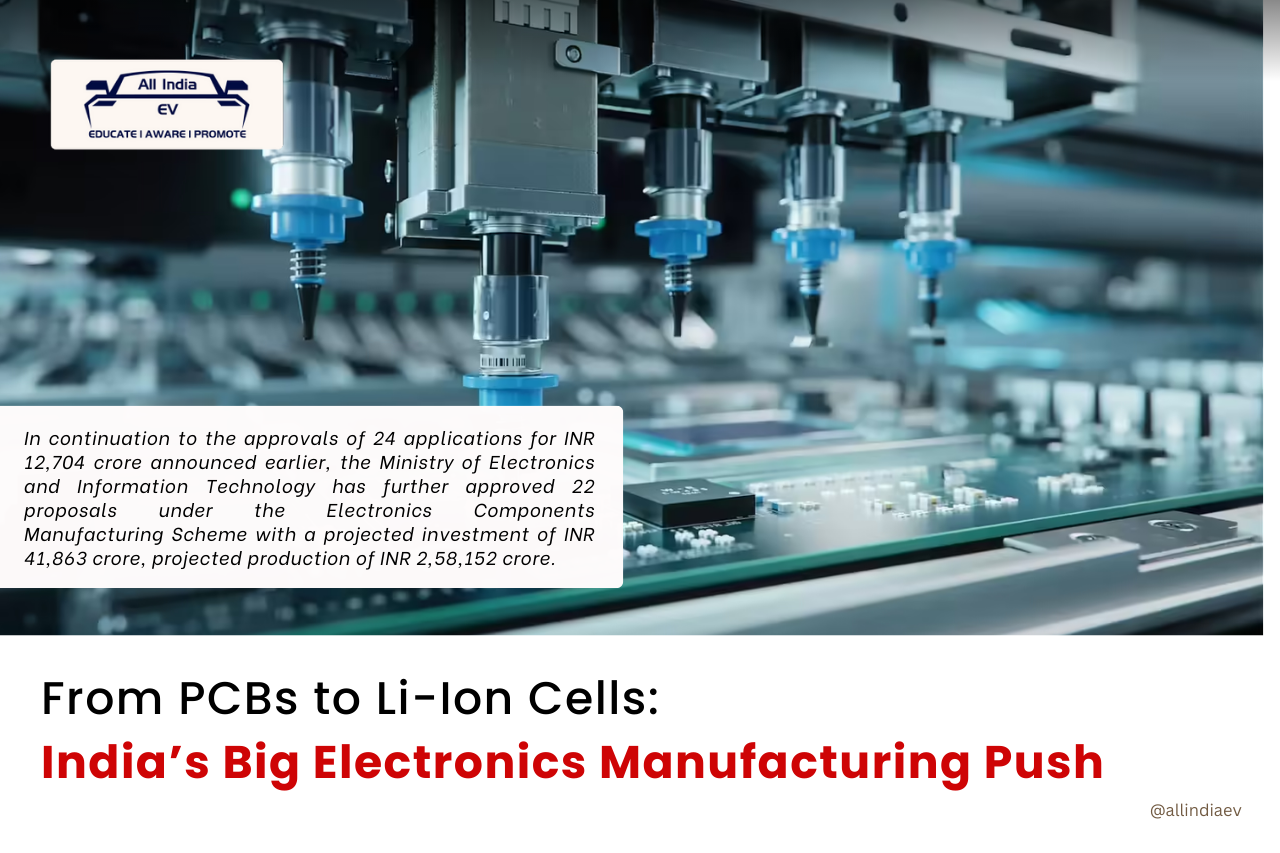
Government approval for 22 proposals under the third tranche of the Electronics Component Manufacturing Scheme marks another step in the effort to deepen domestic supply chains and reduce reliance on imported parts. The cleared projects are expected to draw investment of ₹41,863 crore and generate projected production worth ₹2,58,152 crore over their implementation period, according to official disclosures tied to the decision.
The proposals, cleared by the Union Cabinet chaired by Prime Minister Narendra Modi, span a mix of large conglomerates and specialised component makers focused on sub-assemblies that feed into consumer electronics, industrial equipment and emerging technology segments. Officials said the projects are expected to create 33,791 direct jobs, with a larger number of indirect roles anticipated across logistics, tooling, testing and ancillary services as manufacturing capacity scales up.
The Electronics Component Manufacturing Scheme, commonly referred to as ECMS, is designed to address a persistent weakness in the electronics ecosystem: dependence on imported components even when final assembly takes place domestically. While handset and electronics assembly has expanded rapidly over the past decade, component localisation has lagged, leaving manufacturers exposed to supply disruptions and currency volatility. The third tranche approvals are intended to close that gap by encouraging firms to manufacture key inputs such as printed circuit boards, camera modules, connectors, passive components and specialised sub-systems within the country.
Officials involved in the evaluation process said the latest round places greater emphasis on scale, technology depth and export potential. Several approved proposals involve backward integration into higher-value components, including precision engineering and advanced materials, rather than basic assembly. This approach reflects feedback from earlier tranches, where industry participants argued that long-term competitiveness would depend on mastering complex components rather than expanding low-margin manufacturing alone.
The ECMS operates alongside other incentive programmes such as the Production Linked Incentive framework, but differs in its narrower focus on components rather than finished products. Policy planners view this distinction as critical, given that components account for a substantial share of the value of electronics imports. By targeting this segment, authorities aim to improve value addition within the domestic ecosystem and strengthen resilience against external shocks.
Industry executives welcomed the approvals but cautioned that execution will be as important as policy intent. Several component manufacturers noted that success would depend on timely disbursement of incentives, stable policy conditions and parallel investments in infrastructure such as power reliability, clean-room facilities and logistics. Skilled manpower also remains a concern, particularly for projects involving advanced fabrication and testing processes.
Analysts tracking the sector said the projected production figure of ₹2,58,152 crore signals the government’s expectation that approved firms will not only meet domestic demand but also serve export markets. Global electronics supply chains are undergoing reconfiguration as companies seek to diversify manufacturing bases, and policymakers see an opportunity to position the country as a credible alternative for component sourcing. However, competition remains intense, with established hubs in East and Southeast Asia continuing to benefit from mature ecosystems and economies of scale.
Employment generation has been highlighted as a key outcome of the third tranche. The estimate of 33,791 direct jobs reflects roles across engineering, operations, quality control and management. Economists note that electronics manufacturing tends to create a multiplier effect, supporting additional employment in services and small-scale manufacturing clusters that develop around large plants.
Bitcoin surged beyond the $91,000 mark as a broader rally lifted ether and dogecoin, with traders pointing to political developments tied to Venezuela and signals of possible United States involvement as catalysts for volatility across digital asset markets. The move underscored how geopolitical risk, alongside liquidity conditions and investor positioning, continues to shape price action in cryptocurrencies that are increasingly sensitive to macro and political cues. The […]
Venezuela’s Supreme Court has ordered Vice President Delcy Rodríguez to immediately assume and exercise all presidential powers in an acting capacity, a move that reassigns executive authority at the top of the state and sets off political and institutional repercussions across the country. The ruling, issued by the Supreme Court of Justice, instructs Rodríguez to take on the full scope of presidential functions with immediate effect. The […]
Air India Express has unveiled a limited-period initiative offering discounted rates for pre-booked excess baggage on flights from the Middle East to destinations across the country, a move aimed at easing travel costs for migrant workers, families and long-haul passengers who routinely carry more than the standard allowance.
The airline said passengers travelling on eligible routes can now pre-book either 5 kg or 10 kg of additional baggage at reduced prices when purchasing tickets or managing bookings in advance, rather than paying significantly higher charges at airport counters. The scheme applies to flights operated by Air India Express connecting key Gulf cities with multiple airports, including Kochi, Kozhikode, Thiruvananthapuram, Kannur, Mangaluru, Bengaluru, Chennai, Hyderabad, Tiruchirappalli and Tirupati.
According to the airline, the discounted excess baggage option is available only for travel originating in the Middle East and must be secured before the scheduled departure. Passengers booking at the airport will not be eligible for the reduced rates, a distinction designed to streamline airport operations while encouraging early planning.
Air India Express operates a dense network between the Gulf and southern states, serving a passenger base that often includes overseas workers returning home with gifts, personal belongings and household items. Industry executives say baggage fees have long been a sensitive issue on these routes, where standard allowances can fall short of passenger needs.
A senior airline official said the initiative was introduced after feedback indicated that travellers valued predictable, upfront costs more than ad hoc airport payments. “Pre-booked baggage gives customers certainty and reduces stress on the day of travel,” the official said, adding that the airline continues to evaluate pricing structures in response to demand patterns.
The move comes as competition intensifies on Middle East–India corridors, with full-service and low-cost carriers vying for price-sensitive passengers. Airlines have increasingly turned to ancillary services such as baggage, seat selection and onboard meals to boost revenues while keeping base fares competitive.
Aviation analysts note that excess baggage fees represent a significant ancillary revenue stream globally, but also pose reputational risks if perceived as excessive or opaque. By offering discounted slabs for pre-booking, carriers can strike a balance between revenue generation and customer goodwill.
Data from industry bodies show that traffic between Gulf countries and India has continued to expand, driven by labour mobility, tourism and family travel. Seasonal peaks around school holidays and festival periods often see passengers travelling with heavier loads, amplifying the relevance of baggage-related offers.
Air India Express, now part of the Air India Group following its integration with AIX Connect, has been undergoing operational and branding changes as the group consolidates its low-cost strategy. The airline has been inducting new aircraft, expanding its network and revisiting service elements to align with broader group objectives.
The discounted baggage scheme also reflects a wider trend among low-cost carriers to monetise flexibility. Instead of a one-size-fits-all fare, airlines are offering modular options that allow passengers to tailor services based on individual needs, often at lower overall cost if planned in advance.
Consumer advocacy groups have welcomed clearer communication around baggage pricing but stress the importance of transparency. “Passengers should be able to understand what they are paying for and how much they can carry without surprises,” said a travel rights consultant based in Dubai, noting that disputes over baggage charges remain a frequent source of complaints.
Donald Trump has said United States oil companies would invest billions of dollars to rebuild Venezuela’s battered energy system, asserting that a change in political control would unlock one of the world’s largest proven crude reserves for American firms and help stabilise global supply. Speaking during a campaign-style address, Donald Trump portrayed Venezuela’s oil sector as a prime target for rapid private investment, arguing that US producers […]
Bitcoin has flashed a weekly “death cross”, a technical pattern that has coincided in earlier market cycles with deep drawdowns, prompting traders to reassess downside risk even as longer-term adoption narratives remain intact. The signal, formed when a shorter-term moving average slips below a longer-term one on a weekly chart, has historically preceded declines of 50% to 60% from local highs, according to widely tracked market data […]
Brookfield Asset Management is preparing to launch a cloud computing business called Radiant that will lease artificial intelligence chips directly to developers, underpinned by a newly formed $10 billion AI fund as part of its broader strategy to build an integrated AI infrastructure platform. Radiant’s model aims to control key inputs in the AI value chain from land and power to compute, offering an alternative to conventional cloud […]
Arabian Post Staff -Dubai Barq has vaulted into the spotlight of Saudi Arabia’s financial technology landscape, cementing its position as the fastest-growing digital wallet in the Kingdom by download and usage metrics, according to market data and industry tracking. The platform’s pace of adoption has set benchmarks rarely seen in consumer financial services, underscoring how quickly digital payments are becoming embedded in everyday transactions across Saudi Arabia. […]
Riyadh Zoo has positioned itself as a family-centred destination within Riyadh Season 2025, offering child-focused environments designed around safety, comfort and controlled engagement with wildlife, according to official details released at the start of the year. The attraction, one of the season’s designated zones, is being presented as a model for how large-scale entertainment events in the capital are adapting to the needs of families with young children.
The zoo’s layout has been organised to prioritise safe movement and visibility, with dedicated pathways that reduce congestion and limit close contact points. Low-height viewing areas have been built to allow children clear sightlines to animals without the need for lifting or crowding, a feature aimed at reducing accidents while improving the overall experience. These design choices form part of a broader emphasis on balancing entertainment with parental reassurance.
Family seating areas are distributed throughout the zone, providing spaces for rest and supervision while maintaining visual access to enclosures. Organisers say this approach allows families to remain engaged without feeling overwhelmed by noise or foot traffic, an issue that has challenged other high-density attractions during the season. The emphasis on controlled flow and defined activity zones reflects planning standards that have been applied across several Riyadh Season venues.
Riyadh Zoo’s children’s facilities include interactive learning areas intended to introduce younger visitors to animal behaviour and conservation in an age-appropriate format. Educational elements are integrated into play-based experiences, with staff trained to manage group sizes and maintain clear boundaries between visitors and animals. This structure is designed to minimise stress for both children and wildlife while encouraging curiosity and awareness.
Safety protocols extend beyond physical design. Organisers have highlighted strict operational standards, including routine checks of barriers, continuous monitoring of visitor movement and the presence of trained personnel in high-traffic areas. Emergency response procedures have been aligned with wider Riyadh Season safety frameworks, ensuring coordination with medical and security teams operating across the city’s entertainment zones.
The focus on child-friendly environments aligns with Riyadh Season’s stated objective of expanding family-oriented destinations as part of the capital’s cultural and leisure transformation. Over successive editions, the festival has broadened its appeal beyond concerts and sporting events to include attractions that cater to younger audiences, reflecting demographic demand and changing leisure habits within the Kingdom.
Urban planners and event management specialists note that such initiatives also serve a longer-term purpose. By embedding safety-first design principles into popular venues, organisers can set benchmarks for future projects, particularly those involving children. The Riyadh Zoo model demonstrates how entertainment infrastructure can be adapted to local expectations while meeting international standards for visitor welfare.
Riyadh Season 2025 has placed increased emphasis on organisation and crowd management following feedback from earlier editions, when high attendance at certain zones led to congestion. The zoo’s structured layout and controlled entry points are intended to mitigate those risks, offering a calmer environment compared with more high-energy attractions elsewhere in the season.
Parents visiting the zoo have highlighted the value of clearly marked routes and viewing points that allow children to engage independently within defined limits. This approach reduces reliance on physical barriers alone, instead combining design, supervision and education to create a safer setting. For organisers, the challenge has been to preserve a sense of exploration while maintaining order, particularly during peak attendance periods.
The zoo’s role within Riyadh Season also reflects broader investment in leisure infrastructure as part of national diversification efforts. Family-oriented attractions are increasingly viewed as essential to building a sustainable entertainment economy, encouraging repeat visits and longer dwell times while appealing to residents and visitors alike.
Arabian Post Staff -Dubai Samsung Electronics has lifted the curtain on the Freestyle Plus, a new generation of its portable projector range that pushes further into artificial intelligence-driven home entertainment. Revealed ahead of the CES 2026 technology show in Las Vegas, the device signals Samsung’s intent to blend mobility with smarter software, at a time when consumer electronics firms are racing to embed AI across everyday products. […]
Bitcoin is trading within a narrow band at the start of 2026 after pulling back from the $110,000 zone, yet blockchain data and market activity point to mounting pressure beneath the surface. Large holders are adding to positions, exchange balances are thinning and derivatives markets are showing renewed engagement, a combination that has fuelled expectations of a potential double-digit move if key technical levels give way. The […]
Plans to turn India into a major semiconductor manufacturing hub are moving from policy to execution, with four companies scheduled to begin chip production during 2026 and the government setting its sights on becoming one of the world’s leading producers by 2035. The transition marks a decisive phase for a country long dependent on imported chips but now seeking to embed itself in global electronics supply chains amid geopolitical realignments and rising demand for secure manufacturing bases.
The most advanced of the announced projects is the large-scale fabrication facility planned at Dholera in Gujarat, a joint venture between Tata Electronics and Taiwan’s Powerchip Semiconductor Manufacturing Corporation. The plant, cleared with government backing and financial incentives under the Semiconductor Mission, is designed to manufacture mature-node chips used in automobiles, power electronics, consumer devices and industrial equipment. Construction work has progressed through 2025, with commercial production targeted to start the following year, according to timelines shared with policymakers and industry partners.
Alongside the Dholera fab, three other facilities are slated to commence output in 2026, primarily in the assembly, testing, marking and packaging segment. Micron Technology’s ATMP plant at Sanand in Gujarat is expected to be the first major operational unit, focusing on memory products for global markets. Two domestic groups, Tata Electronics and Kaynes Semicon, are also developing advanced packaging facilities, while CG Power, in partnership with Japan’s Renesas Electronics and Thailand’s Stars Microelectronics, is setting up an outsourced semiconductor assembly and test unit in Gujarat. Together, these projects are intended to establish a foundational ecosystem rather than a single flagship plant.
Government officials argue that the emphasis on both fabrication and packaging reflects a deliberate strategy. While advanced-node fabs require decades of experience and heavy capital, mature-node manufacturing and packaging are seen as realistic entry points that align with India’s strengths in engineering talent, scale and cost efficiency. Officials involved in the programme say the objective is to capture value across the semiconductor chain while gradually building capabilities for more complex processes.
Public funding has played a central role. Under the incentive framework, the central government is offering support covering up to half the project cost for approved semiconductor and display manufacturing units, with additional incentives from host states. The total committed investment across approved projects runs into tens of billions of dollars, according to official estimates, making it one of the most capital-intensive industrial initiatives undertaken in the country.
Industry analysts note that the timing coincides with a global rethinking of chip supply chains. Disruptions during the pandemic years, coupled with trade and technology tensions, prompted governments and companies to seek diversified manufacturing locations. India’s pitch combines policy stability, a large domestic electronics market and strategic partnerships with established chipmakers. Executives at electronics firms say the presence of local chip production could shorten supply chains and reduce vulnerability to external shocks.
Challenges remain substantial. Semiconductor manufacturing demands ultra-reliable power, water and logistics, as well as a deep supplier base for chemicals, gases and equipment. Skills development is another constraint. While India produces large numbers of engineers, chip fabrication requires specialised expertise built through years of hands-on experience. To address this, training collaborations with overseas partners and academic institutions have been initiated, and several universities have launched semiconductor-focused programmes.
There is also scepticism about the 2035 ambition. Market researchers point out that becoming a “top” producer can be defined in different ways, whether by volume, value or technological sophistication. Countries such as Taiwan, South Korea and the United States dominate advanced-node manufacturing, while China has invested heavily across the value chain. India’s near-term projects focus on mature technologies, which serve vast markets but command lower margins. Supporters counter that demand for such chips is set to remain strong due to electric vehicles, renewable energy systems and industrial automation.
Bitcoin exchange-traded funds have recorded an unprecedented $4.57 billion in net outflows over a two-month period, marking the sharpest withdrawal since spot products were approved and underscoring a shift in investor positioning after a steep correction in the digital asset’s price. The reversal follows a roughly 20% drop in bitcoin over the same window, testing the durability of institutional demand that had powered inflows earlier in the […]
Chicago soybean futures eased in the latest session, trimming earlier advances, but still closed the year with their first annual gain in three years, marking a turnaround after a prolonged period of price pressure driven by ample global supplies and volatile demand signals. Prices on the Chicago Board of Trade moved lower during the session as traders locked in profits following weeks of upward momentum. Despite the […]
Competition between Tesla and Waymo is reshaping the trajectory of autonomous transport, with contrasting technical philosophies, regulatory strategies and deployment timelines sharpening the pace of innovation across the robotaxi market. Waymo holds a tangible lead in fully driverless commercial operations. Its vehicles, packed with lidar, radar and high-resolution cameras, have logged millions of autonomous miles without a human safety driver across multiple US cities. In places such […]
Global charging technology brand CUKTECH has launched its first desktop super-fast charging station in Vietnam, marking a strategic push into Southeast Asia’s fast-growing market for high-power, multi-device charging solutions aimed at professionals and power users.
The CUKTECH 30 Ultra Charging Station enters a segment shaped by the rapid proliferation of laptops, tablets, cameras and high-capacity smartphones that increasingly demand desktop-class power delivery. The company said the device is designed for users who run several devices simultaneously, including content creators, developers and technology enthusiasts seeking a single hub that replaces multiple chargers without compromising speed or safety.
At the centre of the product is an ultra-high power output architecture capable of delivering fast charging across several ports at once, supported by intelligent power allocation that prioritises devices based on real-time demand. The station features a visual interaction interface that displays charging status, wattage distribution and thermal conditions, a move intended to give users greater control and transparency over how power is being delivered during intensive workloads.
Vietnam has emerged as a focal point for consumer electronics launches, driven by rising disposable incomes, a young digital-first population and the country’s growing role as a manufacturing and innovation hub. By choosing Vietnam for its first desktop charging station rollout, CUKTECH is signalling confidence in demand for premium accessories that support hybrid work, gaming and creative production environments.
Industry analysts note that desktop charging stations are evolving from simple multi-port adapters into intelligent power management devices. As laptops adopt higher-wattage USB-C standards and smartphones push faster charging thresholds, manufacturers are racing to balance speed with safety, heat control and long-term battery health. Products that fail to manage thermal loads or power negotiation effectively risk damaging devices or underperforming under sustained use.
CUKTECH’s 30 Ultra addresses these concerns with built-in safety systems that monitor temperature, voltage and current in real time, automatically adjusting output to protect connected devices. The company has highlighted compliance with international charging protocols, allowing the station to work across a wide range of brands and operating systems without proprietary lock-ins.
The launch also reflects intensifying competition in the charging accessories market, where established players and newer brands are vying to differentiate through design, smart features and ecosystem compatibility. Desktop charging stations, once niche products, are now being positioned as essential tools for modern desks, particularly as remote and hybrid work setups become permanent fixtures for many professionals.
For content creators, the appeal lies in the ability to power cameras, laptops, tablets and phones from a single device while monitoring output visually, reducing cable clutter and downtime. For businesses and co-working spaces, such stations offer a shared charging solution that can support multiple high-demand devices without the need for wall-mounted adapters or extension cords.
CUKTECH’s expansion strategy has drawn attention due to its roots in advanced charging research and its association with broader consumer electronics supply chains in Asia. The company has previously focused on portable power banks and fast chargers, building a reputation for high-wattage products that cater to users with demanding power needs. Moving into desktop charging stations represents a natural extension of that portfolio, while also placing the brand in direct competition with premium accessory makers targeting professional users.
Vietnam’s technology retail landscape has become increasingly receptive to such launches, with consumers showing greater willingness to invest in quality peripherals that promise durability and performance. Retailers have reported strong interest in fast-charging solutions that can future-proof desks as device power requirements continue to climb.
Market observers also point to regulatory clarity around USB-C and fast-charging standards as a factor accelerating adoption. As devices converge on common charging protocols, consumers are more confident that a single high-end station can serve multiple generations of hardware, improving value over time.
Dollar trading opened the new year on firmer ground on Friday, extending a modest rebound after a bruising twelve months that marked its weakest annual performance in eight years, as investors reassessed the outlook for United States interest rates and global growth.
The greenback edged higher against a basket of major peers in early European dealings, with the yen drifting back towards levels last seen in the spring and the euro slipping slightly after gains built up over the previous year. Market participants described the move as cautious rather than decisive, reflecting thin liquidity and lingering uncertainty over policy direction in Washington.
Currency strategists said the dollar’s fragile recovery followed heavy selling through much of last year, when expectations of rate cuts by the Federal Reserve and easing inflation undercut the yield advantage that had supported the currency in earlier cycles. At the same time, improving growth prospects outside the United States encouraged investors to rotate towards higher-yielding or undervalued alternatives.
Against the yen, the dollar climbed back towards the upper end of its trading range, hovering near a ten-month high. The Japanese currency has remained under pressure amid a persistent gap between domestic borrowing costs and those in the United States, even as Tokyo has signalled a gradual move away from ultra-loose policy. Traders noted that the yen’s slide was less abrupt than in past episodes, reflecting continued sensitivity to the risk of official intervention.
The euro eased after a strong performance last year, when slowing inflation and steady growth in parts of the euro zone boosted confidence in the region’s economic resilience. Analysts cautioned that the single currency’s trajectory would depend heavily on whether European policymakers deliver further easing or pause to assess wage pressures and fiscal spending plans.
Sterling traded in a narrow band, supported by signs of stabilising inflation but weighed by questions over the durability of domestic growth. Emerging market currencies showed mixed moves, with higher-yielding units holding up better as investors searched for carry opportunities, while those linked to commodities reacted to softer prices in energy and metals.
Market focus remains fixed on forthcoming United States data releases, including employment and inflation indicators that could shape expectations for policy adjustments later in the year. While inflation has moderated from its peak, officials have stressed that decisions will be driven by incoming data rather than preset timelines, a stance that has kept rate forecasts in flux.
Some investors argue that the dollar’s decline last year went too far, pointing to the size and liquidity of United States markets and the economy’s capacity to absorb tighter financial conditions. Others counter that structural forces, including a narrowing growth gap with other advanced economies and rising fiscal deficits, could cap any sustained rebound.
Central banks outside the United States are also recalibrating. In Japan, policymakers are weighing how quickly to normalise after years of stimulus without destabilising markets. In Europe, debates continue over balancing support for growth with the need to anchor inflation expectations. These cross-currents have injected volatility into foreign exchange markets, even as overall trading ranges remain narrower than during periods of crisis.
Commodity prices have added another layer of complexity. Oil has softened amid ample supply, trimming support for currencies of major exporters, while gold’s pullback has reduced its appeal as a hedge against currency weakness. Equity markets have started the year on a cautious note, reinforcing demand for safe and liquid assets.
Showcasing transparent MicroLED, ultra-bright HUD, and naked-eye 3D displays to redefine the display landscape across retail, cockpit, and smart device applications
LAS VEGAS, USA – Media OutReach Newswire – 2 January 2026 – Innolux will showcase its next-generation display technology in Las Vegas, USA from January 6 to 8, under the theme “Display the Future, TOGETHER.” Powered by high brightness, high resolution, and immersive experiences, Innolux meets the evolving demands of smart retail, cockpit displays, smart homes, and commercial exhibitions, demonstrating its forward-looking strength in cross-domain integration, application innovation, and market deployments.
Next-generation MicroLED transparent displays reshape the visual experience across retail settings
For the first time, Innolux will unveil its next-generation “MicroLED Display Window,” delivering a clearer, more eye-catching spatial visual experience through high clarity, high transmittance, high brightness, and high resolution. Featuring self-illuminating technology, an advanced optical structure, and a wide color gamut, the product delivers outstanding visibility even in strong ambient light, while its high-resolution design blends visual elegance with clear and efficient information recognition. Transparent displays can simultaneously showcase product information, dynamic advertisements, and navigation content, cutting wait times and easing operational demands, while accommodating a variety of sizes and shapes with the world’s largest modular splicing unit. This solution seamlessly integrates digital information into real-world settings, making it ideal for applications such as commercial window displays and museum exhibits, while delivering a new immersive display experience for retail and smart environments.
Dual MicroLED technology debuts, upgrading marine and automotive displays with ultra-high brightness and minimalist aesthetics
Innolux is unveiling its first “Ultra-High Brightness MicroLED HUD,” delivering ultra-high direct brightness (50,000 nits) and reflective virtual image brightness (10,000 nits). This breakthrough solves the challenges of reflections and image blurring caused by intense light in marine and automotive environments. Even under strong sunlight or reflections from the sea surface or deck, the HUD clearly presents waterways, sea conditions, and navigation instructions, thereby enhancing cockpit visibility. Critical information can be projected directly in the line of sight or front field of vision, minimizing eye movement while improving operational safety and application flexibility.
This year’s event will also highlight the next-generation “MicroLED Decoration Display,” which pair high brightness with an elegant wood grain design, ideal for ship cabins and car interiors. When powered off, the display blends seamlessly into its surroundings like a wood panel; when on, its specialized optical structure delivers high transmittance with minimal brightness loss, meeting ESG standards. Leveraging MicroLED technology, the display achieves 2,000 nits brightness, 229 PPI resolution, and 115% NTSC color gamut, ensuring clear visibility even under strong light. By merging aesthetics with functionality, it broadens the range of applications for interior displays.
Multi-view 3D and mirror displays dramatically boost product display efficiency
Innolux has launched the industry’s first “65″ Multi-Users N3D & Kirameki Display(8K)” for retail and exhibition applications. The display combines exclusive N3D multi-view naked-eye 3D technology with the Kirameki algorithm, overcoming the limitations of traditional 2D displays and delivering a more immersive, lifelike stereoscopic experience. N3D allows multiple users to view 3D content simultaneously, maintaining comfort over extended periods while clearly rendering the product’s three-dimensional form. Meanwhile, Kirameki enhances luster, texture, and material details, creating a natural lighting effect from every angle. This boosts product recognition, extends customer engagement, and enriches the interactive experience, making it ideal for retail and boutique displays as well as digital advertising.
Also on display will be an industry first—the “InnoMirror,” which features high-reflection coated glass and local dimming technology to enhance contrast and sharpness while reducing mirror reflection interference. When powered off, the display appears as a mirror; when on, it delivers product information and enables virtual try-on, color matching, and item switching, thus reducing wait times, minimizing wear, and easing staff workloads. This makes it perfect for a range of environments, from boutiques and beauty retailers to smart homes.
Exclusive N3D display technology, paired with low-latency performance and eye-tracking, delivers an immersive naked-eye 3D experience
Innolux is unveiling its “16″ Single User N3D Display,” featuring exclusive N3D technology and a 2D restoration algorithm. The system limits 3D latency to under 1 millisecond, effectively reducing crosstalk and visual discomfort. It also supports seamless switching between 3D and 2D, while eye-tracking ensures a natural, immersive viewing experience.
At the exhibition, Innolux will showcase a range of innovative displays for applications including laptops, AI notebooks, and outdoor and in-flight entertainment, highlighting its latest breakthroughs in display technology. Products on display include the “Multi-Frequency Display (MFD)” and the “Integrated Touch Display.” The former leverages multi-frequency display technology to automatically switch between 24Hz, 60Hz, and 120Hz refresh rates depending on the content, thus optimizing video quality, gaming and graphics smoothness, and energy efficiency. Meanwhile, the Integraded Touch Display incorporates a tTED IC chip design, supports refresh rates from 30Hz to 120Hz, streamlines the PCBA assembly, and features a thin, lightweight form factor. Also on display are the “Ultra Slim and Light LCD Display with Carbon Fiber Bezel,” the “17.3″UHD MiniLED Local Dimming” and the “13.3″ MiniLED for in Fly Entertaiment Display.” Through these debuting products, Innolux exemplifies the integration of high performance, energy efficiency, and portability, reinforcing its leadership in defining the next generation of smart display technology.
Hashtag: #Innolux
The issuer is solely responsible for the content of this announcement.
Global equity funds attracted sizeable inflows in the final week of 2025, reflecting sustained investor confidence as artificial intelligence-driven gains and expectations of resilient corporate earnings buoyed risk appetite across major markets. Fund flow data compiled from multiple tracking agencies showed investors adding billions of dollars to equity-focused vehicles, extending a trend that had strengthened through the closing quarter of the year.
The late-year surge followed a period of steady gains in global stock indices, underpinned by enthusiasm around productivity improvements linked to AI adoption and comparatively stable macroeconomic conditions in several advanced economies. Technology-heavy markets led the inflows, with North America and parts of Asia drawing particular interest, while Europe also registered net additions after earlier bouts of volatility tied to growth concerns.
Market participants pointed to a recalibration of expectations around monetary policy as another driver. With major central banks signalling that the peak of the tightening cycle had passed, investors appeared more willing to increase exposure to equities, especially companies positioned to benefit from automation, data analytics and cloud computing. Portfolio managers noted that the narrative around AI had broadened beyond a narrow group of mega-cap technology firms, supporting inflows into diversified equity funds rather than only thematic products.
Corporate earnings guidance also played a role in shaping sentiment. As the reporting season unfolded, many large firms indicated that margins were holding up better than feared, aided by cost discipline and selective price increases. While earnings growth varied by sector, analysts highlighted that consensus forecasts for the coming quarters stabilised after repeated downgrades earlier in the year, giving investors greater confidence to deploy capital before year-end.
Flows into emerging market equity funds showed a more nuanced picture. Some regions benefited from improving external balances and easing inflation pressures, which encouraged selective inflows, while others continued to see outflows amid currency volatility and geopolitical uncertainty. Asset managers said global investors remained discriminating, favouring markets with credible policy frameworks and exposure to global technology supply chains.
Bond funds, by contrast, recorded more modest movements during the same period, with some investors reallocating from fixed income to equities as yields plateaued. Mixed flows into money market funds suggested that cash levels remained elevated, reflecting a degree of caution even as equity allocations rose. This balance underscored what strategists described as a “measured optimism” rather than an unqualified risk-on shift.
Industry data indicated that passive equity funds and exchange-traded funds accounted for a significant share of the inflows, highlighting the continued appeal of low-cost vehicles tracking broad indices. Active equity funds also saw net subscriptions, particularly those with mandates focused on innovation, healthcare and industrial automation, sectors viewed as long-term beneficiaries of technological change.
Regional allocation patterns revealed that United States-focused funds captured the largest share of new money, supported by strong performance in technology and communication services stocks. Asia-Pacific equity funds followed, aided by signs of recovery in key economies and policy measures aimed at supporting growth. European equity funds experienced steadier, though smaller, inflows as investors weighed valuation appeal against ongoing structural challenges.
Market analysts cautioned that the momentum seen at the end of the year did not eliminate underlying risks. Valuations in some AI-linked stocks were described as demanding, leaving markets vulnerable to corrections if earnings failed to meet elevated expectations. Geopolitical tensions, trade policy uncertainty and uneven global growth were also cited as factors that could test investor confidence in the months ahead.
By Prabhat Patnaik The BJP-led government has just got parliament to pass a legislation permitting up to 100 percent foreign equity-ownership in India’s insurance sector. This, the Prime Minister has announced, marks the beginning of a major “reform” in India’s financial sector, towards presumably much greater private, including foreign, ownership of financial institutions. This would […]






 www.hklss.org
 www.facebook.com/HKLifeSciencesSociety
 www.instagram.com/hklifesciencessociety
 www.linkedin.com/company/hklss/












 By Prabhat Patnaik The BJP-led government has just got parliament to pass a legislation permitting up to 100 percent foreign equity-ownership in India’s insurance sector. This, the Prime Minister has announced, marks the beginning of a major “reform” in India’s financial sector, towards presumably much greater private, including foreign, ownership of financial institutions. This would […]



