By Ashok Nilakantan Ayers NEW YORK: The second day of the 81st United Nations General Assembly saw diplomatic spotlight shifting from the opening-day clash of competing worldviews to the harder business of finding common ground — over Gaza, Ukraine, Iran, development, climate, artificial intelligence and the future of multilateral institutions. For India, this was an […]
Pope Leo XIV will use his first visit to France as pontiff to underscore solidarity with eastern Christian communities, including those in the Arab world, during a four-day apostolic journey beginning in Paris on Friday. The Pope is due to pray at Notre-Dame Cathedral on September 25, where a chapel dedicated to eastern Christians has become a visible symbol of links between western Catholicism and ancient churches […]
By K Raveendran The Supreme Court’s hearing on Vande Mataram has exposed the question at the centre of the Modi government’s new law: when does honouring a national symbol become an obligation to voice beliefs a citizen does not hold? The court has given no final answer. Its decision to examine the consequences of refusing […]
Asked for a personal example, four in ten PSLE English oral practice answers give none, study finds
SINGAPORE – Media OutReach Newswire – 23 September 2026 – PSLEPrep, a Singapore-built AI oral examiner for PSLE English oral and PSLE Chinese oral practice, has published its first Oral Practice Report. It is based on 12,459 first answers given by 1,290 children practising on the platform over three months. PSLEPrep used AI to identify whether each answer, given before any follow-up question, contained a personal example or a reason.
Key findings:
When a question asked for a personal example, four in ten English answers did not give one.
Asked for an opinion, 96 per cent of English answers gave a reason.
In Chinese, 78 per cent of answers to personal-example questions gave one; the two languages are not directly comparable as the questions are different.
More than a quarter of all practice sessions took place in the four days before the oral examinations began on 12 August.
8pm was the busiest hour for practice.
The main finding concerns questions such as “Have you ever…” and “Tell me about a time…”. Four in ten English answers to them stayed general: what the child usually does, or what people should do, without describing a specific experience of their own.
The problem is not that children cannot explain themselves. Almost every opinion answer gave a reason. What went missing was the child’s own experience, and that is part of what the oral paper assesses. In the PSLE English oral, the conversation section carries 25 of the 40 marks, and the Singapore Examinations and Assessment Board (SEAB) lists expressing “personal opinions, ideas and experiences” among its assessment objectives. In August, SEAB said the oral assesses communication skills, and that pupils are “not expected to reproduce … pre-prepared responses”.
Here is the same question answered two ways. Asked “Do you enjoy eating at hawker centres? Tell me about a time you went”, a general answer says: “Yes, I enjoy hawker centres because the food is cheap and tasty.” A specific answer says: “Yes, because there is so much choice. Last month my grandmother took me to the Bedok hawker centre and I tried chee cheong fun for the first time. I did not like the sauce, so she laughed and bought me chicken rice instead.” Both give a reason. Only the second describes a particular visit. The examples were written by PSLEPrep to illustrate the point; they are not children’s transcripts.
“Children have learned to say ‘because’. What they often leave out is the moment that makes the answer their own, and that is one of the things the examiner is listening for,” said Paul Whiteway, founder of PSLEPrep. “The most useful question a parent can ask is a simple one: when did that actually happen?”
Practice also bunched up before the exam. More than a quarter of all sessions in the three months began in the four days before the oral examinations started on 12 August. The busiest hour of the day was 8pm.
“At 8pm on a school night, a child can practise answering aloud with a patient examiner, and get feedback straight away,” said Mr Whiteway. “AI does not replace a good teacher. It gives children more chances to speak between lessons.”
The analysis used de-identified transcripts and reports only aggregated findings; no child is named or identifiable. The children are a self-selected group, so the findings describe children practising on the platform, not Singapore children as a whole. The full report at https://psleprep.sg/findings sets out the method and limitations and carries a chart free for editorial use.
PSLEPrep was founded by Mr Whiteway, a Singapore-based parent who does not speak Chinese and began using AI voice practice to help his son with spoken Mandarin at home. Its AI oral examiner runs a full PSLE oral practice session in either language and gives feedback and a score on each session, explained in plain English. The oral paper carries 20 per cent of the PSLE English grade and 25 per cent of the Chinese grade. PSLEPrep was named in The Straits Times in May 2026 among AI tools for PSLE oral preparation.
The issuer is solely responsible for the content of this announcement.
PSLEPrep
PSLEPrep is a Singapore-built AI oral examiner for PSLE English oral and PSLE Chinese oral practice, operated by Studio P2 Pte Ltd. Primary 5 and 6 pupils practise reading aloud and stimulus-based conversation by speaking, and receive feedback on every session. The first ten practice sessions are free; a subscription is S$29.90 a month. PSLEPrep publishes findings from its practice data, free study guides and a public database of reported PSLE oral topics. Learn more at https://psleprep.sg.
Inspiring Asia Launched by HKAWL in Hong Kong for the First Time to Support its Impact Link Initiative to Foster Community Empowerment, Exchange and Strategic Philanthropy
HONG KONG SAR – Media OutReach Newswire – 22 September 2026 – The Hong Kong Academy for Wealth Legacy (HKAWL) brought the Inspiring Asia Micro Film Festival to Hong Kong for the first time as Regional Lead Partner, and recognised three winning entries at the inaugural Hong Kong regional awards. The festival culminated in a Screening and Award Ceremony on 21 September 2026 at The Hong Kong Jockey Club University of Chicago Academic Complex | The University of Chicago Francis and Rose Yuen Campus in Hong Kong, and was supported by Lee Hysan Foundation as Strategic Partner and Sponsor.
The inaugural “Inspiring Asia” Hong Kong Regional Awards introduced by the Hong Kong Academy for Wealth Legacy has successfully concluded. Hong Kong’s winning entries and selected finalists will advance to the Main Phase of Inspiring Asia.
Guided by the theme “Community Empowerment” and the tagline “Belonging, Resilience, and Thriving”, participating filmmakers, students and community changemakers shared stories that explored inclusion, connection and resilience. The Festival encourages creators and community organisations to document community stories through micro films, fostering dialogue and greater social participation.
Award-Winning Films Spotlight Inclusion, Resilience and Community Connection
The three winning entries reflected these aspirations through stories of cross-cultural friendship, ageing with purpose and disability inclusion, offering perspectives on experiences that are often overlooked in everyday conversations.
A chance encounter lies at the heart of Between the Unsaid, the winner of the Best Micro Film Award, as an unexpected friendship blossoms between a Pakistani tailor and a local florist. Directed by Qasim Khan and produced by Kaneeta Arshad, the Hong Kong drama shows how kindness can cross linguistic and cultural boundaries, bringing comfort amid grief and isolation.
Best Micro Film
The Story Hunter, winner of the Best AI Film Award, follows an 80-year-old Hong Kong resident who finds renewed purpose by sharing lived experiences. Created by Yimin Chen and Ethan Wong, the drama combines human-written script with AI-assisted production to amplify older adults’ voices and value as storytellers, mentors and active contributors to the community.
Best AI Film
Recipient of the Best Project Award, The Superpower of Little Hands challenges perceptions of congenital limb differences through stories co-created by children and parents from the Hand in Hand Association. The documentary shows how peer support, inclusion and understanding can build confidence, belonging and ambition.
Best Project
Empowering Communities Beyond the Awards
As a flagship annual event of HKAWL’s Impact Link initiative, the Festival reflects its wider efforts to foster dialogue between philanthropy, the social sector and the creative community. As Regional Lead Partner, HKAWL worked with a diverse network of partners to support the Festival’s Hong Kong debut. Beyond the competition itself, Inspiring Asia serves as a platform for capacity building, community participation and collaborative philanthropy, bringing together filmmakers, NGOs, foundations, universities and other partners through activities such as workshops, mentorship, screenings and peer exchange.
“Seeing these powerful community stories come to life on screen was incredibly moving,” said Angel Chia, Executive Director of the Hong Kong Academy for Wealth Legacy. “The winning films demonstrate how storytelling can help people better understand the realities and aspirations of different communities. As a flagship annual event of HKAWL’s Impact Link initiative, Inspiring Asia connects creators and social impact organisations with philanthropists and supporters, helping foster dialogue around strategic philanthropy.”
The journey continues as Hong Kong’s winning entries and selected finalists advance to the Main Phase of Inspiring Asia, bringing their Hong Kong stories to audiences across Asia.
The Screening and Award Ceremony marked the festival’s conclusion in the city, but its impact in creating lasting change continues well beyond the event. In particular, The Hong Kong Jockey Club Programme on Social Innovation (HKJCPSI), operated by The University of Chicago Booth School of Business, will provide capacity-building resources to the Best Project Award winner and shortlisted project teams, helping them strengthen their organisational capabilities and advance the community initiatives featured in their films.
Extending the impact further, the stories will continue to resonate across wider audiences through community screenings from October to December 2026, enabling more people to learn about the experiences and issues they bring to light. Screening details will be announced through HKAWL’s official channels.
Appendix: Hong Kong Regional Competition Award Winners
Award Category
Film Title
Director / Producer
Film Synopsis
Best Micro Film
Between the Unsaid
Qasim Khan, Kaneeta Arshad
The film features Saira, a Pakistani shopkeeper in Hong Kong who is isolated by loneliness, homesickness, and a language barrier. After the sudden loss of her mother, an unexpected friendship with local florist Kim brings comfort, showing how kindness and empathy can bridge cultural and linguistic divides to create strong communities.
Best AI Film
The Story Hunter
Yimin Chen, Ethan Wong
The film follows Granny Fa, an 80-year-old widow living alone like an isolated island — until Story Hunters knocked on her door and walked with her through storytelling training. She brought her real-life experiences to university stages, and the warm applause from the younger generation rekindled her passion for life. In the end, she becomes a Story Hunter herself, knocking on the next closed door.
Best Project
The Superpower of Little Hands
Hand in Hand Association
Produced by Hand in Hand Association, Hong Kong’s first patient self-help organisation for congenital hand differences, this joyful documentary moves beyond traditional narratives of pity. It highlights four vibrant children with hand differences, celebrating their unique talents, creativity, and zest for life. By showcasing a strong peer-support network of families empowering one another, the film demonstrates how love, confidence, and supportive community allow every special hand to shine without limits.
Hashtag: #HKAWL
The issuer is solely responsible for the content of this announcement.
About The Hong Kong Academy for Wealth Legacy (HKAWL)
The Hong Kong Academy for Wealth Legacy (HKAWL) is committed to invigorating a vibrant ecosystem for family offices worldwide by fostering knowledge sharing, capacity building, peer connection, and collaboration. It equips business and wealth owners and inheritors with knowledge in building enduring family legacies, while mobilising family capital to drive measurable social impact and facilitating a strategic philanthropy platform via its Impact Link initiative. By bridging wealth with purpose, HKAWL reinforces Hong Kong’s status as a principal centre for managing family wealth legacies.
Established in 2015, Under Production Ltd. (UP) is a dynamic social enterprise dedicated to empowering aspiring creative talents. By bridging the gap between youth and the creative industries, UP equips creators with production expertise and social awareness to transform complex issues into compelling narratives. UP’s expertise spans three core pillars: Film & Video Production, Multi-platform Publishing, and Integrated Campaign Management. Notable projects include social films Constellation and May It Rain, which have gained recognition for their intimate storytelling on social themes. Over the years, UP has built a sustainable creative ecosystem with NGO partners and community collaborators, consistently delivering innovative solutions that create lasting community impact.
About Lee Hysan Foundation (LHF)
Lee Hysan Foundation (LHF) is a private foundation incorporated in 1973 by the Lee Hysan Family to institutionalise the philanthropic work which the family had been doing for many decades. It currently operates as an endowment fund in perpetuity and does not fundraise. LHF’s mission is to advance the well-being of Hong Kong by catalysing policy and systemic change and scaling evidence-based models to transform Education, Social Welfare, Health, Arts and Culture, and the Environment. Through this work, LHF seeks to enable under-resourced people from diverse backgrounds to flourish.
*Although established by the same family, Hysan Development Company Limited is operated separately from LHF and has its own independent management and board of directors.
New data highlights the contribution of Dusit Central Park’s rooftop park to urban cooling, air quality, biodiversity, and community well-being. The park will also mark Bangkok Climate Action Week 2026 with a special Tree Walk.
BANGKOK, THAILAND – Media OutReach Newswire – 22 September 2026 – Following its first anniversary on 3 September 2026, Suan Dusit Arun – the 11,200 sq m public rooftop park at Dusit Central Park in the heart of Bangkok – has released its first set of visitor, community, and environmental performance data. The figures demonstrate strong public demand for accessible green space in the Thai capital, with an average of 2,621 unique daily visitors during the 12-month reporting period.
Suan Dusit Arun, the 11,200 sq m public rooftop park at Dusit Central Park in the heart of Bangkok, has welcomed more than 951,000 visitors since opening on 3 September 2025.
The largest public rooftop park in Bangkok’s central business district, Suan Dusit Arun is a defining feature of Dusit Central Park and provides elevated views across Lumpini Park, one of the city’s most important green spaces. It was designed as a practical response to critical urban challenges facing Bangkok, including rising temperatures, limited access to green space, and declining biodiversity.
Open to all, the park offers the luxury of space, nature, and calm in the centre of Bangkok. Its public use and programming are thoughtfully managed to protect the landscape, preserve a comfortable atmosphere, and ensure that visitors can continue to enjoy the park without compromising the qualities it was designed to provide.
Combining beautiful views with a strong social and environmental purpose, the park serves as the unifying landscape connecting the principal elements of Dusit Central Park: the flagship Dusit Thani Bangkok hotel, Central Park Offices, the Central Park shopping centre, and a 69-storey residential tower comprising the ultra-luxury Dusit Residences and contemporary Dusit Parkside.
The design of Suan Dusit Arun reflects the wider architectural philosophy of Dusit Central Park, responding to wind flow and solar orientation while drawing on Feng Shui principles to foster harmony, balance, and a positive flow of energy between people and their surroundings.
With approximately 98% of its layered landscape dedicated to green space, the park combines 184 plant varieties, including 48 Thai species, with accessible areas for recreation, learning, community gatherings, and quiet reflection. Its planting includes native shade trees, flowering varieties, and climate-adapted plants.
The planting includes nine tree species in the three threatened categories of the IUCN Red List – two Critically Endangered, two Endangered, and five Vulnerable. It also reflects Thailand’s cultural heritage through sacred spirit trees, species referenced in classical Thai literature, and jasmine, a symbol of Mother’s Day in Thailand. Pollinator-friendly species include mangrove apple and queen’s crape myrtle.
Water management is another important part of the park’s operation. Harvested or recycled water supplies approximately 25% of irrigation demand, supported by an automated, timer-controlled irrigation system. The planted landscape is estimated to reduce stormwater runoff entering the city’s drainage system by 30–50% compared with a conventional hard-surfaced roof.
While assessment of the park’s environmental performance is ongoing, monitoring conducted within and outside the project area on 13 and 14 March 2026 provided an initial snapshot of conditions. Air temperature within Suan Dusit Arun was recorded at 31°C, compared with 33°C outside the project area. Suspended particulate matter concentrations were also approximately 35% lower within the park during the monitoring period.
“When we conceived Suan Dusit Arun, we wanted it to become an active part of Bangkok’s daily life – a public landscape with a clear social and environmental purpose,” said Chanin Donavanik, Group CEO, Dusit International. “Welcoming more than 951,000 visitors in its first year shows how strongly people value accessible green spaces where they can exercise, learn, connect, and spend time in nature.
“For Dusit, this is how responsible hospitality reaches beyond hotel operations: by creating places that deliver meaningful value for the communities and environments around them. The initial data from Suan Dusit Arun indicates the potential of thoughtful design and responsible operation to improve everyday urban life. We will continue to monitor the park’s performance and report its contribution with care and transparency.”
Beyond its daily public use, Suan Dusit Arun hosted a thoughtfully curated programme of 43 recreational, wellness, and educational events and visits during its first year. Together, these activities engaged more than 9,500 people. They ranged from aerobics, Pilates, and city runs to Children’s Day celebrations, live music, design talks, and study visits by schools and universities.
Partners included Silpakorn University, SCG Packaging Public Company Limited (SCGP), and the Thai Red Cross, alongside schools, community groups, and commercial organisations.
Collaboration with SCGP also extends to waste reduction. Suan Dusit Arun participates in the company’s “Old for New” recycling initiative and separates around 100 kg of cardboard from its operational waste each month for recycling. Event organisers are also encouraged to reduce disposable plastics and choose reusable or recyclable materials wherever practical.
Tree Walk for Bangkok Climate Action Week 2026
To mark Bangkok Climate Action Week 2026, Suan Dusit Arun and Dusit International will collaborate with Big Trees Foundation to host Tree Walk: Discovering the Value of Urban Trees at Suan Dusit Arun on 9 October 2026. Led by landscape architect Touchapon Soontrajarn and professional arborists, the half-day programme will explore how thoughtful landscape design and tree care can support urban cooling, cleaner air, biodiversity, and public well-being.
Running from 9:00–11:30 hrs, the event is limited to 30 participants and costs THB 250 per person, with all proceeds to be donated to Big Trees Foundation to support urban tree conservation. Registration will be available through the Bangkok Climate Action Week platform.
High-resolution images and a short video accompanying this media release are available here: Suan Dusit Arun
Hashtag: #Dusit
The issuer is solely responsible for the content of this announcement.
About Suan Dusit Arun
Suan Dusit Arun is an 11,200 sq m public rooftop park at Dusit Central Park, a mixed-use development in the heart of Bangkok, Thailand. Opened on 3 September 2025, the park was designed according to Universal Design principles and brings together Thai flora, shaded walkways, water features, cultural spaces, and panoramic views of Lumpini Park.
Its principal features include the Bird Nest Viewpoint, Cascade 2513 waterfall, and Dusitpini Amphitheatre. Suan Dusit Arun connects Dusit Thani Bangkok, Central Park Offices, Central Park shopping centre, and a 69-storey residential tower comprising Dusit Residences and Dusit Parkside. The park is open to the public free of charge.
Established in 1949, Dusit International is a leading hospitality group listed on the Stock Exchange of Thailand. Its operations comprise five distinct yet complementary business units: Dusit Hotels and Resorts, Dusit Hospitality Education, Dusit Foods, Real Estate Development, and Hospitality-Related Services.
Dusit’s diversified investments in real estate development, hospitality-related services, and the food sector are part of its long-term strategy for sustainable growth, which focuses on three key areas: balance, expansion, and diversification.
Focusing on “Nature-Positive” Concept: Inviting the Education Sector to Co-Create a Vision for Green Building
HONG KONG SAR – Media OutReach Newswire – 22 September 2026 – To enhance public understanding and awareness of green buildings, the Hong Kong Green Building Council (HKGBC) has launched “My Green Space” Student Competition since 2011. The Competition encourages students to unleash their creativity and integrate green building concepts into real life, thus creating ideal green spaces.
The 2026-2027 edition, solely sponsored by Chinachem Group, explores “The Ideal Nature-Positive Built Environment“. It seeks to inspire the younger generation to reimagine the relationship between cities and nature through creative thinking and to nurture future green building pioneers.
Organised by the Hong Kong Green Building Council (HKGBC) and solely sponsored by Chinachem Group, the “My Green Space” Student Competition 2026-2027 explores “The Ideal Nature-Positive Built Environment”. The Competition seeks to inspire the younger generation to reimagine the relationship between cities and nature through creative thinking and to nurture future green building pioneers.
Aligning with Policy: Urban Transformation and Ecological Balance
Natural ecosystems and biodiversity are essential foundations of human well-being and sustainable development. Amid escalating climate challenges, transforming cities into more sustainable built environments is paramount to balancing human development with nature conservation.
The Biodiversity Strategy and Action Plan (BSAP) updated by the Government of the HKSAR, underscores the urgency of protecting local biodiversity to foster the harmonious coexistence between humans and nature, as well as between urban development and ecological conservation. The Hong Kong Nature-based Solutions Design Guidelines (HKNbSDG) provides a localised framework in this regard for designing and implementing solutions to enhance climate resilience, promote biodiversity and coexistence of development and nature conservation.
This year’s Competition invites students to present their vision of a liveable, regenerative, zero-waste and circular built environment through the lenses of design, planning, engineering, climate-resilient strategies and nature-based solution, to help drive society toward a carbon-neutral and nature-positive future.
Open to Primary, Secondary and Tertiary Students with Comprehensive Support and Learning Experiences
The Competition features five divisions covering different learning stages: Junior Primary,Senior Primary, Junior Secondary, Senior Secondary, and Tertiary. To foster cross-regional collaboration, the Tertiary category welcomes student teams from across the Greater Bay Area.
Participants may submit entries in the form of 2D artworks (for the Junior Primary and Senior Primary Divisions only), 3D models, multimedia works, or proposals. Each entry must include at least one building of any type, allowing participants to explore the possibilities of green building through different creative formats.
To equip participants with fundamental knowledge of green building, HKGBC will organise “Green Building Tour and Training Workshop” to impart relevant knowledge. “The Companion Scheme” will also be launched, under which young green building practitioners from the “Green Building Young Leaders (GBYLs)” Programme will answer participants’ technical questions on a voluntary basis and provide professional advice throughout the Competition.
Entries will be assessed on four criteria: application of sustainability from the environment, economics and social aspects or green building concepts, originality, creativity and innovation, effectiveness of presentation, and feasibility of implementation. Participants who join the “Green Building Tour and Training Workshop” and complete the designated questionnaires will receive bonus marks.
Attractive Prizes and Development Opportunities to Help Students Build Careers
Each category offers Champion, First Runner-up, Second Runner-up and Merit awards, with cash prizes of up to HK$8,000, trophies and certificates. As the sole sponsor, Chinachem Group will also offer special awards to demonstrate its ongoing commitment to nurturing future talent. Full award details will be announced later.
Beyond cash prizes and certificates, HKGBC offers diverse extra recognition and development opportunities. Winning entries will be exhibited at D.PARK , further showcasing participants’ creativity and achievements and enriching their personal portfolios.
Tertiary winners may also be invited to internship interviews with Chinachem Group, Arup, and other leading green building organisations, thereby laying a solid foundation for future careers in green building and sustainable development.
Details of “My Green Space” Student Competition 2026-2027:
The Competition is open to students from local primary and secondary schools or local and Greater Bay Area Tertiary Institutions in the academic year 2026/27.
Students can participate as individuals or in groups of up to 6 members. Each participant can join one group only.
Each entrant or group is allowed to submit 1 entry only.
The issuer is solely responsible for the content of this announcement.
About the Hong Kong Green Building Council (HKGBC)
The Hong Kong Green Building Council (HKGBC) is a non-profit, member-led organisation established in 2009 and has become a public body under the Prevention of Bribery Ordinance since 2016. The HKGBC strives to promote the standard and development of sustainable buildings in Hong Kong. The HKGBC also aims to raise green building awareness by engaging the government, the industry and the public, and to develop practical solutions for Hong Kong’s unique, subtropical built environment of high-rise, high density urban area, leading Hong Kong to achieve carbon neutrality by 2050 and to become a world’s exemplar of green building development. The Founding Members of the HKGBC include the Construction Industry Council (CIC), the Business Environment Council (BEC), the BEAM Society Limited (BSL) and the Professional Green Building Council (PGBC).
NANNING, CHINA – Media OutReach Newswire – 20 September 2026 – On September 16, as an international science and technology exchange platform included in the list of cooperation initiatives for the series of leaders’ meetings on East Asia cooperation, the Fourth Forum on China-ASEAN Artificial Intelligence Cooperation was successfully held in Nanning, Guangxi. With the theme of “AI for Industries, Digitalization for Shared Future”, this forum was co-hosted by the China-ASEAN Technology Transfer Center, the China-ASEAN Innovation Cooperation Center for Artificial Intelligence, the Department of Science and Technology of Guangxi Zhuang Autonomous Region, and the Guangxi Institute of Industrial Technology. More than 700 government representatives, research scholars, tech entrepreneurs, and venture capital representatives from China and ASEAN countries gathered on site, focusing on three major directions, namely embodied intelligence, AI finance, and data circulation, discussing collaborative technological innovation, jointly pursuing industrial digital transformation, and comprehensively deepening pragmatic cooperation between China and ASEAN in the field of artificial intelligence.
Fourth Forum on China-ASEAN Artificial Intelligence Cooperation Successfully Held in Nanning, Drawing Over 700 Delegates
Coinciding with the historic milestone of the Pinglu Canal being completed and navigable, a canal opens up a physical trade corridor between China and ASEAN, opening a new chapter of digital economy collaboration. “Goods Flow Across Rivers and Seas, Digital Intelligence Connects ASEAN” has become the most distinctive symbol of the era at this forum. The forum closely follows the differentiated development path of “R&D in Beijing, Shanghai, and Guangzhou + Integration in Guangxi + Application in ASEAN”, solving problems through technological breakthroughs, gathering momentum through industry-finance linkage, and promoting effectiveness through scenario implementation, to deepen and solidify China-ASEAN AI cooperation.
Technology empowers the opening, creating a new paradigm of human-machine collaboration
The forum kicked off with Guangxi’s classic ethnic song “Folk Songs like the Spring River”, where human dancers, dancing robots, accompaniment robots, and a digital crowd performing the folk song collaborated across disciplines to perform group collaborations. Relying on millisecond-level cluster scheduling technology, ethnic culture and embodied intelligence were deeply integrated to create an immersive technological audiovisual feast. This forum innovatively adopted a three-party collaborative hosting model of “human host + digital human avatar + intelligent robot”. Yang Yanqing, Professor of ShanghaiTech University, coordinated with her digital human avatar and AGIBOT Lingxi X2 to jointly host the forum, empowering the forum scene through technology, which became a major highlight of the event.
Dr. Padapxay SAYAKHOT, Director-General, Institute of Information and Communication Technology, Ministry of Technology and Communications, Lao PDR, Sun Ruijun, Director-General, China-ASEAN Technology Transfer Center, Secretary of the Party Leadership Group and Director-General, Department of Science and Technology of Guangxi Zhuang Autonomous Region, Secretary of the Party Committee, Guangxi Institute of Industrial Technology, delivered speeches in succession. Both sides stated that they will use this forum as a link to deepen the connection of scientific research and innovation, the implementation of industrial scenarios, and the coordination of policies and mechanisms, gather synergy for digital and intelligent development, and serve the building of a closer China-ASEAN community with a shared future.
Industry authorities gather, anchoring regional AI development directions
The speakers at the forum combined international breadth and professional depth, bringing together industry experts, academic and cutting-edge research forces, industrial technology, and cross-border implementation capabilities from ASEAN countries, forming a core high ground for intellectual exchange and gathering top intellectuals for China-ASEAN AI innovation and development.
Industry experts from ASEAN countries: Dr. Wasan Pattara-atikom, Vice President, National Science and Technology Development Agency, Thailand; Li Haizhou, Fellow of the Academy of Engineering, Singapore (SAEng), Dean of the School of Artificial Intelligence, the Chinese University of Hong Kong, Shenzhen; YAP Hwa Jen, Professor of Universiti Malaya, Managing Director of the UPUM Sdn. Bhd.;
Academic and cutting-edge research forces: Yang Chao, Professor of Peking University, Founder and Chief Scientist of Beijing 1011 Technology Co., Ltd.; Cui Peng, Professor of Tsinghua University and Chief Scientist of Stable AI (Xiong’an) Technology Co., Ltd.; Wang Shisong, Professor of Guangzhou University, Co-founder of Abelian (a quantum-resistant blockchain infrastructure);
Industry technology and cross-border implementation forces: Li Nan, Founder, Chairman, and CEO of Maimai Technology Group; Yao Yuan, Vice President of the Middle East Asia-Pacific Region Division, AGIBOT Innovation (Shanghai) Technology Co., Ltd.; Lyu Jun, Chief Scientist of Shanghai Noematrix Technology Co., Ltd.; Liu Liqi, General Manager of Data Strategy Department, X Square Robot Technology (Shenzhen) Co., Ltd.
The guests focused on three major directions, namely embodied intelligence, AI finance, and data circulation, exploring feasible paths for technological breakthroughs, ecosystem co-construction, and joint innovation. They covered the key stages of artificial intelligence from source research and development and technology transfer to industrial implementation and cross-border cooperation, achieving a two-way dialogue between cutting-edge academic theories and practical industry needs, and providing diverse perspectives and action ideas to bridge the regional digital divide and unlock the inclusive value of AI.
Five achievements released, strengthening the solid foundation for digital intelligence cooperation
At the forum, five scientific and technological innovation achievements were released together, constructing an AI innovation supply system oriented toward ASEAN from multiple dimensions including technology products, platform carriers, talent systems, and decision-making support.
1. The China-ASEAN Cross-Border Industrial Large Language Model: It covers multilingual capabilities and industry knowledge graph for ASEAN, integrates six major agents to collaboratively analyze business scenarios, and serves as a professional intelligent partner for Chinese enterprises to expand into the ASEAN market.
2. Achievements in AI Talent Development for ASEAN: Relying on the Guangxi Academy of Artificial Intelligence, a talent training model of “a dual-mentor system, dual-integrated teaching, dual training tracks, and an integrated master-doctoral program” has been created, achieving an international education pattern of enrolling at one university, earning credits from multiple universities, gaining practical experience in multiple countries, and strengthening talent support for cross-border AI cooperation.
3. “Guikerong” Sci-Tech Finance Digital-Intelligent Foundation Platform: Developed under the guidance of the Department of Science and Technology of Guangxi Zhuang Autonomous Region, it uses data-driven technology credit evaluation to open the value transformation chain of “technology, industry, and finance”, supporting the innovative development of technology-based enterprises.
4. Lao-Language Large Language Model (LLM) for the Energy and Power Sector: China’s first AI overseas project in the power industry, implemented on Electricite du Laos, exploring a new model of “Retaining Computing Power in Guangxi, Exporting Services Globally” for compliant token going global, providing a practical example for cross-border services in the energy sector.
5. “2026 China-ASEAN Artificial Intelligence Industry Development Study Report”: A panoramic overview of regional industrial policy environment, market scale, and application patterns, analyzing core industry development trends, and providing decision-making references for China-ASEAN AI industry cooperation.
Exhibition and negotiation are working together to build a pragmatic platform for exchange and cooperation
The forum adheres to the principles of “promoting research through exhibitions, cooperation through meetings, and implementation through business matchmaking”, simultaneously hosting the Special Session on AI: Bank-Enterprise Matchmaking and the Industry Supply-Demand Matchmaking and Technology Achievement Exhibition, achieving precise coordination between exhibition displays and business negotiations, and building a cross-border cooperation ecosystem deeply integrating industry, academia, research, and application.
The Technology Achievement Exhibition showcased high-tech products such as the General Embodied Intelligent Robot, Fingertip 3D Force Sensors, Integrated Land-Sea-Air Inspection Equipment, Smart Wall-Climbing Industrial Robot, and AI + Embodied Intelligence Teaching and Experiment Platform, covering key tracks like humanoid robots, industrial intelligent equipment, and education and training, demonstrating the innovative strength of domestic AI technology adaptation to ASEAN scenarios.
The venue also set up an immersive AI experience zone, where interactive projects such as coffee-making robots, agile robotic arms, AI customized cultural products, and unmanned retail attracted attendees to stop and experience the vivid effects of AI empowering people’s services up close, highlighting the development philosophy of technology for good and digital intelligence benefiting the people.
Focusing on collaborative win-win cooperation to jointly build a new pattern of regional development
As an international platform for scientific and technological exchange aimed at ASEAN, the Forum on China-ASEAN Artificial Intelligence Cooperation has been held consecutively for four sessions, bringing together more than 4,300 guests from China, foreign government, industry, academia, and research, facilitating the connection of over a hundred industrial projects, and becoming an important platform for the exchange of ideas, interconnection of technologies, and mutual industrial support between China and ASEAN in the field of artificial intelligence.
Looking to the future, China and ASEAN will continue to deepen cross-border joint innovation, promote the orderly flow of AI innovation elements, cultivate a vibrant and inclusive regional digital innovation ecosystem, facilitate digital intelligence benefiting regional industrial upgrading and livelihood development, and jointly build a new mutually beneficial and win-win pattern of China-ASEAN digital economy.
This forum was supported by the Ministry of Technology and Communications of Laos and the ASEAN Secretariat, and co-hosted by Guangzhou University, Guangxi Beibu Gulf Bank, Guangxi Academy of Artificial Intelligence, and Computer Academy of Guangxi.
The issuer is solely responsible for the content of this announcement.
A United Nations-backed fact-finding mission has found reasonable grounds to believe United States forces committed war crimes in two February strikes in Iran, including an attack on a primary school in Minab that killed more than 150 people. The Independent International Fact-Finding Mission on Iran said the strikes amounted to indiscriminate attacks that caused civilian deaths, injuries and damage to civilian objects. Its findings were submitted to […]
Arabian Post Staff -Dubai flydubai has partnered with Egnatia Aviation and Skyborne Airline Academy to expand flight instruction for the first cadet batches of its Ab Initio Pilot Training Programme, strengthening a pipeline designed to feed qualified first officers into the Dubai carrier’s growing operation. The two academies will provide practical flight training for selected candidates working towards a Multi-Crew Pilot Licence, or MPL. Cadets completing the […]
Matein Khalid I never thought a routine telegraphed 0.25% a rate hike at a FOMC conclave would make September 16, 2026 one of the scariest days in my investing career, right up there with September 15, 2008 (the Tuesday Lehman died), September 11, 2001 the day the WTC Feng Shui twin sentinels of Manhattan died or Black Wednesday September 15 1992, when my Magyar idol George Soros […]
Saudi Arabia’s King Salman Humanitarian Aid and Relief Centre has signed a cooperation agreement with the Refaq Association in Hail Region to provide monthly financial assistance, clothing and shopping vouchers for orphans in Djibouti. The agreement, signed on Thursday at KSrelief’s headquarters in Riyadh, provides monthly support of $80 for each participating orphan, intended to reduce the financial pressure on families caring for them. It also includes […]
OpenAI has asked a federal judge in California to dismiss lawsuits brought by survivors and families affected by the Tumbler Ridge mass shooting, arguing that British Columbia is the appropriate forum for claims arising from the February attack. Motions filed in the US District Court for the Northern District of California invoke the doctrine of forum non conveniens, which allows a court to decline a case when […]
HONG KONG SAR – Media OutReach Newswire – 18 September 2026 – Hong Kong’s standing as a global financial centre is turning the city into a magnet for internationally minded business students. For Aashni Rungta, a second-year Integrated BBA student from India, that pull became a decision to study at The Chinese University of Hong Kong (CUHK), where finance and data analytics sit at the core of her degree. Her story shows how a rigorous curriculum and a diverse campus can turn an unfamiliar city into a second home.
Indian Student Aashni Rungta Pursues Business Excellence at CUHK
Hong Kong: A Gateway to Global Business
Aashni Rungta’s journey to The Chinese University of Hong Kong (CUHK) began with a clear vision: to study in the East’s most dynamic educational hubs. As a second-year Integrated BBA student from India, Aashni was drawn to Hong Kong’s unique position as a global financial centre. “I was always sure I wanted to study in the East—places like Hong Kong or Singapore,” she reflects. For Aashni, CUHK stood out not just for its academic reputation, but for its holistic approach to student development and its vibrant international community.
Balancing Academic Rigour with Personal Growth
Choosing CUHK meant embracing both comfort and challenge. Aashni found that the university’s environment pushed her beyond her comfort zone while providing the necessary support to thrive. Specialising in Finance and Data Analytics, she has quickly adapted to the rigorous curriculum. “CUHK has pushed me academically, but more than that, it has helped me grow as a person,” she notes. The transition from a close-knit family in India to independent life in Hong Kong was made easier by the supportive campus atmosphere, where every corner now carries a special memory of her first year.
Leading the International Student Community
Aashni’s impact extends far beyond the classroom. Recently elected as the President of the International Student Association (ISA), she has taken on a significant leadership role to give back to the community that welcomed her. “Being elected as the ISA President has been one of the most meaningful experiences,” Aashni shares. Through this role, she aims to foster a sense of belonging for international students, organizing events like BBQs and late-night campus walks that define the unique CUHK experience.
Building a Future in Finance and Analytics
Looking ahead, Aashni is eager to explore internship opportunities in Hong Kong’s thriving business and finance world. Her first year has already instilled a newfound sense of independence and confidence. “CUHK has made Hong Kong feel a little more like home,” she says. With a focus on finance and data analytics, she is well-positioned to contribute to the city’s tech-driven economy, carrying with her the friendships and challenges that have shaped her transformative first year.
The Integrated BBA (IBBA) programme at CUHK is designed to equip students with a broad-based business education while allowing for deep specialisation. Key highlights include:
Flexible Curriculum: Students can choose from nine concentrations, including Finance, Data Analytics, and Marketing.
Global Recognition: Consistently ranked among the top business schools in Asia and the world.
Practical Training: Strong emphasis on internships, mentorship, and practical training with industry leaders.
Diverse Community: A vibrant international student body fostering global perspectives and networks.
By Arun Srivastava It would be politically naive to look at the decision of Trinamool Congress chief Mamata Banerjee to stay out of the Nandigram by-poll purely as a calculated move to avoid a trap set by her opponents. Yet another significant move Mamata has made is of a tactical outreach by offering the Nandigram […]
The same handful of avoidable mistakes get repeated every cycle by foreign buyers in Dubai, usually by those moving fast on a deal that felt urgent. None of these errors require bad luck. They require skipping a step that felt optional at the time. Trusting the asking rent instead of the signed one A listing advertising $16,338 in annual rent doesn’t mean that’s what tenants are actually […]
SINGAPORE – Media OutReach Newswire – 15 September 2026 – The Carnival Fair, Singapore’s carnival event and rental specialist, is happy to announce that it has crossed 1,200 events delivered since its founding, cementing its position as one of the country’s most trusted names in carnival experiences. The milestone spans a client roster of more than 700 brands, covering corporate functions, school carnivals, birthdays and family gatherings.
Founded in 2019 by Jaylon Lim and Joshua Luah, both of whom cut their teeth working part-time at an events rental company, The Carnival Fair was built on a simple observation: Singapore’s events scene had genuine appetite for a specialist who took carnival experiences seriously, from properly maintained equipment to staff who know how to run a booth and hold a crowd.
That foundation has since grown into a catalogue spanning carnival classics such as ring toss and bouncy castle rental, themed booth setups with custom props and backdrops, and a tech-forward lineup including claw machine rental, racing simulators and VR/AR stations. Clients looking to rent carnival games for a single booth or an entire event footprint can now draw from one of the broadest catalogues in the local market, withcarnival food rental options available to round out the experience for guests. The breadth was on full display at flagship events such as the City Harvest Church Christmas Carnival at Suntec City, which drew around 10,000 attendees across a multi-day operation, and the Biotronik “Carnival Around the World” celebration, which paired globally themed food stations with bespoke branding to mark a genuine company milestone.
Underpinning the growth is a price-match guarantee, ensuring clients who find a comparable like-for-like quote from another Singapore provider are never short-changed on price or quality.
Reaching 1,200 events reflects sustained demand from Singapore’s businesses, schools and families for carnival experiences done properly, and marks just the beginning as the company moves further into full event planning rather than rentals alone.
With demand continuing to grow across corporate, education and private segments, The Carnival Fair is expanding its interactive and technology-driven offerings, including holographic claw machines, racing simulators, VR/AR stations and interactive digital games, while deepening partnerships with venues and recurring corporate clients.
The issuer is solely responsible for the content of this announcement.
About The Carnival Fair
The Carnival Fair is a Singapore-based carnival event and rental company offering bouncy castle rental, carnival games, inflatables, food stations, photo experiences and interactive tech installations for corporate, school and private events. Businesses and families can rent carnival games and equipment individually or as part of a full carnival package, backed by a price-match guarantee. The company has served more than 700 clients since 2019.
ZHANGJIAKOU, HEBEI – Media OutReach Newswire – 13 September 2026 – In the third season of Village Voyage, CGTN host Julian Waghann from the United States and Mexican traveler Juan Carlos Cheang Guzmán journey across Zhangjiakou, a city in Hebei Province some 200 kilometers northwest of Beijing, to explore how its land and people are creating new possibilities for rural life. Known for its mountains, wide-open highlands and vibrant outdoor culture, boosted by the 2022 Beijing Winter Olympics, Zhangjiakou has emerged as a distinctive destination in northern China.
Village Voyage Season 3 Poster
This latest season takes viewers beyond the city‘s famous landmarks and into the countryside, where international travelers get their hands in the soil, learn traditional crafts and share everyday meals with local residents. Through these experiences, they discover a different side of rural China and the people who are helping shape its future.
Mountain pulse: A year-round outdoor playground
The mountains of Chongli in Zhangjiakou are more than the backdrop for the 2022 Beijing Winter Olympics. Once best known for their snow-covered slopes, they are increasingly becoming a year-round destination for outdoor activities.
“Winter is for skiing, but summer opens up a whole new world,” said a local outdoor guide.
Since the Winter Olympics, residents have been steadily unlocking the hills’ year-round potential: from mountain biking and trail running to hiking and camping. The mountains no longer fall dormant when the snow melts.
Julian and Juan pedal along forest trails, surrounded by mountain air and the scent of damp earth. At the Chongli 168 Ultra-Trail Race, they stand at the starting line as thousands of runners surge forward – a river of energy that sweeps up everyone watching.
For Juan, the scene strikes a familiar chord. “Mountains don’t have borders,” he said. “The urge to run and challenge yourself in the wild is something we share, whether in Latin America or here.”
Field-rooted well-being: Yoga that grew from the soil
Surrounded by farmland and an open sky, Yugouliang Village sits on a high plateau in northern Zhangjiakou. The village has gained attention for a distinctive form of outdoor yoga practiced among its fields. Unlike the wellness trends often associated with urban gyms and resorts, yoga here has grown naturally out of village life.
“Our yoga comes from farm work,” one villager explained. “It is part of how we live.” Between planting and harvesting, they stretch and breathe, finding stillness in the middle of open fields.
Julian and Juan first experienced another part of village life by making youmian, a local staple made from oats. They kneaded the dough and shaped it by hand, then headed into the fields, where they spread their mats on the earth and practiced yoga alongside local residents.
“This feels familiar,” Juan reflected. “No matter where we are, people want the same things – health, peace, security and a life that feels full.”
Yugouliang offers a different picture of rural China: not a place frozen in the past, but a community that has found its own rhythm and a new sense of well-being amid the fields.
Living heritage remains part of daily life
Located in the southern part of Zhangjiakou, Yuxian is known for its historic settlements, traditional architecture and folk arts. Its ancient buildings have also reached new audiences through popular culture. Some of its architecture has inspired locations in Black Myth: Wukong, the hit Chinese action role-playing game.
Yuxian paper-cutting is one of its best-known folk traditions. “Paper-cutting came from everyday people,” said a master of the craft. “It used to decorate farmhouse windows. Now it reaches the wider world.”
With that spirit in mind, Julian and Juan tried their hand at paper-cutting, fumbling with scissors to produce something far from perfect – but they feel, briefly, what it means to make art out of ordinary life. Here, heritage isn’t sealed behind glass. It’s passed from hand to hand, cut into paper and woven into the fabric of daily existence.
Where clean energy meets modern farming
If Yuxian’s ancient villages preserve the memories of the past, Desheng Village shows how rural communities are looking toward the future. Located in the highland farming region of northern Zhangjiakou, Desheng has embraced modern agriculture and solar power as part of its rural development.
Rows of solar panels stretch across the land, capturing sunlight that once only fed crops. Beneath them, modern greenhouses hum with temperature-controlled precision. It’s agriculture reimagined – and the benefits are tangible.
“We used to depend heavily on the weather,” one villager said “Now technology and sunlight give us new hope.”
Julian and Juan stepped into the greenhouses, picking ripe tomatoes and crisp cucumbers, tasting the sweetness of a harvest that no longer depends on luck. They saw how clean energy revenue flows back into the community – funding schools, roads and public spaces.
As night fell, they joined a bonfire gathering in the village square. Music, laughter and conversation filled the evening air. Around the fire, the visitors saw another side of rural development: a village changing with the times while maintaining the close-knit community spirit that has long defined local life.
More than a journey: Stories shaped by the land
For a new generation of travelers, immersive experiences are offering a more complete picture of rural China. In Zhangjiakou, the countryside is not defined by a single landscape or a single way of life. Chongli’s mountains pulse with year-round energy; Yugouliang’s fields offer a slower rhythm of life; Yuxian’s ancient villages keep traditional architecture and folk crafts alive; and Desheng shows how clean energy and modern agriculture can create new opportunities for rural communities.
Here, tradition and innovation coexist in the same villages, where ancient skills can find new audiences and modern technology can take root in centuries-old communities.
Every village has its own story. From mountain trails and open farmland to historic villages and modern greenhouses, Zhangjiakou reveals a northern Chinese countryside that is more diverse, dynamic and full of possibility than any single image can capture.
Visitors may come for the scenery. But by stepping into village life, they leave with something more lasting: a closer understanding of the people who live on this land, the traditions they carry forward and the future they are building together.
Hashtag: #CGTN
The issuer is solely responsible for the content of this announcement.
HANOI, VIETNAM – Media OutReach Newswire – 11 September 2026 – As Asia emerges as the center of global urbanization, Vinhomes is advancing a model of city-building that weaves residential, commercial, educational, healthcare, and green infrastructure into a single, integrated ecosystem. With projects and development plans now extending from Vietnam into Congo, India, Australia, the Philippines, and Indonesia, the company is moving from adopting global urban standards to elevating them on a global scale.
Vinhomes’ projects bring together ESG++ operating standards and a comprehensive All-in-One ecosystem.
Two decades after its first projects broke ground on reclaimed industrial land and riverbank outside Hanoi, Vinhomes, anchored in the wider Vingroup ecosystem and its “ESG++” environmental standards, is positioning itself to help define what a good city looks like for the decades ahead.
Building Cities as Integrated Ecosystems, Not Just Developments
The first Vinhomes projects rose on difficult ground, but their premise was unusual for its time: that a residential development had to fold an entire urban life into a single, walkable proposition. Royal City and Times City were carved from former industrial land in Hanoi, while Vinhomes Riverside took shape on the far side of a river that once marked the edge of the city’s imagination. What set these projects apart was not their scale but their structural approach, schools, clinics, parks, transit, and commerce built in as foundations, not added on later.
That premise has held up. Vietnam’s cities have since become one of the region’s most closely watched growth stories. In 2025, the country drew more than $38 billion in registered foreign direct investment, with real estate the second-largest recipient sector after manufacturing. The capital is following the population, and the population is following the belief that Asian cities will decide what urban life looks like next. Research from the McKinsey Global Institute finds that roughly half of the world’s 600 largest cities by GDP are now in Asia, and that in most Asian countries, cities already generate more than 80 percent of national output.
Vinhomes’ answer to the challenge of urban sequencing has been structural rather than cosmetic, folding its projects into the wider Vingroup ecosystem. A housing development arrives already wired into education (Vinschool, VinUni), healthcare (Vinmec), retail (Vincom Retail), hospitality (Vinpearl, VinWonders), and green mobility (VinFast, V-Green, Green SM), with renewable energy and regional infrastructure now extending that network through VinEnergo and VinSpeed. The premise is that a city assembled this way behaves less like a real-estate product and more like an economy in miniature, one that generates its own demand for jobs, services, and further investment as residents move in.
From ESG++ Leadership to Global Expansion
The newer test for urban development is what a project is willing to leave alone. Vinhomes has framed its approach as “ESG++”, not merely limiting environmental damage, but actively restoring the ecosystems a project sits within. At Can Gio, Vinhomes Green Paradise is being built alongside one of Vietnam’s most significant mangrove systems, with construction is deliberately constrained to protect it. In Ha Long, Vinhomes Global Gate sits beside a UNESCO World Heritage Bay, built with the explicit aim of complementing rather than competing with the landscape.
This approach has drawn notice beyond Vietnam. Vinhomes Green Paradise became the first official global participant in New7Wonders’ “7 Wonders of Future Cities” initiative. Jean-Paul de la Fuente, the campaign’s director, described visiting the project as an encounter with a place where nature, people, and technology converge in ways he had not anticipated from the paperwork alone, adding that few developers anywhere have the execution capacity to build at this scale and speed while still managing that complexity.
The company’s ambitions now extend well beyond its home market. Vinhomes has projects and development plans in Congo, India, Australia, the Philippines, and Indonesia, less an export of a real-estate model than an attempt to carry two decades of Vietnamese urban experience into markets asking the same questions Vietnam once asked itself. For most of the modern era, Vietnamese cities absorbed standards and formats tested elsewhere; that posture is shifting, and not only inside Vietnam.
The data points to a single conclusion: the next several decades of urban growth will be decided in Asia, whether or not Asian developers are ready to define its terms. The United Nations’ World Urbanization Prospects 2025 puts the scale of that growth beyond dispute, cities are now home to 45 percent of the planet’s 8.2 billion people, more than double the share in 1950, with two-thirds of all future population growth through mid-century expected to land in urban areas. The number of megacities has quadrupled since 1975, from eight to 33, and more than half of them sit in Asia. Capital is already voting with its feet, and McKinsey’s research suggests the economic weight has shifted, even if global recognition has not yet caught up.
What Vinhomes is proposing, in effect, is that the second half of that shift, reputation, precedent, the standing to say what a good city looks like, is still being written. Twenty years on from a stretch of marshland and disused factory yards outside Hanoi, the argument is no longer really about towers. It is about whether a place built quickly can still be built to last, for the people living in it and for the land it stands on.
Hashtag: #Vinhomes
The issuer is solely responsible for the content of this announcement.
About Vinhomes
Vinhomes is Vietnam’s largest residential real estate and integrated township developer. The company pioneers the development of synchronized, modern large-scale townships, delivering premium living standards and unlocking sustainable investment opportunities for domestic and international clients.
Arabian Post Staff -Dubai Saudi Arabia’s Public Investment Fund has launched Gulf Coast Development Company to build an integrated residential and tourism destination on the Al-Khafji coast in the Eastern Province, extending a new phase of state-backed urban development to the kingdom’s northern Gulf shoreline. The project will cover about 20 square kilometres and include a 10-kilometre waterfront along the Arabian Gulf, with eight residential neighbourhoods, more […]
New report, authored by GSMA Intelligence in partnership with Huawei, released at UNESCO’s Digital Learning Week
Digital literacy – not coverage – is the main barrier keeping 3.1 billion people offline.
AI could potentially widen the digital literacy gap.
Bridging the usage gap could boost global GDP by $3.5 trillion from 2023 to 2030.
Citing Huawei’s Skills on Wheels initiative, the report urges policymakers, telcos, and tech vendors to treat AI literacy as critical infrastructure.
PARIS, FRANCE – Media OutReach Newswire – 10 September 2026 – More than one in three (38%) people remains offline despite being covered by mobile broadband – and a lack of digital literacy skills is often to blame, according to new research published today.
The new report, “Bridging the Divide: Enhancing Digital Literacy in the AI Era,” authored by GSMA Intelligence and produced in collaboration with Huawei, identifies a digital divide impacting 3.1 billion people caused by a shortage of digital skills, user trust and AI literacy.
AI raises both access and risk
Existing industry projections suggest closing the capability gap could add around $3.5 trillion to global GDP by 2030, with more than 90% of those gains flowing to low- and middle-income countries (LMICs). Physical mobile broadband coverage currently reaches 96% of people worldwide.
The report, unveiled at UNESCO’s Digital Learning Week, suggests artificial intelligence could act as both a bridge and a barrier for underserved communities. AI-powered voice assistants and applications that work with images, audio and video can all help low-literacy users bypass the need to input text. At the same time, they raise the security and critical-thinking standards required to participate safely. However, the study warns that users must now be able to understand data privacy and identify risks such as fraud and deepfakes.
The research cites World Bank statistics that GenAI literacy represents the highest-value skill category, with wage premiums up to 36%, far exceeding returns for both digital and traditional AI skills.
Without targeted interventions in basic digital training, the authors warn, rapid AI adoption risks entrenching existing inequalities even in areas with full network coverage.
Mobile classrooms build skills in remote areas
Digital inclusion initiatives typically target those most at risk of digital exclusion, including rural and remote communities, children and teachers in rural schools, older people, and women and girls.
The report emphasizes the need for community-based delivery models, citing Huawei’s Skills on Wheels initiative as a field-tested example — particularly its solar-powered DigiTruck mobile classrooms, which bring hardware, rural connectivity and hands-on training, including AI literacy, to off-grid regions.
Since 2019, training courses delivered by Skills on Wheels projects have reached more than 130,000 people across 21 countries, with more people benefiting indirectly. DigiTruck trainers encourage trainees to share their new skills, which is shown to occur in practice. A report on DigiTruck by Kenya’s Ministry of Information, Communications and Digital Economy shows that 79% of DigiTruck trainees surveyed had passed on their newly acquired digital skills to family members and peers.
Policymakers urged to treat AI literacy as core infrastructure
To bridge the usage gap, the report urges policymakers, telecom operators and technology vendors to work together and focus on four priorities:
Treating practical AI awareness, online safety and information verification as a baseline national qualification.
Adopting multilingual voice and conversational interfaces across public services to minimise user-side technical hurdles.
Scaling up mobile learning units through cross-sector partnerships that combine operator connectivity, vendor technology and local NGO networks.
Measuring performance by independent task completion and fraud resilience rather than trainee numbers.
“Digital literacy can no longer be defined by static thresholds,” said Tim Hatt, head of research and consultancy at GSMA Intelligence. “Connectivity alone is insufficient — capabilities, system design and trust must evolve together. To capture this multi-trillion-dollar opportunity, stakeholders must integrate layered AI literacy directly into daily livelihoods through trusted community channels.”
“Mobile classrooms have demonstrated immense value in helping underserved populations break through physical and psychological barriers to technology,” said Gavin Allen, Executive Editor-in-Chief at Huawei. “We will continue working alongside local governments and industry partners to drive digital literacy, ensuring that no one is left behind as we transition into the AI economy.”
A new DigiTruck program will launch in France this autumn, covering several cities in the Île-de-France region and targeting low-income and underserved communities with digital skills training.
Q1: What is the main purpose of this report? A: The report analyzes the critical importance of enhancing digital skills in the AI era, highlighting digital literacy as a layered and evolving capability. It calls on all stakeholders to collaborate in accelerating global digital inclusion and skill development.
Q2: What does it mean for policymakers to treat “AI literacy as core infrastructure”? A: It means shifting policy focus from just building physical base stations to funding human capabilities. The report urges governments to integrate baseline AI awareness, online security, and media verification into national qualification frameworks, treating digital skills as an essential public utility alongside electricity and broadband.
Hashtag: #Huawei
The issuer is solely responsible for the content of this announcement.
Arabian Post Staff -Dubai Schools across the UAE have tightened student appearance, clothing and food rules for the 2026-27 academic year, barring certain shaved hairstyles, hoodies and energy drinks on campus. Circulars sent by a number of public and private schools to pupils and parents set out restrictions covering grooming, uniform standards and food brought onto school premises. The rules apply from the time students enter the […]
Snow Suen, 6 Wing, Tracy Chu and Karen Cheng join forces to support students
HONG KONG SAR – Media OutReach Newswire – 10 September 2026 – As the new school year begins, children are meeting new teachers, making new friends and taking on new challenges. They may feel excited about what lies ahead, but they may also experience nervousness and uncertainty. Save the Children Hong Kong has launched Every Moment Matters, a public awareness campaign on children’s mental health. The campaign brings together Children’s Mental Wellness Ambassador Snow Suen, celebrities 6 Wing, Tracy Chu, Karen Cheng and a group of child stars in a series of back-to-school cheer-up videos. The celebrity parents also share their parenting experiences to encourage the community to pay closer attention to children’s emotional needs during times of change, adjustment and growth.
Every Moment Matters brings together Children’s Mental Wellness Ambassador Snow Suen, celebrities 6 Wing, Tracy Chu, and Karen Cheng to support students and share tips for navigating the return to school
Every Moment Matters reminds the public that emotional distress does not have a single, fixed appearance, and children may not always express their struggles in words. A quiet response, avoiding eye contact, or a closed door may point to pressure and distress that a child does not yet know how to communicate. With the campaign line “Before the moment is gone, start with a knock”, the campaign calls on parents, caregivers and the wider community to pay closer attention to children’s emotional needs. A simple knock represents respect, companionship and a readiness to listen. It can also create a moment in which a child feels safe enough to express themselves.
Celebrities join to help children navigate a new school year
Every Moment Matters brings together Snow Suen, 6 Wing, Tracy Chu, Karen Cheng and a group of child stars in the Starting the School Year Together video series. In addition to offering encouragement to students, the celebrity parents share practical ways to support children as they return to school.
Preparing for school begins with building a sense of security
A new school year may bring new teachers, classmates, school environments and more challenging schoolwork. Children may feel excited about these changes, but nervousness and uncertainty may also arise. Instead of repeatedly reminding children about the challenges ahead, parents can help them understand what to expect, give them time to adjust and offer positive yet practical support.
Children’s Mental Wellness Ambassador Snow Suen shared that when her younger child started kindergarten, she explained in advance that there would be teachers and classmates at school. She also reassured her child that she would be there to pick him up at the end of each school day, helping him develop a greater sense of security.
Actress Tracy Chu’s son also began pre-nursery at a new school. Before the term started, she took him to the area surrounding the school so that he could become familiar with the new environment and feel less unfamiliar or afraid on his first day.
Singer 6 Wing believes that ordering textbooks and completing summer homework are important back-to-school preparations, but helping children approach new challenges with a positive mindset matters even more. He said, “For a child, returning to school may mean entering a completely new environment. Parents can first give children time to experience the new environment and adjust at their own pace. Rather than focusing only on how difficult the new school year will be or how hard they must work, we can let them take things one step at a time.”
Begin with what matters to the child
When children return home from school, parents may be eager to ask what they have learnt or whether they are keeping up with their work. However, the celebrity parents featured in the videos believe that conversations can begin with the school experiences and feelings that matter most to the child.
Snow Suen shared that she usually begins by asking her children: “How was your day?”, “Did you have fun?” or “Did anything new or interesting happen today?” She noted that adults also want someone to care about how they feel after a day at work, and children need the same kind of attention. She also encourages parents to share their own experiences and feelings from the day, making communication a two-way exchange rather than a series of questions directed at the child. When daily sharing becomes a habit, children may become more willing to talk not only about interesting things that happen at school, but also about experiences that have made them unhappy. Snow Suen said, “Young children may not yet have enough experience to manage their emotions, so they need parents to talk with them and show that they care. Most importantly, children should know that, whatever happens, someone will support them and their parents will be there for them.”
6 Wing shared that when his children return home after the first day of school, he asks whether they were happy, whether school was fun and whether they made any new friends. He believes parents can first ask how children are adapting to the new school environment and social relationships, instead of immediately asking whether they are keeping up with the curriculum. Radio presenter Karen Cheng likewise believes that parents can begin with the matters children care about most. These might include who their class teacher is, which classmate sits beside them, and what they did with their friends during recess. Specific questions can help children recall and share their experiences, making it easier for the conversation to continue.
Karen Cheng believes parents can approach conversations from their child’s perspective by asking first about the people and experiences that matter most to them.
Adults may not be able to solve every problem a child encounters immediately, but they can pause, understand and respond to the child’s emotional needs in that moment. Continued presence and attentive listening can help children feel that they are not facing challenges alone and support them in developing a stronger sense of security.
Expert insights and thematic videos help caregivers respond to children’s mental health needs
Save the Children Hong Kong is rolling out a series of public education content and support resources on the campaign website. These include celebrity sharing, expert insights, public education videos and the thematic short film No Regrets. Together, these resources help parents, caregivers, and the public better understand the emotional distress children may experience, as well as how adults can respond.
Every Moment Matters is launching a series of public education content and support resources through the campaign website.
The thematic short film No Regrets, starring child actor Ariel So from Warriors of Future, calls on parents and caregivers to make the most of every opportunity to care for children’s emotional needs.
Kalina Tsang, CEO of Save the Children Hong Kong, said, “Every child deserves to be heard, and every adult has an important role to play. Adults may not be able to solve every problem a child faces immediately, but every seemingly ordinary moment can become an opportunity to make a difference.” She added, “Parents and caregivers can begin with everyday observation, patient presence and attentive listening. When a child is not yet ready to express themselves, adults can first offer respect and space. By noticing more and missing fewer moments, we have a greater chance of responding to children’s needs early.”
Save the Children Hong Kong calls on parents, caregivers, schools, child-facing organisations and the wider community to begin from this moment and continue paying attention to children’s emotional needs. Every Moment Matters will raise public awareness of children’s mental health in phases. The first phase focuses on recognising the signs, reminding adults that a child’s struggles may not always be visible. The campaign will then introduce a series of activities encouraging adults to create safe opportunities and spaces for children to express themselves, and to make respect and listening part of everyday family and community life: smallest knock, biggest talk.
Notes to Editors
Public education and support resources, including:
The issuer is solely responsible for the content of this announcement.
Save the Children Hong Kong
Save the Children believes every child deserves a future. In Hong Kong and around the world, we do whatever it takes – every day and in times of crisis – so children can fulfil their rights to a healthy start in life, the opportunity to learn and protection from harm. With over 100 years of expertise, we are the world’s first and leading independent children’s organisation – transforming lives and future.
Established in 2009, Save the Children Hong Kong is part of the global movement which operates in around 100 countries. We work with children, families, schools, communities and our supporters to deliver lasting change for children in Hong Kong and around the world.
Global research explores how newer wealth, continued business ownership, and family stewardship influence philanthropic practices among Asia’s wealthiest families
Roughly 94 percent of Asia‘s wealthiest families are first- or second-generation wealth holders
Approximately 95 percent of Asia’s wealthiest families retain control of the businesses that generated their wealth
SINGAPORE – Media OutReach Newswire – 8 September 2026 – As private wealth continues to expand globally and an estimated US$74 trillion is expected to transfer between generations over the next 20 to 25 years, understanding how wealthy families approach philanthropy is becoming increasingly important. New research from The Bridgespan Group, based on analysis of 186 of the wealthiest individuals and families across 20 economies spanning Asia, Africa, Europe, and the Americas, sheds light on how the world’s wealthiest families give, what they fund, how they organise their philanthropy, and how they seek to create change.
“This research comes at a pivotal moment for family philanthropy, especially as private wealth continues to grow,” said Xueling Lee, co-author and partner at Bridgespan. “Our research helps fill a knowledge gap on how the world’s wealthiest families organise their philanthropy and pursue impact, and finds distinguishing characteristics in Asia.”
In Asia, where founders and second-generation leaders often remain closely involved in the businesses that generated their wealth, philanthropy is frequently connected to broader questions of stewardship, business ownership, succession, and community engagement. The research finds that these differences are shaped by factors including the relative newness of wealth, continued business ownership, and the close connection between family, business, and philanthropy. Bridgespan’s research on corporate giving highlights this dynamic: founder- or family-linked companies account for 11 of Asia’s 20 largest corporate funders, compared with four among the world’s 20 largest corporate funders.
“Beyond the scale of their giving, many families bring a long-term perspective, deep personal commitment, and relationships across sectors built over decades,” said Brian San, secretary-general of the Institute of Philanthropy. “These qualities are particularly relevant in Asia, where family-owned businesses remain a powerful force and philanthropy is often closely connected to family stewardship, business leadership, and community engagement. The report highlights how these characteristics can help families catalyse collaboration, support innovation, and contribute to meaningful impact over time.”
“This research confirms what we have seen firsthand: family philanthropy has driven some of today’s boldest solutions and most pioneering research. These funders are uniquely positioned to take risks and build coalitions that can solve big, complex problems at their root,” said Deepali Khanna, senior vice president and head of Asia (division) at The Rockefeller Foundation. “Some of the work we are proudest of, like the Global Energy Alliance for People and Planet, started because family philanthropies were willing to commit early and jointly at a time when no single institution could have carried it alone.”
While the report finds that wealthy families around the world share many common philanthropic behaviours, it also identifies several characteristics that distinguish family philanthropy in Asia.
Asia’s wealth is newer: Approximately 94 percent of wealth held by Asia’s wealthiest families sits with first- or second-generation wealth holders, compared with roughly 85 percent in high-income economies outside Asia. The relative newness of wealth influences how wealth is held, the degree of family involvement in operating businesses, the availability of liquid assets, and the form philanthropy takes.
Asian families retain tighter control of their businesses: Approximately 95 percent of Asian families maintain control of the businesses that generated their wealth, compared with roughly 68 percent outside Asia. Where wealth remains closely tied to an operating business, philanthropic decisions often sit alongside broader considerations such as government relationships, succession planning, and reputation.
Families fund remarkably similar issues across regions: Education, health, and support for marginalised and vulnerable populations are among the top issues supported by wealthy families. In Asia, families are more likely to support elderly care, religion, and sports, while families from other regions more frequently fund science and technology initiatives, including those related to artificial intelligence.
Few families publicly report outcomes from their giving: More than 80 percent of families in Asia publicly report outputs from their giving, such as schools built or teachers trained, compared with just 45 percent of high-income families outside Asia. However, outcome reporting, such as learning gains or graduation rates, remains uncommon across all groups.
Beyond examining how families give, the companion report How the World’s Wealthiest Families Give explores approaches that help families translate their resources and influence into meaningful and sustained impact:
Taking risks others cannot or will not: Families often have the autonomy to move from decision to deployment more readily than institutional or corporate funders. In Singapore, for example, the Lien Foundation made a decade-long push into early childhood development, a sector that few had championed when it began. Its sustained work alongside government and other stakeholders contributed to broader sector development over time.
Facilitating collective action: Families with trusted relationships across sectors can bring together stakeholders who might not otherwise gather, helping fragmented efforts to evolve into coordinated action. In 2024, the Jollibee Group Foundation, led by Tony and Grace Tan Caktiong, partnered with the Provincial Government of Basilan, the Zuellig Family Foundation, and the League of Corporate Foundations to expand its school feeding programme. Together, the partnership supports the delivery of nutritious meals to nearly 25,000 children in 250 schools.
Mobilising multiple types of capital: A family with authority across philanthropic and investment decisions may be able to move capital across different instruments with fewer external negotiations, board approvals, or fiduciary obligations to outside investors.
The issuer is solely responsible for the content of this announcement.
About The Bridgespan Group
The Bridgespan Group (www.bridgespan.org) is a global nonprofit that collaborates with social change organisations, philanthropists, and impact investors to make the world more equitable and just. Bridgespan’s services include strategy consulting and advising, sourcing and diligence, and leadership team support. We take what we learn from this work and build on it with original research, identifying best practices and innovative ideas to share with the social sector. We work from locations in Boston, Delhi, Johannesburg, Mumbai, New York, San Francisco, Singapore, and Washington, DC.



 https://psleprep.sg/

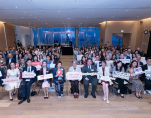


 LinkedIn
 Instagram


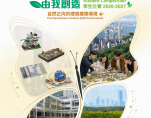


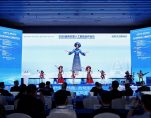








 https://www.facebook.com/TheCarnivalFairSG/









 https://www.youtube.com/user/savehk