News related to
security

The Export-Import Bank of the United States has authorised over $100 million in financing guarantees to support two flagship digital infrastructure projects in Côte d’Ivoire. The package includes a $66 million guarantee for a national data centre and $47 million for technology exports intended to digitalise the Ministry of Commerce and Industry. The deals, approved in August under EXIM’s China and Transformational Exports Program, were formally unveiled […]

HANGZHOU, CHINA – Media OutReach Newswire – 25 September 2025 – From September 25 to 29, Hangzhou, capital city of east China’s Zhejiang Province, will play host to the 4th Global Digital Trade Expo. As the world’s gaze turns to eastern China, the city is using this premier digital trade gathering to paint a vivid picture of the “AI +” era. Official picture of the 4th Global […]

With Singapore as its regional headquarters in APAC and new operations in China, the payments orchestrator is simplifying cross-border commerce for global merchants. Yuno is also announcing the regional availability of NOVA, the company’s first-of-its-kind suite of agentic AI solutions that turn payment friction into growth. SINGAPORE & NEW YORK, US – Media OutReach Newswire – 25 September 2025 – Yuno, the global payment orchestration platform, today […]

The decentralized finance space is undergoing a critical transformation in 2025, ushering in what many observers call “DeFi 3.0.” While the earlier waves of DeFi focused on decentralized exchanges and liquidity incentives, the next generation is centered on permissionless lending, composability, capital efficiency, and real-time adaptation. As platforms such as Euler, Morpho and Hyperliquid gain traction, the shifts promise to reshape how capital moves, how risk is […]

A critical security flaw in NVIDIA’s Merlin Transformers4Rec framework allows threat actors to execute code remotely with root-level access, raising alarm across the AI ecosystem. The vulnerability, tracked as CVE-2025-23298, stems from unsafe deserialization in the model checkpoint loading routine. Attackers exploiting this flaw can submit crafted model files that, when deserialized via Python’s built-in mechanisms, trigger arbitrary command execution within the process’s context. Given that AI […]

Luma Protocol, incubated by PopChain and Nivex, officially entered the market on 20 September 2025, positioning itself as a new architecture in decentralized finance that anchors value in computing power rather than speculative token mechanics. At midday UTC+8 the project launched its pre-sale and, within hours, issued the first mining rewards — signalling a shift from purely token-based incentives toward infrastructure-backed models.

The project’s core proposition is that “Hash Power” — the computational capacity underlying blockchains — becomes a tangible, tradeable asset integrated into DeFi systems. Luma’s model seeks to counterbalance what its promoters describe as the unsustainable cycles of token subsidies that have affected prior generations of DeFi protocols. Underpinning the system, Luma plans to merge capital, computational resource markets, and application layers in a closed-loop infrastructure.

PopChain contributes its identity and settlement capabilities, while Nivex offers liquidity, exchange infrastructure, and compliance support. This strategic alignment aims to deliver an ecosystem where value issuance, transaction execution, and mining resource distribution interlock. According to the announcement, the first mining rewards were disbursed at midnight UTC+8, immediately after launching the pre-sale.

Market reaction to the LUMA token has been volatile. On the MEXC exchange, LUMA traded with a 24-hour jump of 26 per cent, reflecting speculative interest. Yet the token’s 7-day price variance is extremely steep, plunging nearly 99.97 per cent over the week, pointing to high risk and low liquidity stability. The circulating supply and full market capitalisation currently remain opaque.

Critics caution that the concept of tokenizing hash power is not without inherent risk. In the realm of blockchain security, high concentration of mining capacity has historically exposed smaller networks to attacks. The accessibility of mining power through services like NiceHash demonstrates how hash power can be rented and concentrated, creating vulnerability, especially for new entrants. At the same time, mainstream DeFi research underscores systemic risks emerging from leverage, protocol interdependence, and opacity in governance.

Luma’s governance architecture is not fully detailed in public documentation, but the model will need to grapple with decentralised decision-making, hardware centralisation, and incentives for fair participation. Without sufficient safeguards, the protocol may face the same challenges of centralisation, collusion, or exploitability that have troubled other DeFi platforms.

For its part, Nivex has been scaling its ecosystem prior to Luma’s debut. It recently launched a Web3 wallet integrated with PopChain, with plans to embed users into a flow from wallet to liquidity operations to settlement. This vertical integration may benefit Luma by driving demand for the infrastructure stack. Nivex also recently listed the POP/USDT trading pair, anchoring the POP ecosystem that underlies PopChain’s social finance ambitions.

On the supply side, the broader mining industry’s economics are under strain. Electricity, hardware depreciation, and operational costs continue to restrict profitable deployment of hash power. The Cambridge Digital Mining Report underscores that energy cost variance across geographies is a major barrier for expansion. Projects that seek to monetise compute power must navigate this cost differential.


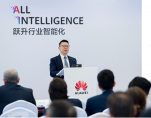
SHANGHAI, CHINA – Media OutReach Newswire – 25 September 2025 – During HUAWEI CONNECT 2025, Huawei released the ISP/MSP Business Success Driven by RAMS White Paper at the summit themed “Powering the ISP/MSP Industry with All Intelligence and Resilience.” The white paper introduces the RAMS framework—ROI, Availability, Maintenance, and Security, aiming to help ISPs and MSPs thrive with AI by transitioning from providing connectivity to offering intelligent […]

Advertisements

Meta has partnered with Circus SE, a leading European AI company, to extend its artificial intelligence capabilities to the defence and security sectors. This collaboration signals Meta’s growing commitment to leverage AI technologies for a range of applications, including military and security operations, aiming to strengthen both European and global defence strategies. Meta, which has been investing heavily in AI over the past few years, is shifting […]

Defence stocks will rally and global investors will be paying attention, I believe. The reason the bullish analysis is a catalyst came the moment President Donald Trump, after meeting Ukraine’s President Volodymyr Zelenskyy at the UN General Assembly, declared that Kyiv can reclaim all territory seized by Russia, an abrupt and market-moving pivot from his earlier calls for compromise. In a single statement, the world’s largest economy […]

A newly disclosed vulnerability allows threat actors to surreptitiously install arbitrary extensions on Chromium-based browsers within Windows domain environments, circumventing typical user alerts and security checks. The technique hinges on manipulating how Chrome and its derivatives store extension settings and validations in preference files. Security researchers demonstrated that by editing specific preference files in a user’s profile, an attacker can mark a malicious extension as a “component” […]

The inaugural Open Source Summit Korea is set to take place in Seoul on 4–5 November, gathering developers, community leaders, corporate adopters and policy advocates under one roof. Organisers expect a high-powered two-day event blending technical deep dives, cross-domain dialogue and community building across open source’s diverse ecosystems. The summit will host seven major tracks: Cloud & Containers, Embedded Linux, Linux, Open AI + Data, Open Source […]

New data centers and service centers designed to enhance infrastructure coverage and stay ahead of global growing demand for AI and Cloud services Full-stack AI and Cloud capabilities fuel innovations withglobalpartners and customers HANGZHOU, CHINA – Media OutReach Newswire – 24 September 2025 – Alibaba Cloud, the digital technology and intelligence backbone of Alibaba Group, today announced its latest strategic plans to launch its first data centers […]

China is pursuing arrangements with allied central banks to store foreign sovereign gold within its territory, aiming to elevate its influence over global bullion holdings. The People’s Bank of China is deploying the Shanghai Gold Exchange as a vehicle to attract sovereign clients to park bullion inside China. At least one Southeast Asian country has expressed interest.

Officials involved say that the proposal involves central banks of “friendly” states buying gold and placing it in warehouses tied to the Shanghai Gold Exchange. This builds on China’s strategy of diversifying reserves and enhancing its status in global bullion markets.

China’s own gold holdings are growing steadily. As of July, its official international reserves included approximately 73.96 million ounces of gold, up from 73.9 million the month before. That marks nine months of continuous growth. At that point gold accounted for about 7% of China’s foreign reserves—well below the global average of around 15%. Analysts said China is likely to continue buying gold while moderately reducing holdings of US Treasuries, both to strengthen the renminbi’s international standing and mitigate exposure to dollar-linked risks.

Gold-buying by China fits into a larger global trend among central banks. Many are raising their allocation to gold as a hedge against geopolitical risks, inflation, and the uncertainty of reliance on major foreign currencies. Market watchers note that China’s moves are consistent with efforts from BRICS countries to build financial infrastructure and reserve mechanisms less dependent on dollar-centred systems.

For China, becoming a custodian for others’ gold reserves would represent a significant shift. It would mean not only controlling its own gold supply but also offering vaulting, storage, and custodial services to foreign sovereign clients. Such an arrangement would involve regulatory, security, and diplomatic considerations—from ensuring physical security of bullion to managing compliance with international rules around audits, transparency, and cross-border transfers.

Questions remain about how much demand exists among sovereigns for such an arrangement. The identity of the Southeast Asian country showing interest has not been confirmed. Some central banks prefer keeping reserves offshore for perceived neutrality or diversification of geographic risk. Others may hesitate due to concerns over sovereignty, geopolitical leverage, or storage fees and logistics.

China’s global gold purchases continue regardless. Observers point to continued accumulation of gold by the People’s Bank of China, a trend seen in the State Administration of Foreign Exchange data. Gold holdings have increased month after month, even as foreign exchange reserves fluctuate.

SpyCloud’s 2025 Identity Exposure Report reveals that 91% of organisations reported suffering an identity-related incident in the last year, nearly double the proportion seen the year before. Data troves comprising stolen credentials, phishing logs, malware infection records and session cookies have expanded dramatically, but many firms remain overconfident in their ability to defend against evolving identity threats. The volume of distinct identity records recaptured by SpyCloud has […]

Arabian Post Staff -Dubai FuriLabs has unveiled the FLX1s, a Linux-based smartphone priced at US$550 that delivers physical kill switches to disable the microphone, cameras, and modem/GPS. The device runs its custom Debian-based operating system, FuriOS, and supports 5G connectivity. The kill switches allow users to cut power to sensitive components: one switch disables the microphone, another blocks both front and rear cameras, and a third severs […]

Aldar Properties has increased its ownership stake in Aldar Estates to 82.55%, acquiring the 17.45% indirect share held by Modon Holding via its wholly-owned subsidiary ADNEC Group. The move solidifies Aldar’s dominance over the region’s largest integrated real-estate service platform.

Aldar Estates, formed through a merger of Aldar, IHC, and ADNEC’s property and facilities management businesses, has seen strong growth since its establishment in 2023. Aldar now holds outright control following the ADNEC-Modon exit.

Under Aldar’s direction, the platform manages roughly 155,000 residential units, and has almost doubled its prime retail and commercial leasable space to two million square metres. Contracts under management are now said to exceed AED 3 billion. These figures reflect ambitious expansion in recurring-income services.

Financially, Aldar Estates delivered revenues of about AED 2.6 billion in 2024, with EBITDA near AED 400 million, forming a growing part of Aldar’s overall strategy to emphasise stable income-streams outside pure property development. Aldar Investment oversees a broader AED 47 billion portfolio of income-generating assets.

Aldar’s Chief Executive of Aldar Investment, Jassem Salah Busaibe, said that the business is well positioned for further scale-up given increasing demand in property, facilities, and community services, along with a rising base of third-party clients. Gordons in landscaping, technical services, security, sustainability consulting and community management have been among the areas where Aldar Estates has expanded its offering.

Abu Dhabi’s Technology Innovation Institute and Nvidia have signed an agreement to establish the Middle East’s first joint laboratory dedicated to artificial intelligence and robotics. The new facility, known as the TII-NVAITC Joint Lab for AI and Robotics, will be located at TII’s headquarters. Its mandate is to push forward next-generation AI models, robotics platforms and humanoid technologies. The lab combines TII’s strength in applied research with […]

Abu Dhabi Securities Exchange has listed the Boreas Solactive Quantum Computing UCITS ETF under the ticker QUANTM, offering investors exposure to 25 companies pioneering quantum computing technologies. This marks the first thematic ETF of its kind on ADX, and joins 16 other ETFs already trading on the platform. The new fund tracks the Solactive Developed Quantum Computing Index, representing firms active in hardware, software & algorithms, and […]

KUALA LUMPUR, MALAYSIA – Media OutReach Newswire – 23 SEPTEMBER 2025 – Webull Malaysia, a subsidiary of Webull Corporation (NASDAQ: BULL), the owner of the Webull trading platform, has launched its nationwide campaign #SamaSamaWebull, aiming to make investing more accessible for Malaysians. The campaign addresses challenges many Malaysians face, including limited financial literacy, complex platforms, and perceived high costs, by offering low-cost and simplified tools that make […]

More than 180 UAE government Chief AI Officers gathered in Washington under the aegis of the US-UAE Business Council to build partnerships with US tech firms and experts, intensifying the country’s drive in AI governance and cybersecurity. The event leveraged sessions with global business leaders and government officials to share expertise in advanced technology, highlighting the AI Chief Executives Model as a catalyst for digital governance reforms.

Engineer Mohamed bin Taliah, Chief of Government Services, underscored that AI adoption across UAE government remains a top priority, anchored in strategic goals to elevate digital governance globally. He asserted that engaging directly with leading technology companies offers vital exposure to best practices, and that empowering local talent via high-level training is essential to establishing an innovative and “smarter” digital future.

Dr Mohamed Al Kuwaiti, heading the Cybersecurity Council for the UAE Government, flagged an increase in complexity and frequency of cyber threats, saying that international cooperation is now non-negotiable. He described protection of critical infrastructure, data privacy, and AI-driven defence as areas requiring urgent collaboration, emphasising building resilience through national expertise and shared knowledge.

Dr Abdulrahman Al Mahmoud of the Artificial Intelligence, Digital Economy, and Remote Work Applications Office explained that the purpose of the visit is to position the UAE as a global node for innovation. He said the delegation’s exchanges aim at unlocking joint innovation opportunities, shaping practical AI solutions, and reinforcing the UAE’s digital transformation strategy.

Participants included leaders from SmartCohort, Dell Technologies, PwC, and organisations like Cisco, Google, IBM, Oracle, Applied AI, Akamai, Core42 and Cloudflare, among others.

By Nantoo Banerjee Few will disagree that India should keep investing substantially in both onshore and offshore oil search as the country is becoming increasingly dependent on the import of petroleum crude to meet its energy needs. Currently, almost 86 percent of India’s annual crude petroleum needs are being met through imports. During his recent […]

The article Higher GST Will Hurt Oil-Starved India’s Exploration Drills appeared first on Latest India news, analysis and reports on IPA Newspack.

Airports across Brussels, London, Berlin and Dublin are working to restore normal flight operations after a cyber-attack on the Muse check-in software operated by Collins Aerospace disrupted check-in, boarding pass and baggage tag services. Brussels remains the worst affected, with cancellations, delays and airport officials warning of further cancellations into Monday. Collins Aerospace, part of RTX Corporation, confirmed its check-in and baggage drop systems have suffered a […]

Abu Dhabi has finalised a major agreement to enforce greater transparency in crypto-asset taxation by signing the Multilateral Competent Authority Agreement under the Crypto-Asset Reporting Framework. The deal mandates automatic exchange of tax-related data on crypto transactions across jurisdictions, aligning the UAE with rising global norms on financial disclosure. The Ministry of Finance confirmed that CARF will start operating in the UAE in 2027, with the first […]

SAP’s global chief executive Christian Klein announced a strategic expansion of cloud infrastructure in New Delhi today, unveiling the launch of SAP Software Cloud in India and urging that cloud computing and artificial intelligence must underpin India’s path towards self-reliance and a digitally fortified economy. He warned that India is on track to generate 10 zettabytes of data by 2025, and stressed that harnessing this data effectively will be critical for national growth.

Addressing an audience of business leaders, technologists, and government representatives, Klein emphasised that mission-critical infrastructure must increasingly rely on sovereign cloud offerings. These are systems where data storage, processing, and control are governed under local legal standards—ensuring both security and regulatory compliance. He added that many organisations will not yet have requirements for sovereign cloud, but sectors such as defence, utilities and others handling classified data are likely to lead adoption.

SAP India’s president and managing director, Manish Prasad, highlighted the firm’s 30-year legacy in the region, and the growing need to make AI “relevant”—not just in proof-of-concepts but in full-scale deployments. He made clear that India must benefit more from its data, not simply generate it. Enhanced capabilities in secure engineering, data sovereignty, and local control of cloud operations are being positioned as foundational elements for India’s next phase of growth.

One major component of SAP’s plan is investment: globally, the company is committing €20 billion by next year toward cloud infrastructure and expansion. India is being treated as a key strategic market for that investment. SAP says it will deliver the “full stack” for cloud solutions—including those with compliance, localised control planes and sovereign cloud services where required.

Klein also underscored that government policy, regulation and innovation capacity must keep pace with technological opportunity. India’s regulatory environment around data sovereignty and digital infrastructure is evolving, and sectors with critical or regulated data will demand clarity and trust in legal and technical frameworks. Without that, investing in sovereign cloud becomes more difficult for those clients.

Digital sovereignty loomed large in SAP’s message. Martin Merz, president of SAP’s sovereign cloud division, said that while physical infrastructure is important, operational, technical and legal dimensions of data sovereignty matter at least as much. He pointed out that SAP has already delivered sovereign cloud services to highly security-sensitive organisations globally, and that India offers “great potential.”

VISHNU RAJA
RYO YAMADA
HITORI GOTOH
IKUYO KITA