News related to
security

Argentina is set to become the first country in South America to install a cryptocurrency ATM, with plans to launch in 2025. The announcement comes at a time when the country is exploring new ways to enhance its digital economy, underscored by a recent partnership with El Salvador, a leader in digital currency adoption. The collaboration between Argentina and El Salvador aims to boost cryptocurrency use and financial innovation in the region.

BitBase, a Spanish cryptocurrency company, will be responsible for the installation of the ATM. The move marks a significant milestone in Argentina’s push towards embracing cryptocurrencies as a legitimate financial instrument, especially amid the country’s ongoing economic challenges. As inflation soars and the national currency struggles, Argentinians have increasingly turned to digital currencies for financial security. BitBase’s ATM will allow users to buy and sell cryptocurrencies like Bitcoin, facilitating easier access to digital assets in a country that has seen rapid growth in crypto adoption.

Argentina’s decision to integrate a crypto ATM into its financial infrastructure is also seen as a response to the evolving global economic landscape. As inflation rates continue to climb, Argentinians have turned to Bitcoin and other cryptocurrencies as a hedge against their volatile local currency. The country has already witnessed a surge in cryptocurrency transactions, and the introduction of the crypto ATM is expected to further fuel this trend, making it more convenient for citizens to access digital currencies.

The partnership with El Salvador is also a critical aspect of this shift towards digital currency adoption. El Salvador, the first country to make Bitcoin legal tender, has experienced a variety of successes and challenges in its efforts to integrate cryptocurrency into its financial system. Argentina’s collaboration with El Salvador aims to leverage their collective experiences, enabling Argentina to accelerate its own adoption of digital currencies while mitigating potential challenges.

The Argentinian government has remained cautious but open to the idea of integrating cryptocurrency into its financial system. While there is no official endorsement of cryptocurrency as a national currency, the government has acknowledged the potential of blockchain technology and digital assets to improve financial inclusion. As part of its economic strategy, Argentina is actively exploring the use of technology to combat financial instability, and cryptocurrency has become an increasingly prominent part of that conversation.

In a nation where access to traditional banking services is limited for many, cryptocurrencies offer an alternative financial system that is not reliant on centralized institutions. The ability to engage with a decentralized financial ecosystem presents an opportunity for the underbanked and those with limited access to traditional financial services. The installation of the crypto ATM is expected to bridge the gap for many Argentinians, providing them with a more direct route to engage with the digital economy.

BitBase’s decision to target Argentina for its first crypto ATM installation outside of Europe demonstrates the growing interest in Latin America as a hub for cryptocurrency adoption. Argentina, with its large population and economic struggles, offers an ideal environment for such initiatives. The region has become a key battleground for cryptocurrency firms, with countries like Brazil, Mexico, and Colombia also taking steps toward increasing cryptocurrency adoption.

While the introduction of crypto ATMs presents opportunities, it also raises concerns about the regulatory environment. Argentina’s government has yet to fully regulate cryptocurrency transactions, and the potential for future legislation remains a point of uncertainty. The Argentine Central Bank has issued warnings about the risks associated with cryptocurrencies, including their volatility and the potential for money laundering and other illicit activities. Despite these concerns, the growing public interest in cryptocurrencies is pushing the government to adopt a more pragmatic approach.

The installation of the crypto ATM in Argentina is expected to open the door for further advancements in the digital economy. This initiative aligns with the broader trend in Latin America, where countries are increasingly seeking to integrate blockchain technology and digital currencies into their financial systems. Argentina’s move is a significant step toward positioning itself as a leader in digital finance in the region.

As for the collaboration with El Salvador, both nations are working to develop a framework that ensures the safe and effective use of cryptocurrencies. The experience of El Salvador, which is currently navigating the complexities of cryptocurrency adoption, will provide Argentina with valuable insights. By learning from the successes and challenges faced by El Salvador, Argentina hopes to build a more robust infrastructure for digital currencies that can serve as a model for other countries in Latin America.

Abu Dhabi National Oil Company (ADNOC) has secured a pivotal 15-year Sales and Purchase Agreement (SPA) with Germany’s EnBW Energie Baden-Württemberg AG for the delivery of Liquefied Natural Gas (LNG) from the Ruwais project. This agreement, valued at over 15 years, marks the transformation of a previous Heads of Agreement (HoA) between both companies into a formal, legally binding contract.

The contract will see the supply of 0.6 million tons of LNG annually, signaling a significant step for both ADNOC and EnBW as they work together on the development and growth of the lower-carbon Ruwais LNG project. This long-term agreement further underscores the UAE’s growing commitment to diversifying energy exports and providing cleaner energy alternatives to global markets.

The Ruwais LNG project, positioned as an essential piece of ADNOC’s energy strategy, seeks to tap into the global LNG market by providing environmentally friendlier solutions. The project’s focus on carbon reduction is aligned with ADNOC’s broader sustainability goals and its drive to balance its role in global energy markets with commitments to lower carbon emissions.

As one of the first major deals to materialize under ADNOC’s expanded LNG export strategy, this SPA positions ADNOC as a crucial player in the global LNG market. The deal also underscores the UAE’s robust energy diplomacy, aligning closely with the country’s energy diversification objectives.

EnBW, a key German utility company, has seen its investment in the Ruwais LNG project as a vital step toward enhancing energy security in Europe while also meeting the increasing demand for cleaner energy sources. EnBW has long been an advocate of low-carbon energy solutions and sees this partnership as an essential addition to its LNG procurement strategy, marking a significant alignment between European energy needs and Middle Eastern resources.

The agreement comes amid heightened global interest in securing clean energy sources, with Europe especially focused on reducing dependence on traditional, carbon-intensive fuels. With this deal, EnBW solidifies its place in the strategic LNG supply chain and boosts its reputation as a responsible energy provider. Meanwhile, ADNOC continues to leverage its vast energy resources to foster long-term partnerships with key international players.

This milestone deal follows a series of strategic efforts by ADNOC to capitalize on its extensive infrastructure and supply capabilities in order to meet global energy demands while maintaining an eye on sustainability. The Ruwais LNG project, designed to produce lower-carbon LNG, is part of ADNOC’s broader vision to reduce carbon emissions from its natural gas and liquefied natural gas sectors. The project aligns with the company’s goal of contributing positively to the global transition towards cleaner energy, making ADNOC a more attractive partner for global investors looking to reduce the environmental impact of their energy consumption.

For ADNOC, the deal is part of a broader push to enhance its portfolio and expand its presence in global energy markets. The UAE has long been a key energy exporter, and this deal represents another step in ADNOC’s strategic expansion plans. The company continues to focus on providing low-carbon energy solutions, driven by both market demands and a global push for environmental responsibility.

The terms of the deal also underscore ADNOC’s ability to meet growing demand for LNG while ensuring a steady supply of energy to European markets, particularly during times of supply uncertainty. The UAE’s strategic location and its robust infrastructure make it an ideal hub for such critical energy partnerships. The deal also reflects the UAE’s ongoing efforts to strengthen its ties with global markets, enhancing energy security and fostering more sustainable energy practices worldwide.

Meanwhile, for EnBW, this deal with ADNOC is an important part of its strategic push to secure long-term, stable LNG supplies. Europe’s energy market is facing substantial challenges in the wake of the global energy crisis, and EnBW is taking proactive steps to secure the necessary energy resources to meet future demand. The partnership with ADNOC is expected to bolster EnBW’s energy mix, ensuring that the utility company can maintain a balance of secure and sustainable energy sources for its customers.

With an increasing emphasis on lowering carbon footprints across industries, both ADNOC and EnBW are positioning themselves as leaders in the shift toward cleaner energy. The move comes at a time when many global companies are seeking more environmentally responsible energy sources to comply with stringent emission reduction targets set by governments and international organizations. The deal represents a significant contribution to the global LNG market, and as the project progresses, both companies are expected to explore further opportunities for collaboration in areas related to renewable energy and emission reduction technologies.

BANGKOK, THAILAND – Media OutReach Newswire – 17 December 2024 – The ACES Awards 2024 spotlighted Malaysia’s remarkable strides in sustainability, innovation, and community empowerment, placing the nation firmly at the forefront of Asia’s evolving business landscape. With 110 Malaysian nominations among 682 entries from 17 countries—and ultimately 250 finalists—this year’s awards showcase the country’s growing influence, diversity, and drive toward responsible progress. Recognising Leadership Excellence: 59 […]

HO CHI MINH CITY, VIETNAM – Media OutReach Newswire – 16 December 2024 – Visa, a global leader in digital payments, convened the Digital Future Forum 2024 in Hanoi, showcasing the latest payment trends and innovations shaping Vietnam’s digital landscape. This forum, part of Visa’s annual client appreciation event, underscored Visa’s commitment to driving Vietnam’s digital transformation, with a focus on AI’s role in enhancing security and […]

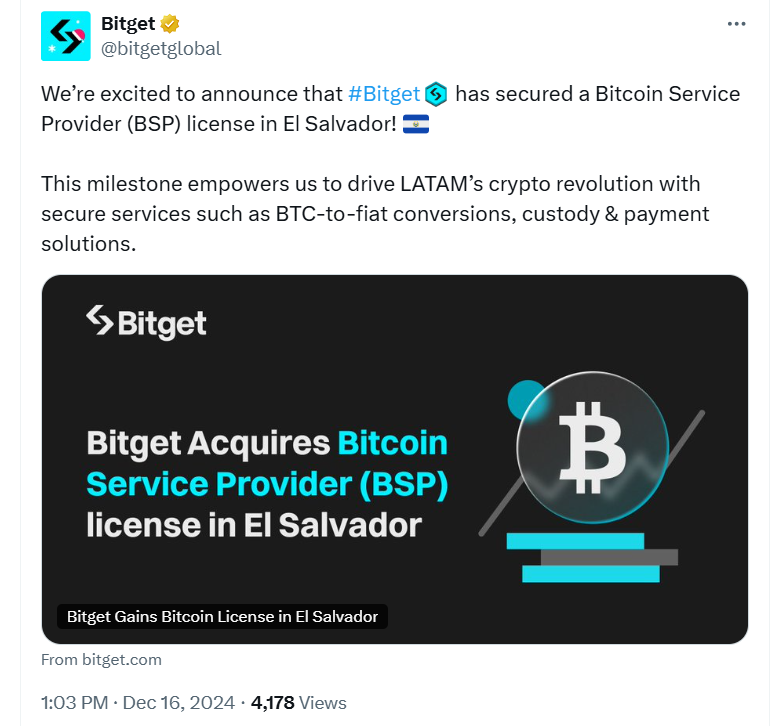
Bitget has received the coveted Bitcoin Service Provider (BSP) license from El Salvador’s Central Reserve Bank, marking a significant step in its global expansion strategy. This authorization allows the platform to offer a range of Bitcoin-related services, including exchanges, payments, and custody solutions, in the Central American nation known for its embrace of cryptocurrency.

The license represents a notable achievement for Bitget, signaling its commitment to adhering to regulatory frameworks in its pursuit of a stronger foothold in Latin America. El Salvador, which made Bitcoin legal tender in 2021, has positioned itself as a hub for crypto innovation, drawing interest from international players eager to tap into its growing digital economy.

Bitget’s decision to prioritize regulatory compliance aligns with its broader mission to establish trust and credibility in the global crypto space. By securing this license, the platform gains access to a burgeoning market while demonstrating its capability to meet the rigorous standards set by El Salvador’s financial authorities. This development underscores the firm’s ambition to build a robust presence in the region, leveraging the country’s pro-Bitcoin stance as a springboard for further growth.

El Salvador’s adoption of Bitcoin as legal tender has attracted significant attention, both for its groundbreaking approach and the challenges associated with integrating digital assets into a traditional economy. The move has created opportunities for companies like Bitget to introduce innovative solutions tailored to the unique needs of the Salvadoran market. By offering services such as secure custodial options and seamless payment integrations, Bitget aims to contribute to the local crypto ecosystem’s development while addressing concerns around security and accessibility.

Bitget’s license acquisition comes at a time when Latin America is experiencing an uptick in cryptocurrency adoption, driven by economic instability, high inflation rates, and limited access to traditional banking services. In this context, Bitcoin and other digital assets are increasingly seen as viable alternatives for financial inclusion. The platform’s expansion into El Salvador is expected to capitalize on these trends, providing users with reliable and regulated avenues for engaging with digital currencies.

Beyond its operations in El Salvador, Bitget has indicated plans to deepen its engagement with the wider Latin American region. Countries such as Brazil, Argentina, and Colombia have shown growing interest in blockchain technology, creating a fertile ground for companies looking to expand their footprint. By obtaining regulatory approvals and investing in localized solutions, Bitget aims to position itself as a leader in the regional crypto market.

El Salvador’s proactive stance on Bitcoin regulation has set it apart from many other nations, where digital assets remain subject to varying degrees of scrutiny and uncertainty. The BSP license issued to Bitget highlights the government’s willingness to work with private sector entities in fostering a dynamic and well-regulated crypto environment. This approach not only enhances the appeal of the Salvadoran market but also sets a precedent for other countries seeking to balance innovation with regulatory oversight.

As part of its expansion strategy, Bitget plans to introduce educational initiatives aimed at increasing awareness and understanding of cryptocurrencies among Salvadorans. These efforts are expected to complement the government’s existing programs and facilitate broader adoption of digital assets across diverse demographics. The company’s emphasis on education reflects its recognition of the need to address skepticism and build confidence among users new to the crypto space.

Bitget’s move also reflects broader industry trends, as major crypto firms increasingly seek to align with regulatory frameworks to ensure long-term sustainability. The BSP license not only enhances Bitget’s credibility but also serves as a testament to its operational rigor and strategic vision. By adhering to the highest standards of compliance, the platform positions itself to attract a diverse user base while mitigating risks associated with the volatile nature of the cryptocurrency market.

The crypto industry, while growing rapidly, remains a highly competitive field where job opportunities are often limited relative to the number of aspiring candidates. Despite a surge in cryptocurrency and blockchain-related innovations, many still struggle to land full-time roles due to the industry’s relatively small size compared to more established sectors.

To succeed in this competitive environment, candidates need to go beyond possessing the right knowledge, skills, and enthusiasm. Preparation and organization are paramount in securing a crypto job. Aspiring crypto professionals must focus on understanding the fundamental concepts of cryptocurrencies and blockchain technology, staying informed about trends such as decentralized finance (DeFi) and emerging blockchain platforms.

Building specialized skills, such as proficiency in blockchain programming languages (Solidity, Python), smart contract development, and cybersecurity, is also crucial. Industry certifications, like Certified Blockchain Developer (CBD), can boost a candidate’s credentials, enhancing their attractiveness to employersking plays a significant role in the crypto industry. Engaging in crypto communities, attending industry events, and participating in hackathons are ways to expand one’s professional network. This not only opens up job opportunities but also provides a platform to showcase one’s skills and gain practical experience. For example, contributing to open-source projects or building a personal portfolio can demonstrate expertise and enthusiasm to potential employers .

With rms and social media channels acting as critical gateways to job opportunities, candidates need to customize their resumes and cover letters for each application. Researching the company and understanding its products, services, and recent developments is essential to show genuine interest during interviews. This effort can set candidates apart in a crowded job market where everyone else may have similar technical skills.

Libya’s Zawiya Refinery has come to a standstill after the declaration of force majeure, compounding the nation’s already fragile economic landscape. The move has disrupted operations at the key facility, which is crucial for the country’s domestic fuel supply and its oil export revenues. As the impact of the refinery’s shutdown reverberates, concerns are rising over how long Libya can weather these economic shocks. Located on the […]

Advertisements

The consolidation trend among Islamic banks in the EMEA (Europe, Middle East, and Africa) region is poised to continue into 2025, according to Fitch Ratings. The consolidation, driven by the need for increased scale, enhanced profitability, and improved operational efficiency, is seen as a necessary response to the challenges posed by the ongoing economic and regulatory changes across the region. While the process has been gradual, experts predict that a more significant shift will take place in the coming year.

The Islamic banking sector, with its distinct set of regulations and operations, is under growing pressure to adapt to the evolving financial landscape. As regional economies grapple with uncertainty caused by factors such as geopolitical tensions, fluctuating oil prices, and the impact of digital disruption, banks are increasingly seeking mergers and acquisitions (M&A) as a means to strengthen their market position. The potential for cost synergies, coupled with the increasing importance of technology-driven innovation, has made consolidation an attractive option.

One of the primary factors driving this trend is the growing need for Islamic banks to enhance their capital bases. This is particularly critical in the face of stricter regulatory requirements and increased competition from both conventional and non-bank financial institutions. Many Islamic banks in the region have faced challenges in maintaining their profitability and meeting regulatory capital adequacy standards. A merger or acquisition often presents an effective way to increase the capital base and spread risks, which is crucial for long-term sustainability.

In addition to regulatory pressures, Islamic banks in EMEA are responding to shifts in consumer behavior. Increasingly tech-savvy customers are demanding more digital services, and Islamic banks are finding it challenging to match these expectations with traditional banking models. The need to invest in technology, digital banking infrastructure, and cybersecurity has created additional financial strain on smaller banks. Larger institutions, on the other hand, can leverage their scale to absorb such costs more efficiently. This has led many smaller Islamic banks to explore consolidation options as a way to remain competitive and relevant in the market.

The Middle East, in particular, has been at the forefront of this consolidation. Banks in the UAE, Saudi Arabia, and Qatar have already seen several high-profile mergers in the past few years. The consolidation trend is not only focused on strengthening local banks but is also a part of broader efforts to increase the global competitiveness of Islamic financial institutions. The rise of fintech in the Islamic finance sector has further accelerated the need for banks to collaborate or merge, aiming to modernize their services and better serve a younger, more tech-oriented clientele.

Fitch Ratings highlights that consolidation could be more pronounced among smaller institutions that are struggling to keep pace with the technological advancements and regulatory demands. These smaller banks, while historically focused on niche markets, will likely face increasing pressure to align with larger, more diversified institutions or explore mergers to survive. In many cases, the market is witnessing banks combining to pool their resources and expand their geographic footprint, a move that will allow them to offer a wider array of products and services while capitalizing on economies of scale.

Regional governments, too, are playing a role in facilitating this consolidation. Several governments in the EMEA region are actively encouraging M&A activities as part of their broader economic diversification plans. By creating a more robust and competitive Islamic finance sector, they aim to bolster their financial markets and attract more global investment. Additionally, regulatory changes, such as the implementation of Basel III standards, have made it more difficult for smaller institutions to operate independently. As such, the continued consolidation trend is seen as both an economic and regulatory necessity.

As the year 2025 approaches, experts predict that the landscape for Islamic banking in the EMEA region will become even more concentrated. Larger, more technologically advanced banks will increasingly dominate the market, while smaller players may find it difficult to compete without partnering with others or being absorbed into bigger institutions. This shift will have significant implications not only for the banks involved but also for consumers and investors alike, who may see a broader range of services and greater operational efficiencies emerge from these mergers.

Despite the potential challenges, there is optimism about the future of Islamic banking in the region. While consolidation will lead to fewer players in the market, the remaining institutions will be better positioned to meet the demands of a changing financial environment. As Islamic banks continue to focus on digital transformation, enhanced capital adequacy, and cross-border expansion, the sector is expected to become more resilient and globally competitive.

XRP has drawn renewed focus in the cryptocurrency market as on-chain data reveals substantial outflows of the token from major exchanges. Market analysts and blockchain trackers indicate that $300 million worth of XRP has been withdrawn, fueling speculation of accumulation by whales and institutional investors. This development arrives amid an extended phase of price consolidation for XRP, sparking discussions on its potential trajectory.

According to data from Coinglass, the significant outflows over the past week indicate a strategic shift by high-net-worth investors, who appear to be betting on the token’s future. The movement of such a considerable volume suggests confidence in XRP’s long-term potential despite broader market uncertainties. Observers highlight that such patterns of withdrawal often correlate with accumulation, as holders transfer their tokens to private wallets to prepare for anticipated price surges.

The timing of these transactions is notable, as XRP has demonstrated resilience following regulatory clarity in its ongoing legal battle with the United States Securities and Exchange Commission (SEC). The partial victory Ripple Labs achieved earlier this year, where XRP was deemed not to be a security when sold on secondary markets, has bolstered investor sentiment and rekindled interest in the asset.

XRP’s price has remained relatively stable, hovering within a tight range between $0.50 and $0.55. Analysts attribute this to broader market conditions and the lack of a significant catalyst in the crypto space. However, the scale of the $300 million outflows has prompted speculation that larger players could be positioning themselves for a breakout. Whale Alert, a blockchain tracker, recorded multiple transactions of XRP worth millions, adding weight to the idea that this activity is a precursor to strategic market movements.

Beyond these transactions, Ripple Labs has been advancing its efforts to expand XRP’s utility. The company has been actively pursuing partnerships with financial institutions globally, emphasizing cross-border payment solutions. Such initiatives aim to solidify XRP’s role as a preferred digital asset for seamless, low-cost transactions, a factor that experts believe could drive demand over time.

The cryptocurrency market has witnessed increased volatility in recent months, with fluctuating macroeconomic indicators and shifting investor sentiment impacting digital asset prices. While Bitcoin and Ethereum continue to dominate trading volumes, altcoins like XRP are gaining traction, especially among those seeking diversification in their crypto portfolios.

Analysts caution, however, that market dynamics remain uncertain. Although the $300 million outflows hint at positive sentiment, they do not guarantee immediate price action. Factors such as liquidity, macroeconomic conditions, and regulatory developments will play critical roles in shaping XRP’s near-term prospects. Some experts suggest that retail investors should carefully monitor market trends and avoid being swayed solely by whale activity.

On the regulatory front, Ripple’s legal entanglements continue to weigh on its ecosystem. Despite the partial victory in its case against the SEC, the broader question of XRP’s status under U.S. securities law remains unresolved. A final decision in the matter, expected in the coming months, could serve as a pivotal moment for the token, potentially influencing its adoption and price.

In addition to its legal battles, Ripple Labs is preparing for a new phase of innovation. Its recent announcements about leveraging XRP for real-world applications, including tokenized assets and central bank digital currency (CBDC) pilots, reflect the firm’s ambition to remain at the forefront of blockchain technology. This approach aligns with the growing demand for decentralized financial solutions, which many see as a transformative force in the global financial system.

Market participants are also paying close attention to XRP’s performance against broader altcoin indices. Some argue that the consolidation phase, coupled with heightened whale activity, presents a favorable entry point for long-term investors. However, the inherent volatility of cryptocurrency markets suggests that any investment carries significant risks.

SINGAPORE – Media OutReach Newswire – 16 December 2024 – The Financial Independence, Retire Early (F.I.R.E.) movement continues to gain momentum worldwide, and Singapore is no exception. More and more Singaporeans are being drawn to the idea of achieving early retirement and financial independence. While the allure of escaping traditional work structures and enjoying life on one’s own terms is undeniable, experts caution that the pursuit of […]

HANOI, VIETNAM – Media OutReach Newswire – 11 December 2024 – On December 10, 2024, Eximbank proudly joined hands with Visa to officially launch the Visa Direct service, a transformative step in redefining cross-border financial transactions. Held at Eximbank’s Head Office, this prestigious event brought together Eximbank’s leadership, Visa representatives, and distinguished guests to celebrate this innovative milestone. Visa Direct offers an exceptional opportunity for Eximbank customers, […]

State-owned Saudi Electricity Co. has secured a significant $3.6 billion internationally syndicated credit facility. This financing is designed for general corporate purposes, marking a major financial milestone for the utility company. The credit facility spans five years with the added flexibility of two one-year extension options, ensuring that the company has a robust financial buffer for its future operations and growth.

The financing deal is being provided by a group of 13 banks, including several leading international financial institutions. The consortium includes the Industrial and Commercial Bank of China (ICBC), Bank of China, Agricultural Bank of China, Bank of Communications, and China Construction Bank, alongside prominent regional banks such as KfW IPEX Bank, State Bank of India, and First Abu Dhabi Bank. The deal also involves Abu Dhabi Commercial Bank, Abu Dhabi Islamic Bank, Boubyan Bank, Dubai Islamic Bank, and Saudi Investment Bank.

This syndicate brings together a diverse mix of global and regional financial powerhouses, reinforcing Saudi Electricity Co.’s credibility and appeal in the global market. It highlights the strong international trust in the company’s ability to meet its financial obligations. The financing agreement is seen as an essential move to strengthen the company’s operational capacity and support its expansion initiatives across Saudi Arabia’s rapidly developing energy sector.

Saudi Electricity Co. is the primary electricity provider in the Kingdom of Saudi Arabia, playing a critical role in supporting the nation’s growing demand for power. The company is involved in the generation, transmission, and distribution of electricity, with a wide-reaching infrastructure that covers both urban and rural areas. As part of the Saudi government’s Vision 2030, the company is expected to continue investing in its infrastructure to support the kingdom’s growing energy needs, driven by both population growth and industrial development.

The newly secured syndicated credit facility is part of Saudi Electricity Co.’s strategy to diversify its funding sources and enhance its financial stability in the face of ongoing energy sector reforms. With Saudi Arabia pushing forward with ambitious diversification plans under Vision 2030, the demand for electricity continues to rise, creating further pressure on the country’s energy utilities to expand and modernize their infrastructure.

The five-year tenor of the loan, with the potential for two one-year extensions, provides Saudi Electricity Co. with a long-term financial cushion to undertake projects that will modernize and expand its power generation and distribution systems. It also aligns with the company’s ongoing efforts to increase the efficiency of its operations and integrate renewable energy sources into its grid. The company is exploring a range of technologies to boost its renewable energy capacity, aligning with the country’s broader sustainability goals.

The consortium of banks involved in this deal underscores the strong ties between Saudi Arabia and key global financial institutions, particularly those from China and the Gulf region. China has emerged as one of the major international partners for Saudi Arabia, with a growing interest in the country’s infrastructure and energy sectors. This trend is likely to continue as the two countries strengthen their economic and political relationships, driven by mutual interests in energy security and economic diversification.

The involvement of regional banks such as First Abu Dhabi Bank and Dubai Islamic Bank also highlights the ongoing collaboration between Saudi Arabia and the UAE. The UAE has been an active participant in the broader Gulf region’s energy sector, with many of its financial institutions looking to expand their presence in Saudi Arabia’s burgeoning energy market.

The loan facility also comes at a time when Saudi Electricity Co. is looking to improve its financial profile. While the company has historically relied on state-backed financing, this syndicated loan deal represents a step towards accessing global capital markets. The participation of a diverse array of international and regional banks suggests that Saudi Electricity Co. is becoming more integrated into the global financial ecosystem, reflecting its evolving role in the Kingdom’s energy transition.

This syndicated loan is expected to help Saudi Electricity Co. fulfill its mission of modernizing and expanding its infrastructure to meet growing electricity demands. It will also bolster its ability to integrate clean and renewable energy sources into the grid, supporting the broader goal of reducing the country’s carbon footprint and advancing sustainability efforts.

The move is also part of Saudi Electricity Co.’s long-term strategy to maintain financial flexibility and reduce its reliance on government support. By securing funding from a range of international and local financial institutions, the company is positioning itself for future growth, both in the domestic and regional energy markets. The successful closure of this facility also serves as an endorsement of the company’s financial health and strategic direction, providing it with the resources needed to maintain its pivotal role in the energy sector.

The United Arab Emirates has revealed a lineup of dazzling locations for New Year’s Eve fireworks, promising residents and visitors a spectacular celebration to ring in 2025. With world-famous landmarks and breathtaking displays, the festivities aim to showcase the country’s grandeur and hospitality while offering diverse experiences for everyone.

Dubai, renowned for its extravagant celebrations, will feature Burj Khalifa as the centerpiece of its New Year’s Eve festivities. The iconic skyscraper will host a stunning nine-minute show featuring synchronized light beams, original music, and an intricate fireworks display. This world-famous attraction is expected to draw thousands to Downtown Dubai, where the experience is enhanced by the surrounding fountains and vibrant nightlife. Meanwhile, the historic district of Al Seef offers an alternative experience, where the fusion of traditional architecture and modern pyrotechnics creates a unique cultural ambiance.

Atlantis, The Palm, another star venue in Dubai, will treat guests to an unforgettable night combining fireworks and a live performance by international artist Lionel Richie. Guests at the luxurious resort will have exclusive vantage points from its waterfront and restaurants, ensuring an opulent setting to welcome the new year.

In Abu Dhabi, the capital city offers equally impressive celebrations. The Corniche, a picturesque eight-kilometer-long promenade, is expected to attract large crowds with its vivid fireworks display, lighting up the waterfront against the city’s skyline. Yas Island, home to theme parks, hotels, and entertainment venues, will also host stunning pyrotechnics, best enjoyed from Yas Bay Waterfront, Yas Marina, or Yas Beach.

The broader UAE features additional sites ensuring the celebrations reach every corner of the nation. Sharjah’s Al Majaz Waterfront will deliver a family-friendly atmosphere with spectacular fireworks illuminating its scenic lagoon. Ras Al Khaimah continues to carve its place as a record-breaking destination for pyrotechnics, promising jaw-dropping displays set against the backdrop of its mountains and coastline.

As the clock approaches midnight, each location offers a distinctive charm, from the bustling urban settings of Dubai to the tranquil and cultural vibes of Al Seef and the family-oriented atmosphere of Yas Island. The UAE’s preparation highlights its commitment to providing world-class entertainment and attracting global attention during the festive season.

Authorities have urged attendees to plan ahead, given the large crowds expected at prime locations. Public transport services are being expanded, and organizers are ensuring ample parking and accessibility at key sites to facilitate smooth celebrations. With safety and enjoyment as top priorities, security measures and crowd management protocols are set to enhance the overall experience.

A proposed law in New York City aimed at regulating electric bikes has ignited significant debate, with critics arguing that it unfairly targets marginalized communities while failing to address the larger issue of road safety. The legislation, which would impose stricter regulations on e-bikes, is being touted by some as a necessary step to reduce accidents involving these vehicles. However, many activists and community leaders have raised […]

The Linux Foundation has launched LF India, aiming to propel open source development across the country, focusing on key technological domains such as cloud computing, artificial intelligence (AI), the Internet of Things (IoT), and blockchain. This initiative aims to empower both developers and startups, providing the necessary infrastructure and support to build scalable, secure, and innovative open-source solutions. LF India reflects the growing importance of open-source technologies in India’s expanding digital ecosystem, emphasizing community-driven progress and collaboration.

LF India, established in partnership with several prominent tech companies, seeks to foster collaboration between global and local developers. The initiative is part of the Linux Foundation’s broader strategy to advance open-source innovation by creating a robust ecosystem that encourages sustainable development. By focusing on emerging technologies like AI, blockchain, and IoT, LF India aims to address key challenges and opportunities in sectors such as healthcare, finance, and education.

Open-source technologies have been rapidly transforming industries worldwide. With the launch of LF India, the Foundation aims to further accelerate this transformation within the Indian tech space. Open-source software offers significant advantages, including cost efficiency, flexibility, and security, which are particularly relevant in a fast-evolving market. As part of this initiative, LF India will provide resources and mentorship to Indian startups, fostering an environment conducive to innovation and scaling.

A key focus of LF India will be cloud-native technologies, which are integral to the future of computing and application development. Cloud-native frameworks and tools, powered by Kubernetes and containerization technologies, have gained traction across industries for their scalability and efficiency. By equipping local developers with the right tools and best practices, LF India intends to make India a leader in cloud-native open-source innovation.

The Foundation is keen to establish a stronger presence in AI and blockchain, two areas seeing rapid advancements globally. The increasing interest in AI-driven applications, particularly generative AI, highlights the demand for open-source frameworks that allow greater accessibility and customization. Blockchain, on the other hand, is transforming industries like finance and supply chain management, and LF India plans to support projects aimed at solving scalability and security issues within blockchain ecosystems.

India, with its large and growing tech community, is a perfect location for LF India’s new push. The country has seen a surge in tech startups and is already home to a vibrant developer community that has contributed to various open-source projects over the years. The local tech ecosystem has benefited from collaborations between global tech giants and local innovators, with the Linux Foundation now poised to take these efforts to the next level.

LF India is expected to serve as a hub for knowledge-sharing and collaboration, hosting conferences, hackathons, and other community-building events. These activities will allow developers and companies to stay at the forefront of technological advancements and best practices in the open-source domain. By bringing together key players from the industry, the Foundation aims to create a unified platform for developing solutions that are both innovative and sustainable.

The Linux Foundation’s investment in India also aligns with the country’s broader goals of digital transformation and tech-driven growth. As the Indian government continues to push for a “Digital India,” open-source solutions play a crucial role in enabling accessibility, inclusivity, and scalability across various sectors. LF India will not only support startups and developers but also collaborate with government bodies and educational institutions to help build a stronger foundation for the country’s digital future.

LF India’s focus on nurturing the startup ecosystem is significant. The Foundation recognizes that startups are often the birthplace of disruptive technologies. By providing them with access to open-source resources, technical support, and collaboration opportunities, LF India aims to create a fertile ground for the next generation of tech innovators. This effort is expected to help address some of the common challenges faced by startups, such as limited access to enterprise-grade infrastructure and high costs associated with proprietary technologies.

As India continues to position itself as a global tech hub, LF India’s launch marks a significant step forward in its ambitions. The country’s tech industry has already made substantial strides in areas such as software development, app-based solutions, and IT services. With LF India now playing a pivotal role in fostering open-source innovation, India could become a leader in the global open-source movement.

Byte Federal, a prominent Bitcoin ATM network in the United States, has disclosed a security breach that compromised the personal data of 58,000 customers. The company revealed the incident after identifying unauthorized access to its systems, which reportedly led to the exposure of sensitive user information, including names, email addresses, and transaction details.

The breach has raised concerns about cybersecurity measures in the cryptocurrency sector. Byte Federal, known for operating over 1,000 Bitcoin ATMs across more than 40 states, has positioned itself as a major player in the digital asset ecosystem, facilitating cryptocurrency transactions for thousands of users daily. This incident underscores the vulnerabilities even in established networks within the fintech space.

Byte Federal’s systems were reportedly targeted in a sophisticated cyberattack, exploiting vulnerabilities in its data storage infrastructure. While the company has not confirmed whether financial information, such as bank account or credit card details, was accessed, it has assured customers that immediate steps were taken to address the breach and secure its systems. Additionally, Byte Federal is cooperating with law enforcement agencies and third-party cybersecurity firms to investigate the breach thoroughly and prevent future incidents.

This data breach follows Byte Federal’s expansion of its service offerings, including the integration of the Bitcoin Lightning Network, which enables faster and more cost-efficient transactions. The company’s focus on innovation has drawn significant attention, but this breach may lead to heightened scrutiny over its cybersecurity protocols. Industry experts have noted that companies in the cryptocurrency domain must balance innovation with robust security measures to protect user data.

Affected customers are being notified individually and advised to monitor their accounts for any unauthorized activity. Byte Federal has also recommended users to reset their passwords and adopt additional security measures, such as enabling two-factor authentication, to safeguard their accounts. The company is offering complimentary identity theft protection services to those impacted by the breach.

The incident has prompted discussions about regulatory oversight and the need for stricter cybersecurity compliance in the fintech and cryptocurrency sectors. Analysts argue that the growing adoption of digital assets necessitates a parallel emphasis on security standards to protect consumers and maintain trust in the ecosystem. This breach serves as a stark reminder of the challenges faced by firms operating in an increasingly digital financial landscape.

Dubai Electricity and Water Authority (DEWA) has forged a strategic partnership with the Electric Power Research Institute (EPRI), aiming to accelerate the shift towards renewable energy. This collaboration aligns with DEWA’s long-term goal to enhance energy sustainability and address the evolving global energy challenges. By joining forces, both organizations seek to leverage cutting-edge technologies and drive forward Dubai’s ambitious clean energy agenda.

The agreement between DEWA and EPRI will focus on various aspects of the energy transition, including grid modernization, renewable energy adoption, and advanced energy storage solutions. With EPRI’s extensive research capabilities and DEWA’s robust infrastructure, the two entities plan to create a framework for knowledge exchange, joint projects, and innovation. The partnership is poised to play a pivotal role in the development and implementation of modern energy technologies, helping to shape the future of energy in Dubai and beyond.

As part of the collaboration, the two organizations will engage in training and development programs aimed at equipping professionals with the skills needed to navigate the challenges of the energy sector. These training initiatives will cover a range of topics, including energy efficiency, clean power generation, and grid resilience. This aspect of the partnership underscores the importance of developing human capital to support the energy transformation process.

DEWA has made significant strides in transitioning towards a more sustainable energy mix, with projects such as the Mohammed bin Rashid Al Maktoum Solar Park serving as flagship examples. The solar park, which is one of the largest in the world, has been a critical part of Dubai’s strategy to reduce carbon emissions and meet its renewable energy targets. By expanding its renewable energy portfolio and collaborating with global leaders like EPRI, DEWA is reinforcing its position as a leader in the Middle East’s energy sector.

EPRI, a US-based non-profit organization, brings decades of expertise in power systems, energy generation, and environmental sustainability. The institute works with utilities, governments, and other stakeholders worldwide to research and develop solutions for the energy industry. EPRI’s contribution to the collaboration with DEWA will be instrumental in driving innovations in smart grid technologies, energy storage systems, and the integration of renewable energy sources into the existing power infrastructure.

The collaboration is timely, as global energy systems are undergoing profound changes. Governments and organizations worldwide are facing the dual challenge of increasing energy demand while reducing environmental impact. In Dubai, DEWA’s leadership in renewable energy is essential for meeting the emirate’s energy goals, which include generating 50% of its power from clean sources by 2050. To achieve these targets, the emirate is focusing on solar, wind, and other renewable technologies, alongside improvements in energy efficiency and grid management.

Energy storage is one area that will benefit from the DEWA-EPRI collaboration. As renewable energy sources like solar and wind are intermittent, energy storage solutions are crucial for ensuring a stable and reliable power supply. The partnership will explore innovative energy storage technologies to better manage fluctuations in energy generation, enabling DEWA to enhance grid stability and reduce reliance on fossil fuels.

The focus on grid modernization will be vital as Dubai looks to incorporate a larger share of renewable energy into its power mix. Modernizing the grid involves upgrading infrastructure to handle decentralized and variable energy sources. This is particularly important as more renewable energy is generated locally through distributed systems, such as solar panels on buildings. Advanced grid technologies, such as smart meters and automation, will help integrate renewable energy more effectively while maintaining reliability and minimizing energy losses.

DEWA’s collaboration with EPRI also underscores the growing importance of international partnerships in addressing global energy challenges. As nations worldwide aim to meet climate goals set under international agreements such as the Paris Agreement, sharing knowledge and expertise becomes crucial. By working with EPRI, DEWA taps into a global network of energy innovators, ensuring that its energy transition strategies are informed by the latest research and best practices.

Dubai’s clean energy push is part of a broader trend across the region, where energy producers are increasingly embracing sustainable practices. The UAE has made significant investments in renewable energy projects, such as the Barakah nuclear power plant and the Noor Abu Dhabi solar plant. These efforts are not only aimed at reducing the country’s carbon footprint but also at diversifying its energy sources and enhancing energy security.

The DEWA-EPRI partnership also highlights the critical role of technological innovation in the energy sector. The growing adoption of digital tools and advanced analytics is transforming how utilities manage energy systems. Artificial intelligence, big data, and machine learning are becoming essential in optimizing grid performance and predicting energy demand patterns. These technologies will play a central role in the collaboration, helping to improve the efficiency and flexibility of Dubai’s energy infrastructure.

Another key area of focus for DEWA is enhancing energy efficiency across various sectors, including transportation and buildings. The collaboration with EPRI will explore how advanced technologies can be applied to optimize energy use in these areas, helping to reduce consumption and lower costs. Additionally, the partnership aims to promote the integration of electric vehicles (EVs) into Dubai’s transport network, providing a sustainable alternative to traditional fuel-powered vehicles.

Base, a layer-2 blockchain solution built atop Ethereum, has garnered significant attention due to its robust growth in 2024, securing $2.7 billion in net inflows year-to-date. The surge marks a pivotal moment for the project, reflecting strong investor confidence and the growing appeal of scaling solutions within the crypto ecosystem. In stark contrast, Ethereum itself, despite its dominance in the space, experienced a record $7.4 billion in net outflows over the same period, signaling a shift in investor sentiment away from the original Ethereum blockchain toward alternative platforms like Base.

The disparity in inflows and outflows has drawn attention from market analysts, particularly because both assets are intrinsically linked. Base’s success hinges on the Ethereum blockchain for security, but its tailored scalability and lower transaction costs have attracted considerable investment. Ethereum’s outflows are largely attributed to concerns over its scalability issues, particularly its high transaction fees and network congestion that have persisted despite ongoing updates.

The ongoing battle between layer-1 and layer-2 solutions illustrates a broader trend in blockchain development. Layer-2 solutions like Base aim to alleviate the scalability challenges faced by Ethereum by processing transactions off-chain while leveraging Ethereum’s security. This model has proven to be appealing to decentralized application developers and users who seek lower fees and faster transactions. Investors are increasingly recognizing these advantages, which has driven the substantial inflows into Base.

One of the key factors driving Base’s success has been its integration with Optimism, a layer-2 network that employs Optimistic Rollups. This technology allows transactions to be processed in batches, enhancing speed and efficiency while reducing costs. Optimism’s established track record, combined with the robust infrastructure of Base, has resulted in a growing number of decentralized finance (DeFi) protocols migrating to this ecosystem. These protocols are increasingly shifting their focus to Base, buoyed by its ability to scale and manage higher transaction volumes more effectively than Ethereum.

Ethereum’s struggle to retain investor confidence, on the other hand, can be traced to its long-standing scalability limitations. The Ethereum network, often hailed as the backbone of decentralized finance, has been plagued by network congestion, especially during periods of high transaction demand. While Ethereum’s transition to Ethereum 2.0, which aims to implement a Proof of Stake consensus mechanism, is intended to address some of these issues, many investors remain skeptical of its long-term viability in its current form. High transaction fees continue to plague the network, pushing investors and developers to seek alternatives that offer better scalability.

Despite Ethereum’s ongoing development efforts, including the introduction of sharding and other upgrades to enhance throughput, the market sentiment has leaned toward blockchain solutions that can offer immediate relief. Layer-2 solutions like Base, Arbitrum, and Polygon have benefitted from this shift, offering near-instant transaction finality and negligible fees. These benefits have not only attracted developers but also institutional investors who are looking to capitalize on the emerging layer-2 ecosystem, further driving the inflow into these platforms.

The contrast between Ethereum’s challenges and Base’s growth is particularly notable given the overlap in their underlying technologies. While Base runs on Ethereum’s base layer for security and consensus, its innovative scaling model has managed to sidestep many of the bottlenecks that continue to hinder Ethereum itself. This dynamic has led to the rapid rise of Base in the market, with many speculating that this trend could continue as more applications and investors shift their focus to layer-2 solutions.

A key consideration in the ongoing evolution of blockchain technology is the role of decentralization. Ethereum has long been the poster child for decentralization, emphasizing the importance of a trustless and distributed network. However, as scalability and efficiency have become more pressing issues, layer-2 solutions like Base are offering a middle ground—leveraging Ethereum’s security without burdening its mainnet with excessive transactions. This hybrid approach is increasingly gaining favor among users who value both decentralization and efficiency.

The entry of institutional investors into the blockchain space has played a critical role in shaping the landscape. Many institutional players have expressed interest in blockchain technologies that provide high throughput and minimal latency, qualities that are often found in layer-2 solutions. The inflows into Base reflect this shift, as institutions seek to diversify their portfolios in the rapidly evolving digital asset space. The growing adoption of decentralized finance, non-fungible tokens (NFTs), and other blockchain-based innovations has further cemented Base’s position as a platform that can support these applications with lower costs and faster speeds.

The contrasting trends in Ethereum’s outflows and Base’s inflows have sparked debate about the future of Ethereum’s role in the broader blockchain ecosystem. While Ethereum remains the dominant layer-1 blockchain, its scalability issues have led to increased competition from a range of layer-2 solutions. These developments highlight the evolving dynamics within the blockchain space, where scalability, speed, and cost-efficiency are becoming the key determinants of success.

Dubai Islamic Bank (DIB) is open to acquiring other banks and financial technology (FinTech) businesses as part of its strategy to expand its market presence and strengthen its service offerings. CEO of DIB, Adnan Chilwan, highlighted the bank’s interest in further diversifying its portfolio to meet the evolving needs of customers. This approach is in line with DIB’s broader growth strategy, which has already seen significant investments […]

The United Arab Emirates has finalized a comprehensive agreement aimed at boosting economic and trade relations with the Eurasian Economic Union (EAEU), marking a significant step in its efforts to diversify trade partnerships and expand its geopolitical influence. The deal, signed by top officials in both regions, is expected to enhance cooperation in sectors such as energy, technology, and logistics, and increase bilateral trade, which has already shown promising growth.

The EAEU, a political and economic union comprising Armenia, Belarus, Kazakhstan, Kyrgyzstan, and Russia, represents a growing market with over 180 million consumers. The agreement with the UAE promises to deepen economic integration between these countries and one of the Middle East’s most dynamic economies. This strategic alignment highlights the UAE’s broader ambition to strengthen its role as a global trading hub, positioning itself as a bridge between East and West.

Trade relations between the UAE and the EAEU have been steadily evolving, with the UAE emerging as a key partner for EAEU nations in recent years. This new pact, formalized after several rounds of negotiation, is designed to capitalize on existing commercial synergies, offering a platform for increased investment flows, joint ventures, and the expansion of supply chains. The agreement sets the stage for a substantial increase in trade volumes, as both parties have agreed to reduce trade barriers and streamline customs procedures, making it easier for goods and services to flow across borders.

In addition to the trade component, the agreement includes provisions for cooperation in technology and innovation. The UAE, already a leader in the tech sector in the Middle East, is looking to export its expertise in fields such as artificial intelligence (AI), renewable energy, and smart infrastructure. EAEU nations, particularly Russia and Kazakhstan, are keen to integrate more advanced technologies into their industries, and the UAE sees this as a prime opportunity to tap into these growing markets. The deal is expected to open up new avenues for collaboration in space technology, fintech, and cybersecurity, sectors in which the UAE has made substantial strides.

Energy remains one of the cornerstone industries in the relationship. The UAE, a member of the Organization of the Petroleum Exporting Countries (OPEC), and Russia, one of the world’s largest oil producers, have long had a robust partnership in the energy sector. This agreement formalizes their commitment to enhancing energy cooperation, particularly in the field of renewable energy. With both nations investing heavily in solar, wind, and nuclear power, the UAE’s clean energy expertise could play a pivotal role in helping EAEU countries achieve their energy transition goals.

The partnership holds significant strategic value for the UAE, which is seeking to diversify its international partnerships and reduce its reliance on traditional Western markets. As geopolitical dynamics shift, particularly with increasing tensions between the West and Russia, the UAE sees the EAEU as an important alternative to expand its global influence. The UAE’s government has been active in seeking closer relations with non-Western powers, building ties with China, India, and Russia in various sectors, including defense, technology, and trade.

For the EAEU, the agreement provides a new dimension to its outward economic orientation, as the bloc looks to reduce its dependence on Europe and enhance its engagement with the Middle East. This new avenue for collaboration is seen as critical for the EAEU’s long-term economic strategy, which aims to bolster ties with countries in Asia and the Arab world. The UAE’s rapidly growing economy and its strategic location between Asia, Africa, and Europe offer a unique gateway for EAEU countries to increase their exports, access global markets, and attract investments.

This agreement is part of a broader trend of the UAE pursuing economic diversification and expanding its trade footprint beyond its traditional partners. The UAE has been actively seeking new trade agreements with nations across the globe, and this deal with the EAEU complements similar initiatives with countries such as India, China, and various African nations. Through these agreements, the UAE is enhancing its position as a regional and global trade powerhouse, and the EAEU pact is a significant component of that vision.

The deal’s signing follows years of diplomatic and economic negotiations, with both sides recognizing the growing potential for collaboration across multiple sectors. The UAE has long prioritized the development of strong, diversified economic relationships, and this agreement with the EAEU is expected to deliver tangible benefits for both regions in the coming years.

While the agreement sets the stage for increased trade and investment, both sides are aware of the challenges involved in implementing such a broad partnership. Differences in regulatory environments, market structures, and political dynamics could present hurdles that need to be navigated carefully. However, the determination on both sides to push forward with these initiatives reflects the shared commitment to strengthening economic ties.

BEIJING, CHINA – Media OutReach Newswire – 11 December 2024 – On December 10, the Beijing Municipal Government Information Office held a press conference for the 2024 Beijing’s Forum on Swift Response to Public Complaints. Scheduled for December 18-19 at the China National Convention Center in Beijing, the forum is themed “Modernizing for People-Centered Urban Governance.” The event aims to create a platform for exchange and mutual […]

A cryptocurrency trader leveraged an audacious high-risk position to turn an initial investment of $2,500 into an impressive $200,000 by trading XRP with a staggering 500x leverage. The bold maneuver capitalized on XRP’s upward price movement following developments in its ongoing legal case with the U.S. Securities and Exchange Commission (SEC).

The trader’s position, which teetered near liquidation at one point, highlights the volatile nature of high-leverage trading. Leveraging 500x means a minor price fluctuation can significantly amplify gains—or wipe out investments. XRP’s sharp price increase, fueled by optimism over favorable judicial rulings, provided a critical lifeline for this strategy to succeed.

This dramatic transformation of funds underscores the high-reward potential of crypto derivatives trading but also serves as a cautionary tale about its risks. With leverage of this magnitude, traders face amplified exposure to market swings, emphasizing the importance of careful market analysis and risk management. XRP, buoyed by increased trading volumes and speculation about the SEC ruling, became the backdrop for this extraordinary financial feat.

The case surrounding Ripple Labs, the company behind XRP, has long been a focal point of crypto markets. Ripple’s partial victories in court have bolstered confidence among traders and investors, lifting XRP prices. Market sentiment, compounded by Ripple’s legal clarity in its battle over XRP’s classification as a security, catalyzed significant price action. Experts emphasize that while the trader’s success is remarkable, it is not representative of typical outcomes in high-leverage trading scenarios, where the odds heavily favor losses.

Cryptocurrency analysts point out that this incident reflects the unpredictable yet enticing nature of crypto markets. As digital assets become more integrated into mainstream financial systems, volatility remains a defining characteristic, particularly for leveraged products. Observers note that such stories can inspire further speculative activity, potentially fueling market bubbles and increasing the inherent risks of trading these assets.

Regulators from El Salvador and Argentina have entered into a strategic agreement aimed at strengthening oversight in the cryptocurrency sector. The move is seen as a significant step toward enhancing regulatory frameworks and fostering innovation in the rapidly evolving world of digital assets. The collaboration, which aligns both countries’ regulatory authorities, focuses on boosting the integrity, efficiency, and security of virtual and digital asset services.

The agreement was formalized between the National Securities Commission (CNV) of El Salvador and Argentina’s National Digital Assets Commission (CNAD). It aims to establish a framework for better regulatory practices in both nations, with an emphasis on the prevention of fraud and the development of a robust digital financial system. The regulators plan to exchange expertise and best practices, engage in workshops, and share knowledge on digital asset supervision.

Dr. Roberto E. Silva, head of the CNV, expressed enthusiasm about the partnership, noting that El Salvador has long been a pioneer in the digital asset space, particularly with its adoption of Bitcoin as legal tender. He emphasized that the collaboration would build upon El Salvador’s experience with cryptocurrencies and help drive regional innovation.

El Salvador has made significant strides in cryptocurrency regulation, being one of the first countries to officially recognize Bitcoin as legal tender in 2021. This new agreement with Argentina marks the continuation of El Salvador’s efforts to solidify its position as a global leader in cryptocurrency regulation. The CNV has been actively working on enhancing its registry for virtual asset service providers (VASPs), which aims to provide a transparent and secure environment for crypto-related businesses.

For Argentina, the deal offers a chance to learn from El Salvador’s regulatory advancements and further solidify its position in the Latin American cryptocurrency ecosystem. The CNAD, which oversees all forms of digital assets in El Salvador, is expected to share its vast knowledge and regulatory frameworks with its Argentine counterparts, which have focused on regulating virtual assets and service providers, a narrower scope than El Salvador’s broader approach.

The signing of this agreement also highlights the increasing trend of cross-border collaboration in the digital assets space, as countries around the world look to establish clearer regulatory structures for cryptocurrencies. Both nations share a vision of developing more secure and transparent cryptocurrency markets that foster innovation while safeguarding investors.

In practical terms, the collaboration will enable both agencies to co-host workshops, joint seminars, and training programs for their respective teams. These efforts are aimed at improving the regulatory capabilities of both countries, ensuring that their digital asset markets remain competitive and secure. Experts suggest that this could also lead to a more integrated approach to managing digital assets across the region, making it easier for businesses and investors to navigate the growing cryptocurrency landscape.

The partnership comes at a time when both countries are navigating challenges in their financial sectors, with the volatility of digital assets adding complexity to their economic landscapes. By strengthening regulatory cooperation, both El Salvador and Argentina aim to mitigate risks associated with cryptocurrency investments, such as fraud and market manipulation, while encouraging further technological advancements in the sector.

Base, a decentralized layer-2 blockchain built on Ethereum, has shattered previous records, reaching an all-time high of 8.8 million daily transactions. This surge underscores its growing dominance in the blockchain ecosystem, as developers, businesses, and users flock to the platform for faster, cheaper transactions.

The new milestone reflects Base’s increasing popularity among decentralized application (dApp) developers and users who are seeking scalability and cost efficiency. As the blockchain space continues to mature, Base’s ability to handle a vast number of transactions per day without compromising security is a significant achievement, particularly as demand for decentralized finance (DeFi) services and blockchain-based applications expands globally.

This achievement comes as Base positions itself as a leader in the rollup space, an advanced scaling solution designed to alleviate congestion on the Ethereum mainnet. The layer-2 solution has gained considerable attention due to its seamless integration with Ethereum, making it an attractive option for developers who need a fast and efficient platform while retaining access to Ethereum’s security and infrastructure.

The 8.8 million transactions milestone comes amid an upswing in Layer-2 adoption, as the broader Ethereum ecosystem is faced with challenges related to scalability and gas fees. As Ethereum’s popularity continues to rise, users have become more sensitive to transaction costs, which can fluctuate wildly depending on network congestion. Base’s low-cost and high-speed model addresses these issues, which has made it an appealing alternative for developers seeking to mitigate high Ethereum gas fees.

The spike in daily transactions highlights Base’s expanding utility across various sectors. The platform has gained traction with decentralized finance protocols, gaming applications, and non-fungible token (NFT) marketplaces, all of which are driving up the number of daily transactions. By allowing users to access decentralized applications without experiencing the latency and high fees often associated with the Ethereum mainnet, Base is establishing itself as a leading force in Web3 innovation.

One of the most critical factors contributing to Base’s rapid growth is its strategic backing by major players in the crypto and blockchain industries. The platform is supported by Coinbase, one of the largest cryptocurrency exchanges globally, which has provided a strong foundation for Base’s expansion. Coinbase’s involvement not only adds credibility to the platform but also strengthens its integration with the broader cryptocurrency market, helping to attract users who are already familiar with Coinbase’s ecosystem.

As of now, Base is competing with other blockchain solutions like Arbitrum and Optimism, which also offer Layer-2 scaling solutions. However, what sets Base apart is its seamless connection to Ethereum, providing users with a reliable bridge between the scalability of Layer-2 and the robust security features of Ethereum’s Layer-1 chain. This integration has made Base a go-to platform for Ethereum developers who require a high-performance environment for decentralized applications.

Despite the impressive surge in transaction volume, Base is also tackling the complex challenges of ensuring security and decentralization in its system. One of the key concerns for blockchain platforms handling millions of transactions per day is the risk of centralization. In Base’s case, its integration with Ethereum’s robust security model helps mitigate these risks. However, the team behind the platform is continually working to refine and optimize the security protocols to ensure the network remains safe and resilient against potential attacks.

The rapid transaction growth also reflects the increasing interest in blockchain technology from institutional investors. As more companies explore the potential of decentralized applications, smart contracts, and blockchain-powered services, platforms like Base are becoming essential components of the enterprise technology stack. Additionally, Base’s support for developers through easy-to-use tools and infrastructure has positioned it as a go-to solution for building next-generation decentralized applications.

With Web3 technology evolving at a rapid pace, the continued success of platforms like Base depends on their ability to adapt to user demands and integrate new technologies. The demand for blockchain scalability solutions is expected to continue growing as more sectors look to integrate decentralized systems. The 8.8 million daily transaction milestone shows that Base is meeting this demand, while also pushing the boundaries of what is possible with Layer-2 technology.

VISHNU RAJA
RYO YAMADA
HITORI GOTOH
IKUYO KITA