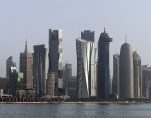
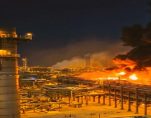
Oil prices pushed higher on Tuesday as Donald Trump intensified pressure on Iran, sharpening investor anxiety over the fate of the Strait of Hormuz and the risk of a wider supply shock across global energy markets. Brent crude traded above $110 a barrel and US West Texas Intermediate rose past $113, extending a rally driven by fears that a prolonged disruption in the Gulf could squeeze flows […]
Arabian Post Staff -Dubai Mounting economic damage from the Middle East war is set to push inflation higher and global growth lower, IMF managing director Kristalina Georgieva has warned, as the fund prepares to cut its growth outlook and raise its inflation projections in its World Economic Outlook due on April 14. The warning comes as the conflict has triggered what the International Energy Agency has […]
Arabian Post Staff -Dubai Iran said on Monday it wanted a durable end to the war with the United States and Israel rather than a temporary truce, rejecting pressure to reopen the Strait of Hormuz on Washington’s timetable as President Donald Trump warned the country could be “taken out” if it failed to meet his Tuesday night deadline for a deal. Tehran’s stance underscored how far apart […]
Arabian Post Staff -Dubai Dubai Precast has secured a contract to deliver a full precast building system for a residential scheme in Meydan, adding another marker to the steady use of factory-made concrete components in Dubai’s fast-moving housing market. The award covers the design, supply, delivery and installation of 93 G+2 townhouses and two villas, with completion of installation targeted for the fourth quarter of 2026. The […]
Khalifa Economic Zones Abu Dhabi has secured five new industrial and logistics projects worth AED147 million across Al Ain and Abu Dhabi, adding more than 84,000 square metres of development space and an estimated 500 jobs as the emirate presses ahead with its manufacturing and supply-chain expansion plans. Four of the projects are earmarked for KEZAD Al Ain, where they account for just over 37,400 square metres, […]
KUALA LUMPUR, MALAYSIA – Media OutReach Newswire – 7 April 2026 – The ACES Institute has officially released its latest comprehensive research publication titled “Doing Things Right, Doing the Right Things: The Scramble for the Soul of an Organisation.” The study provides a rigorous analysis of the modern corporate dilemma between operational efficiency and ethical conviction, introducing a leadership framework designed to help global organizations navigate increasingly fragmented stakeholder expectations.
Ren Li, Founder and CEO of Letright Industrial Corp., Ltd., whose commitment to ‘doing the right things’ led the company’s pivotal shift toward sustainable materials long before it became an industry standard.
The research, authored by Research Strategist Ager Freddy, Senior Researcher Timothy Benson, and ACES Institute President Dr. Shanggari Balakrishnan, argues that the phrase “doing the right thing” is frequently invoked in business discourse as a universal moral ideal, yet it is rarely examined through the lens of operational cost and strategic trade-offs. The study identifies that what is considered “right” varies significantly depending on the stakeholder ranging from regulatory compliance for governments and governance standards for investors to fair wages for employees and responsible resource use for environmental advocates.
The 4Cs Framework and Institutional Resilience
Central to the publication is the introduction of the 4Cs leadership framework: Creativity, Conscientiousness, Constancy, and Collaboration. According to the ACES Institute, these four pillars are essential for embedding ethical considerations directly into an organization’s product design, engineering processes, and corporate culture. The researchers suggest that by moving beyond surface-level corporate social responsibility and toward an institutionalized philosophy, companies can build a foundation for long-term differentiation and resilience.
The study acknowledges that this values-driven approach often necessitates difficult decisions that may carry significant short-term costs. Organizations pursuing deep sustainability or ethical strategies may face higher production expenses, skepticism from traditional market analysts, and resistance from consumers who express support for sustainability in theory but remain sensitive to price in practice. Furthermore, the research explores how global economic and political dynamics, such as shifting regulations and differing sustainability standards across international markets, complicate the efforts of leaders to maintain a consistent ethical stance.
Case Study Analysis: Letright Industrial Corp., Ltd.
To provide empirical evidence for these findings, the report examines the multi-decade journey of Letright Industrial Corp., Ltd., a manufacturer of premium outdoor living products. Under the leadership of founder and CEO Ren Li, the company made a pivotal decision in the early 2000s to abandon wood then the dominant material in the industry in favor of recyclable materials such as aluminum. This decision was driven by personal conviction regarding environmental impact rather than immediate market demand or regulatory requirements.
The case study illustrates the “Constancy” pillar of the ACES framework, noting that the move initially triggered significant resistance. During this period, customers continued to prefer traditional materials, employees questioned the strategic shift, and management warned of the financial consequences of declining orders. However, the research highlights that by persisting through this uncertainty, Letright successfully transitioned from an original equipment manufacturer (OEM) to an original design manufacturer (ODM). This shift allowed the company to build its own intellectual property, eventually leading to the development of the Ombra solar smart pergola, which integrates photovoltaic technology for renewable energy generation.
Executive Perspective on Global Leadership
“Organisations today operate in a landscape where expectations rarely align,” stated the authors of the study. “What appears responsible to one group may be viewed as inadequate or even harmful by another. Ultimately, ethical leadership does not mean achieving universal approval or avoiding difficult decisions. Instead, it requires organisations to define their own principles and align strategy, operations, and innovation around those values.”
The publication concludes that while “doing the right things” does not guarantee universal agreement, organizations that clearly define their values and consistently act on them are statistically more likely to build lasting relevance and resilience in an increasingly complex business environment. This research forms a key part of the ACES Institute’s ongoing mission to examine the intersection of leadership, sustainability, and responsible corporate transformation across global industries. Hashtag: #ACESInstitute #LetrightIndustrial
The issuer is solely responsible for the content of this announcement.
About ACES Institute
ACES Institute is a Kuala Lumpur-based research and thought leadership organisation focused on responsible leadership, sustainability, and organisational transformation. Through industry research, case studies, and strategic insights, the institute works with global companies and experts to explore how organisations can create long-term value while addressing complex economic, social, and environmental challenges.
About Letright Industrial Corp., Ltd. | Ombra Brand
Letright Industrial Corp., Ltd. is a global manufacturer of premium outdoor living solutions, specialising in innovative pergolas, outdoor furniture, and lifestyle products. Headquartered in Hangzhou, China, the company combines design innovation, advanced engineering, and environmentally responsible materials to deliver sustainable outdoor experiences for residential and commercial markets worldwide.
Young business owners drive small businesses in Malaysia
Technology adoption remains concentrated in front-end activities
Improved access to finance needed for deeper digital transformation
KUALA LUMPUR, MALAYSIA – Media OutReach Newswire – 7 April 2026 – Innovation, technology and young entrepreneurs continue to power growth among Malaysian small business, but this has yet to translate into sustained improvements in business performance, according to CPA Australia’s Asia-Pacific Small Business Survey findings.
While half of Malaysian small businesses report improved profitability from their technology investments over the past two years, the proportion generating more than 10 per cent of revenue from online sales declined from 74 per cent in 2024 to 62 per cent in 2025.
Digital payment usage has also declined in 2025 with 74 per cent of small businesses receiving more than 10 per cent of their sales through digital payment platforms such as GrabPay, Touch ‘n Go and Boost, compared to 78 per cent in 2024.
Priya Terumalay, CPA Australia’s Regional Head for Southeast Asia, said while government initiatives have helped support technology adoption, these efforts have yet to drive significant uptake of deeper productivity-enhancing technologies, such as artificial intelligence, process automation, data analytics and systems integration.
“Technology investment remains concentrated in computer hardware and customer-facing functions like mobile apps and payments, while structural constraints continue to limit more transformative approaches,” Priya said.
“With cost pressures remaining a persistent challenge compressing margins, policy priorities should focus on addressing structural constraints such as re-orienting digital support towards automation, systems integration, and data use along with support for productivity-enhancing responses rather than short-term relief.”
Businesses making technology investments must include adequate protection measures to minimise cyber risk exposure as 35 per cent of small businesses lost time or money due to a cyber-attack in 2025.
Only 39 per cent reviewed their cybersecurity protections over a six-month period, the second lowest result among the 11 markets surveyed.
Despite the challenges, business sentiment on the Malaysian economy remains positive with 75 percent of small businesses expecting the economy to grow in 2026.
A strong 77 per cent also anticipate business growth this year, although improved access to effective finance, especially for investment will be important to enable deeper digital transformation and build resilience.
“This is particularly crucial for outward-oriented small businesses navigating global supply chain pressures and trade policy uncertainty that could weigh on growth, especially firms integrated into regional supply chains.” Priya said.
About the survey
CPA Australia’s 17th annual Asia-Pacific Small Business Survey was conducted among small business owners/senior managers during November and December 2025 to identify the characteristics of successful small businesses across the region. The findings for the survey come from 4,166 small businesses in 11 markets. From the commencement of the survey in 2009, we have surveyed over 50,000 small businesses across the region. These include Australia, Mainland China, Hong Kong, India, Indonesia, Malaysia, New Zealand, Philippines, Singapore, Taiwan and Vietnam. Hashtag: #SmallBusiness #CPAAustralia #MalaysiaBusinesses
The issuer is solely responsible for the content of this announcement.
About CPA Australia
CPA Australia is one of the world’s largest professional accounting bodies, with more than 175,000 members in over 100 countries and regions, including more than 21,000 members in Southeast Asia. As we mark our 140th anniversary, we also celebrate 70 years of presence in Malaysia. With offices in Malaysia, Singapore, Indonesia and Vietnam, we are the largest Australian accounting body in the region providing education, training, technical support and advocacy. CPA Australia provides thought leadership on issues affecting the accounting profession and the public interest. We engage with governments, regulators and industries to advocate policies that stimulate sustainable economic growth and have positive business and public outcomes. A CPA is a Certified Practising Accountant. More at cpaaustralia.com.au
Bitcoin pushed back above the $70,000 mark on Monday, offering a measure of relief to a market that has been battered by volatility, geopolitical tension and doubts over whether institutional buying is strong enough to absorb selling by large holders. The move was modest rather than decisive, with live pricing showing bitcoin at about $69,728 on Tuesday in Asia after an intraday high of $70,240, underscoring […]
Tokenisation of financial assets could pull some of the crypto market’s most destabilising traits into mainstream finance, the International Monetary Fund has warned, saying the same technology that promises faster settlement and lower costs may also magnify volatility, fragment liquidity and leave regulators with less time to respond in a crisis. The IMF set out the warning in an April note by Tobias Adrian, its financial counsellor, […]
Polymarket has unveiled what it calls a full exchange upgrade, setting out plans to rebuild the core plumbing of its prediction market, launch a native collateral token and strengthen the systems it uses to turn disputed outcomes into settled trades. The move comes as the company, widely discussed at a roughly $20 billion valuation, positions itself for a broader push into the United States and for a […]
Arabian Post Staff -Dubai Donald Trump has said a Tuesday deadline for Iran to accept a deal remains final, sharpening a crisis that has already pushed energy markets higher, intensified diplomatic pressure and raised fresh concern over the risk of a broader Middle East conflict. Speaking on April 6 at the White House, the US president said Tehran had made what he described as a significant move […]
Singapore’s parliament is set to turn its attention on Tuesday to the economic and security consequences of the war involving Iran, with lawmakers filing 62 questions and three ministers due to deliver statements on how the conflict could affect energy supplies, inflation, transport costs and broader national resilience. The questions, lodged by 32 members from both the ruling People’s Action Party and the opposition, underline growing concern in the trade-dependent city-state over the fallout from turmoil in the Middle East.
The scale of parliamentary scrutiny is notable even by Singapore’s standards. According to the order paper for the 7 April sitting, Deputy Prime Minister and Minister for Trade and Industry Gan Kim Yong, Coordinating Minister for National Security K. Shanmugam, and Acting Transport Minister and Senior Minister of State for Finance Jeffrey Siow are scheduled to address the chamber. The questions range from the immediate effect of higher oil and gas prices to the security of liquefied natural gas supplies and the government’s plans to shield households and businesses from a prolonged external shock.
At the centre of concern is Singapore’s dependence on imported energy and its exposure to global shipping routes. The order paper shows MPs asking whether damage to Qatar’s Ras Laffan LNG facilities could materially affect short- and medium-term supply, whether alternative procurement arrangements would be enough to offset any shortfall, and whether disruption in the Middle East might accelerate efforts to diversify the energy mix, including greater investment in alternatives such as nuclear power. That line of questioning reflects a deeper vulnerability: Singapore generates most of its electricity from natural gas and has little room to escape sudden swings in international fuel markets.
Cost pressures are another major theme. Lawmakers have asked how rising fuel and electricity prices may feed through to household expenditure, transport operators and the wider cost of living. For a government already balancing inflation management with fiscal prudence, the debate offers an opportunity to show whether existing buffers are sufficient or whether targeted support may be needed if the conflict persists. Prime Minister Lawrence Wong, in a video message on 2 April, had already warned Singaporeans that instability in the Middle East could affect the economy through higher energy prices, supply chain disruption and weaker global confidence, signalling that the government was preparing the public for a potentially difficult external environment.
Singapore’s predicament is shaped by geography as much as policy. The republic sits far from the conflict zone, yet its economy is tied tightly to global trade, imported food and imported fuel. Any threat to Gulf energy production or maritime passage through strategic chokepoints can ripple quickly into Asian benchmark prices, freight costs and business sentiment. Questions filed for parliament suggest MPs are not only concerned about immediate supply disruption, but also about second-round effects on manufacturers, logistics firms, electricity generation and consumers already sensitive to living costs.
The breadth of the questions also points to a broader political calculation. Singapore’s leaders have long framed resilience as a whole-of-government and whole-of-society effort, particularly when external shocks threaten domestic stability. The debate now unfolding in parliament is likely to test how far that framework can stretch in the face of a conflict whose trajectory remains uncertain. Opposition members, including Workers’ Party figures, have pressed for details on fuel reserves, assistance for workers dependent on transport and the likely effect on household budgets, while ruling-party MPs have focused heavily on energy security, diversification and inflation spillovers.
Beyond energy, the parliamentary discussion may widen into questions of diplomacy, national security and public confidence. K. Shanmugam’s planned statement suggests the government sees the crisis as more than a commodity shock. Singapore has consistently sought to position itself as stable, rules-based and open to commerce, which means geopolitical conflict in a key producing region carries implications not only for prices but also for investor confidence and regional security calculations. Ministers will face pressure to reassure the public that contingency planning is in place, even as they acknowledge that a small open economy cannot fully insulate itself from a major war-driven disruption.
A malware campaign targeting organisations in South Korea is using weaponised Windows shortcut files and GitHub’s infrastructure to slip past standard network defences, according to threat researchers who say the operation relies on native Windows tools, hidden scripts and trusted web traffic to keep a low profile. Technical analysis published over the past few days shows the attackers embedding or decoding malicious PowerShell from LNK files, then […]
India has moved to secure 2.5 million tonnes of imported urea ahead of the kharif sowing season, opening one of its largest buying exercises in months as the West Asia war squeezes gas availability, disrupts shipping routes and cuts domestic fertiliser output. State-run Indian Potash Ltd has invited bids for 1.5 million tonnes for west coast ports and 1 million tonnes for east coast ports, with vessels required to sail by 14 June and bids due on 15 April.
The timing reflects pressure building across the farm supply chain just before planting for rice, maize and soybean gathers pace in June. India is the world’s biggest urea importer and remains exposed not only to overseas fertiliser shipments but also to liquefied natural gas supplies from the Gulf, a key feedstock for domestic urea plants. Market disruption linked to the conflict has forced policymakers and import agencies to act earlier and at larger scale than usual to avoid a supply gap during the monsoon cropping cycle.
The tender itself underlines the urgency. Indian Potash’s notice, dated 4 April, shows the company is seeking granular or prilled urea in bulk for agriculture use, with separate pricing required for FOBT and C&FFO terms. The notice also sets the bid opening for 15 April and says offers must remain valid until 23 April. Those details matter because India’s tenders often serve as a benchmark for global trade, influencing price expectations far beyond its own market.
Supply stress has emerged on two fronts. First, disruption around the Gulf has affected fertiliser cargo movements through the Strait of Hormuz, one of the most sensitive trade chokepoints for both natural gas and finished fertiliser. Second, tighter LNG availability has curtailed feedstock for urea manufacturing at home. Reuters reported that the conflict had cut domestic output by about 600,000 to 700,000 tonnes a month, while other reports in the domestic press said production in one month had slipped to about 18 lakh tonnes from around 24 lakh tonnes.
That drop is striking because domestic capacity had been strengthened over the past decade. Official figures released last month said urea production in 2024-25 stood at 306.67 lakh metric tonnes, after touching a record 314.07 lakh metric tonnes in 2023-24. The broader policy effort has been to reduce import dependence through revived plants and brownfield additions, yet the present disruption shows that energy exposure still leaves the sector vulnerable when conflict hits upstream supply and freight corridors.
Trade data had already pointed to a more import-dependent year even before the latest escalation. Fertiliser Association of India data reported in January showed urea imports jumped 120.3 per cent year on year to 7.17 million tonnes in April-November 2024-25. That surge suggested domestic output and demand were already misaligned, leaving little buffer when the external shock arrived. The latest tender therefore looks less like a one-off emergency purchase and more like an attempt to rebuild a thinning pipeline before farm demand accelerates.
The price implications are equally important. Reuters said India’s previous tender had cleared at $418.40 a tonne, and traders now expect the new purchase to test higher levels because global availability has tightened. Argus reported that the war had effectively cut off exports from major Gulf producers including Qatar, Saudi Arabia, the UAE and Bahrain, which together usually account for roughly 1 million tonnes a month, or about a fifth of global urea trade. It also cited Kpler data showing more than 900,000 tonnes on stranded vessels beyond Hormuz.
Officials have also been working on contingency planning outside the tender route. Domestic reports said a task group had been formed to assess global urea sources and prepare import options, while gas supply to fertiliser units has been partially restored through spot purchases and reallocation. That may soften the production hit, but it does not fully remove the risk because any prolonged interruption in Gulf shipping or LNG flows would keep pressure on both landed prices and physical availability.
Anthropic’s Claude Code has come under fresh scrutiny after researchers disclosed a flaw that can neutralise user-set deny rules when a shell command is padded with a long chain of harmless subcommands, raising concerns that a safety feature marketed as a hard stop may fail in exactly the kind of hostile conditions it is meant to resist. The issue centres on Claude Code’s permission system, which lets […]
Saudi Arabia’s non-oil private sector slipped into contraction in March, with business conditions deteriorating for the first time since August 2020 as conflict across the Middle East disrupted supply chains, delayed exports and hit customer demand. The Riyad Bank Saudi Arabia Purchasing Managers’ Index fell to 48.8 in March from 56.1 in February, dropping below the 50-point threshold that separates growth from contraction. Data for the […]
By Nantoo Banerjee The Reserve Bank of India and the government may officially deny or even pretend to ignore the adverse impact of the continuous downhill journey of the Indian Rupee against the US Dollar on the economy, the disturbing trend, if not contained, is bound to lead the heavily import-reliant nation to high inflation […]
Arabian Post Staff -Dubai ADNOC Gas said its domestic supply chain remains intact after damage at part of the Habshan complex on April 3, with gas demand inside the UAE being met through other facilities and no disruption to customer supply. The company told the Abu Dhabi Securities Exchange that the affected area had been isolated and that a full assessment of damage to the Habshan train […]
Gold prices extended their retreat as investors recalibrated expectations for US interest rates after stronger labour-market signals collided with a worsening conflict in the Middle East, a combination that lifted the dollar, pushed oil higher and revived concerns that inflation could stay stubborn for longer. Spot bullion has come under pressure even as geopolitical risk remains elevated, an unusual pattern that reflects how sharply energy costs and […]
Beijing HyperStrong Technology, one of the country’s biggest battery energy-storage system suppliers, expects shipments to more than double in 2026 as utilities, renewable developers and industrial customers accelerate orders at home and overseas. The company is projecting deliveries of about 70 gigawatt-hours this year, up from 26 gigawatt-hours in 2025, according to comments published on April 6, a jump that underscores how quickly large-scale storage is moving from a supporting technology to a central piece of power infrastructure.
The forecast places HyperStrong among the more aggressive corporate voices in a market that has expanded far beyond its earlier role of smoothing short bursts of solar and wind volatility. Storage is now being bought to stabilise grids, capture cheap midday renewable power, support evening peaks and back up electricity-hungry data centres. Global spending on batteries for power-sector storage is set to reach about $66 billion in 2025, reflecting the scale of investment now flowing into the sector.
HyperStrong’s position helps explain why its target is drawing attention. The company says it has been ranked among the top three global battery energy-storage system integrators and has held a Tier 1 standing with BloombergNEF since 2024. It also says it is the top integrator in China’s mainland market by cumulative installed and contracted project capacity. On its own figures, it has deployed more than 50GWh across more than 400 projects after being founded in 2011.
Demand inside China remains the first pillar of that growth story. The country’s clean-power build-out has been so rapid that storage is becoming essential to absorb output and protect grid reliability. Government data showed wind and solar capacity reached 1.84 billion kilowatts in 2025, accounting for 47.3% of total installed power capacity and overtaking thermal power for the first time. Separate official data showed installed new-type energy storage reached 136 million kilowatts in 2025, after already topping 70 million kilowatts in 2024.
Policy has also shifted in ways that improve the commercial case for storage. Earlier concerns that many projects were being built faster than they could be profitably used have given way to a more market-based system in which capacity payments, peak pricing and wider power-sector reforms are strengthening returns. Analysts have said those changes, combined with subsidies in some provinces, helped turn storage into a far more investable business. That domestic backdrop matters because it gives manufacturers and integrators a large home market from which to scale.
Overseas demand forms the second pillar. Chinese storage suppliers have benefited from orders tied to renewable expansion, ageing grids and the electricity needs of AI-linked data centres in North America, Europe and the Middle East. HyperStrong has been widening its footprint in Europe and said in March that it had projects across 15 countries there. The company has also been visibly pushing its international profile through industry events in Europe and the Americas, a sign that it sees export growth as more than a side business.
Competition, however, is unlikely to ease. China’s battery and clean-tech industries have shown how quickly rapid capacity growth can feed price wars and margin pressure. Rival suppliers ranging from CATL and BYD to other storage specialists are expanding at speed, while trade frictions and policy shifts abroad could complicate the export story. At the same time, technology is moving on: lithium-ion remains dominant for daily cycling, but sodium-ion and longer-duration storage systems are being pushed for specific use cases, especially where mineral costs, safety or duration become bigger factors.
Justin Bieber’s headline-grabbing purchase of a Bored Ape Yacht Club NFT for about $1.3 million in January 2022 has become one of the clearest symbols of how sharply the NFT market has deflated, with comparable pricing for the collection now hovering around $11,000 to $12,000. The singer bought Bored Ape #3001 for 500 ether at a time when digital collectibles were commanding extraordinary sums, fuelled by celebrity […]
Telegram has rolled out a broad product update that adds a private AI writing tool, a major expansion of polling functions, support for Live Photos and Motion Photos, and a new system that lets bots create and manage other bots, in a move that sharpens the platform’s push into AI-assisted messaging and developer automation. The update was announced on March 31, 2026, with related bot-management changes […]
Google has disclosed a coordinated takedown of UNC2814, a suspected China-linked cyber-espionage group, after investigators tied it to intrusions at 53 organisations in 42 countries, with telecommunications providers and government bodies forming the core of the victim set. The campaign centred on a custom backdoor called GRIDTIDE, which used Google Sheets as a covert command-and-control channel, allowing malicious traffic to blend with ordinary cloud activity rather than […]
Solana’s effort to prepare for a future quantum-computing threat is exposing a basic tension for high-speed blockchains: the safer the signature system becomes, the heavier and slower it is likely to be. That trade-off has moved into sharper focus as Bitcoin developers debate draft quantum-safe address proposals, Ethereum’s post-quantum team lays out a multi-year migration plan, and new research from Google and outside experts brings forward the […]







 https://www.cpaaustralia.com.au
 https://www.linkedin.com/school/cpaaustralia
 https://twitter.com/cpaaustralia
 https://www.facebook.com/cpaaustralia
 https://www.instagram.com/cpaaustralia