News related to
trade

Arabian Post Staff -Dubai European shares held their ground on Monday as investors waited for German and euro zone inflation readings that could show how sharply the Middle East war is feeding through into prices, after a surge in oil left the STOXX 600 heading for its worst month since the first pandemic shock of March 2020. The pan-European STOXX 600 was up about 0.2 per cent […]

Omniyat Holdings has said it has enough liquidity to handle its debt obligations after Fitch placed the Dubai ultra-luxury developer on Rating Watch Negative, citing geopolitical risk linked to the Iran war and the potential for weaker buyer demand in Dubai and across the Gulf. The company said it held more than AED 5.3 billion in cash, cash equivalents and other financial assets at the end of […]

North Korea has carried out a ground test of a newly upgraded high-thrust solid-fuel engine, with leader Kim Jong-un saying the development would strengthen the country’s strategic strike capability and advance its military modernisation drive. State media said Kim observed the test and described it as an important step in the ruling party’s five-year defence plan, a programme that has centred on building faster-launching missiles and a […]

Arabian Post Staff -Dubai Rosatom has agreed to form a logistics joint venture with DP World in a deal that would place Russia’s state nuclear corporation in majority control while bringing one of Dubai’s biggest global trade operators deeper into a strategically sensitive transport network centred on FESCO and Arctic shipping lanes. Under the proposed structure, Rosatom will hold 51% and DP World 49%, with Rosatom contributing […]

India’s rupee surged on Monday after the Reserve Bank of India tightened banks’ foreign-exchange position limits, forcing lenders to cut dollar holdings and unwind arbitrage trades that had built up as the currency slid to a record low at the end of last week. The rupee rose as much as 1.4% in early trade and was quoted around 93.48 to 93.85 per US dollar, marking its sharpest one-day gain since February.

The immediate trigger was the RBI’s March 27 directive capping banks’ net open rupee positions in the onshore deliverable market at $100 million by the close of each business day from April 10. That replaced a looser framework under which banks’ boards could set limits up to 25% of total capital. Traders said the order prompted a burst of dollar selling as banks moved to reduce exposures that had become profitable while the rupee was weakening.

The rebound followed a bruising stretch for the currency. On Friday, the rupee hit a record low of about 94.84 to the dollar after heavy pressure from higher crude prices, risk aversion and foreign outflows. Reuters reported the rupee had fallen more than 4% in March, putting it on course for its worst monthly performance in more than seven years, while broader anxiety over the Middle East conflict and its implications for energy markets deepened concern over India’s import bill and external balance.

At the centre of the RBI’s move is the gap between the domestic market and the offshore non-deliverable forward, or NDF, market. Banks had been exploiting pricing differences between the two venues, building large arbitrage books that were profitable during the rupee’s slide. Estimates for those positions vary, but Reuters and other market reports put them broadly in the $25 billion to $50 billion range. By suddenly tightening the rules, the central bank appears to have targeted not only volatility in the spot market but also the speculative mechanics that were amplifying pressure on the currency.

That has given the rupee breathing room, but it has also shifted the strain onto banks. Lenders have warned that rapid compliance could force a disorderly unwinding of positions and crystallise losses in treasury books. Several banks have asked the RBI for three months to comply, arguing that a phased adjustment or permission to hold existing trades to maturity would reduce the risk of market disruption. Equity investors appeared to register that concern, with banking shares falling amid estimates that mark-to-market losses could run into thousands of crores if the unwind is abrupt.

The central bank’s intervention is being read in dealing rooms as one of its strongest attempts in years to reassert control over rupee pricing. Market participants said the RBI has already been active in local and offshore markets, using reserves and liquidity tools to keep the currency from sliding too quickly. The new cap adds a regulatory weapon to that defence. It also sends a signal that the central bank is prepared to curb trading strategies it sees as destabilising, even at the cost of squeezing bank profitability in the short term.

Whether the rupee can hold on to these gains will depend less on technical unwinding and more on the backdrop that pushed it down in the first place. Brent crude has climbed sharply, with Reuters reporting a move above $115 a barrel on Monday and a monthly gain of nearly 60%. For an economy that imports the bulk of its oil, that raises the risk of a wider current account deficit, imported inflation and renewed pressure on the currency. Bond yields also edged higher, indicating that traders remain alert to the wider macroeconomic fallout even as the rupee recovers ground.

A China-Singapore youth dialogue in Singapore has closed with artificial intelligence, innovation and cross-border cooperation at the centre of discussions, as both countries seek to deepen people-to-people links alongside a broader push into advanced technology and digital governance. The two-day event was held on 24 and 25 March and brought together 12 young representatives from the two countries under the theme “Building Tomorrow: Youth Voices United”.

The gathering was co-organised by People’s Daily and Lianhe Zaobao, giving it a media-diplomacy character as well as a youth engagement role. Participants discussed how their generation is navigating technological change, cultural renewal and sustainable development, with one panel focused specifically on how young professionals in robotics, flying cars and data verification see the opportunities and risks of the AI era.

That emphasis matters beyond the symbolism of a youth exchange. Singapore has been working to position itself as a regional hub for trusted AI deployment, regulation and commercialisation, while China continues to expand its technological reach across sectors from advanced manufacturing to data-driven consumer platforms. Against that backdrop, a dialogue framed around youth voices and innovation also functions as a signal that bilateral engagement is moving beyond trade and official diplomacy into talent, technology and narrative influence.

Organisers said the technology segment featured participants working in frontier and emerging fields, including robotics, air mobility and digital verification. Those subjects reflect a wider regional agenda in which governments, universities and companies are trying to balance investment enthusiasm with concerns over safety, labour disruption, misinformation and the standards needed for responsible AI adoption. The inclusion of data verification in the discussion is especially notable at a time when synthetic media, manipulated content and trust in online information have become strategic concerns across Asia.

The event also extended beyond technology. Another strand of the dialogue focused on culture and identity, with participants in wood sculpture, paper arts, jewellery design and cultural reporting arguing that heritage does not have to be sidelined by digital change. That framing aligns with a broader trend in both China and Singapore, where policymakers and institutions increasingly present innovation and cultural continuity not as competing ideas but as parallel pillars of national development and soft power.

For Singapore, the dialogue fits neatly into its longer-standing strategy of maintaining practical, multi-layered ties with China while preserving its distinct regulatory and economic model. Youth exchanges, especially those tied to technology and entrepreneurship, can help widen those ties at a time when regional competition for skilled workers, capital and research partnerships is intensifying. Singapore’s universities and public institutions have also hosted multiple youth-oriented dialogues on China-related themes this year, pointing to a sustained effort to cultivate a new generation conversant in both policy and commercial realities.

For China, the event offered another platform to project openness and collaborative intent through younger voices rather than official communiqués. That matters at a moment when Beijing is trying to reassure partners in Southeast Asia that technological cooperation can advance without crowding out local priorities. Using youth representatives, entrepreneurs and cultural figures helps soften what might otherwise appear as a purely state-led message, while also reinforcing the idea that future bilateral ties will be shaped as much by personal networks and innovation ecosystems as by government ministries.

Still, such forums come with limits. Dialogues can build familiarity and create useful connections, but they do not by themselves resolve harder policy questions around data governance, platform regulation, research openness or strategic competition. Singapore has been careful to develop AI frameworks that stress accountability and trust, while China’s model is backed by a far larger domestic market and a different regulatory environment. That means cooperation may expand fastest in applied innovation, education, mobility and selected commercial fields rather than in fully harmonised digital rules.


Online anonymity is facing a sharper threat as new research suggests large language models can now identify pseudonymous internet users at scale by combining fragments of public writing with broader online data. The warning comes from a February 2026 preprint by Simon Lermen and co-authors at ETH Zurich, Anthropic and the Machine Learning Alignment and Theory Scholars programme, which argues that the “practical obscurity” that once protected […]

Advertisements

India has cut special excise duties on petrol and diesel after a sharp rise in global crude prices, seeking to shield consumers from a broader inflation shock as the Iran war and disruption around the Strait of Hormuz continue to unsettle energy markets. A government order issued late on Thursday reduced the special excise duty on petrol to Rs 3 a litre from Rs 13, while the levy on diesel was removed entirely from Rs 10 a litre. At the same time, New Delhi imposed fresh windfall taxes on diesel and aviation turbine fuel exports to recover part of the revenue loss and manage the fiscal hit.

The move underlines the pressure facing policymakers as oil prices remain volatile and the rupee weakens, raising the cost of imports for one of the world’s biggest crude buyers. Brent crude climbed above $112 a barrel on Friday, extending a rally driven by doubts over any near-term ceasefire and persistent fears that supply disruptions in the Gulf could deepen. Traders and analysts have said the risk premium now reflects not only lost barrels but also the strategic importance of Hormuz, through which a large share of global oil and liquefied natural gas flows.

For India, the tax cut is as much about inflation management as political optics. Retail prices at state-run fuel retailers have been largely held steady even as global crude costs have climbed, forcing public-sector oil marketing companies to absorb losses on every litre sold. Reuters reported that those losses were running at about Rs 24 a litre on petrol and Rs 30 on diesel at the time of the duty cut, a burden that had begun to raise concerns about the financial strain on the country’s dominant fuel retailers. By lowering excise duties, the government creates room for those companies to keep pump prices stable without taking the full blow on their balance sheets.

That relief, however, comes with a cost. The excise reduction is expected to trim government revenue by roughly Rs 70 billion every fortnight, with the net impact estimated at about Rs 55 billion after accounting for the new export levies on diesel and jet fuel. Those numbers matter because New Delhi is already balancing slower growth risks, higher import costs and sensitivity in bond markets. India’s 10-year government bond yield rose as investors weighed the inflationary impact of oil and the possibility that fiscal targets may come under pressure if energy turbulence persists.

Currency markets have been sending a similar warning. The rupee slipped beyond 94 to the US dollar, marking a record low and capping its weakest fiscal-year performance in more than a decade. Higher oil prices have compounded external pressures by widening import costs and fuelling worries over inflation, while signs of reduced support from the Reserve Bank of India have added to volatility in both the currency and government debt markets. The combination of a softer rupee and expensive crude intensifies the urgency for measures that can prevent fuel inflation from feeding into transport, food and manufacturing costs.

The government has paired the tax changes with broader supply assurances. Officials have said retail fuel prices will remain stable and that supplies of fuel, fertiliser and coal are adequate. India has also increased the availability of liquefied petroleum gas for industrial use, an indication that authorities are trying to prevent energy stress from spilling into factories and power demand. That broader messaging is aimed at containing panic in a market already on edge over whether the Middle East conflict could trigger a more prolonged energy shock.

The burden of holding down prices has not been distributed evenly across the sector. State-run retailers, which control more than 90 per cent of the country’s fuel stations, have largely refrained from raising pump prices, while private players have begun adjusting. Nayara Energy, for example, increased gasoline and gasoil prices this week, citing the combined impact of a weaker rupee and surging global crude prices. The divergence highlights the structural challenge for the government: keeping inflation contained without unduly damaging the finances of state-backed refiners and marketers.

Arabian Post Staff -Dubai   Motorists in the UAE are likely to pay more for petrol and diesel in April after the Iran war sent crude prices sharply higher and intensified disruption across the Gulf’s main energy and shipping routes, raising the cost base that feeds into the country’s monthly fuel-price adjustment. April rates were due to be announced on March 31, and local pricing remains tied […]

Arabian Post Staff -Dubai Gold prices climbed sharply on Friday, reversing part of this week’s slide as investors stepped back into the market after bullion fell to a four-month low, while traders also watched for any sign that tensions in the Middle East might ease. Spot gold rose more than 3% at its intraday peak before trading about 2.6% higher at $4,491.78 an ounce by afternoon dealings […]

Erythritol, a low-calorie sweetener widely used in sugar-free drinks, protein bars, keto snacks and diabetic-friendly foods, is facing renewed scrutiny after new research found it can harm cells lining tiny blood vessels in the brain in ways that may favour clotting and reduce normal vessel relaxation. The study adds to a growing body of evidence that has raised questions over whether one of the food industry’s most […]

Blippo+ has arrived as one of the stranger releases to gain traction across independent gaming, presenting itself not as a conventional narrative title but as a faux television service from an alien world. Built around channel surfing, short-form live-action broadcasts and a deliberately warped retro aesthetic, the project has drawn attention for turning the language of late-20th-century television into an interactive spectacle that feels equal parts parody, […]

U. S. spot Bitcoin exchange-traded funds recorded their heaviest one-day net withdrawals in three weeks on Thursday, with investors pulling about $171.2 million as Bitcoin slid below the $70,000 mark and broader market nerves rose over the risk of a fresh flare-up in the conflict involving the United States, Israel and Iran. The outflow, based on market data compiled by SoSoValue and widely tracked across the crypto […]

Banks are pressing the Reserve Bank of India to soften a new foreign-exchange rule that dealers say could force the unwinding of large arbitrage positions, deepen trading losses and add fresh strain to the rupee at a fragile moment for the currency market. The central bank has told lenders to keep their net open rupee positions in the onshore deliverable market within $100 million by the end of each business day from April 10, replacing a far more flexible regime under which banks’ boards could set limits linked to capital.

The pushback from lenders has grown because the rule change lands after weeks of pressure on the rupee from higher oil prices, foreign portfolio outflows and war-driven risk aversion across global markets. The rupee touched a record low of 94.84 against the US dollar after a sharp slide this week, underscoring the urgency with which the central bank is trying to contain volatility and regain influence over price formation in the domestic market.

At the heart of the dispute is a trading structure that banks have used to profit from differences between the onshore market and the offshore non-deliverable forward, or NDF, market. Under the earlier framework, dealers could offset positions across the two venues without breaching broader exposure limits. The new rule narrows that room sharply by capping end-of-day net open rupee exposure in the onshore deliverable market, regardless of how positions are balanced elsewhere. Traders told Reuters that arbitrage books likely to be affected are worth about $10 billion to $18 billion, while Bloomberg reported that banks see total unwinding pressure building toward roughly $30 billion.

That distinction matters because the RBI appears to be targeting a channel through which offshore pricing has increasingly spilled back into the domestic market. By tightening end-of-day exposure, the central bank is seeking to reduce the ability of banks to transmit volatility from the NDF market into onshore rupee trading, while making its own intervention in the domestic market more effective. That objective fits with a broader pattern this month, as the RBI has been active in spot, futures and non-deliverable forward markets to steady the currency.

Banks, however, argue that the speed of implementation could be costly. Treasury officials have warned that compressing positions before the April 10 deadline may force disorderly exits, widen onshore-offshore spreads and crystallise mark-to-market losses on trades that had previously been profitable. The immediate complaint is not only about tighter oversight but also about the lack of transition time for legacy positions built under the old regime. Reports from the domestic financial press say lenders have asked the central bank to reconsider or provide relief, reflecting concern that a hard cap applied uniformly across banks does not distinguish between speculative bets and market-making activity.

The central bank’s tougher line comes as India’s external buffers, while still substantial, have been tested by intervention. RBI data cited in a Reuters report showed foreign-exchange reserves at $709.76 billion as of March 13, enough to cover 11.2 months of imports and about 95 per cent of outstanding external debt. Even so, reserves had fallen notably over the month as the central bank sold dollars to smooth rupee moves. That means policymakers are trying to balance two goals at once: preserving confidence in India’s macro-financial resilience while discouraging trading structures that may amplify pressure during periods of external shock.

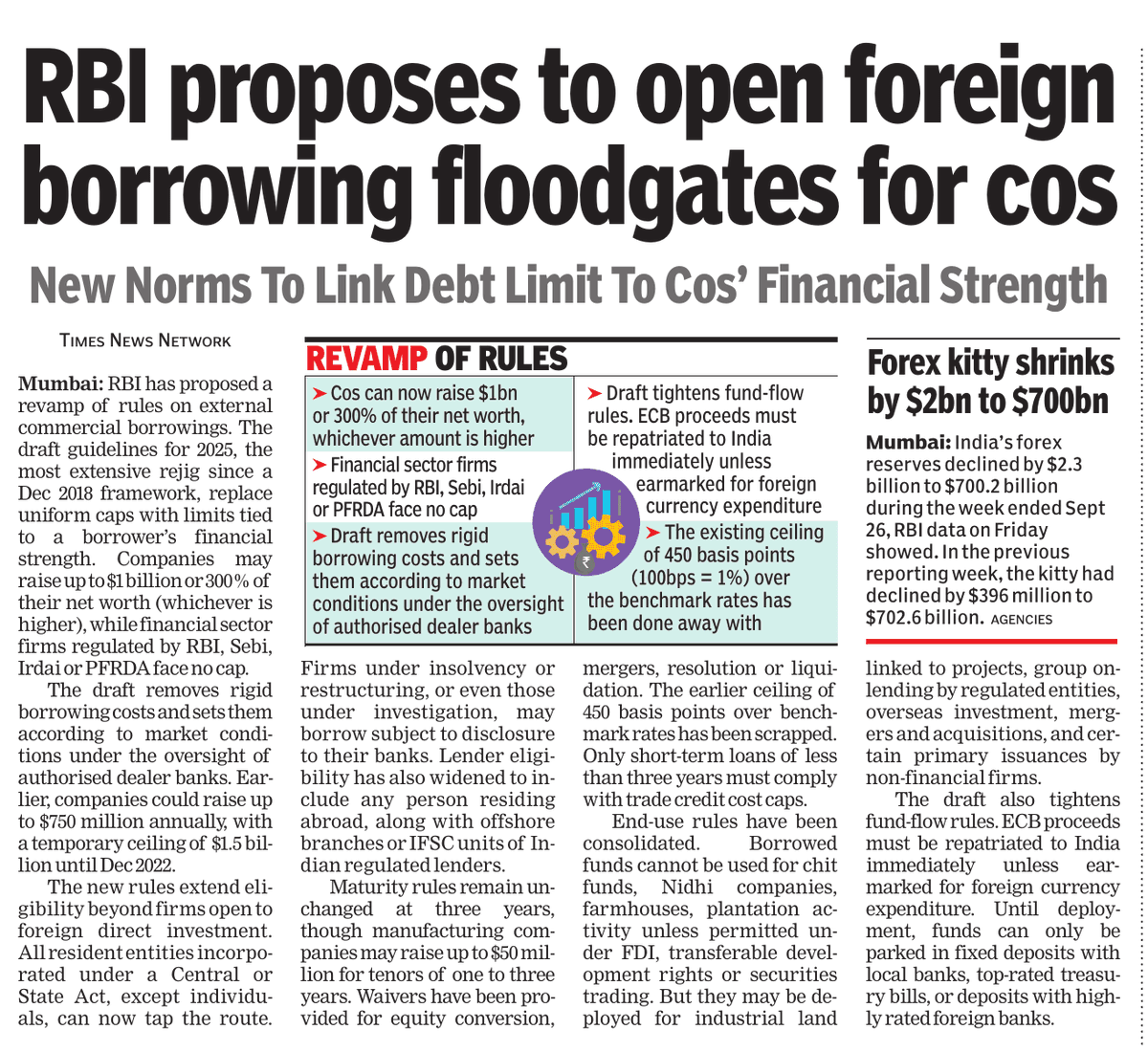
Another layer of complexity is that the RBI had, only weeks earlier, proposed broader reforms that would ease some foreign-exchange transaction norms for authorised dealers and give market participants greater flexibility in hedging and balance-sheet management. That makes the present clampdown look less like a reversal of liberalisation and more like a targeted response to extraordinary market conditions. For banks, though, the contrast has sharpened frustration: one arm of the regulatory agenda promises flexibility, while another has suddenly imposed a hard operational ceiling on rupee positions.

Arabian Post Staff -Dubai US Vice President JD Vance has sought to reassure voters and markets that Washington does not intend to become locked into a prolonged military commitment in Iran, arguing that higher fuel costs are a temporary consequence of a campaign the administration expects to wrap up rather than harden into another open-ended Middle East war. His remarks come as the Trump administration faces a […]

Anthropic’s accidental exposure of internal material about an unreleased AI system dubbed Claude Mythos has jolted investors, sending cybersecurity shares sharply lower and adding to pressure across risk assets, while reviving a deeper debate over whether frontier AI is moving faster than the safeguards meant to contain it. The leaked material, first reported by Fortune on March 26 and 27, described Mythos as Anthropic’s most powerful model […]

Intercontinental Exchange, the parent of the New York Stock Exchange, has expanded its push into prediction markets with a fresh $600 million investment in Polymarket, tightening a partnership that could take its total commitment to almost $2 billion and further pull event-based trading into the financial mainstream. ICE said the new cash injection forms part of a previously announced arrangement and does not expect to materially affect […]

By K Raveendran US President Donald Trump’s attempt to jawbone oil lower has run into the hard edge of market reality. At the start, the strategy appeared to work. When he signalled that peace talks with Iran were possible and suggested a diplomatic opening, crude quickly gave back a large share of its war premium. […]

The article Energy Markets See Through Shallow Peace Talk, Move On Their Own Terms appeared first on Latest India news, analysis and reports on Newspack by India Press Agency).

Morgan Stanley has moved to shake up the crowded US spot bitcoin exchange-traded fund market by proposing a fee of 14 basis points for its planned Morgan Stanley Bitcoin Trust, a level that would make it the cheapest fund in the segment if regulators clear the product for launch. The filing marks a sharper price challenge than many on Wall Street expected from a late entrant and […]

Bitcoin slid to a two-week low on Friday, dropping below $67,000 as a wave of forced liquidations swept through crypto derivatives markets and a broader retreat from risk assets gathered pace. Ether also moved down towards the $2,000 mark, underscoring how quickly sentiment has turned as traders confront weaker equities, elevated oil prices and fading conviction in leveraged bets. The pullback reflected more than a routine bout […]

Arabian Post Staff -Dubai Banishing delivered a polished front-end result for the United States and Saudi Arabia at Meydan on Saturday, winning the $1 million Group 2 Godolphin Mile and handing a notable success to trainer David Jacobson, jockey Silvestre de Sousa and owners Sharaf Mohammed Al Hariri, David Jacobson and Lawrence Roman. The Godolphin-bred six-year-old beat Commissioner King by 2¼ lengths over the mile on dirt, […]

Zimbabwe has turned a long-signalled restriction on second-hand clothing into formal law, tightening its effort to shield domestic manufacturers even as economists and traders warn that the move could squeeze low-income consumers and deepen pressure on an already fragile apparel market. The measure is now enforced under Statutory Instrument 59 of 2026, which bars the import of second-hand clothes unless an importer holds a government permit issued […]

The European Commission has confirmed a cyberattack on cloud infrastructure supporting parts of the Europa. eu web platform, with the intrusion discovered on March 24 and swiftly contained as investigators assess whether data was taken from affected public-facing services. The Commission has said its internal systems were not hit. The breach centres on a compromised Amazon Web Services account used to host elements of the Commission’s web […]

African Development Bank Group is set to launch the 2026 edition of its Africa’s Macroeconomic Performance and Outlook report on 30 March at its headquarters in Abidjan, Côte d’Ivoire, placing the continent’s growth prospects, debt strains and inflation risks under fresh scrutiny at a time of heightened global uncertainty. The event is expected to draw policymakers, investors and development specialists looking for updated guidance on how African […]

VISHNU RAJA
RYO YAMADA
HITORI GOTOH
IKUYO KITA